
Needs Assessment and Consultation to Support Groundwater Management
- Slides: 15
Needs Assessment and Consultation to Support Groundwater Management in African RBOs (from 2013) Karen G. Villholth Principal Researcher IWMI 3 rd Regional Meeting on Tools for the Sustainable Management of Transboundary Aquifers, GABORONE, BOTSWANA, 06 -09 MARCH, 2018
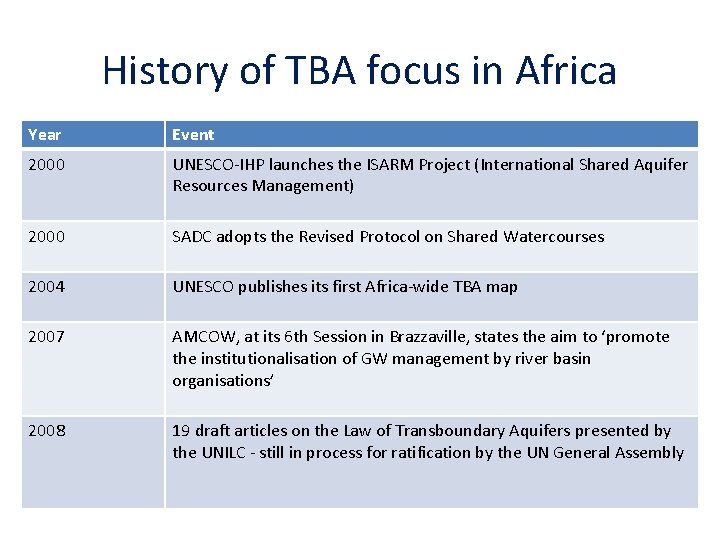
History of TBA focus in Africa Year Event 2000 UNESCO-IHP launches the ISARM Project (International Shared Aquifer Resources Management) 2000 SADC adopts the Revised Protocol on Shared Watercourses 2004 UNESCO publishes its first Africa-wide TBA map 2007 AMCOW, at its 6 th Session in Brazzaville, states the aim to ‘promote the institutionalisation of GW management by river basin organisations’ 2008 19 draft articles on the Law of Transboundary Aquifers presented by the UNILC - still in process for ratification by the UN General Assembly
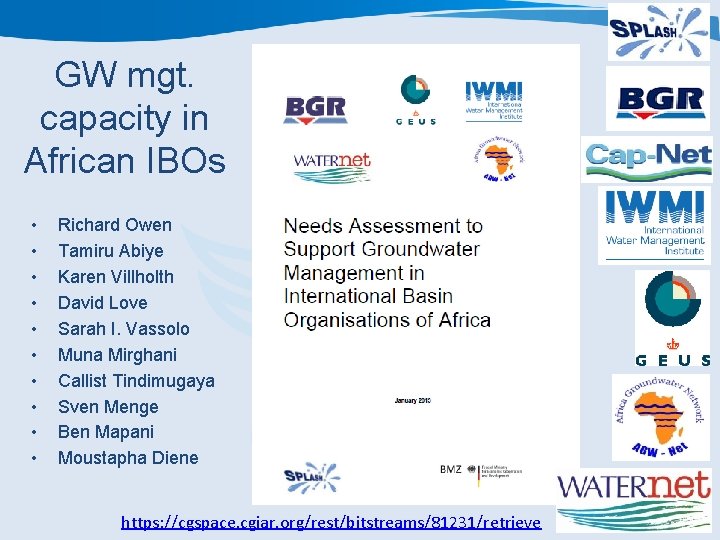
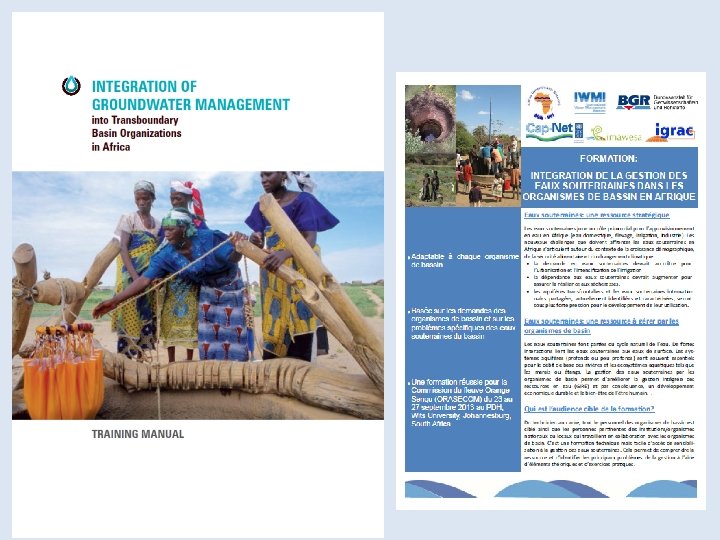
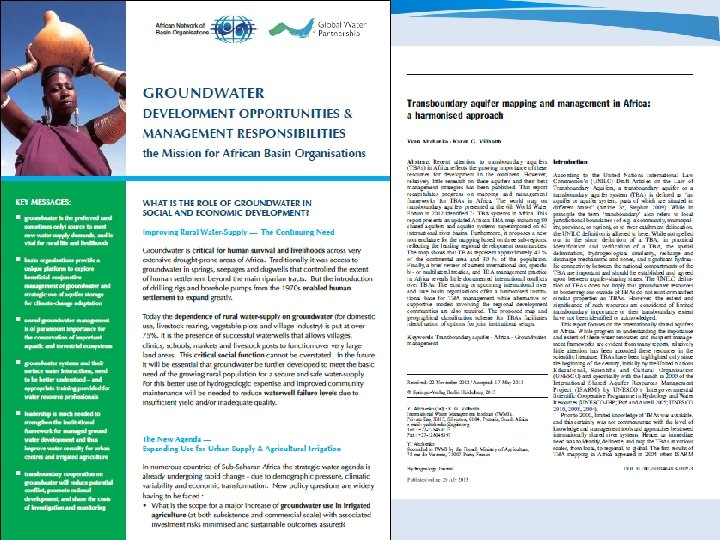
GW mgt. capacity in African IBOs • • • Richard Owen Tamiru Abiye Karen Villholth David Love Sarah I. Vassolo Muna Mirghani Callist Tindimugaya Sven Menge Ben Mapani Moustapha Diene https: //cgspace. cgiar. org/rest/bitstreams/81231/retrieve
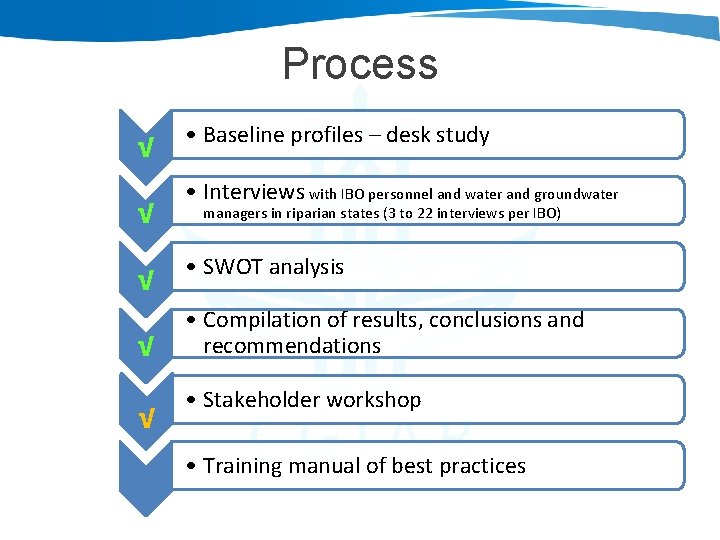
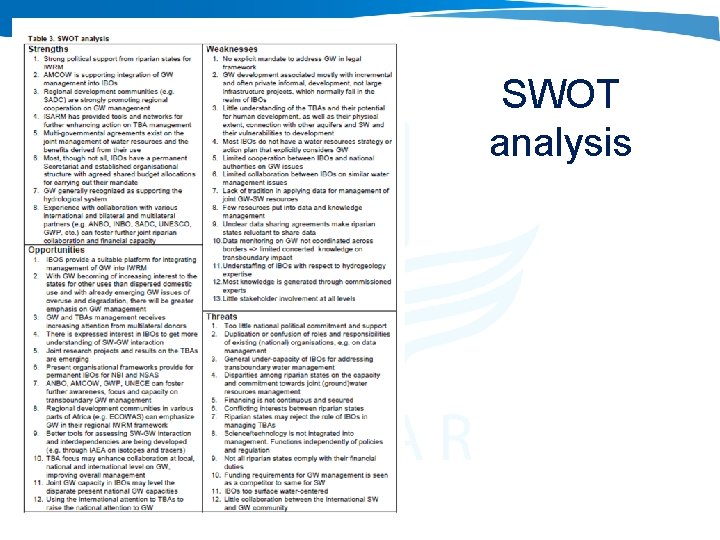
Process √ √ √ • Baseline profiles – desk study • Interviews with IBO personnel and water and groundwater managers in riparian states (3 to 22 interviews per IBO) • SWOT analysis • Compilation of results, conclusions and recommendations • Stakeholder workshop • Training manual of best practices
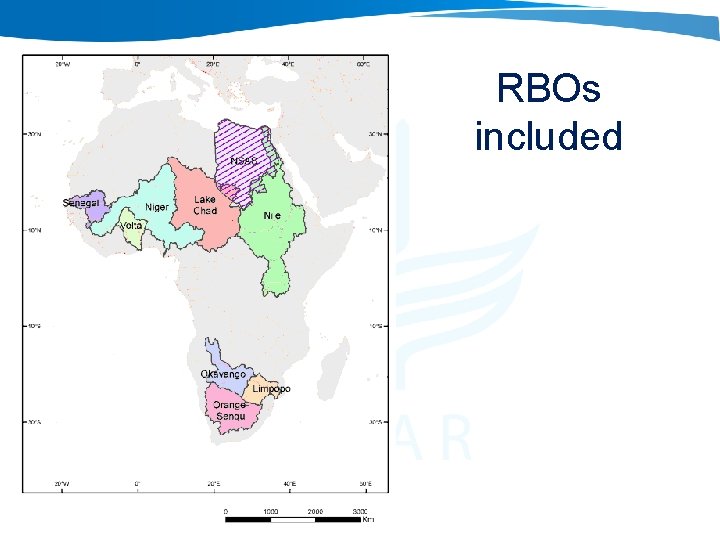
RBOs included
SWOT analysis
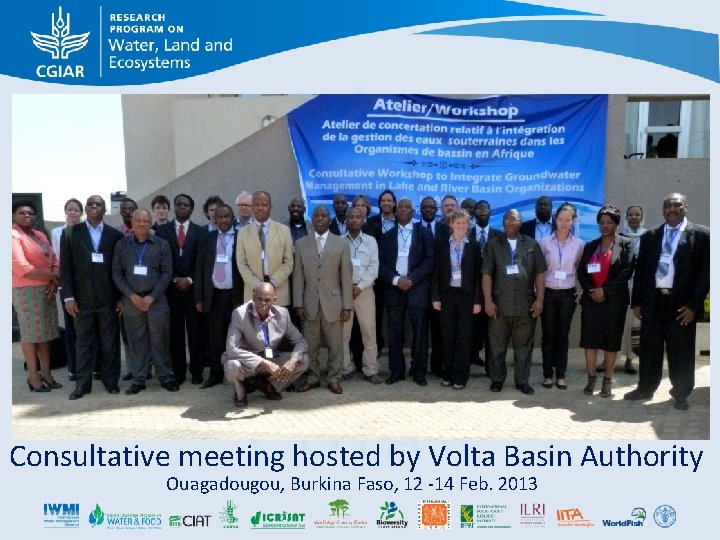
Consultative meeting hosted by Volta Basin Authority Ouagadougou, Burkina Faso, 12 -14 Feb. 2013
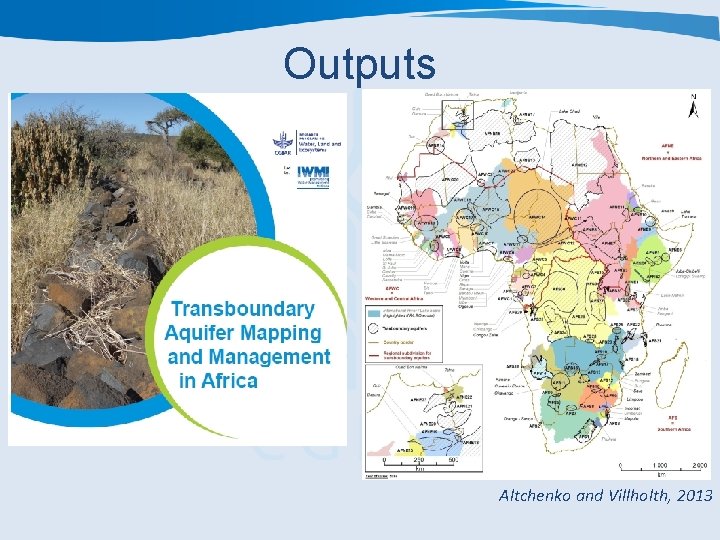
Outputs Altchenko and Villholth, 2013
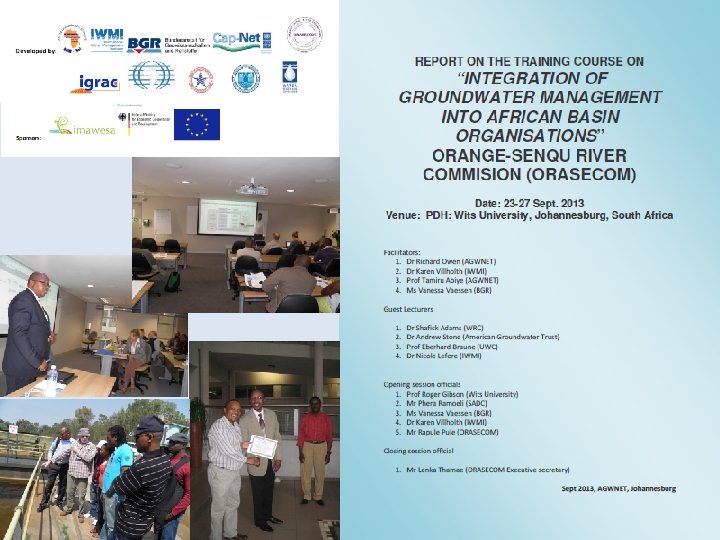
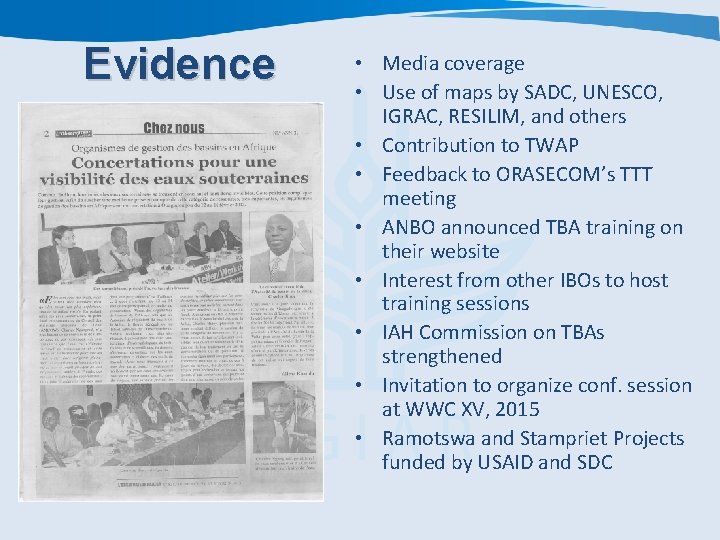
Evidence • Media coverage • Use of maps by SADC, UNESCO, IGRAC, RESILIM, and others • Contribution to TWAP • Feedback to ORASECOM’s TTT meeting • ANBO announced TBA training on their website • Interest from other IBOs to host training sessions • IAH Commission on TBAs strengthened • Invitation to organize conf. session at WWC XV, 2015 • Ramotswa and Stampriet Projects funded by USAID and SDC
Lessons learned, early • That timely effort is critical - TB GW mgt. management is increasingly acknowledged at national and international level as a critical parameter in TB water cooperation • That strong and committed long-term partnership is crucial for the delivery of outputs and impact • That using existing org. platform (AGW-Net/Cap-Net) as setoff is efficient • That CD is a good avenue for diverse partnership building and for acknowledgement and uptake of research outputs • That providing coherent and user-friendly interdisciplinary information material and tools is crucial for uptake • That concurrent research and training activities give credibility as an entry point to initiate detailed research in pilot TBAs • That a TB focus can be used to enhance attention to local and
Lessons learned, now • That SADC as a region is now spearheading TBA work globally • SADC-GMI is taking a lead role in moving the agenda forward • That a community of practice, ensuring common understanding, knowledge and approaches, is being developed for TBA management in Africa – with some regional focus • That SDG focus on TBAs is a vehicle for more attention to groundwater and required multi-level cooperation • That bridging the gap of technical and management aspects is becoming the norm – further guideline/lesson learned to be documented after Stampriet and RAMOTSWA • That new TBAs in SADC are to be tackled in the future, e. g. Shire and Tuli-Karoo • That we should explore a common framework for the cooperative management of TBAs in SADC • We need to address GW quality
Thank you! Contact: k. villholth@cgiar. org