
Needlepoint Bipolar Ionization and How to Apply it

Needlepoint Bipolar Ionization and How to Apply it to ASHRAE 62. 1 Indoor Air Quality Procedure Presented by Charlie Waddell President – Global Plasma Solutions

Commercial Applications OA Reduction • • • Education Hospitality Worship Veterinary Sports Arenas Restaurants Critical Environment • • Patient Waiting Areas Hospital TB Isolation CBR
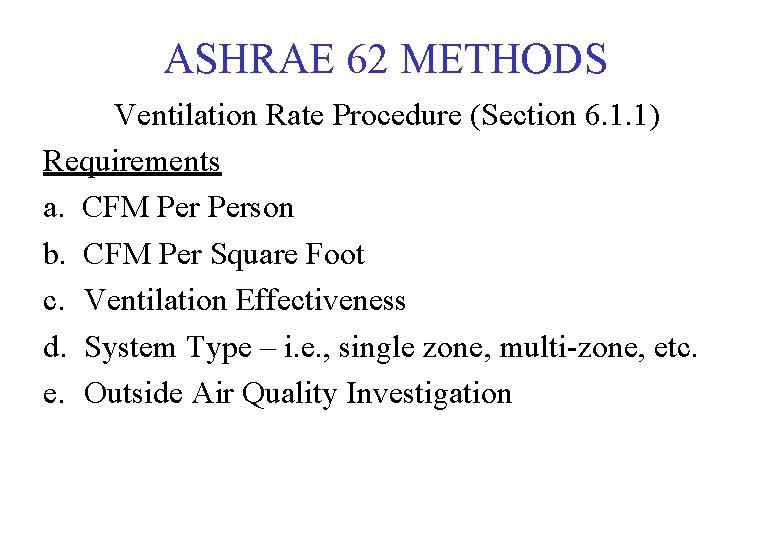
ASHRAE 62 METHODS Ventilation Rate Procedure (Section 6. 1. 1) Requirements a. CFM Person b. CFM Per Square Foot c. Ventilation Effectiveness d. System Type – i. e. , single zone, multi-zone, etc. e. Outside Air Quality Investigation
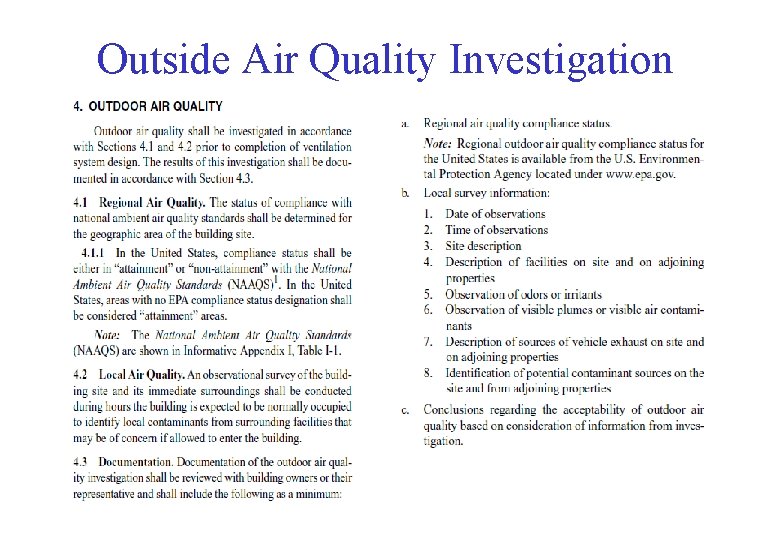
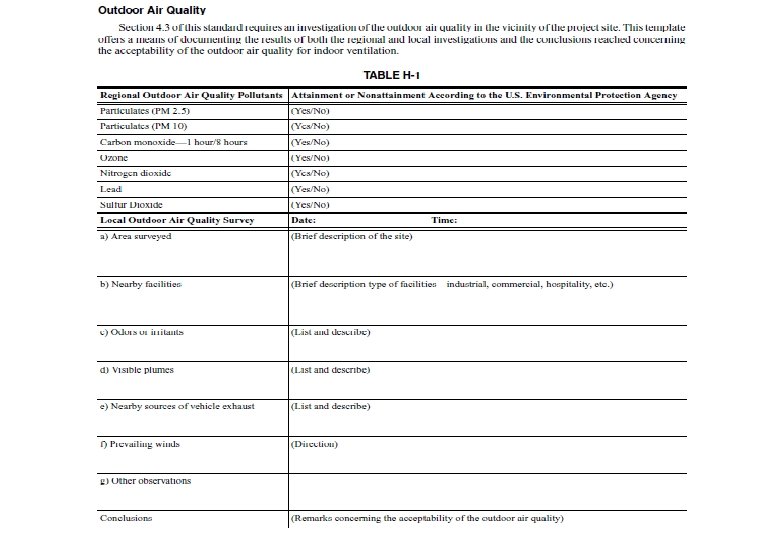
Outside Air Quality Investigation
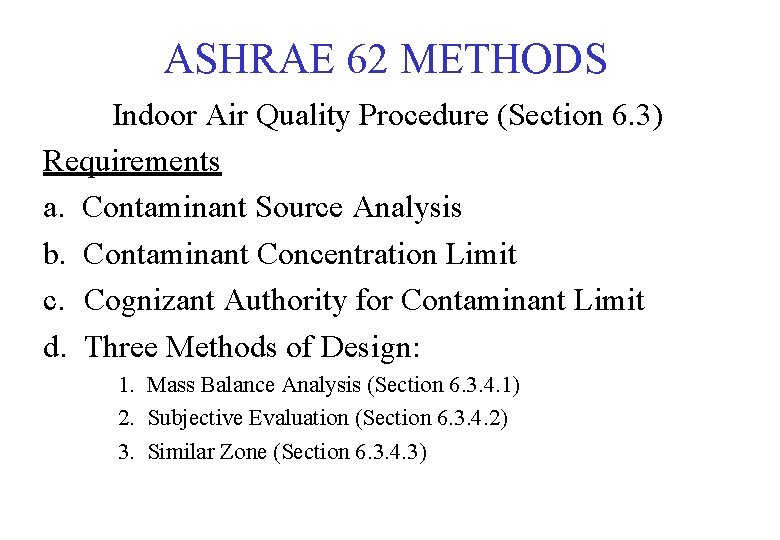
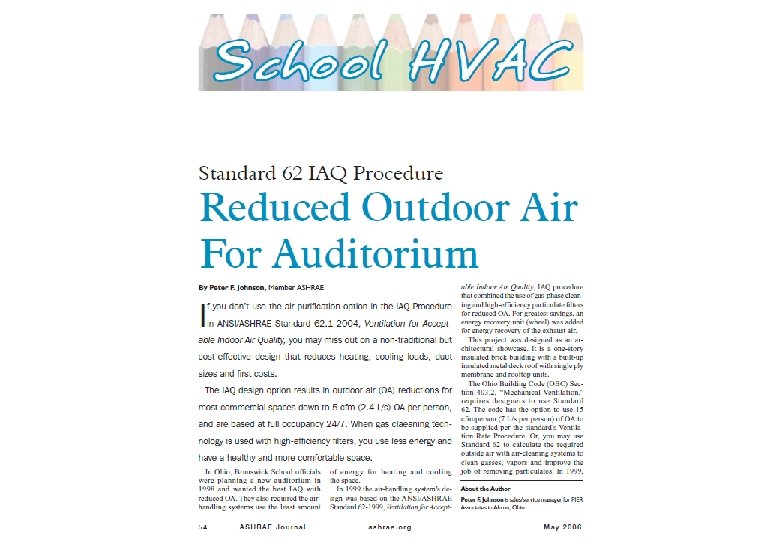
ASHRAE 62 METHODS Indoor Air Quality Procedure (Section 6. 3) Requirements a. Contaminant Source Analysis b. Contaminant Concentration Limit c. Cognizant Authority for Contaminant Limit d. Three Methods of Design: 1. Mass Balance Analysis (Section 6. 3. 4. 1) 2. Subjective Evaluation (Section 6. 3. 4. 2) 3. Similar Zone (Section 6. 3. 4. 3)

USA Today Website

OA Does Not Control IAQ Alone Source: National Institute of Standards & Technology
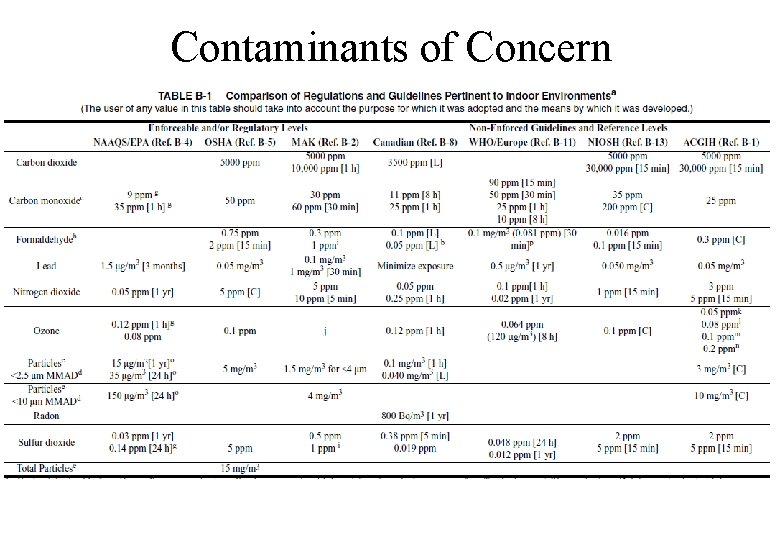
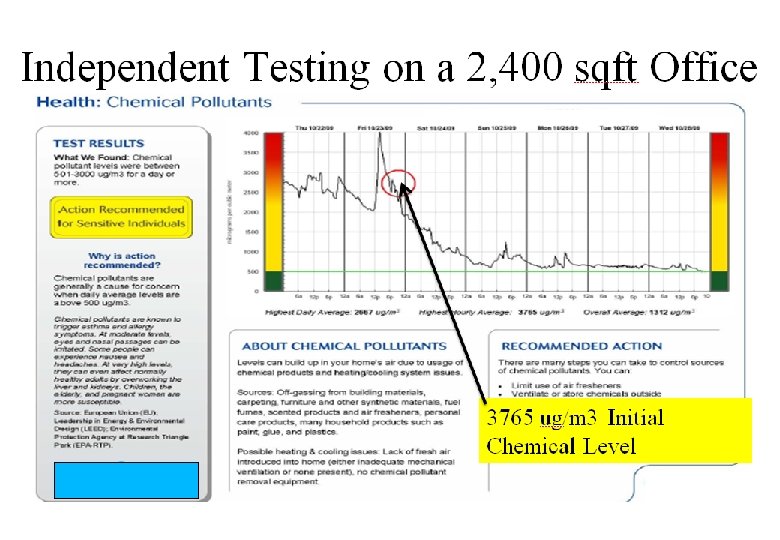
Contaminants of Concern
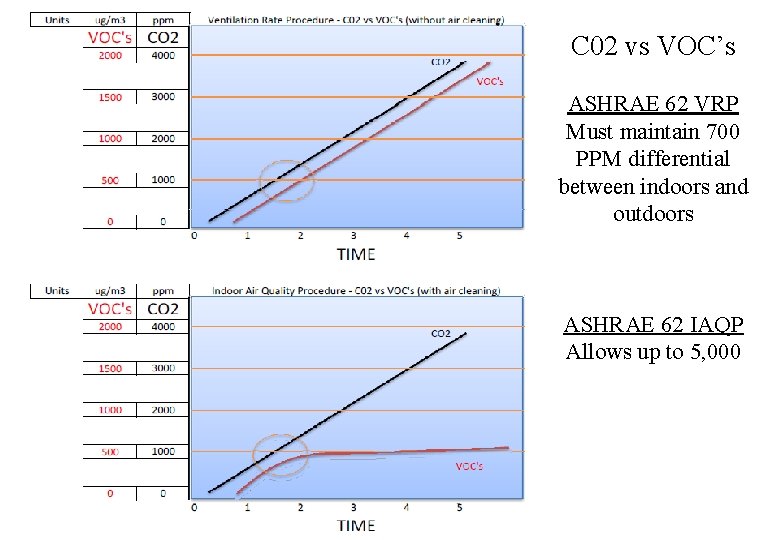
C 02 vs VOC’s ASHRAE 62 VRP Must maintain 700 PPM differential between indoors and outdoors ASHRAE 62 IAQP Allows up to 5, 000 PPM
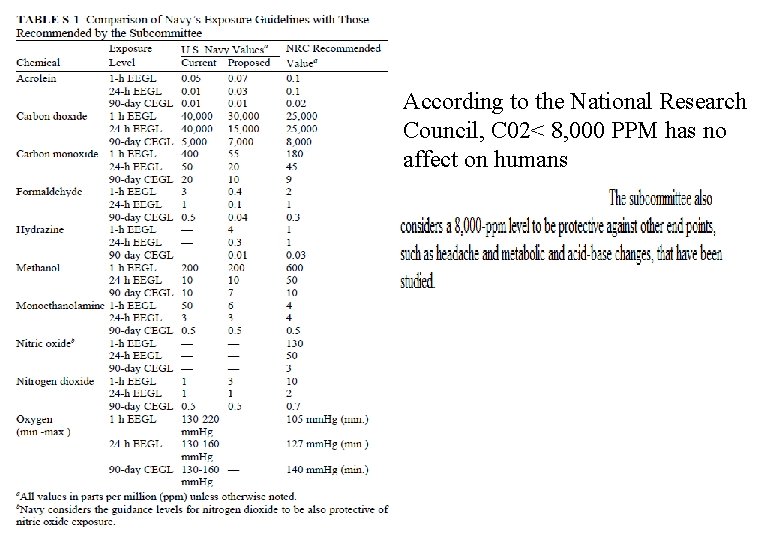
According to the National Research Council, C 02< 8, 000 PPM has no affect on humans

Table D-1
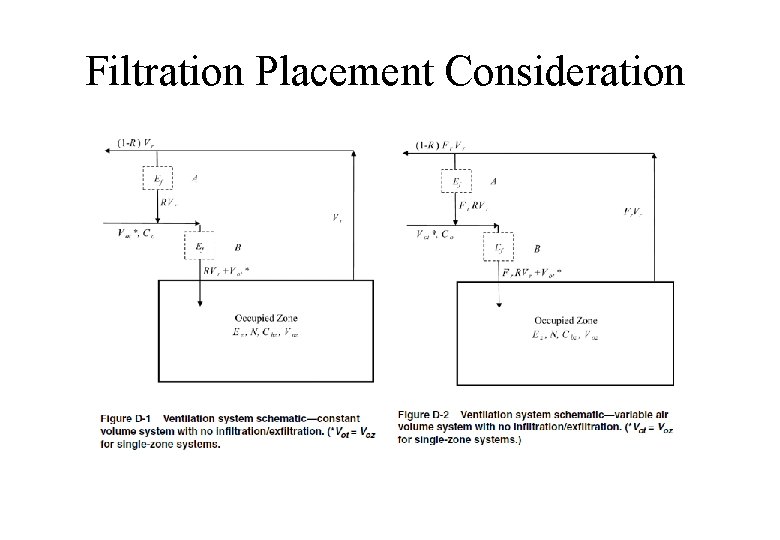
Filtration Placement Consideration

TECHNOLGY MUST BE UTILIZED TO CONTROL GAS PHASE CONTAMINANTS PASSIVE • CARBON / ACTIVATED CARBON / KMN 04 ACTIVE • NEEDLEPOINT BI-POLAR IONIZATION (Cold Plasma)
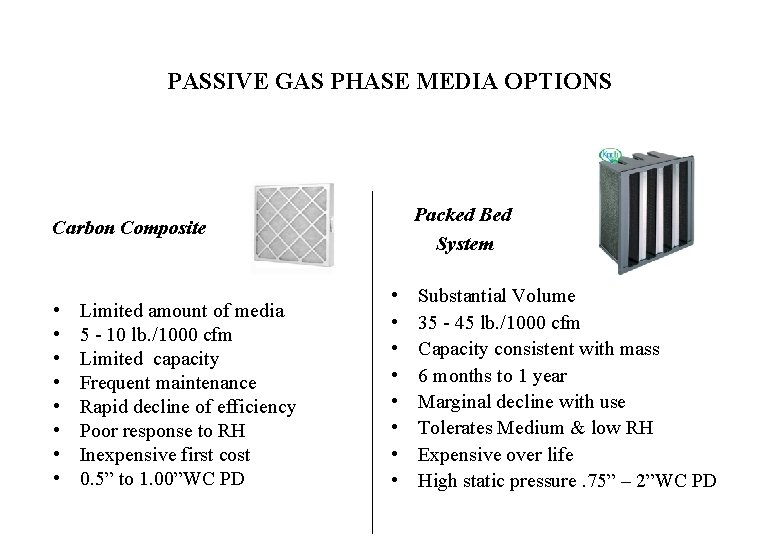
Application of Air Ionization PASSIVE GAS PHASE MEDIA OPTIONS Packed Bed System Carbon Composite Filter Media • • Limited amount of media 5 - 10 lb. /1000 cfm Limited capacity Frequent maintenance Rapid decline of efficiency Poor response to RH Inexpensive first cost 0. 5” to 1. 00”WC PD • • Substantial Volume 35 - 45 lb. /1000 cfm Capacity consistent with mass 6 months to 1 year Marginal decline with use Tolerates Medium & low RH Expensive over life High static pressure. 75” – 2”WC PD

TECHNOLGY THAT WILL NOT CONTROL GAS CONTAMINANTS UV Lights (Unless a catalyst such as Ti 02 is used with UV) Particle Filters, Including HEPA Filters Powered Particle Filters Electrostatic Precipitators
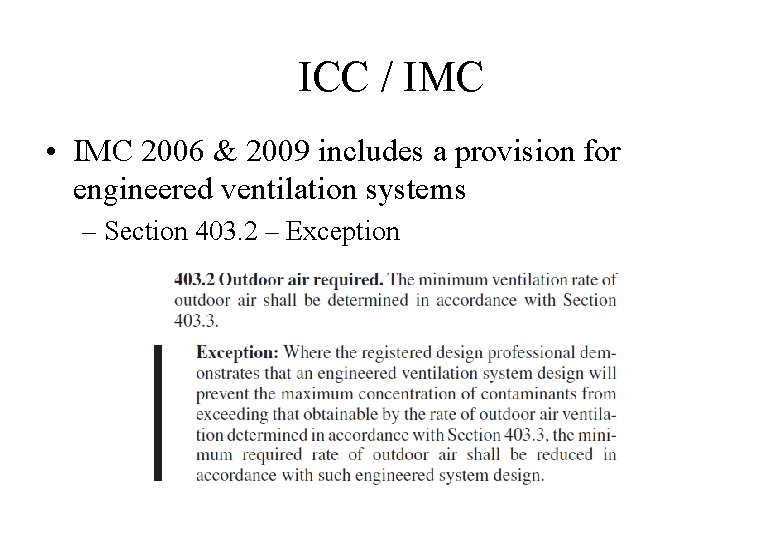
ICC / IMC • IMC 2006 & 2009 includes a provision for engineered ventilation systems – Section 403. 2 – Exception
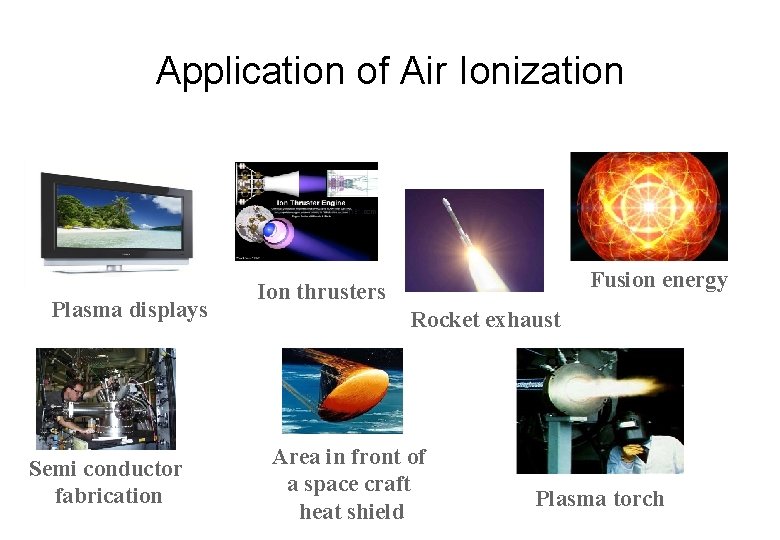
Application of Air Ionization Some artificially produced plasma's Plasma displays Semi conductor fabrication Fusion energy Ion thrusters Rocket exhaust Area in front of a space craft heat shield Plasma torch
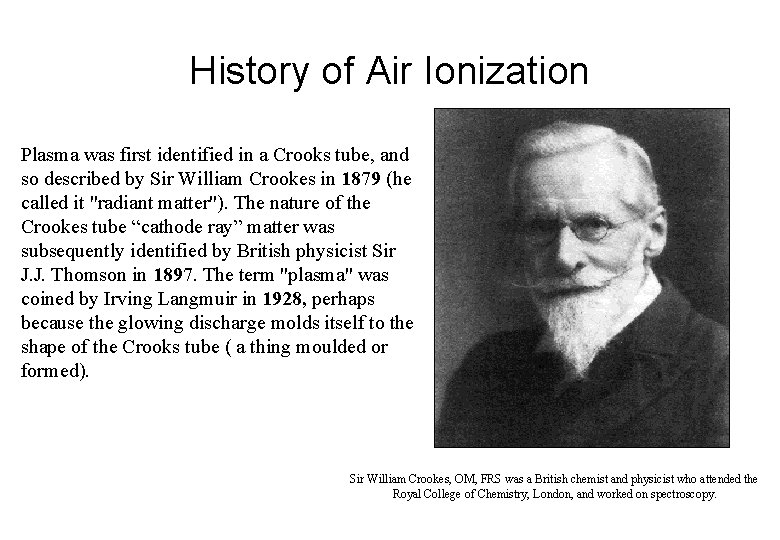
History of Air Ionization Plasma was first identified in a Crooks tube, and so described by Sir William Crookes in 1879 (he called it "radiant matter"). The nature of the Crookes tube “cathode ray” matter was subsequently identified by British physicist Sir J. J. Thomson in 1897. The term "plasma" was coined by Irving Langmuir in 1928, perhaps because the glowing discharge molds itself to the shape of the Crooks tube ( a thing moulded or formed). Sir William Crookes, OM, FRS was a British chemist and physicist who attended the Royal College of Chemistry, London, and worked on spectroscopy.
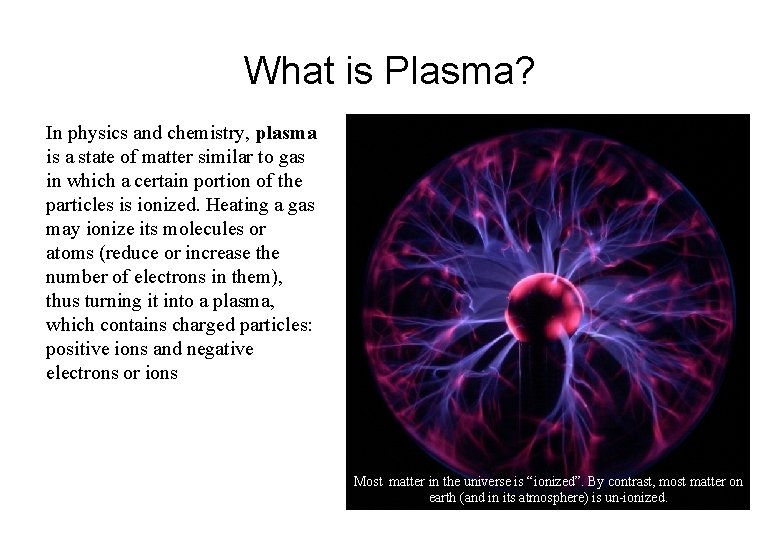
What is Plasma? In physics and chemistry, plasma is a state of matter similar to gas in which a certain portion of the particles is ionized. Heating a gas may ionize its molecules or atoms (reduce or increase the number of electrons in them), thus turning it into a plasma, which contains charged particles: positive ions and negative electrons or ions. Most matter in the universe is “ionized”. By contrast, most matter on earth (and in its atmosphere) is un-ionized.
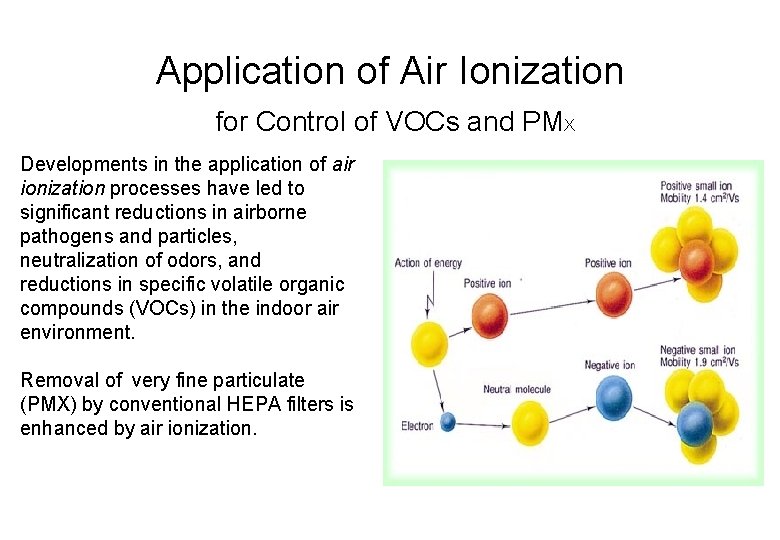
Application of Air Ionization for Control of VOCs and PMX Developments in the application of air ionization processes have led to significant reductions in airborne pathogens and particles, neutralization of odors, and reductions in specific volatile organic compounds (VOCs) in the indoor air environment. Removal of very fine particulate (PMX) by conventional HEPA filters is enhanced by air ionization. The process of air ionization involves the electronically induced formation of small air ions (plasma) which react rapidly with airborne VOC and PMX species.
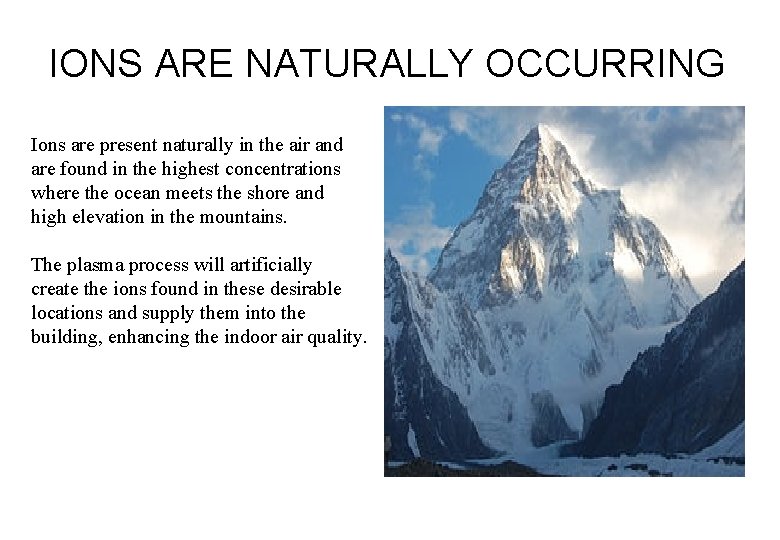
IONS ARE NATURALLY OCCURRING Ions are present naturally in the air and are found in the highest concentrations where the ocean meets the shore and high elevation in the mountains. The plasma process will artificially create the ions found in these desirable locations and supply them into the building, enhancing the indoor air quality.
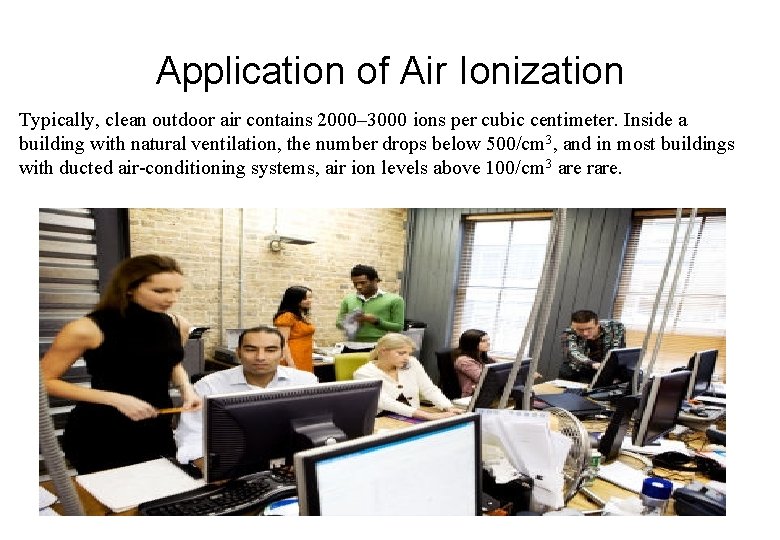
Application of Air Ionization Typically, clean outdoor air contains 2000– 3000 ions per cubic centimeter. Inside a building with natural ventilation, the number drops below 500/cm 3, and in most buildings with ducted air-conditioning systems, air ion levels above 100/cm 3 are rare.
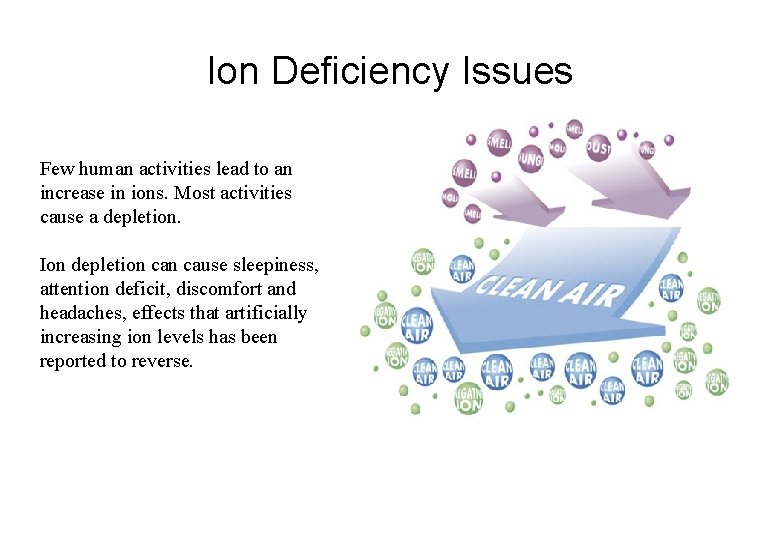
Ion Deficiency Issues Few human activities lead to an increase in ions. Most activities cause a depletion. Ion depletion cause sleepiness, attention deficit, discomfort and headaches, effects that artificially increasing ion levels has been reported to reverse. No research has reported any adverse effects on people from even high concentrations of balanced or monopolar ionization
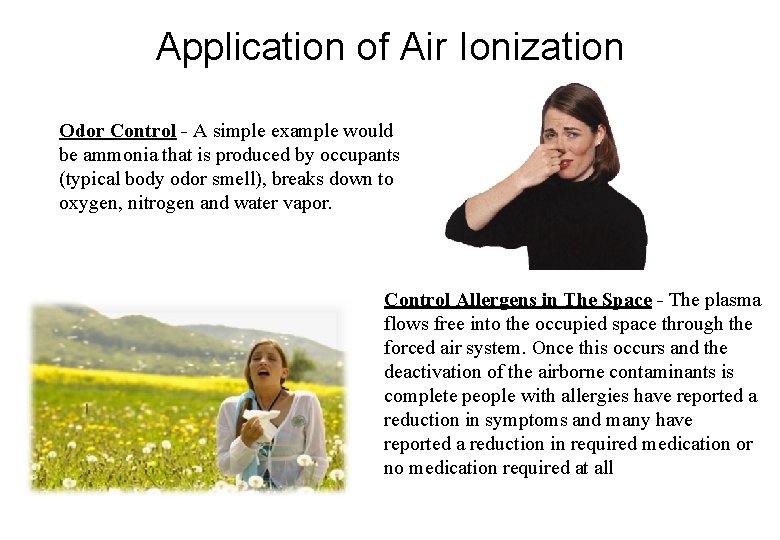
Application of Air Ionization Odor Control - A simple example would be ammonia that is produced by occupants (typical body odor smell), breaks down to oxygen, nitrogen and water vapor. Control Allergens in The Space - The plasma flows free into the occupied space through the forced air system. Once this occurs and the deactivation of the airborne contaminants is complete people with allergies have reported a reduction in symptoms and many have reported a reduction in required medication or no medication required at all
Application of Air Ionization What Are VOCs? Volatile: Vapor at Room Temperature Organic: Contains Hydrogen & Carbon • Natural & Man-Made • We Come in Contact w/100’s Each Day • Human & Non-Human Sources
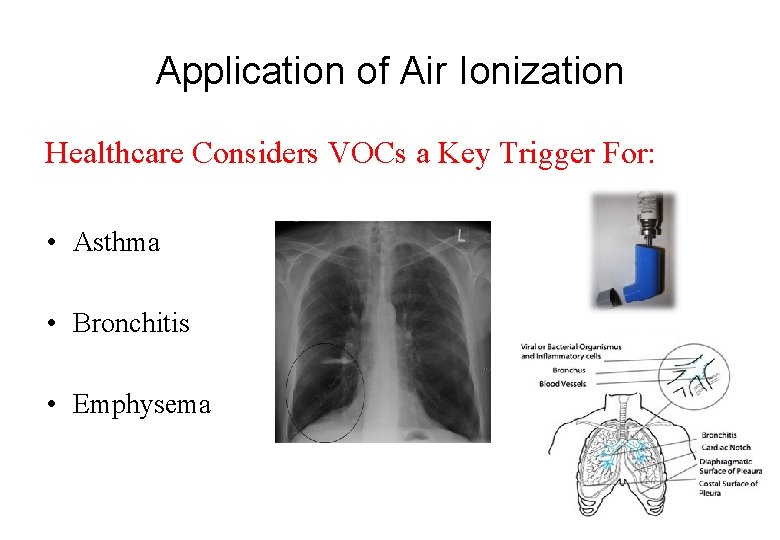
Application of Air Ionization Healthcare Considers VOCs a Key Trigger For: • Asthma • Bronchitis • Emphysema
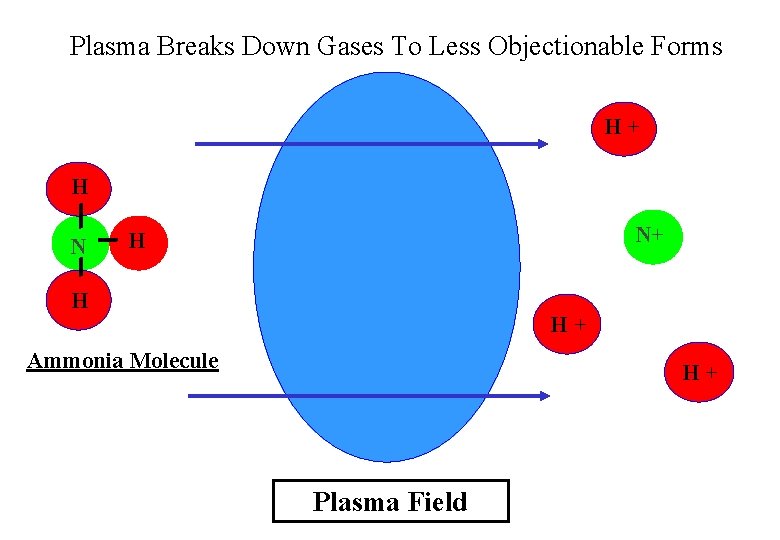
Plasma Breaks Down Gases To Less Objectionable Forms H+ H N N+ H H H+ Ammonia Molecule H+ Plasma Field
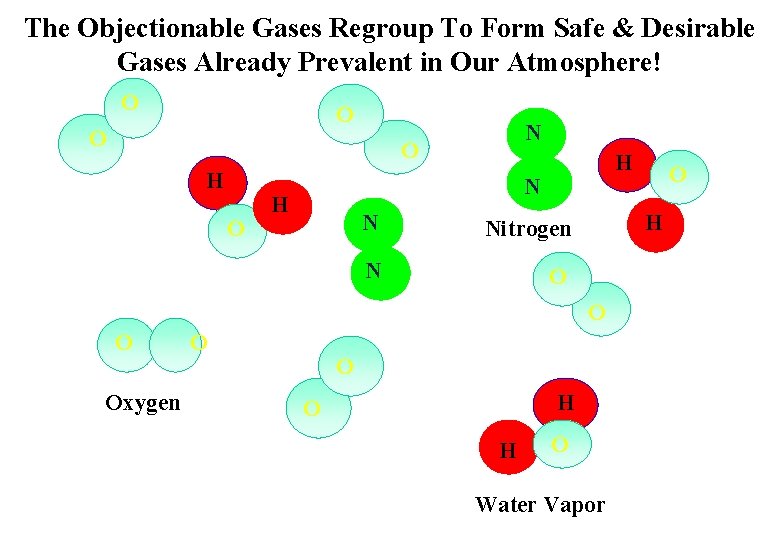
The Objectionable Gases Regroup To Form Safe & Desirable Gases Already Prevalent in Our Atmosphere! O O O N O H N H N Nitrogen N O H O O Oxygen O O H O O Water Vapor
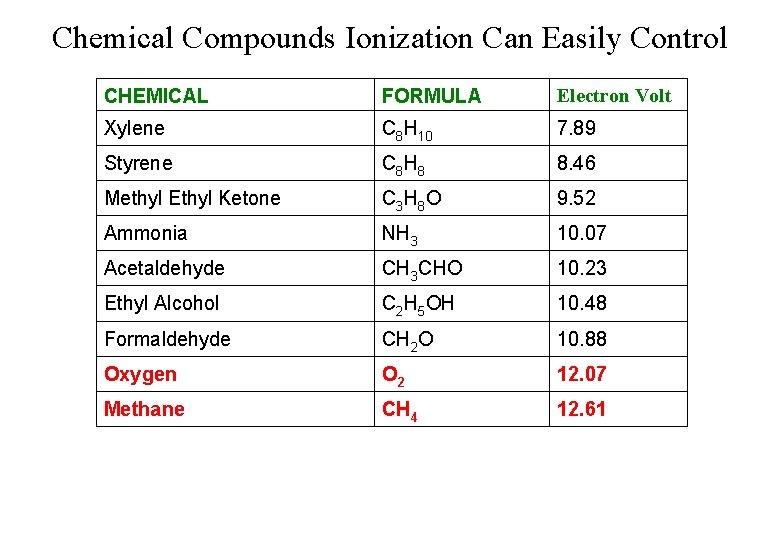
Chemical Compounds Ionization Can Easily Control CHEMICAL FORMULA Electron Volt Xylene C 8 H 10 7. 89 Styrene C 8 H 8 8. 46 Methyl Ethyl Ketone C 3 H 8 O 9. 52 Ammonia NH 3 10. 07 Acetaldehyde CH 3 CHO 10. 23 Ethyl Alcohol C 2 H 5 OH 10. 48 Formaldehyde CH 2 O 10. 88 Oxygen O 2 12. 07 Methane CH 4 12. 61
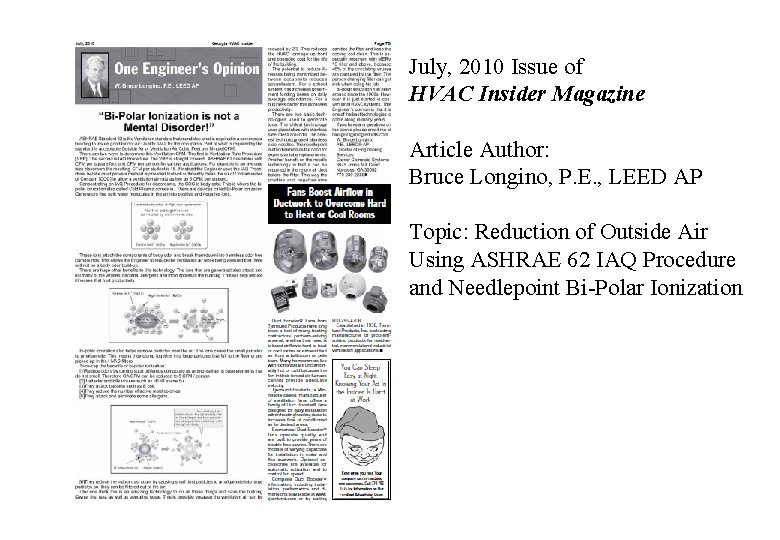
July, 2010 Issue of HVAC Insider Magazine Article Author: Bruce Longino, P. E. , LEED AP Topic: Reduction of Outside Air Using ASHRAE 62 IAQ Procedure and Needlepoint Bi-Polar Ionization
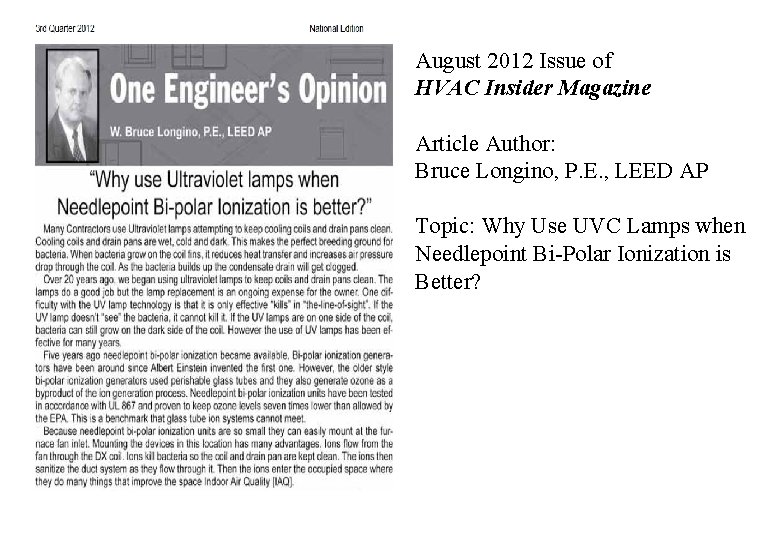
August 2012 Issue of HVAC Insider Magazine Article Author: Bruce Longino, P. E. , LEED AP Topic: Why Use UVC Lamps when Needlepoint Bi-Polar Ionization is Better?
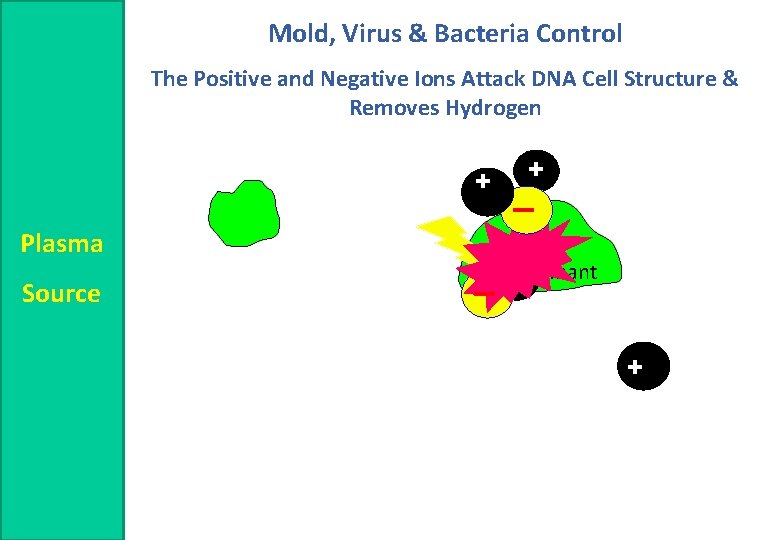
Mold, Virus & Bacteria Control The Positive and Negative Ions Attack DNA Cell Structure & Removes Hydrogen + + Plasma Source Contaminant + +
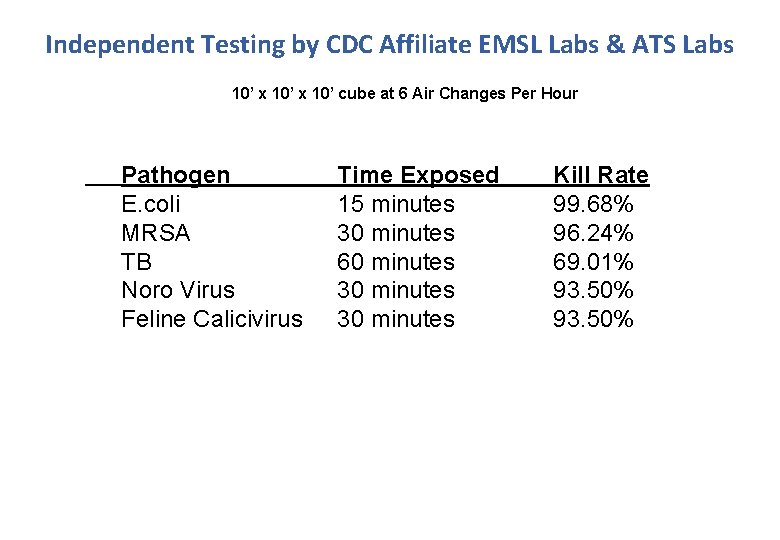
Independent Testing by CDC Affiliate EMSL Labs & ATS Labs 10’ x 10’ cube at 6 Air Changes Per Hour Pathogen E. coli MRSA TB Noro Virus Feline Calicivirus Time Exposed 15 minutes 30 minutes 60 minutes 30 minutes Kill Rate 99. 68% 96. 24% 69. 01% 93. 50%
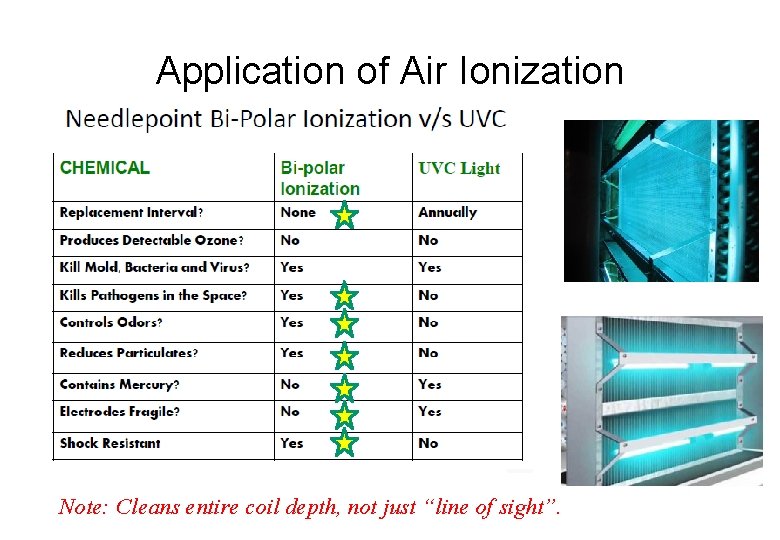
Application of Air Ionization Note: Cleans entire coil depth, not just “line of sight”.
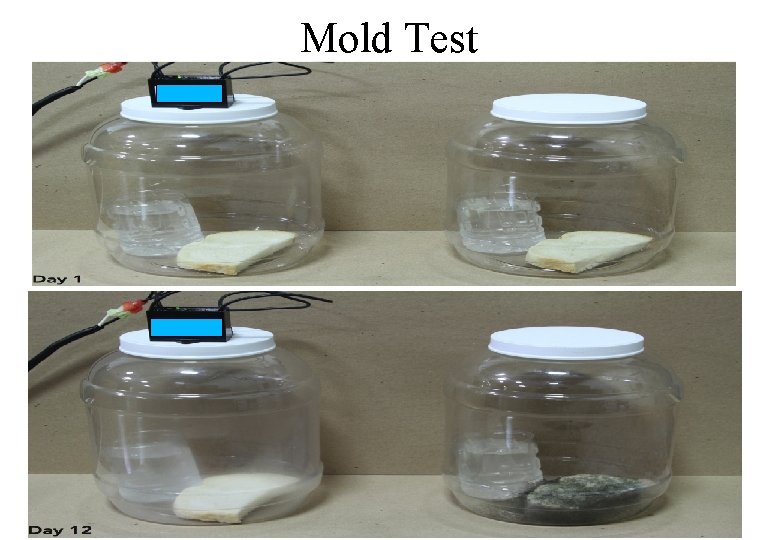
Mold Test
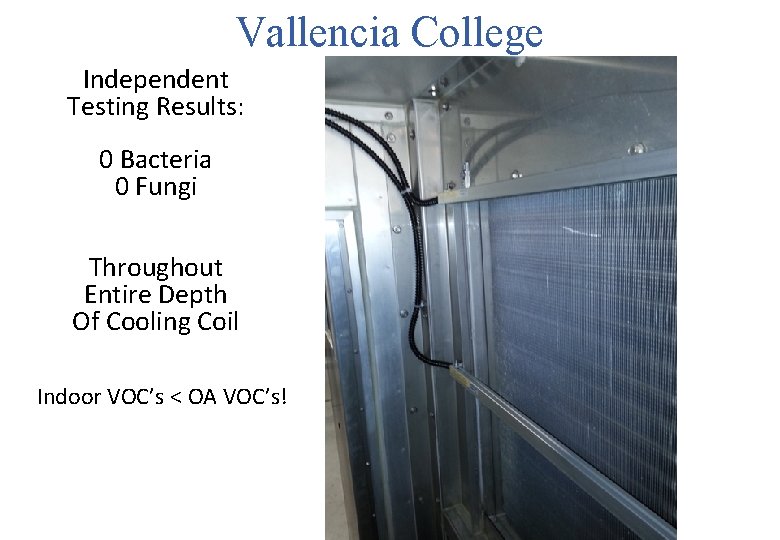
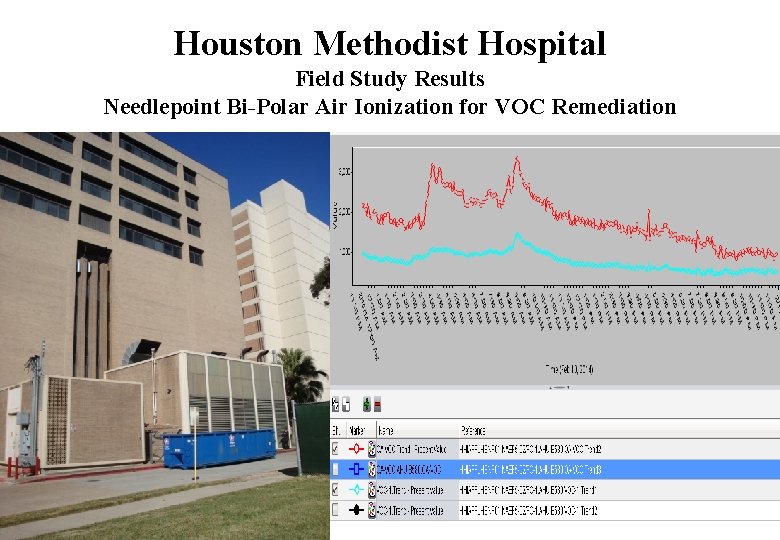
Vallencia College Independent Testing Results: 0 Bacteria 0 Fungi Throughout Entire Depth Of Cooling Coil Indoor VOC’s < OA VOC’s! GPS-IBAR
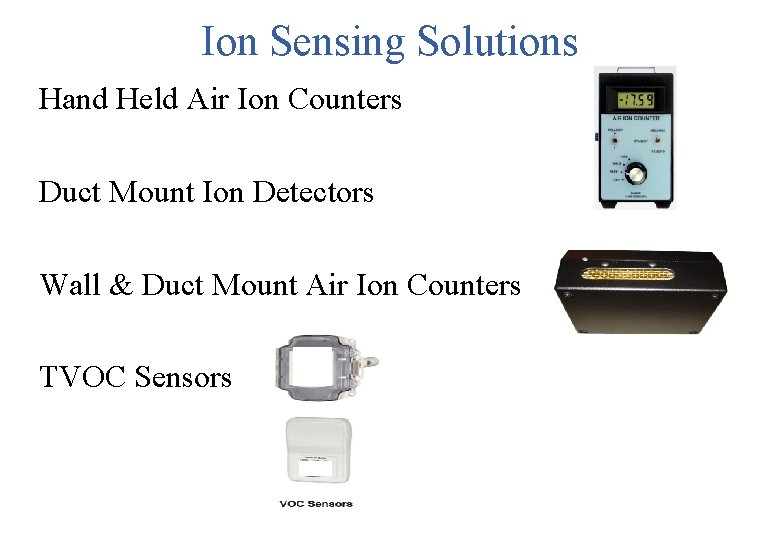
Ion Sensing Solutions Hand Held Air Ion Counters Duct Mount Ion Detectors Wall & Duct Mount Air Ion Counters TVOC Sensors
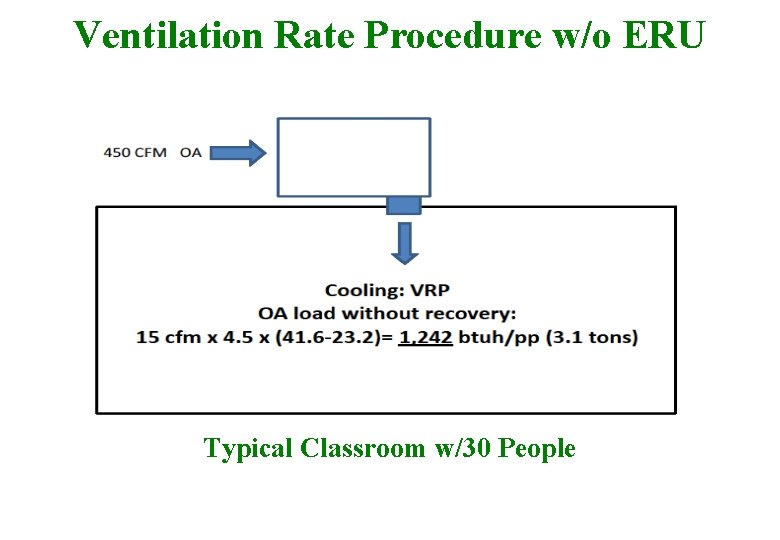
Ventilation Rate Procedure w/o ERU Typical Classroom w/30 People
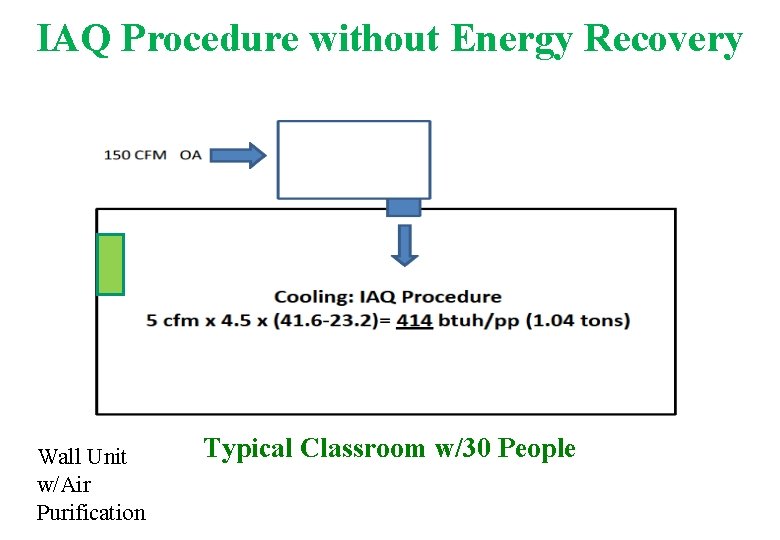
IAQ Procedure without Energy Recovery Wall Unit w/Air Purification Typical Classroom w/30 People
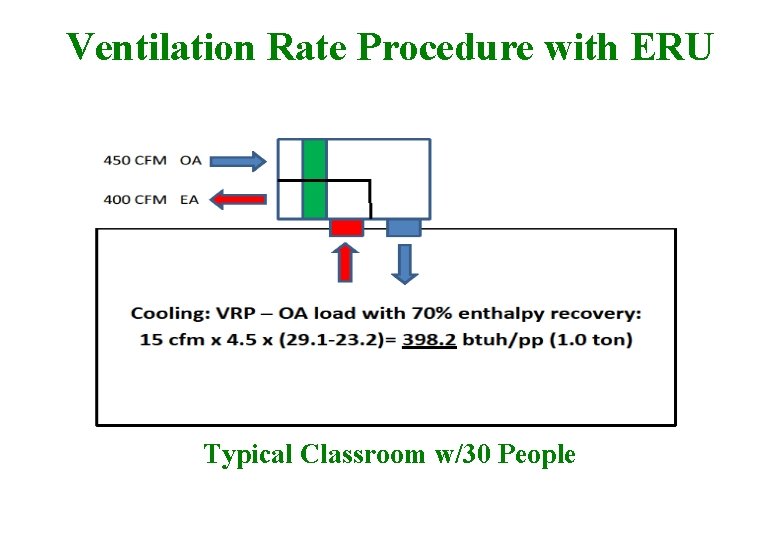
Ventilation Rate Procedure with ERU Typical Classroom w/30 People
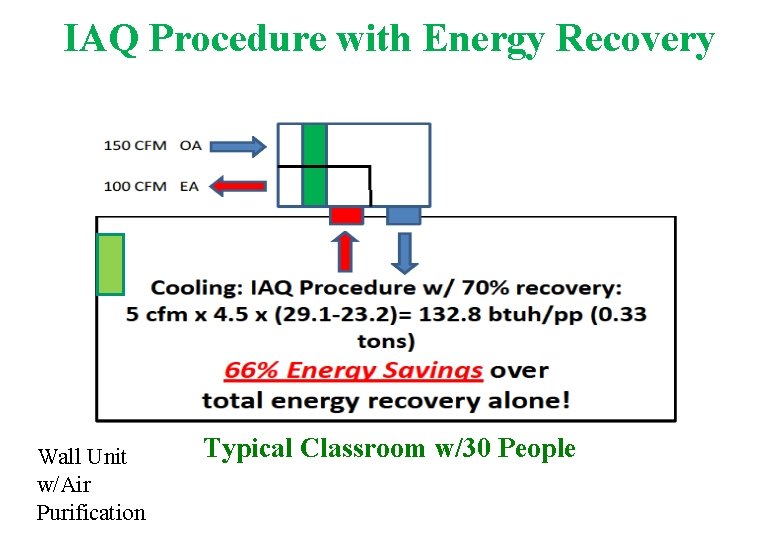
IAQ Procedure with Energy Recovery Wall Unit w/Air Purification Typical Classroom w/30 People
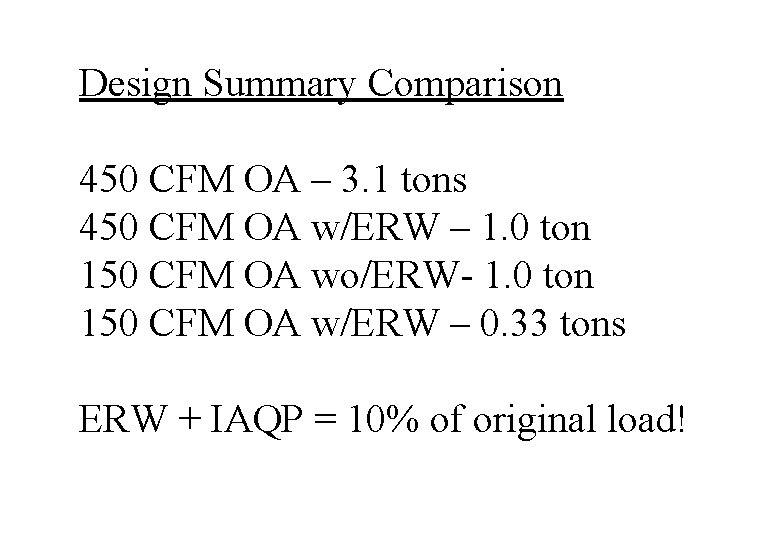
Design Summary Comparison 450 CFM OA – 3. 1 tons 450 CFM OA w/ERW – 1. 0 ton 150 CFM OA wo/ERW- 1. 0 ton 150 CFM OA w/ERW – 0. 33 tons ERW + IAQP = 10% of original load!
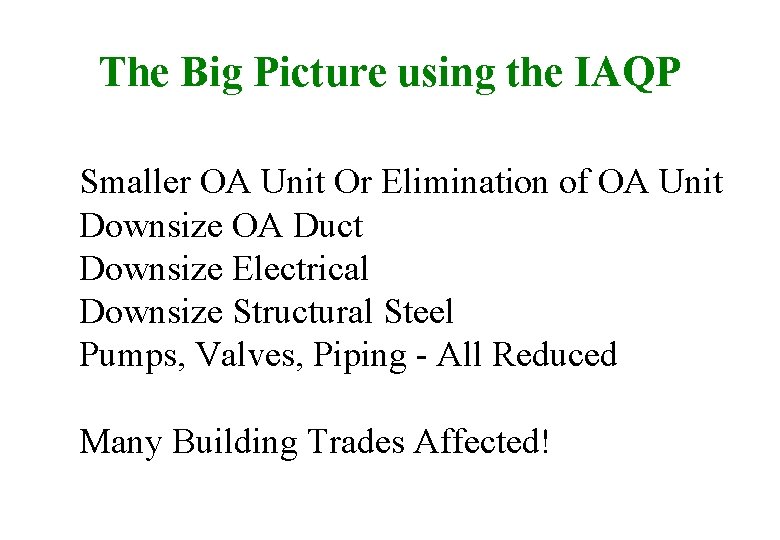
The Big Picture using the IAQP Smaller OA Unit Or Elimination of OA Unit Downsize OA Duct Downsize Electrical Downsize Structural Steel Pumps, Valves, Piping - All Reduced Many Building Trades Affected!
The Big Picture with IAQP • Typical First Cost Savings = $300 k to $400 k or $2. 50/ft²* • Typical Annual Energy Savings = $48, 000 or $0. 40/ft²** *First cost savings analysis provided by Spurlock Consulting, ATL, GA **Energy savings provided by Gwinnett County Schools


Houston Methodist Hospital Field Study Results Needlepoint Bi-Polar Air Ionization for VOC Remediation
TAMPA BAY ARENA CASE STUDY Year Built: Year Renovated: Size: Occupancy: OA Reduction: Capacity Saved: Equipment: Renovation $ Saved: Annual Energy $: C 02 Reduction: Environment Impact: Engineer: Contractor: 1996 2011 670, 000 square feet 21, 500 Occupants 94, 274 CFM 700 Tons 12 – 40, 000 AHU’s with Needlepoint Equip. > $1 million >$115, 000 > 1. 25 millions pounds C 02 annually Equivalent to planting > 3, 000 trees Smith Seckman & Reid (SSR Nashville) Tappouni Mechanical, Tampa, FL
NON HVAC APPLICATIONS AS WELL
Building Rating Programs • LEED – Leadership in Energy & Environmental Design • Alternate compliance path now allowed for IAQP Energy Star & Green Globes accept the IAQ Procedure
Wrap Up • ASHRAE 62 IAQ Procedure is a Great Way to Save First Cost, Operating Costs & Energy • IAQ Procedure May Be Used With The VRP to Control Contaminants • Acceptable IAQ & Much Tighter Humidity Control

Questions?
- Slides: 57