
NEED FOR SAFETY Unit D Use explanatory models
- Slides: 28
NEED FOR SAFETY Unit D: Use explanatory models from their own learning in science or personal experience to distinguish between scientific and personal opinion and to analyze the need for safety systems and regulations
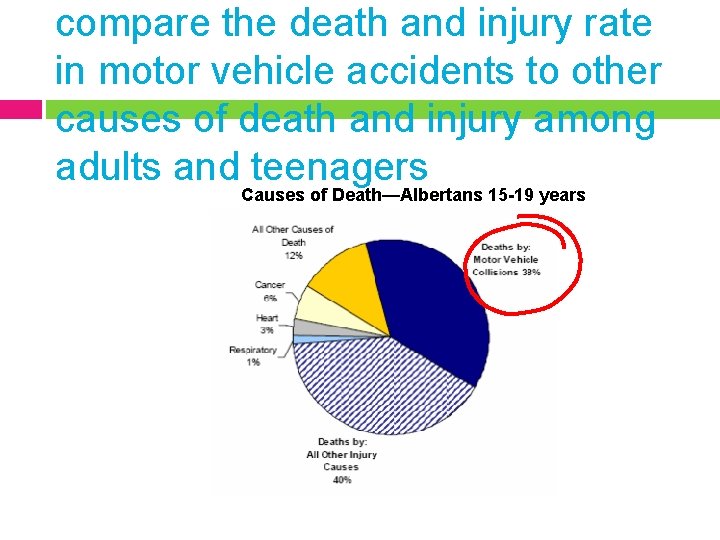
Where we are going… list the factors influencing the ability to make sudden stops assess the need for staying a safe distance behind another automobile when travelling at highway speeds discuss the consequences of a shorter or longer reaction time list traffic safety factors list and describe ways that passengers can protect themselves from injury in accidents identify and analyze the dangers faced by people in a motor vehicle accident compare the death and injury rate in motor vehicle accidents to other causes of death and injury among adults and teenagers
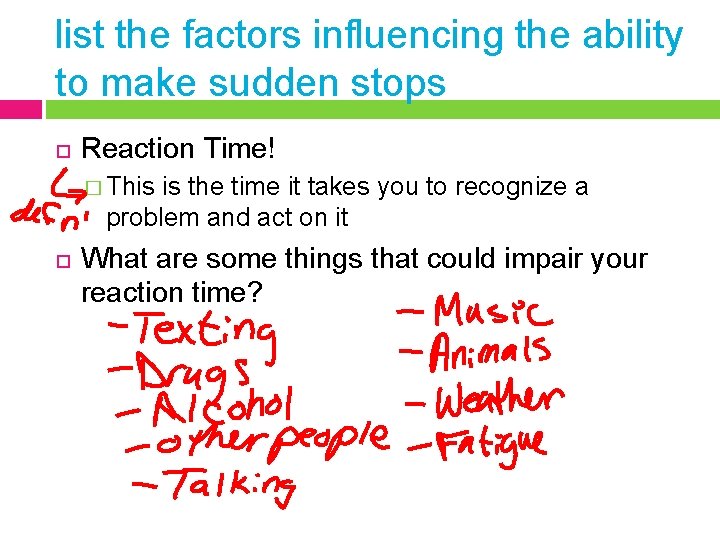
list the factors influencing the ability to make sudden stops Reaction Time! � This is the time it takes you to recognize a problem and act on it What are some things that could impair your reaction time?
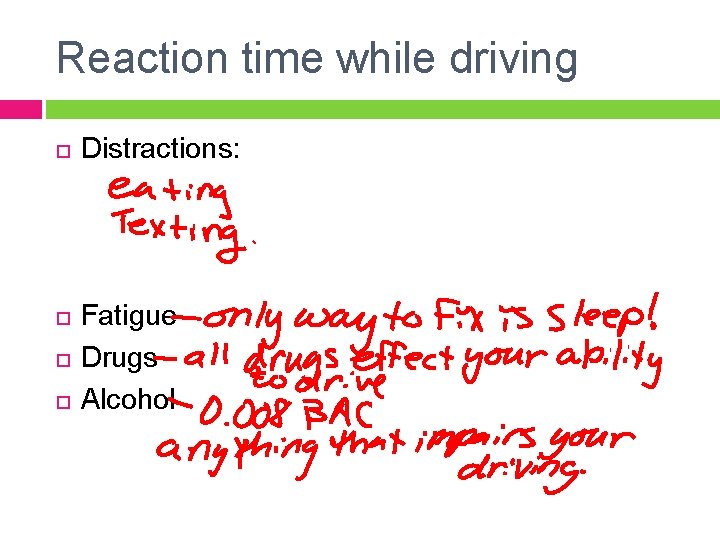
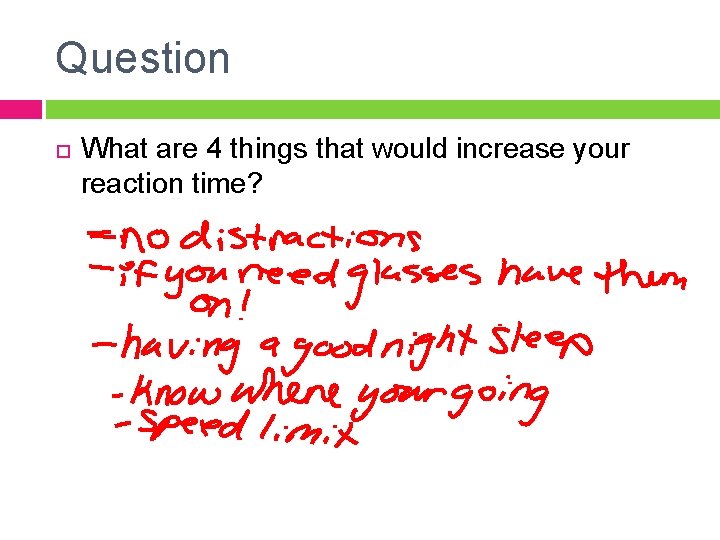
Reaction time while driving Distractions: Fatigue Drugs Alcohol
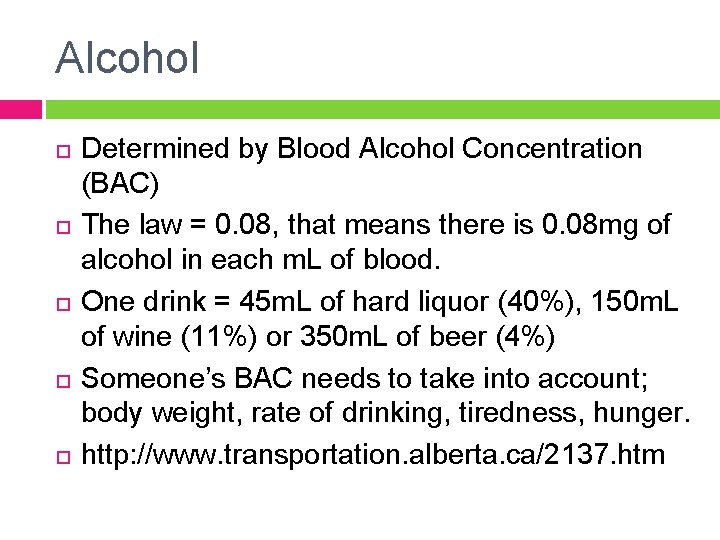
Alcohol Determined by Blood Alcohol Concentration (BAC) The law = 0. 08, that means there is 0. 08 mg of alcohol in each m. L of blood. One drink = 45 m. L of hard liquor (40%), 150 m. L of wine (11%) or 350 m. L of beer (4%) Someone’s BAC needs to take into account; body weight, rate of drinking, tiredness, hunger. http: //www. transportation. alberta. ca/2137. htm
BAC till I can drive next? Pg. 242 How soon can a drinker drive?
assess the need for staying a safe distance behind another automobile when travelling at highway speeds What is a safe distance?
Safe distance You are traveling 10 m behind another car. Your both travelling at 100 km/h. The person in front of you slams on their breaks to avoid hitting a deer, they stop within 15 m. How long do you have to respond? Do you think that you would hit the other car?
Safe distance You are traveling 10 m behind another car. Your both travelling at 80 km/h. The person in front of you slams on their breaks to avoid hitting a deer, they stop within 15 m. How long do you have to respond? Do you think that you would hit the other car?
Safe distance You are traveling 10 m behind another car. Your both travelling at 60 km/h. The person in front of you slams on their breaks to avoid hitting a deer, they stop within 15 m. How long do you have to respond? Do you think that you would hit the other car? What if you were impaired? Or distracted?
discuss the consequences of a shorter or longer reaction time Discussion:
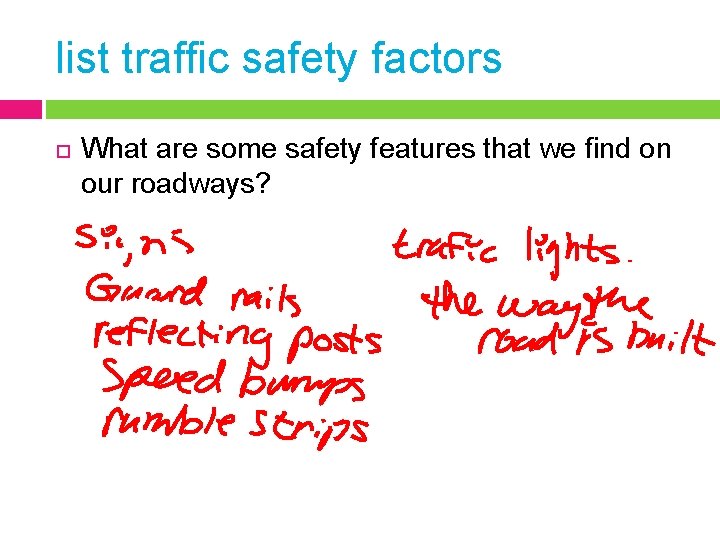
list traffic safety factors What are some safety features that we find on our roadways?
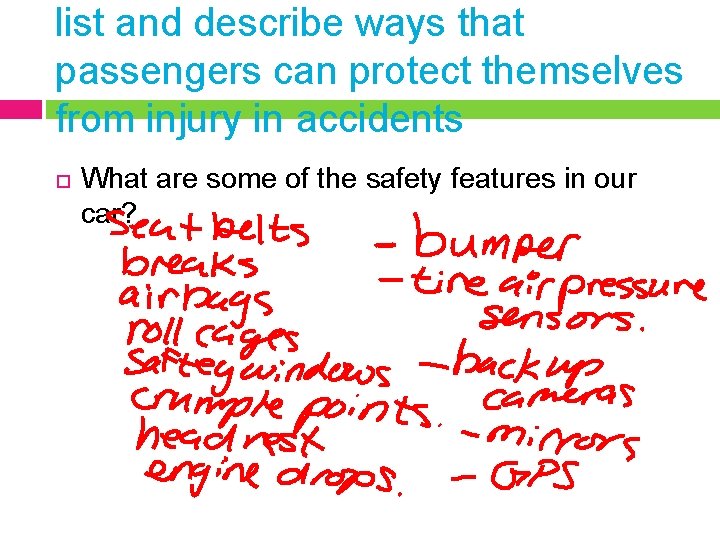
list and describe ways that passengers can protect themselves from injury in accidents What are some of the safety features in our car?
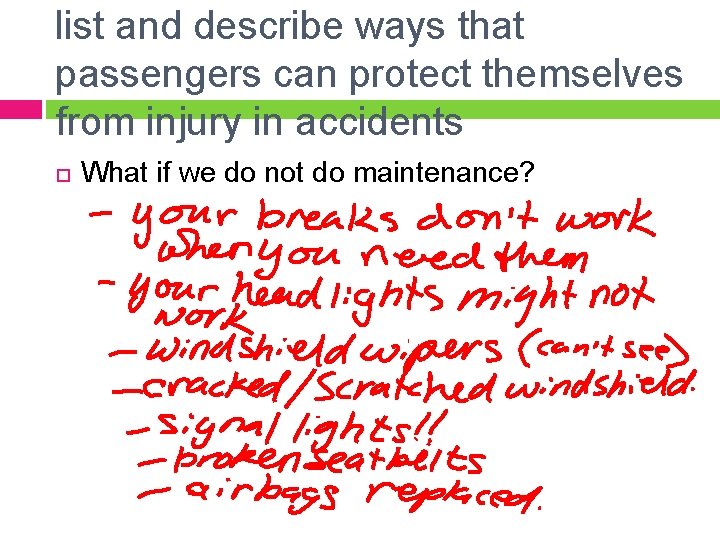
list and describe ways that passengers can protect themselves from injury in accidents What if we do not do maintenance?
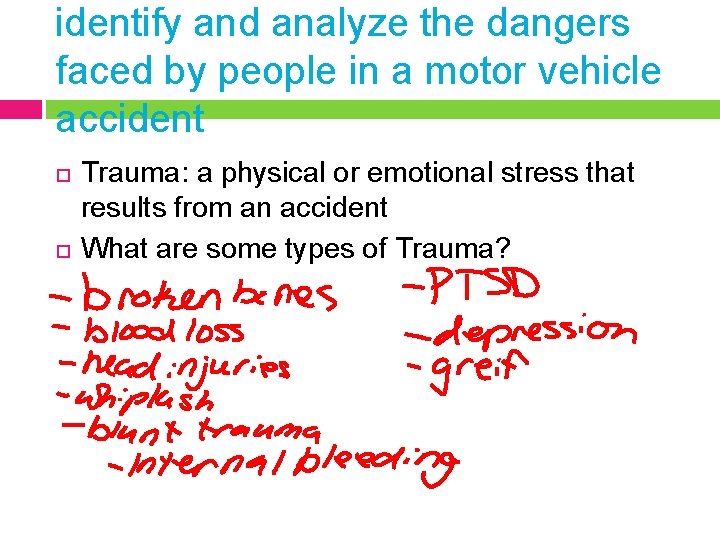
identify and analyze the dangers faced by people in a motor vehicle accident Trauma: a physical or emotional stress that results from an accident What are some types of Trauma?
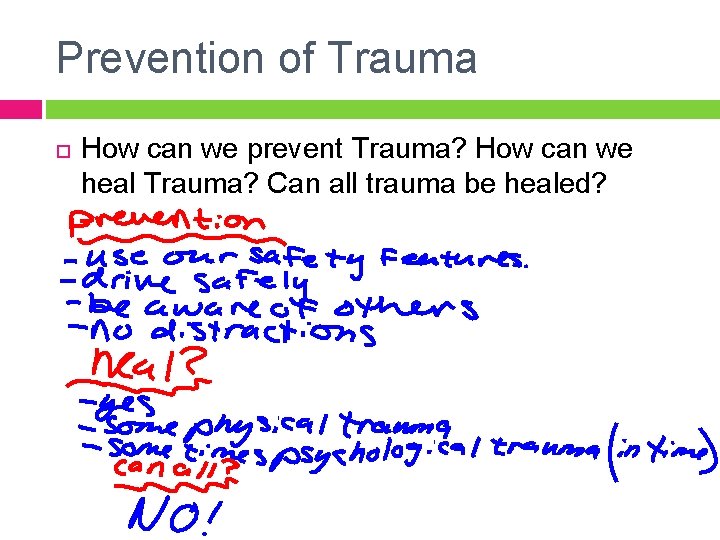
Prevention of Trauma How can we prevent Trauma? How can we heal Trauma? Can all trauma be healed?
compare the death and injury rate in motor vehicle accidents to other causes of death and injury among adults and teenagers Causes of Death—Albertans 15 -19 years
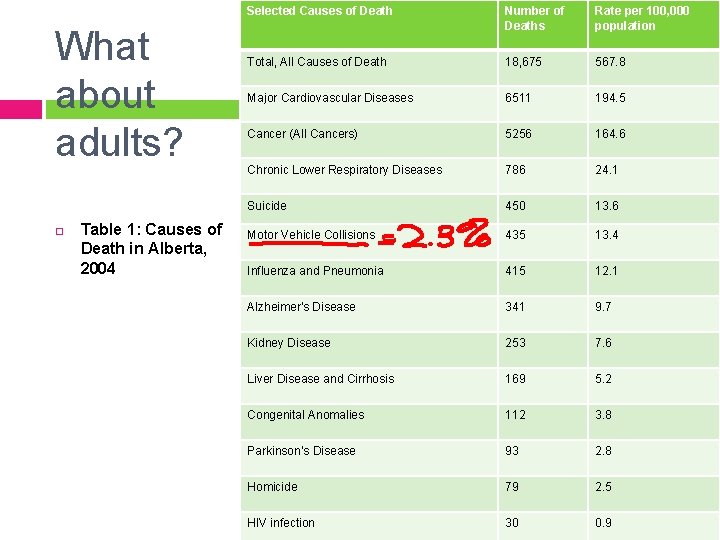
What about adults? Table 1: Causes of Death in Alberta, 2004 Selected Causes of Death Number of Deaths Rate per 100, 000 population Total, All Causes of Death 18, 675 567. 8 Major Cardiovascular Diseases 6511 194. 5 Cancer (All Cancers) 5256 164. 6 Chronic Lower Respiratory Diseases 786 24. 1 Suicide 450 13. 6 Motor Vehicle Collisions 435 13. 4 Influenza and Pneumonia 415 12. 1 Alzheimer’s Disease 341 9. 7 Kidney Disease 253 7. 6 Liver Disease and Cirrhosis 169 5. 2 Congenital Anomalies 112 3. 8 Parkinson’s Disease 93 2. 8 Homicide 79 2. 5 HIV infection 30 0. 9
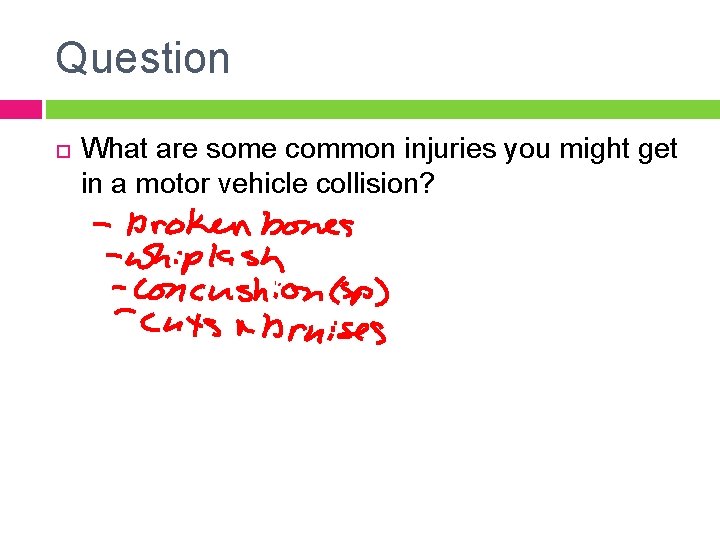
Question What are some common injuries you might get in a motor vehicle collision?
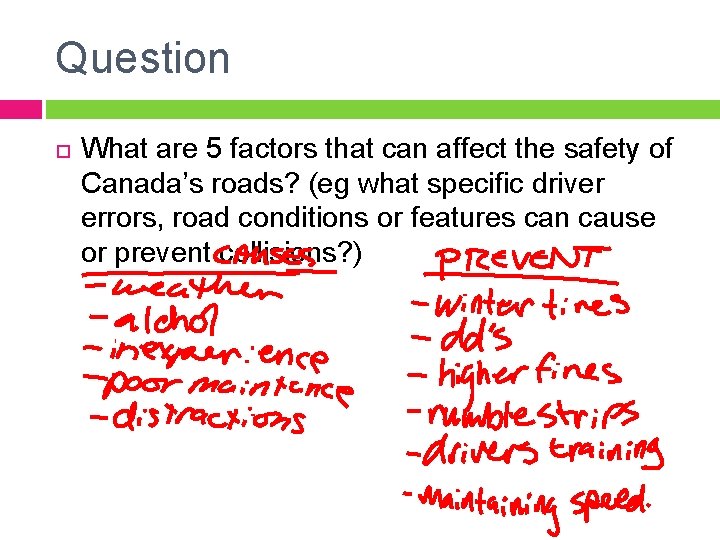
Question What are 5 factors that can affect the safety of Canada’s roads? (eg what specific driver errors, road conditions or features can cause or prevent collisions? )
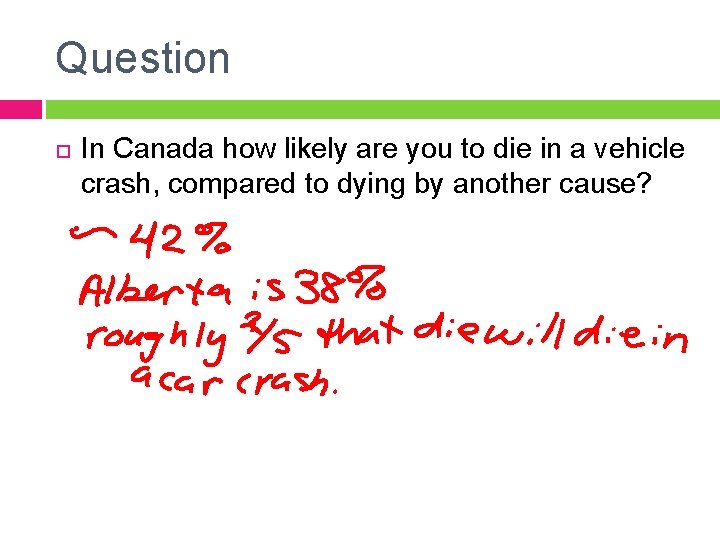
Question In Canada how likely are you to die in a vehicle crash, compared to dying by another cause?
Question What are 4 things that would increase your reaction time?
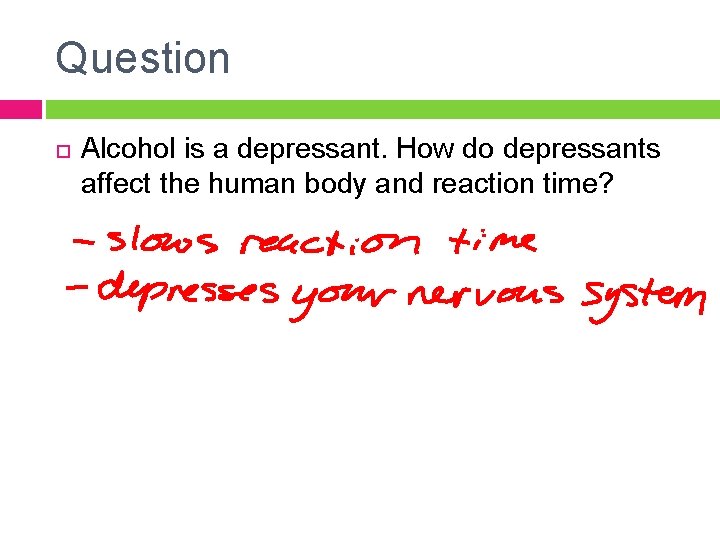
Question Alcohol is a depressant. How do depressants affect the human body and reaction time?
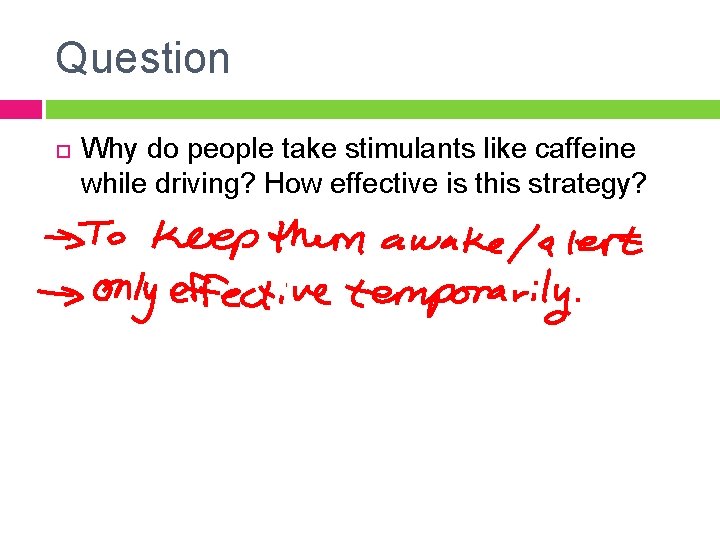
Question Why do people take stimulants like caffeine while driving? How effective is this strategy?
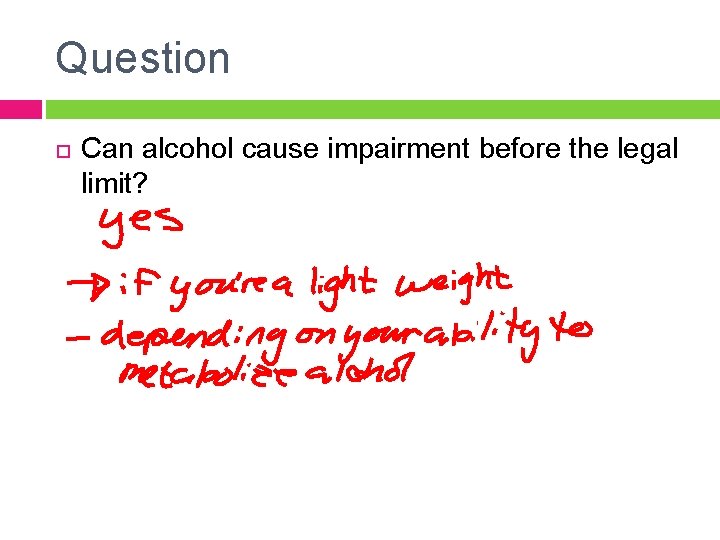
Question Can alcohol cause impairment before the legal limit?
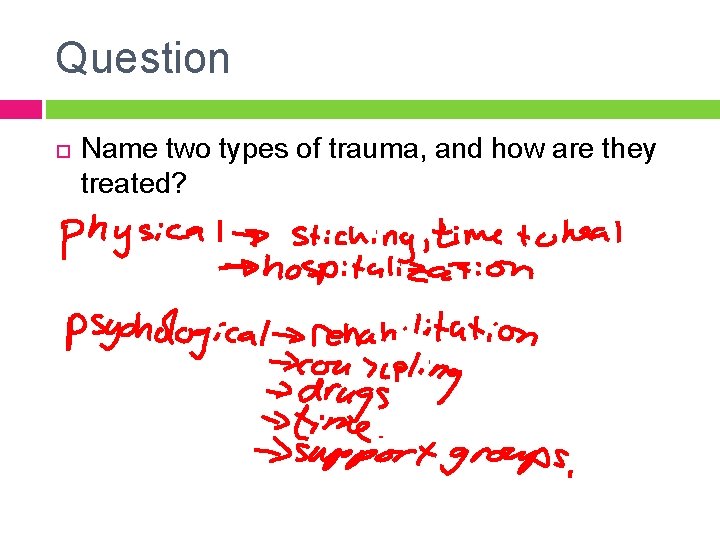
Question Name two types of trauma, and how are they treated?
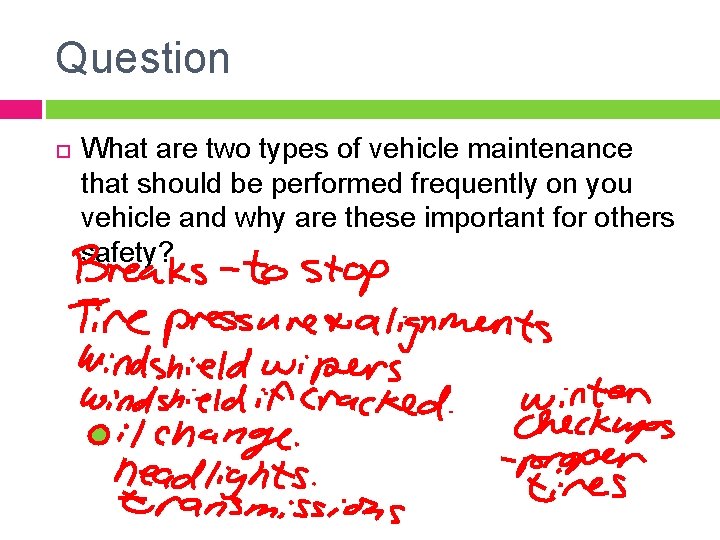
Question What are two types of vehicle maintenance that should be performed frequently on you vehicle and why are these important for others safety?
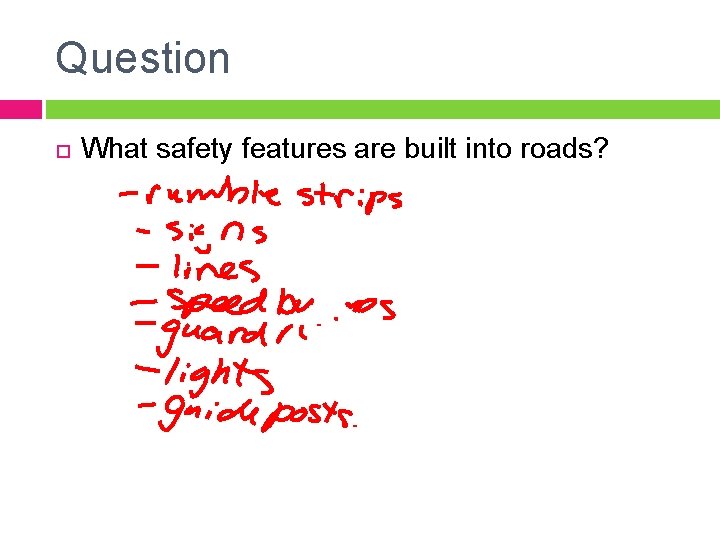
Question What safety features are built into roads?