
Nebuliser training for parents and carers Aims To
Nebuliser training for parents and carers
Aims • • • To know what a nebuliser is To understand why, when a nebuliser is given To know how to set up and use a nebuliser To know when a child is unwell and when to get help To know how to look after and clean a nebuliser machine and equipment
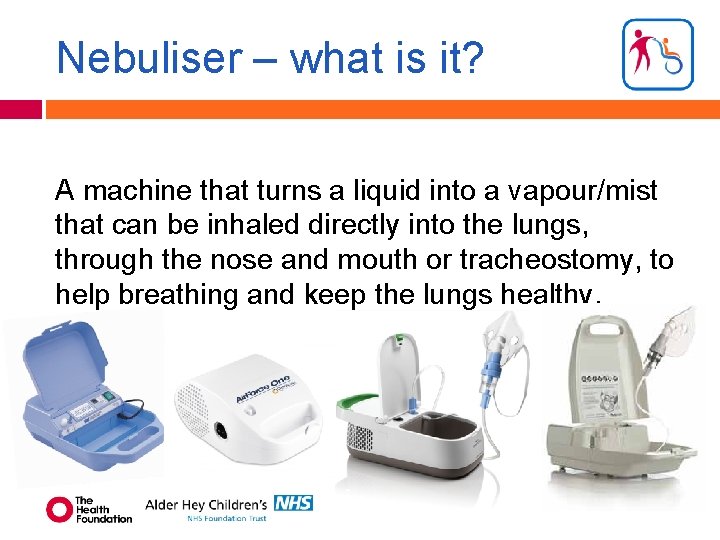
Nebuliser – what is it? A machine that turns a liquid into a vapour/mist that can be inhaled directly into the lungs, through the nose and mouth or tracheostomy, to help breathing and keep the lungs healthy.
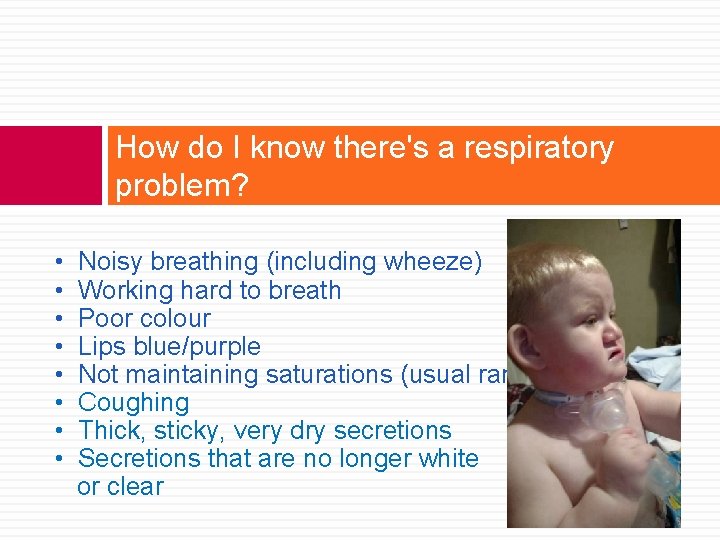
How do I know there's a respiratory problem? • Noisy breathing (including wheeze) • Working hard to breath • Poor colour • Lips blue/purple • Not maintaining saturations (usual range) • Coughing • Thick, sticky, very dry secretions • Secretions that are no longer white or clear
Clinical and Holistic Assessment Airway q Is there anything in the child’s airway that you can see that may be affecting their breathing? q If you can see something and can remove it, do so but never carry out a blind finger sweep as this could push a foreign body down the airway causing bigger problems. q Do they need suction (if you are trained to do so)? Get help if you are unsure. q Do they need a tracheostomy tube change?
Breathing Is the child breathing? If not follow the resuscitation protocol. Are they breathing harder and faster? Does their breathing sound noisy? Are they coughing or grunting? Is their breathing unusually quiet? Get help if you are unsure or have concerns.
Circulation How do they look? What is their colour like? Rosy cheeks or pale? Have their lips turned blue/purple? If their hands and feet are blue they can be warmed up. If the rest of the body is blue this is more serious and needs acting upon quickly! Do they have a temperature? Are they sweating? Cold and clammy? Do you need to start Basic Life Support? If you are unsure always ring 999!
Disability Are they smiling or grimacing? Have they had a seizure or has their seizure activity increased? Do they appear in pain? What is their environment like? Are they bored or overstimulated? Do they need a rest/quiet time? Has there been a significant change to their routine? Have they had an unsettled night? Are they missing someone close to them? Do they need a hug/reassurance? Are their clothes rubbing or too tight and they cannot communicate this to you? Do they need a pad change? Position change?
Exposure Is there a risk of exposure to anything? Is the equipment working? Has the ventilator become unattached? Has the saturation probe become loose? Has the oxygen stopped or the nasal cannula/face mask moved?
Fluids Are they tolerating their feeds/ fluids? Have they passed urine? Have they had their bowels opened? Are they constipated? Do their need winding Does their tube need venting? *Every child is different so only some of these will apply and there will be others you will think of when carrying out your assessment*
Prevention is key • Chest physiotherapy • Positional changes (standing frame, tummy time, prone etc) • Nebulisers • Cough assist • Suction *These are child specific for SOME children only. *Always Re-assess the child once treated.

Have you heard of PRN? “pro re nata” means when needed A saline nebuliser can be prescribed PRN (as well as regularly) Effective preventive for thick, sticky, dry secretions Particularly trache and NP airways
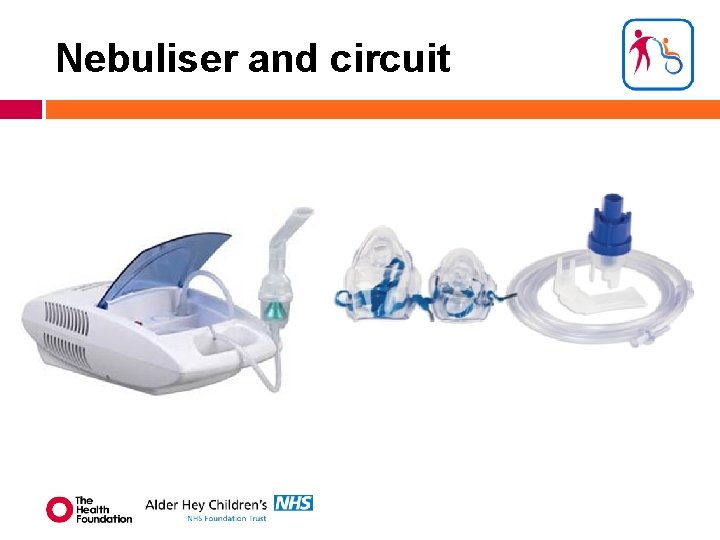
Nebuliser and circuit
Giving a nebuliser • It’s a medicine and should be prescribed • The medicine needs to be nebulised using air or oxygen (if prescribed if child not maintaining sats) • The nebuliser machines generates air pressure • Various ways of giving a nebuliser
Warnings Things to consider Be aware if you’re needing to give the nebuliser with oxygen this will deplete your oxygen supply If your child doesn’t usually need oxygen always get them checked Always re-assess after the intervention (nebuliser) - has it worked? Do they need to be seen by the GP, physio, nurse?
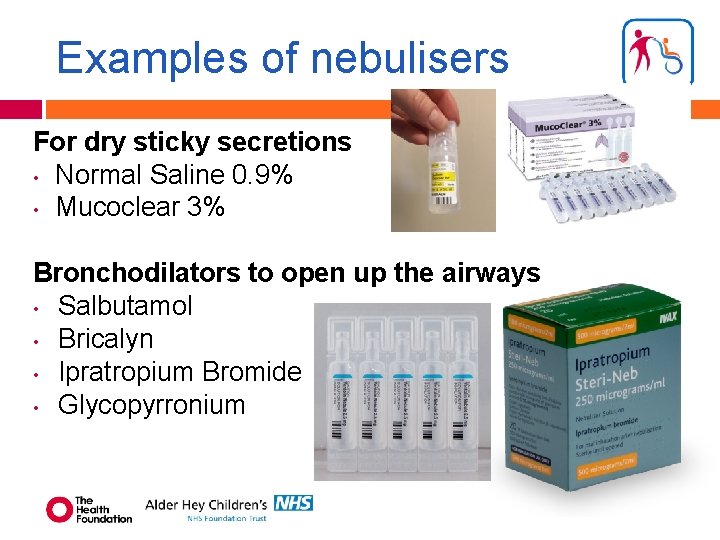
Examples of nebulisers For dry sticky secretions • Normal Saline 0. 9% • Mucoclear 3% Bronchodilators to open up the airways • Salbutamol • Bricalyn • Ipratropium Bromide • Glycopyrronium
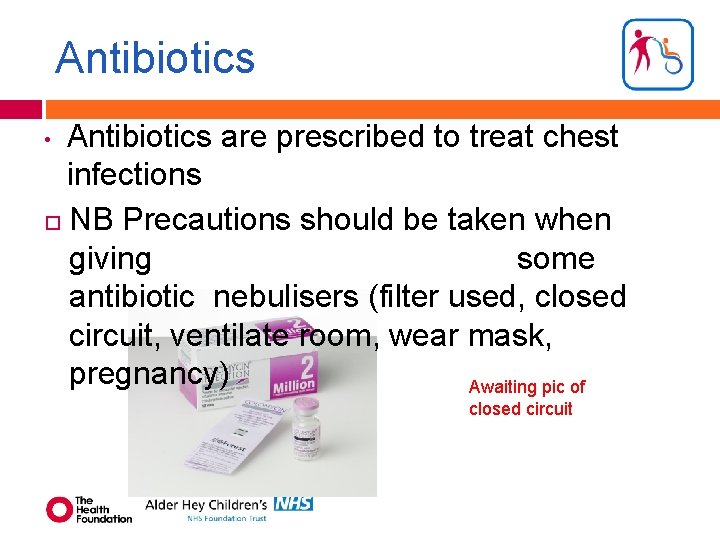
Antibiotics are prescribed to treat chest infections NB Precautions should be taken when giving some antibiotic nebulisers (filter used, closed circuit, ventilate room, wear mask, pregnancy) Awaiting pic of • closed circuit
Side effects None expected but the child should be monitored during and after administration. Stop nebuliser if adverse effects. Do not use the nebuliser solution unless the product is clear and the pack intact. If the usual relief reduces or has little effect, see GP Always report adverse reactions to the GP.
During the nebuliser What should you check for?
During the nebuliser Continue respiratory assessment during and after Check the child is coping/ monitor ABCDEF Check if they need suctioning Consider giving the nebuliser with oxygen if not managing colour/saturations are out of usual range
What to do if you have concerns • • • Shout for help! Consider suctioning (if appropriate) and repositioning Consider giving oxygen (if prescribed) Offer reassurance to the child Dial 999 and follow the resuscitation protocol NB Never practice outside your limitations
Cleaning and maintenance Clean the acorn with warm soapy water daily, leave to air dry. Careful not to lose the small part. Steam clean circuit weekly. Change filter 3 monthly. Wipe down unit weekly. If circuit looks dirty throw away. WARNING If cleaning isn’t done properly this can result in the child getting an infection
Practical Any questions? For further information and training go to www. carerskillspassport. org. uk
- Slides: 23