
NearInfrared Spectroscopy NIRS Monitoring By Katie Lawton RN
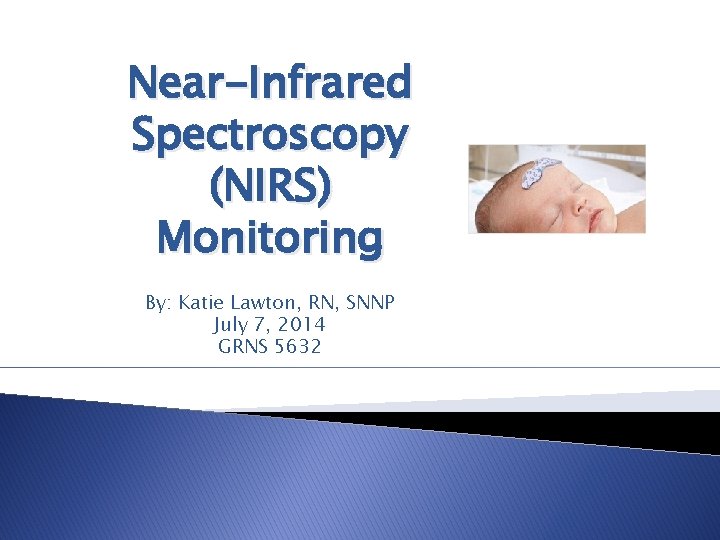
Near-Infrared Spectroscopy (NIRS) Monitoring By: Katie Lawton, RN, SNNP July 7, 2014 GRNS 5632
Objectives � To understand what NIRS is � To understand how NIRS works � To become acquainted with the NIRS machine and where to place the probe � To understand how NIRS can be utilized in the clinical setting � To understand the beneficial significance of NIRS

Objectives � To understand the relationship between cerebral and somatic regional oxygen saturations � To become familiar with normal cerebral and somatic r. SO 2 ranges and interventions to improve r. SO 2 � To provide research regarding the use of NIRS in the clinical setting in relation with patient outcomes
What is NIRS? � Noninvasive, monitoring continuous tissue oxygenation ◦ Measures concentrations of oxyhemoglobin and deoxyhemoglobin ◦ Used to measure regional oxygen saturation (r. SO 2) �Cerebral and Somatic �Can be to measure oxygenation in: �Brain �Renal �Liver �Extremities ◦ Commonly used during cardiac surgery and emergency situations (Covidien, 2011)
Factors That Affect Cerebral Oxygen Saturation � Increase ◦ Rise in oxygen delivery ◦ Diminished oxygen demand � Decrease ◦ Decrease in oxygen delivery ◦ Uncompensated rise in demand (Covidien, n. d. )
Why is NIRS used at the bedside? � Helps in early identification of complications associated with ◦ ◦ Low cardiac output Shock and seizures Renal failure Neurological damage
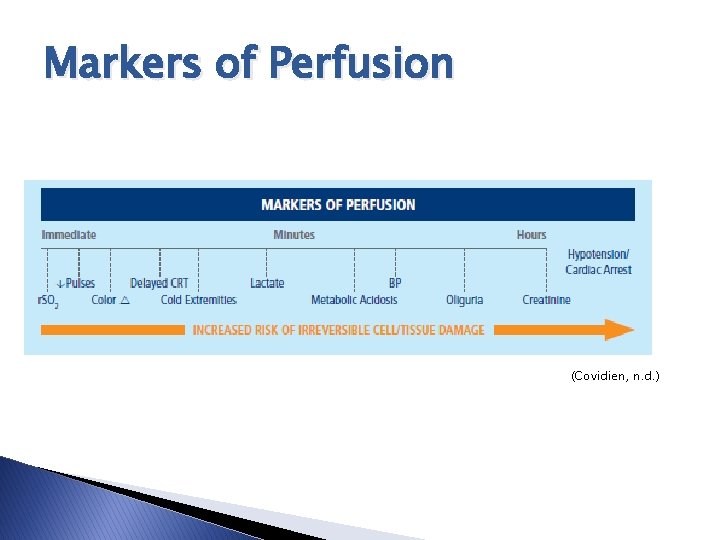
Markers of Perfusion (Covidien, n. d. )
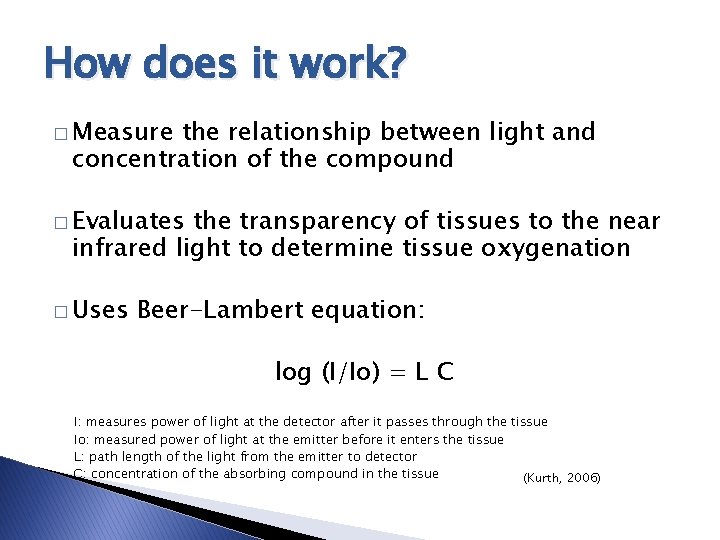
How does it work? � Measure the relationship between light and concentration of the compound � Evaluates the transparency of tissues to the near infrared light to determine tissue oxygenation � Uses Beer-Lambert equation: log (I/Io) = L C I: measures power of light at the detector after it passes through the tissue Io: measured power of light at the emitter before it enters the tissue L: path length of the light from the emitter to detector C: concentration of the absorbing compound in the tissue (Kurth, 2006)
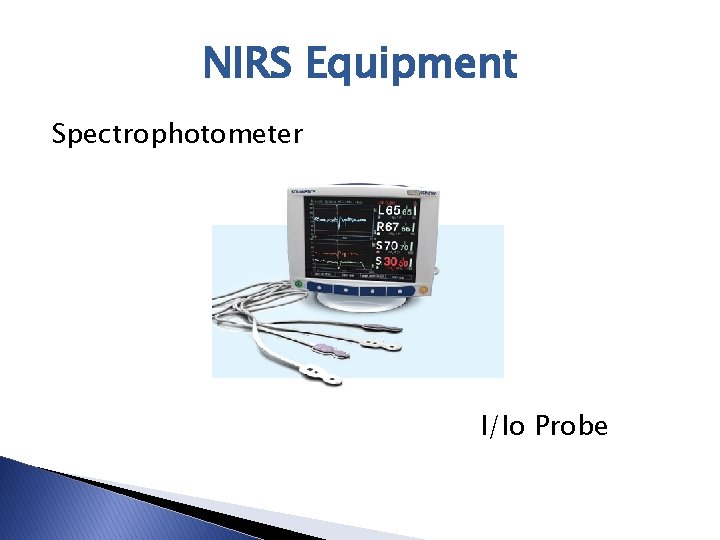
NIRS Equipment Spectrophotometer I/Io Probe
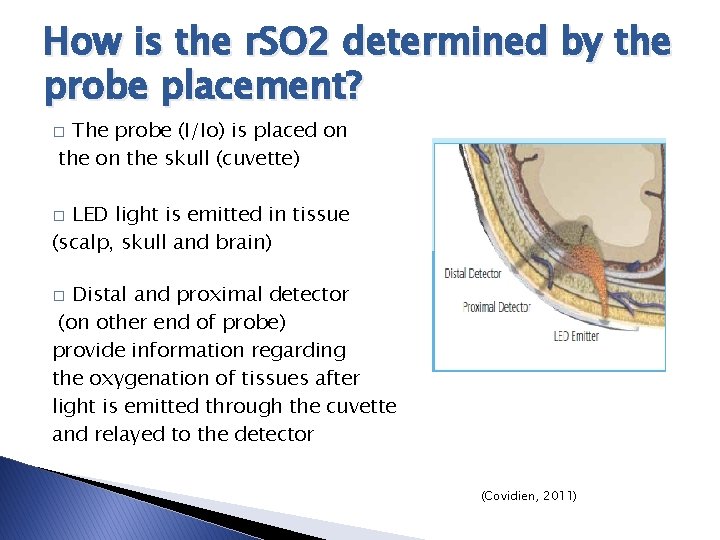
How is the r. SO 2 determined by the probe placement? The probe (I/Io) is placed on the skull (cuvette) � LED light is emitted in tissue (scalp, skull and brain) � Distal and proximal detector (on other end of probe) provide information regarding the oxygenation of tissues after light is emitted through the cuvette and relayed to the detector � (Covidien, 2011)
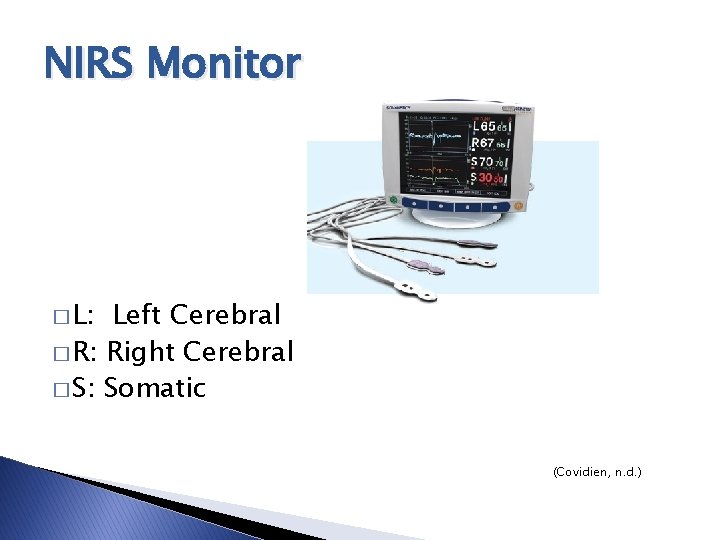
NIRS Monitor � L: Left Cerebral � R: Right Cerebral � S: Somatic (Covidien, n. d. )
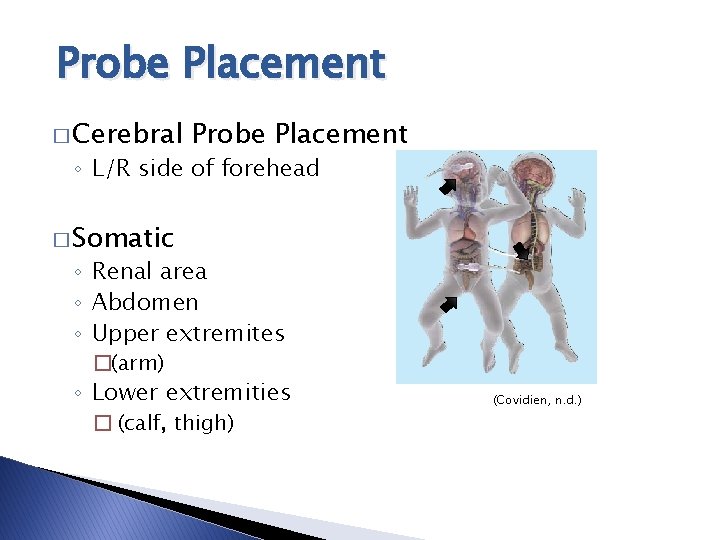
Probe Placement � Cerebral Probe Placement ◦ L/R side of forehead � Somatic ◦ Renal area ◦ Abdomen ◦ Upper extremites �(arm) ◦ Lower extremities � (calf, thigh) (Covidien, n. d. )
Relatonship Between Cerebral & Somatic Regions � Cerebral ◦ High flow/ high extraction organ ◦ Compensatory mechanisms �Autoregulation �Flow metabolism coupling ◦ If autoregulation is intact, cerebral desaturations are a late warning of shock � Somatic ◦ Variable flow/ low O 2 extraction ◦ Flow influenced by sympathetic tone ◦ Somatic desaturations are early sign of shock due to compensatory mechanisms (Covidien, n. d. )
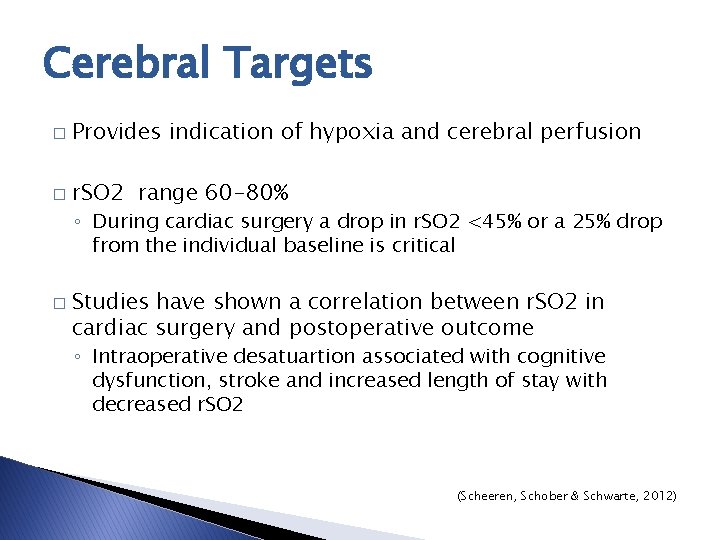
Cerebral Targets � Provides indication of hypoxia and cerebral perfusion � r. SO 2 range 60 -80% ◦ During cardiac surgery a drop in r. SO 2 <45% or a 25% drop from the individual baseline is critical � Studies have shown a correlation between r. SO 2 in cardiac surgery and postoperative outcome ◦ Intraoperative desatuartion associated with cognitive dysfunction, stroke and increased length of stay with decreased r. SO 2 (Scheeren, Schober & Schwarte, 2012)
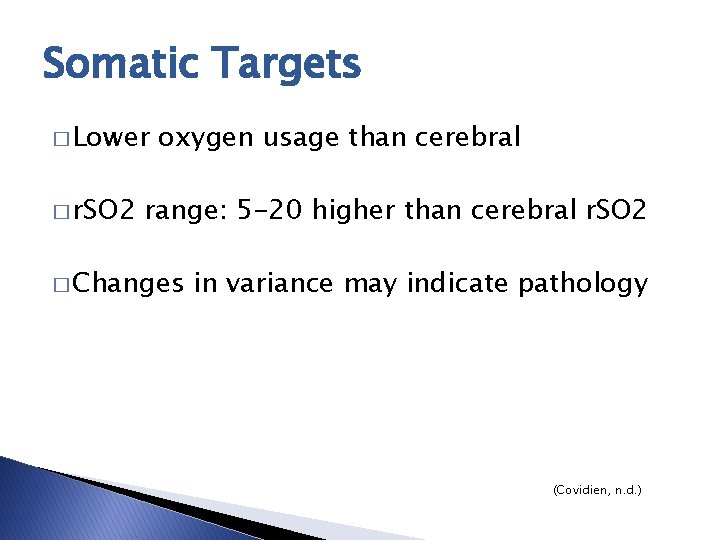
Somatic Targets � Lower � r. SO 2 oxygen usage than cerebral range: 5 -20 higher than cerebral r. SO 2 � Changes in variance may indicate pathology (Covidien, n. d. )
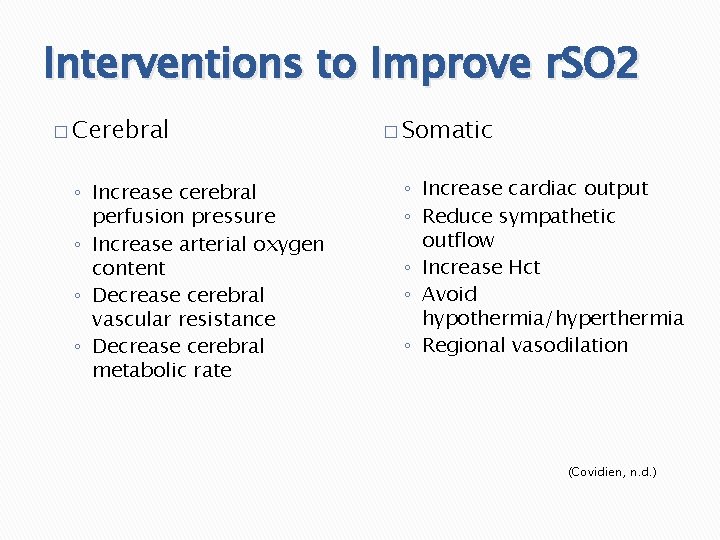
Interventions to Improve r. SO 2 � Cerebral ◦ Increase cerebral perfusion pressure ◦ Increase arterial oxygen content ◦ Decrease cerebral vascular resistance ◦ Decrease cerebral metabolic rate � Somatic ◦ Increase cardiac output ◦ Reduce sympathetic outflow ◦ Increase Hct ◦ Avoid hypothermia/hyperthermia ◦ Regional vasodilation (Covidien, n. d. )
References Covidien. (n. d). INVOS Cerebral/Somatic Oximeter: Quick reference guide for pediatric use. Retrieved from https: //lane. stanford. edu/portals/cvicu/HCP_Equipment/NIRS-INVOS_Reference_Guide. pdf Covidien. (2011). INVOS Cerebral/Somatic Oximeter. Retrieved from http: //www. covidien. com/rms/image. Server. aspx? content. ID=27565&contenttype=application/p df&original. File. Name=1. 3. 3. 1_Neonatal%20 Brochure. pdf Hill, L. (n. d. ). Cerebral blood flow and intracranial pressure. Retrieved from http: //www. frca. co. uk/Documents/17 0907%20 Cerebral%20 physiology%20 I. pdf Kurth. (2006). Near infrared spectroscopy. Retrieved from http: //www. pedsanesthesia. org/meetings/2006 winter/pdfs/Friday_Kurth. pdf Marimon, G. A. , Dockery, W. K. Sheridan, M. J. & Agarwal, S. (2012). Near-infrared spectroscopy cerebral and somatic (renal) oxygen saturation correlation to continuous venous oxygen saturation via intravenous oximetry catheter. Journal of Critical Care, 27, 314. e 13 -314. e 18. doi: 10. 1016/j. jcrc. 2011. 10. 002 Scheeren, T. W. L, Schober, P. & Schwarte, L. A. (2012). Monitoring tissue oxygenation by near infrared spectroscopy: background and current applications. Journal of Clinical Monitoring and Computing, 26 (4), 279 -287. doi: 10. 1007/s 10877 -012 -9348 -y
- Slides: 17