
Nd YAG LASER Wavelengths and emissions 1 Nd

- Slides: 39
Nd: YAG LASER Wavelengths and emissions 1
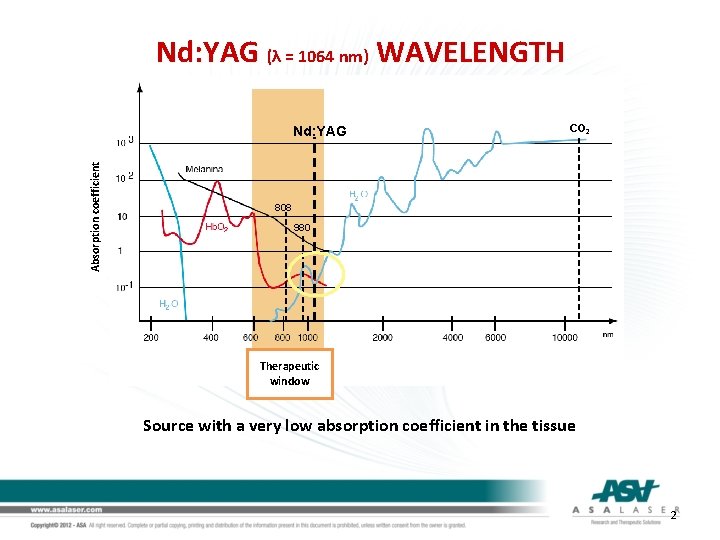
Nd: YAG (λ = 1064 nm) WAVELENGTH Absorption coefficient Nd: YAG CO₂ 808 980 Therapeutic window Source with a very low absorption coefficient in the tissue 2
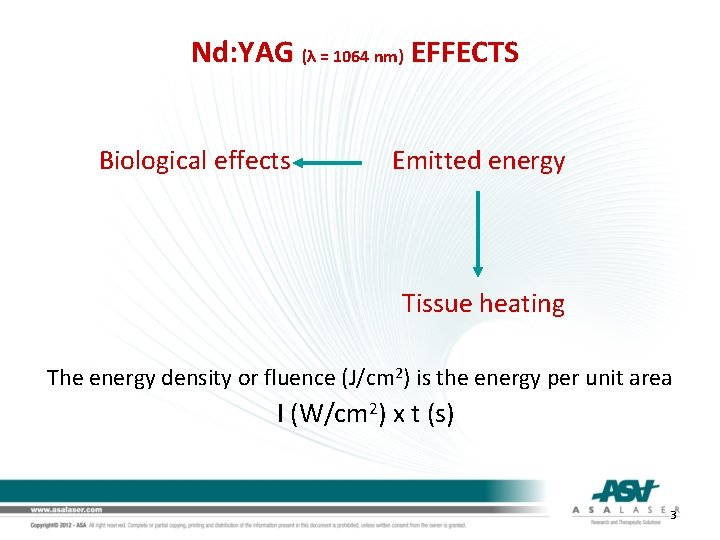
Nd: YAG (λ = 1064 nm) EFFECTS Biological effects Emitted energy Tissue heating The energy density or fluence (J/cm 2) is the energy per unit area I (W/cm 2) x t (s) 3
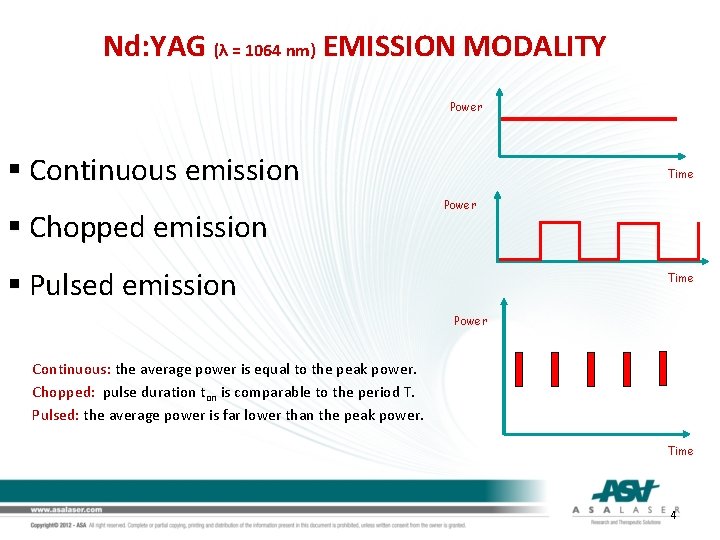
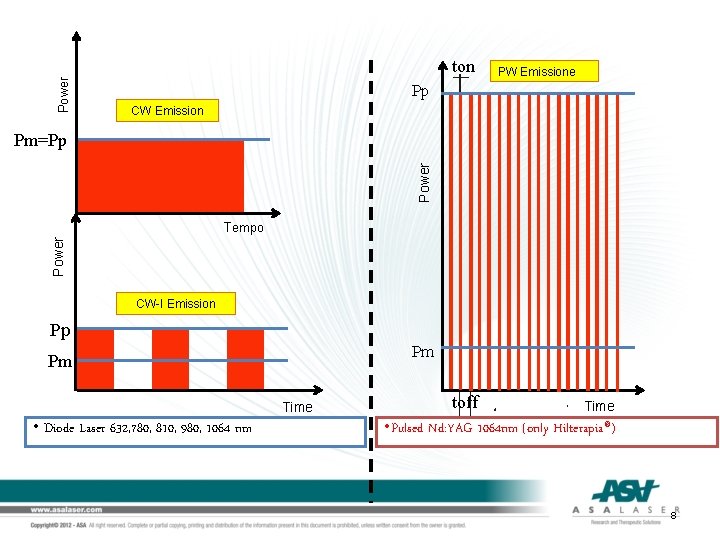
Nd: YAG (λ = 1064 nm) EMISSION MODALITY Power § Continuous emission § Chopped emission Time Power § Pulsed emission Time Power Continuous: the average power is equal to the peak power. Chopped: pulse duration ton is comparable to the period T. Pulsed: the average power is far lower than the peak power. Time 4
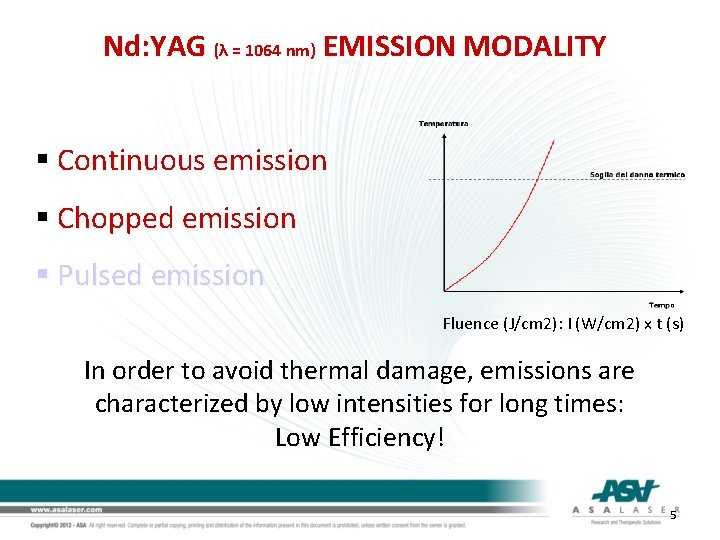
Nd: YAG (λ = 1064 nm) EMISSION MODALITY § Continuous emission § Chopped emission § Pulsed emission Fluence (J/cm 2): I (W/cm 2) x t (s) In order to avoid thermal damage, emissions are characterized by low intensities for long times: Low Efficiency! 5
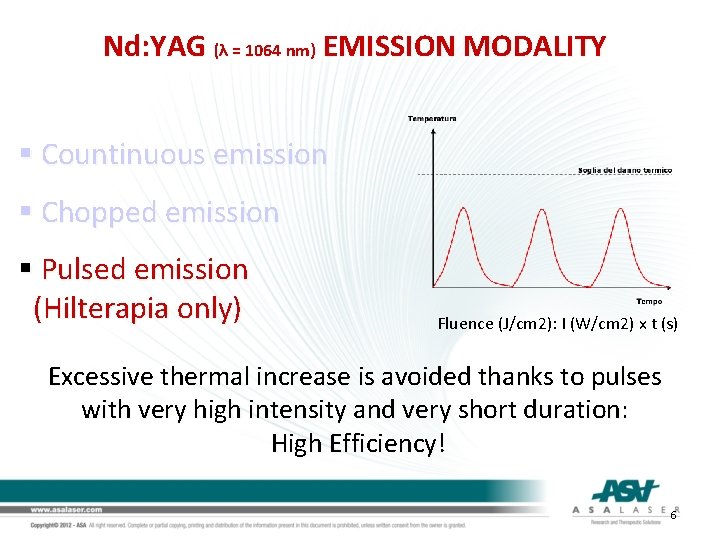
Nd: YAG (λ = 1064 nm) EMISSION MODALITY § Countinuous emission § Chopped emission § Pulsed emission (Hilterapia only) Fluence (J/cm 2): I (W/cm 2) x t (s) Excessive thermal increase is avoided thanks to pulses with very high intensity and very short duration: High Efficiency! 6
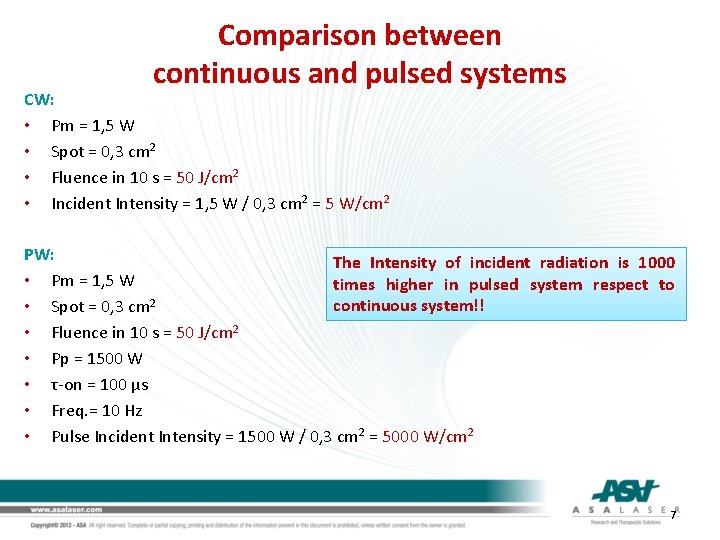
Comparison between continuous and pulsed systems CW: • Pm = 1, 5 W • Spot = 0, 3 cm 2 • Fluence in 10 s = 50 J/cm 2 • Incident Intensity = 1, 5 W / 0, 3 cm 2 = 5 W/cm 2 PW: The Intensity of incident radiation is 1000 • Pm = 1, 5 W times higher in pulsed system respect to continuous system!! • Spot = 0, 3 cm 2 • Fluence in 10 s = 50 J/cm 2 • Pp = 1500 W • τ-on = 100 μs • Freq. = 10 Hz • Pulse Incident Intensity = 1500 W / 0, 3 cm 2 = 5000 W/cm 2 7
Power ton PW Emissione Pp CW Emission Power Pm=Pp Power Tempo CW-I Emission Pp Pm Pm Time • Diode Laser 632, 780, 810, 980, 1064 nm toff Time • Pulsed Nd: YAG 1064 nm (only Hilterapia®) 8
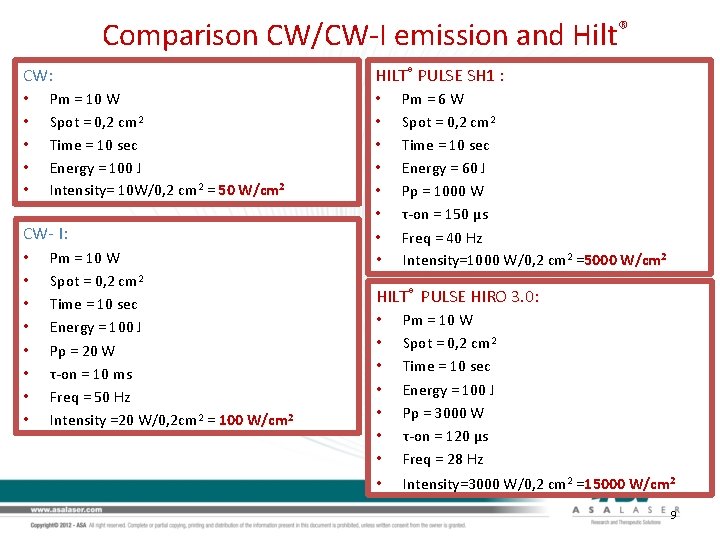
Comparison CW/CW-I emission and Hilt® CW: • • • Pm = 10 W Spot = 0, 2 cm 2 Time = 10 sec Energy = 100 J Intensity= 10 W/0, 2 cm 2 = 50 W/cm 2 CW- I: • • Pm = 10 W Spot = 0, 2 cm 2 Time = 10 sec Energy = 100 J Pp = 20 W τ-on = 10 ms Freq = 50 Hz Intensity =20 W/0, 2 cm 2 = 100 W/cm 2 HILT® PULSE SH 1 : • • Pm = 6 W Spot = 0, 2 cm 2 Time = 10 sec Energy = 60 J Pp = 1000 W τ-on = 150 μs Freq = 40 Hz Intensity=1000 W/0, 2 cm 2 =5000 W/cm 2 HILT® PULSE HIRO 3. 0: • • Pm = 10 W Spot = 0, 2 cm 2 Time = 10 sec Energy = 100 J Pp = 3000 W τ-on = 120 μs Freq = 28 Hz • Intensity=3000 W/0, 2 cm 2 =15000 W/cm 2 9
® Hilterapia Technical characteristics 10
Hilterapia® § Patented in USA (U. S. Patent n° 6, 527, 797 B 1) § Approved by FDA-USA 510 (k) n. K 051537 11
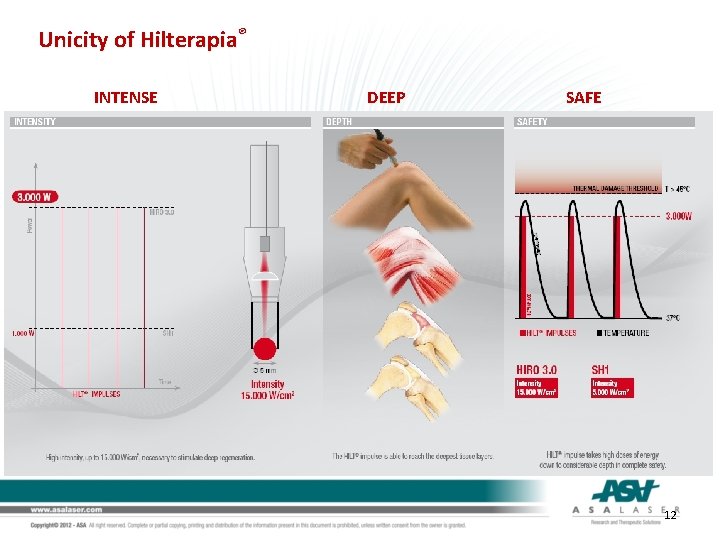
Unicity of Hilterapia® INTENSE DEEP SAFE 12
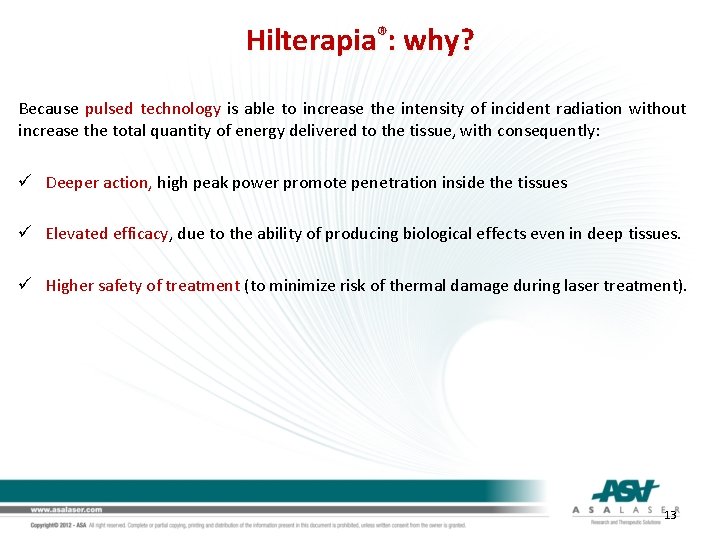
Hilterapia®: why? Because pulsed technology is able to increase the intensity of incident radiation without increase the total quantity of energy delivered to the tissue, with consequently: ü Deeper action, high peak power promote penetration inside the tissues ü Elevated efficacy, due to the ability of producing biological effects even in deep tissues. ü Higher safety of treatment (to minimize risk of thermal damage during laser treatment). 13
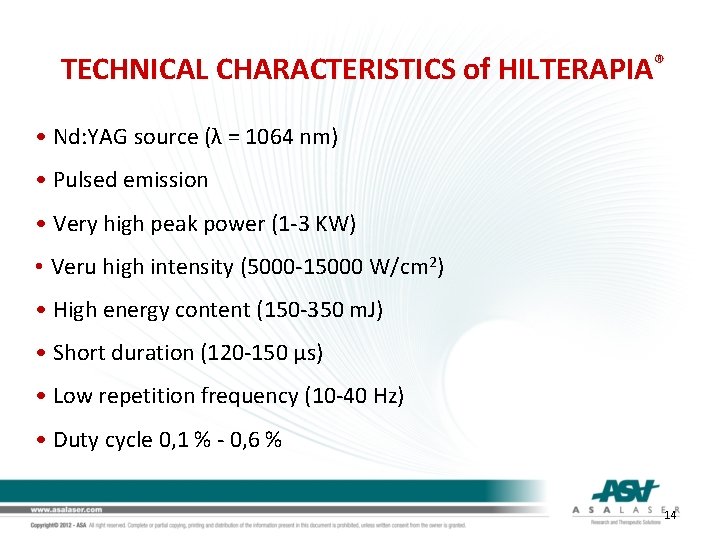
TECHNICAL CHARACTERISTICS of HILTERAPIA® • Nd: YAG source (λ = 1064 nm) • Pulsed emission • Very high peak power (1 -3 KW) • Veru high intensity (5000 -15000 W/cm 2) • High energy content (150 -350 m. J) • Short duration (120 -150 µs) • Low repetition frequency (10 -40 Hz) • Duty cycle 0, 1 % - 0, 6 % 14
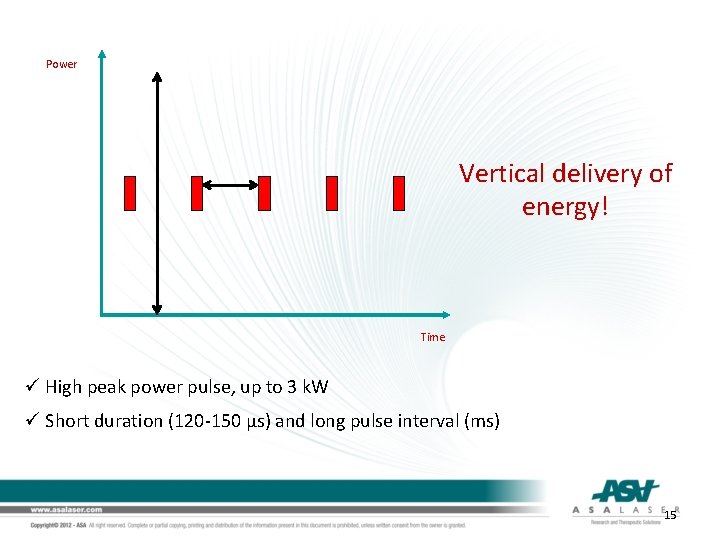
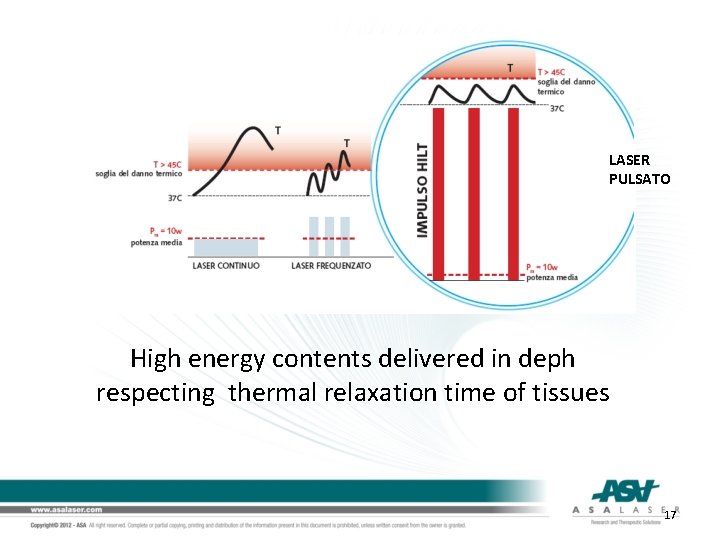
Power Vertical delivery of energy! Time ü High peak power pulse, up to 3 k. W ü Short duration (120 -150 µs) and long pulse interval (ms) 15
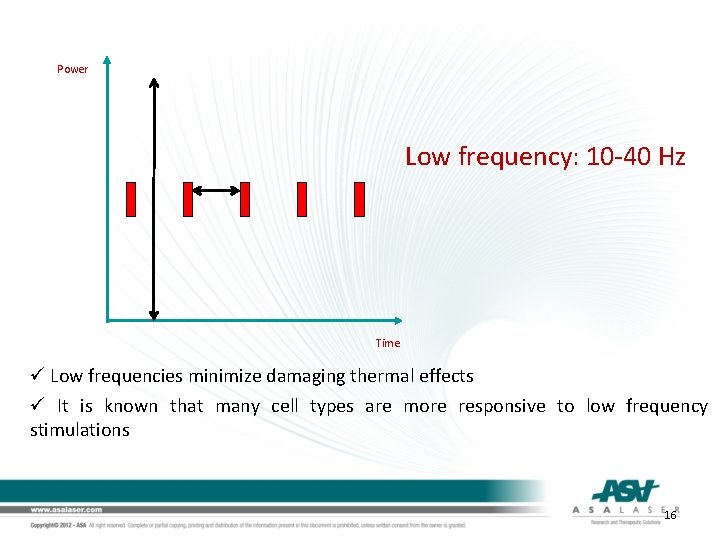
Power Low frequency: 10 -40 Hz Time ü Low frequencies minimize damaging thermal effects ü It is known that many cell types are more responsive to low frequency stimulations 16
LASER PULSATO High energy contents delivered in deph respecting thermal relaxation time of tissues 17
HILTERAPIA® Laser-Tissue Interaction 18
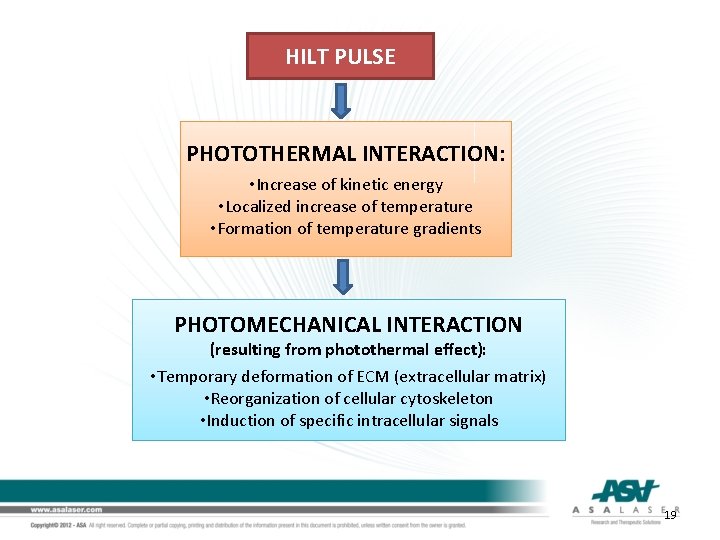
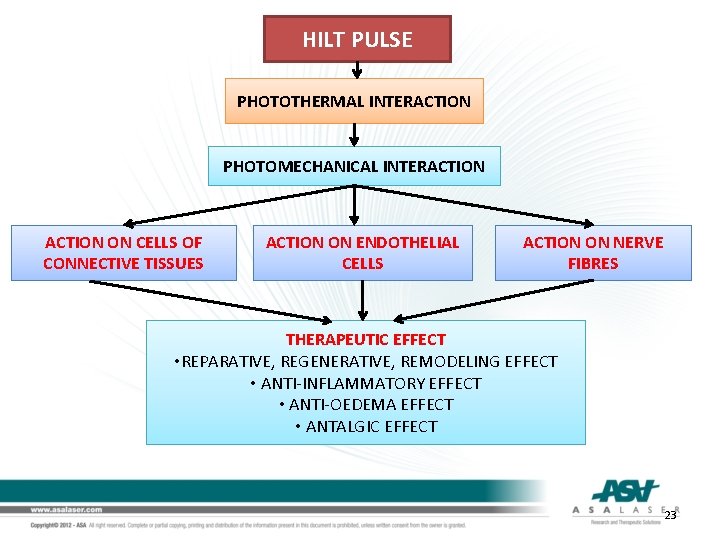
HILT PULSE PHOTOTHERMAL INTERACTION: • Increase of kinetic energy • Localized increase of temperature • Formation of temperature gradients PHOTOMECHANICAL INTERACTION (resulting from photothermal effect): • Temporary deformation of ECM (extracellular matrix) • Reorganization of cellular cytoskeleton • Induction of specific intracellular signals 19
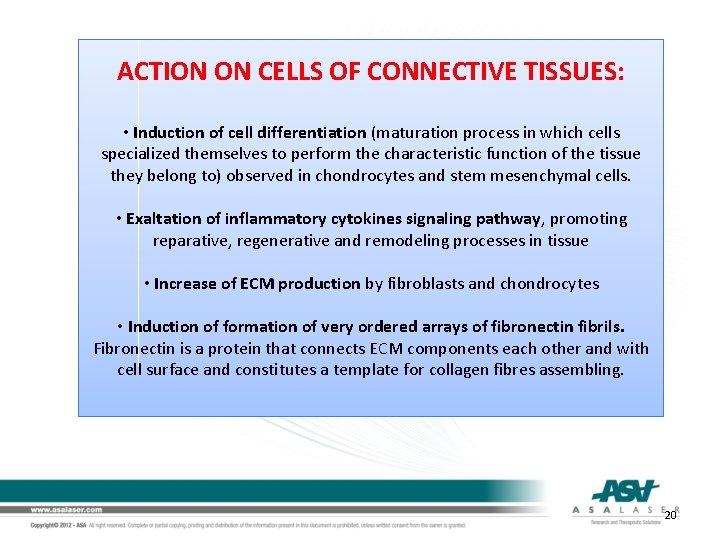
ACTION ON CELLS OF CONNECTIVE TISSUES: • Induction of cell differentiation (maturation process in which cells specialized themselves to perform the characteristic function of the tissue they belong to) observed in chondrocytes and stem mesenchymal cells. • Exaltation of inflammatory cytokines signaling pathway, promoting reparative, regenerative and remodeling processes in tissue • Increase of ECM production by fibroblasts and chondrocytes • Induction of formation of very ordered arrays of fibronectin fibrils. Fibronectin is a protein that connects ECM components each other and with cell surface and constitutes a template for collagen fibres assembling. 20
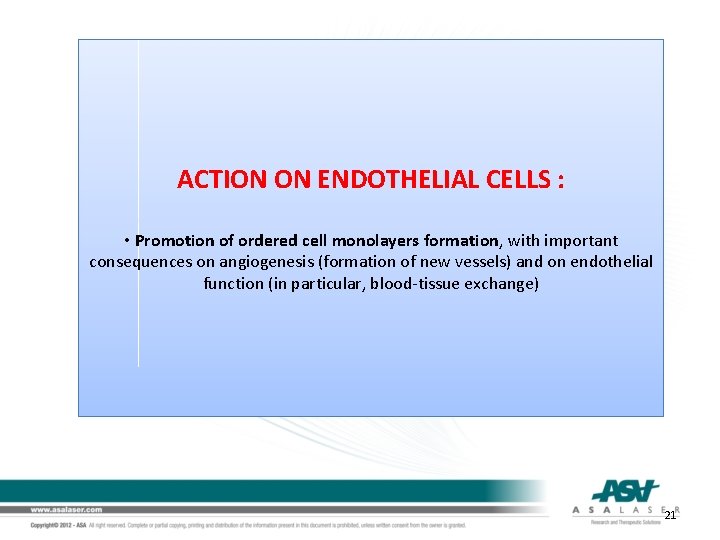
ACTION ON ENDOTHELIAL CELLS : • Promotion of ordered cell monolayers formation, with important consequences on angiogenesis (formation of new vessels) and on endothelial function (in particular, blood-tissue exchange) 21
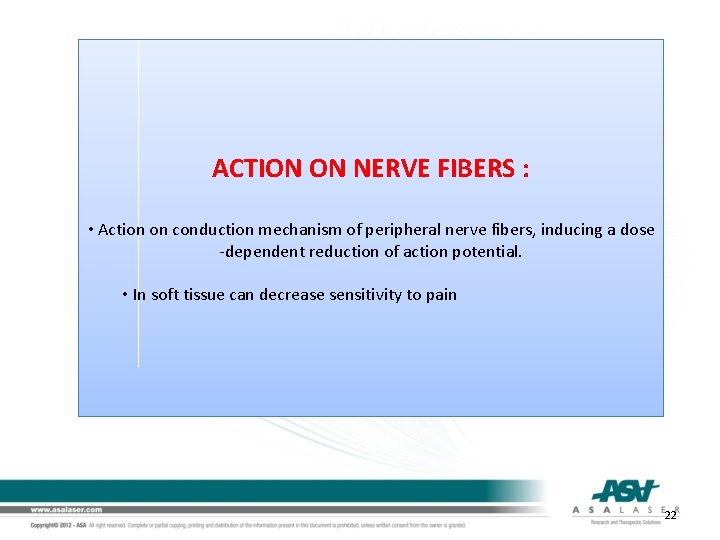
ACTION ON NERVE FIBERS : • Action on conduction mechanism of peripheral nerve fibers, inducing a dose -dependent reduction of action potential. • In soft tissue can decrease sensitivity to pain 22
HILT PULSE PHOTOTHERMAL INTERACTION PHOTOMECHANICAL INTERACTION ON CELLS OF CONNECTIVE TISSUES ACTION ON ENDOTHELIAL CELLS ACTION ON NERVE FIBRES THERAPEUTIC EFFECT • REPARATIVE, REGENERATIVE, REMODELING EFFECT • ANTI-INFLAMMATORY EFFECT • ANTI-OEDEMA EFFECT • ANTALGIC EFFECT 23
HILTERAPIA® Indications, contraindications and warnings 24
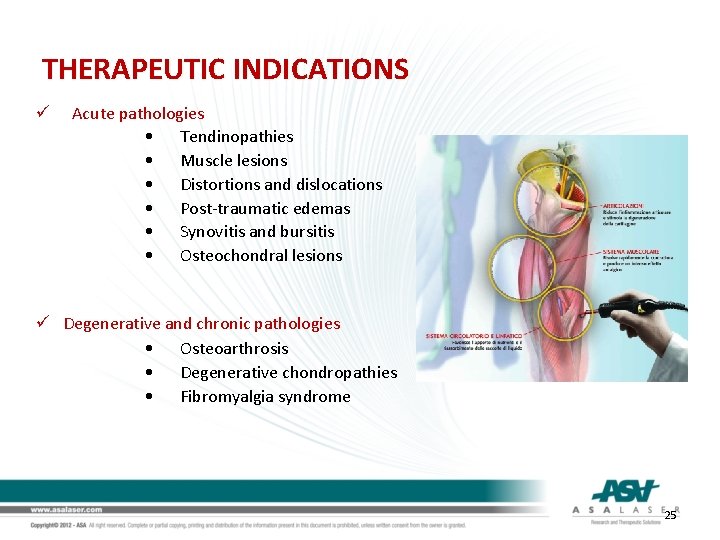
THERAPEUTIC INDICATIONS ü Acute pathologies • Tendinopathies • Muscle lesions • Distortions and dislocations • Post-traumatic edemas • Synovitis and bursitis • Osteochondral lesions ü Degenerative and chronic pathologies • Osteoarthrosis • Degenerative chondropathies • Fibromyalgia syndrome 25
CONTRAINDICATIONS Therapy using the system is contraindicated for those patients who: • have known sensitivity to the device • take anticoagulants • take medication that is known to increase sensitivity to sunlight • have seizure disorders triggered by light • are pregnant • suspected of carrying serious infectious disease and/or disease where it is advisable to suppress heat or fever • with hemorrhagic diatheses • have HIV positive history 26
CONTRAINDICATIONS The device should not be used: • over areas of suspicious, potentially or known cancerous tissue • over areas of active hemorrhage • over areas injected with steroids in the past 2 -3 weeks • over the thoracic area if the patient is using a pacemaker • over the sympathetic ganglia • over the vagus nerve • over the neck (thyroid or carotid sinus region) • over or near bone growth centers until bone growth is complete • over area where analgesia may mask progressive pathology 27
CONTRAINDICATIONS The device should not be used: • over anesthetic areas • over an area of the spinal cord following a laminectomy, i. e. , when major covering tissue have been removed • on ischemic tissue where the blood supply would be unable to follow the increase in metabolic demand tissue necrosis might result • for symptomatic local pain relief unless a pain syndrome has been diagnosed or unless etiology is established 28
WARNINGS • No direct aim into the eyes of humans or animals • Patients with an implanted neurostimulation device must not be treated with or be in close proximity to any shortwave diathermy, microwave diathermy, therapeutic laser diathermy or laser diathermy anywhere on their body. Energy from diathermy can cause tissue damage and can result in severe injury or death, even if neurostimulation system is turned off. 29
WARNINGS • The application on wounds has to be performed at a certain distance to avoid the spread of bacteria. • Higher output levels have a greater potential for patient discomfort. Choose a lower dosage to reduce output or select a frequenced output to decrease patient discomfort. 30
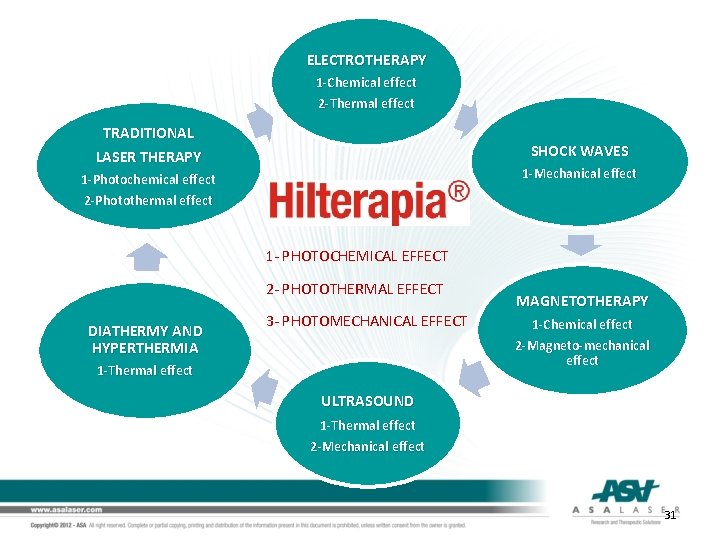
ELECTROTHERAPY 1 -Chemical effect 2 -Thermal effect TRADITIONAL LASER THERAPY SHOCK WAVES 1 -Mechanical effect 1 -Photochemical effect 2 -Photothermal effect 1 - PHOTOCHEMICAL EFFECT 2 - PHOTOTHERMAL EFFECT DIATHERMY AND HYPERTHERMIA 3 - PHOTOMECHANICAL EFFECT 1 -Thermal effect MAGNETOTHERAPY 1 -Chemical effect 2 -Magneto-mechanical effect ULTRASOUND 1 -Thermal effect 2 -Mechanical effect 31
CLINICAL EVIDENCES 32
Conservative treatment of low back pain caused by intervertebral disk displacement: Comparison among HILT ®, TENS e NSAID (Zati et al. Medicina dello Sport, 2004, 57: 77 -82) 33
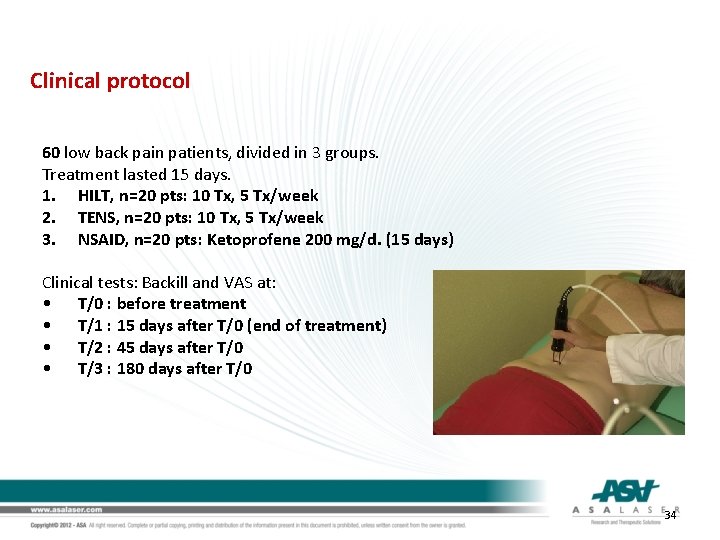
Clinical protocol 60 low back pain patients, divided in 3 groups. Treatment lasted 15 days. 1. HILT, n=20 pts: 10 Tx, 5 Tx/week 2. TENS, n=20 pts: 10 Tx, 5 Tx/week 3. NSAID, n=20 pts: Ketoprofene 200 mg/d. (15 days) Clinical tests: Backill and VAS at: • T/0 : before treatment • T/1 : 15 days after T/0 (end of treatment) • T/2 : 45 days after T/0 • T/3 : 180 days after T/0 34
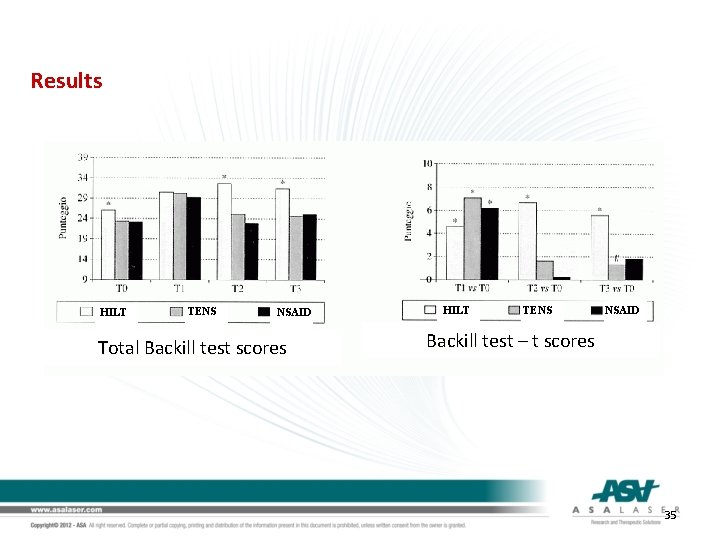
Results HILT TENS NSAID Total Backill test scores HILT TENS NSAID Backill test – t scores 35
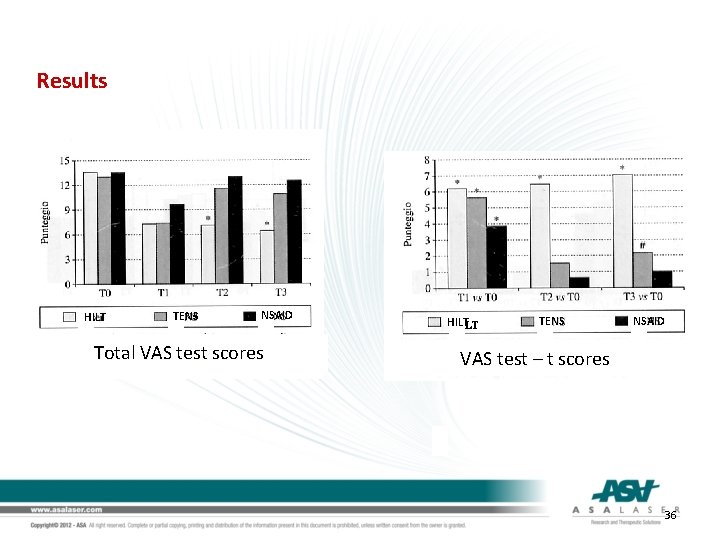
Results HILT TENS NSAID Total VAS test scores HILT TENS NSAID VAS test – t scores 36
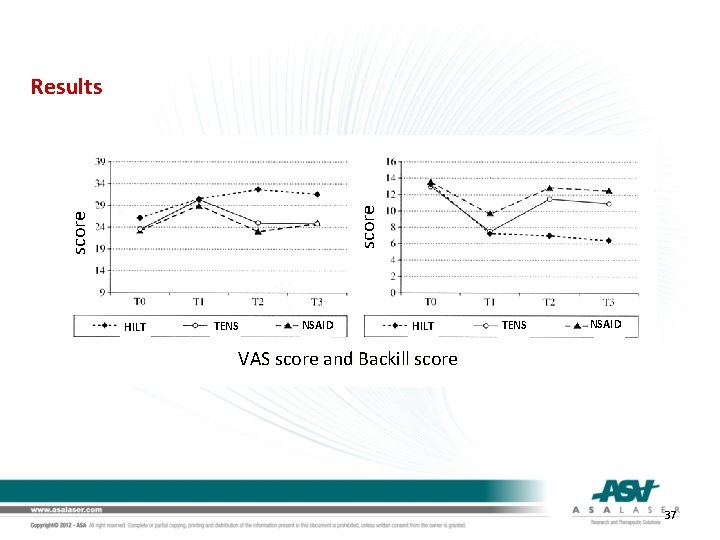
score Results HILT TENS NSAID VAS score and Backill score 37
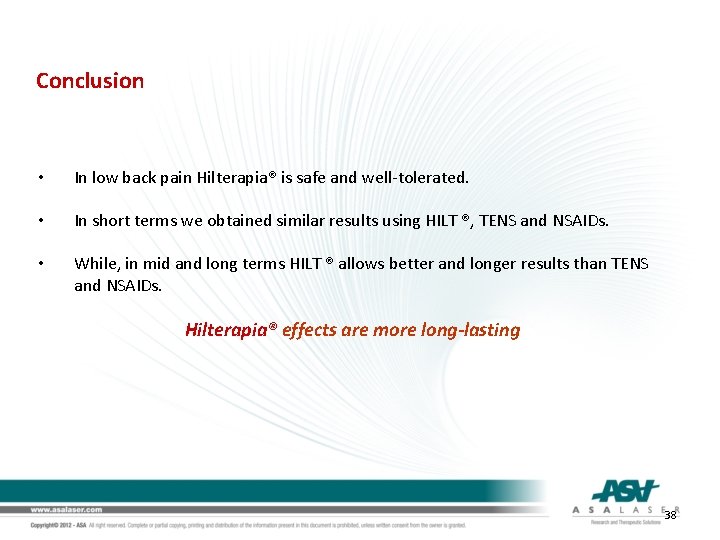
Conclusion • In low back pain Hilterapia® is safe and well-tolerated. • In short terms we obtained similar results using HILT ®, TENS and NSAIDs. • While, in mid and long terms HILT ® allows better and longer results than TENS and NSAIDs. Hilterapia® effects are more long-lasting 38
Hilterapia® for the treatment of calcifying tendonitis of the rotator cuff (Valent A. , Benedetti E. , Istituti Ortopedici Rizzoli, 2003) 39