
NCHRP 8 36 Task 129 Scoping study to

- Slides: 28
NCHRP 8 -36 Task 129 Scoping study to establish standards and guidance for data used for transportation planning and traffic operations purposes Presented to: TRB Committees Presented by: Anita Vandervalk, P. E. , P. M. P
Agenda Ø Historical context, challenges, big data Ø Project objectives Ø Representative transportation standards Ø Government role Ø Project deliverables Ø Feedback 2
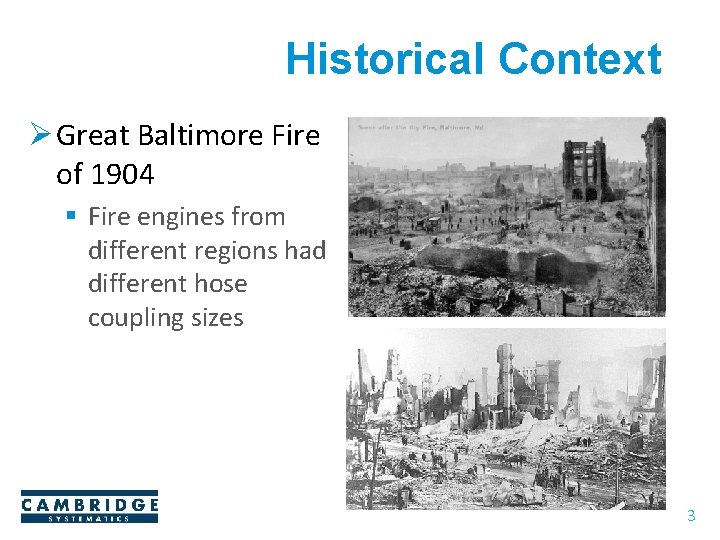
Historical Context Ø Great Baltimore Fire of 1904 § Fire engines from different regions had different hose coupling sizes 3
Historical Context Ø International Standards Organization (ISO) “A standard is a document that provides requirements, specifications, guidelines or characteristics that can be used consistently to ensure that materials, products, processes and services are fit for their purpose”. Ø Circular A-119 issued in 1998 http: //www. iso. org/iso/home/standard 4
Types of Data Ø Mobility – the quantity and quality of movement of goods and people within/through the system (examples: traffic data speed/volume/classification); travel behavior (origin/destination); freight volumes, commodity (values and volumes) Ø Inventory and condition – (examples: asset inventory databases, 5
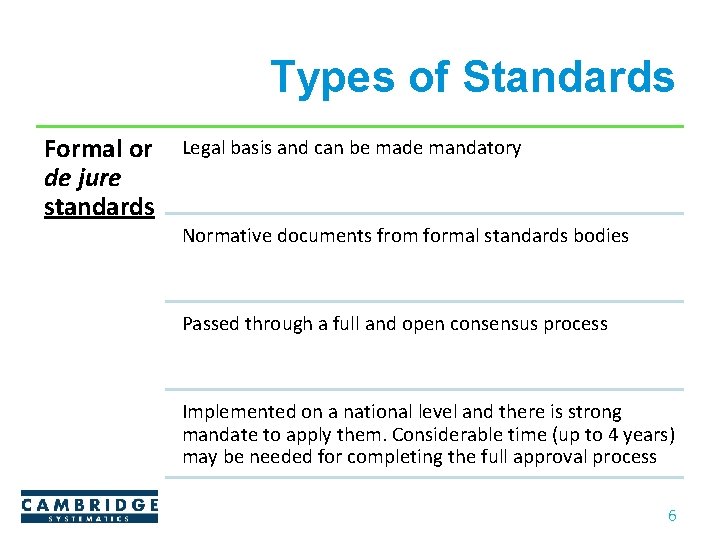
Types of Standards Formal or de jure standards Legal basis and can be made mandatory Normative documents from formal standards bodies Passed through a full and open consensus process Implemented on a national level and there is strong mandate to apply them. Considerable time (up to 4 years) may be needed for completing the full approval process 6
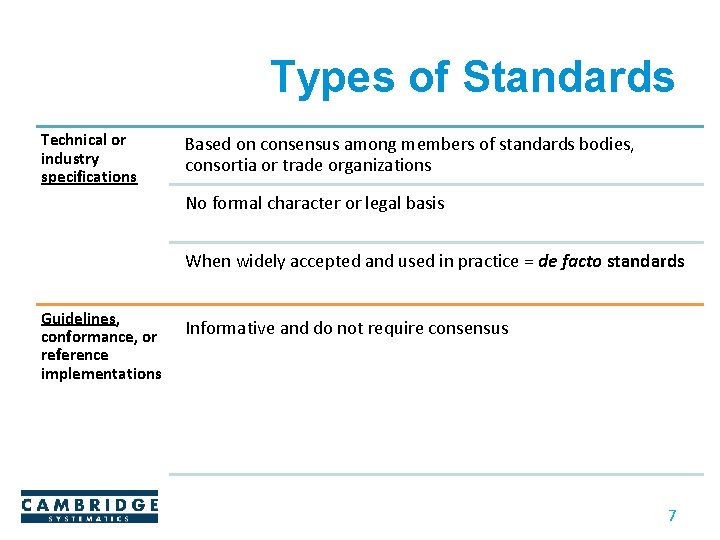
Types of Standards Technical or industry specifications Based on consensus among members of standards bodies, consortia or trade organizations No formal character or legal basis When widely accepted and used in practice = de facto standards Guidelines, conformance, or reference implementations Informative and do not require consensus 7
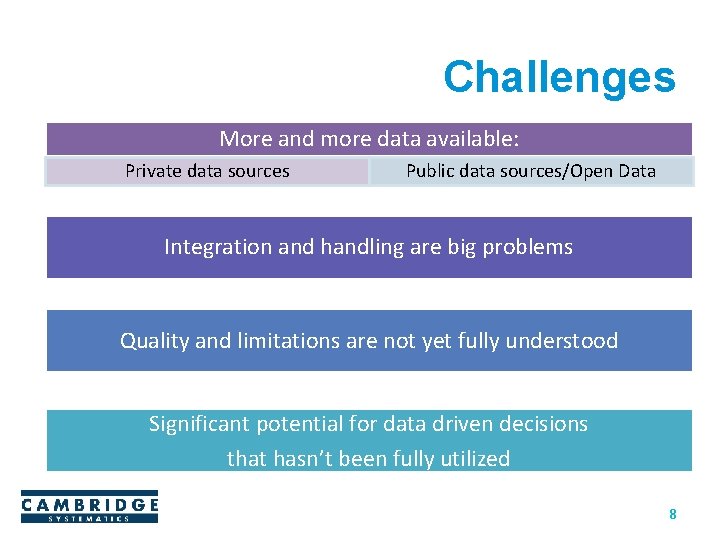
Challenges More and more data available: Private data sources Public data sources/Open Data Integration and handling are big problems Quality and limitations are not yet fully understood Significant potential for data driven decisions that hasn’t been fully utilized 8
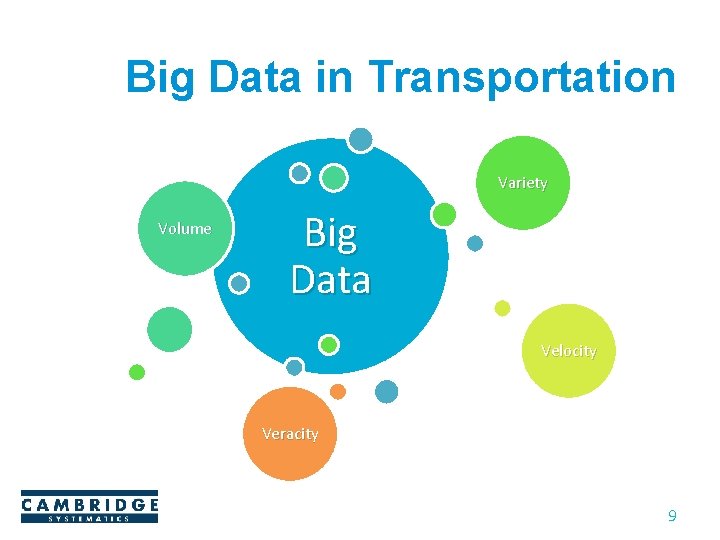
Big Data in Transportation Variety Volume Big Data Velocity Veracity 9
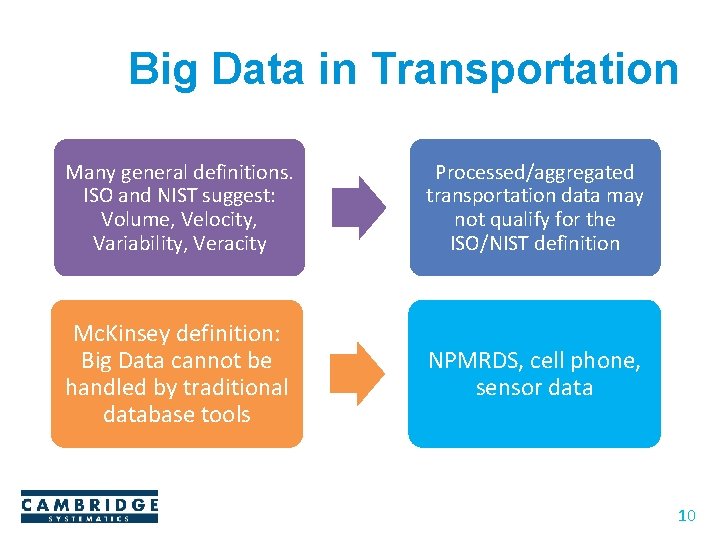
Big Data in Transportation Many general definitions. ISO and NIST suggest: Volume, Velocity, Variability, Veracity Processed/aggregated transportation data may not qualify for the ISO/NIST definition Mc. Kinsey definition: Big Data cannot be handled by traditional database tools NPMRDS, cell phone, sensor data 10
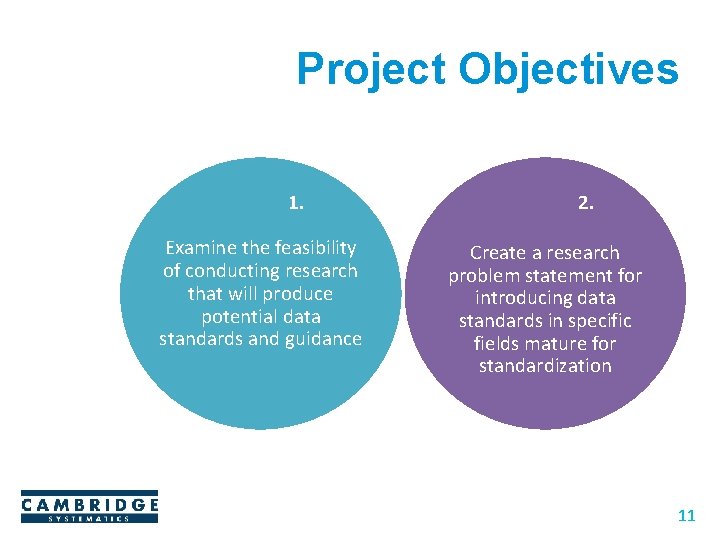
Project Objectives 1. Examine the feasibility of conducting research that will produce potential data standards and guidance 2. Create a research problem statement for introducing data standards in specific fields mature for standardization 11
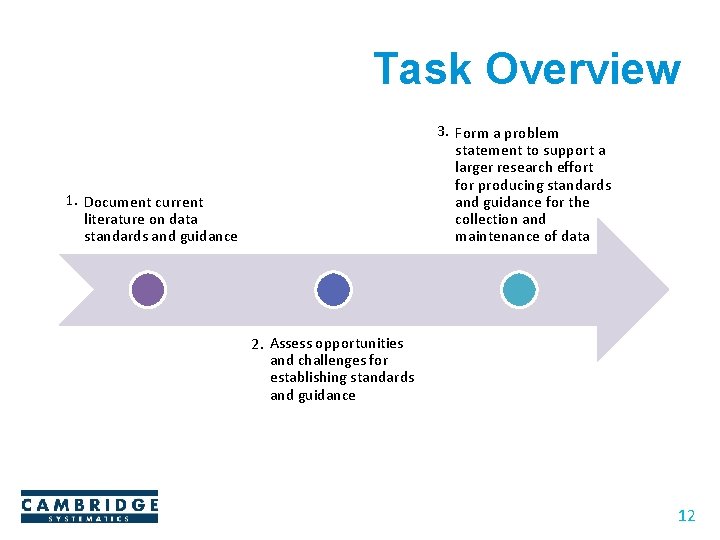
Task Overview 3. Form a problem statement to support a larger research effort for producing standards and guidance for the collection and maintenance of data 1. Document current literature on data standards and guidance 2. Assess opportunities and challenges for establishing standards and guidance 12
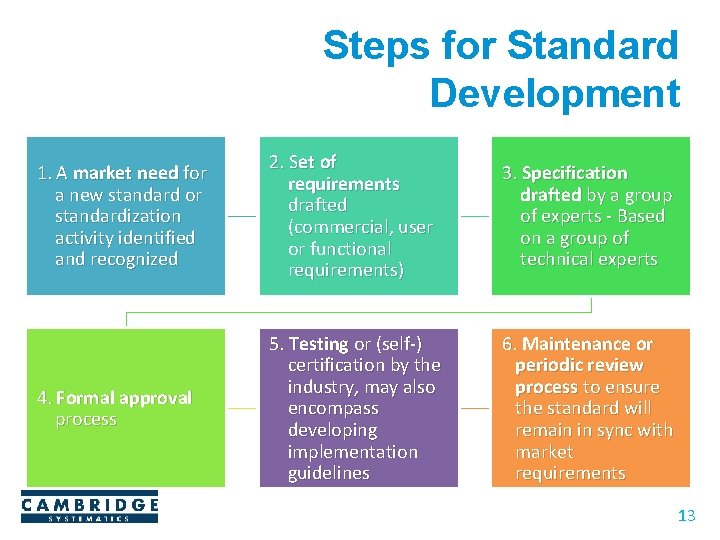
Steps for Standard Development 1. A market need for a new standard or standardization activity identified and recognized 2. Set of requirements drafted (commercial, user or functional requirements) 3. Specification drafted by a group of experts - Based on a group of technical experts 4. Formal approval process 5. Testing or (self-) certification by the industry, may also encompass developing implementation guidelines 6. Maintenance or periodic review process to ensure the standard will remain in sync with market requirements 13
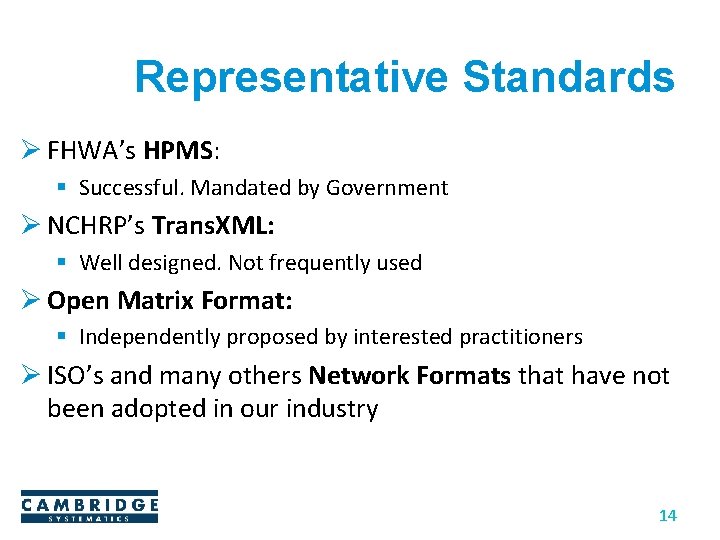
Representative Standards Ø FHWA’s HPMS: § Successful. Mandated by Government Ø NCHRP’s Trans. XML: § Well designed. Not frequently used Ø Open Matrix Format: § Independently proposed by interested practitioners Ø ISO’s and many others Network Formats that have not been adopted in our industry 14
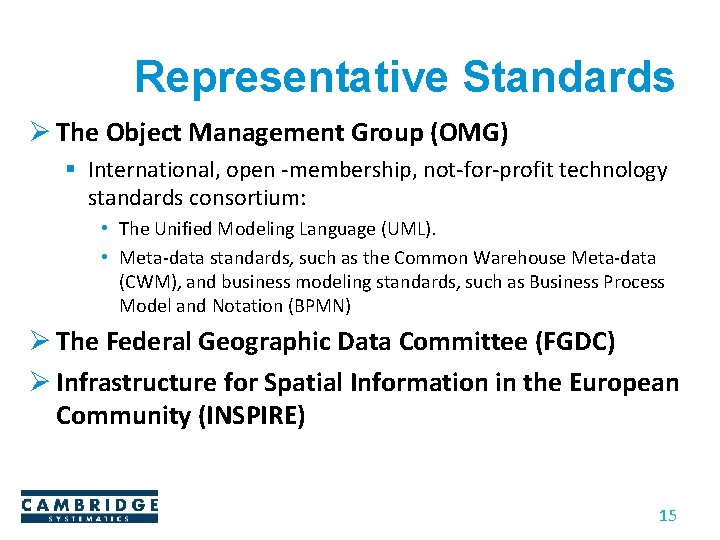
Representative Standards Ø The Object Management Group (OMG) § International, open -membership, not-for-profit technology standards consortium: • The Unified Modeling Language (UML). • Meta-data standards, such as the Common Warehouse Meta-data (CWM), and business modeling standards, such as Business Process Model and Notation (BPMN) Ø The Federal Geographic Data Committee (FGDC) Ø Infrastructure for Spatial Information in the European Community (INSPIRE) 15
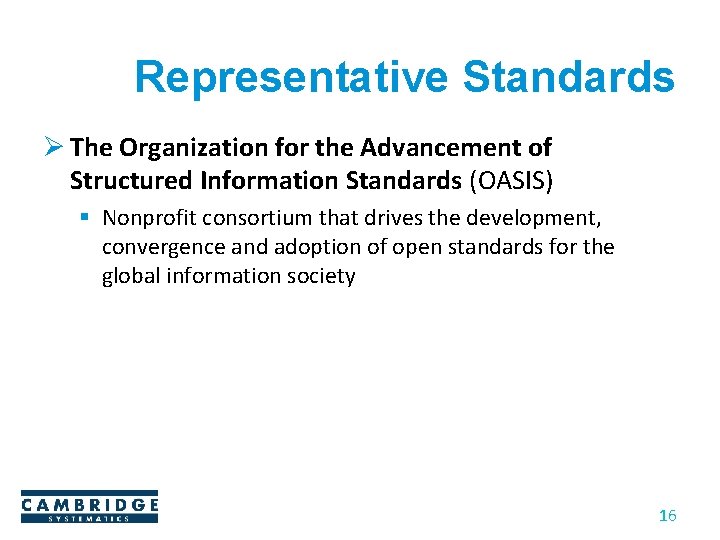
Representative Standards Ø The Organization for the Advancement of Structured Information Standards (OASIS) § Nonprofit consortium that drives the development, convergence and adoption of open standards for the global information society 16
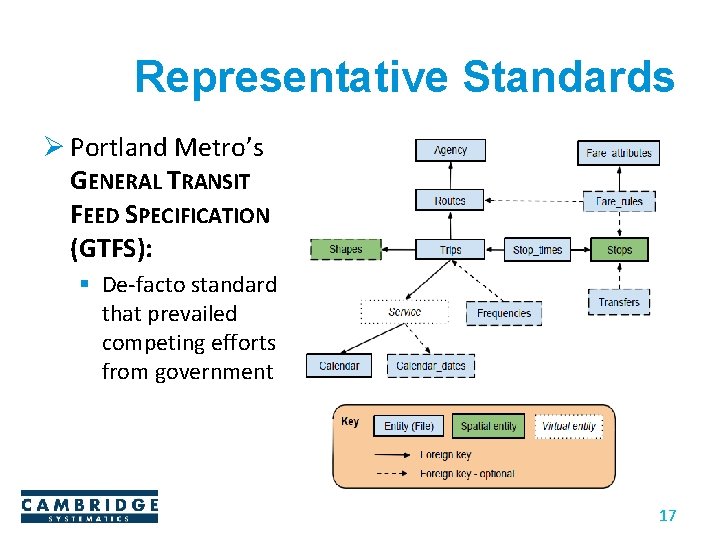
Representative Standards Ø Portland Metro’s GENERAL TRANSIT FEED SPECIFICATION (GTFS): § De-facto standard that prevailed competing efforts from government 17
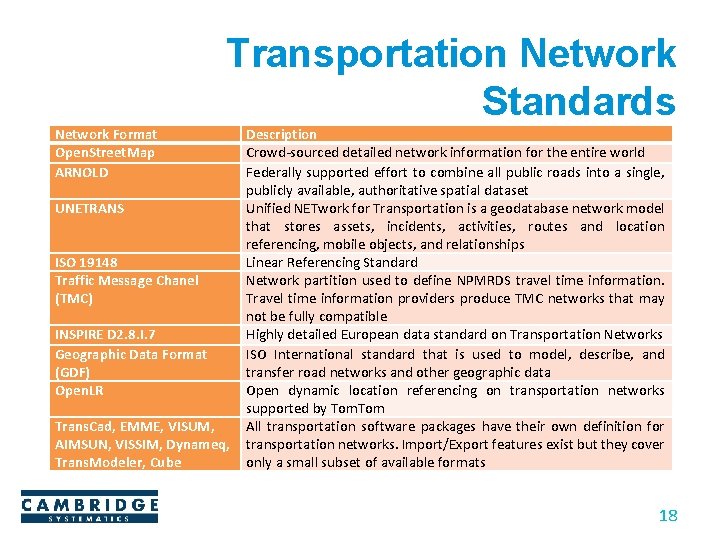
Transportation Network Standards Network Format Open. Street. Map ARNOLD UNETRANS ISO 19148 Traffic Message Chanel (TMC) INSPIRE D 2. 8. I. 7 Geographic Data Format (GDF) Open. LR Trans. Cad, EMME, VISUM, AIMSUN, VISSIM, Dynameq, Trans. Modeler, Cube Description Crowd-sourced detailed network information for the entire world Federally supported effort to combine all public roads into a single, publicly available, authoritative spatial dataset Unified NETwork for Transportation is a geodatabase network model that stores assets, incidents, activities, routes and location referencing, mobile objects, and relationships Linear Referencing Standard Network partition used to define NPMRDS travel time information. Travel time information providers produce TMC networks that may not be fully compatible Highly detailed European data standard on Transportation Networks ISO International standard that is used to model, describe, and transfer road networks and other geographic data Open dynamic location referencing on transportation networks supported by Tom All transportation software packages have their own definition for transportation networks. Import/Export features exist but they cover only a small subset of available formats 18
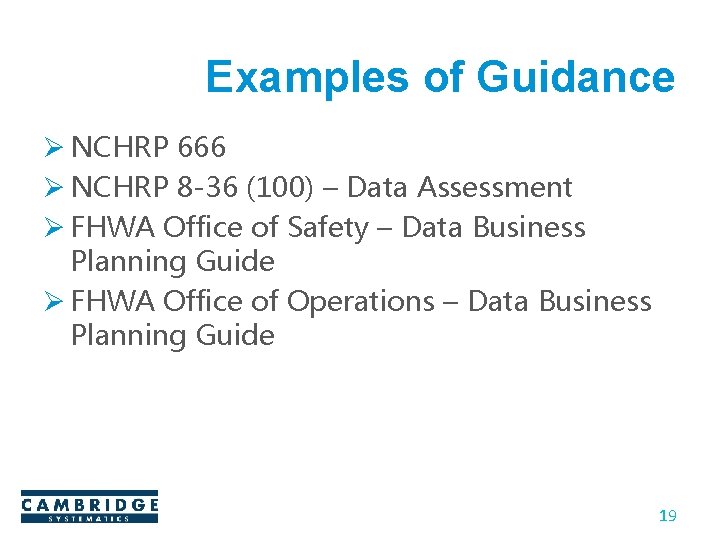
Examples of Guidance Ø NCHRP 666 Ø NCHRP 8 -36 (100) – Data Assessment Ø FHWA Office of Safety – Data Business Planning Guide Ø FHWA Office of Operations – Data Business Planning Guide 19
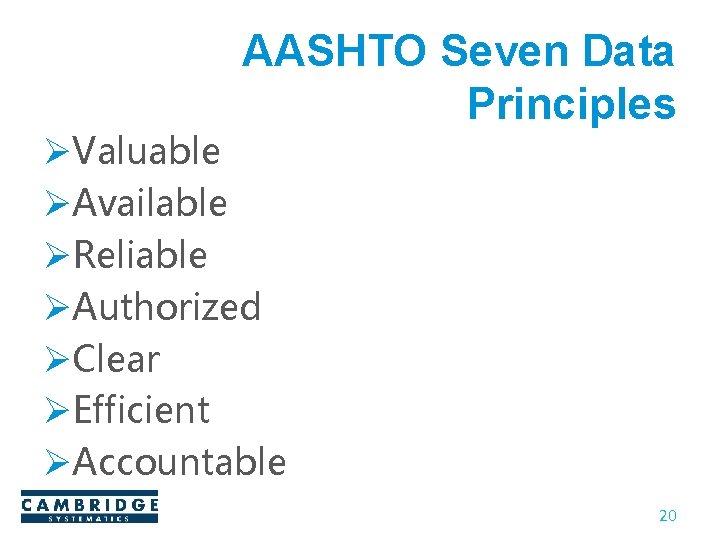
AASHTO Seven Data Principles ØValuable ØAvailable ØReliable ØAuthorized ØClear ØEfficient ØAccountable 20
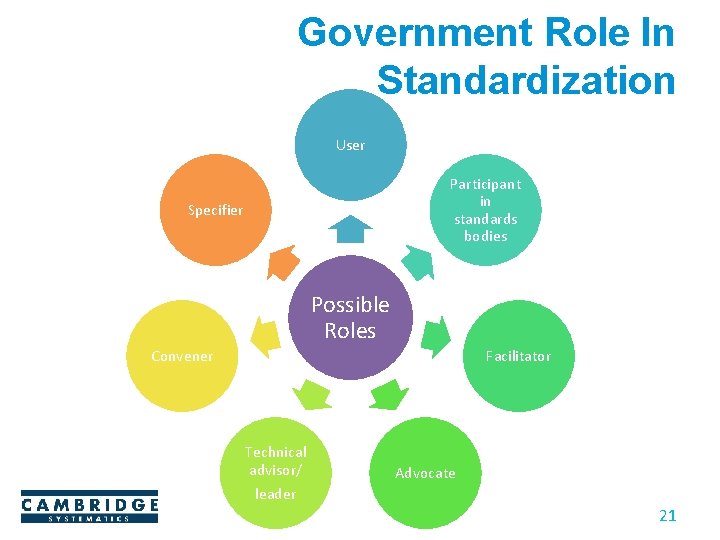
Government Role In Standardization User Participant in standards bodies Specifier Possible Roles Convener Facilitator Technical advisor/ leader Advocate 21
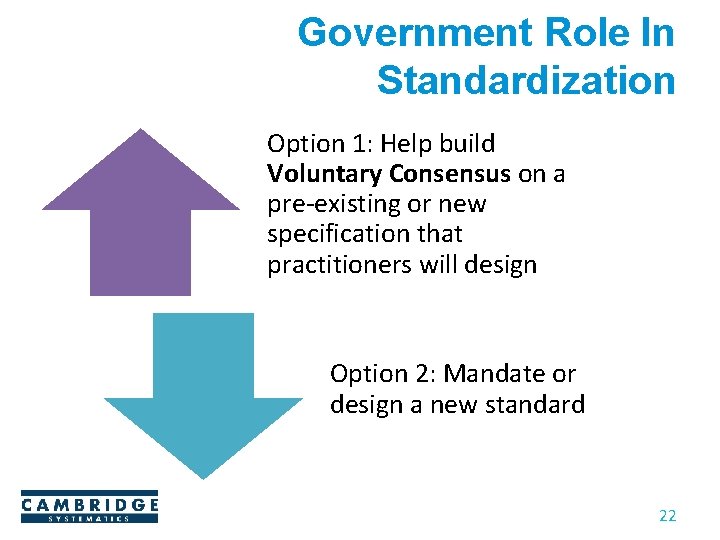
Government Role In Standardization Option 1: Help build Voluntary Consensus on a pre-existing or new specification that practitioners will design Option 2: Mandate or design a new standard 22
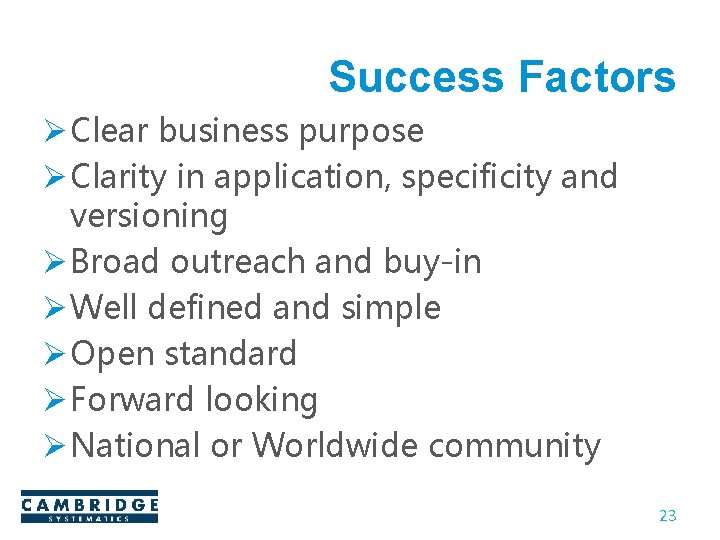
Success Factors Ø Clear business purpose Ø Clarity in application, specificity and versioning Ø Broad outreach and buy-in Ø Well defined and simple Ø Open standard Ø Forward looking Ø National or Worldwide community 23
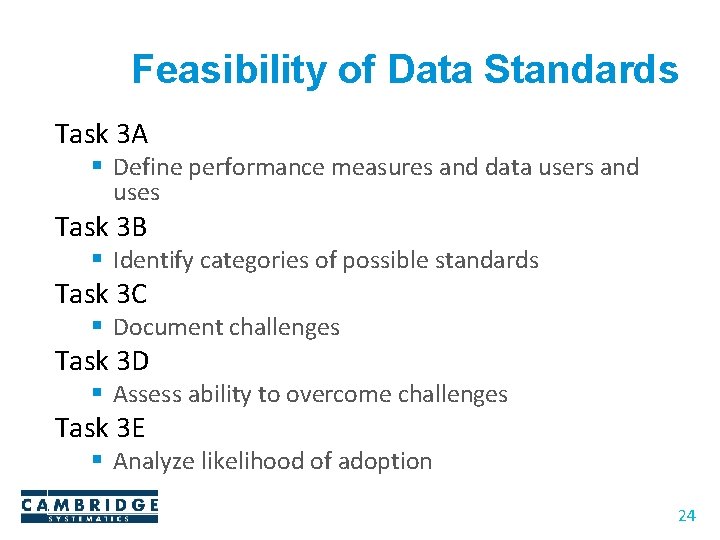
Feasibility of Data Standards Task 3 A § Define performance measures and data users and uses Task 3 B § Identify categories of possible standards Task 3 C § Document challenges Task 3 D § Assess ability to overcome challenges Task 3 E § Analyze likelihood of adoption 24
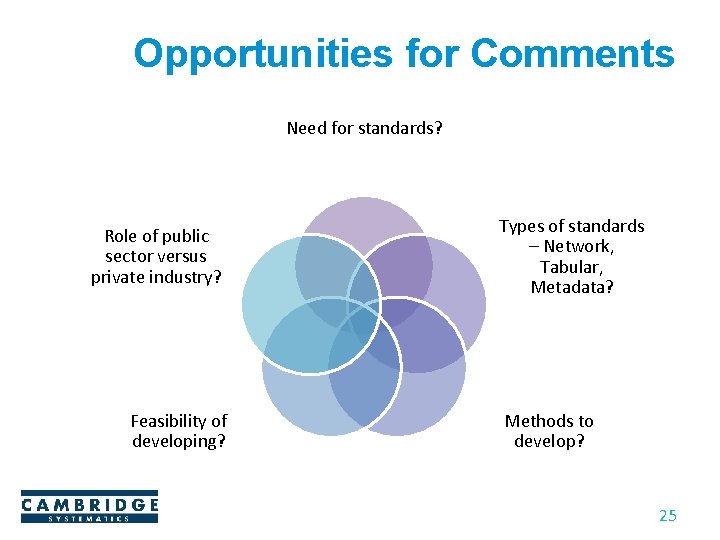
Opportunities for Comments Need for standards? Role of public sector versus private industry? Feasibility of developing? Types of standards – Network, Tabular, Metadata? Methods to develop? 25
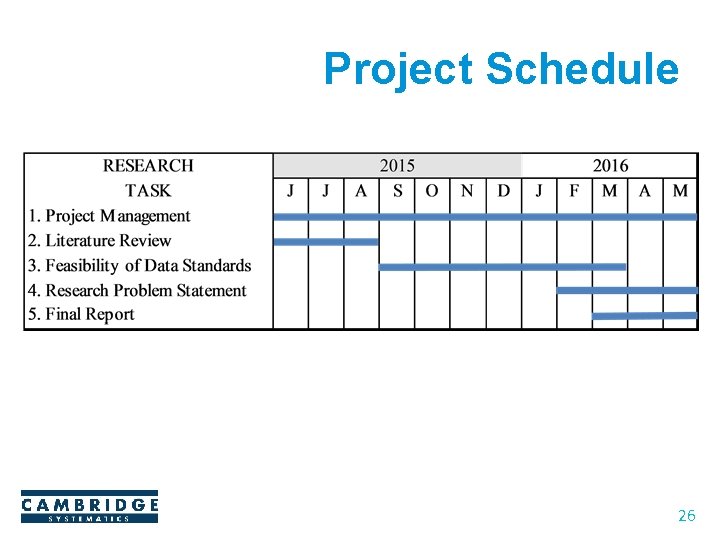
Project Schedule 26
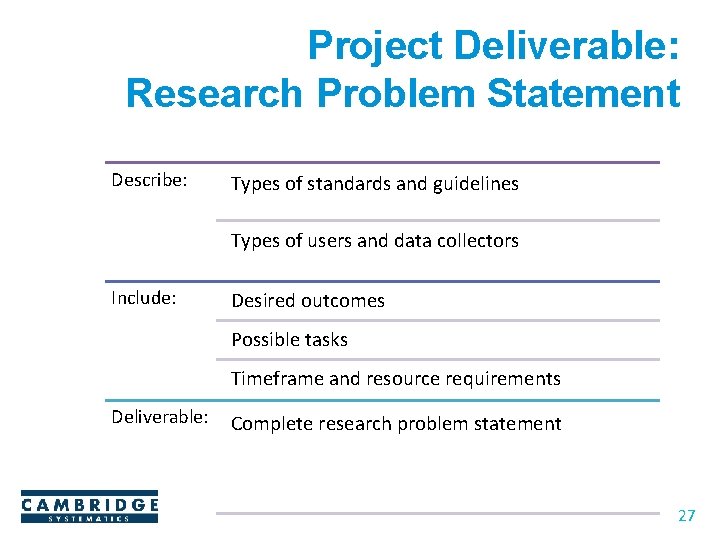
Project Deliverable: Research Problem Statement Describe: Types of standards and guidelines Types of users and data collectors Include: Desired outcomes Possible tasks Timeframe and resource requirements Deliverable: Complete research problem statement 27
Questions? Anita Vandervalk avandervalk@camsys. com Larry Goldstein LGoldstein@nas. edu 28