
NCH School Certificate in Philosophy Photo by Natalia
NCH School Certificate in Philosophy Photo by Natalia Y on Unsplash
The dawn of philosophy Photo by Sebastien Gabriel on Unsplash
“The first philosopher” Thales of Miletus
A good theory? “Everything is water” Photo by Imleedh Ali on Unsplash
Keynotes Western philosophy th began in the 7 century BCE in Ancient Greece.
Keynotes The earliest philosophers were called the ‘pre-Socratics’
Keynotes Thales, said to be the first philosopher, rejected traditional Greek mystical ideas about the world.
Keynotes Thales tried to understand the world using observation and reason.
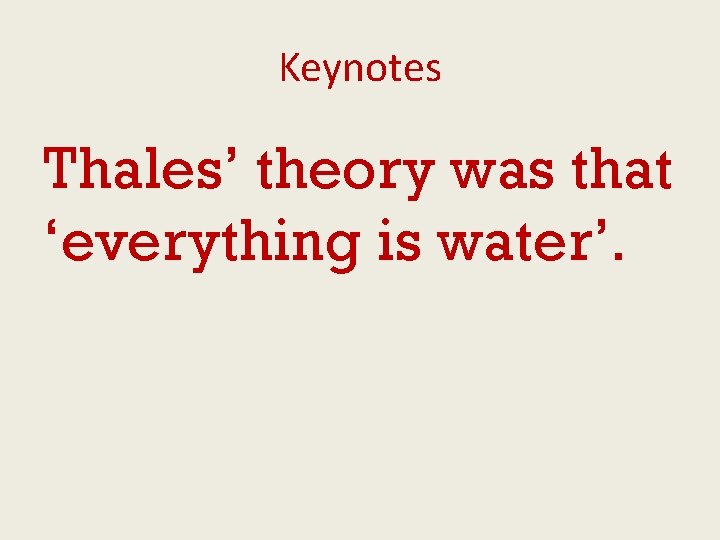
Keynotes Thales’ theory was that ‘everything is water’.

Research one pre-Socratic philosopher. Introduce them to your group. Photo by Imleedh Ali on Unsplash
Searching for the good life: Socrates Photo by Imleedh Ali on Unsplash
Introducing Socrates
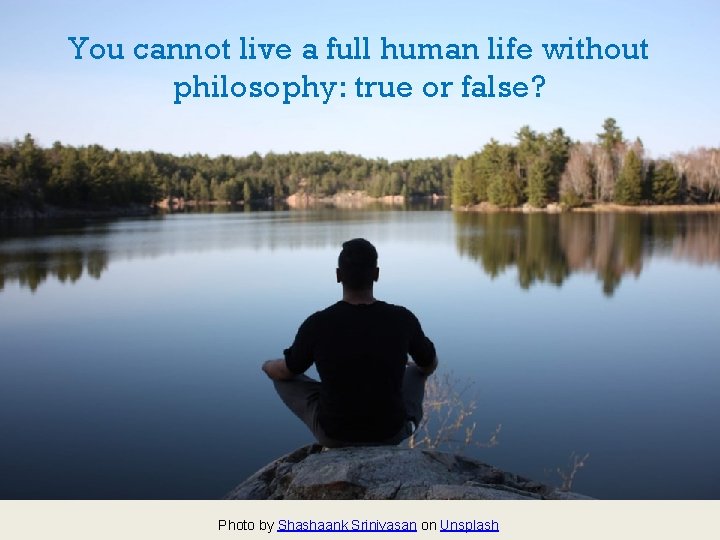
You cannot live a full human life without philosophy: true or false? Photo by Shashaank Srinivasan on Unsplash
Socrates: the man and his life
Keynotes Socrates is held to be the ‘father of philosophy’.
Keynotes The oracle prophesied that Socrates was the ‘wisest man of all’.
Keynotes Socrates realized that he was wiser than all others, because he knew how little he knew.
Keynotes Socrates enraged his fellow Athenians by critically questioning their ideas.
Keynotes Socrates was convicted of denying the gods of the state and corrupting the youth, and executed in 399 BCE.
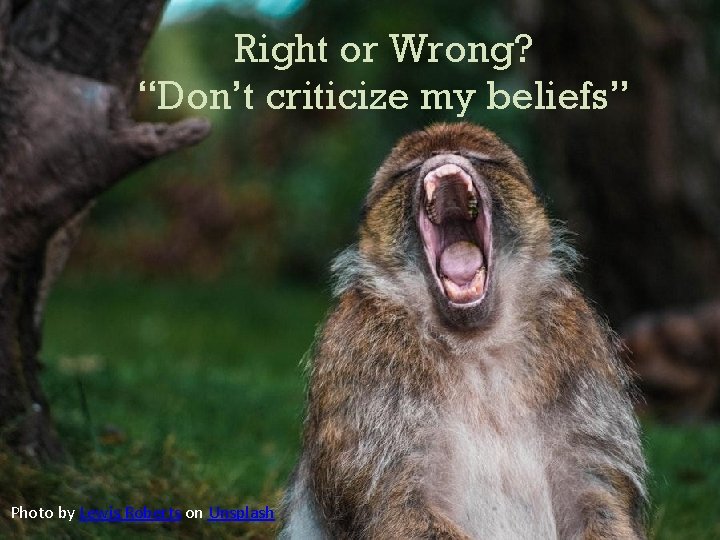
Right or Wrong? “Don’t criticize my beliefs” Photo by Lewis Roberts on Unsplash
The Ideas of Socrates
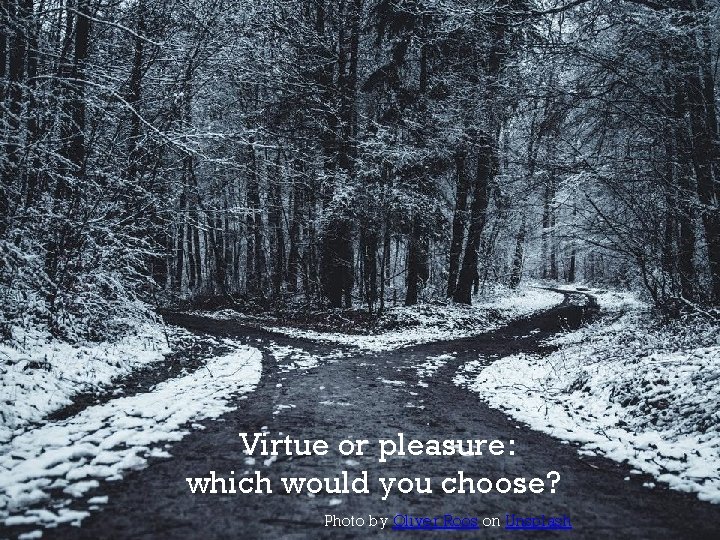
Virtue or pleasure: which would you choose? Photo by Oliver Roos on Unsplash
What is real? Photo by Aziz Acharki on Unsplash
Is time real? Photo by Erik Witsoe on Unsplash
Are numbers real? Photo by Jennifer Burk on Unsplash
Is the world of sense experience real?
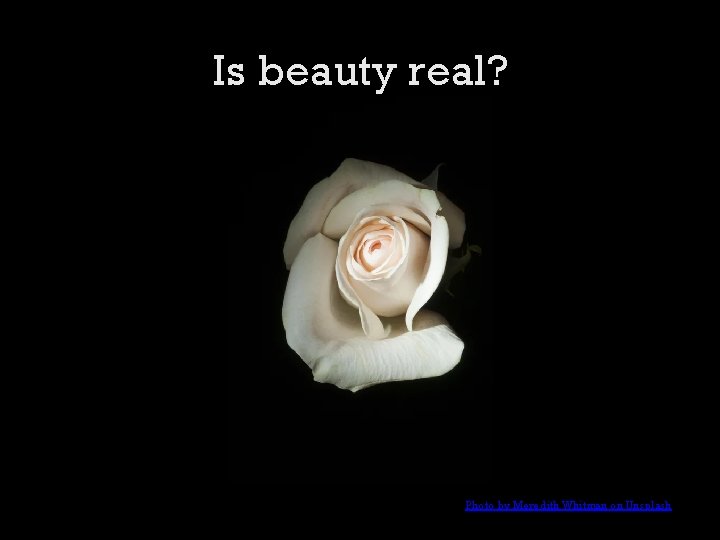
Is beauty real? Photo by Meredith Whitman on Unsplash
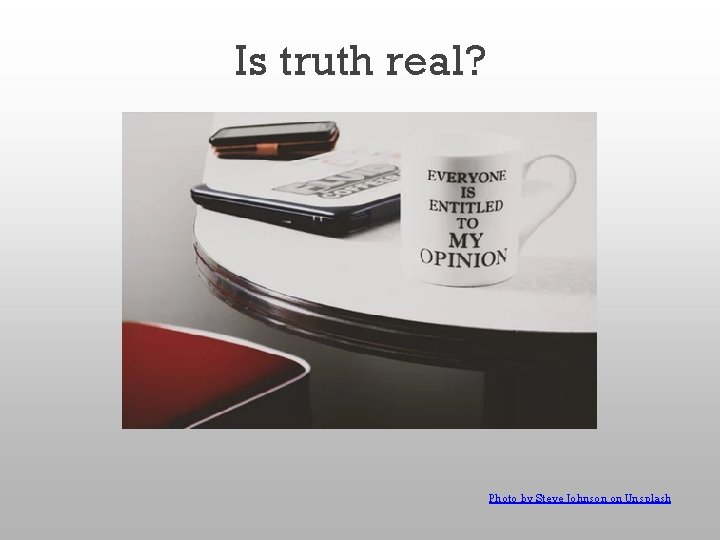
Is truth real? Photo by Steve Johnson on Unsplash
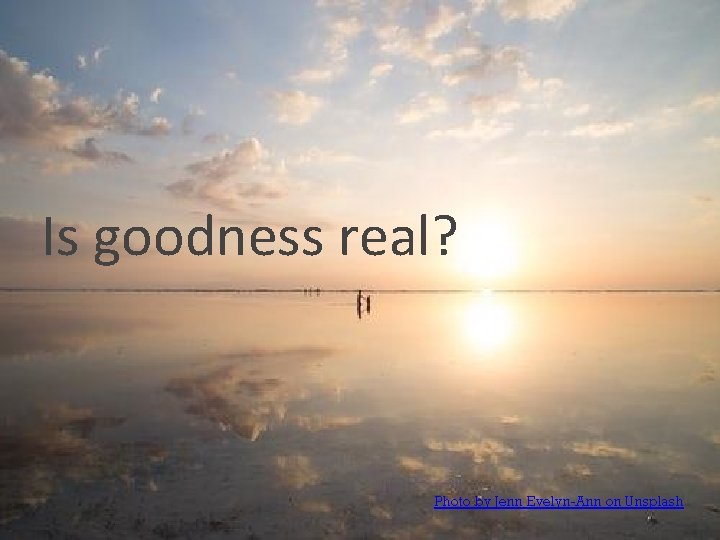
Is goodness real? Photo by Jenn Evelyn-Ann on Unsplash
Introducing Plato (428 - 347) BCE
Keynotes Plato was a student of Socrates. He believed that the world of the senses is not reality.
Keynotes Reality is made up of the Ideal Forms, things like Truth, Goodness and Beauty.
Keynotes Philosophers should free themselves from the illusions around them and contemplate these pure Forms.
Plato’s Cave
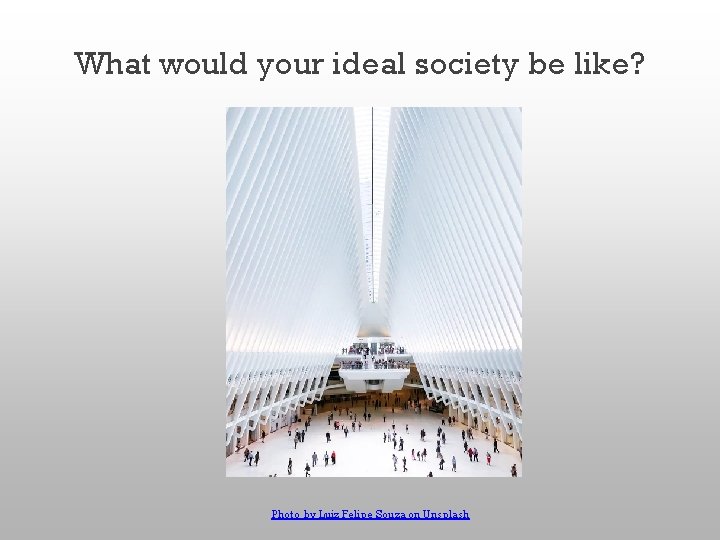
What would your ideal society be like? Photo by Luiz Felipe Souza on Unsplash
Debate “We should let people believe their comfortable illusions. ” Photo by David Clode on Unsplash
Aristotle: How to live well Photo by Tim Mossholder on Unsplash
Introducing Aristotle
What makes people happy? Photo by Ankush Minda on Unsplash
What is art for? Photo by Debby Hudson on Unsplash
What makes someone a true friend? Photo by Anthony Intraversato on Unsplash
Aristotle
Keynotes Aristotle believed that to understand something, we needed to know its purpose.
Keynotes The way to be happy is to live a life of moral goodness.
Keynotes True friends care about what is good for their friends.
Keynotes The point of art is to make us desire what is good and fear what is bad.
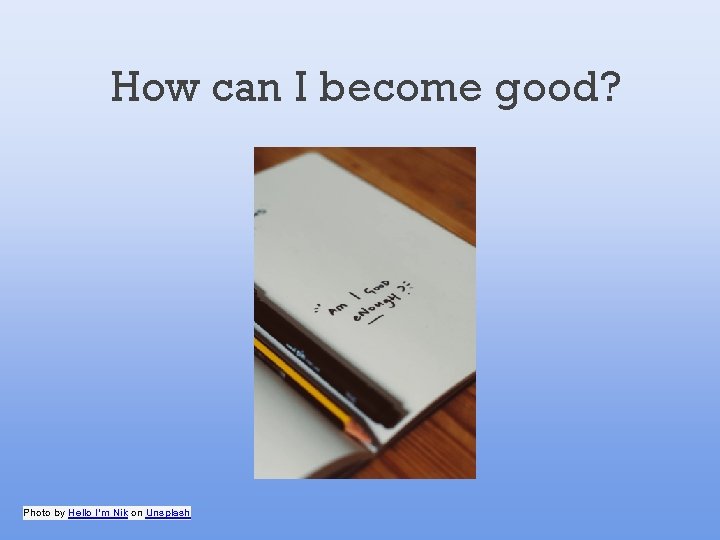
How can I become good? Photo by Hello I'm Nik on Unsplash
Aristotle and Virtue Theory
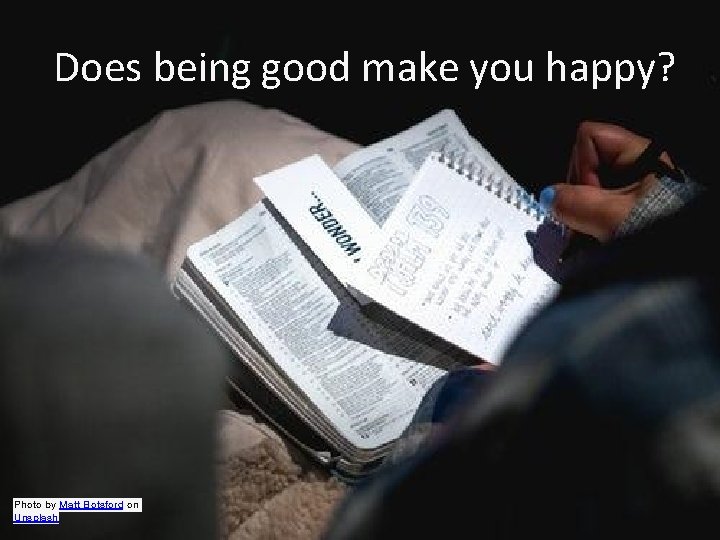
Does being good make you happy? Photo by Matt Botsford on Unsplash
Keynotes For Aristotle, the good life is a life of virtue.
Keynotes Virtues (good qualities) lie in between vices (bad qualities)
Keynotes We become good by copying the actions of good people until they become part of our character.
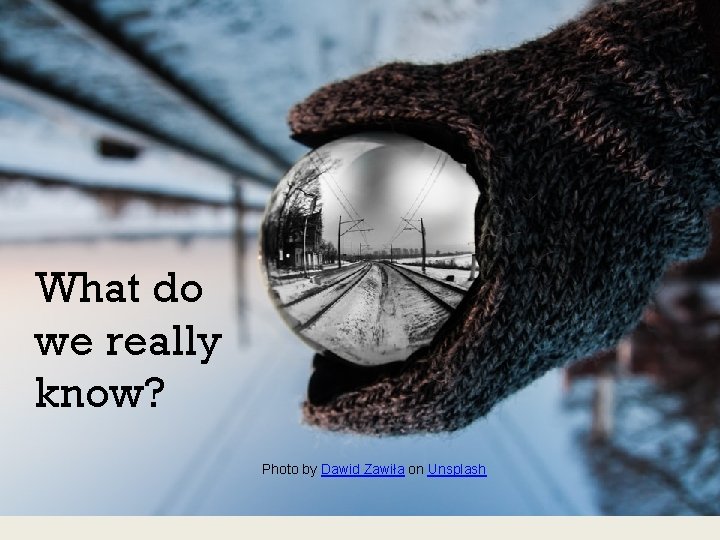
What do we really know? Photo by Dawid Zawiła on Unsplash
Can you trust your senses?

Rene Descartes
For discussion. . • How do we know the difference between reality and illusion? • How do we know the difference between being awake and being asleep? • Do we know the world is real and we are not just parts of a computer simulation?
Keynotes Descartes asked whether we could know that the physical world around us is real
Keynotes Sceptics argue that we cannot know for certain that the world is not an illusion.
Are we living in a simulation?
If you could live in a perfect simulation, would you?
Where do you think knowledge comes from? Can we ever be completely certain of anything? Do we know that the world around us is real? Would you prefer to live in an imperfect but real world or a perfect simulation? Photo by Papaioannou Kostas on Unsplash
- Slides: 61