
NCAR UCAR A scientific poster has this structure

- Slides: 12
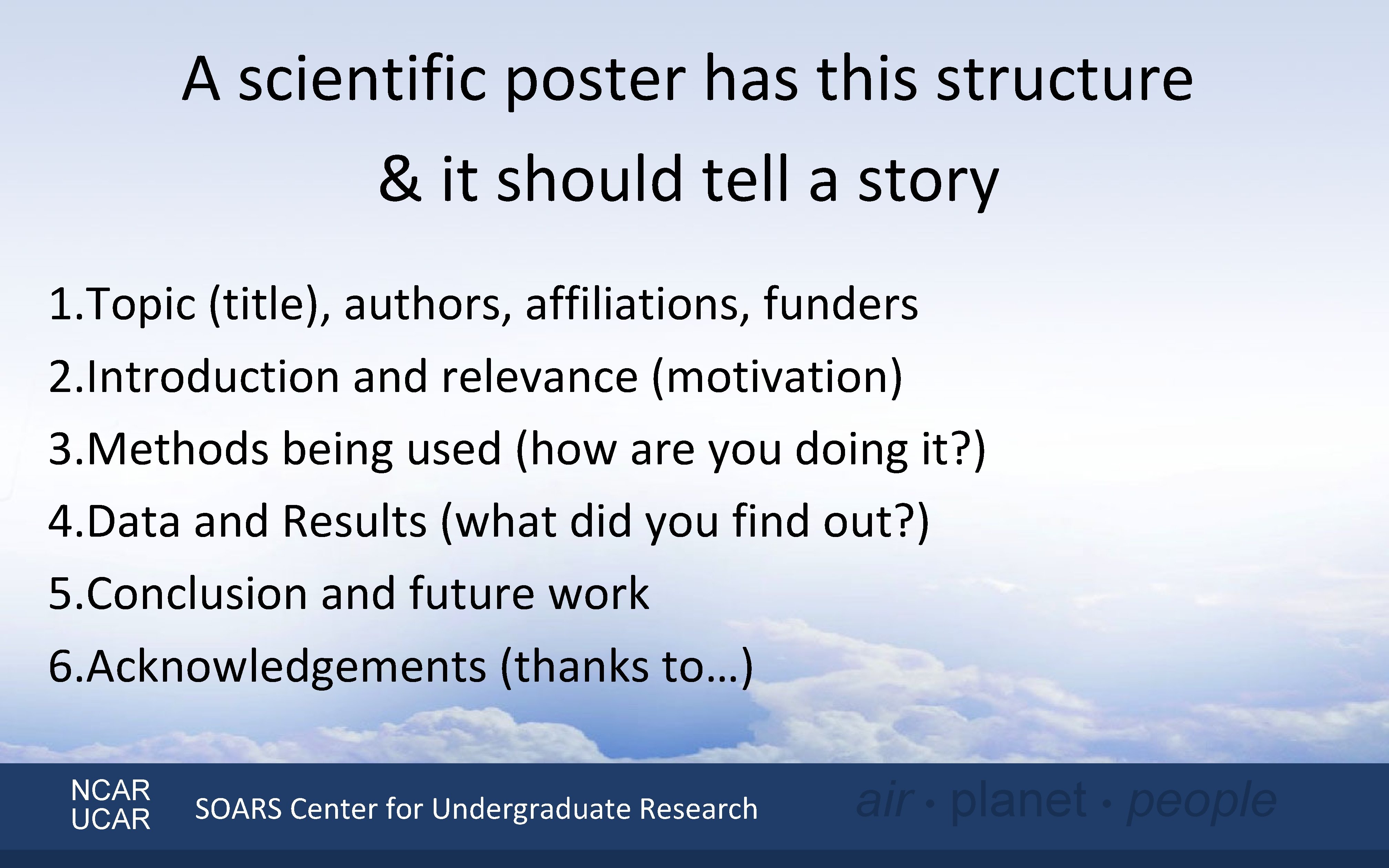
NCAR UCAR A scientific poster has this structure & it should tell a story 1. Topic (title), authors, affiliations, funders 2. Introduction and relevance (motivation) 3. Methods being used (how are you doing it? ) 4. Data and Results (what did you find out? ) 5. Conclusion and future work 6. Acknowledgements (thanks to…) NCAR UCAR SOARS Center for Undergraduate Research air • planet • people
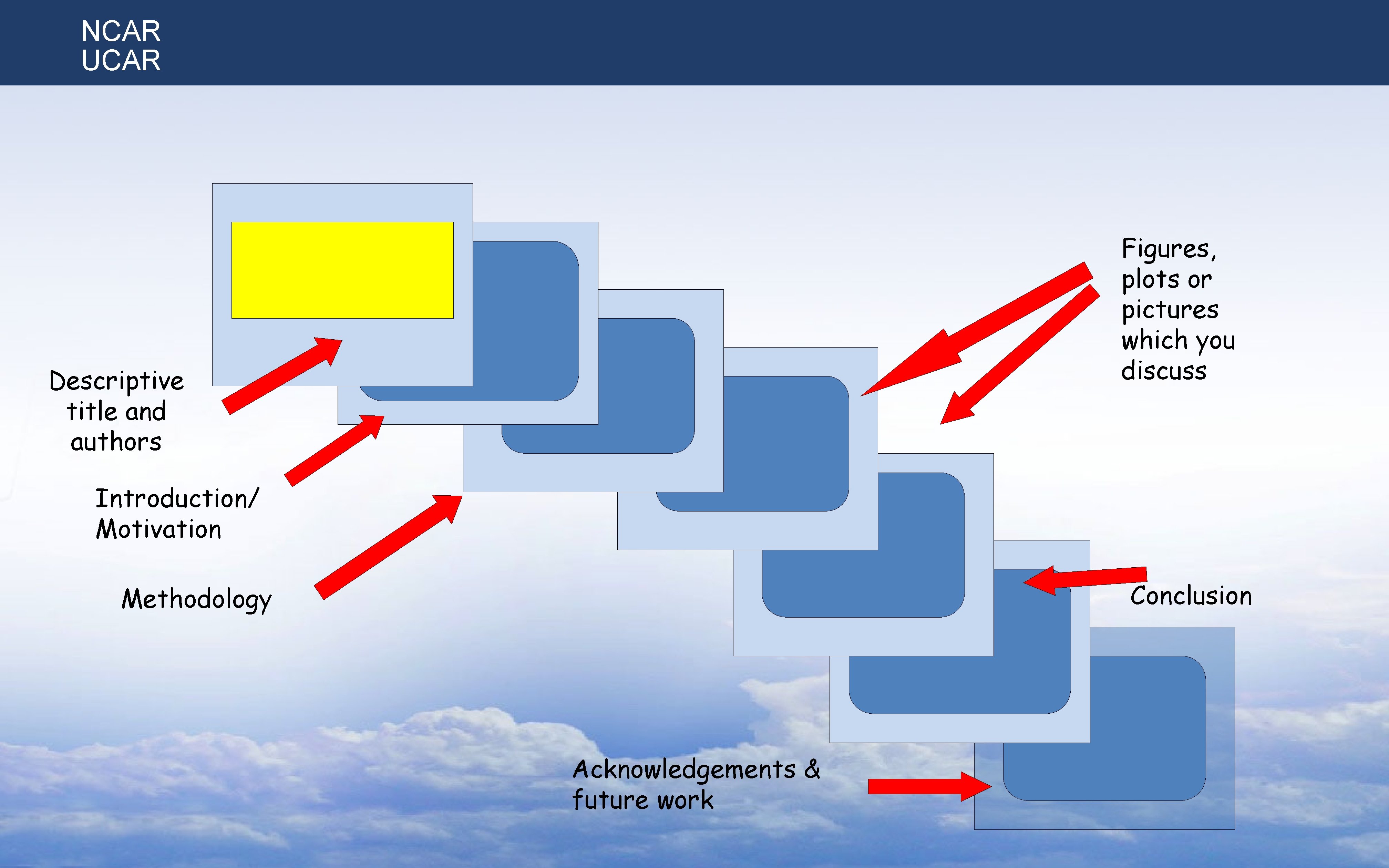
NCAR UCAR Figures, plots or pictures which you discuss Descriptive title and authors Introduction/ Motivation Conclusion Methodology Acknowledgements & future work
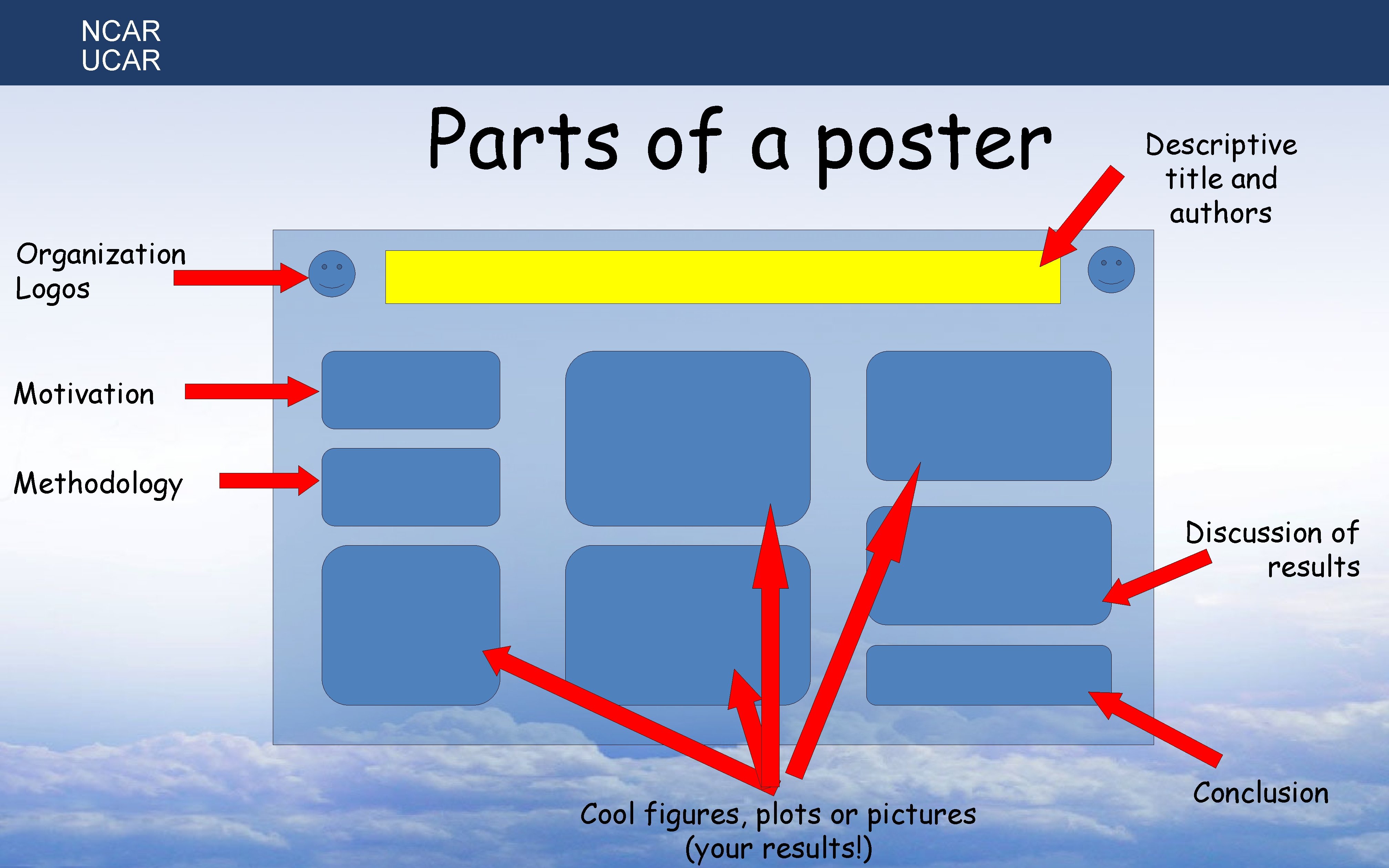
NCAR UCAR Parts of a poster Descriptive title and authors Organization Logos Motivation Methodology Discussion of results Cool figures, plots or pictures (your results!) Conclusion
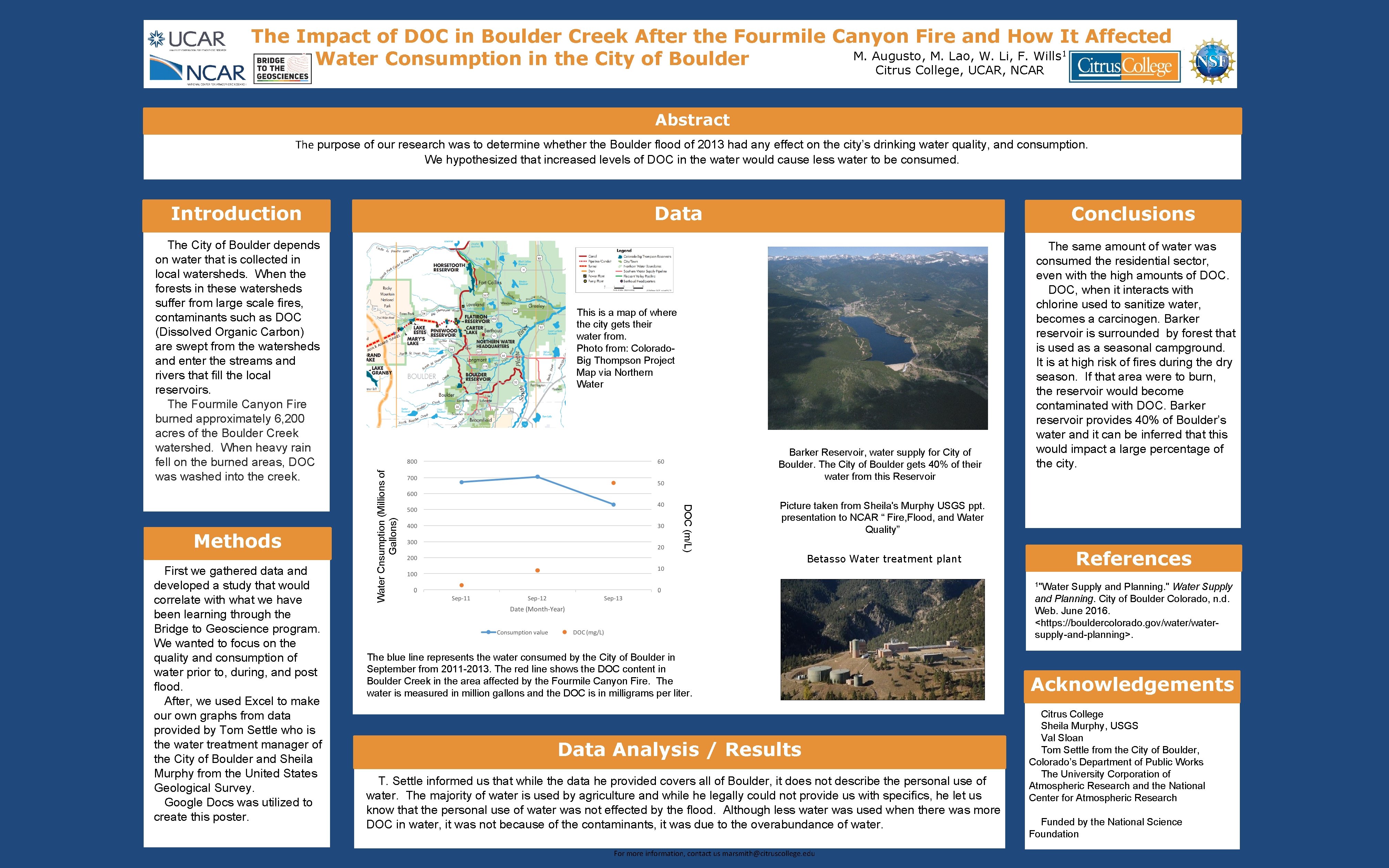
The Impact of DOC in Boulder Creek After the Fourmile Canyon Fire and How It Affected 1 M. Augusto, M. Lao, W. Li, F. Wills Water Consumption in the City of Boulder Citrus College, UCAR, NCAR Abstract The purpose of our research was to determine whether the Boulder flood of 2013 had any effect on the city’s drinking water quality, and consumption. Results We hypothesized that increased levels of DOC in the water would cause less water to be consumed. Data Introduction First we gathered data and developed a study that would correlate with what we have been learning through the Bridge to Geoscience program. We wanted to focus on the quality and consumption of water prior to, during, and post flood. After, we used Excel to make our own graphs from data provided by Tom Settle who is the water treatment manager of the City of Boulder and Sheila Murphy from the United States Geological Survey. Google Docs was utilized to create this poster. 5 DOC (m/L) Methods This is a map of where the city gets their water from. Photo from: Colorado. Big Thompson Project Map via Northern Water Cnsumption (Millions of Gallons) The City of Boulder depends on water that is collected in local watersheds. When the forests in these watersheds suffer from large scale fires, contaminants such as DOC (Dissolved Organic Carbon) are swept from the watersheds and enter the streams and rivers that fill the local reservoirs. The Fourmile Canyon Fire burned approximately 6, 200 acres of the Boulder Creek watershed. When heavy rain fell on the burned areas, DOC washed into the creek. Conclusions Barker Reservoir, water supply for City of Boulder. The City of Boulder gets 40% of their water from this Reservoir The same amount of water was consumed the residential sector, even with the high amounts of DOC, when it interacts with chlorine used to sanitize water, becomes a carcinogen. Barker reservoir is surrounded by forest that is used as a seasonal campground. It is at high risk of fires during the dry season. If that area were to burn, the reservoir would become contaminated with DOC. Barker reservoir provides 40% of Boulder’s water and it can be inferred that this would impact a large percentage of the city. Picture taken from Sheila's Murphy USGS ppt. presentation to NCAR “ Fire, Flood, and Water Quality” References Betasso Water treatment plant 1"Water Supply and Planning. " Water Supply and Planning. City of Boulder Colorado, n. d. Web. June 2016. <https: //bouldercolorado. gov/watersupply-and-planning>. The blue line represents the water consumed by the City of Boulder in September from 2011 -2013. The red line shows the DOC content in Boulder Creek in the area affected by the Fourmile Canyon Fire. The water is measured in million gallons and the DOC is in milligrams per liter. Data Analysis / Results T. Settle informed us that while the data he provided covers all of Boulder, it does not describe the personal use of water. The majority of water is used by agriculture and while he legally could not provide us with specifics, he let us know that the personal use of water was not effected by the flood. Although less water was used when there was more DOC in water, it was not because of the contaminants, it was due to the overabundance of water. For more information, contact us marsmith@citruscollege. edu Acknowledgements Citrus College Sheila Murphy, USGS Val Sloan Tom Settle from the City of Boulder, Colorado’s Department of Public Works The University Corporation of Atmospheric Research and the National Center for Atmospheric Research Funded by the National Science Foundation
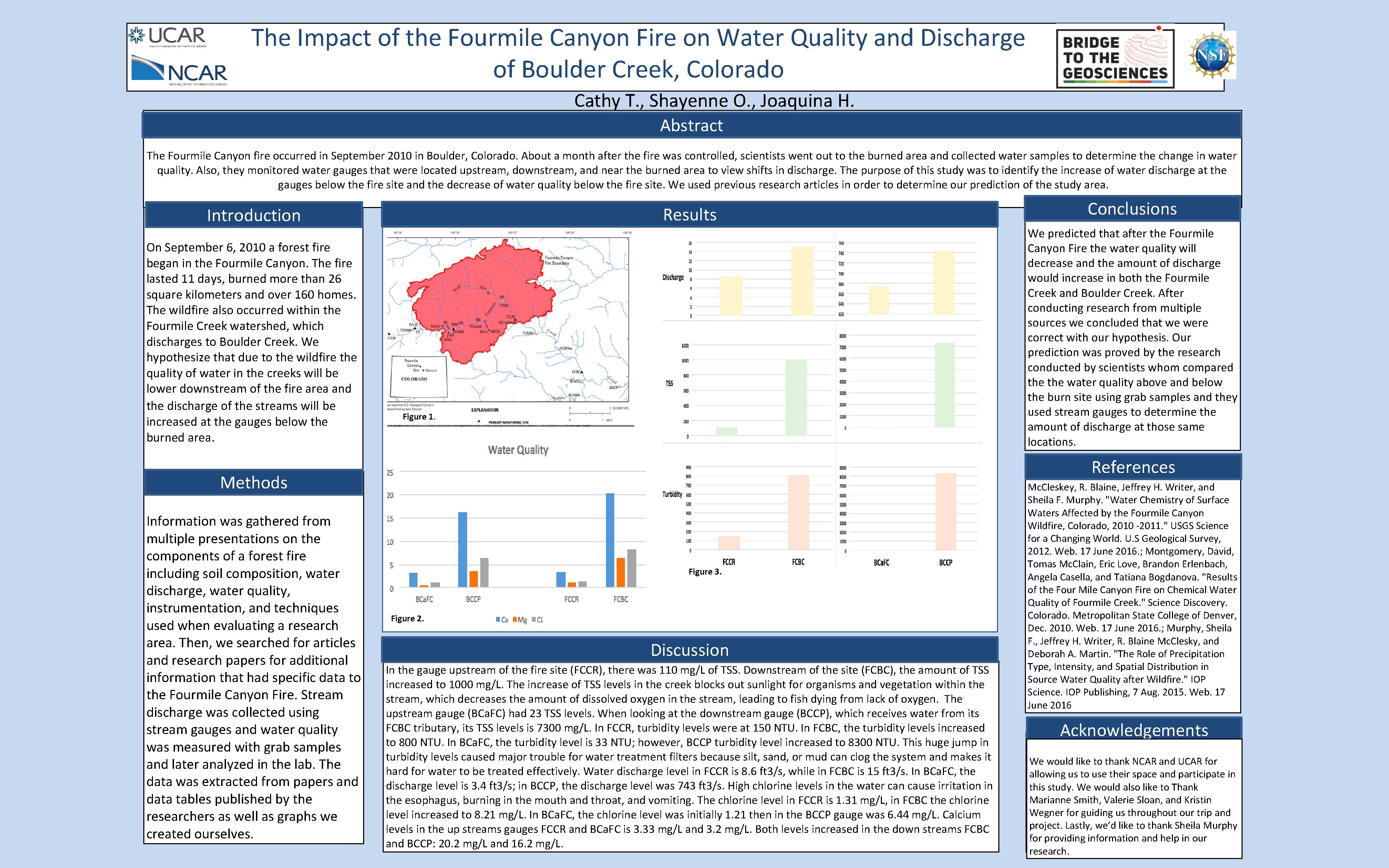
The Impact of the Fourmile Canyon Fire on Water Quality and Discharge of Boulder Creek, Colorado Cathy T. , Shayenne O. , Joaquina H. Abstract Resultsscientists went out to the burned area and collected water samples to determine the change in water The Fourmile Canyon fire occurred in September 2010 in Boulder, Colorado. About a month after the fire was controlled, quality. Also, they monitored water gauges that were located upstream, downstream, and near the burned area to view shifts in discharge. The purpose of this study was to identify the increase of water discharge at the gauges below the fire site and the decrease of water quality below the fire site. We used previous research articles in order to determine our prediction of the study area. Introduction On September 6, 2010 a forest fire began in the Fourmile Canyon. The fire lasted 11 days, burned more than 26 square kilometers and over 160 homes. The wildfire also occurred within the Fourmile Creek watershed, which discharges to Boulder Creek. We hypothesize that due to the wildfire the quality of water in the creeks will be lower downstream of the fire area and the discharge of the streams will be increased at the gauges below the burned area. Results Figures, pictures etc… don’t forget captions! Figure 1. We predicted that after the Fourmile Canyon Fire the water quality will decrease and the amount of discharge would increase in both the Fourmile Creek and Boulder Creek. After conducting research from multiple sources we concluded that we were correct with our hypothesis. Our prediction was proved by the research conducted by scientists whom compared the water quality above and below the burn site using grab samples and they used stream gauges to determine the amount of discharge at those same locations. References Methods Information was gathered from multiple presentations on the components of a forest fire including soil composition, water discharge, water quality, instrumentation, and techniques used when evaluating a research area. Then, we searched for articles and research papers for additional information that had specific data to the Fourmile Canyon Fire. Stream discharge was collected using stream gauges and water quality was measured with grab samples and later analyzed in the lab. The data was extracted from papers and data tables published by the researchers as well as graphs we created ourselves. Conclusions Figure 3. Figure 2. Discussion In the gauge upstream of the fire site (FCCR), there was 110 mg/L of TSS. Downstream of the site (FCBC), the amount of TSS increased to 1000 mg/L. The increase of TSS levels in the creek blocks out sunlight for organisms and vegetation within the stream, which decreases the amount of dissolved oxygen in the stream, leading to fish dying from lack of oxygen. The upstream gauge (BCa. FC) had 23 TSS levels. When looking at the downstream gauge (BCCP), which receives water from its FCBC tributary, its TSS levels is 7300 mg/L. In FCCR, turbidity levels were at 150 NTU. In FCBC, the turbidity levels increased to 800 NTU. In BCa. FC, the turbidity level is 33 NTU; however, BCCP turbidity level increased to 8300 NTU. This huge jump in turbidity levels caused major trouble for water treatment filters because silt, sand, or mud can clog the system and makes it hard for water to be treated effectively. Water discharge level in FCCR is 8. 6 ft 3/s, while in FCBC is 15 ft 3/s. In BCa. FC, the discharge level is 3. 4 ft 3/s; in BCCP, the discharge level was 743 ft 3/s. High chlorine levels in the water can cause irritation in the esophagus, burning in the mouth and throat, and vomiting. The chlorine level in FCCR is 1. 31 mg/L, in FCBC the chlorine level increased to 8. 21 mg/L. In BCa. FC, the chlorine level was initially 1. 21 then in the BCCP gauge was 6. 44 mg/L. Calcium levels in the up streams gauges FCCR and BCa. FC is 3. 33 mg/L and 3. 2 mg/L. Both levels increased in the down streams FCBC and BCCP: 20. 2 mg/L and 16. 2 mg/L. Mc. Cleskey, R. Blaine, Jeffrey H. Writer, and Sheila F. Murphy. "Water Chemistry of Surface Waters Affected by the Fourmile Canyon Wildfire, Colorado, 2010 -2011. " USGS Science for a Changing World. U. S Geological Survey, 2012. Web. 17 June 2016. ; Montgomery, David, Tomas Mc. Clain, Eric Love, Brandon Erlenbach, Angela Casella, and Tatiana Bogdanova. "Results of the Four Mile Canyon Fire on Chemical Water Quality of Fourmile Creek. " Science Discovery. Colorado. Metropolitan State College of Denver, Dec. 2010. Web. 17 June 2016. ; Murphy, Sheila F. , Jeffrey H. Writer, R. Blaine Mc. Clesky, and Deborah A. Martin. "The Role of Precipitation Type, Intensity, and Spatial Distribution in Source Water Quality after Wildfire. " IOP Science. IOP Publishing, 7 Aug. 2015. Web. 17 June 2016 Acknowledgements We would like to thank NCAR and UCAR for allowing us to use their space and participate in this study. We would also like to Thank Marianne Smith, Valerie Sloan, and Kristin Wegner for guiding us throughout our trip and project. Lastly, we’d like to thank Sheila Murphy for providing information and help in our research.
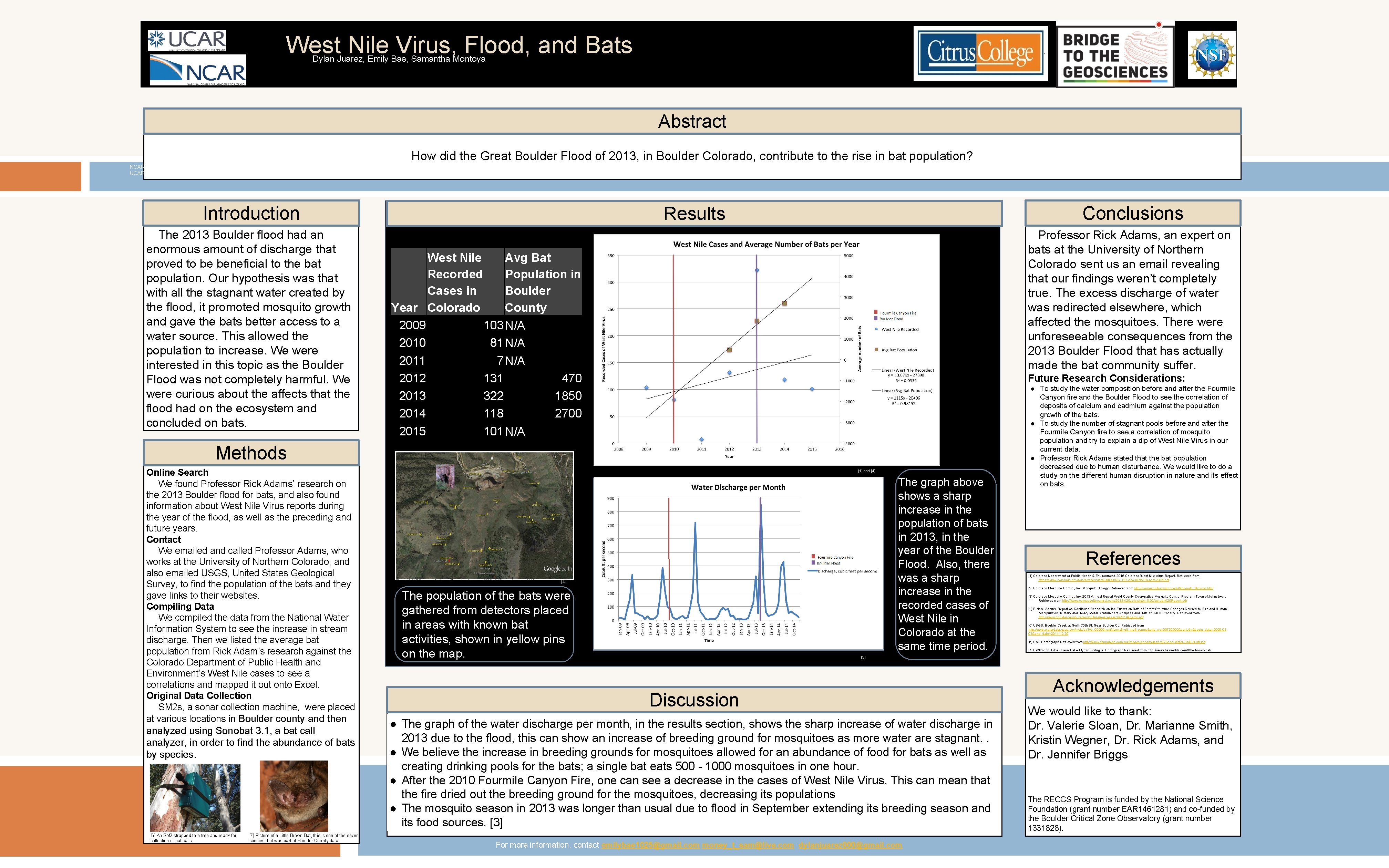
West Nile Virus, Flood, and Bats Dylan Juarez, Emily Bae, Samantha Montoya Abstract Results How did the Great Boulder Flood of 2013, in Boulder Colorado, contribute to the rise in bat population? NCAR UCAR Introduction The 2013 Boulder flood had an enormous amount of discharge that proved to be beneficial to the bat population. Our hypothesis was that with all the stagnant water created by the flood, it promoted mosquito growth and gave the bats better access to a water source. This allowed the population to increase. We were interested in this topic as the Boulder Flood was not completely harmful. We were curious about the affects that the flood had on the ecosystem and concluded on bats. Professor Rick Adams, an expert on bats at the University of Northern Colorado sent us an email revealing that our findings weren’t completely true. The excess discharge of water was redirected elsewhere, which affected the mosquitoes. There were unforeseeable consequences from the 2013 Boulder Flood that has actually made the bat community suffer. West Nile Avg Bat Recorded Population in Cases in Boulder Year Colorado County 2009 103 N/A 2010 81 N/A 2011 7 N/A 2012 131 470 2013 322 1850 2014 118 2700 2015 101 N/A Future Research Considerations: The Red vertical line marks the Fourmile Fire and the Purple line marks the Boulder Flood. Methods Online Search We found Professor Rick Adams’ research on the 2013 Boulder flood for bats, and also found information about West Nile Virus reports during the year of the flood, as well as the preceding and future years. Contact We emailed and called Professor Adams, who works at the University of Northern Colorado, and also emailed USGS, United States Geological Survey, to find the population of the bats and they gave links to their websites. Compiling Data We compiled the data from the National Water Information System to see the increase in stream discharge. Then we listed the average bat population from Rick Adam’s research against the Colorado Department of Public Health and Environment’s West Nile cases to see a correlations and mapped it out onto Excel. Original Data Collection SM 2 s, a sonar collection machine, were placed at various locations in Boulder county and then analyzed using Sonobat 3. 1, a bat call analyzer, in order to find the abundance of bats by species. [6] An SM 2 strapped to a tree and ready for collection of bat calls [7] Picture of a Little Brown Bat, this is one of the seven species that was part of Boulder County data Conclusions Results [1] and [4] The graph above shows a sharp increase in the population of bats in 2013, in the year of the Boulder Flood. Also, there was a sharp increase in the recorded cases of West Nile in Colorado at the same time period. [4] The population of the bats were gathered from detectors placed in areas with known bat activities, shown in yellow pins on the map. ● To study the water composition before and after the Fourmile Canyon fire and the Boulder Flood to see the correlation of deposits of calcium and cadmium against the population growth of the bats. ● To study the number of stagnant pools before and after the Fourmile Canyon fire to see a correlation of mosquito population and try to explain a dip of West Nile Virus in our current data. ● Professor Rick Adams stated that the bat population decreased due to human disturbance. We would like to do a study on the different human disruption in nature and its effect on bats. References [1] Colorado Department of Public Health & Environment. 2015 Colorado West Nile Virus Report. Retrieved from https: //www. colorado. gov/pacific/sites/default/files/DC_CD-Zoo-WNV-Report-2015. pdf [2] Colorado Mosquito Control, Inc. Mosquito Biology. Retrieved from http: //comosquitocontrol. com/Mosquito_Biology. html [3] Colorado Mosquito Control, Inc. 2013 Annual Report Weld County Cooperative Mosquito Control Program Town of Johnstown. Retrieved from http: //www. comosquitocontrol. com/2013%20 Johnstown%20 Annual%20 Report. pdf [4] Rick A. Adams. Report on Continued Research on the Effects on Bats of Forest Structure Changes Caused by Fire and Human Manipulation, Dietary and Heavy Metal Contaminant Analyses and Bats at Hall II Property. Retrieved from http: //www. bouldercounty. org/os/culture/posresearch/2014 adams. pdf [5] USGS. Boulder Creek at North 75 th St. Near Boulder Co. Retrieved from http: //nwis. waterdata. usgs. gov/nwis/uv? cb_00060=on&format=gif_mult_parms&site_no=06730200&period=&begin_date=2009 -0101&end_date=2011 -12 -30 [6] SM 2 Photograph Retrieved from http: //www. faunatech. com. au/images/songmeter/sm 2/Song-Meter-SM 2 -B-06. jpg [7] Bat. Worlds. Little Brown Bat – Myotis lucifugus. Photograph Retrieved from http: //www. batworlds. com/little-brown-bat/ [5] References Discussion ● The graph of the water discharge per month, in the results section, shows the sharp increase of water discharge in 2013 due to the flood, this can show an increase of breeding ground for mosquitoes as more water are stagnant. . ● We believe the increase in breeding grounds for mosquitoes allowed for an abundance of food for bats as well as creating drinking pools for the bats; a single bat eats 500 - 1000 mosquitoes in one hour. ● After the 2010 Fourmile Canyon Fire, one can see a decrease in the cases of West Nile Virus. This can mean that the fire dried out the breeding ground for the mosquitoes, decreasing its populations ● The mosquito season in 2013 was longer than usual due to flood in September extending its breeding season and its food sources. [3] For more information, contact emilybae 1025@gmail. com money_t_sam@live. com dylanjuarez 000@gmail. com Acknowledgements We would like to thank: Dr. Valerie Sloan, Dr. Marianne Smith, Kristin Wegner, Dr. Rick Adams, and Dr. Jennifer Briggs The RECCS Program is funded by the National Science Foundation (grant number EAR 1461281) and co-funded by the Boulder Critical Zone Observatory (grant number 1331828).
My title goes here My name, coauthor names and affiliations go here Abstract If you need to include your abstract, stick it near the top and keep it short! You might want to skip the abstract title and just put the abstract in directly. Results Discussion Introduction This is where I set the scene for the research (can also be called motivation) Bleh Blah This is where you describe a bit more about what you found from doing this Bleh Blah Methods Conclusions This is where you describe what you did. It might have a more descriptive title relevant for your work Bleh Blah Blah Key findings highlighted here! Captions for pictures, description of results… whatever you need to explain. References If you’ve referenced any other sources, make sure you acknowledge them! Acknowledgements This work was performed under the auspices of the Significant Opportunities in Atmospheric Research and Science Program. The SOARS Academy is managed by the University Corporation for Atmospheric Research and is funded by the National Science Foundation.
Title title title title title title title title title title Author, and Author Address(es) Introduction Results Replace the “blah, blah” with your own “blah, blah. ” Blah, blah Conclusions Blah, blah Materials and methods Blah, blah Literature cited Blah, blah, and blah. 2012. Blahing, blahing, and more blahing. Journal of Blahology 1: 1 -2. Acknowledgments Further information Blah, blah. This file from http: //colinpurrington. com/tips/academic/posterdesign. You can erase that URL, of course. © Copyright Colin Purrington. You may use for making your poster, of course, but please do not repost the template on your own site or upload to third-party file-sharing sites such as doctoc. com. This verbiage sounds mean-spirited, perhaps, but I’ve had people siphon off my whole site and then claim my content was public domain because they found it via Google. (Replace this text with your own. )
Title title title title title title title title title title Author, and Author Address(es) Introduction Results Blah, blah More blah, blah Conclusions Blah, blah Literature cited Blah, blah, and blah. 2012. Blahing, blahing, and more blahing. Journal of Blahology 1: 1 -2. Materials and methods Blah, blah Acknowledgments Blah, blah. This file from http: //colinpurrington. com/tips/academic/posterdesign. You can erase that URL, of course. Further information © Copyright Colin Purrington. You may use for making your poster, of course, but please do not repost the template on your own site or upload to third-party file-sharing sites such as doctoc. com. This verbiage sounds mean-spirited, perhaps, but I’ve had people siphon off my whole site and then claim my content was public domain because they found it via Google. (Replace this text with your own. )
Title title title title title title title title title Author, and Author Address(es) Introduction Results Replace the “blah, blah” with your own “blah, blah. ” Blah, blah Conclusions Blah, blah Literature cited Blah, blah, and blah. 2012. Blahing, blahing, and more blahing. Journal of Blahology 1: 1 -2. Materials and methods Blah, blah Acknowledgments Blah, blah. This file from http: //colinpurrington. com/tips/academic/posterdesign. You can erase that URL, of course. Further information © Copyright Colin Purrington. You may use for making your poster, of course, but please do not repost the template on your own site or upload to third-party file-sharing sites such as doctoc. com. This verbiage sounds mean-spirited, perhaps, but I’ve had people siphon off my whole site and then claim my content was public domain because they found it via Google. (Replace this text with your own. )
My title goes here My name 1, coauthor names 2, 3 and affiliations go here Abstract If you need to include your abstract (many people don’t), stick it near the top and. Results keep it short! You might want to skip the title and just put the abstract in directly. Introduction This is where you set the scene for the research (can also be called motivation) Results Conclusions Key findings highlighted here! Figures, pictures etc… don’t forget captions! Methods This is where you describe what you did. It might have a more descriptive title relevant for your work References If you’ve referenced any other sources, make sure you acknowledge them! These can be smaller font size than other sections References Discussion This is where you describe a bit more about what you found from doing this Bleh Blah For more information, contact me@my. email. com Acknowledgements I would like to thank …. The Bridge to the Geosciences Program is funded by the National Science Foundation (grant number. XXXX) and …. . .