
Nazi Germany Adolf Hitlers Rise to Power Germany
- Slides: 18
Nazi Germany Adolf Hitler’s Rise to Power
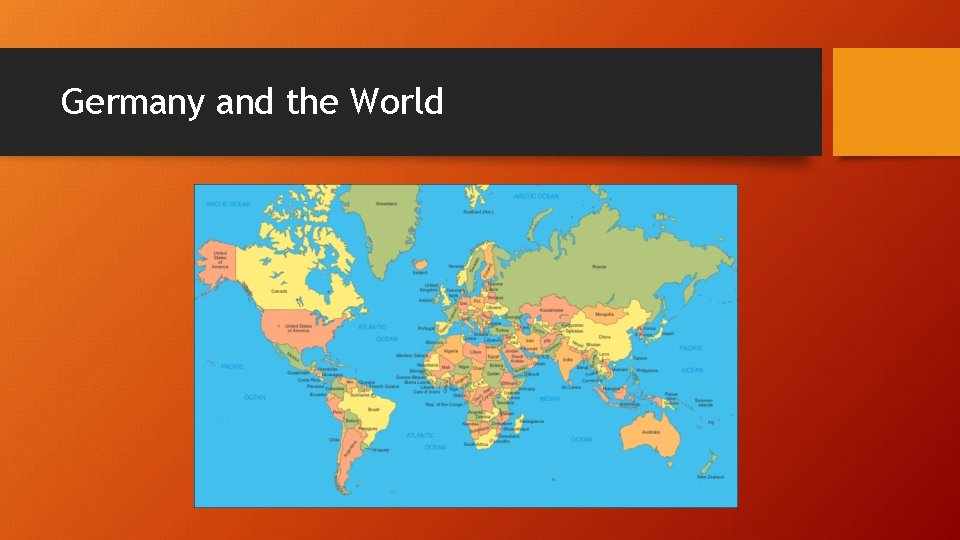
Germany and the World
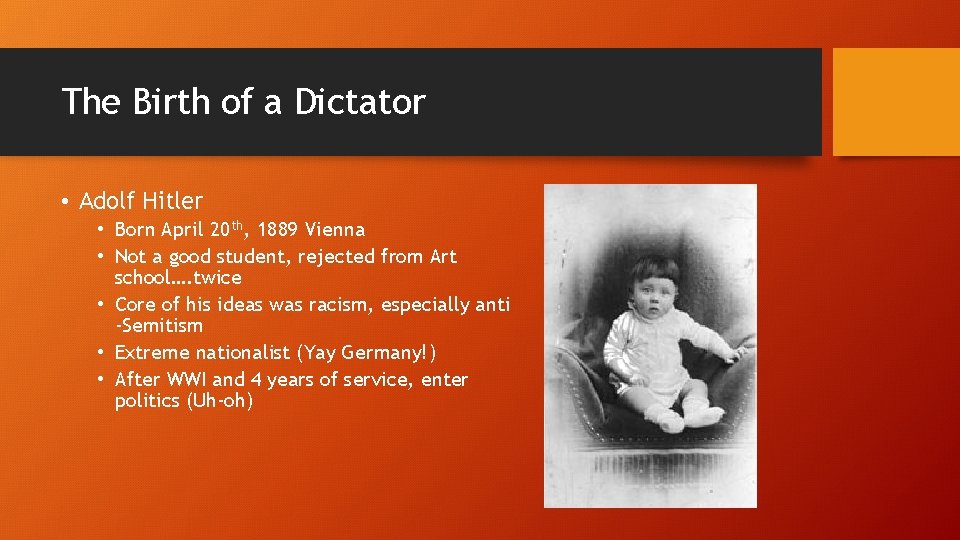
The Birth of a Dictator • Adolf Hitler • Born April 20 th, 1889 Vienna • Not a good student, rejected from Art school…. twice • Core of his ideas was racism, especially anti -Semitism • Extreme nationalist (Yay Germany!) • After WWI and 4 years of service, enter politics (Uh-oh)
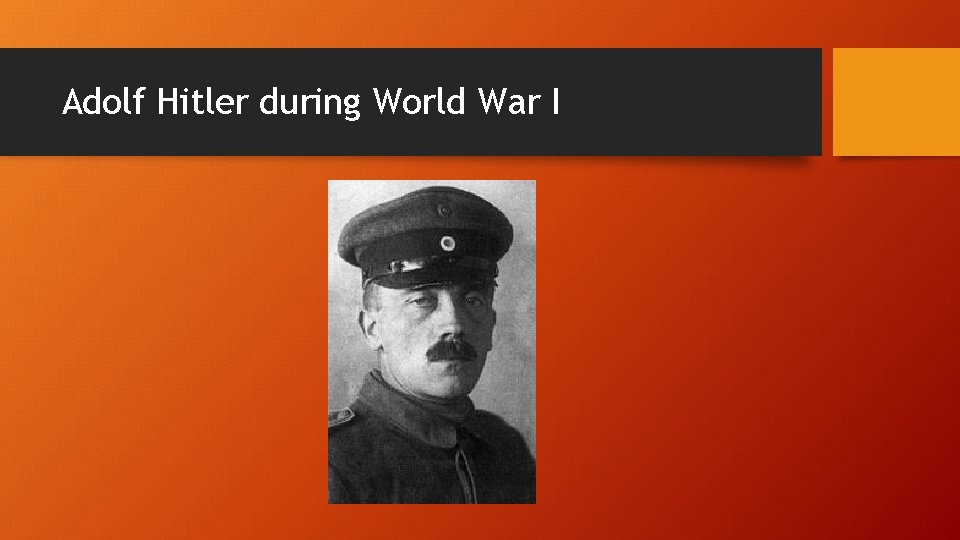
Adolf Hitler during World War I
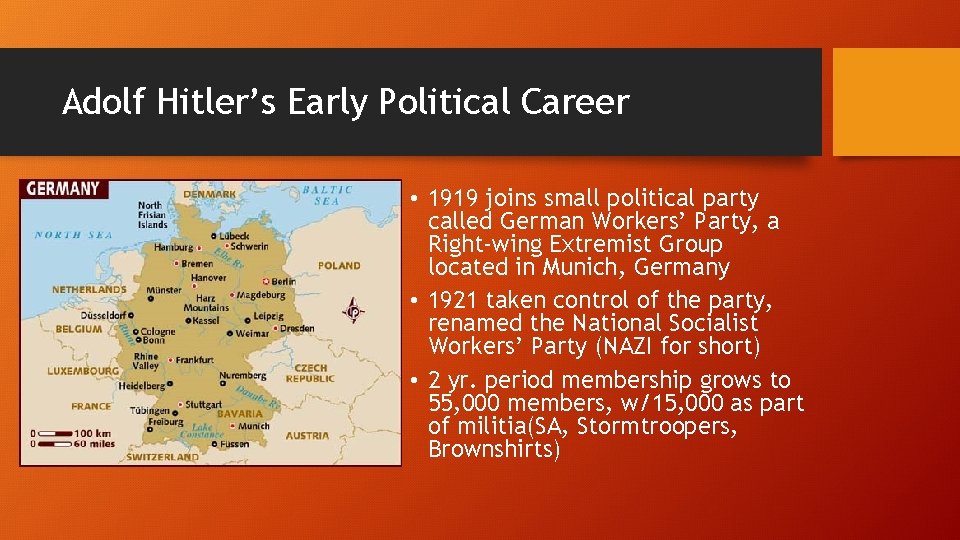
Adolf Hitler’s Early Political Career • 1919 joins small political party called German Workers’ Party, a Right-wing Extremist Group located in Munich, Germany • 1921 taken control of the party, renamed the National Socialist Workers’ Party (NAZI for short) • 2 yr. period membership grows to 55, 000 members, w/15, 000 as part of militia(SA, Stormtroopers, Brownshirts)
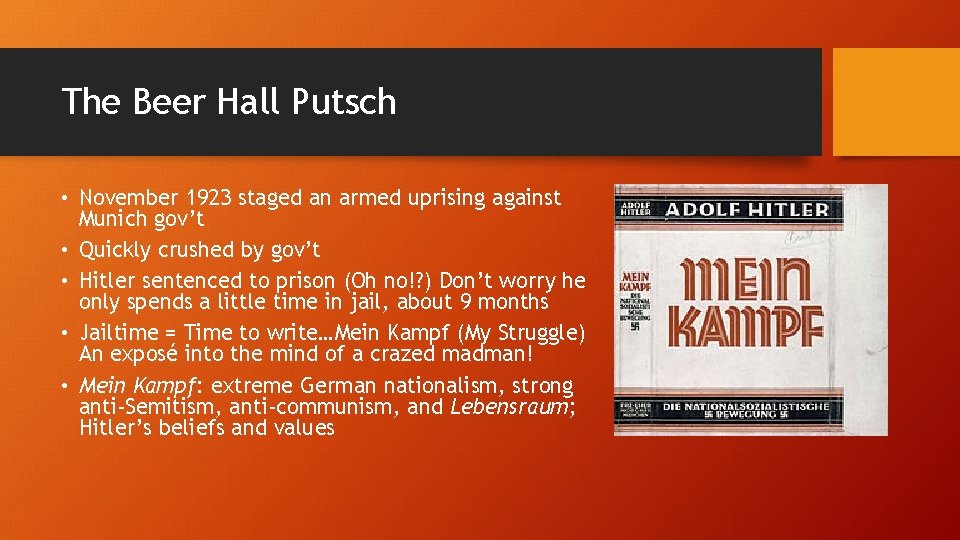
The Beer Hall Putsch • November 1923 staged an armed uprising against Munich gov’t • Quickly crushed by gov’t • Hitler sentenced to prison (Oh no!? ) Don’t worry he only spends a little time in jail, about 9 months • Jailtime = Time to write…Mein Kampf (My Struggle) An exposé into the mind of a crazed madman! • Mein Kampf: extreme German nationalism, strong anti-Semitism, anti-communism, and Lebensraum; Hitler’s beliefs and values
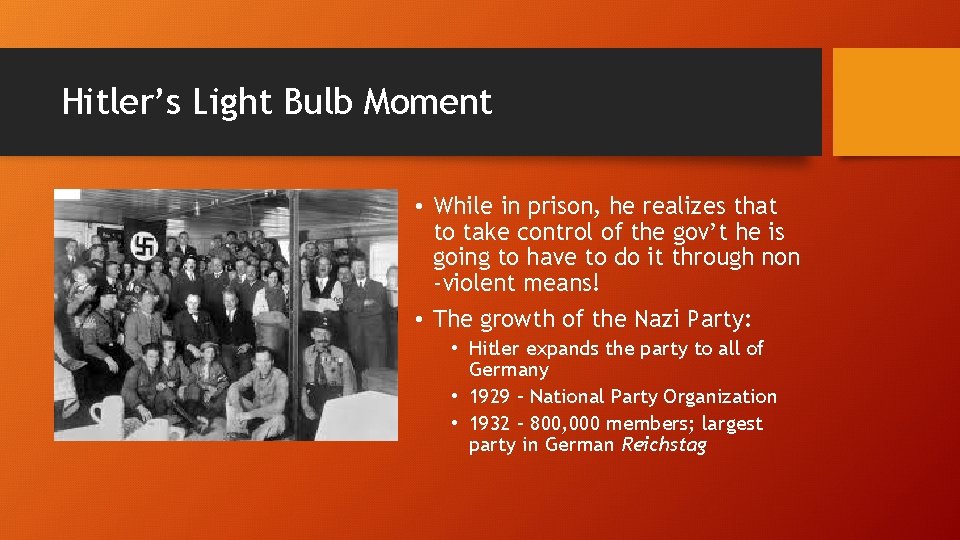
Hitler’s Light Bulb Moment • While in prison, he realizes that to take control of the gov’t he is going to have to do it through non -violent means! • The growth of the Nazi Party: • Hitler expands the party to all of Germany • 1929 – National Party Organization • 1932 – 800, 000 members; largest party in German Reichstag
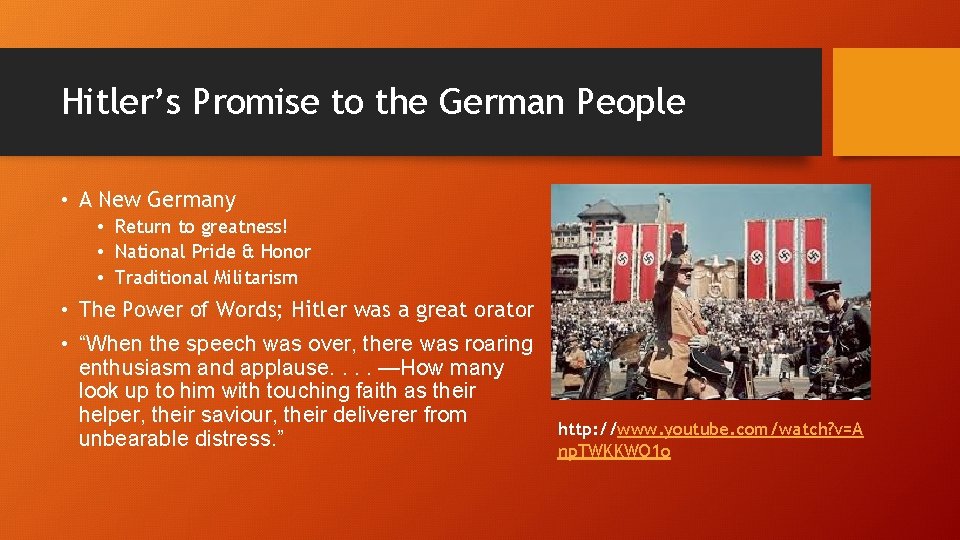
Hitler’s Promise to the German People • A New Germany • Return to greatness! • National Pride & Honor • Traditional Militarism • The Power of Words; Hitler was a great orator • “When the speech was over, there was roaring enthusiasm and applause. . —How many look up to him with touching faith as their helper, their saviour, their deliverer from unbearable distress. ” http: //www. youtube. com/watch? v=A np. TWKKWQ 1 o
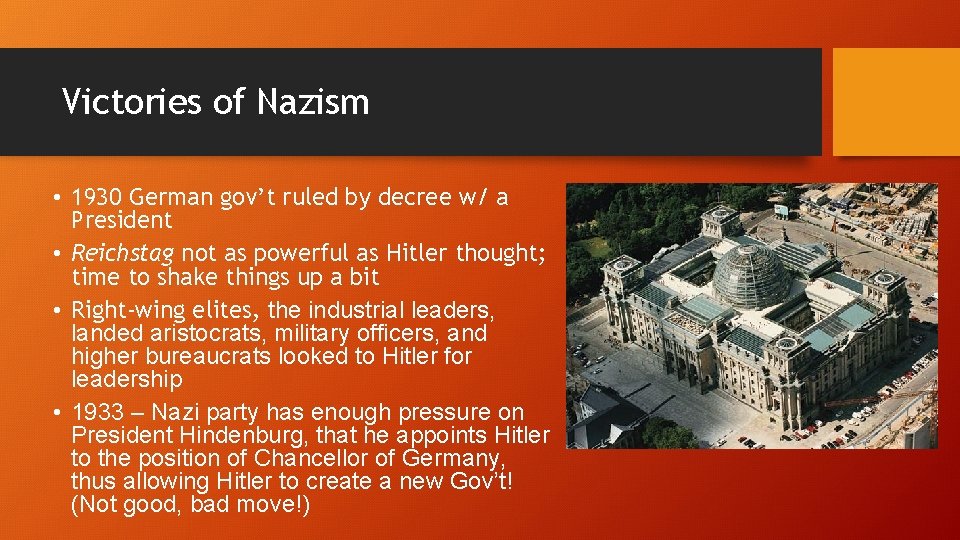
Victories of Nazism • 1930 German gov’t ruled by decree w/ a President • Reichstag not as powerful as Hitler thought; time to shake things up a bit • Right-wing elites, the industrial leaders, landed aristocrats, military officers, and higher bureaucrats looked to Hitler for leadership • 1933 – Nazi party has enough pressure on President Hindenburg, that he appoints Hitler to the position of Chancellor of Germany, thus allowing Hitler to create a new Gov’t! (Not good, bad move!)
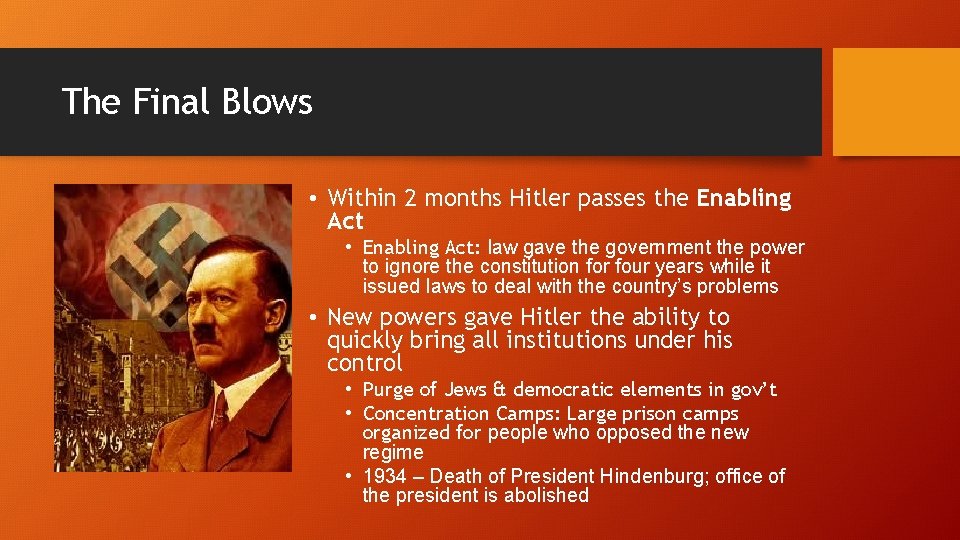
The Final Blows • Within 2 months Hitler passes the Enabling Act • Enabling Act: law gave the government the power to ignore the constitution for four years while it issued laws to deal with the country’s problems • New powers gave Hitler the ability to quickly bring all institutions under his control • Purge of Jews & democratic elements in gov’t • Concentration Camps: Large prison camps organized for people who opposed the new regime • 1934 – Death of President Hindenburg; office of the president is abolished
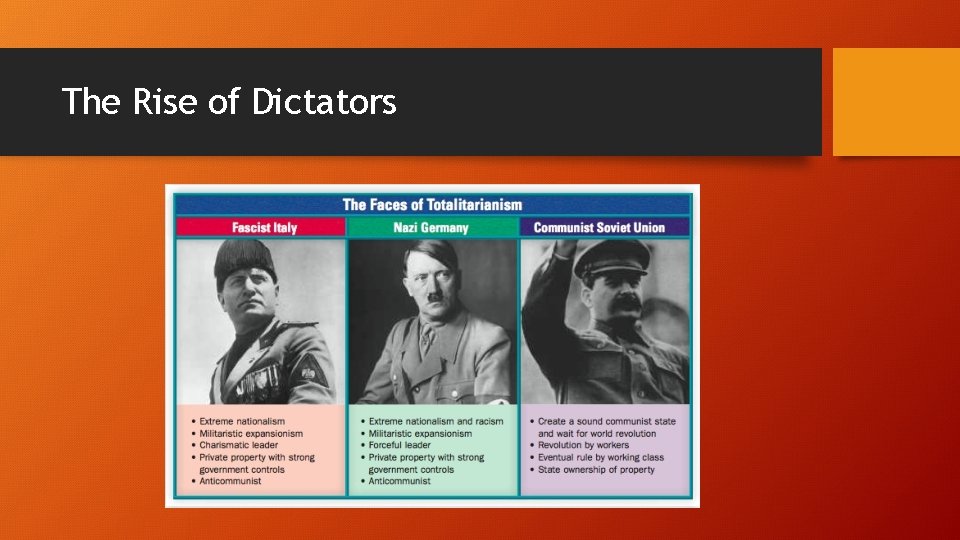
The Rise of Dictators
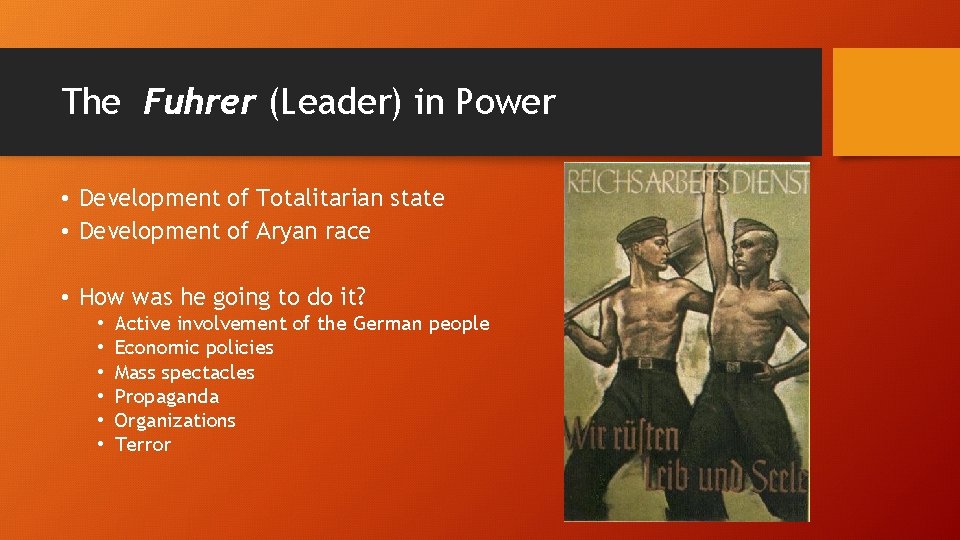
The Fuhrer (Leader) in Power • Development of Totalitarian state • Development of Aryan race • How was he going to do it? • • • Active involvement of the German people Economic policies Mass spectacles Propaganda Organizations Terror
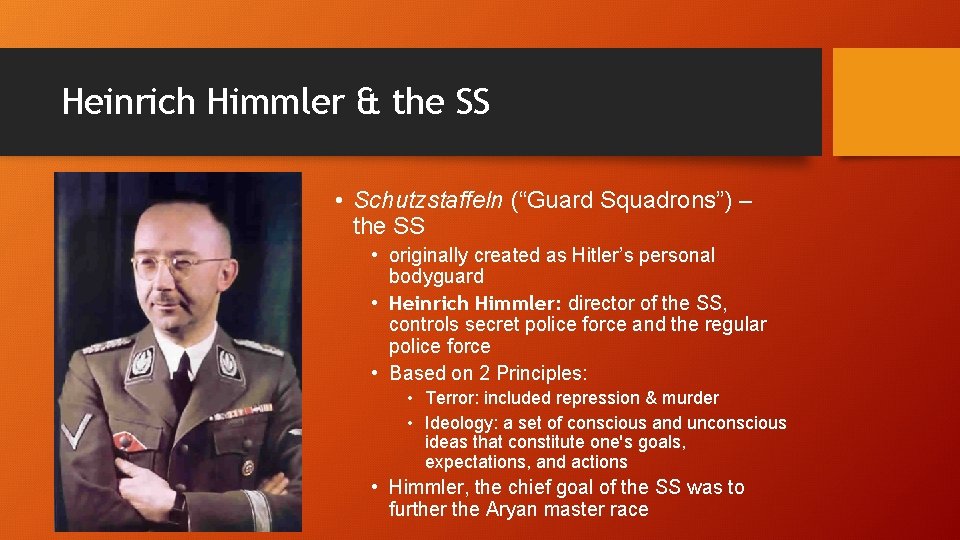
Heinrich Himmler & the SS • Schutzstaffeln (“Guard Squadrons”) – the SS • originally created as Hitler’s personal bodyguard • Heinrich Himmler: director of the SS, controls secret police force and the regular police force • Based on 2 Principles: • Terror: included repression & murder • Ideology: a set of conscious and unconscious ideas that constitute one's goals, expectations, and actions • Himmler, the chief goal of the SS was to further the Aryan master race
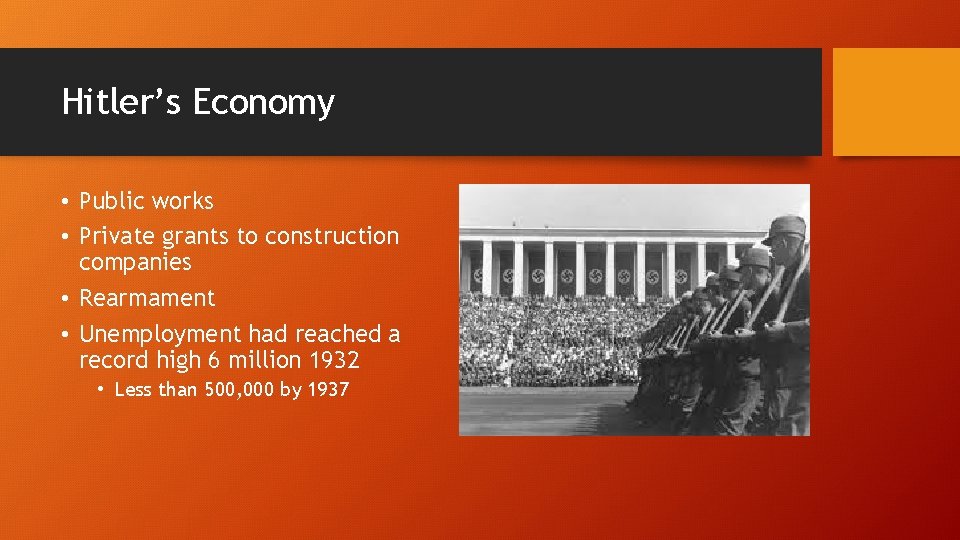
Hitler’s Economy • Public works • Private grants to construction companies • Rearmament • Unemployment had reached a record high 6 million 1932 • Less than 500, 000 by 1937
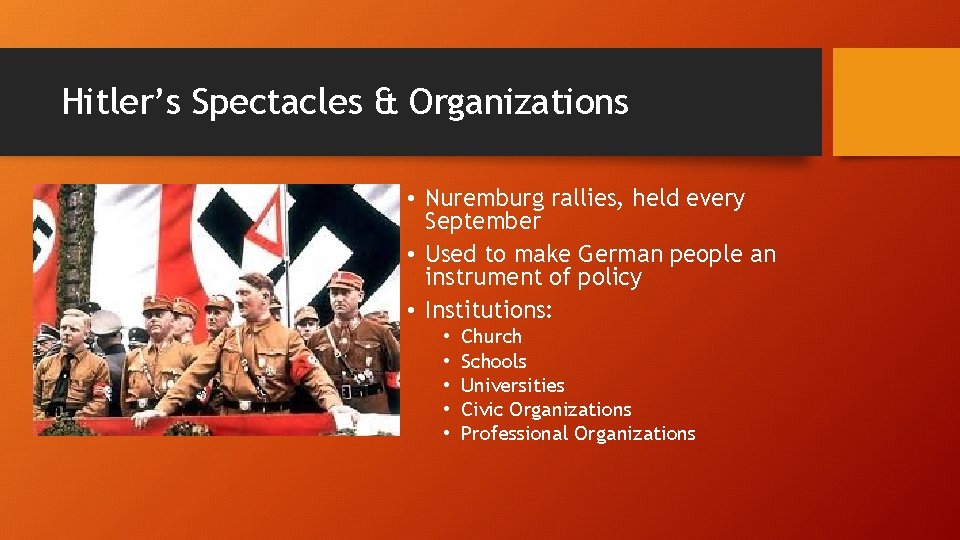
Hitler’s Spectacles & Organizations • Nuremburg rallies, held every September • Used to make German people an instrument of policy • Institutions: • • • Church Schools Universities Civic Organizations Professional Organizations
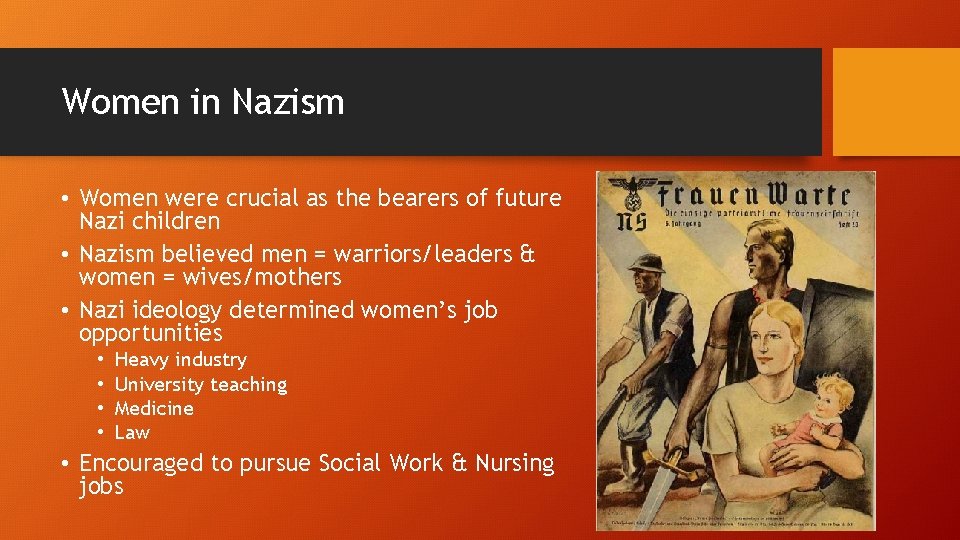
Women in Nazism • Women were crucial as the bearers of future Nazi children • Nazism believed men = warriors/leaders & women = wives/mothers • Nazi ideology determined women’s job opportunities • • Heavy industry University teaching Medicine Law • Encouraged to pursue Social Work & Nursing jobs
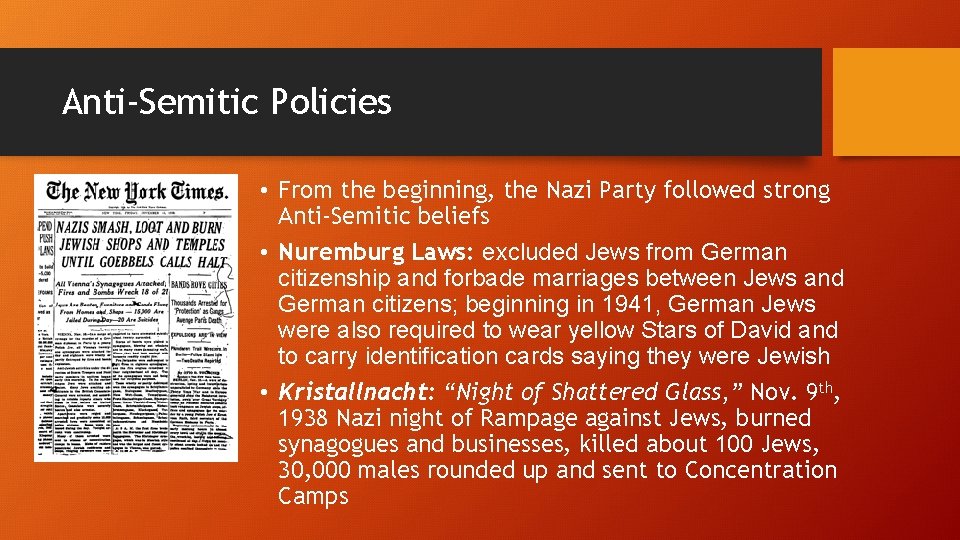
Anti-Semitic Policies • From the beginning, the Nazi Party followed strong Anti-Semitic beliefs • Nuremburg Laws: excluded Jews from German citizenship and forbade marriages between Jews and German citizens; beginning in 1941, German Jews were also required to wear yellow Stars of David and to carry identification cards saying they were Jewish • Kristallnacht: “Night of Shattered Glass, ” Nov. 9 th, 1938 Nazi night of Rampage against Jews, burned synagogues and businesses, killed about 100 Jews, 30, 000 males rounded up and sent to Concentration Camps
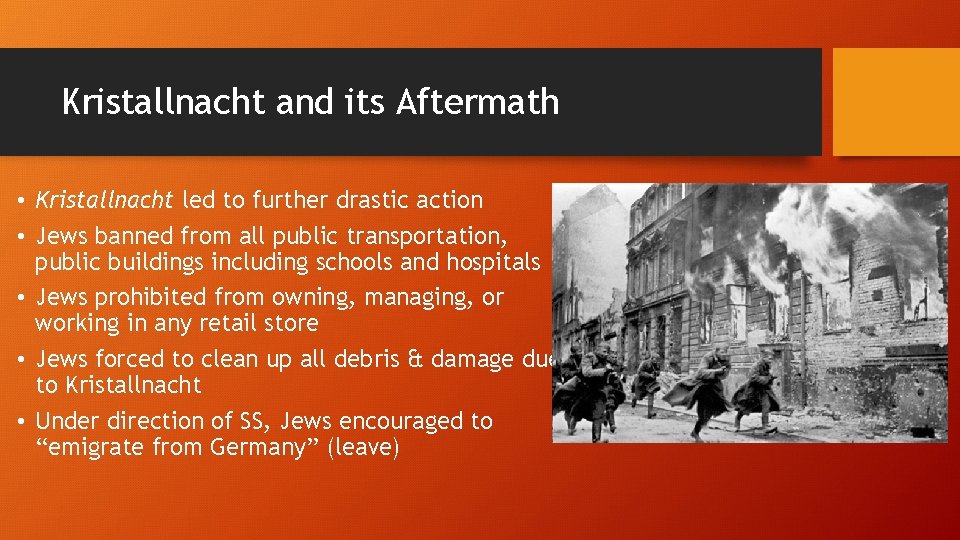
Kristallnacht and its Aftermath • Kristallnacht led to further drastic action • Jews banned from all public transportation, public buildings including schools and hospitals • Jews prohibited from owning, managing, or working in any retail store • Jews forced to clean up all debris & damage due to Kristallnacht • Under direction of SS, Jews encouraged to “emigrate from Germany” (leave)