
Navy Seals Capacity Building Fidelity of Implementation IC
Navy Seals, Capacity Building, Fidelity of Implementation & IC Mapping: LESSONS LEARNED FROM A WAR ON POVERTY Bellarmine University, Summer 2011 Ph. D. Cohort #1 Robert B. Cooter, Jr. Kathleen S. Cooter
Lessons Learned From the Navy Seals* 1. Master the basics 2. Never make the same mistake twice 3. Strive for perfection 4. Be a subject matter expert 5. Think ahead and stay organized 6. When you have a good idea, share it There is no “I” in “SEAL. ” There is strength in the team itself. Leadership requires bringing out the best from others, and not from you alone. Lead well. *From: Williams, G. (2011). Seal of honor: Operation Red Wings and the life of Lt. Michael P. Murphy, USN. Annapolis, MD: Naval Institute Press. 2
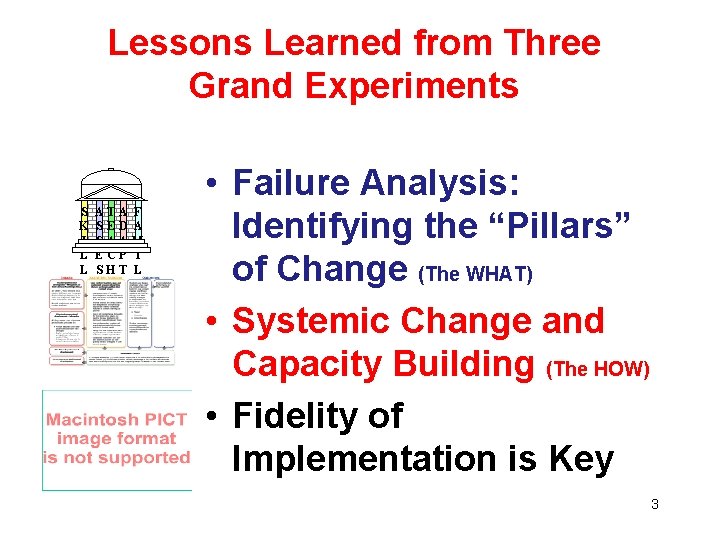
Lessons Learned from Three Grand Experiments S K I L L S ATA SED SAA ECP SHT S I A MN T EG I N O T N S F A M I L Y • Failure Analysis: Identifying the “Pillars” of Change (The WHAT) • Systemic Change and Capacity Building (The HOW) • Fidelity of Implementation is Key 3
CONTEXT for Experiment 1: Dallas Independent School District, TX 4
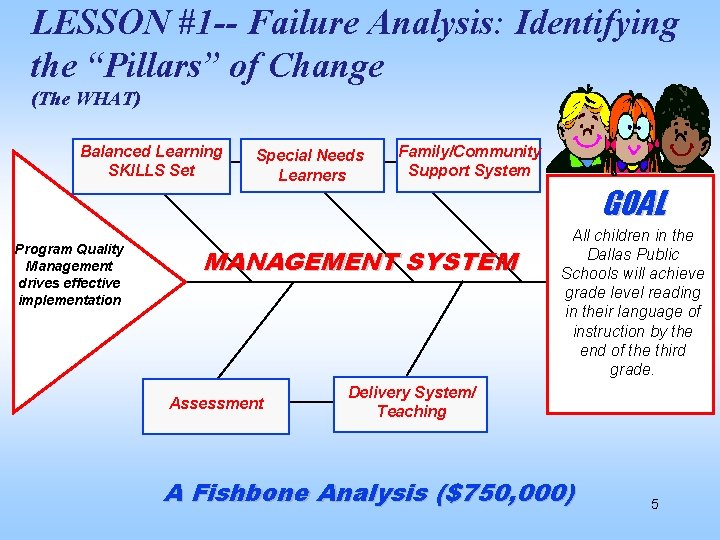
LESSON #1 -- Failure Analysis: Identifying the “Pillars” of Change (The WHAT) Balanced Learning SKILLS Set Program Quality Management drives effective implementation Special Needs Learners Family/Community Support System MANAGEMENT SYSTEM Assessment GOAL All children in the Dallas Public Schools will achieve grade level reading in their language of instruction by the end of the third grade. Delivery System/ Teaching A Fishbone Analysis ($750, 000) 5
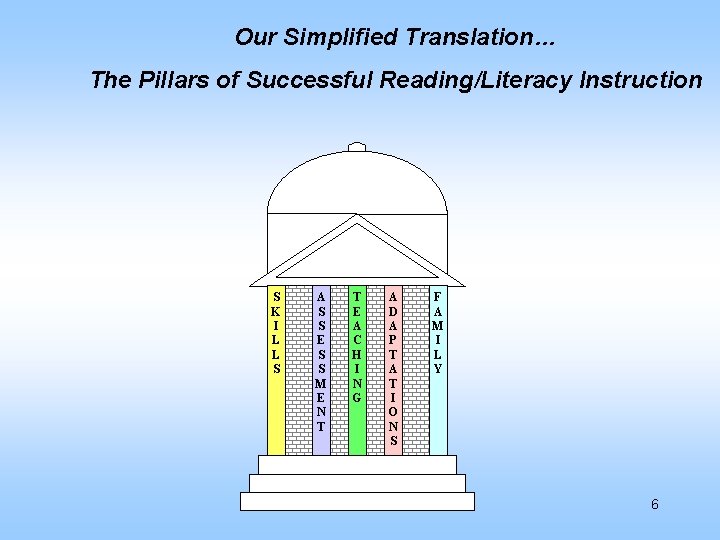
Our Simplified Translation… The Pillars of Successful Reading/Literacy Instruction S K I L L S A S S E S S M E N T T E A C H I N G A D A P T A T I O N S F A M I L Y 6
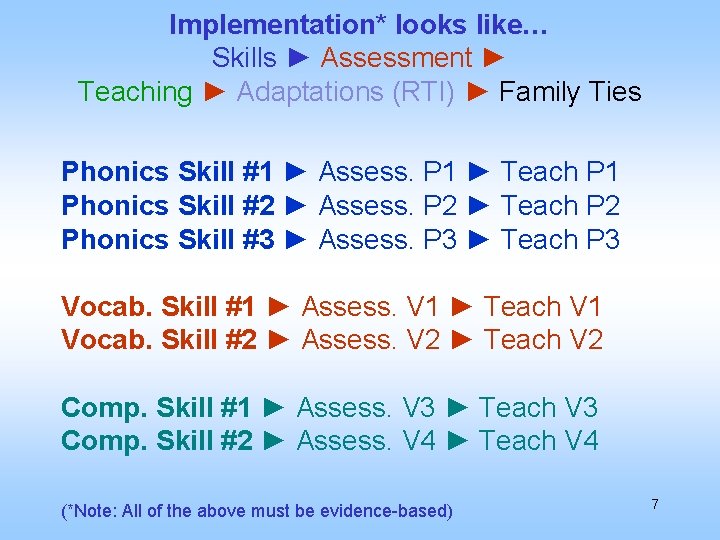
Implementation* looks like… Skills ► Assessment ► Teaching ► Adaptations (RTI) ► Family Ties Phonics Skill #1 ► Assess. P 1 ► Teach P 1 Phonics Skill #2 ► Assess. P 2 ► Teach P 2 Phonics Skill #3 ► Assess. P 3 ► Teach P 3 Vocab. Skill #1 ► Assess. V 1 ► Teach V 1 Vocab. Skill #2 ► Assess. V 2 ► Teach V 2 Comp. Skill #1 ► Assess. V 3 ► Teach V 3 Comp. Skill #2 ► Assess. V 4 ► Teach V 4 (*Note: All of the above must be evidence-based) 7
Lesson #2: Capacity Building & Systemic Change (The HOW) 8

A Capacity-Building Model for Teacher Development Expertise & Ability to Coach Others (R. Cooter & K. Cooter, 2003) Refined and Expanded Capacity Practice with Coaching Deeper Learning with Limited Capacity First Exposure No Knowledge Implication: If you are to help team members achieve expertise in requisite skills/abilities, then you MUST employ a “less is more” strategy.
Lesson 2 -B: Systemic Change? We trained hard– but it seemed that every time we were beginning to form up into teams we were reorganized. I was to learn later in life that we tend to meet any new situation by reorganizing, and what a wonderful method it can be for creating the illusion of progress while actually producing confusion, inefficiency, and demoralization. -- Petronius Arbiter, 210 B. C.
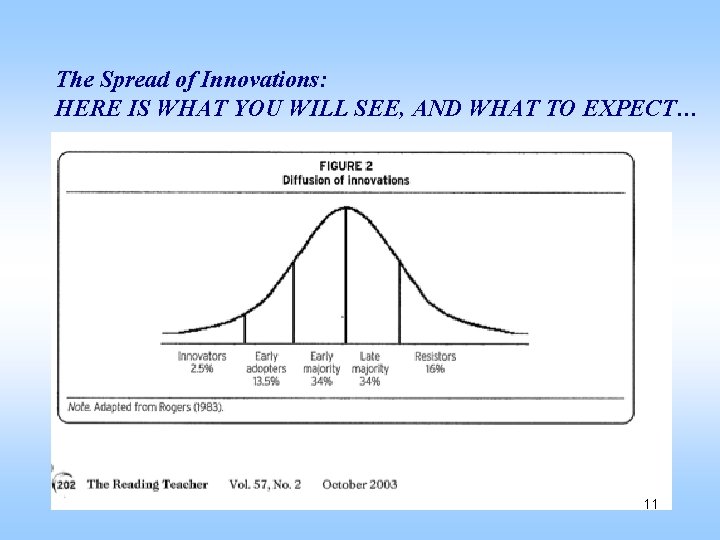
The Spread of Innovations: HERE IS WHAT YOU WILL SEE, AND WHAT TO EXPECT… 11
ASSESSING STATUS of INNOVATION DIFFUSIONS 12
Lesson #3: Fidelity of Implementation is Key Concepts to consider… 1. Fidelity of Implementation (FOI) 1. Logic Model 2. Innovation Configuration (IC) Mapping Ultimate Question: “Am I measuring the right players? ” 13
Guiding Principles of Success (From: Memphis Literacy Academy, 2005) Ord Str er uct ure Dir ect Pur ion Exe pose cut ion Copyright 2005 Robert B. Cooter, Jr. All rights reserved.
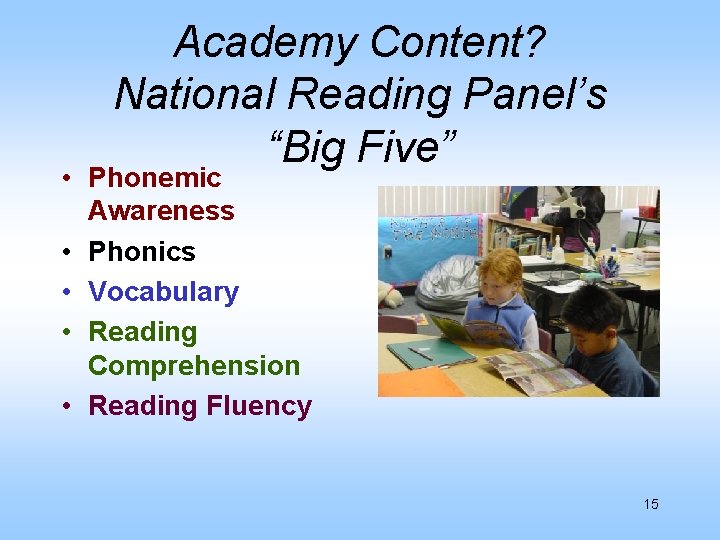
Academy Content? National Reading Panel’s “Big Five” • Phonemic Awareness • Phonics • Vocabulary • Reading Comprehension • Reading Fluency 15
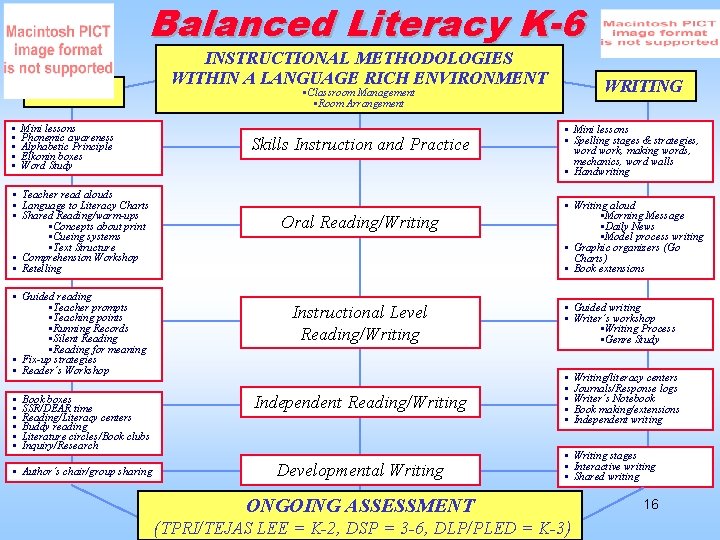
Balanced Literacy K-6 READING • • • Mini lessons Phonemic awareness Alphabetic Principle Elkonin boxes Word Study • Teacher read alouds • Language to Literacy Charts • Shared Reading/warm-ups • Concepts about print • Cueing systems • Text Structure • Comprehension Workshop • Retelling • Guided reading • Teacher prompts • Teaching points • Running Records • Silent Reading • Reading for meaning • Fix-up strategies • Reader’s Workshop • • • Book boxes SSR/DEAR time Reading/Literacy centers Buddy reading Literature circles/Book clubs Inquiry/Research • Author’s chair/group sharing INSTRUCTIONAL METHODOLOGIES WITHIN A LANGUAGE RICH ENVIRONMENT WRITING • Classroom Management • Room Arrangement Skills Instruction and Practice Oral Reading/Writing Instructional Level Reading/Writing Independent Reading/Writing Developmental Writing • Mini lessons • Spelling stages & strategies, word work, making words, mechanics, word walls • Handwriting • Writing aloud • Morning Message • Daily News • Model process writing • Graphic organizers (Go Charts) • Book extensions • Guided writing • Writer’s workshop • Writing Process • Genre Study • • • Writing/literacy centers Journals/Response logs Writer’s Notebook Book making/extensions Independent writing • Writing stages • Interactive writing • Shared writing ONGOING ASSESSMENT (TPRI/TEJAS LEE = K-2, DSP = 3 -6, DLP/PLED = K-3) 16
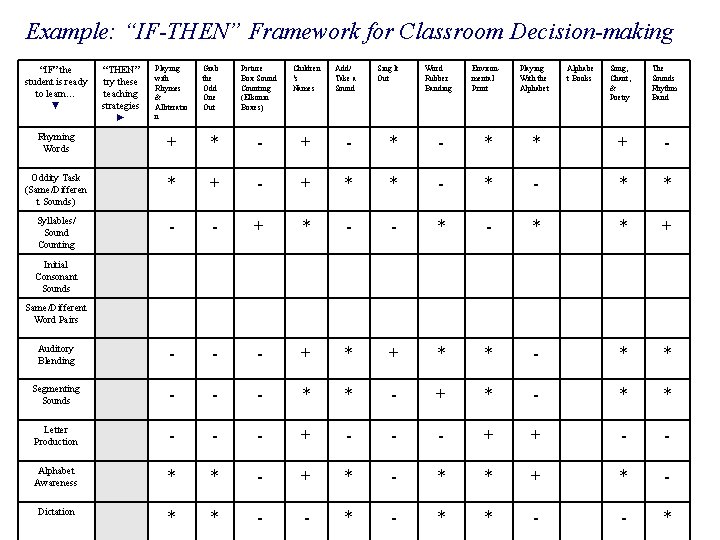
Example: “IF-THEN” Framework for Classroom Decision-making “IF” the student is ready to learn… ▼ “THEN” try these teaching strategies ► Playing with Rhymes & Alliteratio n Grab the Odd One Out Picture Box Sound Counting (Elkonin Boxes) Children ’s Names Add/ Take a Sound Sing It Out Word Rubber Banding Environmental Print Playing With the Alphabet Alphabe t Books Song, Chant, & Poetry The Sounds Rhythm Band Rhyming Words + * - + - * * + - Oddity Task (Same/Differen t Sounds) * + - + * * - * * Syllables/ Sound Counting - - + * - - * * + Auditory Blending - - - + * * - * * Segmenting Sounds - - - * * - + * - * * Letter Production - - - + + - - Alphabet Awareness * * - + * - * * + * - Dictation * * - - * Initial Consonant Sounds Same/Different Word Pairs
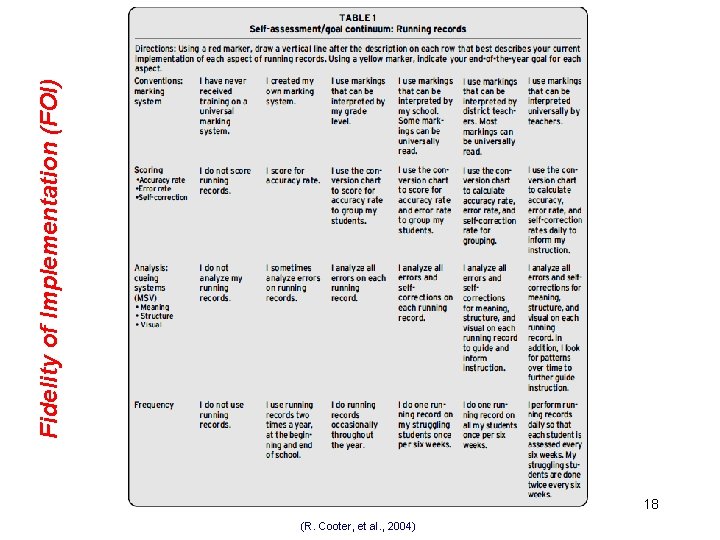
18 (R. Cooter, et al. , 2004) Fidelity of Implementation (FOI)
Another Lesson: Don’t Forget the ‘Middle Managers’ (The Principals’ Fellowship) ü Regular Executive Summaries ü Real World Problem Solving ü Create “Literacy Materials Centers” ü Early Identification w/ Intense/Focused Remediation ü Research-Informed Decision Making ü Involve Families ü Needs-Based Scheduling ü Matching the Most Successful Teachers with “Critical Condition” Kids 19
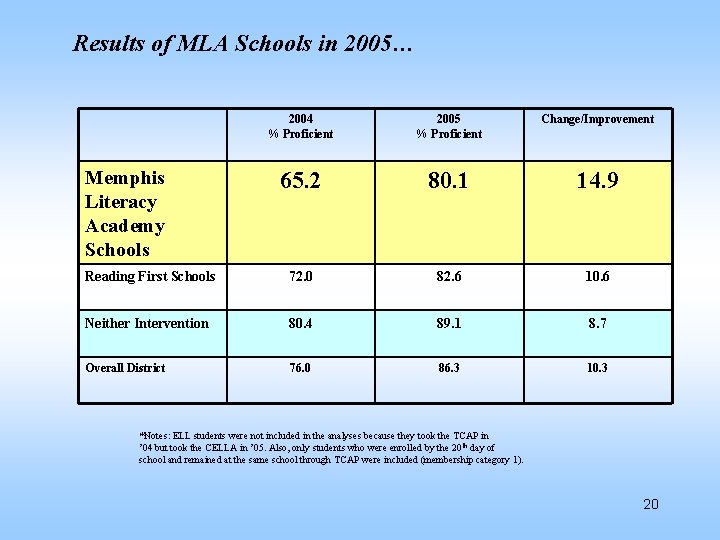
Results of MLA Schools in 2005… 2004 % Proficient 2005 % Proficient Change/Improvement 65. 2 80. 1 14. 9 Reading First Schools 72. 0 82. 6 10. 6 Neither Intervention 80. 4 89. 1 8. 7 Overall District 76. 0 86. 3 10. 3 Memphis Literacy Academy Schools *Notes: ELL students were not included in the analyses because they took the TCAP in ’ 04 but took the CELLA in ’ 05. Also, only students who were enrolled by the 20 th day of school and remained at the same school through TCAP were included (membership category 1). 20
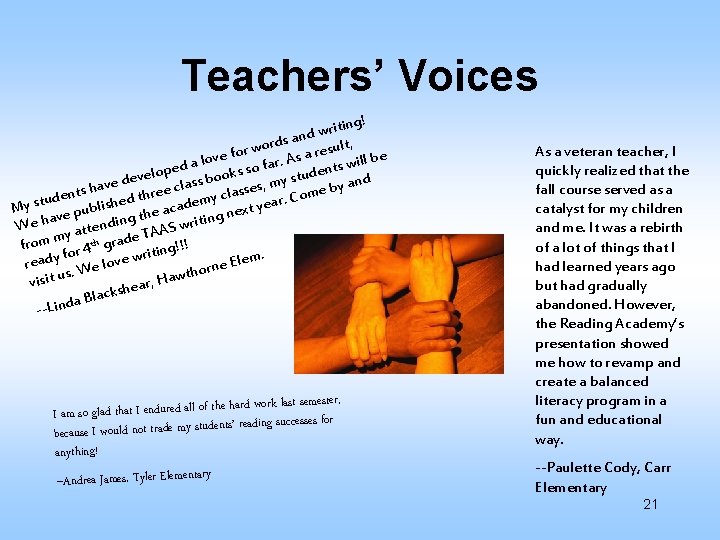
Teachers’ Voices iting! r w d rds an esult, o w r ove fo far. As a r ts will be l a d o e velop ss books s my studen and e e cla y classes, e by s hav e t r m n h o e t C d d. u My st e publishe the academ next year av ng g We h y attendin TAAS writi m e from or 4 th grad iting!!! r f em. l E ready We love w e n s. wthor a H , visit u r kshea c a l B a --Lind rd work last semester, ha the of all red du en I t tha d gla I am so nts’ reading successes for de stu my de tra t no uld wo I se becau anything! --Andrea James, Tyler Elementary As a veteran teacher, I quickly realized that the fall course served as a catalyst for my children and me. It was a rebirth of a lot of things that I had learned years ago but had gradually abandoned. However, the Reading Academy’s presentation showed me how to revamp and create a balanced literacy program in a fun and educational way. --Paulette Cody, Carr Elementary 21
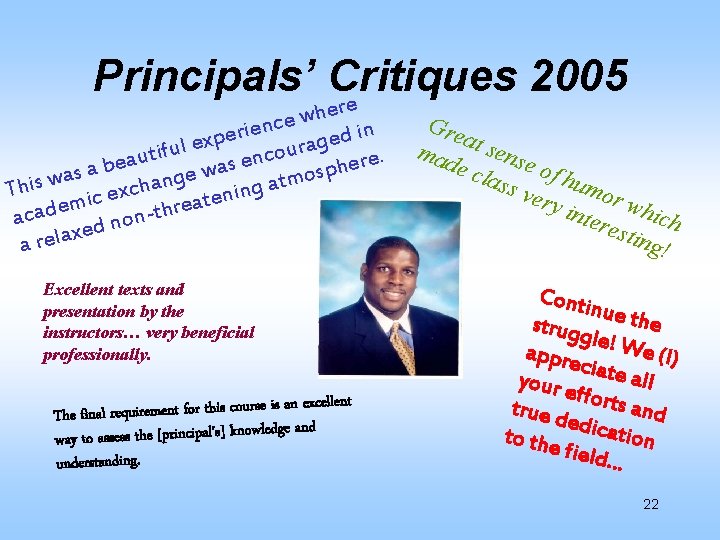
Principals’ Critiques 2005 e er h w e nc e i in r e d p e x g e a ul ur f i o t c. u n e a r e e e s b h a w sp sa e o a g m w n t s a a i g Th n xch i e n c e i t a m e e r d h t a c a non d e x a rela Excellent texts and presentation by the instructors… very beneficial professionally. se is an excellent ur co is th r fo t en m ire qu re al fin e Th ledge and ow kn ’s] al cip rin [p e th ss se as to y wa understanding. Gre a mad t sense e cl ass of hum very or w h inte rest ich ing! Conti nue th e strugg l appre e! We (I) ciate all your e f true d forts and edica tion to the field… 22
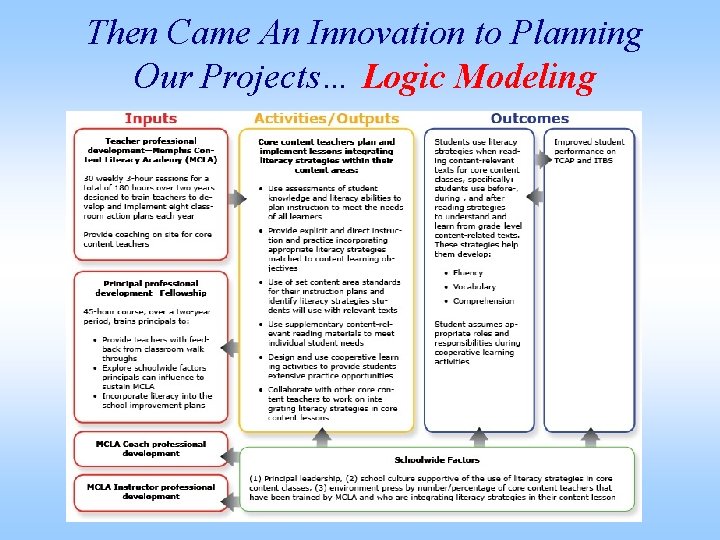
Then Came An Innovation to Planning Our Projects… Logic Modeling
The Logic Model Restated in Simpler Terms… Led to Rediscovering Our TRUE Objective. Do you see it? What is the pitfall? 24
Finally, we discovered Innovation Configuration (IC) Mapping from Gene Hall, Shirley Hord and colleagues. http: //www. sedl. org/cbam/videos. cgi? movie=IC 25
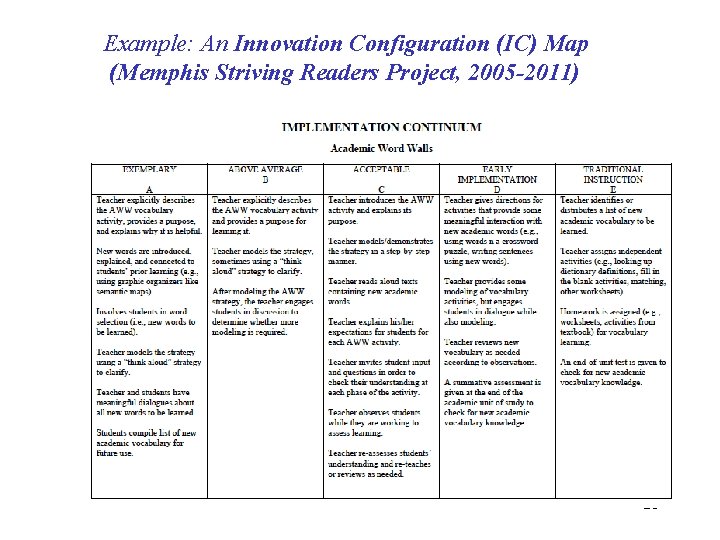
Example: An Innovation Configuration (IC) Map (Memphis Striving Readers Project, 2005 -2011) 26
- Slides: 26