
Navigating the Zero Emission Bus Pathway The Planning

Navigating the Zero Emission Bus Pathway: The Planning Fred Silver- VP CALSTART and Bus Initiative Leader fsilver@calstart. org CALACT Autumn Conference and Expo-Santa Barbara 10/30/19
CALSTART’s 220 + Member Companies and Organizations (PARTIAL LISTING) Making Clean Transportation Happen
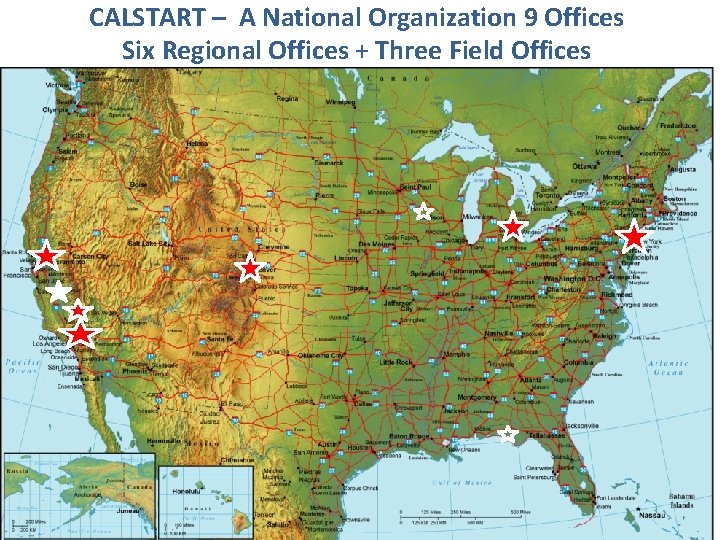
CALSTART – A National Organization 9 Offices Six Regional Offices + Three Field Offices
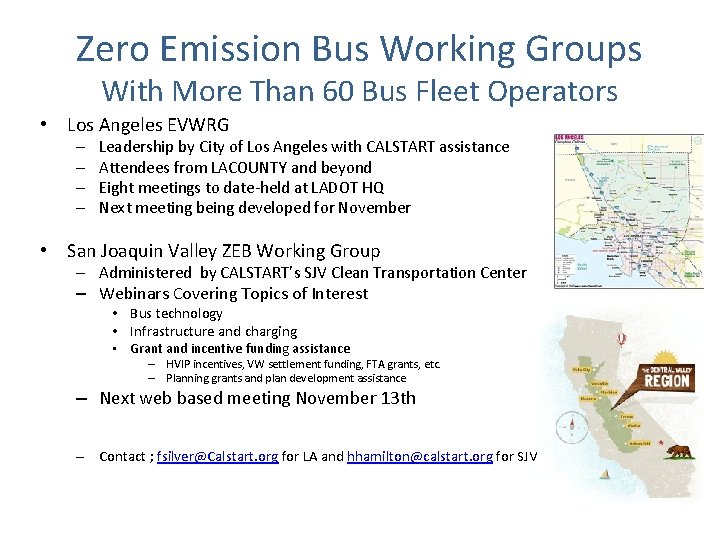
Zero Emission Bus Working Groups With More Than 60 Bus Fleet Operators • Los Angeles EVWRG – – Leadership by City of Los Angeles with CALSTART assistance Attendees from LACOUNTY and beyond Eight meetings to date-held at LADOT HQ Next meeting being developed for November • San Joaquin Valley ZEB Working Group – Administered by CALSTART’s SJV Clean Transportation Center – Webinars Covering Topics of Interest • Bus technology • Infrastructure and charging • Grant and incentive funding assistance – HVIP incentives, VW settlement funding, FTA grants, etc. – Planning grants and plan development assistance – Next web based meeting November 13 th – Contact ; fsilver@Calstart. org for LA and hhamilton@calstart. org for SJV
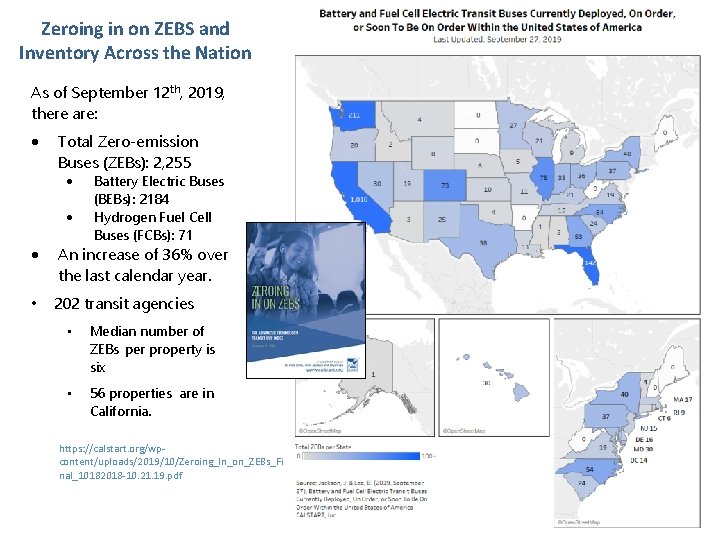
Zeroing in on ZEBS and Inventory Across the Nation As of September 12 th, 2019, there are: Total Zero-emission Buses (ZEBs): 2, 255 Battery Electric Buses (BEBs): 2184 Hydrogen Fuel Cell Buses (FCBs): 71 An increase of 36% over the last calendar year. • 202 transit agencies • Median number of ZEBs per property is six • 56 properties are in California. https: //calstart. org/wpcontent/uploads/2019/10/Zeroing_In_on_ZEBs_Fi nal_10182018 -10. 21. 19. pdf
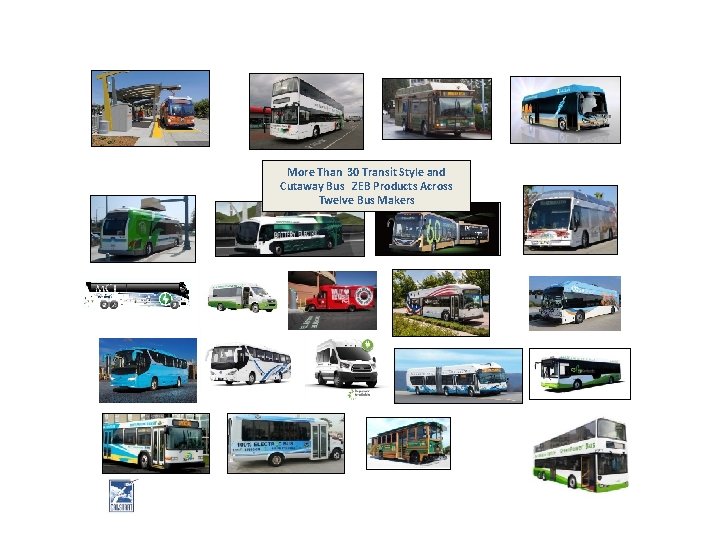
More Than 30 Transit Style and Cutaway Bus ZEB Products Across Twelve Bus Makers
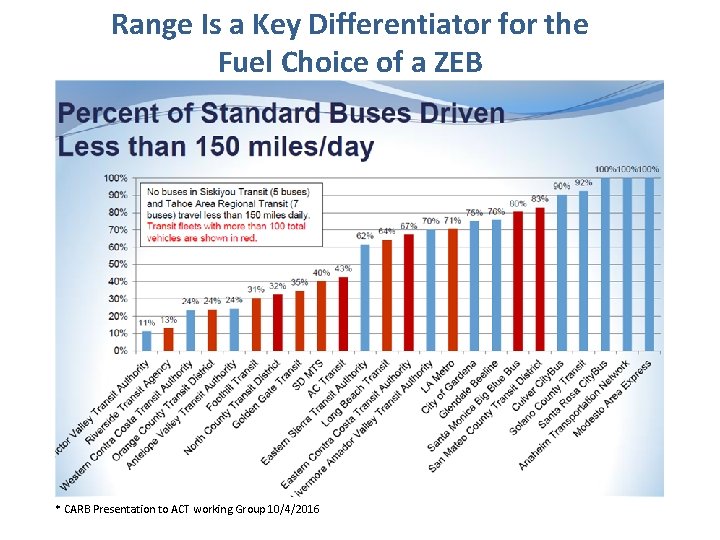
Range Is a Key Differentiator for the Fuel Choice of a ZEB * CARB Presentation to ACT working Group 10/4/2016
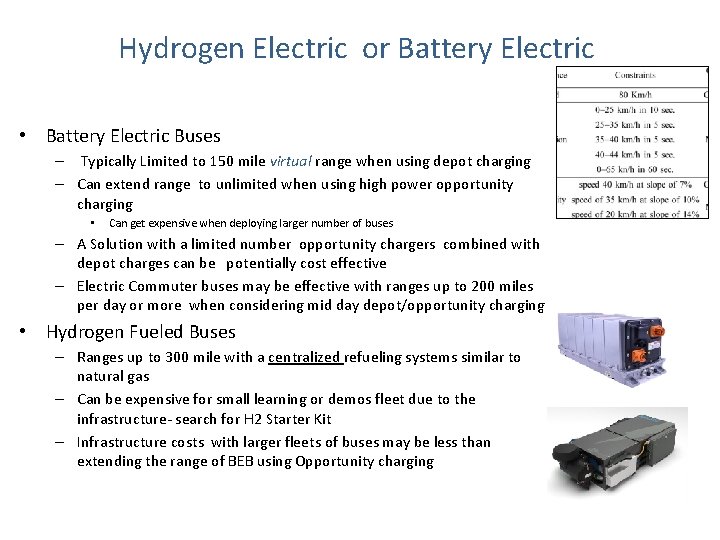
Hydrogen Electric or Battery Electric • Battery Electric Buses – Typically Limited to 150 mile virtual range when using depot charging – Can extend range to unlimited when using high power opportunity charging • Can get expensive when deploying larger number of buses – A Solution with a limited number opportunity chargers combined with depot charges can be potentially cost effective – Electric Commuter buses may be effective with ranges up to 200 miles per day or more when considering mid day depot/opportunity charging • Hydrogen Fueled Buses – Ranges up to 300 mile with a centralized refueling systems similar to natural gas – Can be expensive for small learning or demos fleet due to the infrastructure- search for H 2 Starter Kit – Infrastructure costs with larger fleets of buses may be less than extending the range of BEB using Opportunity charging
When Planning for a Battery Electric Bus • Inquire with bus OEM as to the battery storage options available seeing up to 660 k. Whrs depending on the size of the bus – Varying performance of energy consumption of the base traction system - Generally between 1. 8 -2. 2 k. Whrs/mile- • http: //apps. altoonabustest. psu. edu/ • Does not include air-conditioning, heating or unique route gradeability which can double and at time triple the energy consumed • If daily mileage utilization per route today greater than ( approx. ) 160 miles per day, may need to consider on route charging systems or Hydrogen Fuel Cell • For planning BEB’s may be to analyze the potential performance of a given set of ZEBs on your routes as well as seasonal issues – Bus makers may be willing to provide this service – For a third party analysis CALSTART developed a Corridor Model Tool for Electric Buses
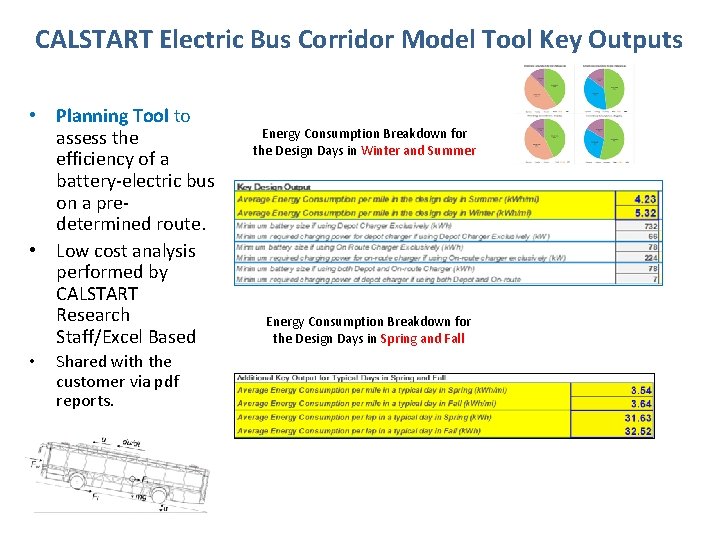
CALSTART Electric Bus Corridor Model Tool Key Outputs • Planning Tool to assess the efficiency of a battery-electric bus on a predetermined route. • Low cost analysis performed by CALSTART Research Staff/Excel Based • Shared with the customer via pdf reports. Energy Consumption Breakdown for the Design Days in Winter and Summer Energy Consumption Breakdown for the Design Days in Spring and Fall
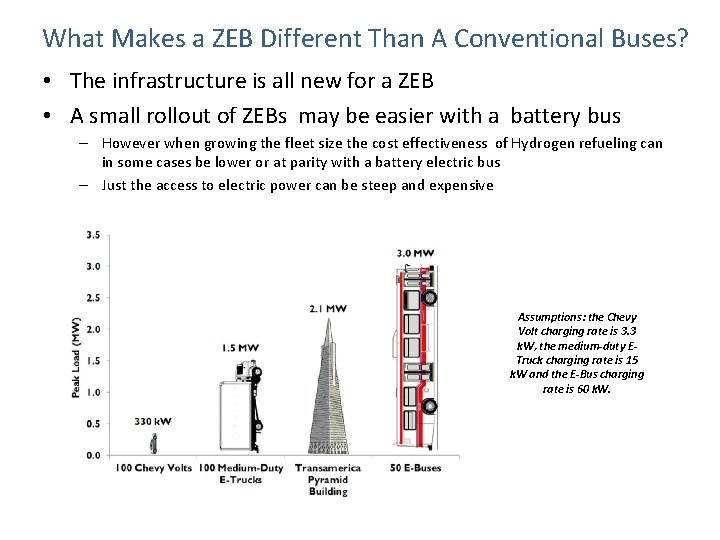
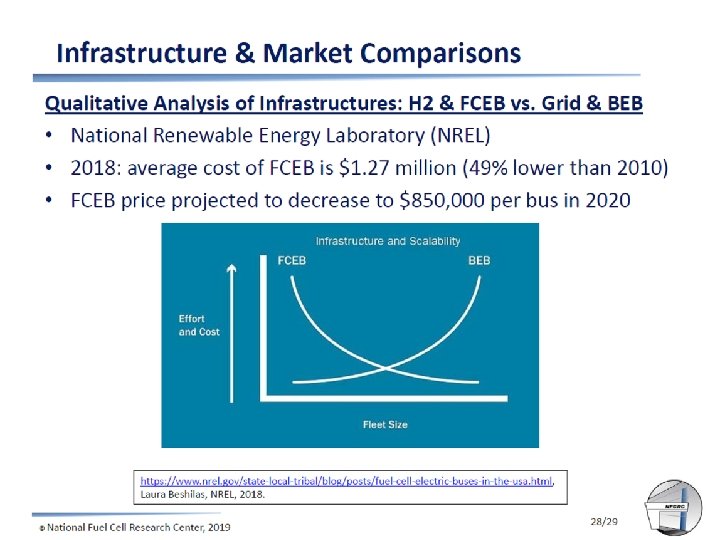
What Makes a ZEB Different Than A Conventional Buses? • The infrastructure is all new for a ZEB • A small rollout of ZEBs may be easier with a battery bus – However when growing the fleet size the cost effectiveness of Hydrogen refueling can in some cases be lower or at parity with a battery electric bus – Just the access to electric power can be steep and expensive Assumptions: the Chevy Volt charging rate is 3. 3 k. W, the medium-duty ETruck charging rate is 15 k. W and the E-Bus charging rate is 60 k. W.
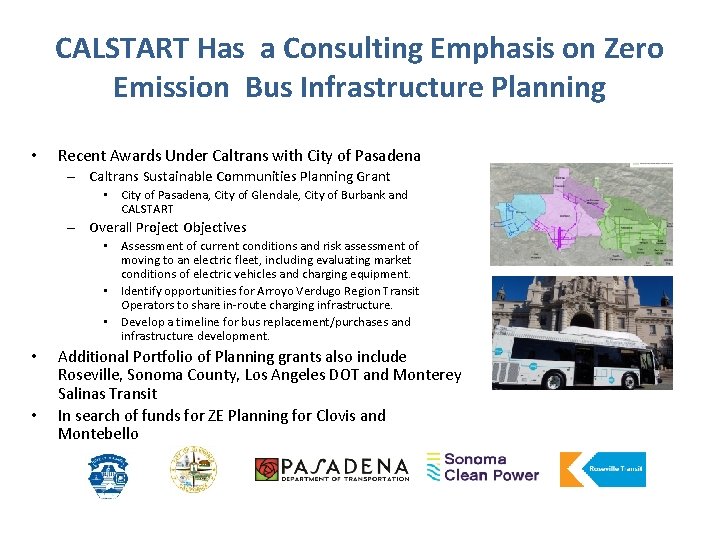
CALSTART Has a Consulting Emphasis on Zero Emission Bus Infrastructure Planning • Recent Awards Under Caltrans with City of Pasadena – Caltrans Sustainable Communities Planning Grant • City of Pasadena, City of Glendale, City of Burbank and CALSTART – Overall Project Objectives • Assessment of current conditions and risk assessment of moving to an electric fleet, including evaluating market conditions of electric vehicles and charging equipment. • Identify opportunities for Arroyo Verdugo Region Transit Operators to share in-route charging infrastructure. • Develop a timeline for bus replacement/purchases and infrastructure development. • • Additional Portfolio of Planning grants also include Roseville, Sonoma County, Los Angeles DOT and Monterey Salinas Transit In search of funds for ZE Planning for Clovis and Montebello

Battery Electric Bus Infrastructure Planning Tool Deployment Timeline Planning: Steps 1 -5 3 – 12 months Development 6 – 48 months Deployment 1 - 3 months
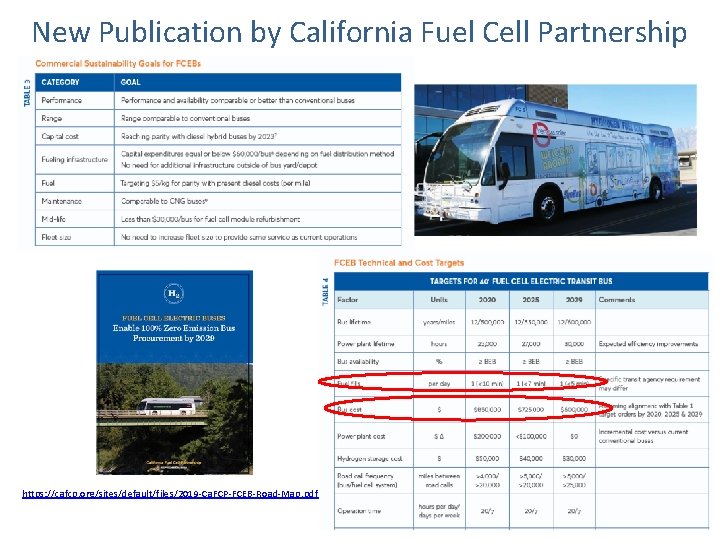
New Publication by California Fuel Cell Partnership https: //cafcp. org/sites/default/files/2019 -Ca. FCP-FCEB-Road-Map. pdf
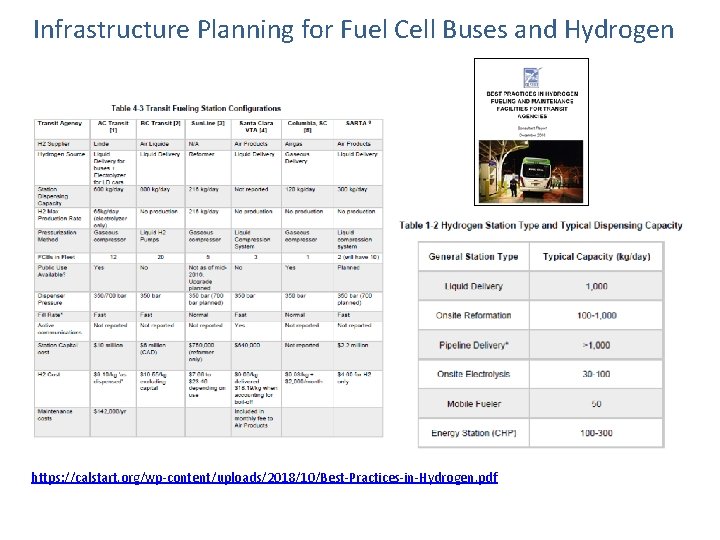
Infrastructure Planning for Fuel Cell Buses and Hydrogen https: //calstart. org/wp-content/uploads/2018/10/Best-Practices-in-Hydrogen. pdf
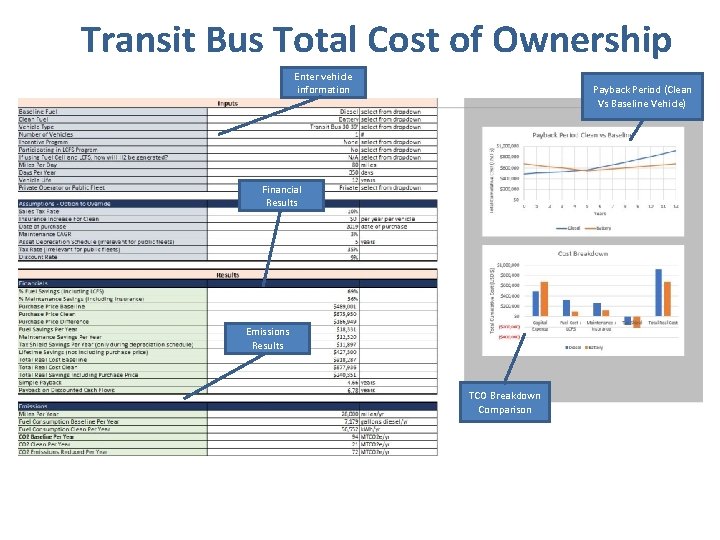
Transit Bus Total Cost of Ownership Enter vehicle information Payback Period (Clean Vs Baseline Vehicle) Financial Results Emissions Results TCO Breakdown Comparison
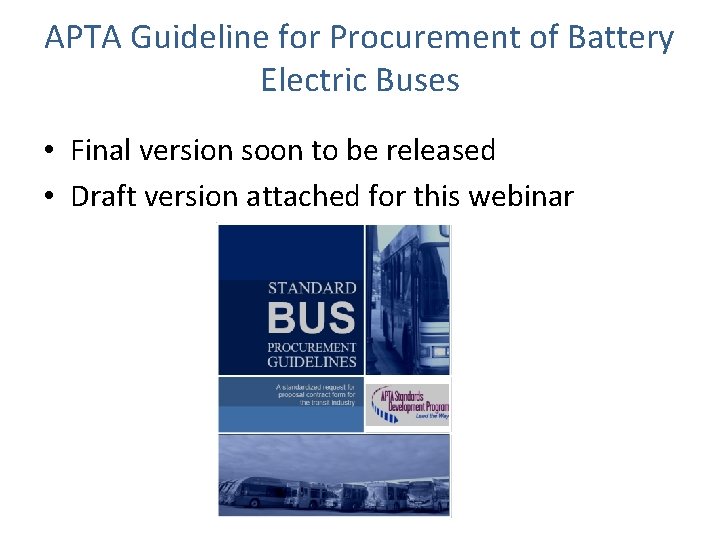
APTA Guideline for Procurement of Battery Electric Buses • Final version soon to be released • Draft version attached for this webinar
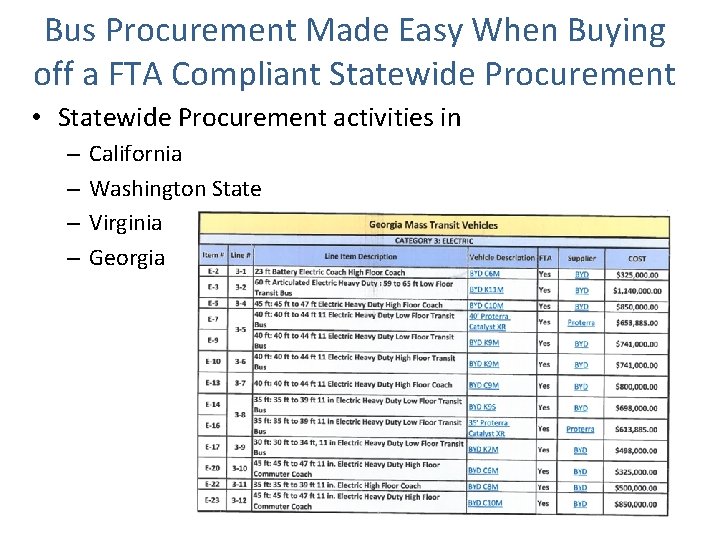
Bus Procurement Made Easy When Buying off a FTA Compliant Statewide Procurement • Statewide Procurement activities in – – California Washington State Virginia Georgia
Fred Silver- VP CALSTART and Bus Initiative Leader fsilver@calstart. org
- Slides: 20