
Navigating ImmunoOncology Coverage Reimbursement Issues Niesha Griffith RPh
Navigating Immuno-Oncology Coverage & Reimbursement Issues Niesha Griffith, RPh, MS, FASHP Administrator of Oncology Pharmacy and Infusion Services at the Arthur G. James Cancer Hospital and Richard J. Solove Research Institute at The Ohio State University Bill Mc. Givney, Ph. D Principal of Mc. Givney Global Advisors August 27, 2015 12 -1 p. m. EST ICLIO e-Course 03
e-Course Overview Section 1: Bill Mc. Givney, Ph. D • General Environment in Coverage and Reimbursement • Determination of Coverage and Reimbursement for I-O Agents • Compendia • Present Coverage for I-O agents • Impact of new Oncology Value Metrics Section 2 Niesha Griffith, RPh, MS, FASHP • Institutional Considerations and Needs in Coverage and Reimbursement • Assurance of explicit, timely, and clear coverage policies including offlabel use • Internal demand for use of I-O agents • Reimbursement issues
Bill Mc. Givney, Ph. D Mc. Givney Global Advisors
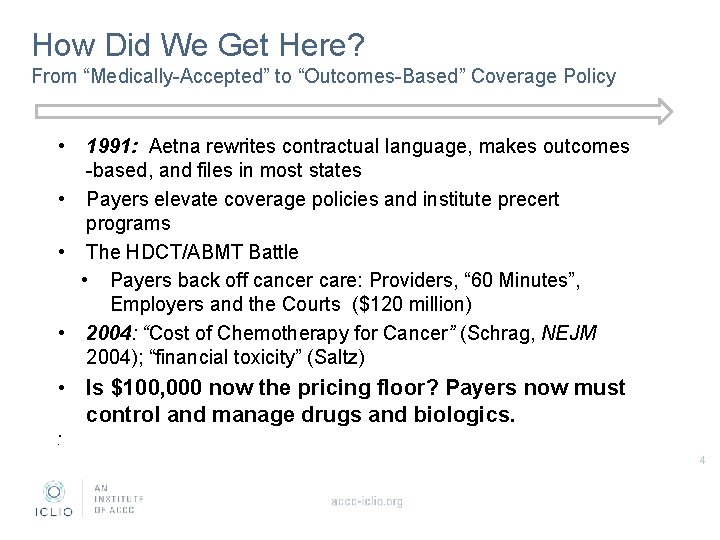
How Did We Get Here? From “Medically-Accepted” to “Outcomes-Based” Coverage Policy • 1991: Aetna rewrites contractual language, makes outcomes -based, and files in most states • Payers elevate coverage policies and institute precert programs • The HDCT/ABMT Battle • Payers back off cancer care: Providers, “ 60 Minutes”, Employers and the Courts ($120 million) • 2004: “Cost of Chemotherapy for Cancer” (Schrag, NEJM 2004); “financial toxicity” (Saltz) • Is $100, 000 now the pricing floor? Payers now must control and manage drugs and biologics. • • 4
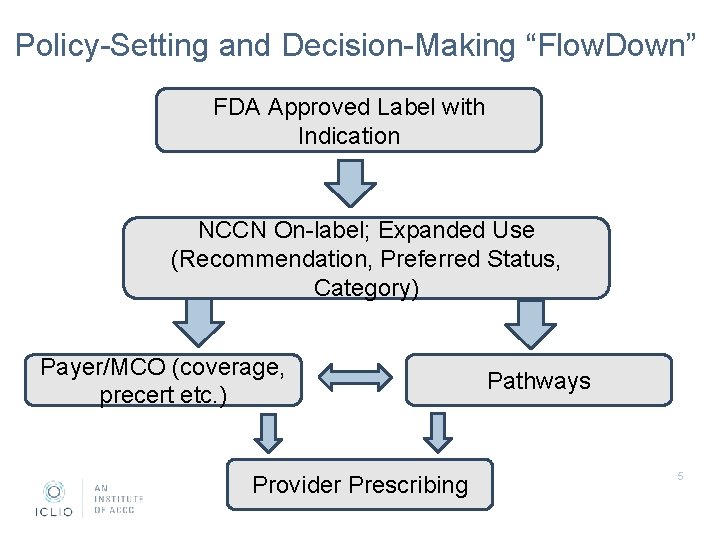
Policy-Setting and Decision-Making “Flow. Down” FDA Approved Label with Indication NCCN On-label; Expanded Use (Recommendation, Preferred Status, Category) Payer/MCO (coverage, precert etc. ) Provider Prescribing Pathways 5
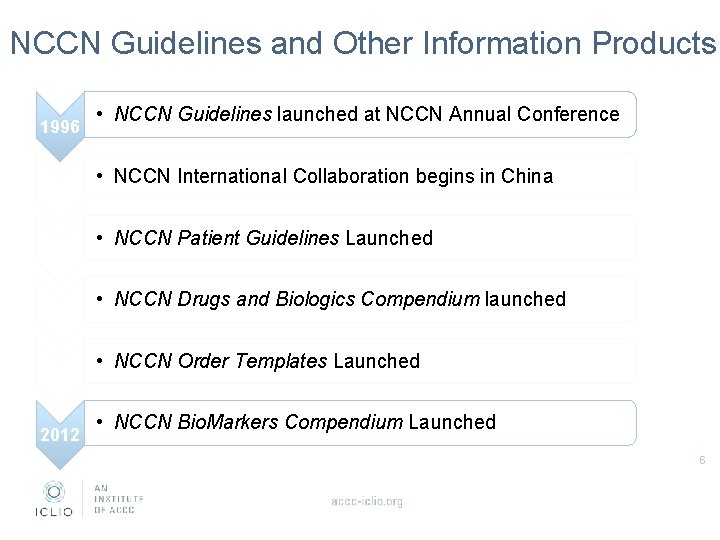
NCCN Guidelines and Other Information Products 1996 2005 2007 2009 2012 • NCCN Guidelines launched at NCCN Annual Conference • NCCN International Collaboration begins in China • NCCN Patient Guidelines Launched • NCCN Drugs and Biologics Compendium launched • NCCN Order Templates Launched • NCCN Bio. Markers Compendium Launched 6
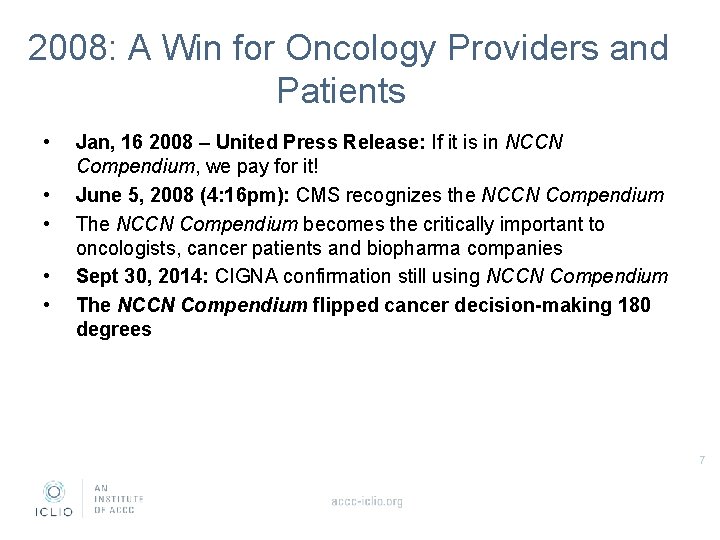
2008: A Win for Oncology Providers and Patients • • • Jan, 16 2008 – United Press Release: If it is in NCCN Compendium, we pay for it! June 5, 2008 (4: 16 pm): CMS recognizes the NCCN Compendium The NCCN Compendium becomes the critically important to oncologists, cancer patients and biopharma companies Sept 30, 2014: CIGNA confirmation still using NCCN Compendium The NCCN Compendium flipped cancer decision-making 180 degrees 7

NCCN Categories Quality of Evidence Level of Consensus NCCN Category High (e. g. RCT, MA) Uniform 1 (6%) Lower (e. g. single arm) Uniform 2 A (87%) Lower (e. g. cohort analysis) Consensus 2 B (6%) Any (e. g. RCT, single Major disagreement arm) 3 (rare) 8

NCCN Categories and Payer Response NCCN Category 1 NCCN Category 2 A NCCN Category 2 B United = Yes Aetna = Yes Cigna = Yes Anthem = Yes Medicare = Yes Aetna = Yes Cigna = Yes Anthem = No Medicare = Silent 9
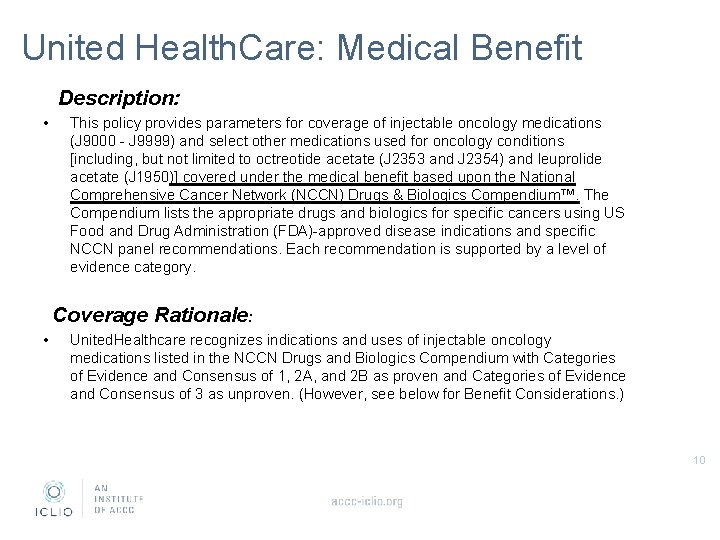
United Health. Care: Medical Benefit Description: • This policy provides parameters for coverage of injectable oncology medications (J 9000 - J 9999) and select other medications used for oncology conditions [including, but not limited to octreotide acetate (J 2353 and J 2354) and leuprolide acetate (J 1950)] covered under the medical benefit based upon the National Comprehensive Cancer Network (NCCN) Drugs & Biologics Compendium™. The Compendium lists the appropriate drugs and biologics for specific cancers using US Food and Drug Administration (FDA)-approved disease indications and specific NCCN panel recommendations. Each recommendation is supported by a level of evidence category. Coverage Rationale: • United. Healthcare recognizes indications and uses of injectable oncology medications listed in the NCCN Drugs and Biologics Compendium with Categories of Evidence and Consensus of 1, 2 A, and 2 B as proven and Categories of Evidence and Consensus of 3 as unproven. (However, see below for Benefit Considerations. ) 10
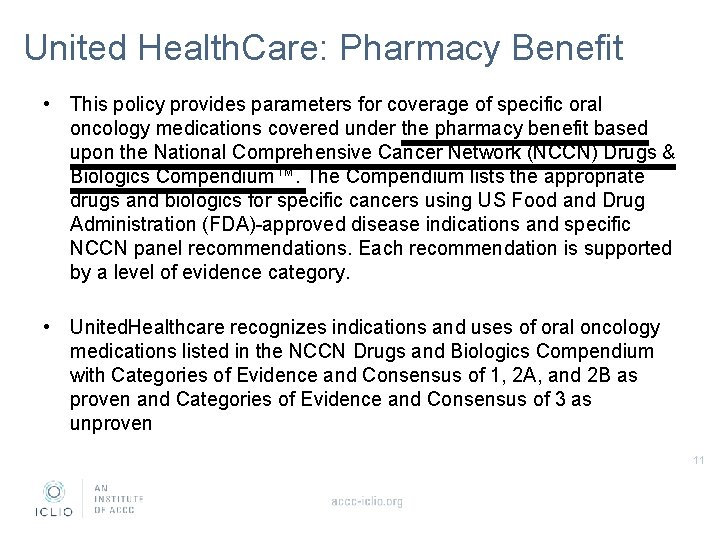
United Health. Care: Pharmacy Benefit • This policy provides parameters for coverage of specific oral oncology medications covered under the pharmacy benefit based upon the National Comprehensive Cancer Network (NCCN) Drugs & Biologics Compendium™. The Compendium lists the appropriate drugs and biologics for specific cancers using US Food and Drug Administration (FDA)-approved disease indications and specific NCCN panel recommendations. Each recommendation is supported by a level of evidence category. • United. Healthcare recognizes indications and uses of oral oncology medications listed in the NCCN Drugs and Biologics Compendium with Categories of Evidence and Consensus of 1, 2 A, and 2 B as proven and Categories of Evidence and Consensus of 3 as unproven 11
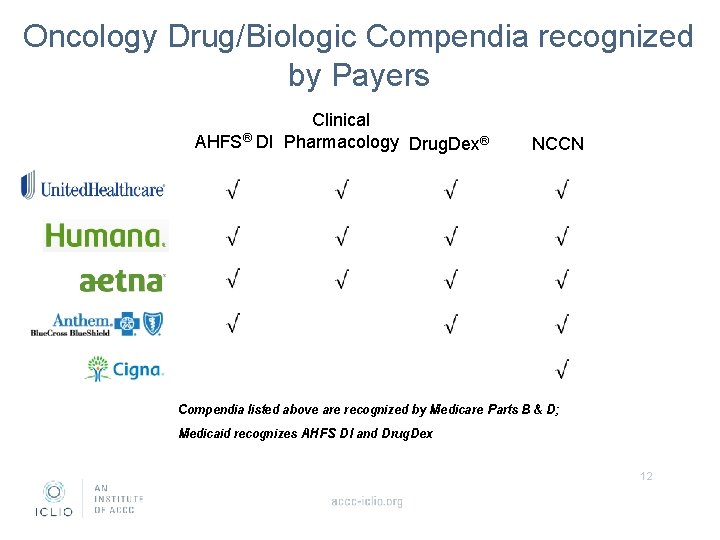
Oncology Drug/Biologic Compendia recognized by Payers Clinical AHFS® DI Pharmacology Drug. Dex® NCCN Compendia listed above are recognized by Medicare Parts B & D; Medicaid recognizes AHFS DI and Drug. Dex 12
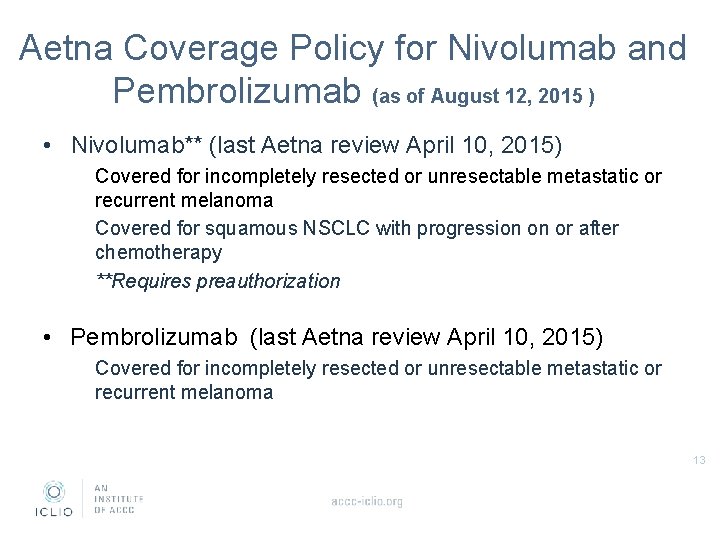
Aetna Coverage Policy for Nivolumab and Pembrolizumab (as of August 12, 2015 ) • Nivolumab** (last Aetna review April 10, 2015) Covered for incompletely resected or unresectable metastatic or recurrent melanoma Covered for squamous NSCLC with progression on or after chemotherapy **Requires preauthorization • Pembrolizumab (last Aetna review April 10, 2015) Covered for incompletely resected or unresectable metastatic or recurrent melanoma 13
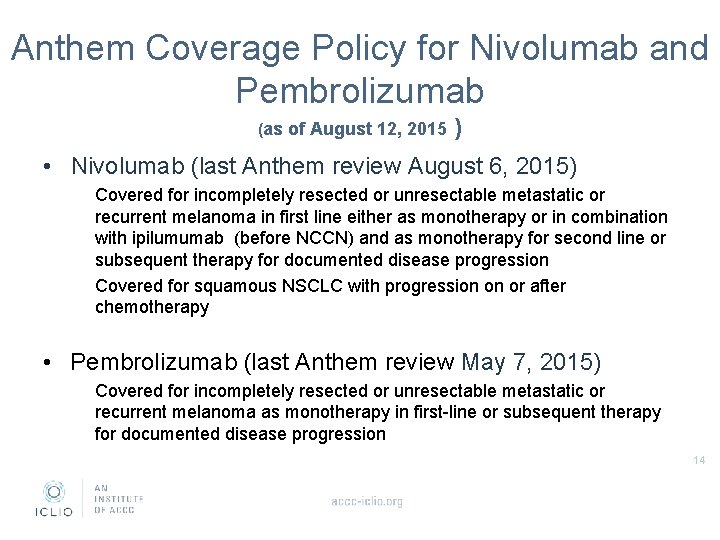
Anthem Coverage Policy for Nivolumab and Pembrolizumab (as of August 12, 2015 ) • Nivolumab (last Anthem review August 6, 2015) Covered for incompletely resected or unresectable metastatic or recurrent melanoma in first line either as monotherapy or in combination with ipilumumab (before NCCN) and as monotherapy for second line or subsequent therapy for documented disease progression Covered for squamous NSCLC with progression on or after chemotherapy • Pembrolizumab (last Anthem review May 7, 2015) Covered for incompletely resected or unresectable metastatic or recurrent melanoma as monotherapy in first-line or subsequent therapy for documented disease progression 14
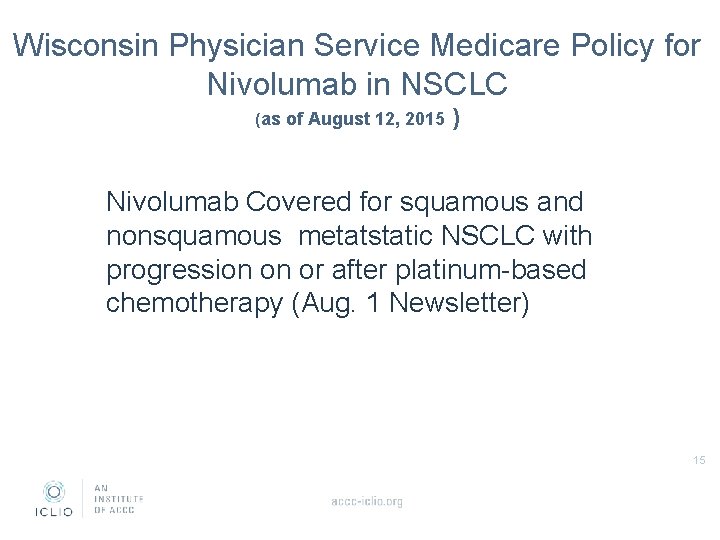
Wisconsin Physician Service Medicare Policy for Nivolumab in NSCLC (as of August 12, 2015 ) Nivolumab Covered for squamous and nonsquamous metatstatic NSCLC with progression on or after platinum-based chemotherapy (Aug. 1 Newsletter) 15
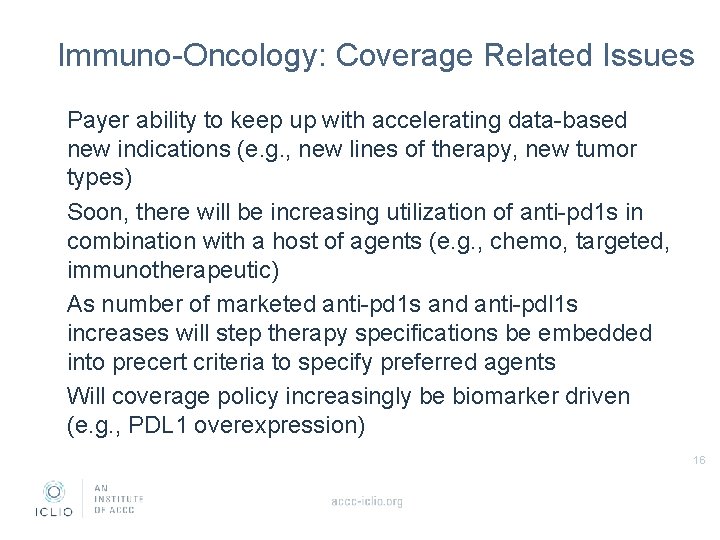
Immuno-Oncology: Coverage Related Issues Payer ability to keep up with accelerating data-based new indications (e. g. , new lines of therapy, new tumor types) Soon, there will be increasing utilization of anti-pd 1 s in combination with a host of agents (e. g. , chemo, targeted, immunotherapeutic) As number of marketed anti-pd 1 s and anti-pdl 1 s increases will step therapy specifications be embedded into precert criteria to specify preferred agents Will coverage policy increasingly be biomarker driven (e. g. , PDL 1 overexpression) 16
Niesha Griffith, RPh, MS, FASHP Administrator of Oncology Pharmacy and Infusion Services at the Arthur G. James Cancer Hospital and Richard J. Solove Research Institute at The Ohio State University 17
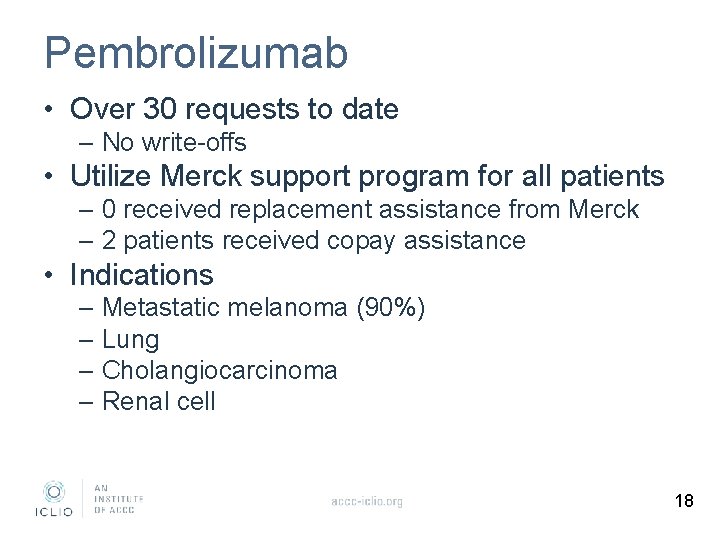
Pembrolizumab • Over 30 requests to date – No write-offs • Utilize Merck support program for all patients – 0 received replacement assistance from Merck – 2 patients received copay assistance • Indications – Metastatic melanoma (90%) – Lung – Cholangiocarcinoma – Renal cell 18
Nivolumab • Over 120 requests to date – No write-offs • Utilize BMS support program for all patients – 19 patients received replacement assistance from BMS – 8 patients received copay assistance • BMS copay support and disease based grants • Indications: • • Metastatic Melonoma (42%) Renal Cell (22%) Lung (20%) Squamous Cell Carcinoma (skin) Non-Hodgkins Lymphoma Bladder Prostate Merkel Cell 19
20
21
22
23
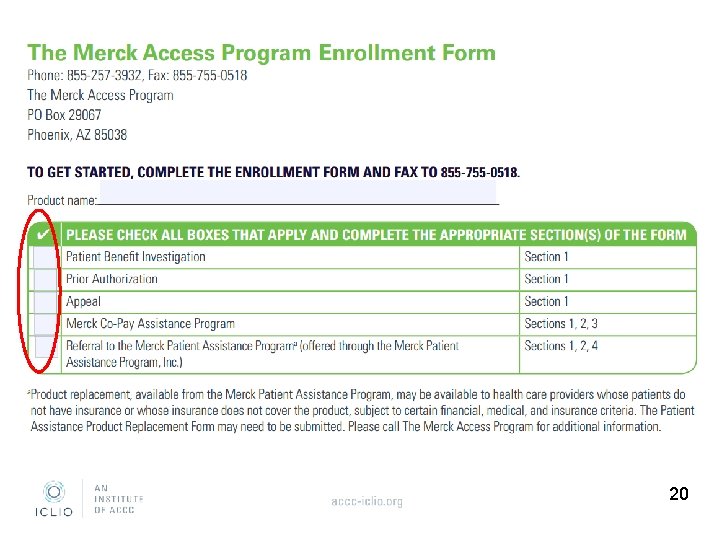
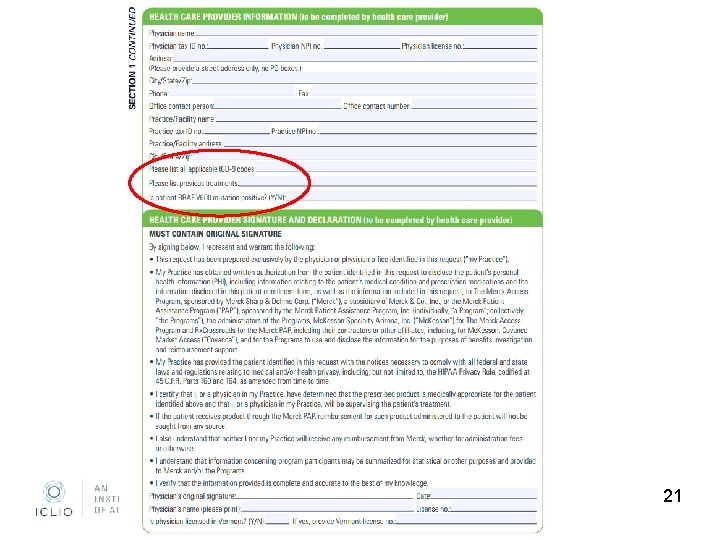
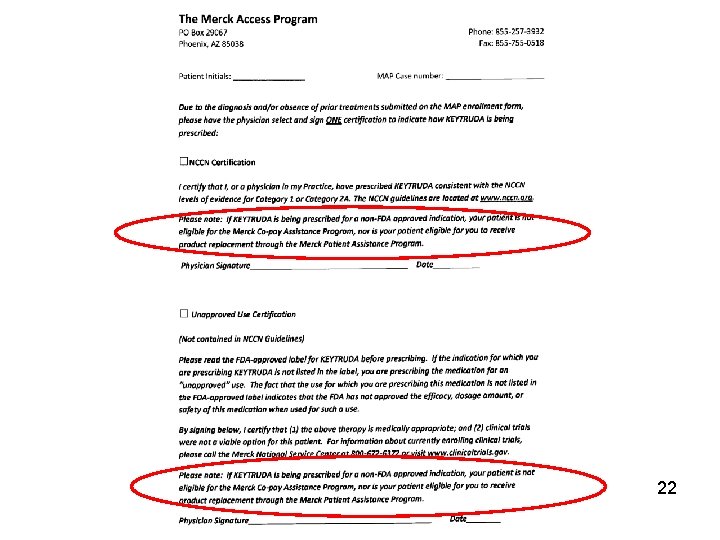
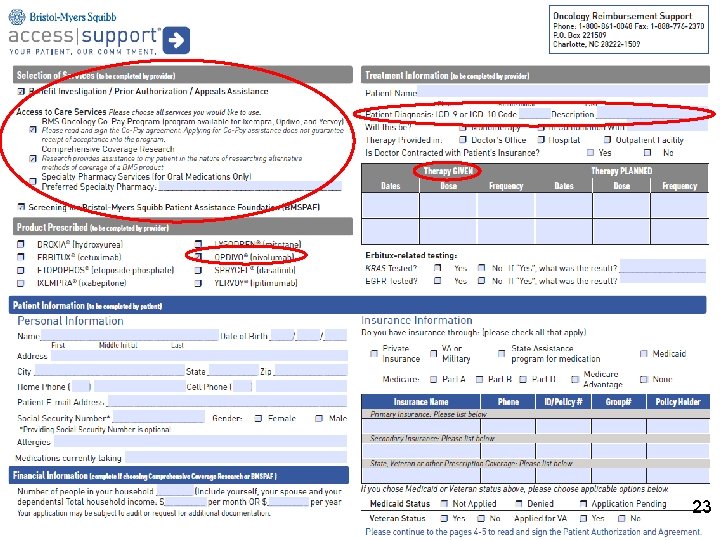
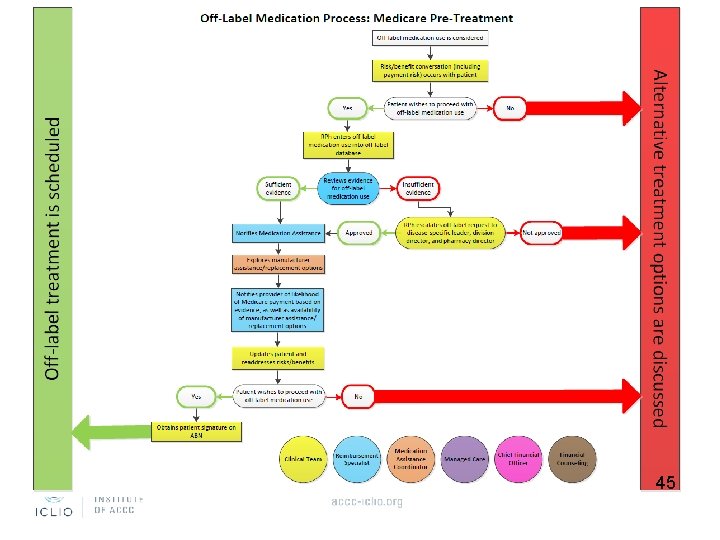
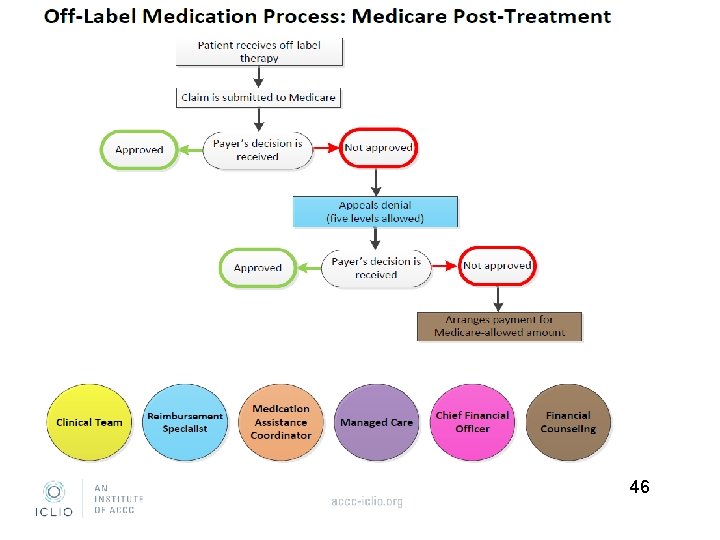
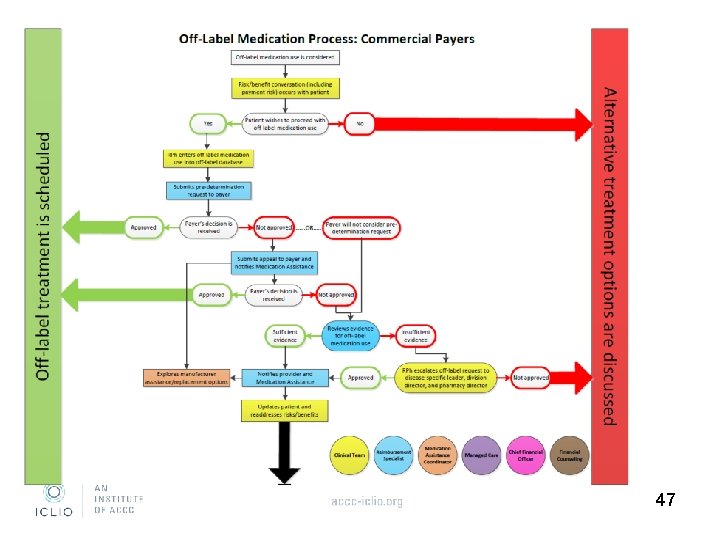
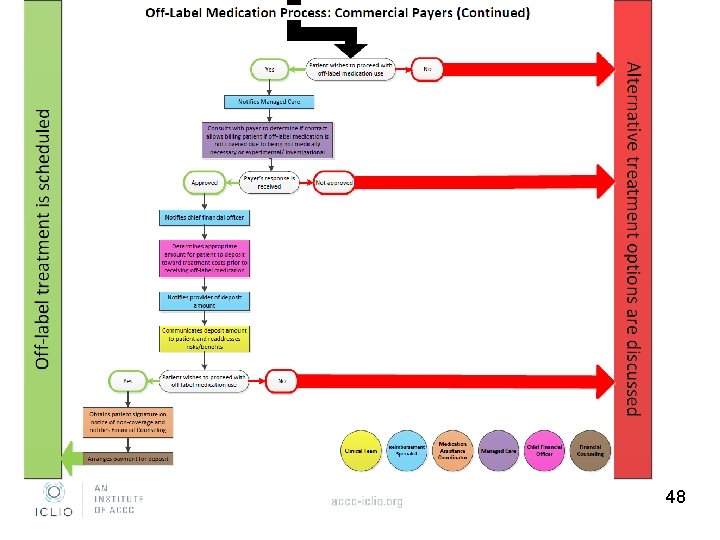
Support Program Experience • We use the support programs whether on or off-label for both medications • On-label requests follow our High Dollar Medication Process flow algorithm • Off-label requests follow either the Medicare or Other Payers Process flow algorithms 24
Payer Experience • Medicare – No LCD yet – Require signed ABN if off label • Managed Medicare – Clinical policy guidelines are available for all major payer plans – Require off-label predetermination • Off-label considered with clinical support and patient information, decisions on a case-by-case basis – Require NONC with unsuccessful predetermination 25

Payer Experience • Medicaid – Can not require NONC – If denied, only option is a support program • Managed Medicaid – Clinical policy guidelines are available (Caresource, Molina, etc. ) – Require off-label predetermination • Off-label considered with clinical support and patient information, decisions on a case-by-case basis – Require signed NONC with unsuccessful predetermination 26
Payer Experience • Anthem, Humana, Aetna, Cigna – Clinical policy guidelines are available for all – Require off-label predetermination • Off-label considered with clinical support and patient information, decisions on a case-by-case basis – Require signed NONC with unsuccessful predetermination – Anthem appears to have most scrutiny and where we have seen the most denials even after pre-determination authorization 27
Payer Experience • United Health Care – Follows NCCN Guidelines – Require off-label predetermination • Off-label considered with clinical support and patient information, decisions on a case-by-case basis – Require signed NONC with unsuccessful predetermination • Patients willing to pay out-of-pocket, if necessary for entire therapy 28
Challenges • Requests for off-label use immediately following FDA approval • Payers initially not prepared to answer coverage questions and render decisions • Support programs are different – Testing requirement – Off-label support • Resource intense – Clinical team (physicians, pharmacists, APPs) – Reimbursement staff 29
0 July-15 June-15 May-15 April-15 March-15 February-15 January-15 December-14 November-14 October-14 September-14 August-14 July-14 June-14 May-14 April-14 March-14 February-14 January-14 December-13 November-13 October-13 September-13 August-13 July-13 June-13 May-13 April-13 March-13 February-13 January-13 Number of Off-Label Requests 80 70 60 50 40 30 Number of Off-label Requests 20 10 30
Challenges • Communication/coordination due to multiple individuals and processes involved (internal/external) • Out of pocket payments • Budget impact – Current off-label use – Pending indications – Number of clinical trials 31
How have we made it work? • High dollar medication approval process – Enroll every patient into a support program, regardless of on or off-label – Clinical specialist pharmacist at point of care provides support and engages clinical team • Robust 0 ff-Label Policy and Procedure - All off-label requests require predetermination - Patients are made aware of risks and benefits, including financial risk - Patients are required to sign an ABN or NONC - Utilize peer review process as necessary 32
How have we made it work? • Added Reimbursement Specialists to the Pharmacy Department – Handle all high dollar approvals • Submit manufacturer program application and perform precertification – Handle all off-label predeterminations – Engage directly with Clinical Specialist Pharmacists – Determine out of pocket payment amount when necessary • Pharmacy follows every claim to ensure payment • Developed detailed process flows 33
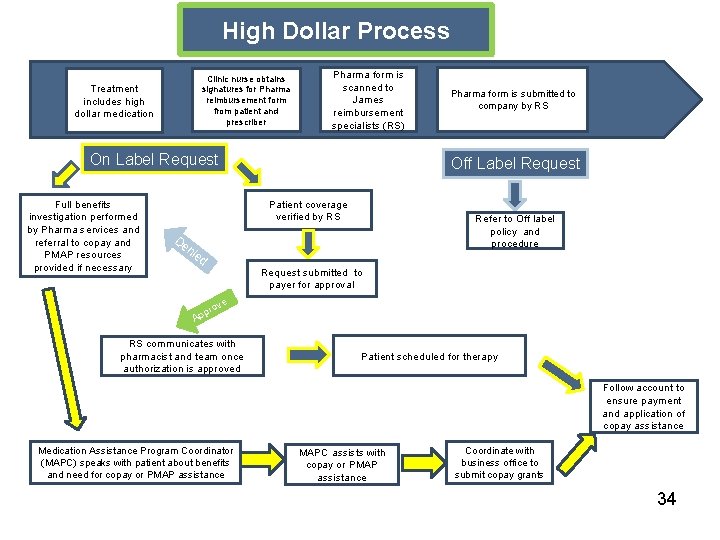
High Dollar Process Clinic nurse obtains signatures for Pharma reimbursement form from patient and prescriber Treatment includes high dollar medication Pharma form is scanned to James reimbursement specialists (RS) On Label Request Full benefits investigation performed by Pharma services and referral to copay and PMAP resources provided if necessary Pharma form is submitted to company by RS Off Label Request Patient coverage verified by RS Refer to Off label policy and procedure De nie d Request submitted to payer for approval e rov p Ap RS communicates with pharmacist and team once authorization is approved Patient scheduled for therapy Follow account to ensure payment and application of copay assistance Medication Assistance Program Coordinator (MAPC) speaks with patient about benefits and need for copay or PMAP assistance MAPC assists with copay or PMAP assistance Coordinate with business office to submit copay grants 34
Predetermination Process • Formal process with a team approach • Key players: – – Pharmacist Physician Advanced Practice Provider (CNP or PA) Reimbursement Specialist • Effective and traceable form of communication is essential 35
Predetermination Process • Pharmacist role – Discuss rationale for off-label use with the team – Retrieve supporting literature – Review CMS approved compendia and NCD/LCD – Enter request into off-label use database • Entry triggers an email to pharmacy director, P&T committee chair, reimbursement specialist team 36
Predetermination Process • Reimbursement Specialist role – Verify medical insurance – Obtain copies of pertinent information from patient medical record (treatment plan, diagnostic studies, etc. ) – Retrieve supporting literature (if not already provided by team) – Verify compendia and NCD/LCD support – Identify appropriate ICD-9 code(s) and HCPCS code(s) for medications 37
Predetermination Process • Reimbursement Specialist role – Draft letter of medical necessity – Fax letter and supporting evidence to payer – Confirm payer has received information – Continue to follow-up until approval/denial received – Request approval number and individual name 38
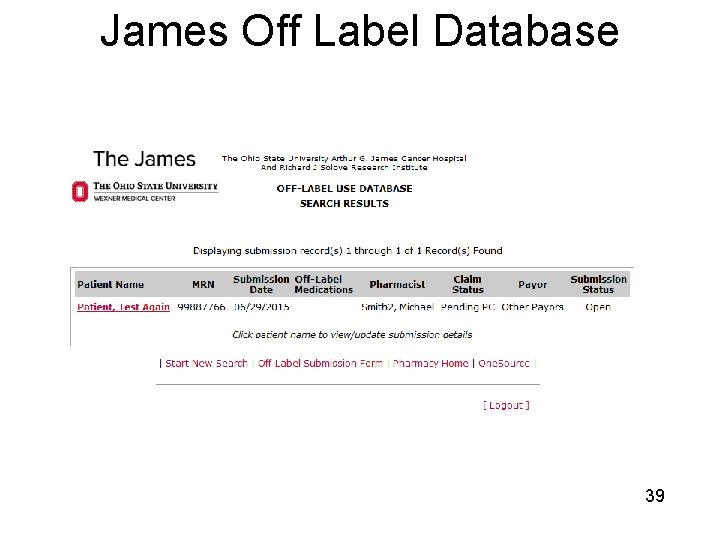
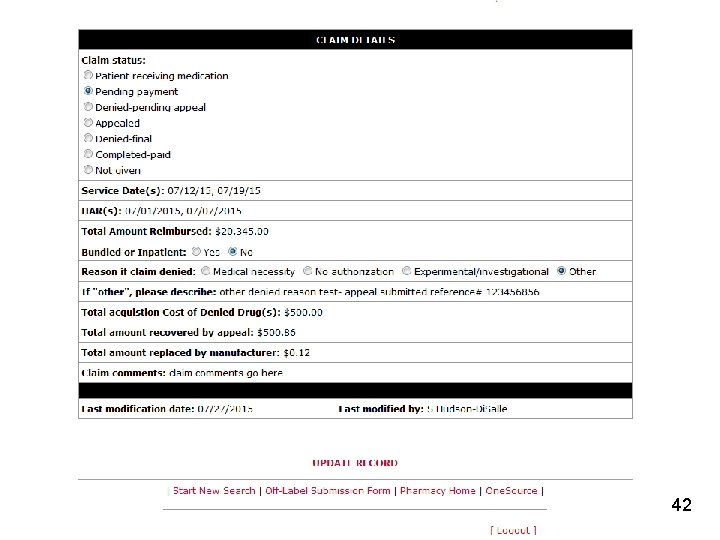
James Off Label Database 39
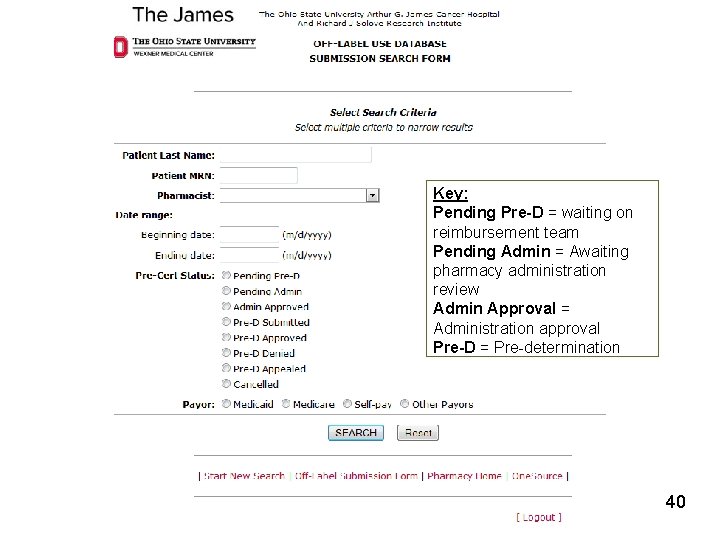
Key: Pending Pre-D = waiting on reimbursement team Pending Admin = Awaiting pharmacy administration review Admin Approval = Administration approval Pre-D = Pre-determination 40
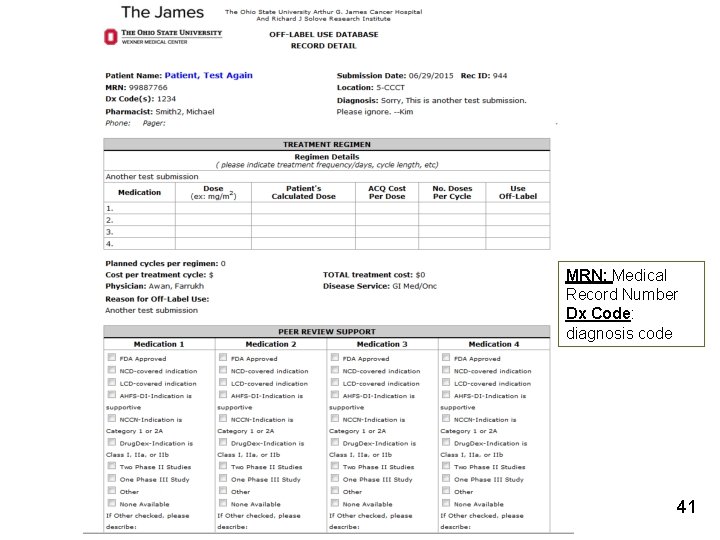
MRN: Medical Record Number Dx Code: diagnosis code 41
42
43
Peer Review Process • Off-label requests lacking supportive evidence require approval by: – Disease Specific Leader (GI, GU, Lung, etc. . ) – Division Director (hematology or oncology) – Pharmacy Administrator/Director • Safety, efficacy, and cost must be considered • Decisions may take up to 72 hours depending on availability of individuals 44
45
46
47
48

Questions?
Register today! accc-iclio. org
- Slides: 50