
Nave Bayes Classifiers Simple nave classification methods based
Naïve Bayes Classifiers Simple (naïve) classification methods based on Bayes rules Yuzhen Ye (Fall 2021)
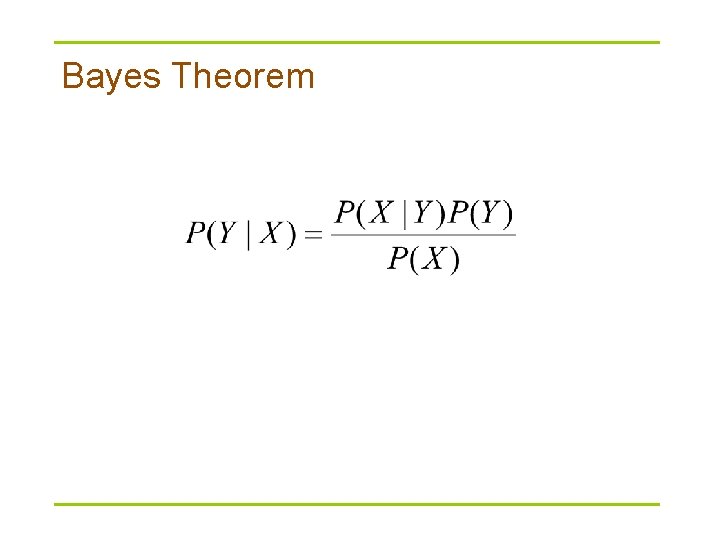
Bayes Theorem
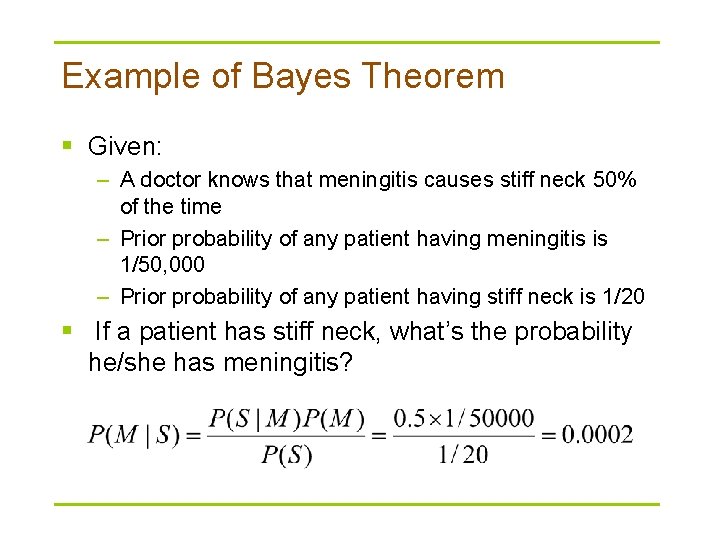
Example of Bayes Theorem § Given: – A doctor knows that meningitis causes stiff neck 50% of the time – Prior probability of any patient having meningitis is 1/50, 000 – Prior probability of any patient having stiff neck is 1/20 § If a patient has stiff neck, what’s the probability he/she has meningitis?
Using Bayes Theorem for Classification § Naïve Bayes classification: “Naïve” refers to the (naïve) assumption that data attributes are independent § The Bayesian method can still be optimal even when this attribute independency is violated (Domingos, P. , and M. Pazzani. 1997)
Properties of Bayes Classifier § Combines prior knowledge and observed data: prior probability of a hypothesis multiplied with probability of the hypothesis given the training data § Probabilistic hypothesis: outputs not only a classification, but a probability distribution over all classes
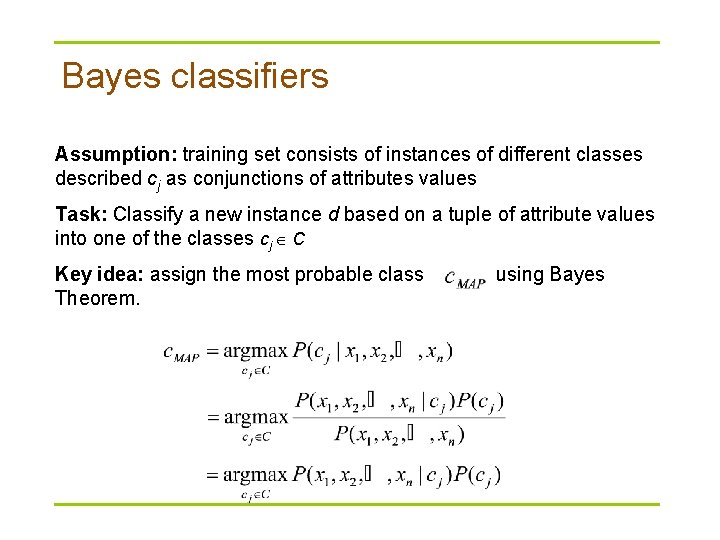
Bayes classifiers Assumption: training set consists of instances of different classes described cj as conjunctions of attributes values Task: Classify a new instance d based on a tuple of attribute values into one of the classes cj C Key idea: assign the most probable class Theorem. using Bayes
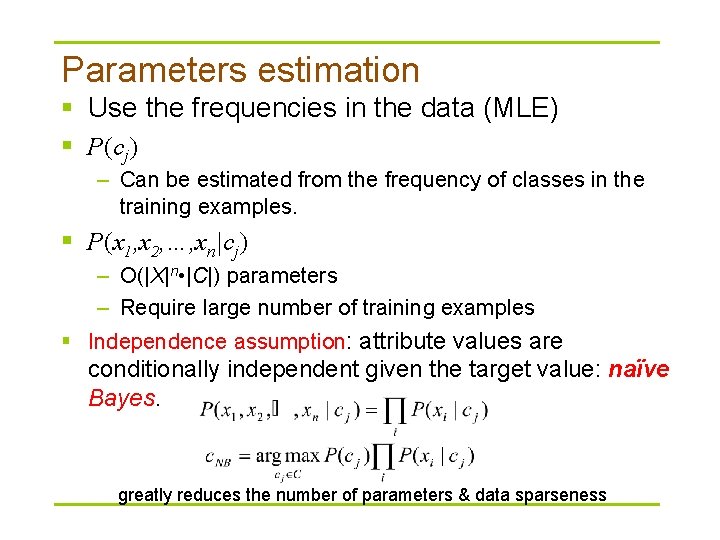
Parameters estimation § Use the frequencies in the data (MLE) § P(cj) – Can be estimated from the frequency of classes in the training examples. § P(x 1, x 2, …, xn|cj) – O(|X|n • |C|) parameters – Require large number of training examples § Independence assumption: attribute values are conditionally independent given the target value: naïve Bayes. greatly reduces the number of parameters & data sparseness
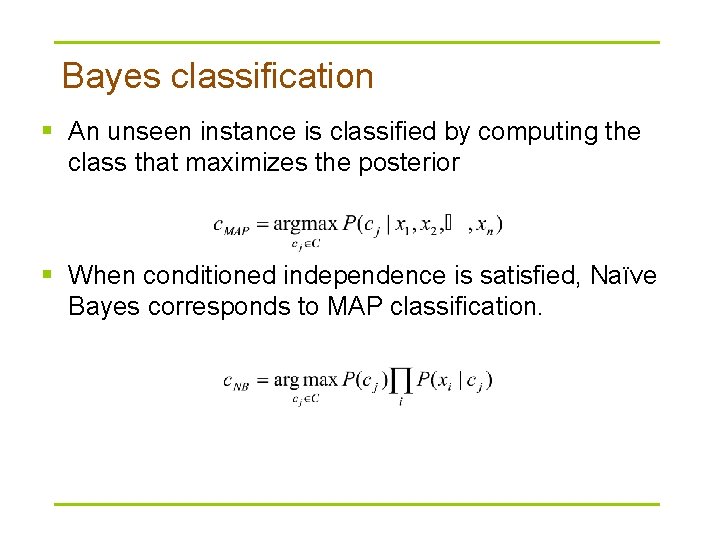
Bayes classification § An unseen instance is classified by computing the class that maximizes the posterior § When conditioned independence is satisfied, Naïve Bayes corresponds to MAP classification.
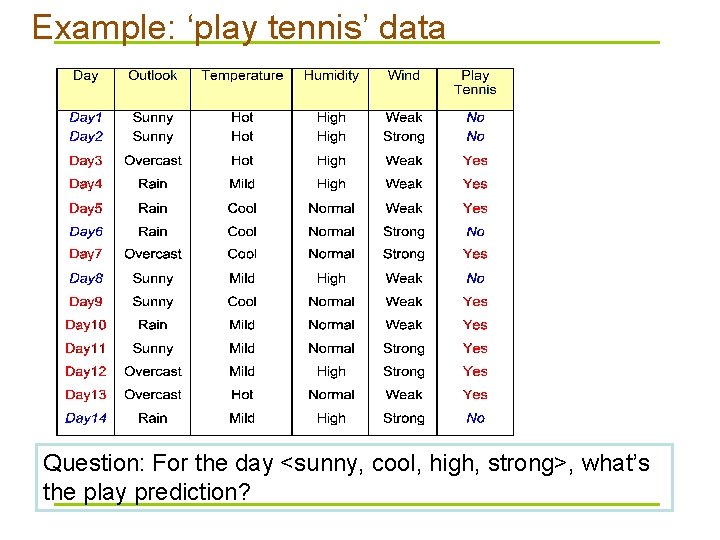
Example: ‘play tennis’ data Question: For the day <sunny, cool, high, strong>, what’s the play prediction?
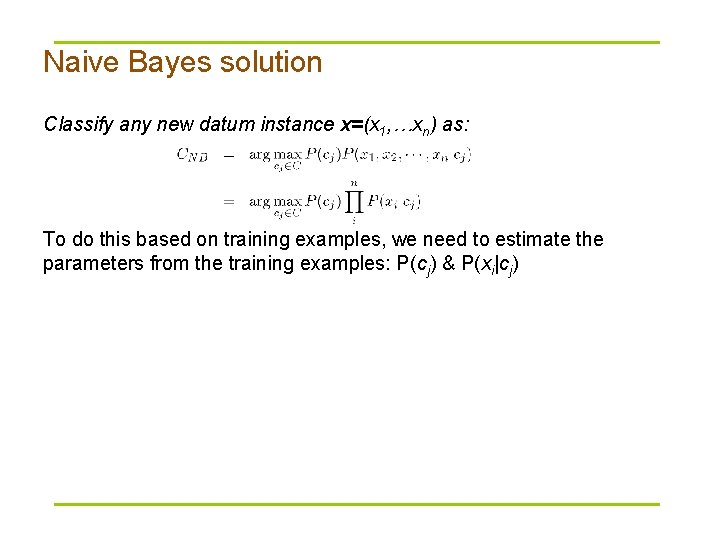
Naive Bayes solution Classify any new datum instance x=(x 1, …xn) as: To do this based on training examples, we need to estimate the parameters from the training examples: P(cj) & P(xi|cj)
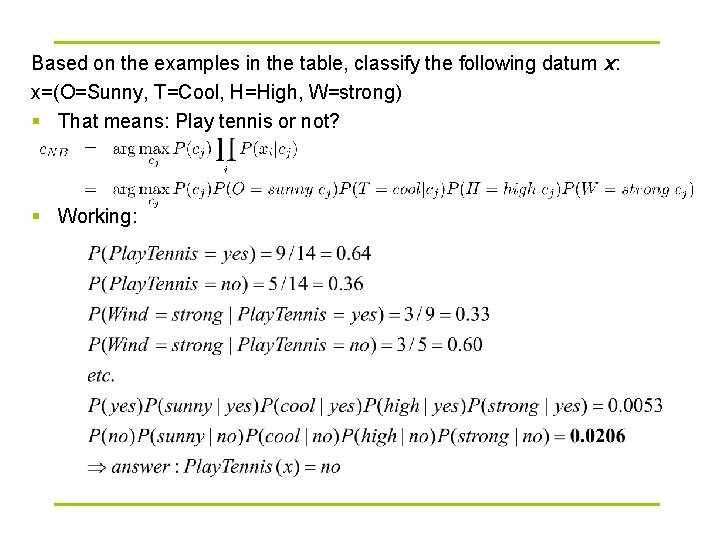
Based on the examples in the table, classify the following datum x: x=(O=Sunny, T=Cool, H=High, W=strong) § That means: Play tennis or not? § Working:
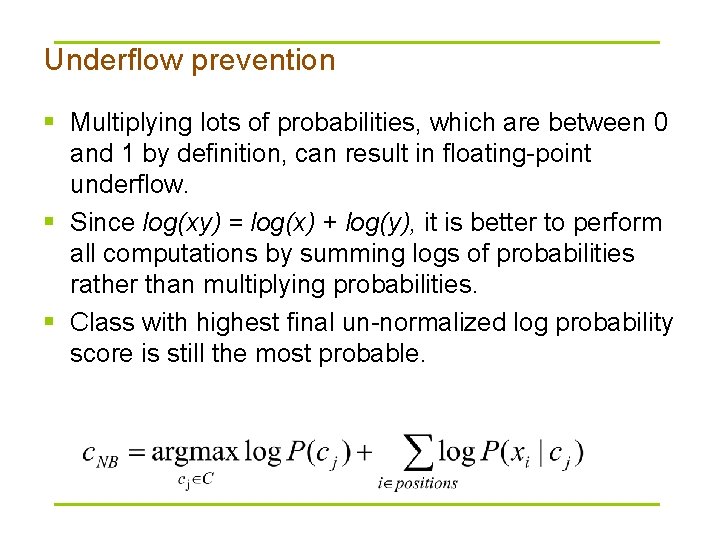
Underflow prevention § Multiplying lots of probabilities, which are between 0 and 1 by definition, can result in floating-point underflow. § Since log(xy) = log(x) + log(y), it is better to perform all computations by summing logs of probabilities rather than multiplying probabilities. § Class with highest final un-normalized log probability score is still the most probable.
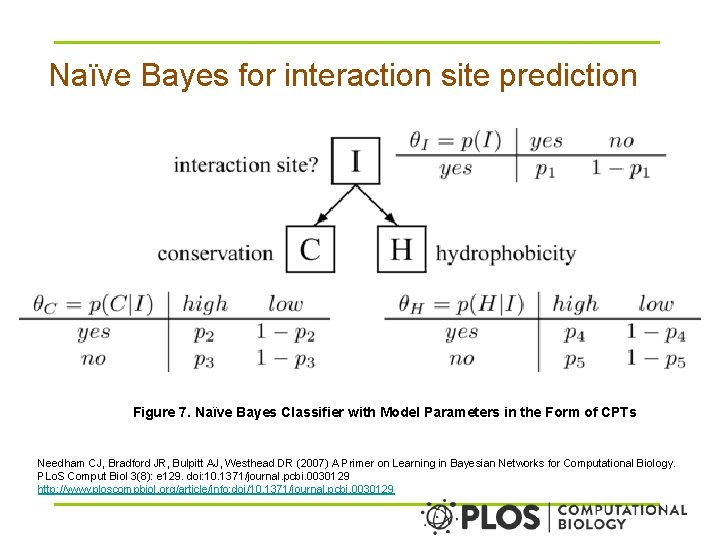
Naïve Bayes for interaction site prediction Figure 7. Naïve Bayes Classifier with Model Parameters in the Form of CPTs Needham CJ, Bradford JR, Bulpitt AJ, Westhead DR (2007) A Primer on Learning in Bayesian Networks for Computational Biology. PLo. S Comput Biol 3(8): e 129. doi: 10. 1371/journal. pcbi. 0030129 http: //www. ploscompbiol. org/article/info: doi/10. 1371/journal. pcbi. 0030129
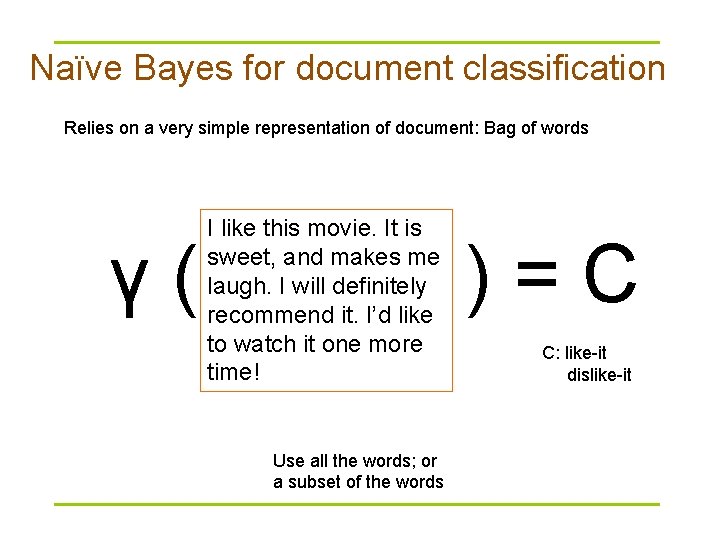
Naïve Bayes for document classification Relies on a very simple representation of document: Bag of words γ( I like this movie. It is sweet, and makes me laugh. I will definitely recommend it. I’d like to watch it one more time! Use all the words; or a subset of the words )=C C: like-it dislike-it
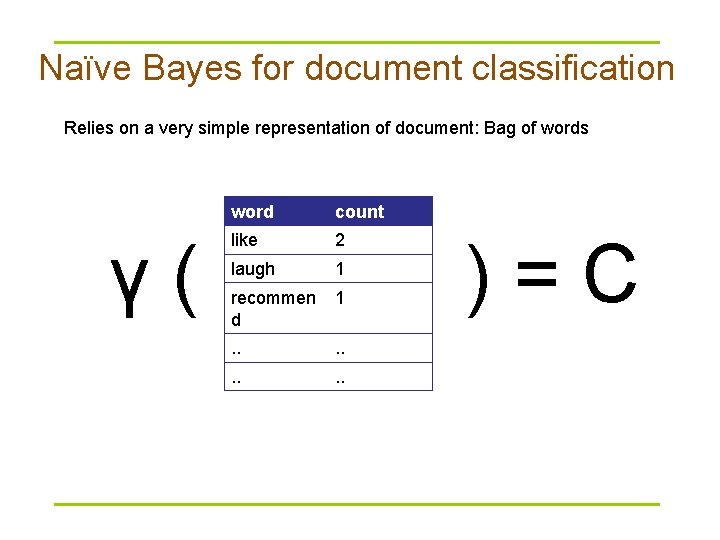
Naïve Bayes for document classification Relies on a very simple representation of document: Bag of words γ( word count like 2 laugh 1 recommen d 1 . . . . )=C
Naïve Bayes (Summary) § Robust to isolated noise points § Handle missing values by ignoring the instance during probability estimate calculations § Robust to irrelevant attributes § Independence assumption may not hold for some attributes – Use other techniques such as Bayesian Belief Networks (BBN)
- Slides: 16