
Naval Reserve Officers Training Corps Operational Stress Control
- Slides: 32
Naval Reserve Officers Training Corps Operational Stress Control Part 2 1
Objectives • Review the common reactions to operational stress in self and others as identified in the Stress Continuum Model. • Identify common barriers to successfully navigating stress. • Identify methods or tools to help navigate stress. • Define the steps involved in Combat and Operational Stress First Aid (COSFA). • Identify resources to get help with stress. 2
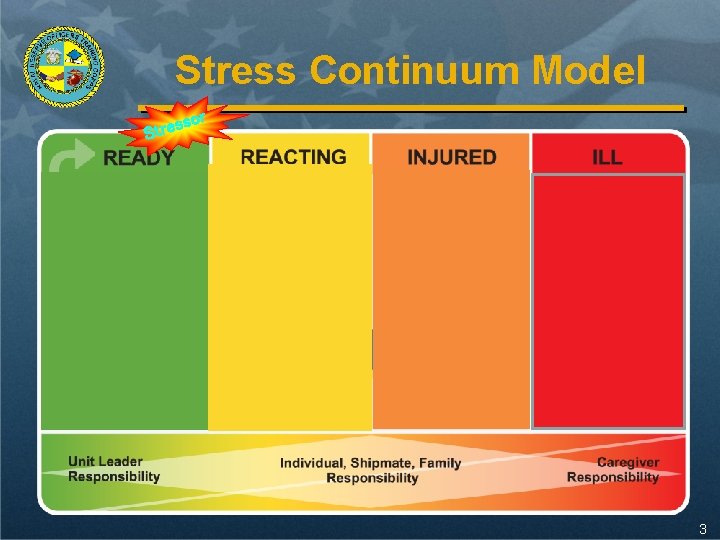
Stress Continuum Model r sso e r t S 3
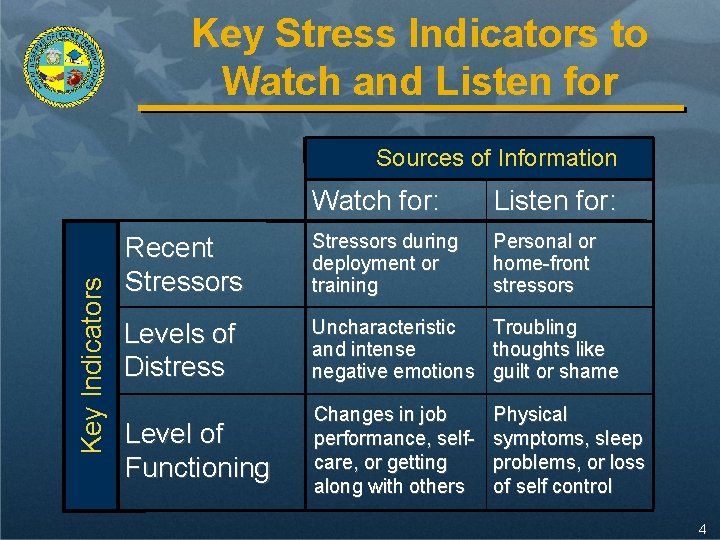
Key Stress Indicators to Watch and Listen for Key Indicators Sources of Information Watch for: Listen for: Recent Stressors during deployment or training Personal or home-front stressors Levels of Distress Uncharacteristic and intense negative emotions Troubling thoughts like guilt or shame Level of Functioning Changes in job performance, selfcare, or getting along with others Physical symptoms, sleep problems, or loss of self control 4
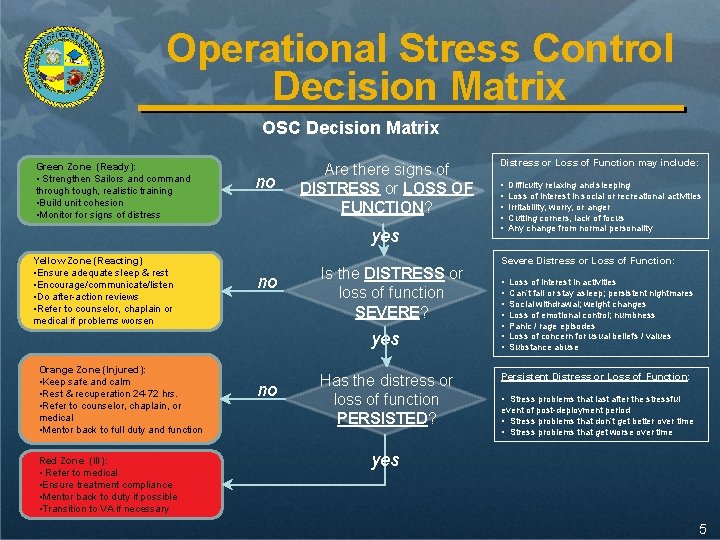
Operational Stress Control Decision Matrix OSC Decision Matrix Green Zone (Ready): • Strengthen Sailors and command through tough, realistic training • Build unit cohesion • Monitor for signs of distress no Are there signs of DISTRESS or LOSS OF FUNCTION? yes Yellow Zone (Reacting) • Ensure adequate sleep & rest • Encourage/communicate/listen • Do after-action reviews • Refer to counselor, chaplain or medical if problems worsen no Is the DISTRESS or loss of function SEVERE? yes Orange Zone (Injured): • Keep safe and calm • Rest & recuperation 24 -72 hrs. • Refer to counselor, chaplain, or medical • Mentor back to full duty and function Red Zone (Ill): • Refer to medical • Ensure treatment compliance • Mentor back to duty if possible • Transition to VA if necessary no Has the distress or loss of function PERSISTED? Distress or Loss of Function may include: • • • Difficulty relaxing and sleeping Loss of interest in social or recreational activities Irritability, worry, or anger Cutting corners, lack of focus Any change from normal personality Severe Distress or Loss of Function: • • Loss of interest in activities Can’t fall or stay asleep; persistent nightmares Social withdrawal; weight changes Loss of emotional control; numbness Panic / rage episodes Loss of concern for usual beliefs / values Substance abuse Persistent Distress or Loss of Function: • Stress problems that last after the stressful event of post-deployment period • Stress problems that don’t get better over time • Stress problems that get worse over time yes 5
Personal Experience with Stigma • Have you ever had a personal problem you were afraid to tell anyone else about, even though telling the right person might have helped fix the problem, just because you felt embarrassed or ashamed about it? 6
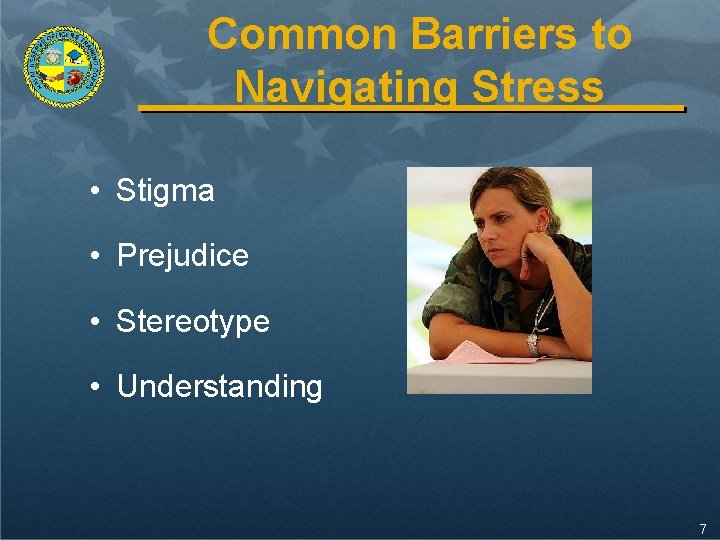
Common Barriers to Navigating Stress • Stigma • Prejudice • Stereotype • Understanding 7
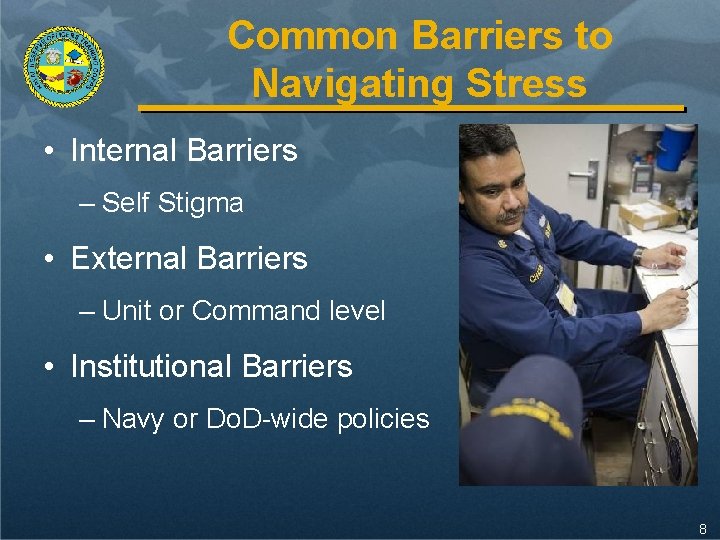
Common Barriers to Navigating Stress • Internal Barriers – Self Stigma • External Barriers – Unit or Command level • Institutional Barriers – Navy or Do. D-wide policies 8
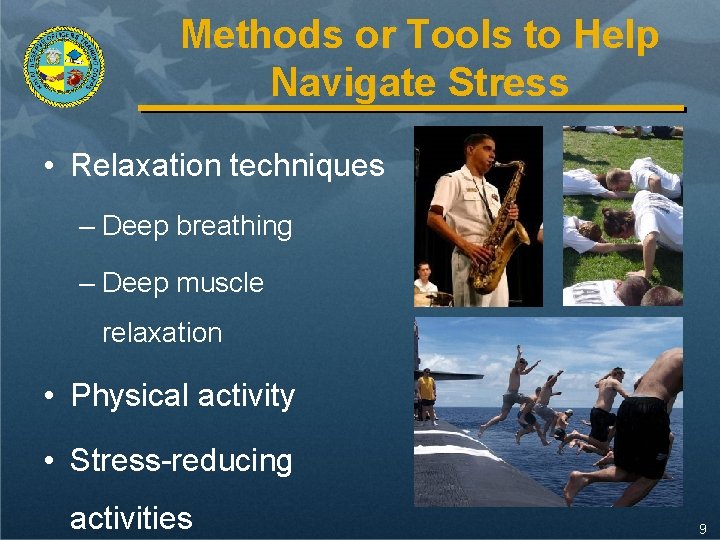
Methods or Tools to Help Navigate Stress • Relaxation techniques – Deep breathing – Deep muscle relaxation • Physical activity • Stress-reducing activities 9
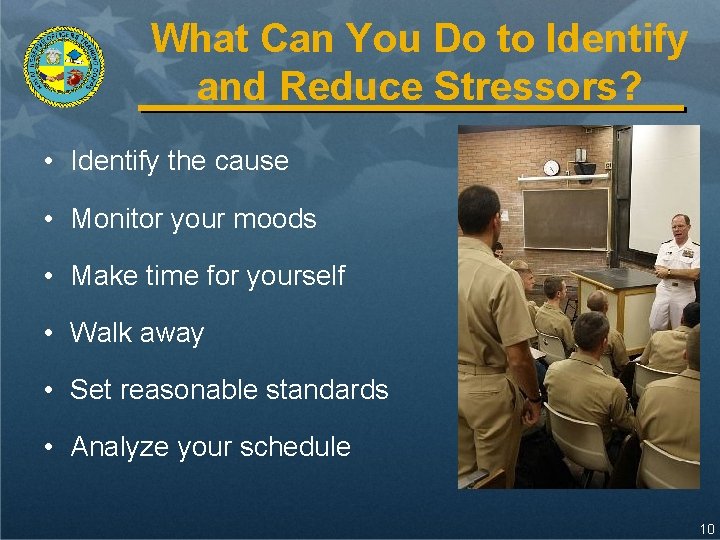
What Can You Do to Identify and Reduce Stressors? • Identify the cause • Monitor your moods • Make time for yourself • Walk away • Set reasonable standards • Analyze your schedule 10
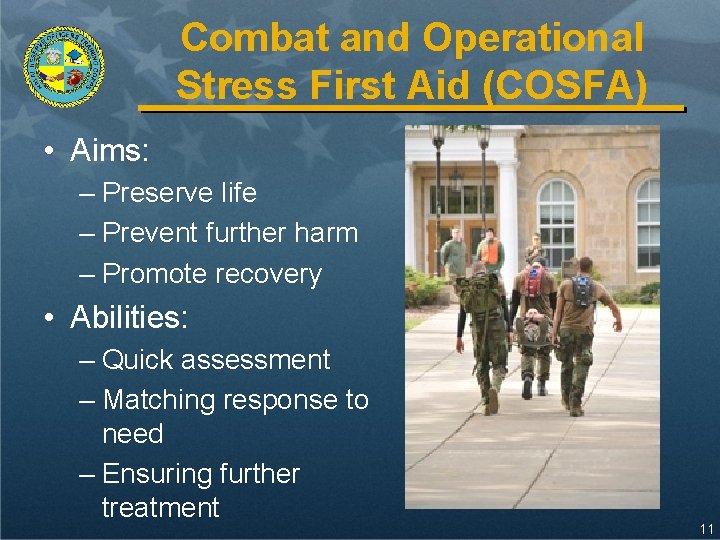
Combat and Operational Stress First Aid (COSFA) • Aims: – Preserve life – Prevent further harm – Promote recovery • Abilities: – Quick assessment – Matching response to need – Ensuring further treatment 11
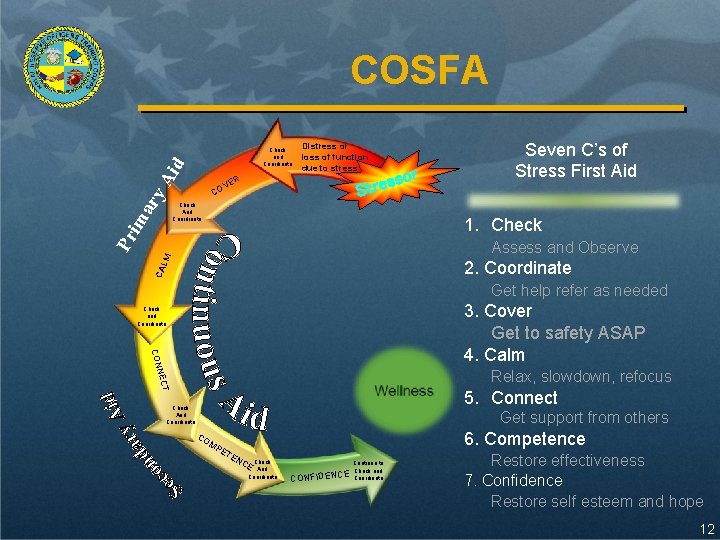
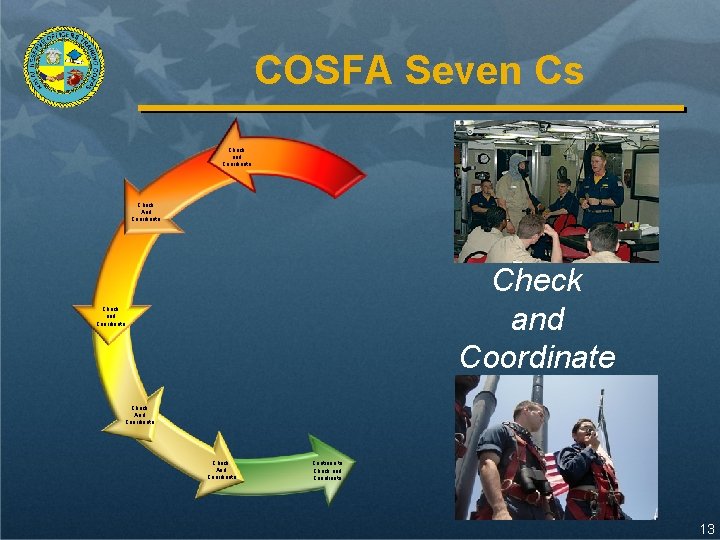
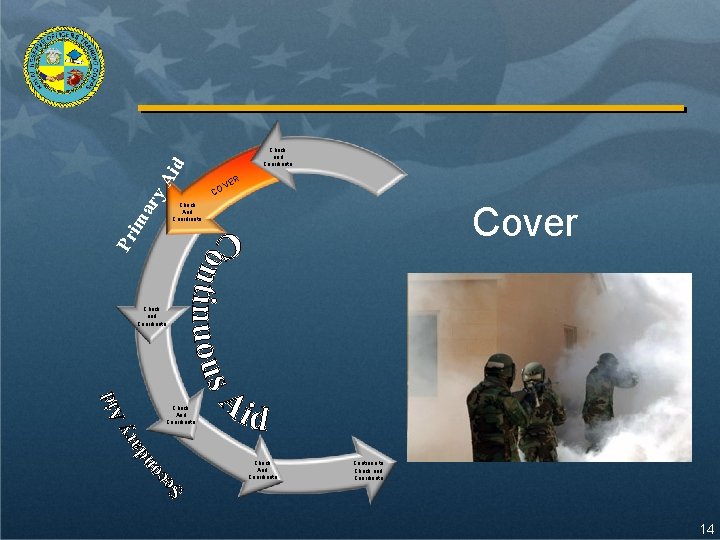
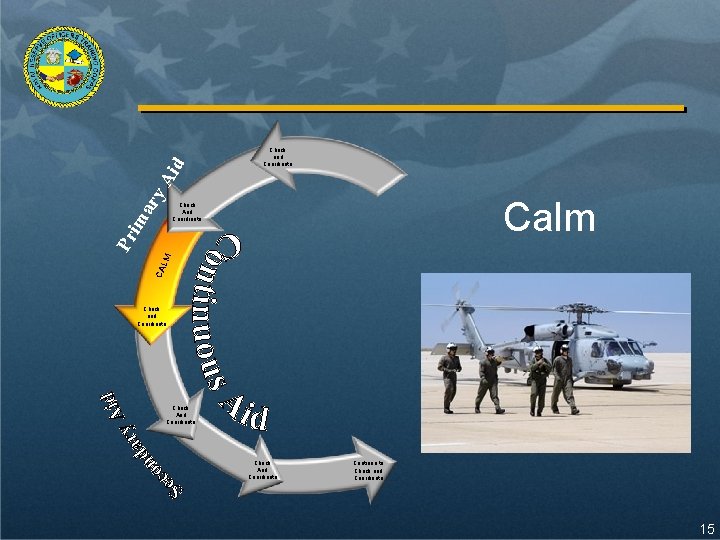
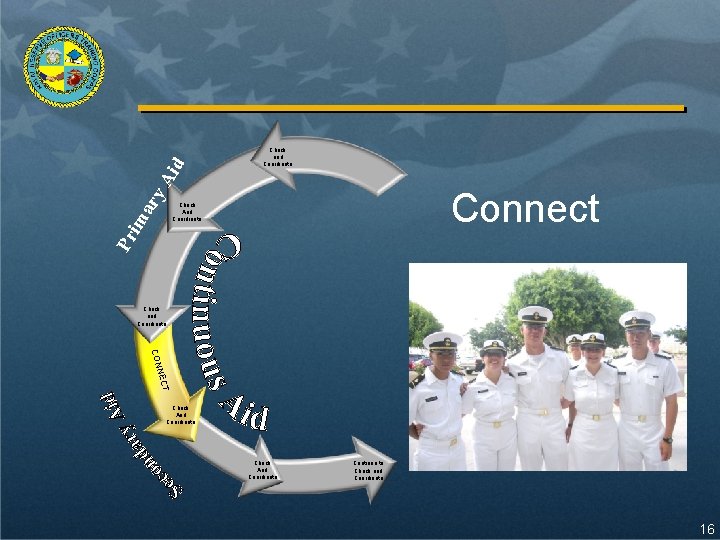
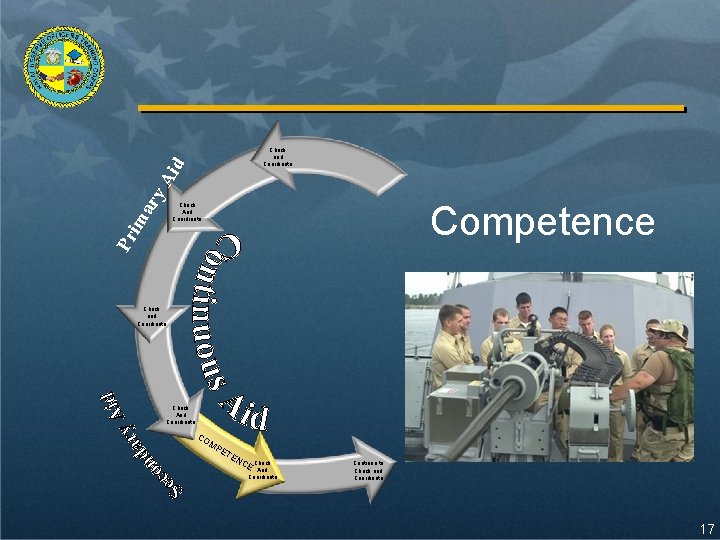
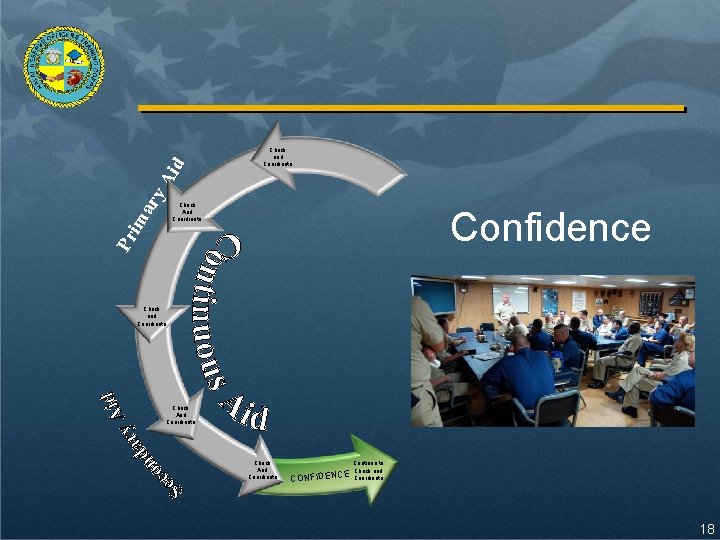
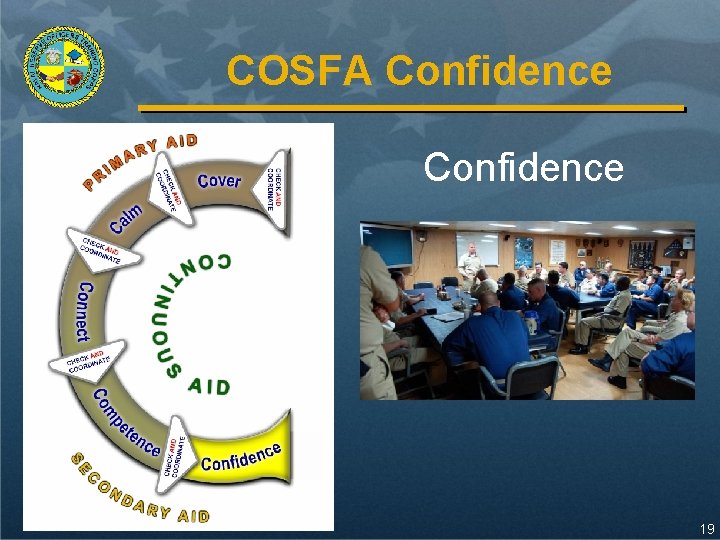
COSFA ar y. A id Check and Coordinate VE CO Distress or loss of function due to stress R or s s e Str 1. Check Pr im Check And Coordinate Seven C’s of Stress First Aid LM Assess and Observe CA 2. Coordinate Get help refer as needed 3. Cover Get to safety ASAP 4. Calm Check and Coordinate CON NEC Relax, slowdown, refocus T 5. Connect Check And Coordinate Get support from others 6. Competence CO MP ET EN CE Check And Coordinate E CONFIDENC Continue to Check and Coordinate Restore effectiveness 7. Confidence Restore self esteem and hope 12
COSFA Seven Cs Check and Coordinate Check And Coordinate Continue to Check and Coordinate 13
ar y. A id Check and Coordinate ER V CO Cover Pr im Check And Coordinate Check and Coordinate Check And Coordinate Continue to Check and Coordinate 14
id ar y. A Check and Coordinate Calm CA LM Pr im Check And Coordinate Check and Coordinate Check And Coordinate Continue to Check and Coordinate 15
id ar y. A Check and Coordinate Connect Pr im Check And Coordinate Check and Coordinate T NEC CON Check And Coordinate Continue to Check and Coordinate 16
ar y. A id Check and Coordinate Competence Pr im Check And Coordinate Check and Coordinate Check And Coordinate CO MP ET EN CE Check And Coordinate Continue to Check and Coordinate 17
id ar y. A Check and Coordinate Confidence Pr im Check And Coordinate Check and Coordinate Check And Coordinate E CONFIDENC Continue to Check and Coordinate 18
COSFA Confidence 19
Ask for Help • When: – You feel trapped, like there's nowhere to turn. – You worry excessively and can't concentrate. – The way you feel affects your sleep, your eating habits, your job, your relationships, or your everyday life. 20
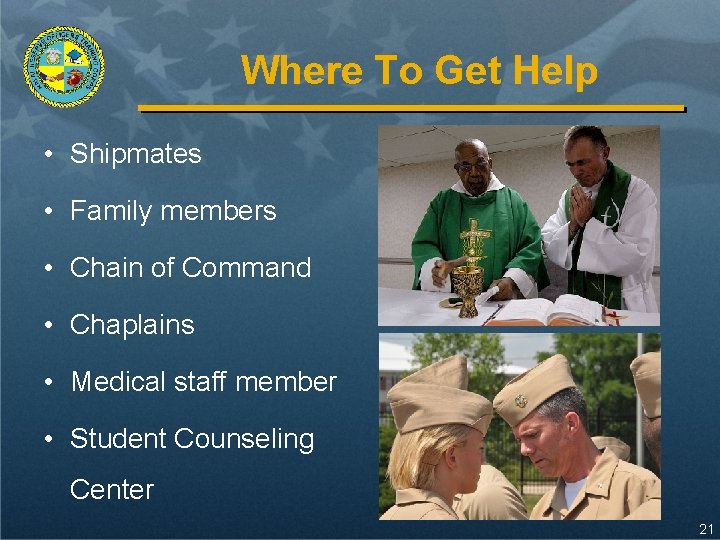
Where To Get Help • Shipmates • Family members • Chain of Command • Chaplains • Medical staff member • Student Counseling Center 21
Resources for Help • Websites: – Navy Operational Stress Control (OSC) blog (www. Navy. Nav. Stress. com) – Navy & Marine Corps Public Health Center (www-nehc. med. navy. mil) – The Naval Center for Combat and Operational Stress Control (http: //www. nccosc. navy. mil) – USMC COSC (www. usmc-mccs. org/cosc ) – Navy Safe Harbor (www. npc. navy. mil/Command. Support/Safe. Harbor ) – Military One. Source (www. militaryonesource. com) – VA Centers (www. vetcenter. va. gov ) 22
Maintain Resources 23
Summary Now that you have completed this NROTC – OSC Module, you should be able to: • Review the common reactions to operational stress in self. and others as identified in the Stress Continuum Model. • Identify common barriers to navigating stress. • Identify methods or tools to help navigate stress. • Define the steps involved in Combat and Operational Stress First Aid (COSFA). • Identify resources to get help with stress. 24
Naval Reserve Officers Training Corps Scenarios 25
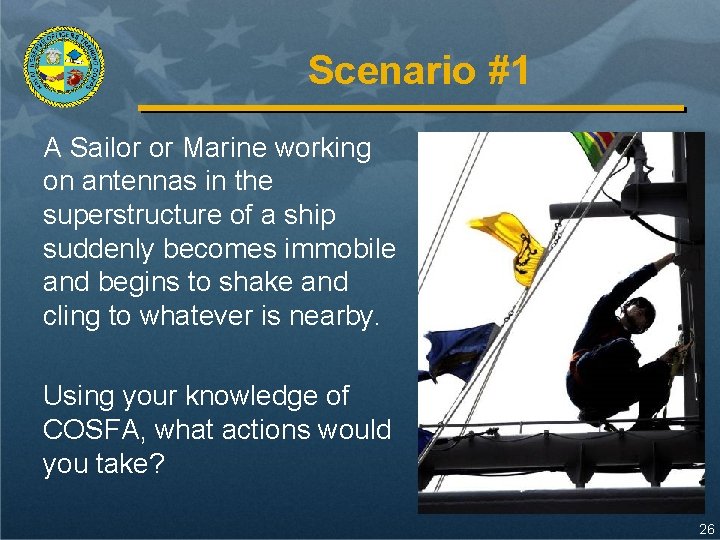
Scenario #1 A Sailor or Marine working on antennas in the superstructure of a ship suddenly becomes immobile and begins to shake and cling to whatever is nearby. Using your knowledge of COSFA, what actions would you take? 26
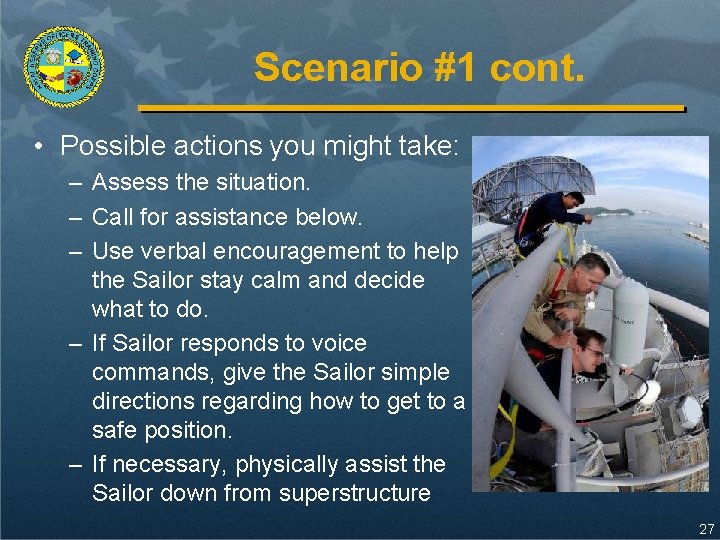
Scenario #1 cont. • Possible actions you might take: – Assess the situation. – Call for assistance below. – Use verbal encouragement to help the Sailor stay calm and decide what to do. – If Sailor responds to voice commands, give the Sailor simple directions regarding how to get to a safe position. – If necessary, physically assist the Sailor down from superstructure 27
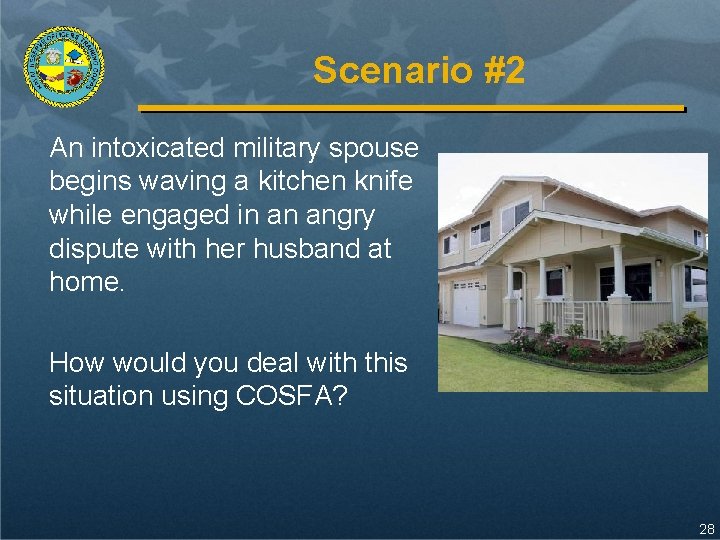
Scenario #2 An intoxicated military spouse begins waving a kitchen knife while engaged in an angry dispute with her husband at home. How would you deal with this situation using COSFA? 28
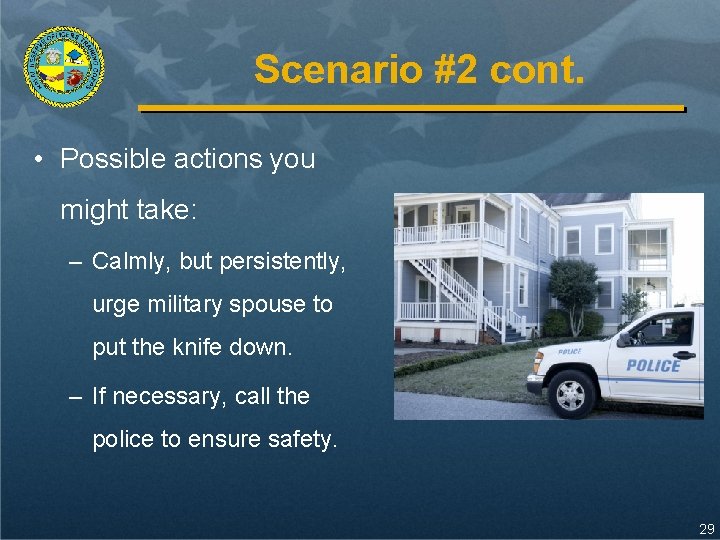
Scenario #2 cont. • Possible actions you might take: – Calmly, but persistently, urge military spouse to put the knife down. – If necessary, call the police to ensure safety. 29
Scenario #3 A Sailor with a significant Orange Zone life threat stress injury has recently returned to the command has expressed concerns about his ability to perform his duties. What are some things the command can do to help reintegrate the sailor? 30
Scenario #3 cont. – Apply elements of the COSFA model. – Restore this individual’s competence and confidence. – Restructure the Sailor’s work assignment and responsibilities. – Gradually resume the Sailor’s responsibility for doing work that requires clear thinking, planning, and decision making. – Continually reassess mental capacity and give the Sailor regular feedback on his or her progress. – Mentor Sailor as needed. 31
Scenario 4: COSFA in Action 32