
NAU Cube Sat Capstone Team Preliminary Design Review
NAU Cube. Sat Capstone Team Preliminary Design Review Richard Campos: Team Leader Zackary Retzlaff: Client Contact Jacob Belin: Budget Liaison Jacqueline Fonseca: Website Designer 1 General Atomics Proprietary Information
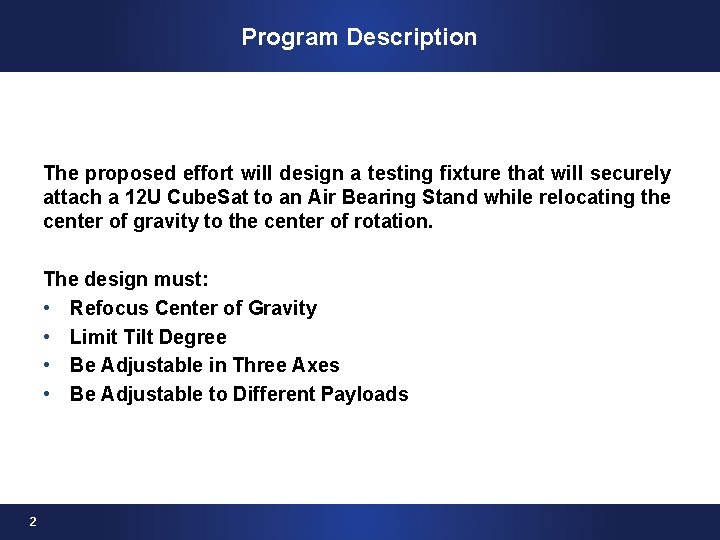
Program Description The proposed effort will design a testing fixture that will securely attach a 12 U Cube. Sat to an Air Bearing Stand while relocating the center of gravity to the center of rotation. The design must: • Refocus Center of Gravity • Limit Tilt Degree • Be Adjustable in Three Axes • Be Adjustable to Different Payloads 2
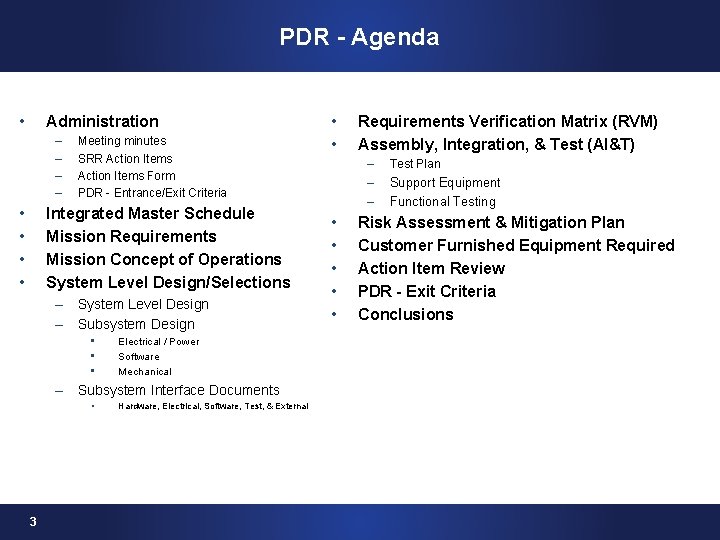
PDR - Agenda • Administration – – • • Meeting minutes SRR Action Items Form PDR - Entrance/Exit Criteria Integrated Master Schedule Mission Requirements Mission Concept of Operations System Level Design/Selections – System Level Design – Subsystem Design • • • Electrical / Power Software Mechanical – Subsystem Interface Documents • 3 Hardware, Electrical, Software, Test, & External • • Requirements Verification Matrix (RVM) Assembly, Integration, & Test (AI&T) – Test Plan – – Support Equipment Functional Testing Risk Assessment & Mitigation Plan Customer Furnished Equipment Required Action Item Review PDR - Exit Criteria Conclusions
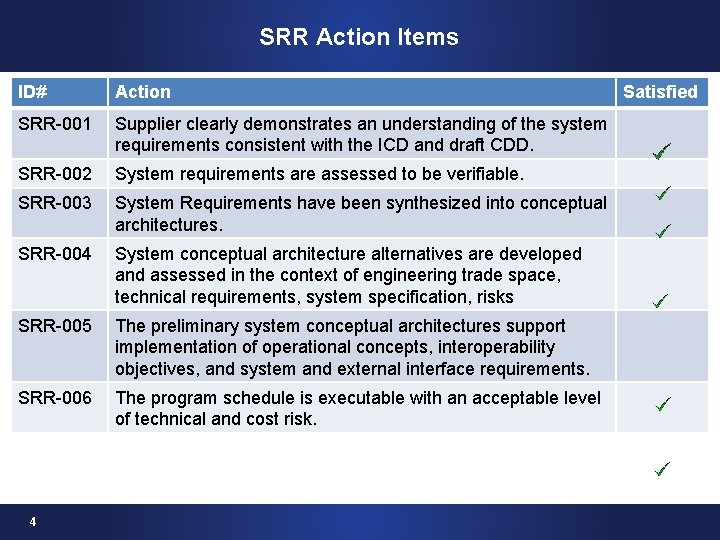
SRR Action Items ID# Action SRR-001 Supplier clearly demonstrates an understanding of the system requirements consistent with the ICD and draft CDD. SRR-002 System requirements are assessed to be verifiable. SRR-003 System Requirements have been synthesized into conceptual architectures. SRR-004 System conceptual architecture alternatives are developed and assessed in the context of engineering trade space, technical requirements, system specification, risks SRR-005 The preliminary system conceptual architectures support implementation of operational concepts, interoperability objectives, and system and external interface requirements. SRR-006 The program schedule is executable with an acceptable level of technical and cost risk. 4 Satisfied

PDR Entrance Criteria Completion of the System Requirements Review (SRR). Adjudication of the SRR Action Items. Requirements are clear, documented, verifiable, and flowed down to levels needed to accomplish the design, analysis, and test tasks. All major design elements are baselined to meet the project requirements are ready to present. Completion of Integrated Master Schedule. The test strategy is documented. 5 Satisfied
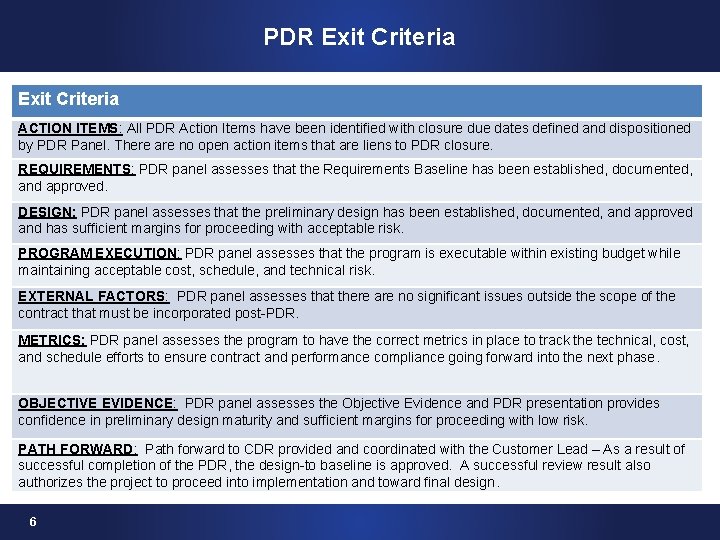
PDR Exit Criteria ACTION ITEMS: All PDR Action Items have been identified with closure due dates defined and dispositioned by PDR Panel. There are no open action items that are liens to PDR closure. REQUIREMENTS: PDR panel assesses that the Requirements Baseline has been established, documented, and approved. DESIGN: PDR panel assesses that the preliminary design has been established, documented, and approved and has sufficient margins for proceeding with acceptable risk. PROGRAM EXECUTION: PDR panel assesses that the program is executable within existing budget while maintaining acceptable cost, schedule, and technical risk. EXTERNAL FACTORS: PDR panel assesses that there are no significant issues outside the scope of the contract that must be incorporated post-PDR. METRICS: PDR panel assesses the program to have the correct metrics in place to track the technical, cost, and schedule efforts to ensure contract and performance compliance going forward into the next phase. OBJECTIVE EVIDENCE: PDR panel assesses the Objective Evidence and PDR presentation provides confidence in preliminary design maturity and sufficient margins for proceeding with low risk. PATH FORWARD: Path forward to CDR provided and coordinated with the Customer Lead – As a result of successful completion of the PDR, the design-to baseline is approved. A successful review result also authorizes the project to proceed into implementation and toward final design. 6

Integrated Master Schedule (IMS) Richard 7
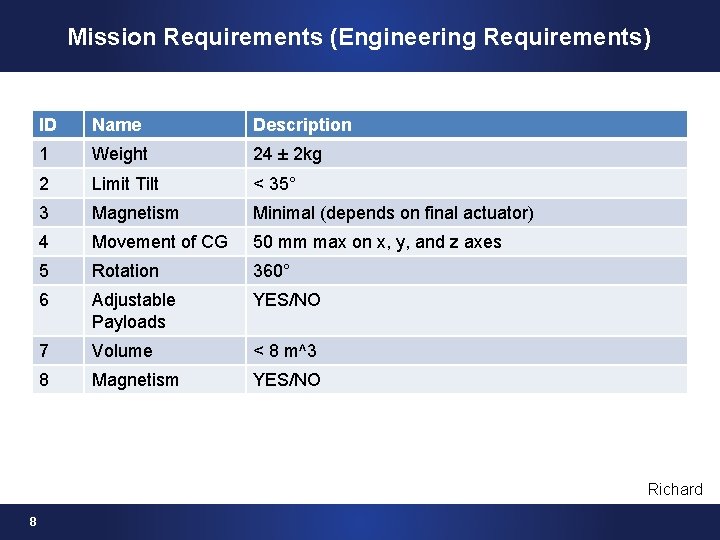
Mission Requirements (Engineering Requirements) ID Name Description 1 Weight 24 ± 2 kg 2 Limit Tilt < 35° 3 Magnetism Minimal (depends on final actuator) 4 Movement of CG 50 mm max on x, y, and z axes 5 Rotation 360° 6 Adjustable Payloads YES/NO 7 Volume < 8 m^3 8 Magnetism YES/NO Richard 8
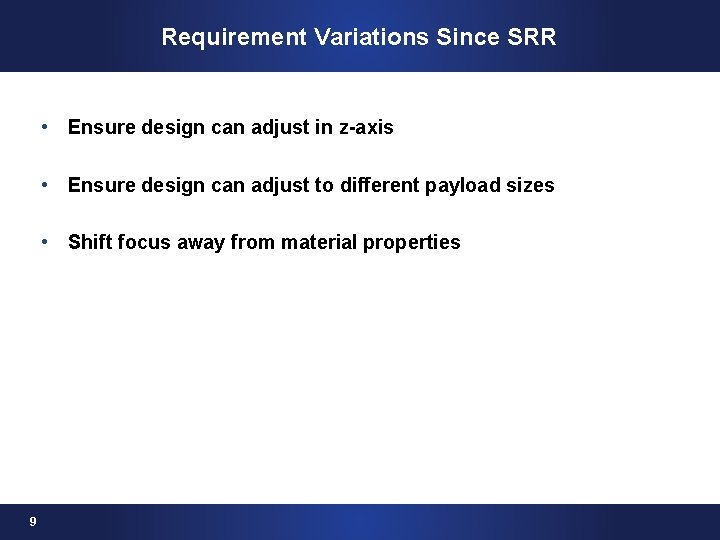
Requirement Variations Since SRR • Ensure design can adjust in z-axis • Ensure design can adjust to different payload sizes • Shift focus away from material properties 9
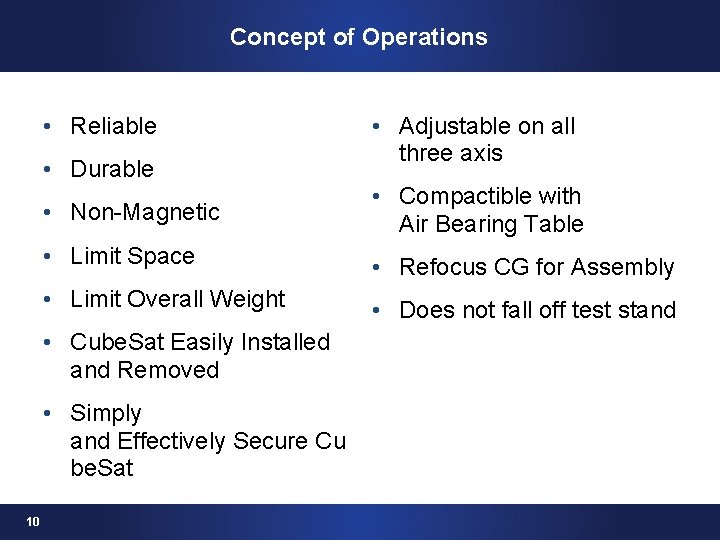
Concept of Operations • Reliable • Durable • Non-Magnetic • Compactible with Air Bearing Table • Limit Space • Refocus CG for Assembly • Limit Overall Weight • Does not fall off test stand • Cube. Sat Easily Installed and Removed • Simply and Effectively Secure Cu be. Sat 10 • Adjustable on all three axis
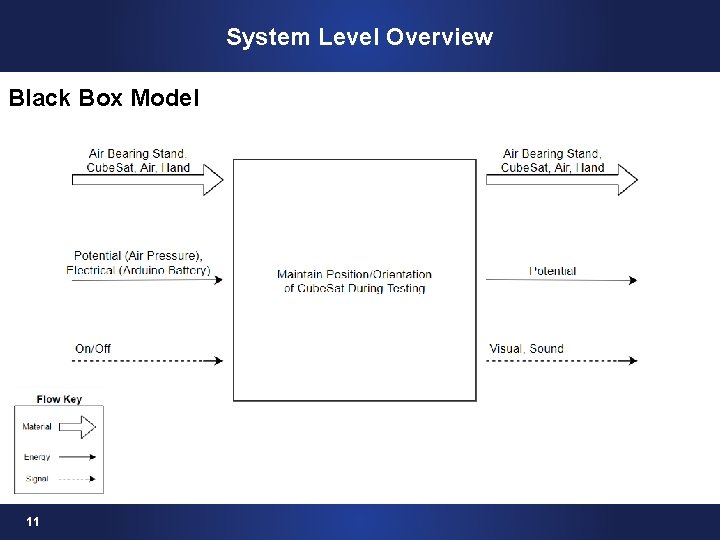
System Level Overview Black Box Model 11
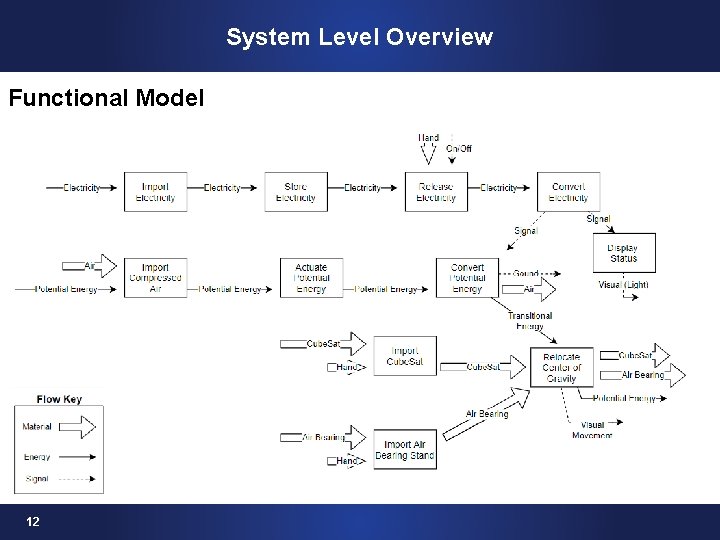
System Level Overview Functional Model 12
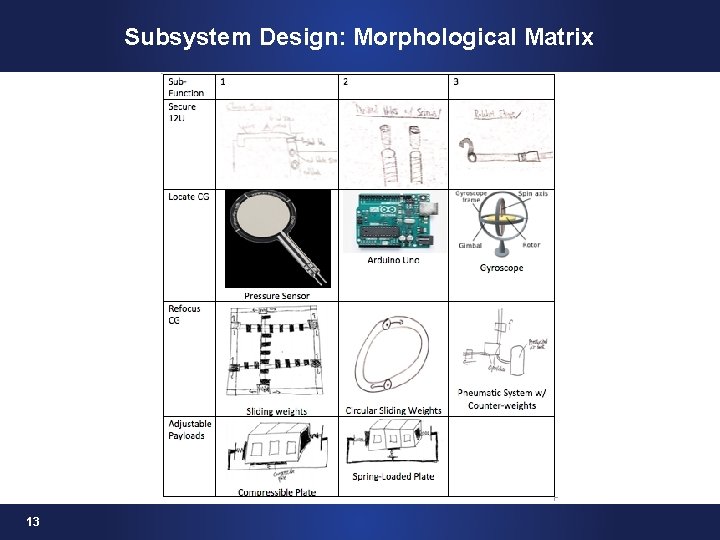
Subsystem Design: Morphological Matrix 13
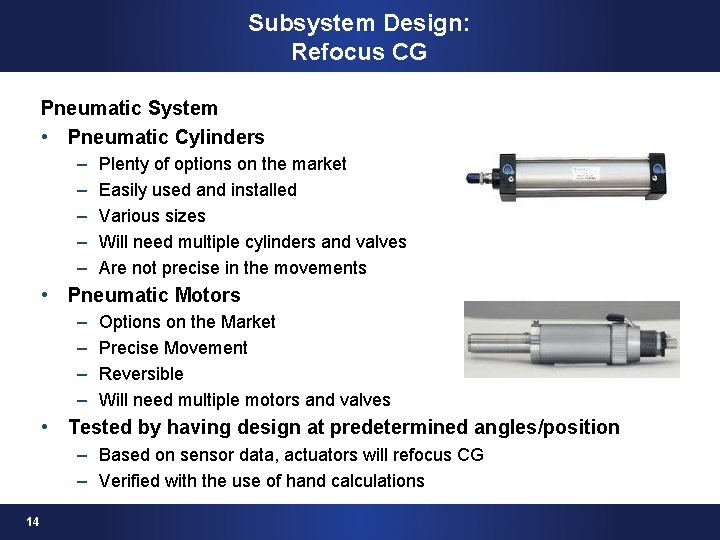
Subsystem Design: Refocus CG Pneumatic System • Pneumatic Cylinders – – – Plenty of options on the market Easily used and installed Various sizes Will need multiple cylinders and valves Are not precise in the movements • Pneumatic Motors – – Options on the Market Precise Movement Reversible Will need multiple motors and valves • Tested by having design at predetermined angles/position – Based on sensor data, actuators will refocus CG – Verified with the use of hand calculations 14
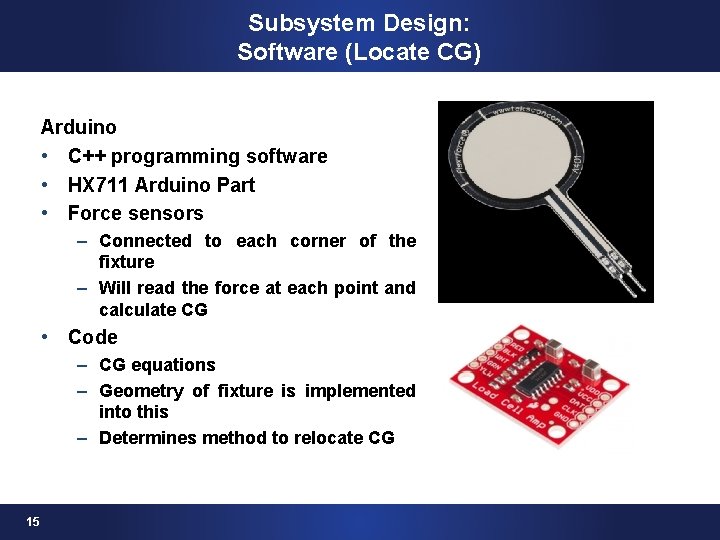
Subsystem Design: Software (Locate CG) Arduino • C++ programming software • HX 711 Arduino Part • Force sensors – Connected to each corner of the fixture – Will read the force at each point and calculate CG • Code – CG equations – Geometry of fixture is implemented into this – Determines method to relocate CG 15
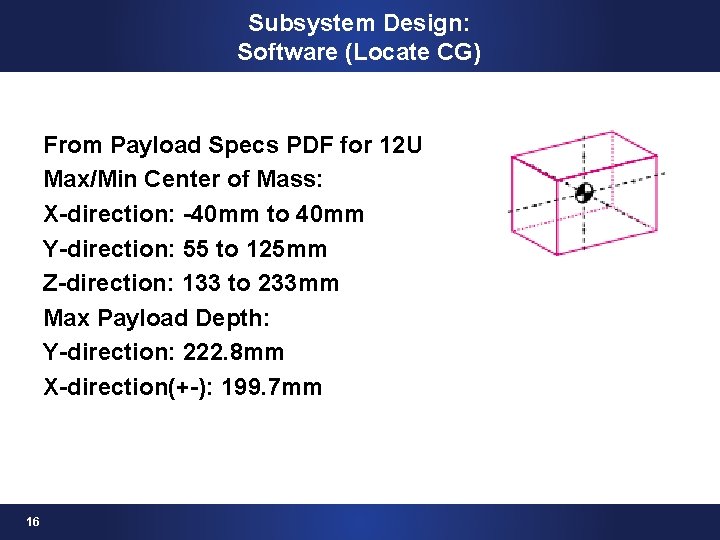
Subsystem Design: Software (Locate CG) From Payload Specs PDF for 12 U Max/Min Center of Mass: X-direction: -40 mm to 40 mm Y-direction: 55 to 125 mm Z-direction: 133 to 233 mm Max Payload Depth: Y-direction: 222. 8 mm X-direction(+-): 199. 7 mm 16
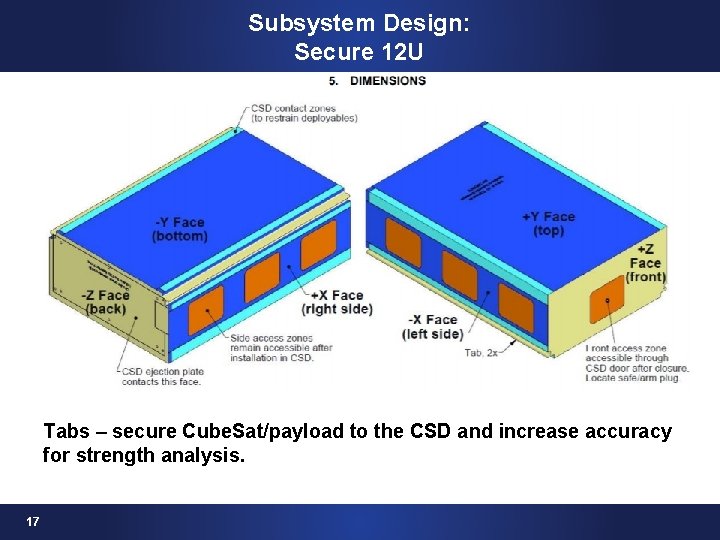
Subsystem Design: Secure 12 U Tabs – secure Cube. Sat/payload to the CSD and increase accuracy for strength analysis. 17

Subsystem Design: Secure 12 U 18

Subsystem Design: Adjust to Payloads 1) Adjustable variable length 2) Change of base Option 1 19 Richard Option 2
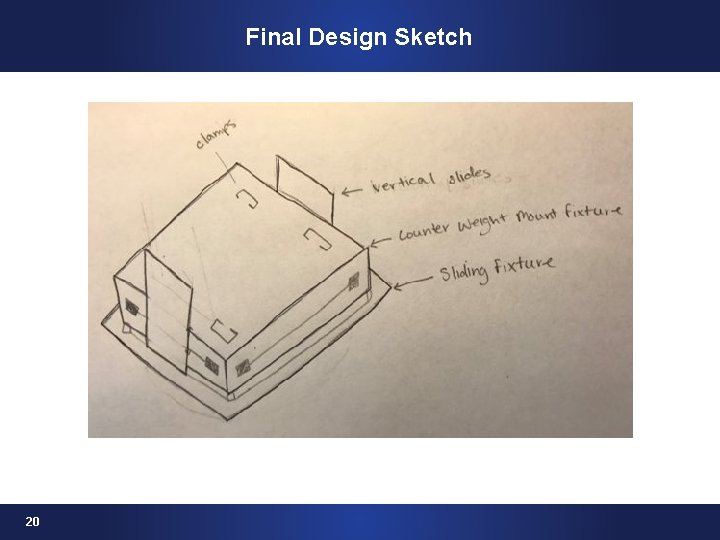
Final Design Sketch 20
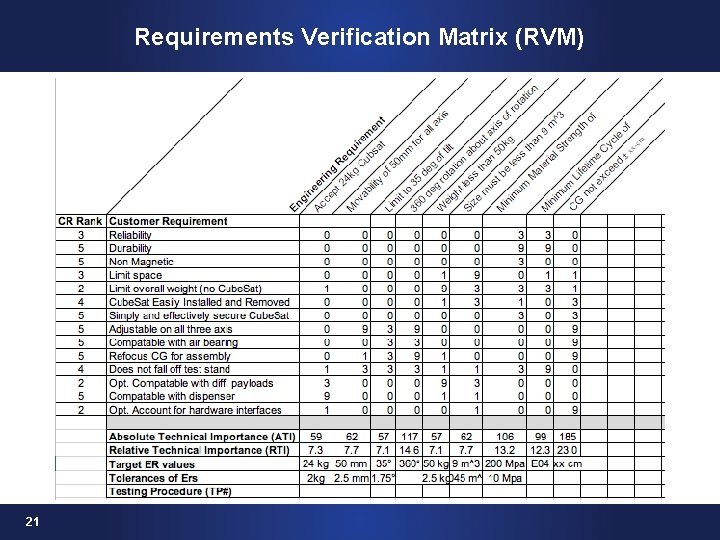
Requirements Verification Matrix (RVM) 21
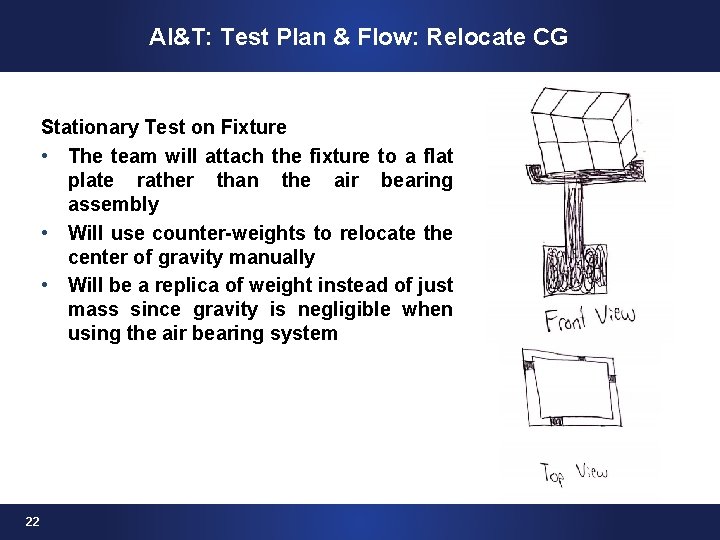
AI&T: Test Plan & Flow: Relocate CG Stationary Test on Fixture • The team will attach the fixture to a flat plate rather than the air bearing assembly • Will use counter-weights to relocate the center of gravity manually • Will be a replica of weight instead of just mass since gravity is negligible when using the air bearing system 22

AI&T: Test Plan & Flow: Secure 12 U • From engineering drawings, clamp can be manufactured on campus • Cube. Sat cage can be printed in house • Securement options can be prototyped • Same test as relocating CG 23
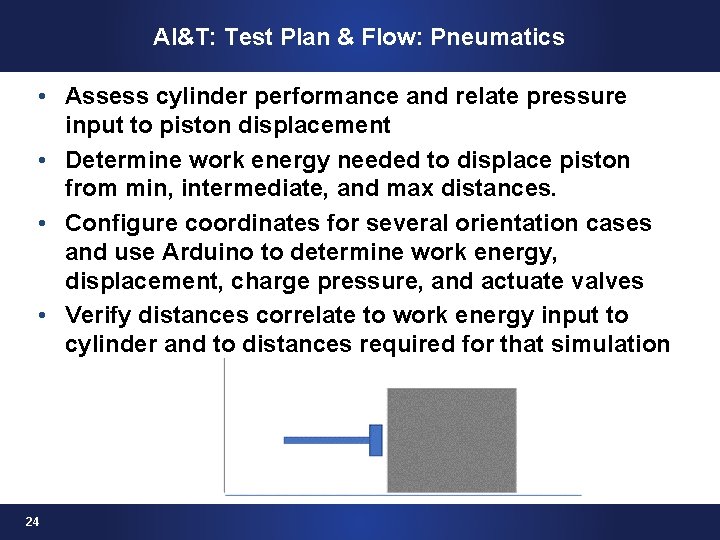
AI&T: Test Plan & Flow: Pneumatics • Assess cylinder performance and relate pressure input to piston displacement • Determine work energy needed to displace piston from min, intermediate, and max distances. • Configure coordinates for several orientation cases and use Arduino to determine work energy, displacement, charge pressure, and actuate valves • Verify distances correlate to work energy input to cylinder and to distances required for that simulation 24
AI&T: Test Plan & Flow: Stationary/Precision Location • Design will be placed at different angles/positions • Onboard sensors will calculate said angles/positions • Data will be compared to what angle/position is certain to be 25
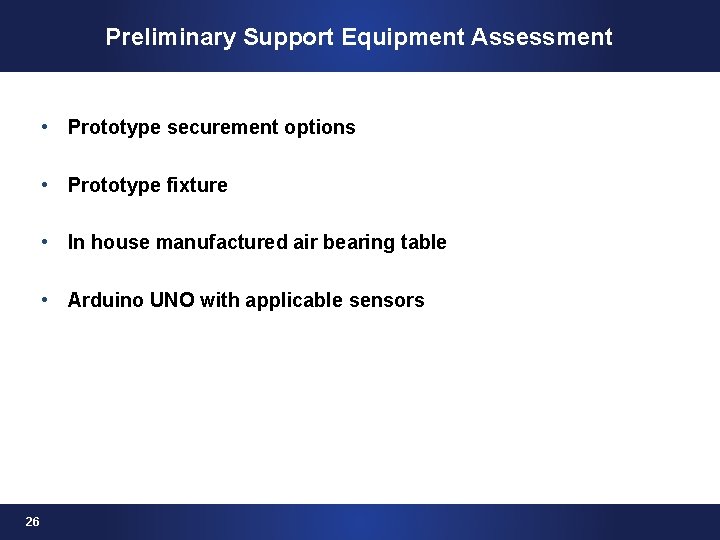
Preliminary Support Equipment Assessment • Prototype securement options • Prototype fixture • In house manufactured air bearing table • Arduino UNO with applicable sensors 26
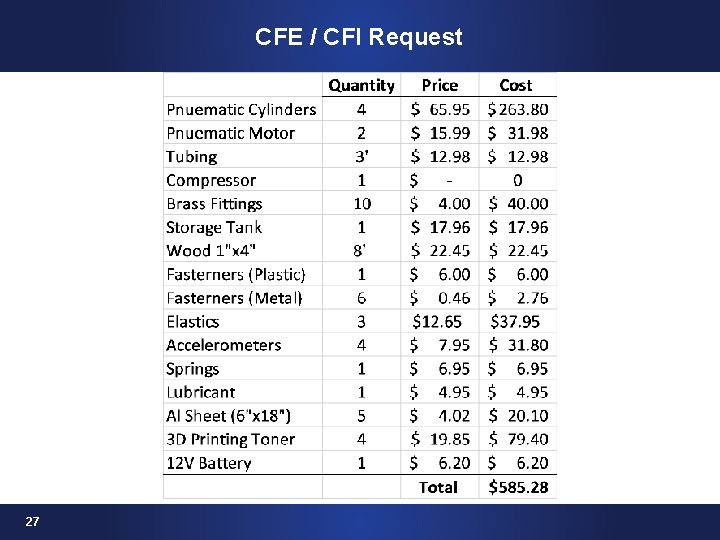
CFE / CFI Request 27
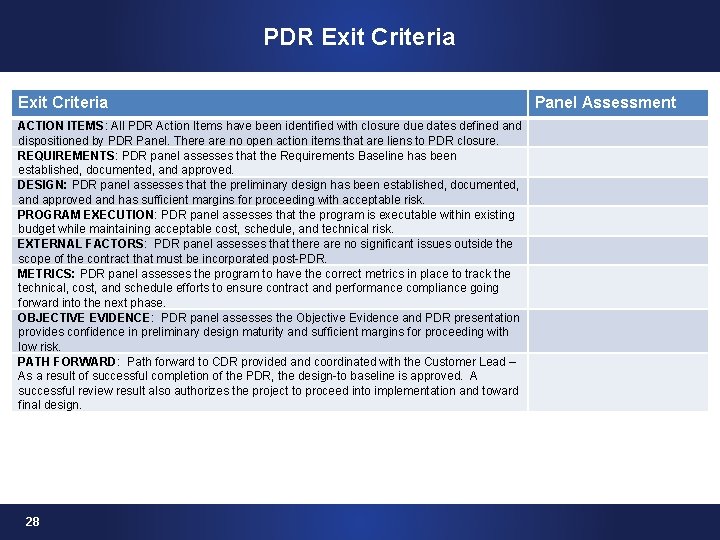
PDR Exit Criteria ACTION ITEMS: All PDR Action Items have been identified with closure due dates defined and dispositioned by PDR Panel. There are no open action items that are liens to PDR closure. REQUIREMENTS: PDR panel assesses that the Requirements Baseline has been established, documented, and approved. DESIGN: PDR panel assesses that the preliminary design has been established, documented, and approved and has sufficient margins for proceeding with acceptable risk. PROGRAM EXECUTION: PDR panel assesses that the program is executable within existing budget while maintaining acceptable cost, schedule, and technical risk. EXTERNAL FACTORS: PDR panel assesses that there are no significant issues outside the scope of the contract that must be incorporated post-PDR. METRICS: PDR panel assesses the program to have the correct metrics in place to track the technical, cost, and schedule efforts to ensure contract and performance compliance going forward into the next phase. OBJECTIVE EVIDENCE: PDR panel assesses the Objective Evidence and PDR presentation provides confidence in preliminary design maturity and sufficient margins for proceeding with low risk. PATH FORWARD: Path forward to CDR provided and coordinated with the Customer Lead – As a result of successful completion of the PDR, the design-to baseline is approved. A successful review result also authorizes the project to proceed into implementation and toward final design. 28 Panel Assessment
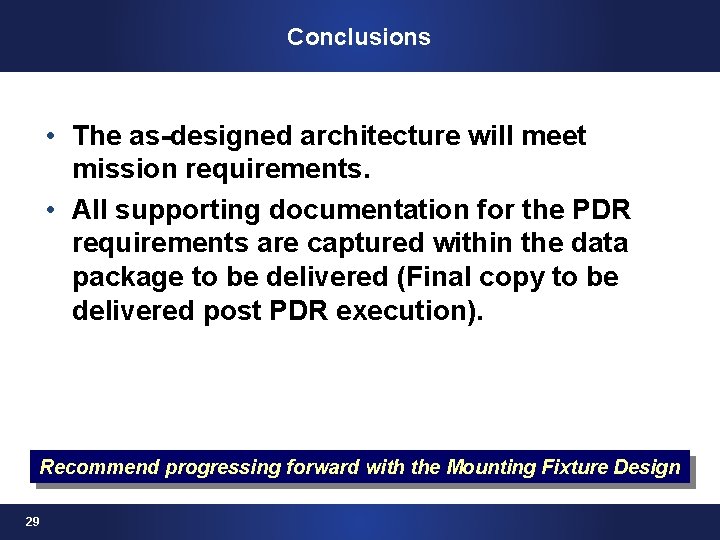
Conclusions • The as-designed architecture will meet mission requirements. • All supporting documentation for the PDR requirements are captured within the data package to be delivered (Final copy to be delivered post PDR execution). Recommend progressing forward with the Mounting Fixture Design 29
- Slides: 29