
Nature of Science Scientific Method Observations Suggest questions

Nature of Science
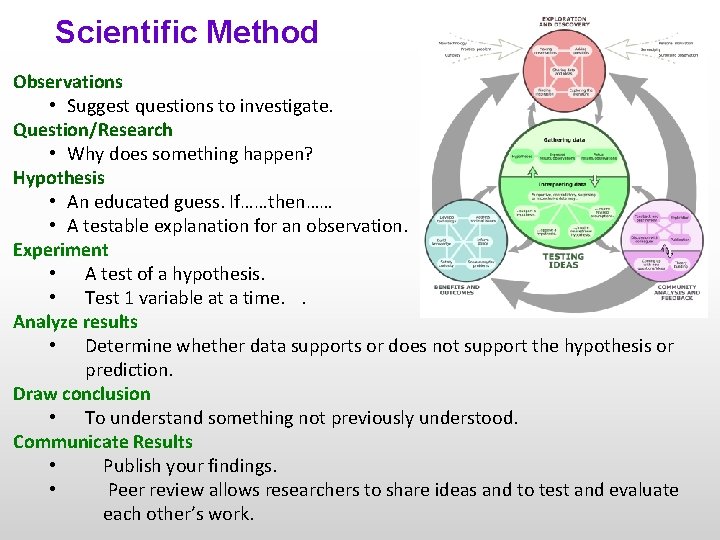
Scientific Method Observations • Suggest questions to investigate. Question/Research • Why does something happen? Hypothesis • An educated guess. If……then…… • A testable explanation for an observation. Experiment • A test of a hypothesis. • Test 1 variable at a time. . Analyze results • Determine whether data supports or does not support the hypothesis or prediction. Draw conclusion • To understand something not previously understood. Communicate Results • Publish your findings. • Peer review allows researchers to share ideas and to test and evaluate each other’s work.
Types of observations. Qualitative statement: describes something you have seen with words. Quantitative statement: uses numbers or equations to describe something. What kind of observations can you make about this room?

Parts of an Experiment • Independent variable: is the variable that is changed in a scientific experiment. • Dependent variable: is the variable being tested in a scientific experiment. • Control: does not get any experimental treatment (under normal conditions).
Scientific Theory A widely accepted, strongly supported, and well documented statement that addresses and *explains observations of nature. 1) Can be revised when new discoveries are made. 2) Cannot become a law.
Scientific Law A description or rule for how nature appears to behave. A law has a very small likelihood of being found incorrect. *DESCRIBES 1) Cannot become a theory.
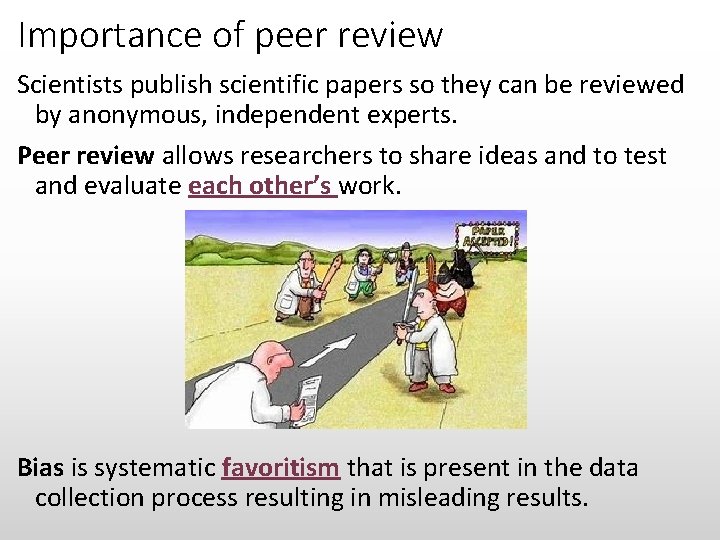
Importance of peer review Scientists publish scientific papers so they can be reviewed by anonymous, independent experts. Peer review allows researchers to share ideas and to test and evaluate each other’s work. Bias is systematic favoritism that is present in the data collection process resulting in misleading results.
Creating a graph • Examine the data to choose type of graph. • Label both axes with title and relevant units. • The x-axis shows the independent variable. • The y-axis shows the dependent variable. • Evenly divide and distribute the units on your axes. • Plot points and sketch the curve or line of fit that is relevant.
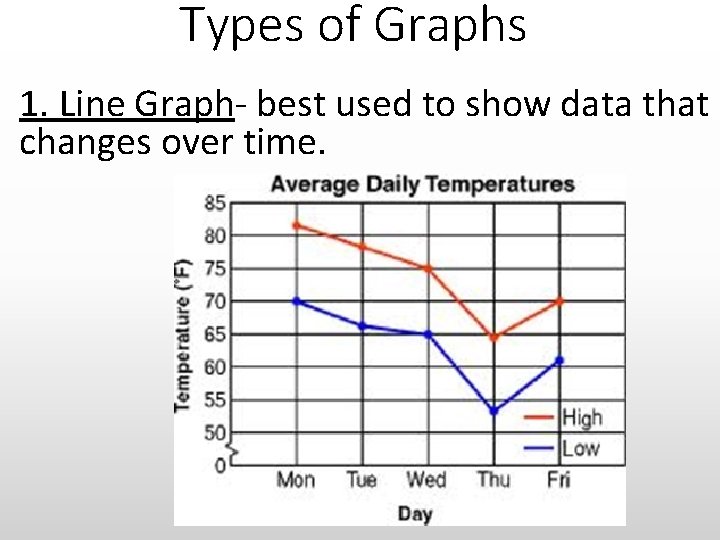
Types of Graphs 1. Line Graph- best used to show data that changes over time.
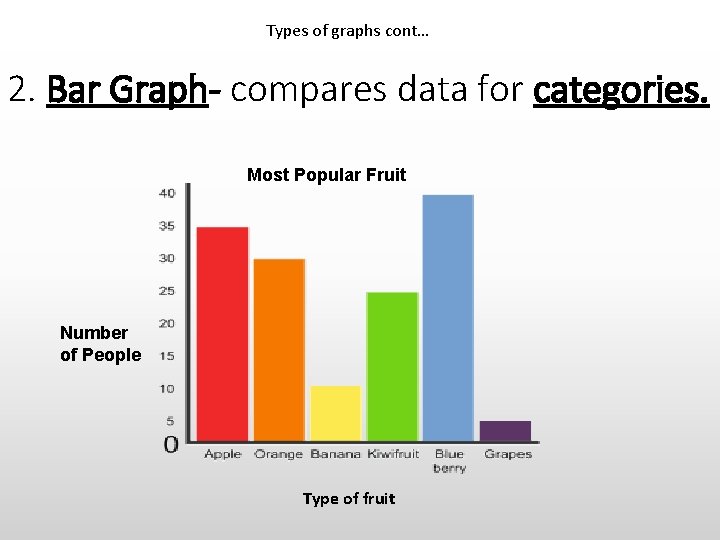
Types of graphs cont… 2. Bar Graph- compares data for categories. Most Popular Fruit Number of People Type of fruit
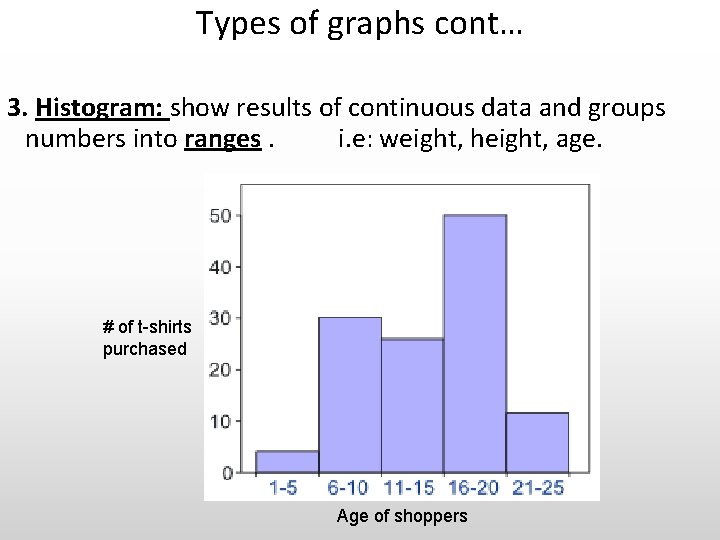
Types of graphs cont… 3. Histogram: show results of continuous data and groups numbers into ranges. i. e: weight, height, age. # of t-shirts purchased Age of shoppers
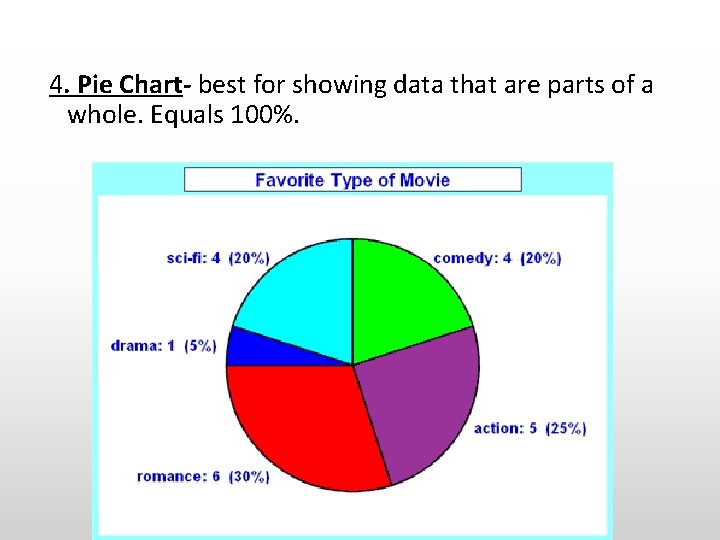
4. Pie Chart- best for showing data that are parts of a whole. Equals 100%.
- Slides: 12