
Nature Nurture and Human Diversity Chapter 3 Nature
- Slides: 25
Nature, Nurture, and Human Diversity Chapter 3
Nature, Nurture, and Human Diversity W E Behavior Genetics: Predicting Individual Differences D § Genes: Our Codes for Life N § Twin Studies E § Temperament Studies S D A Y § Heritability § Gene-Environment Interaction § The New Frontier: Molecular Genetics
T H U R S D A Y Nature, Nurture, and Human Diversity Evolutionary Psychology: Understanding Human Nature § Natural Selection § An Evolutionary Explanation of Human Sexuality § Critiquing the Evolutionary Perspective
F R I D A Y Nature, Nurture, and Human Diversity Parents and Peers § Parents and Early Experiences § Peer Influence Cultural Influences § Variations Across Cultures § Culture and the Self
M O N D A Y Nature, Nurture, and Human Diversity Cultural Influences § Culture and Child-Rearing § Developmental Similarities Across Groups Gender Development § Gender Similarities and Differences
T U E S D A Y Nature, Nurture, and Human Diversity Gender Development § The Nature of Gender § The Nurture of Gender Reflections on Nature and Nurture You will receive your Ch. 3 exam as you leave class – you are responsible for bringing it to class Wednesday
WEDNESDAY, NOV. 21, 2012 Work on Ch. 3 take home exam in class It is due Monday, November 26, 2012
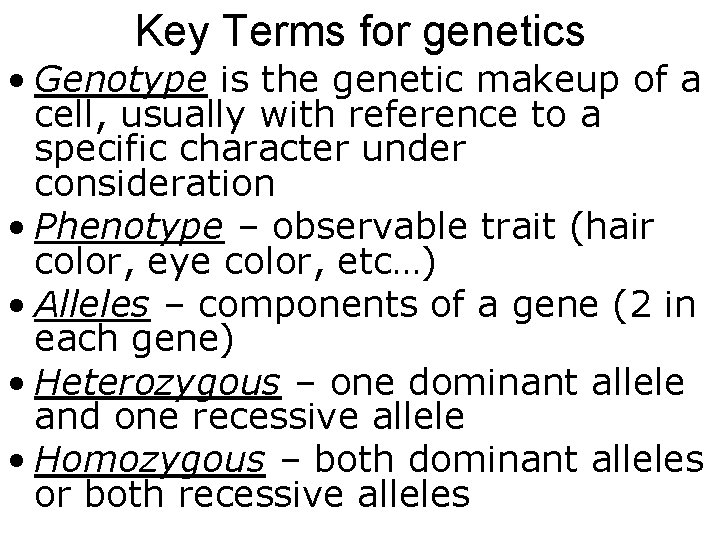
Key Terms for genetics • Genotype is the genetic makeup of a cell, usually with reference to a specific character under consideration • Phenotype – observable trait (hair color, eye color, etc…) • Alleles – components of a gene (2 in each gene) • Heterozygous – one dominant allele and one recessive allele • Homozygous – both dominant alleles or both recessive alleles
Punnett Square • a diagram that is used to predict an outcome of a particular cross or breeding experiment. • Used by biologist to determine the probability of an offspring’s having a particular genotype.
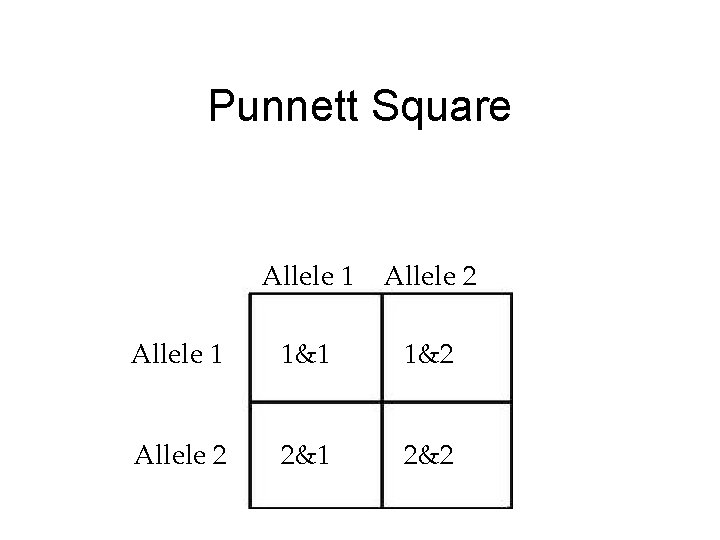
Punnett Square Allele 1 Allele 2 Allele 1 1&2 Allele 2 2&1 2&2
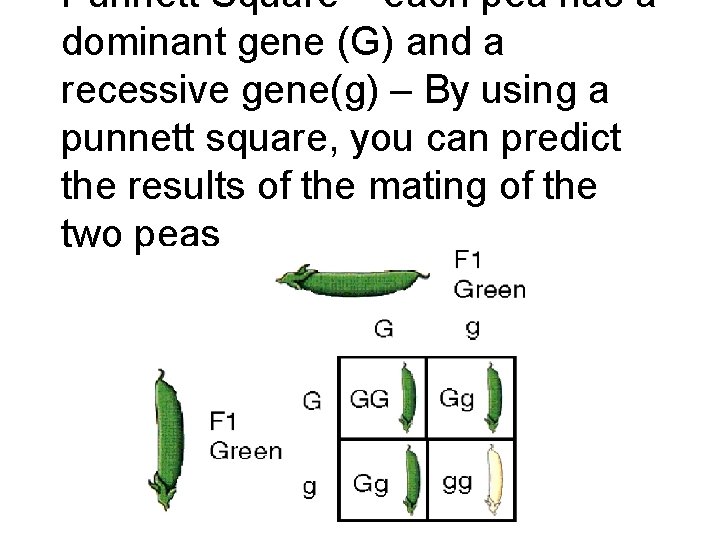
Punnett Square – each pea has a dominant gene (G) and a recessive gene(g) – By using a punnett square, you can predict the results of the mating of the two peas
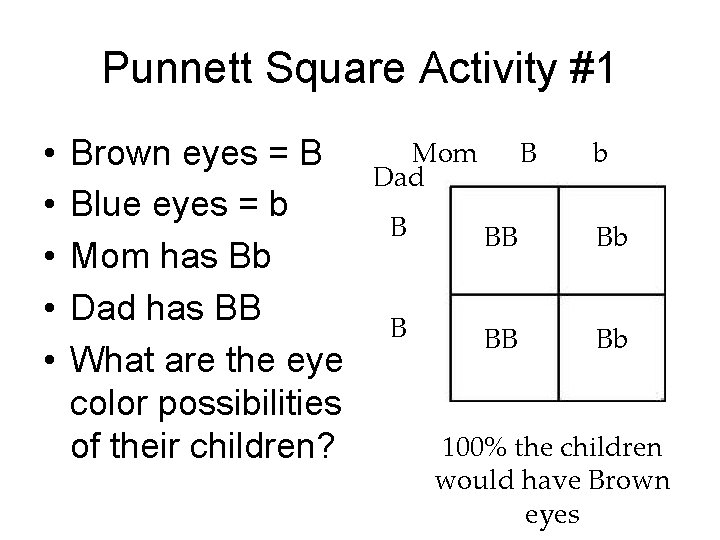
Punnett Square Activity #1 • • • Brown eyes = B Blue eyes = b Mom has Bb Dad has BB What are the eye color possibilities of their children? Mom Dad B b B BB Bb 100% the children would have Brown eyes
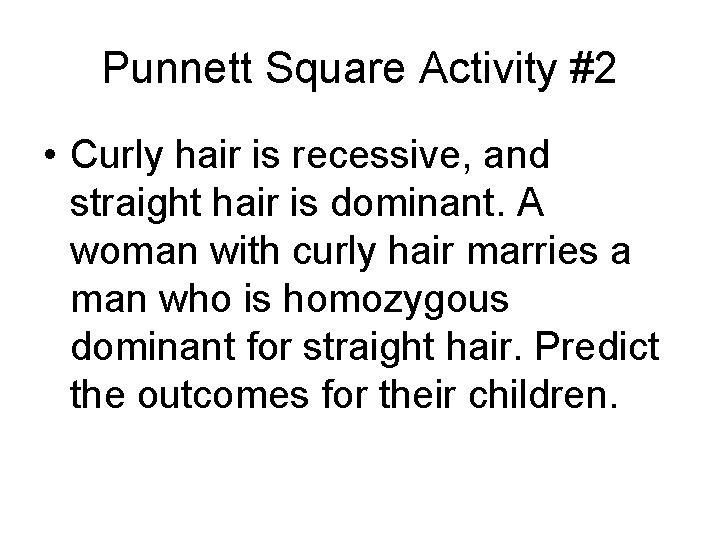
Punnett Square Activity #2 • Curly hair is recessive, and straight hair is dominant. A woman with curly hair marries a man who is homozygous dominant for straight hair. Predict the outcomes for their children.
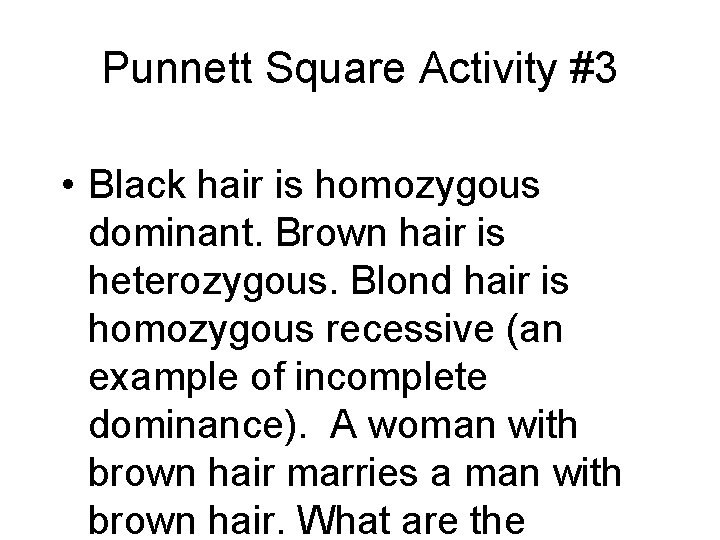
Punnett Square Activity #3 • Black hair is homozygous dominant. Brown hair is heterozygous. Blond hair is homozygous recessive (an example of incomplete dominance). A woman with brown hair marries a man with brown hair. What are the
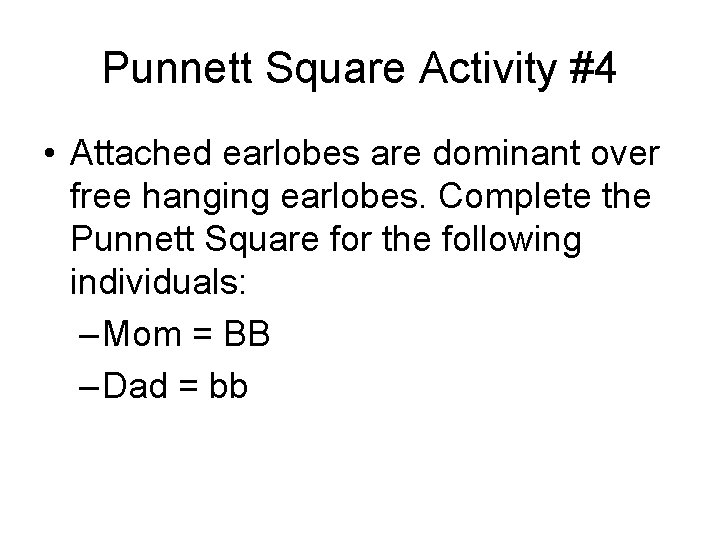
Punnett Square Activity #4 • Attached earlobes are dominant over free hanging earlobes. Complete the Punnett Square for the following individuals: – Mom = BB – Dad = bb
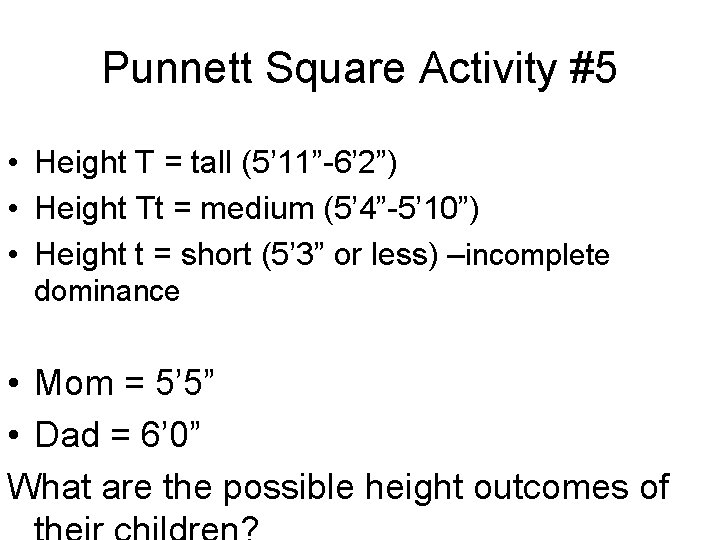
Punnett Square Activity #5 • Height T = tall (5’ 11”-6’ 2”) • Height Tt = medium (5’ 4”-5’ 10”) • Height t = short (5’ 3” or less) –incomplete dominance • Mom = 5’ 5” • Dad = 6’ 0” What are the possible height outcomes of
Punnett Square Activity #6 • Freckles are recessive. No freckles are dominant • Mom = heterozygous • Dad = homozygous recessive What are the possible outcomes for their kids?
Behavior Genetics: Predicting Individual Differences Behavior Geneticists study our differences and weigh the relative effects of heredity and environment.
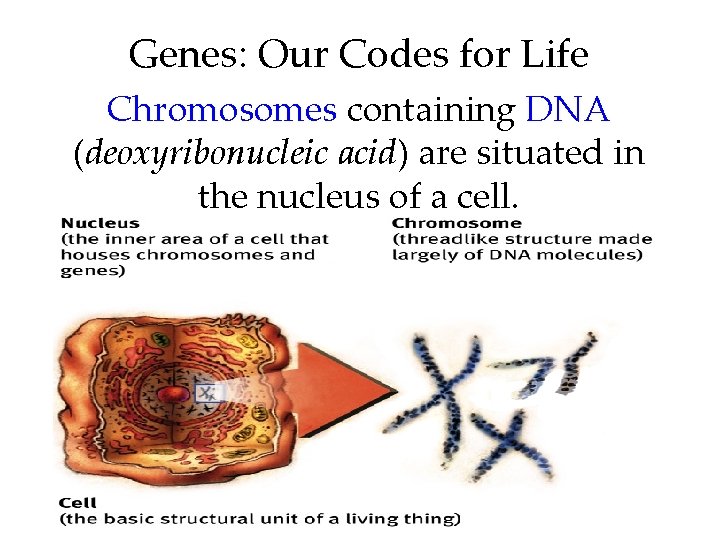
Genes: Our Codes for Life Chromosomes containing DNA (deoxyribonucleic acid) are situated in the nucleus of a cell.
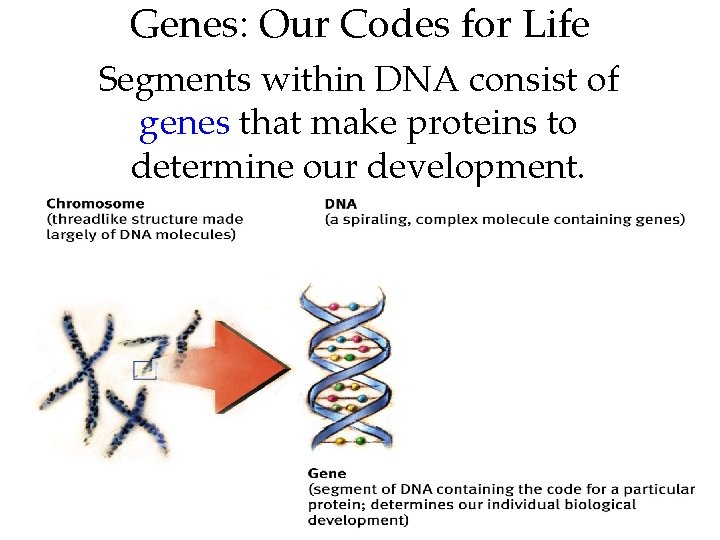
Genes: Our Codes for Life Segments within DNA consist of genes that make proteins to determine our development.
Genome is the set of complete instructions for making an organism, containing all the genes in that organism. Thus, the human genome makes us human, and the genome for drosophila makes it a common house fly. Genetically speaking, we are 99. 9% the same. It is that. 1%, along with our environment, that makes us different. Additionally, at specific DNA sites, we are 99. 4% as chimpanzees.
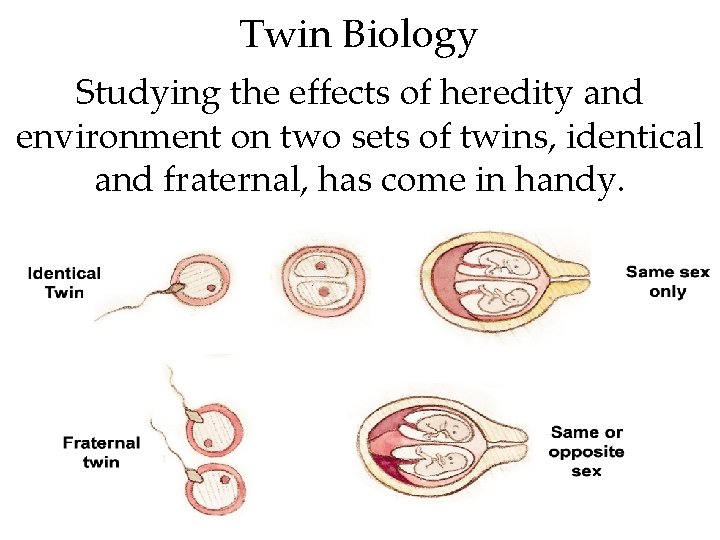
Twin Biology Studying the effects of heredity and environment on two sets of twins, identical and fraternal, has come in handy.
Separated Twins A number of studies compared identical twins raised separately from birth, or close thereafter, and found numerous similarities. Separated Twins Personality, Intelligence Abilities, Attitudes Interests, Fears Brain Waves, Heart Rate
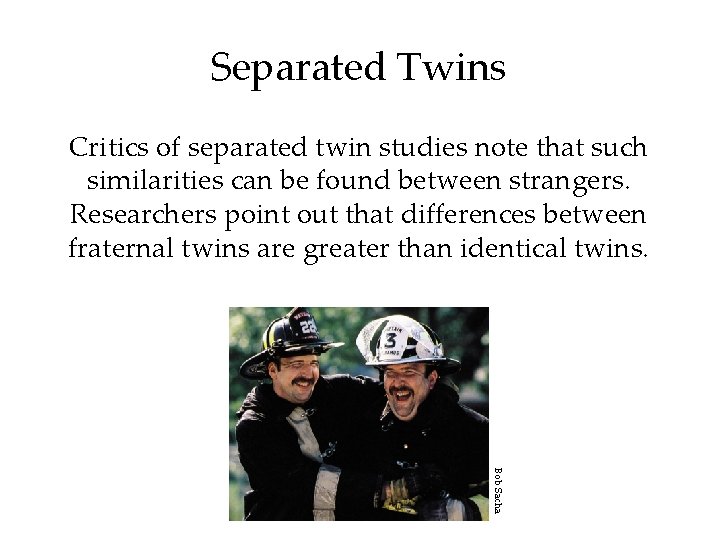
Separated Twins Critics of separated twin studies note that such similarities can be found between strangers. Researchers point out that differences between fraternal twins are greater than identical twins. Bob Sacha
HOMEWORK READ IN TEXT BOOK Ch 3 pg 95 -106