
Nature inspired high performance Biocomposite foams Tal Ben
Nature inspired high performance Bio-composite foams Tal Ben Shalom PI Prof. Oded Shoseyov COST FP 1205 The Robert H. Smith Faculty of Agriculture, Food and Environment, the Hebrew University of Jerusalem
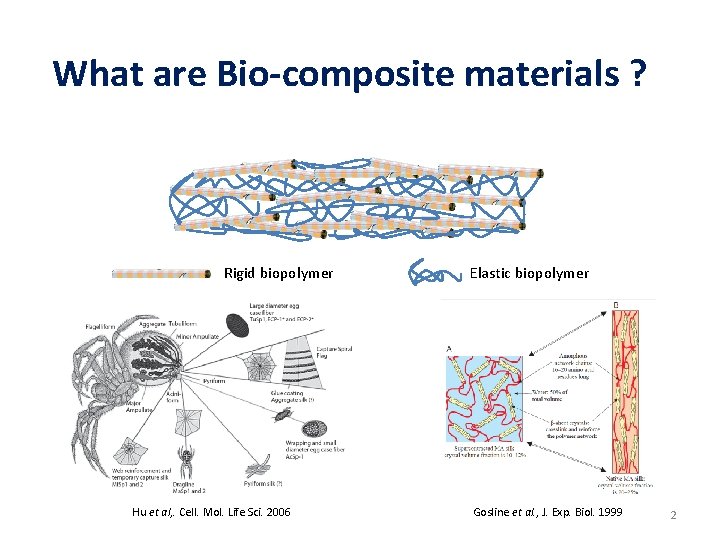
What are Bio-composite materials ? Rigid biopolymer Hu et al, . Cell. Mol. Life Sci. 2006 Elastic biopolymer Gosline et al. , J. Exp. Biol. 1999 2
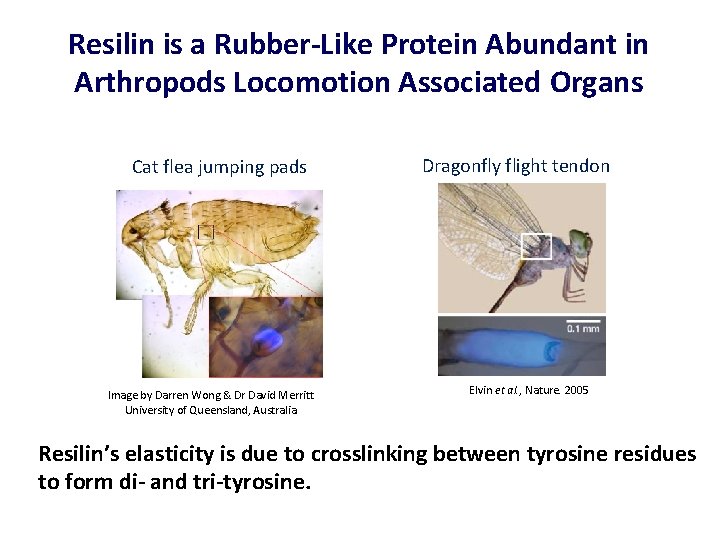
Resilin is a Rubber-Like Protein Abundant in Arthropods Locomotion Associated Organs Cat flea jumping pads Image by Darren Wong & Dr David Merritt University of Queensland, Australia Dragonfly flight tendon Elvin et al. , Nature. 2005 Resilin’s elasticity is due to crosslinking between tyrosine residues to form di- and tri-tyrosine.
Resilin’s properties • Resilin is the most elastic material in nature. • Resilin is known for its high strain, low stiffness and a long fatigue lifetime. • Resilin is highly resilient and immediately recovers its original shape even after it has been stretched for weeks. • Elastic proteins prevent material fatigue, and serve as storage of kinetic energy.
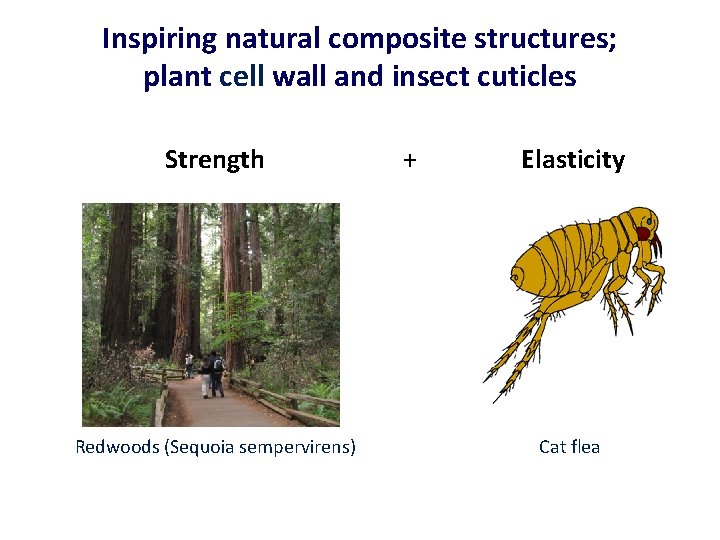
Inspiring natural composite structures; plant cell wall and insect cuticles Strength Redwoods (Sequoia sempervirens) + Elasticity Cat flea
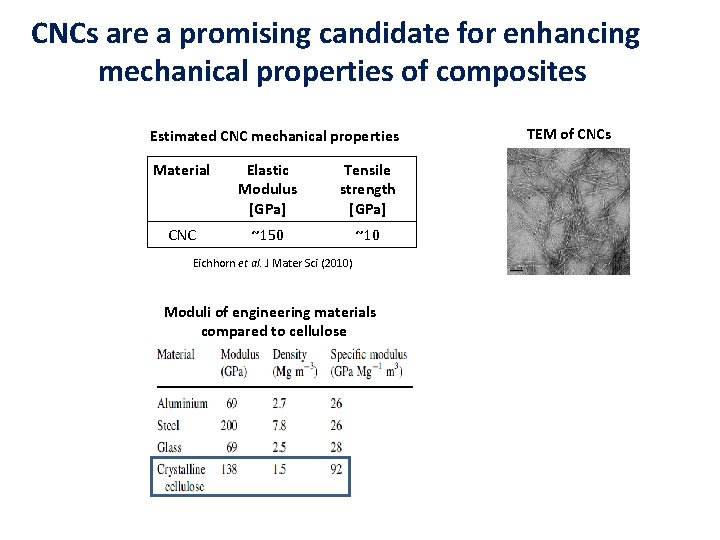
CNCs are a promising candidate for enhancing mechanical properties of composites Estimated CNC mechanical properties Material Elastic Modulus [GPa] Tensile strength [GPa] CNC ~150 ~10 Eichhorn et al. J Mater Sci (2010) Moduli of engineering materials compared to cellulose TEM of CNCs
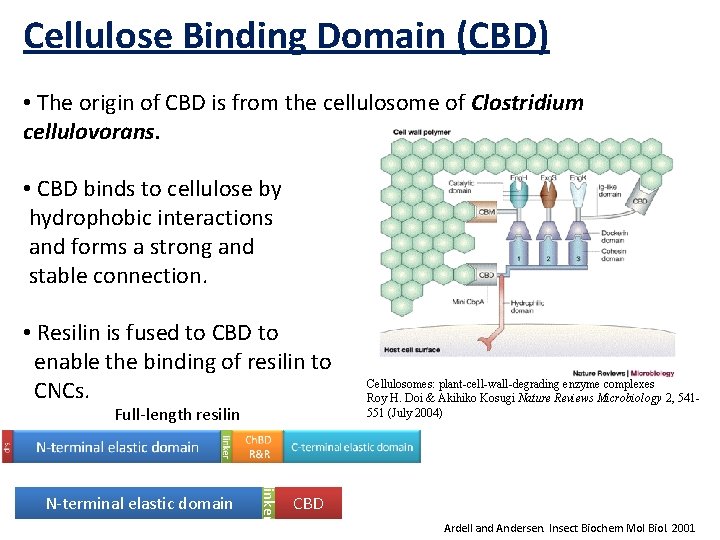
Cellulose Binding Domain (CBD) • The origin of CBD is from the cellulosome of Clostridium cellulovorans. • CBD binds to cellulose by hydrophobic interactions and forms a strong and stable connection. • Resilin is fused to CBD to enable the binding of resilin to CNCs. Full-length resilin link e r N-terminal elastic domain Cellulosomes: plant-cell-wall-degrading enzyme complexes Roy H. Doi & Akihiko Kosugi Nature Reviews Microbiology 2, 541551 (July 2004) CBD Ardell and Andersen. Insect Biochem Mol Biol. 2001
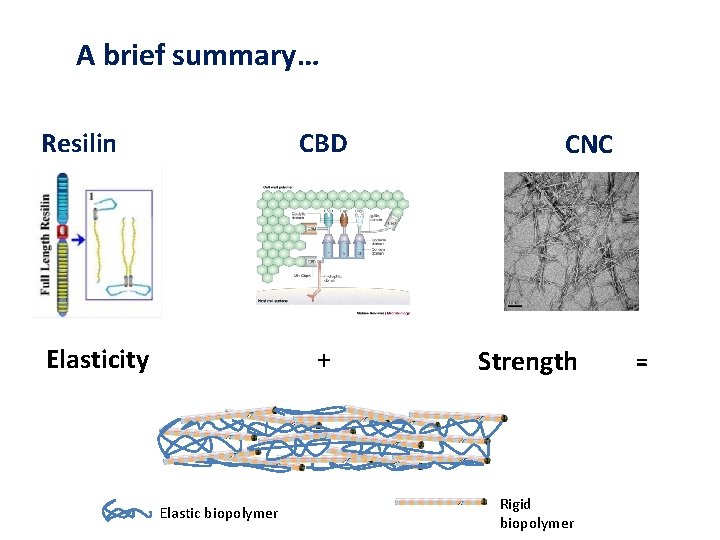
A brief summary… Resilin CBD Elasticity + Elastic biopolymer CNC Strength Rigid biopolymer =
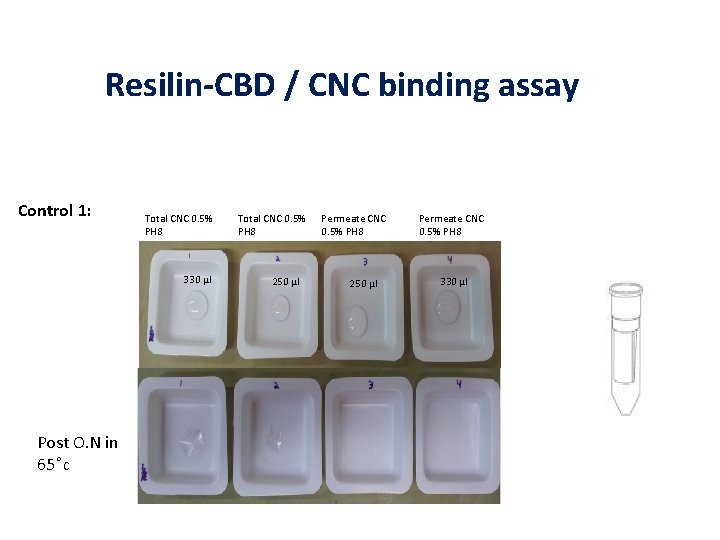
Resilin-CBD / CNC binding assay Control 1: Total CNC 0. 5% PH 8 330 µl Post O. N in 65 C Total CNC 0. 5% PH 8 250 µl Permeate CNC 0. 5% PH 8 330 µl
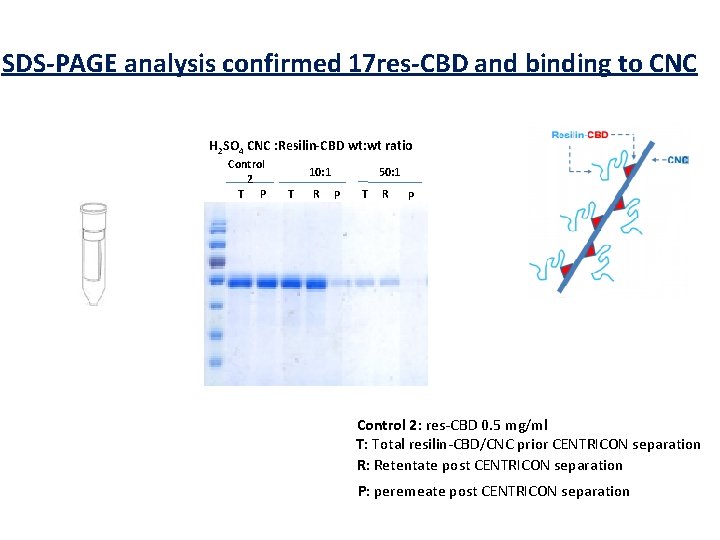
SDS-PAGE analysis confirmed 17 res-CBD and binding to CNC H 2 SO 4 CNC : Resilin-CBD wt: wt ratio Control 2 T P 10: 1 T R 50: 1 P T R P Control 2: res-CBD 0. 5 mg/ml T: Total resilin-CBD/CNC prior CENTRICON separation R: Retentate post CENTRICON separation P: peremeate post CENTRICON separation
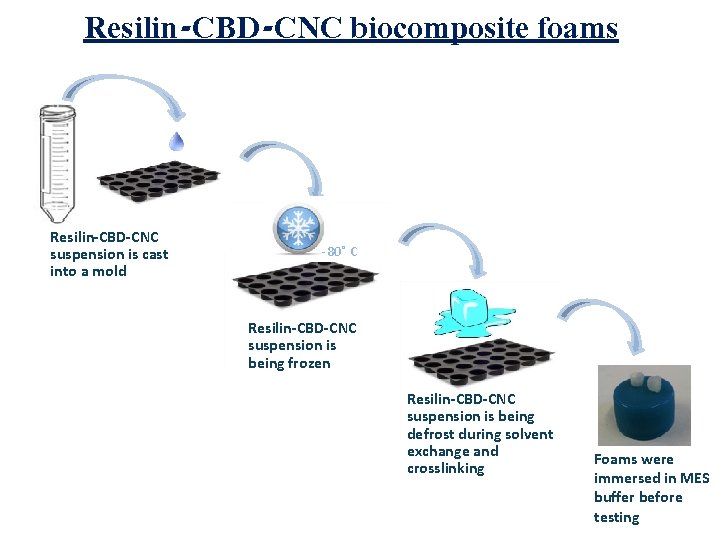
Resilin-CBD-CNC biocomposite foams Resilin-CBD-CNC suspension is cast into a mold -80 C Resilin-CBD-CNC suspension is being frozen Resilin-CBD-CNC suspension is being defrost during solvent exchange and crosslinking Foams were immersed in MES buffer before testing
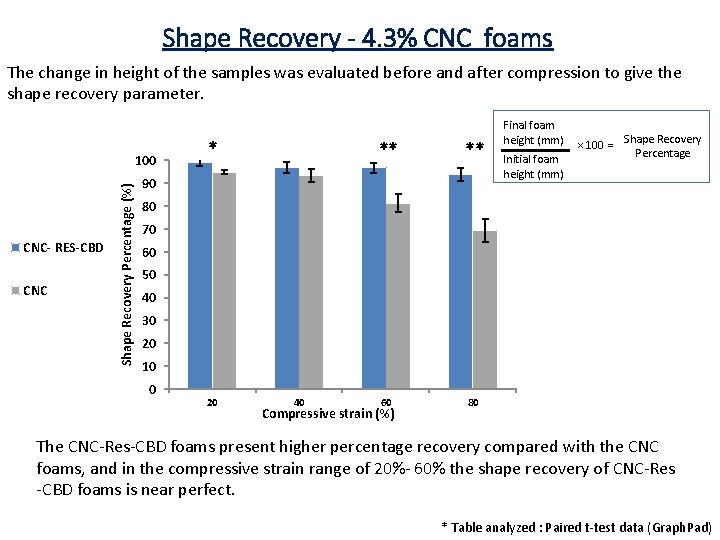
Shape Recovery - 4. 3% CNC foams The change in height of the samples was evaluated before and after compression to give the shape recovery parameter. CNC- RES-CBD CNC Shape Recovery Percentage (%) 100 * ** ** 60 80 90 Final foam height (mm) Initial foam height (mm) × 100 = Shape Recovery Percentage 80 70 60 50 40 30 20 10 0 20 40 Compressive strain (%) The CNC-Res-CBD foams present higher percentage recovery compared with the CNC foams, and in the compressive strain range of 20%- 60% the shape recovery of CNC-Res -CBD foams is near perfect. * Table analyzed : Paired t-test data (Graph. Pad)
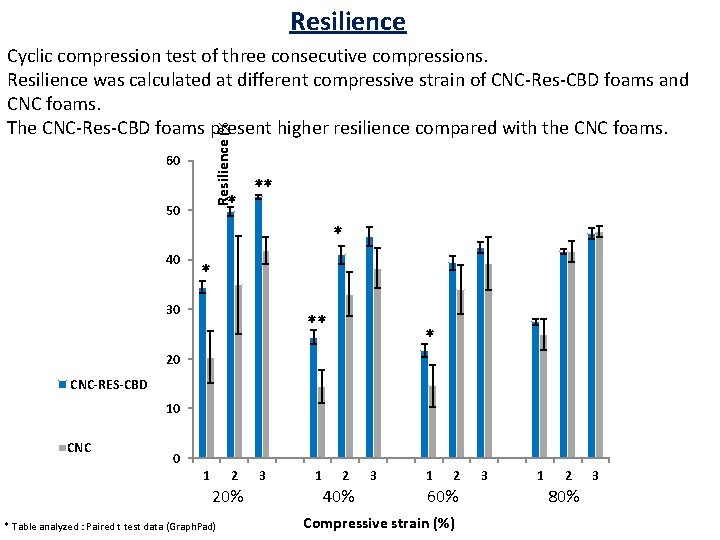
Resilience (%) Cyclic compression test of three consecutive compressions. Resilience was calculated at different compressive strain of CNC-Res-CBD foams and CNC foams. The CNC-Res-CBD foams present higher resilience compared with the CNC foams. 60 * 50 ** * 40 * 30 ** * 20 CNC-RES-CBD 10 CNC 0 1 2 20% * Table analyzed : Paired t test data (Graph. Pad) 3 1 2 40% 3 1 2 60% Compressive strain (%) 3 1 2 80% 3
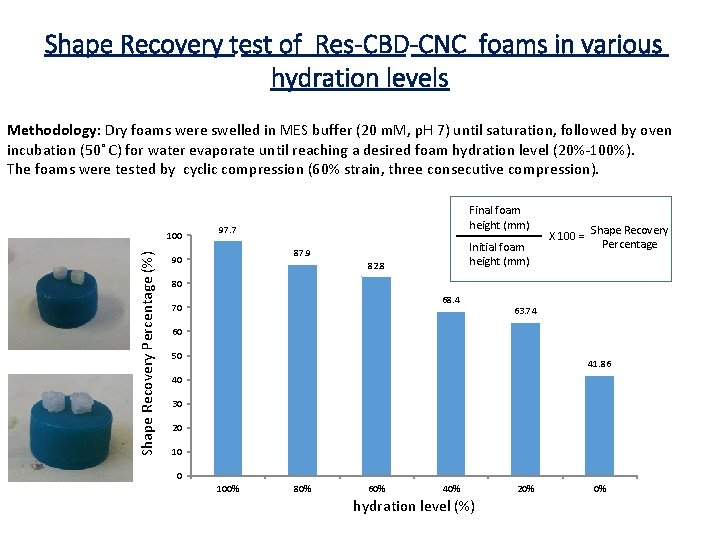
Shape Recovery test of Res-CBD-CNC foams in various hydration levels Methodology: Dry foams were swelled in MES buffer (20 m. M, p. H 7) until saturation, followed by oven incubation (50 C) for water evaporate until reaching a desired foam hydration level (20%-100%). The foams were tested by cyclic compression (60% strain, three consecutive compression). Shape Recovery Percentage (%) 100 Final foam height (mm) 97. 7 Initial foam height (mm) 87. 9 90 82. 8 X 100 = Shape Recovery Percentage 80 68. 4 70 63. 74 60 50 41. 86 40 30 20 100% 80% 60% 40% hydration level (%) 20% 0%
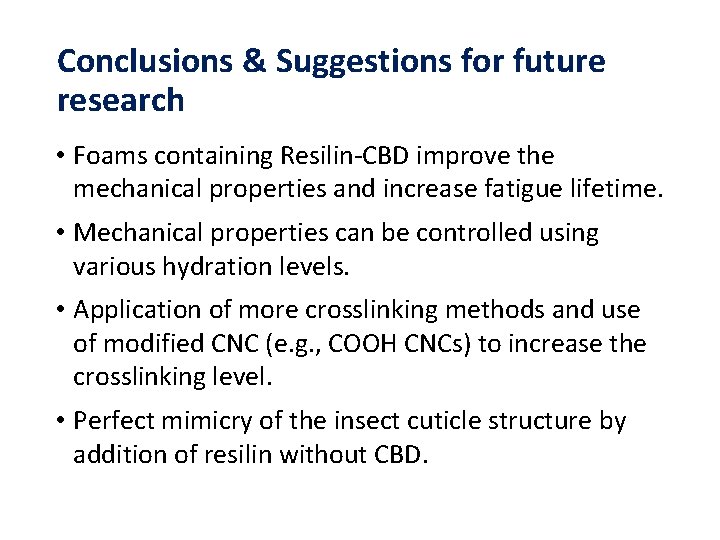
Conclusions & Suggestions for future research • Foams containing Resilin-CBD improve the mechanical properties and increase fatigue lifetime. • Mechanical properties can be controlled using various hydration levels. • Application of more crosslinking methods and use of modified CNC (e. g. , COOH CNCs) to increase the crosslinking level. • Perfect mimicry of the insect cuticle structure by addition of resilin without CBD.

Thank you !
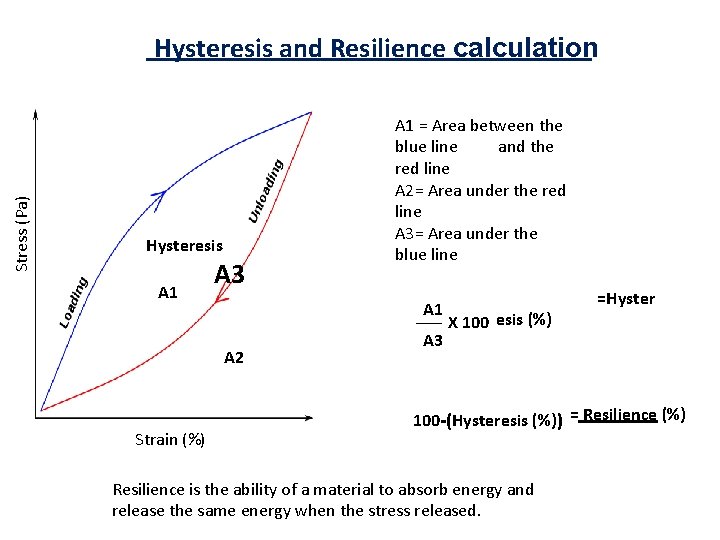
Stress (Pa) Hysteresis and Resilience calculation Hysteresis A 1 A 3 A 1 A 2 Strain (%) A 1 = Area between the blue line and the red line A 2= Area under the red line A 3= Area under the blue line A 3 X 100 esis (%) =Hyster 100 -(Hysteresis (%)) = Resilience (%) Resilience is the ability of a material to absorb energy and release the same energy when the stress released.
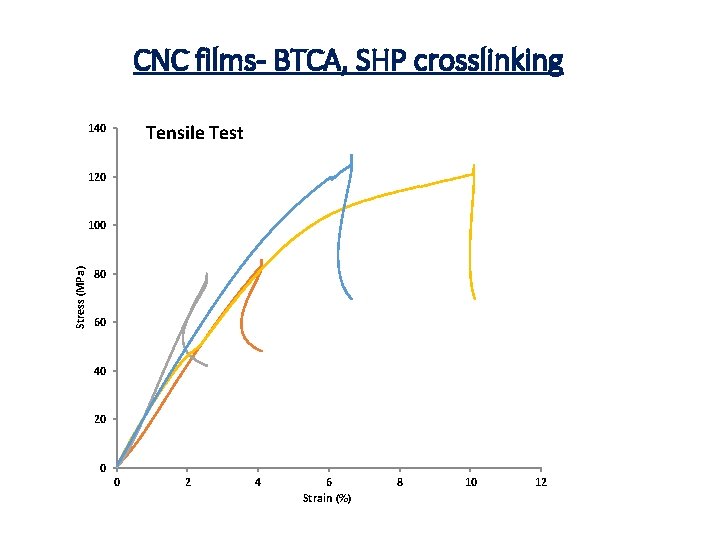
CNC films- BTCA, SHP crosslinking Tensile Test 140 120 Stress (MPa) 100 80 60 40 20 0 0 2 4 6 Strain (%) 8 10 12
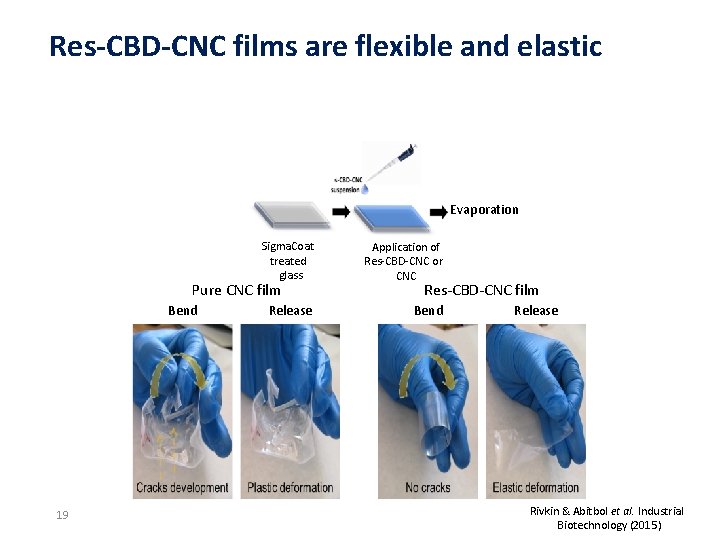
Res-CBD-CNC films are flexible and elastic Evaporation Sigma. Coat treated glass Application of Res-CBD-CNC or CNC Release Bend Pure CNC film Bend 19 Res-CBD-CNC film Release Rivkin & Abitbol et al. Industrial Biotechnology (2015)
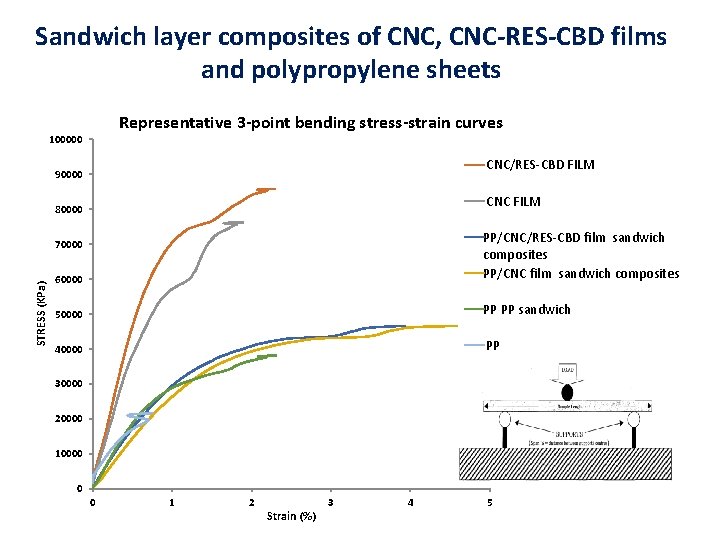
Sandwich layer composites of CNC, CNC-RES-CBD films and polypropylene sheets Representative 3 -point bending stress-strain curves 100000 CNC/RES-CBD FILM 90000 CNC FILM 80000 60000 PP/CNC/RES-CBD film sandwich composites PP/CNC film sandwich composites 50000 PP PP sandwich 40000 PP STRESS (KPa) 70000 30000 20000 10000 0 0 1 2 Strain (%) 3 4 5
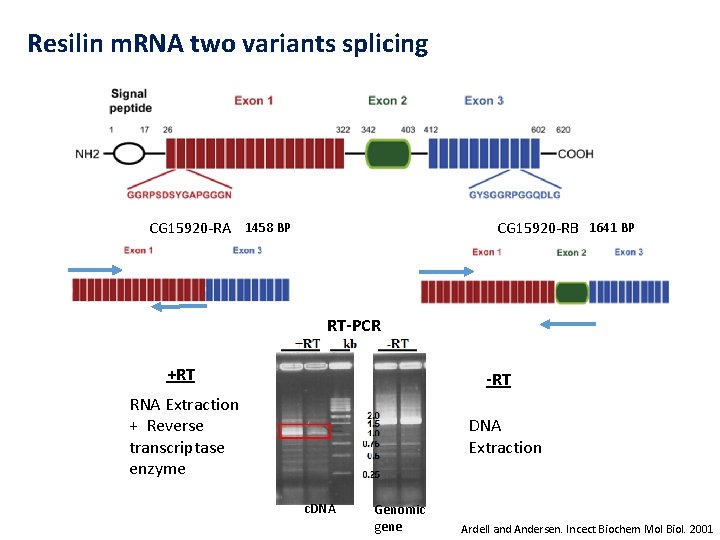
Resilin m. RNA two variants splicing CG 15920 -RA 1458 BP CG 15920 -RB 1641 BP RT-PCR +RT -RT RNA Extraction + Reverse transcriptase enzyme DNA Extraction c. DNA Genomic gene Ardell and Andersen. Incect Biochem Mol Biol. 2001
- Slides: 21