
Nature and Nurture of behavior The heredity vs
Nature and Nurture of behavior The heredity vs. environment controversy
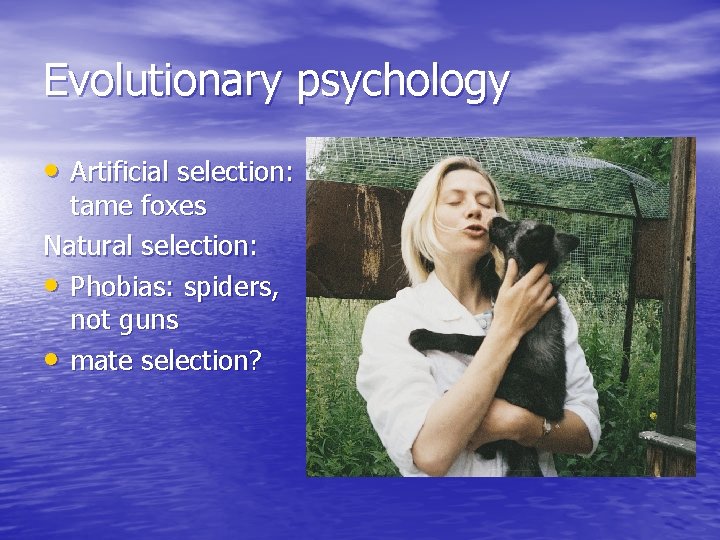
Evolutionary psychology • Artificial selection: tame foxes Natural selection: • Phobias: spiders, not guns • mate selection?
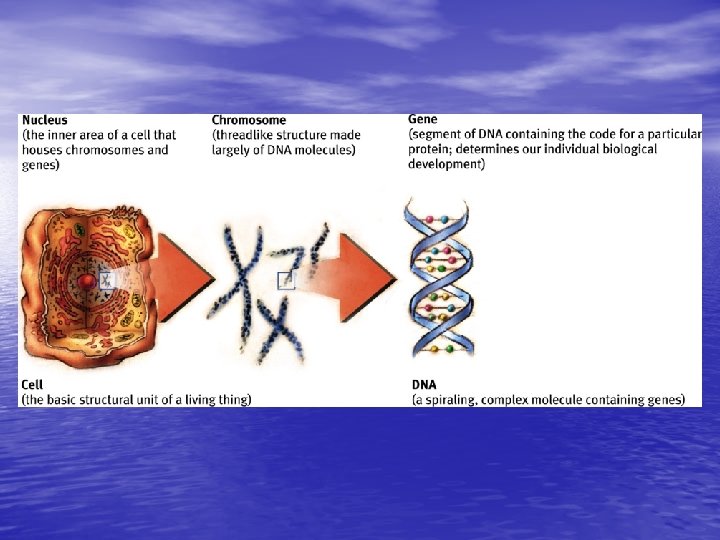
Heredity: molecular basis • DNA carries genetic information • Arranged in 23 pairs of chromosomes • Gene: section of chromosome which codes for a protein
Measuring heredity 1. Gold standard: Twin studies • MZ=monozygotic; DZ=dizygotic • Compare MZ twins, DZ twins, siblings 2. Adoption studies: biological v. adoptive parents 3. Temperament: emotional reactivity • Baby’s temperament correlates with adult personality

Heritability • Definition: extent to which differences are attributable to genetics • Always of a trait in a population • The more similar the environment, the higher the heritability • Identical twins: all traits are 0% heritable • Boys raised in barrels: 100% heritability
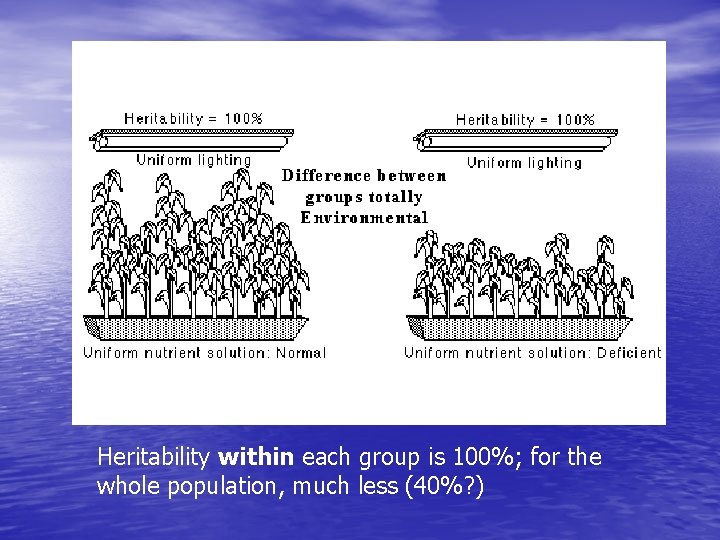
Heritability within each group is 100%; for the whole population, much less (40%? )
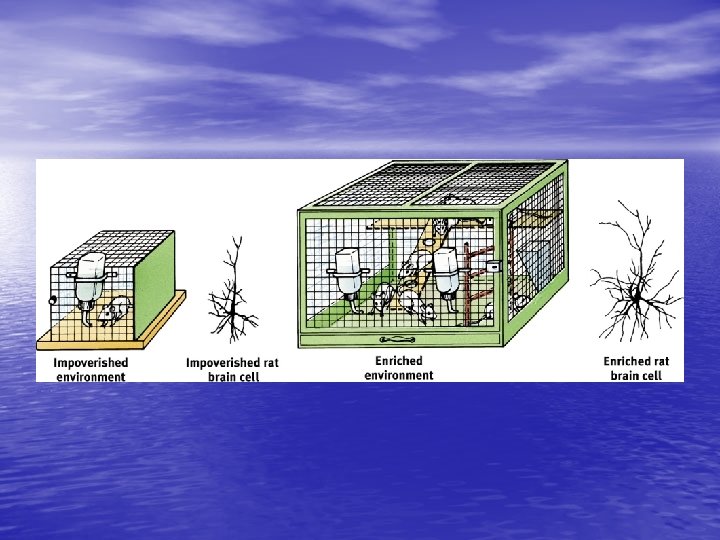
Nurture • Prenatal environment: single placenta MZ twins are more similar than dual placenta • Nature and nurture interact • Nurture and brain development: a bored rat is a dumb rat enriched environment more synapses (and slightly more neurons)
Social influences 1. Parents 2. Peers 3. Culture • Norms: socially enforced expectations – Examples: reciprocity, clothing • Memes: self-replicating cultural elements – Examples: urban legends, jokes

Gender: nature or nurture? • Gender role: normative expectation of male and female behavior • Gender-typing: acquisition of roles or assignment of gender significance • Gender identity: sense of (fe)maleness • Androgynous: having both masculine and feminine characteristics
Nurture of gender 1. Social Learning theory: • Rewards/punishments, observation and imitation • Focus on acquisition 2. Gender Schema Theory • Emphasizes influence of gender on views of world. • Focus on cognition
Nature of gender • Genetic basis: XX or XY • Intersex individuals often display patterns of gendered play behavior which do not match their assigned gender • Hypothalamus is smaller, corpus callosum may be slightly larger in women • Men excel in spatial relations; women in arithmetic, language
- Slides: 14