
NATURE AND NURTURE IN PSYCHOLOGY NATURE Genetic Code
- Slides: 8
NATURE AND NURTURE IN PSYCHOLOGY
NATURE � Genetic Code � � 46 Chromosomes DNA Mutations Predispositions or the possibility of developing a disease NURTURE � All the environmental factors that affect us from conception to death � � WHAT ARE WE MADE OF? Placental abnormalities Wholesome food and water Growing up in a household of smokers Bilingual or monolingual
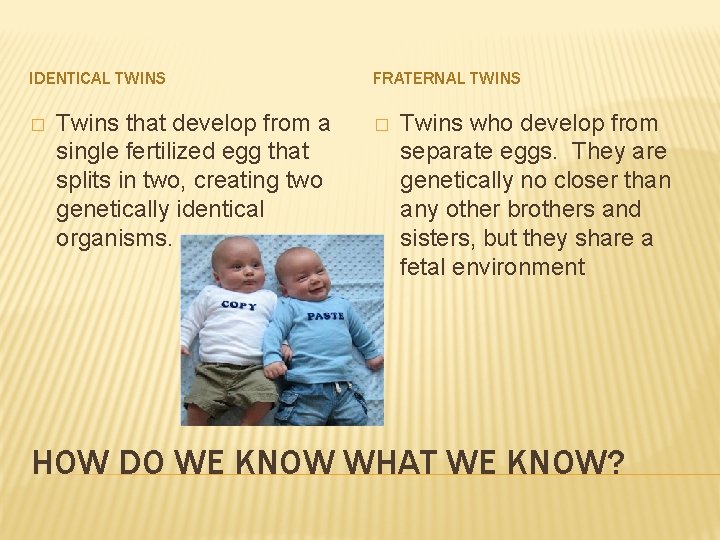
IDENTICAL TWINS � Twins that develop from a single fertilized egg that splits in two, creating two genetically identical organisms. FRATERNAL TWINS � Twins who develop from separate eggs. They are genetically no closer than any other brothers and sisters, but they share a fetal environment HOW DO WE KNOW WHAT WE KNOW?
TWIN STUDIES � Collect and compare data on the intelligence levels of identical twins raised in the same home. � Collect and compare data on the intelligence levels of fraternal twins raised in the same home. � Compare the similarity in intelligence levels of the identical twins with the similarity in intelligence levels of the fraternal twins.
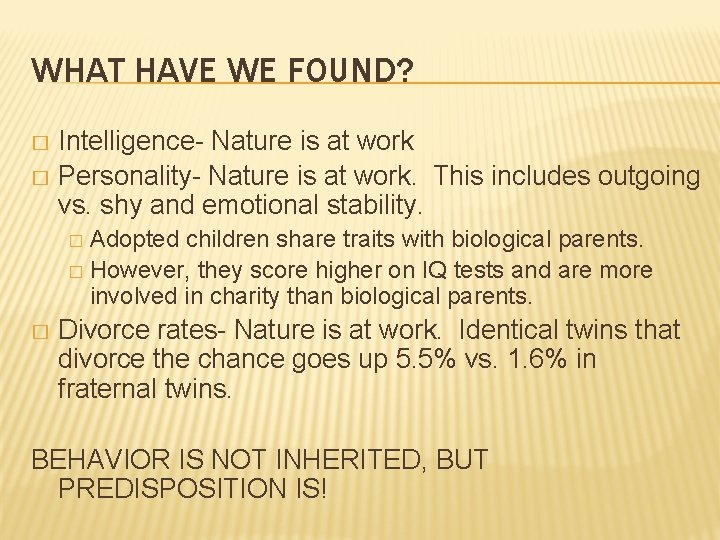
WHAT HAVE WE FOUND? Intelligence- Nature is at work � Personality- Nature is at work. This includes outgoing vs. shy and emotional stability. � Adopted children share traits with biological parents. � However, they score higher on IQ tests and are more involved in charity than biological parents. � � Divorce rates- Nature is at work. Identical twins that divorce the chance goes up 5. 5% vs. 1. 6% in fraternal twins. BEHAVIOR IS NOT INHERITED, BUT PREDISPOSITION IS!
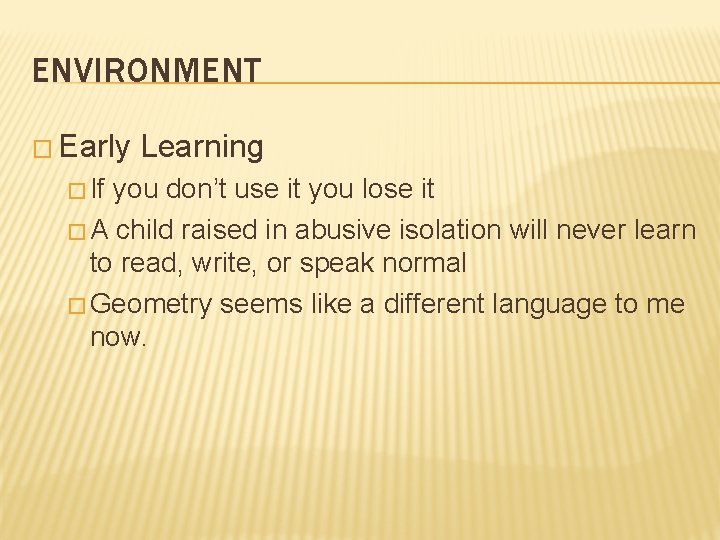
ENVIRONMENT � Early � If Learning you don’t use it you lose it � A child raised in abusive isolation will never learn to read, write, or speak normal � Geometry seems like a different language to me now.
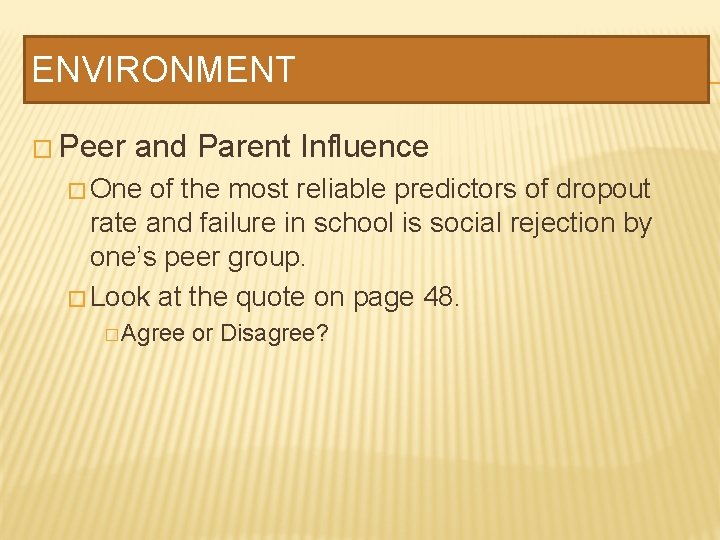
ENVIRONMENT � Peer and Parent Influence � One of the most reliable predictors of dropout rate and failure in school is social rejection by one’s peer group. � Look at the quote on page 48. � Agree or Disagree?
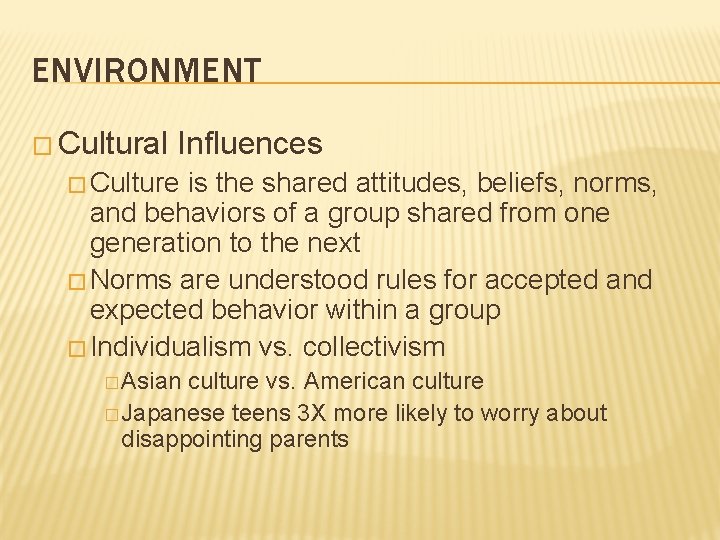
ENVIRONMENT � Cultural Influences � Culture is the shared attitudes, beliefs, norms, and behaviors of a group shared from one generation to the next � Norms are understood rules for accepted and expected behavior within a group � Individualism vs. collectivism � Asian culture vs. American culture � Japanese teens 3 X more likely to worry about disappointing parents