
Naturally Occurring Inhibitors Ahmad Sh Silmi Msc FIBMS
Naturally Occurring Inhibitors Ahmad Sh. Silmi Msc, FIBMS IUG Faculty of Science Medical Technology Dept
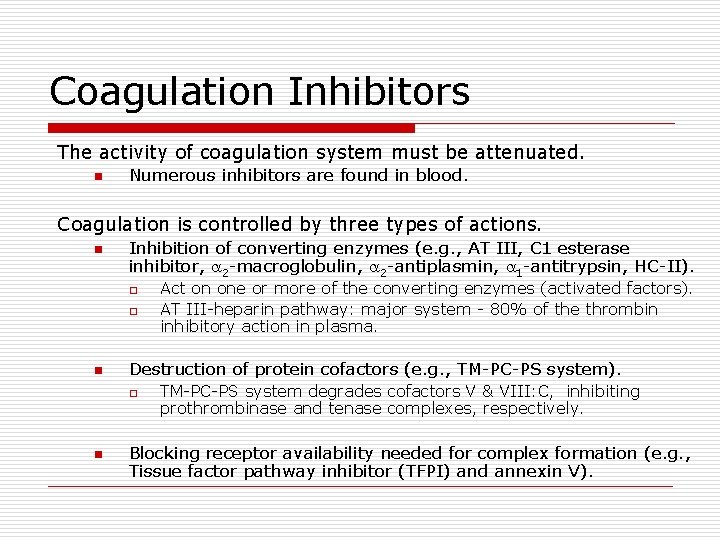
Coagulation Inhibitors The activity of coagulation system must be attenuated. n Numerous inhibitors are found in blood. Coagulation is controlled by three types of actions. n Inhibition of converting enzymes (e. g. , AT III, C 1 esterase inhibitor, a 2 -macroglobulin, a 2 -antiplasmin, a 1 -antitrypsin, HC-II). o o n Destruction of protein cofactors (e. g. , TM-PC-PS system). o n Act on one or more of the converting enzymes (activated factors). AT III-heparin pathway: major system - 80% of the thrombin inhibitory action in plasma. TM-PC-PS system degrades cofactors V & VIII: C, inhibiting prothrombinase and tenase complexes, respectively. Blocking receptor availability needed for complex formation (e. g. , Tissue factor pathway inhibitor (TFPI) and annexin V).
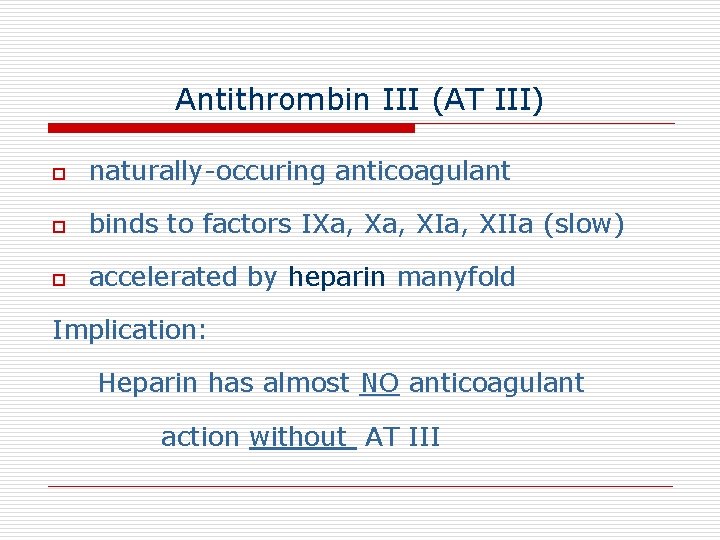
Antithrombin III (AT III) o naturally-occuring anticoagulant o binds to factors IXa, XIa, XIIa (slow) o accelerated by heparin manyfold Implication: Heparin has almost NO anticoagulant action without AT III
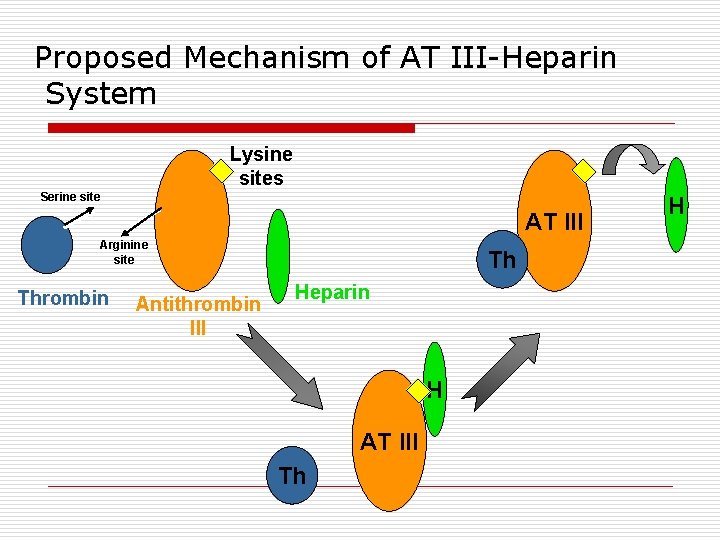
Proposed Mechanism of AT III-Heparin System Lysine sites Serine site AT III Arginine site Thrombin Antithrombin III Th Heparin H AT III Th H
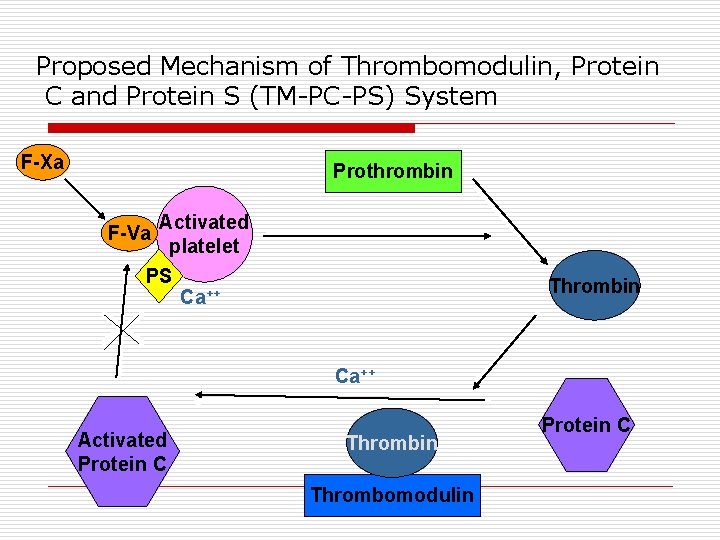
Proposed Mechanism of Thrombomodulin, Protein C and Protein S (TM-PC-PS) System F-Xa Prothrombin F-Va Activated platelet Thrombin Ca++ x PS Ca++ Activated Protein C Thrombin Thrombomodulin Protein C
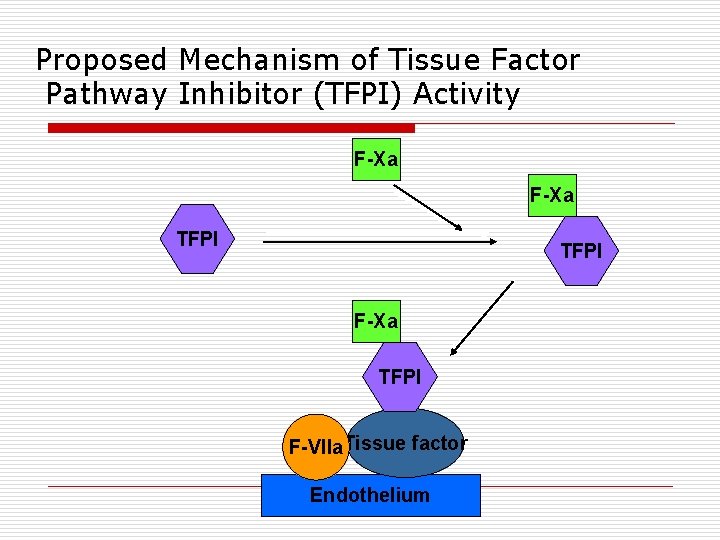
Proposed Mechanism of Tissue Factor Pathway Inhibitor (TFPI) Activity F-Xa TFPI F-VIIa. Tissue factor Endothelium
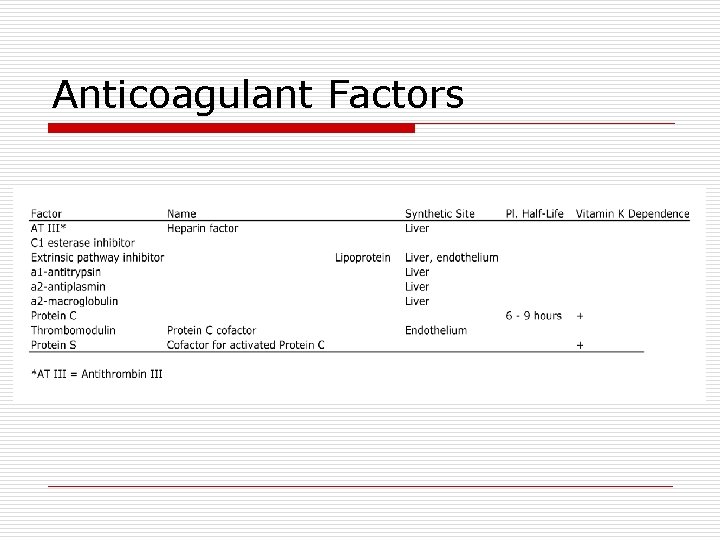
Anticoagulant Factors
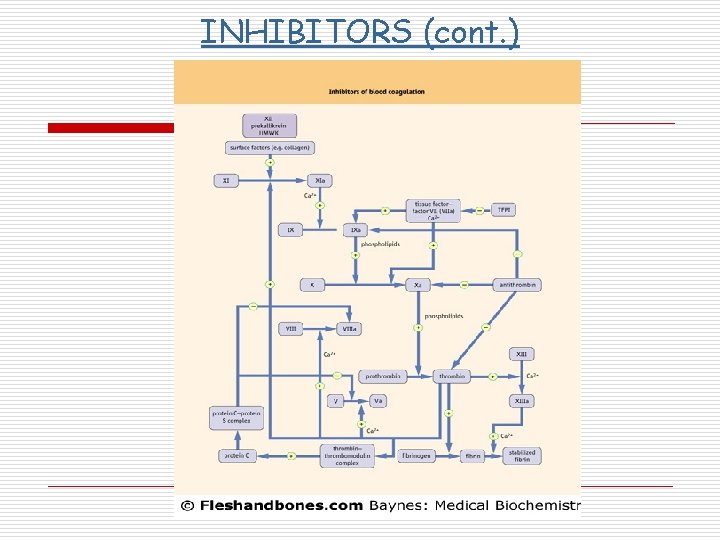
INHIBITORS (cont. )
- Slides: 8