
Natural Variations in Climate 1 El Nino and


- Slides: 22
Natural Variations in Climate
1. El Nino and La Nina • Natural changes in climate due to warmer or cooler than normal surface water in the eastern Pacific
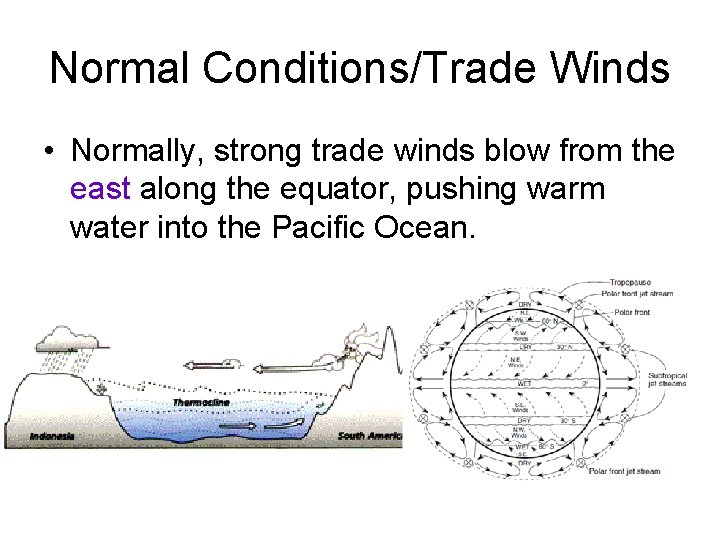
Normal Conditions/Trade Winds • Normally, strong trade winds blow from the east along the equator, pushing warm water into the Pacific Ocean.
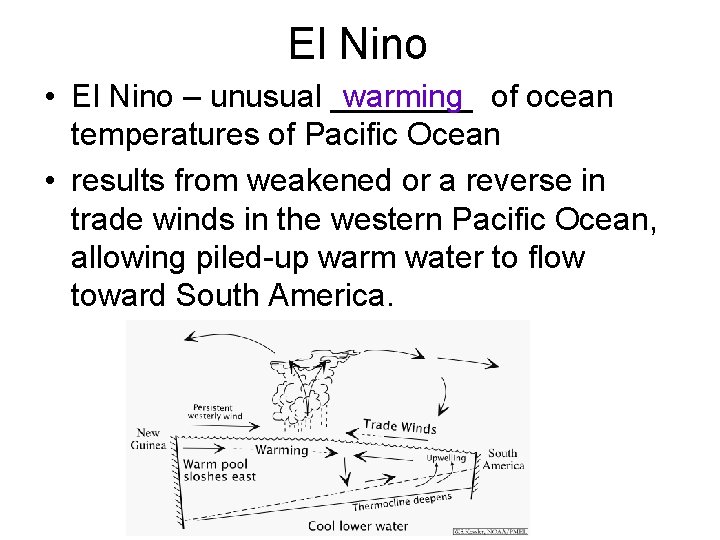
El Nino warming of ocean • El Nino – unusual ____ temperatures of Pacific Ocean • results from weakened or a reverse in trade winds in the western Pacific Ocean, allowing piled-up warm water to flow toward South America.
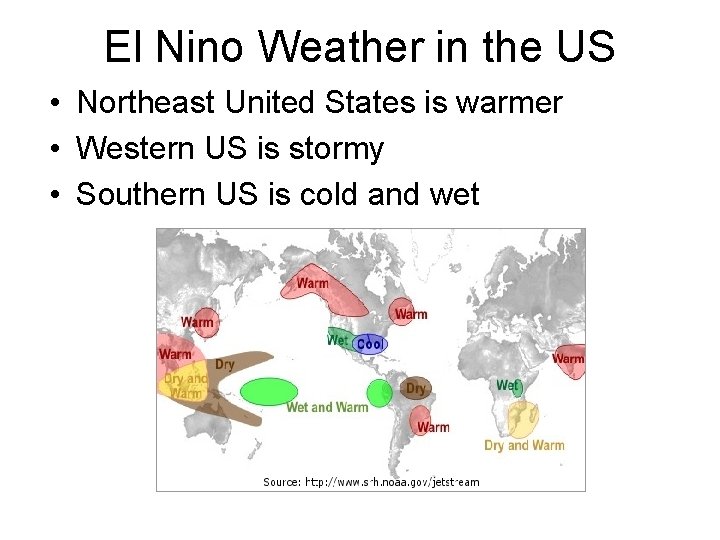
El Nino Weather in the US • Northeast United States is warmer • Western US is stormy • Southern US is cold and wet
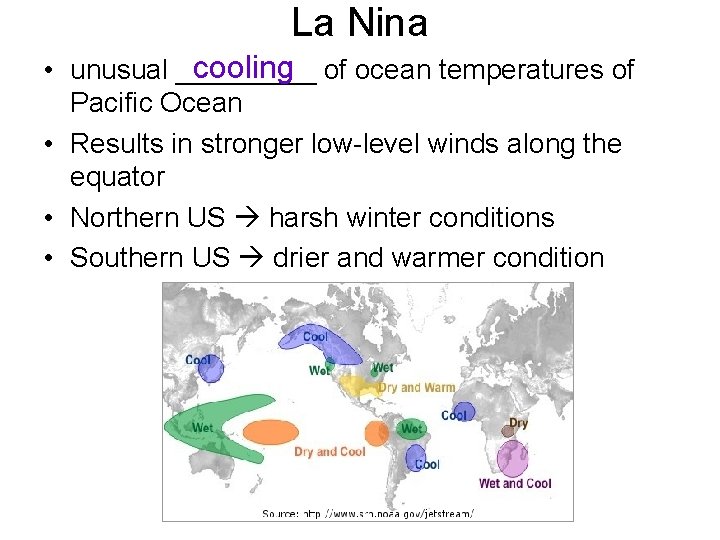
La Nina cooling of ocean temperatures of • unusual _____ Pacific Ocean • Results in stronger low-level winds along the equator • Northern US harsh winter conditions • Southern US drier and warmer condition
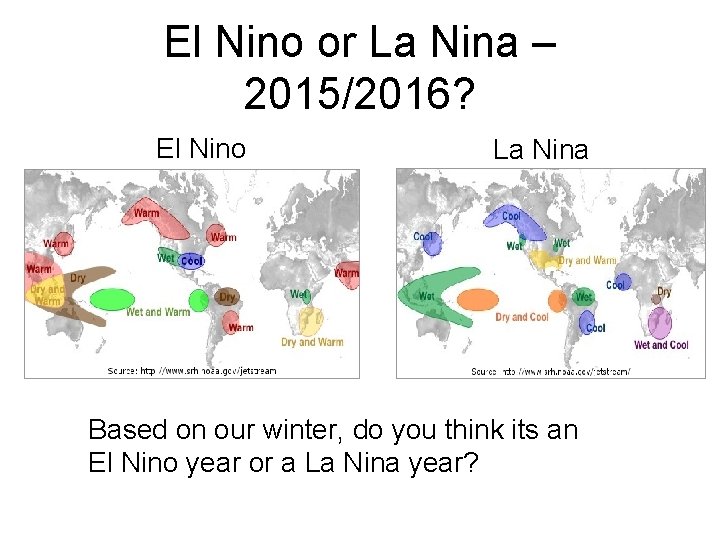
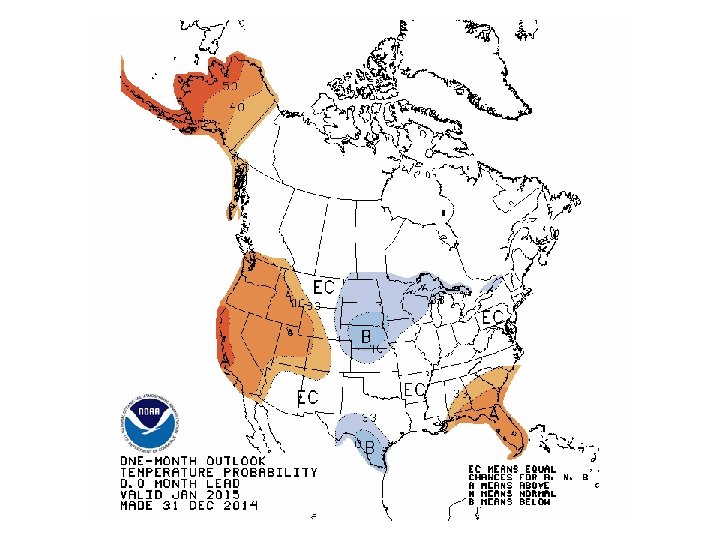
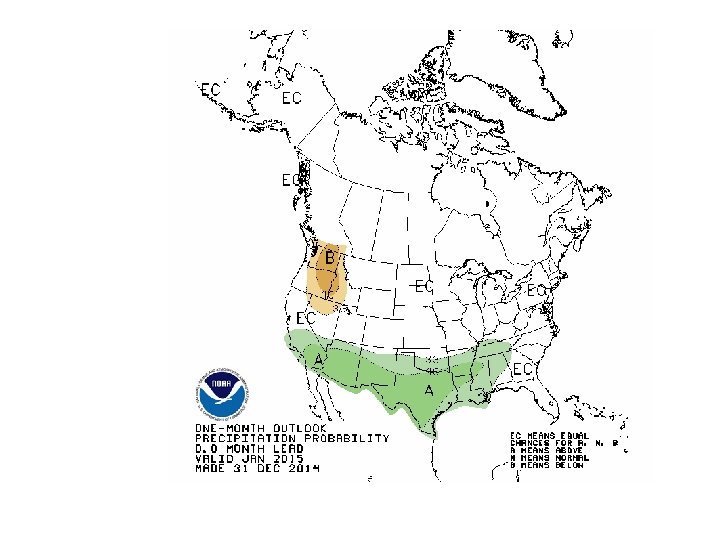
El Nino or La Nina – 2015/2016? El Nino La Nina Based on our winter, do you think its an El Nino year or a La Nina year?
• http: //esminfo. prenhall. com/science/geoani mations/animations/26_Nino. Nina. html
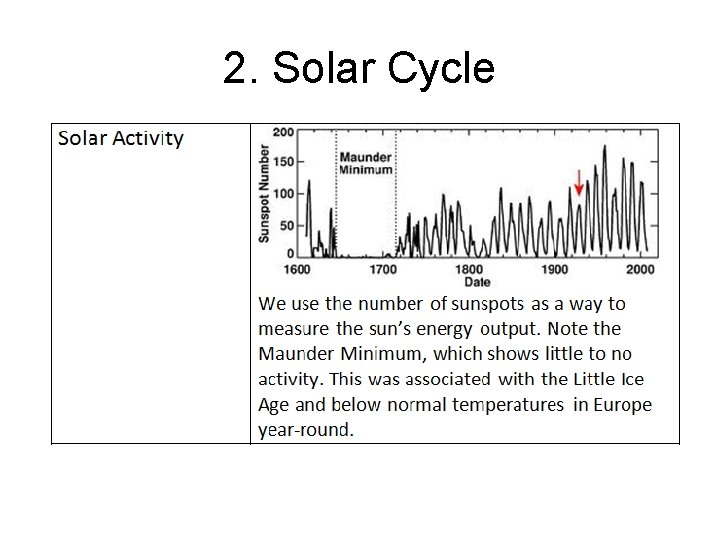
2. Solar Cycle
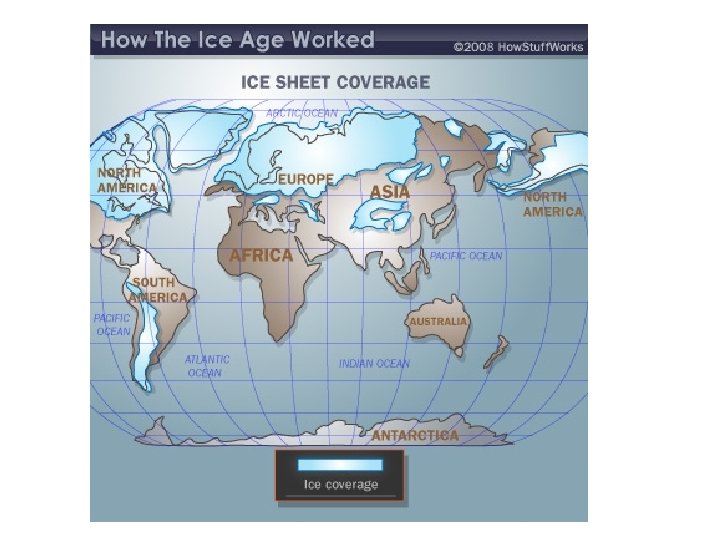
3. Ice Ages • Milankovitch Cycle – Gradual changes in Earth’s rotation and orbit have changed the intensity of sunlight received in our planet’s polar and equatorial regions
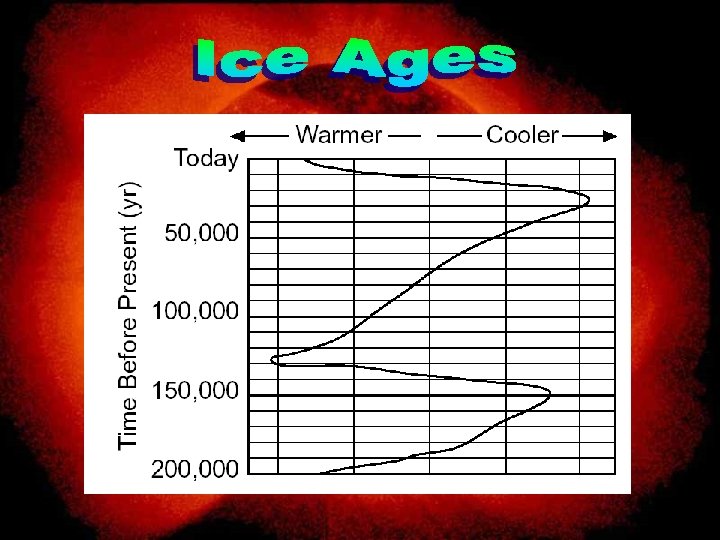
Ice Ages are cyclic. The last one occurred ~12, 000 years ago The exact cause of what triggers an ice age is not known
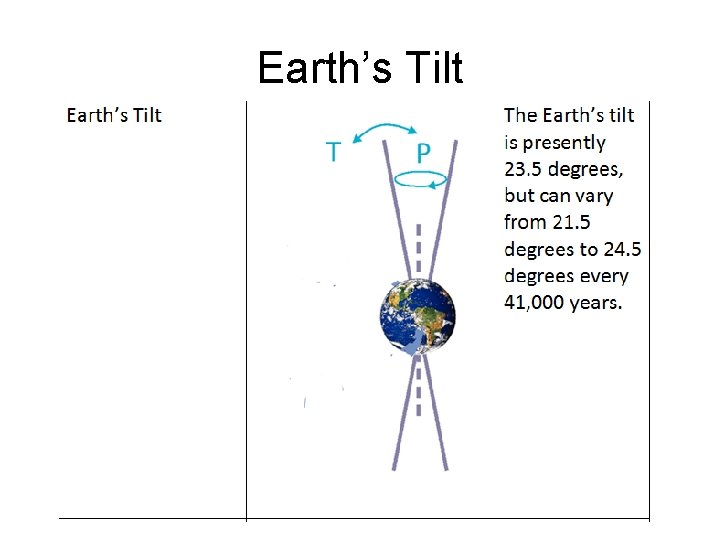
Earth’s Tilt
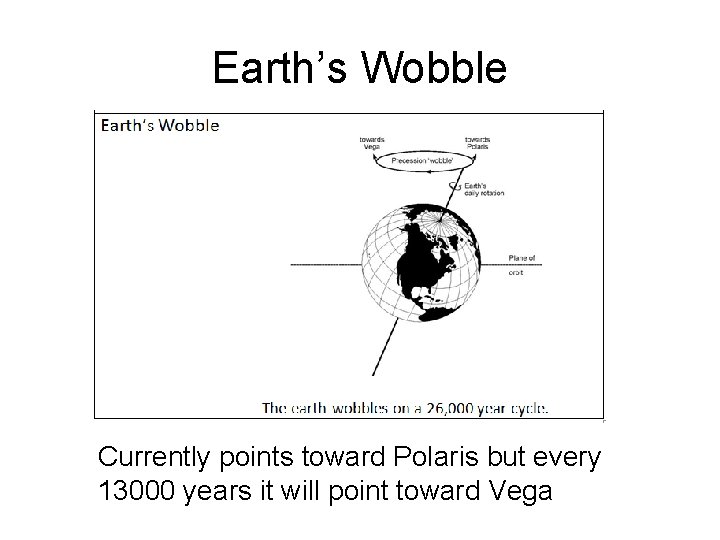
Earth’s Wobble Currently points toward Polaris but every 13000 years it will point toward Vega
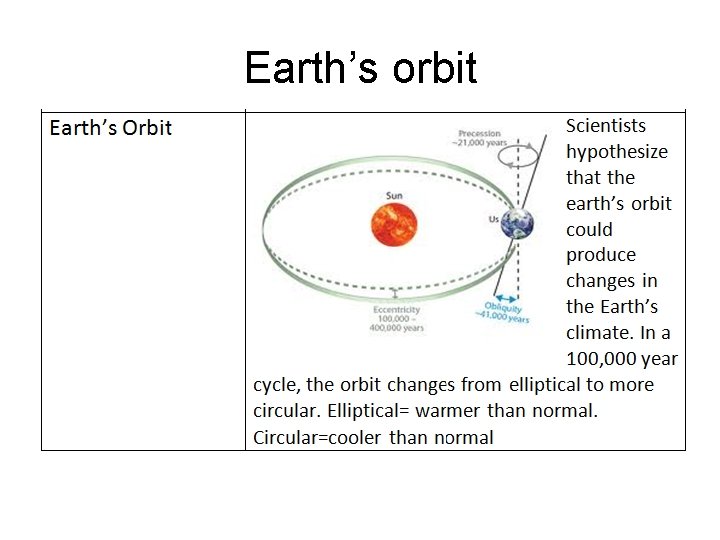
Earth’s orbit • B.
http: //www. youtube. com/watch? v=ga. JJt. S_ WDm. I
4. Volcanic Eruptions Large quantities of Volcanic Ash that are released into atmosphere which blocks incoming solar radiation, Thus, cools the earth
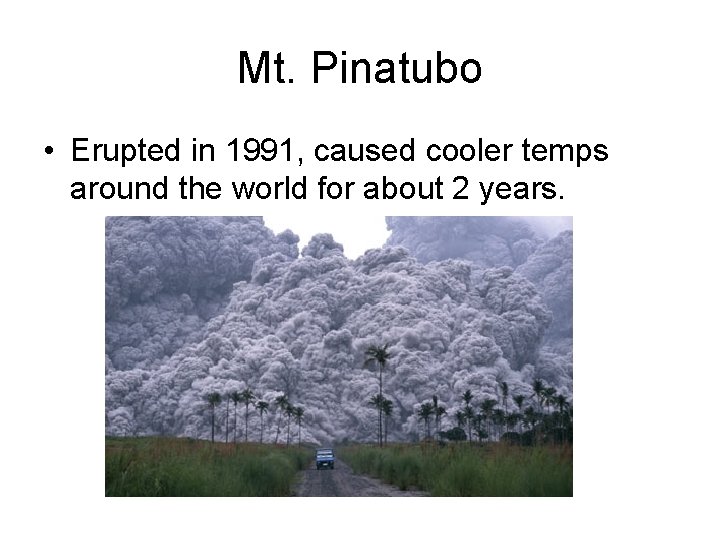
Mt. Pinatubo • Erupted in 1991, caused cooler temps around the world for about 2 years.