
NATURAL SELECTION Evolution Developing the Theory of Evolution
- Slides: 36
NATURAL SELECTION Evolution
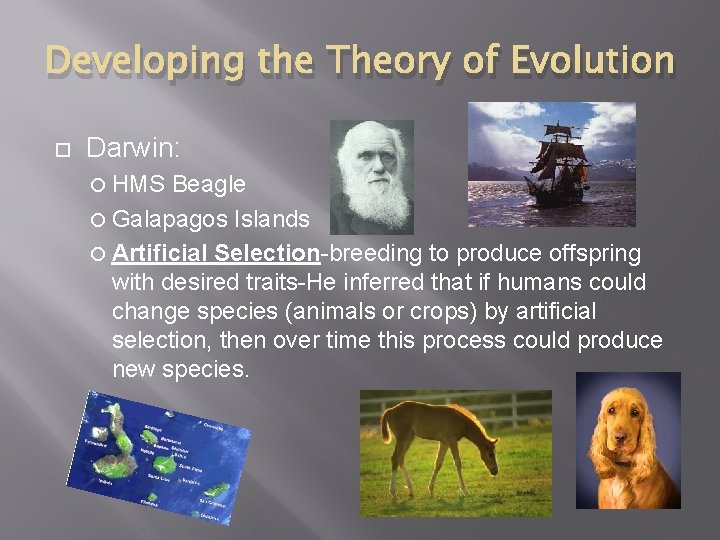
Developing the Theory of Evolution Darwin: HMS Beagle Galapagos Islands Artificial Selection-breeding to produce offspring with desired traits-He inferred that if humans could change species (animals or crops) by artificial selection, then over time this process could produce new species.
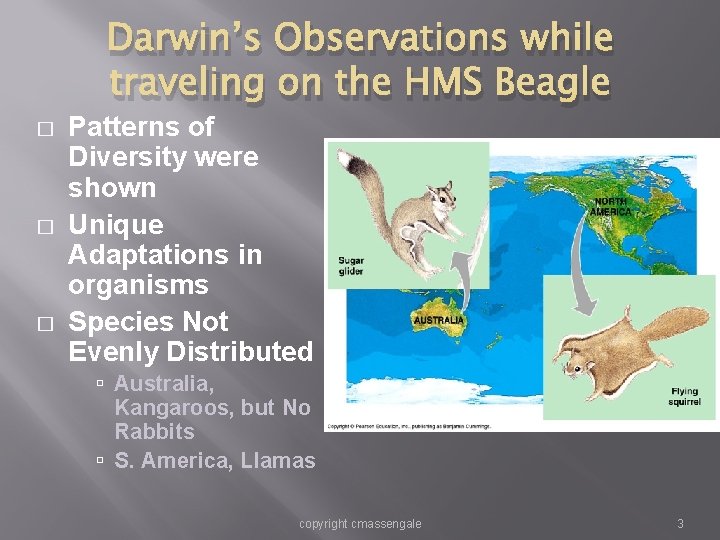
Darwin’s Observations while traveling on the HMS Beagle � � � Patterns of Diversity were shown Unique Adaptations in organisms Species Not Evenly Distributed Australia, Kangaroos, but No Rabbits S. America, Llamas copyright cmassengale 3
Darwin’s 4 basic principles: ALREADY in NOTES…Just going over! 4 Basic Principles: 1. Individuals in a population show difference, or variation 2. Variations can be inherited-meaning passed down from parent to offspring. 3. Organisms have more offspring than can survive on available resources. 4. Variations that increase reproductive success will have a greater chance of being passed on than those that do not increase reproductive success.
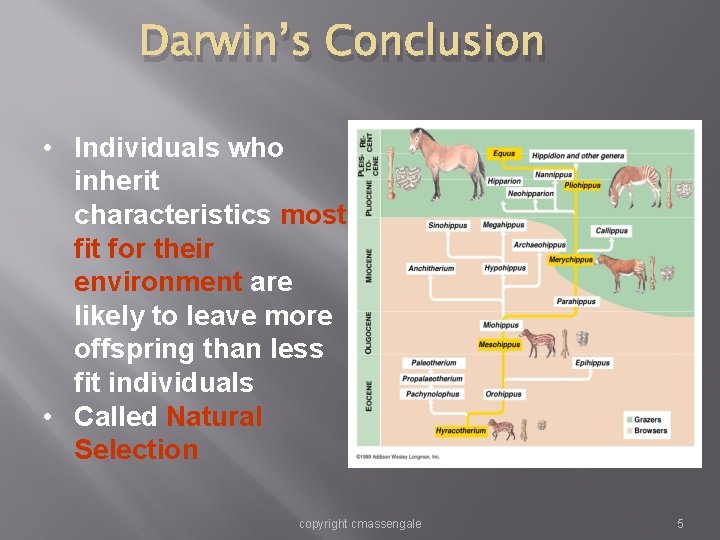
Darwin’s Conclusion • Individuals who inherit characteristics most fit for their environment are likely to leave more offspring than less fit individuals • Called Natural Selection copyright cmassengale 5
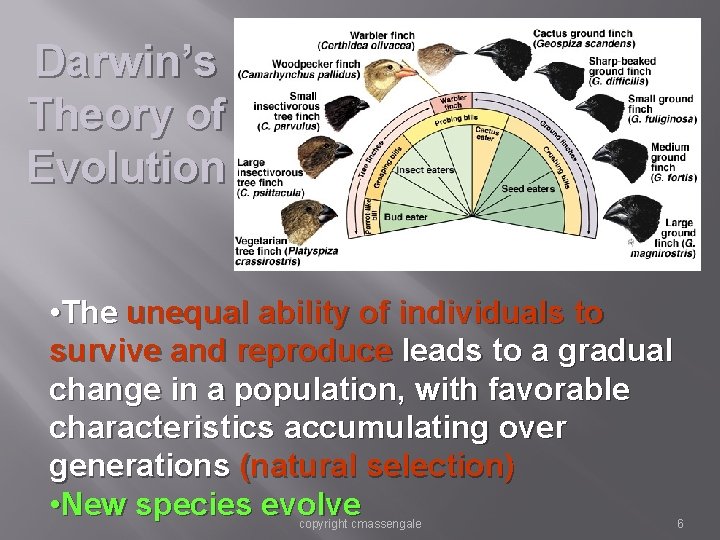
Darwin’s Theory of Evolution • The unequal ability of individuals to survive and reproduce leads to a gradual change in a population, with favorable characteristics accumulating over generations (natural selection) • New species evolve copyright cmassengale 6
Evolution By Natural Selection Concepts 1. The Struggle for Existence (compete for food, mates, space, water, etc. ) 2. Survival of the Fittest (strongest able to survive and reproduce) 3. Descent with Modification (new species arise from common ancestor replacing less fit species) copyright cmassengale 7
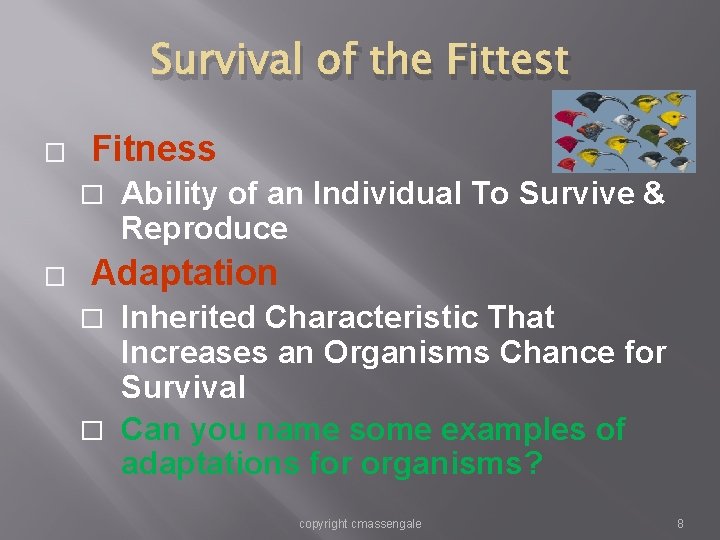
Survival of the Fittest � Fitness � � Ability of an Individual To Survive & Reproduce Adaptation Inherited Characteristic That Increases an Organisms Chance for Survival � Can you name some examples of adaptations for organisms? � copyright cmassengale 8
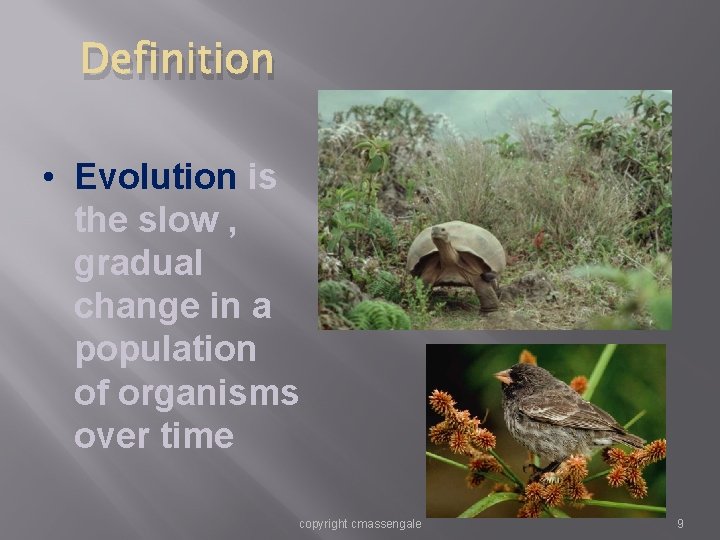
Definition • Evolution is the slow , gradual change in a population of organisms over time copyright cmassengale 9
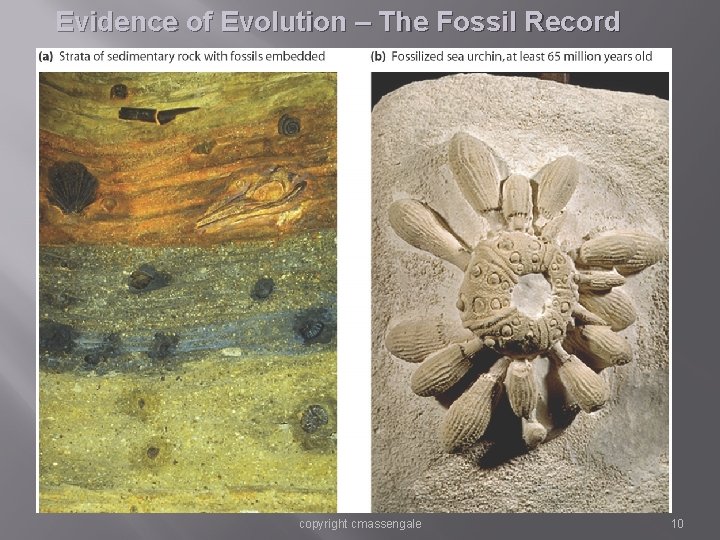
Evidence of Evolution – The Fossil Record copyright cmassengale 10
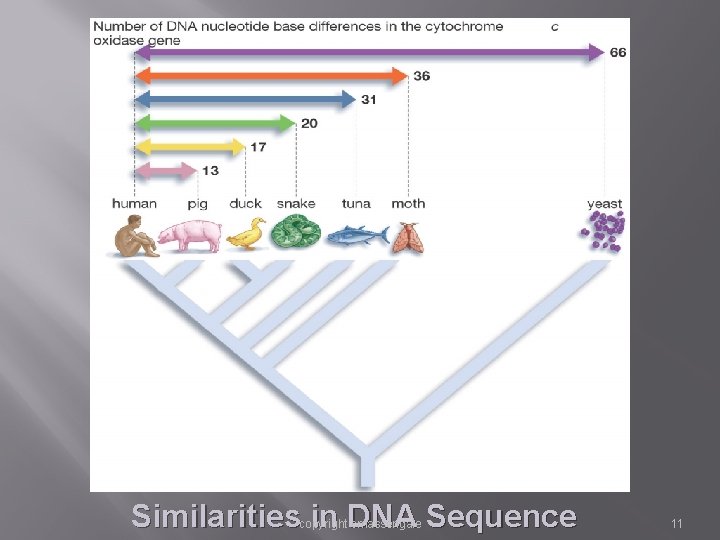
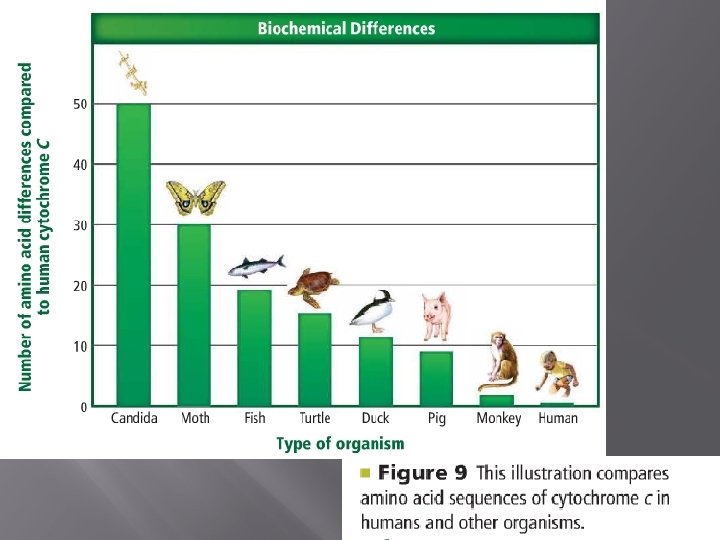
Similarities in DNA Sequence copyright cmassengale 11
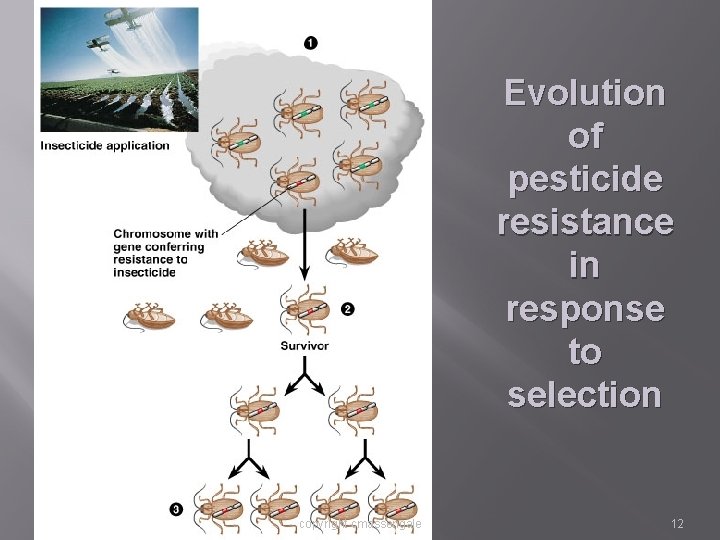
Evolution of pesticide resistance in response to selection copyright cmassengale 12
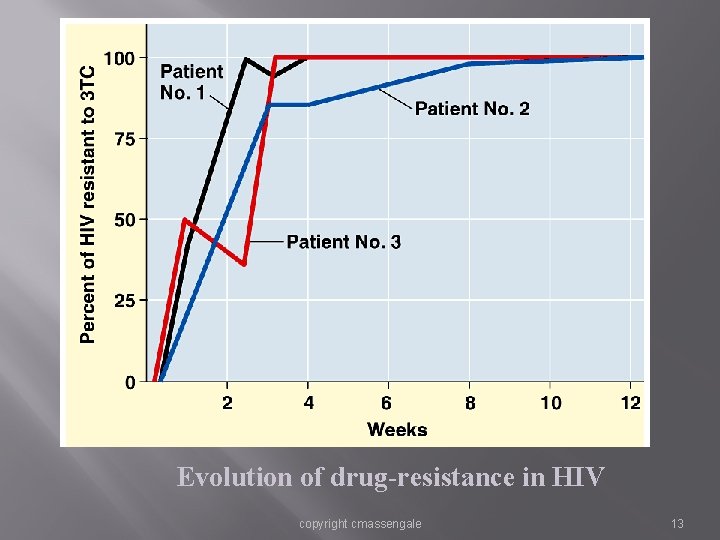
Evidence for Evolution – Evolution Observed Evolution of drug-resistance in HIV copyright cmassengale 13
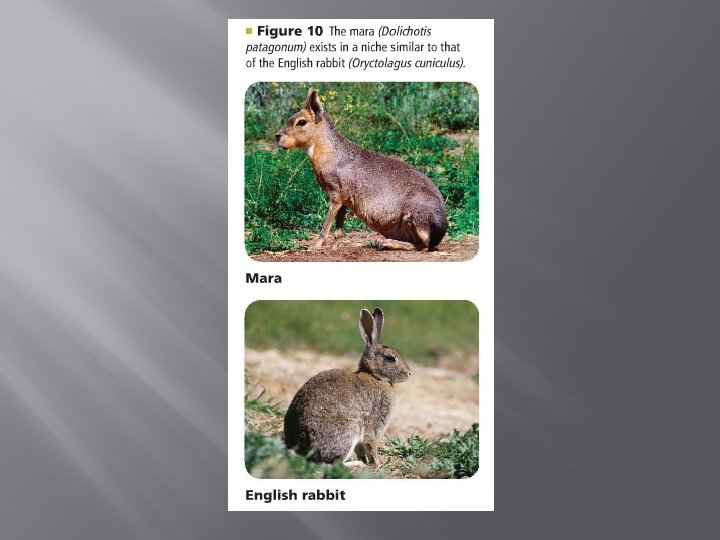
Biogeography The study of the distribution of plants and animals around the world. Patterns of distribution of living and fossil species tell us how modern organisms evolve from their ancestors. Two patterns: Closely related but different and distantly related but similar
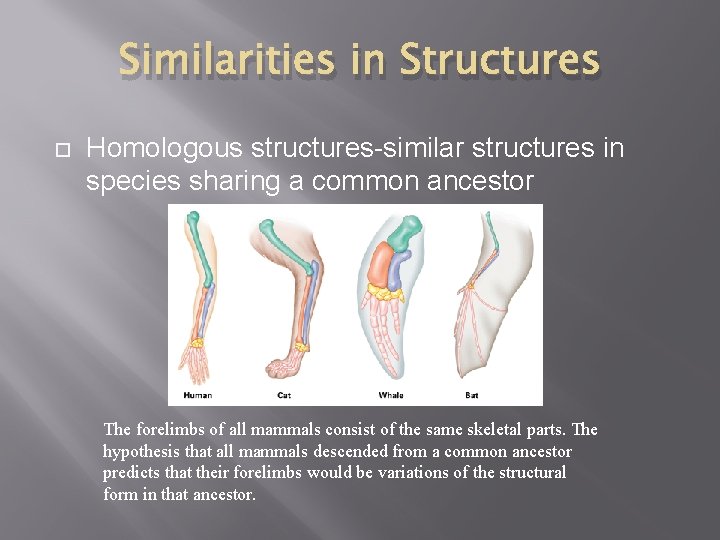
Similarities in Structures Homologous structures-similar structures in species sharing a common ancestor The forelimbs of all mammals consist of the same skeletal parts. The hypothesis that all mammals descended from a common ancestor predicts that their forelimbs would be variations of the structural form in that ancestor.
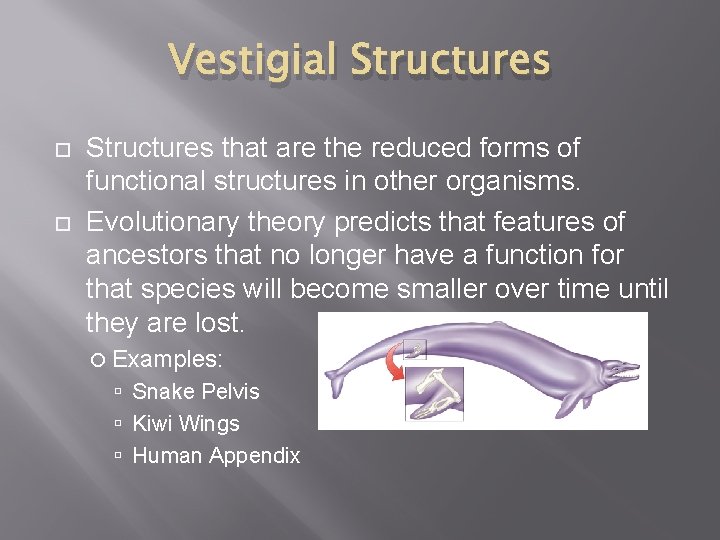
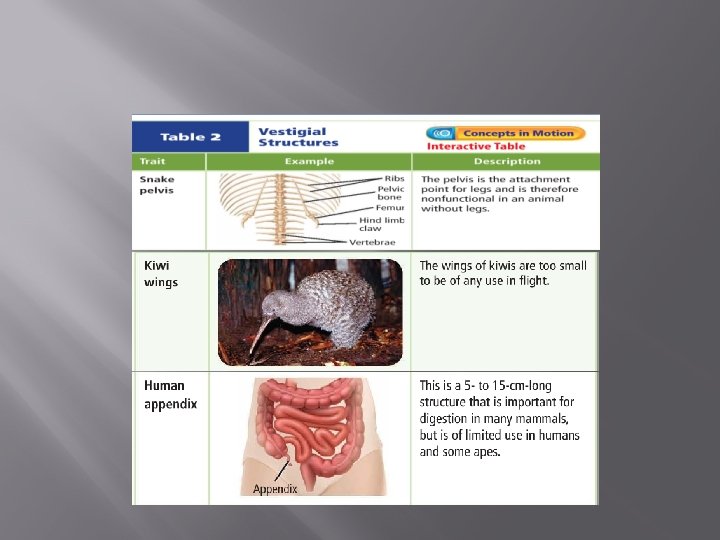
Vestigial Structures that are the reduced forms of functional structures in other organisms. Evolutionary theory predicts that features of ancestors that no longer have a function for that species will become smaller over time until they are lost. Examples: Snake Pelvis Kiwi Wings Human Appendix
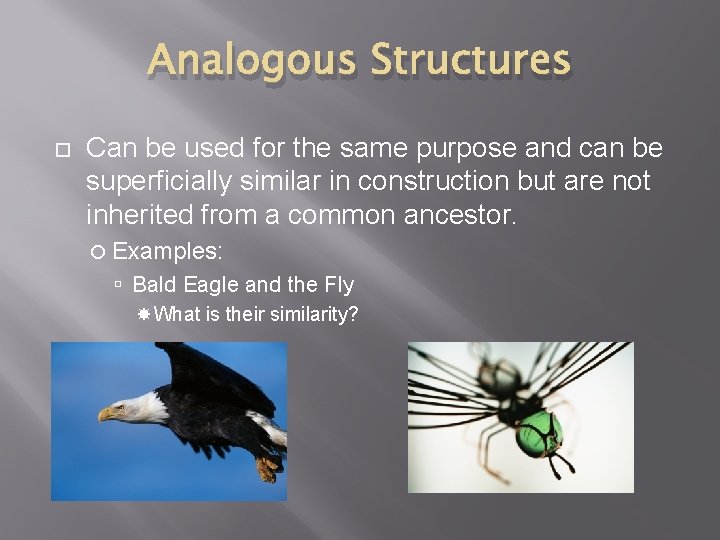
Analogous Structures Can be used for the same purpose and can be superficially similar in construction but are not inherited from a common ancestor. Examples: Bald Eagle and the Fly What is their similarity?
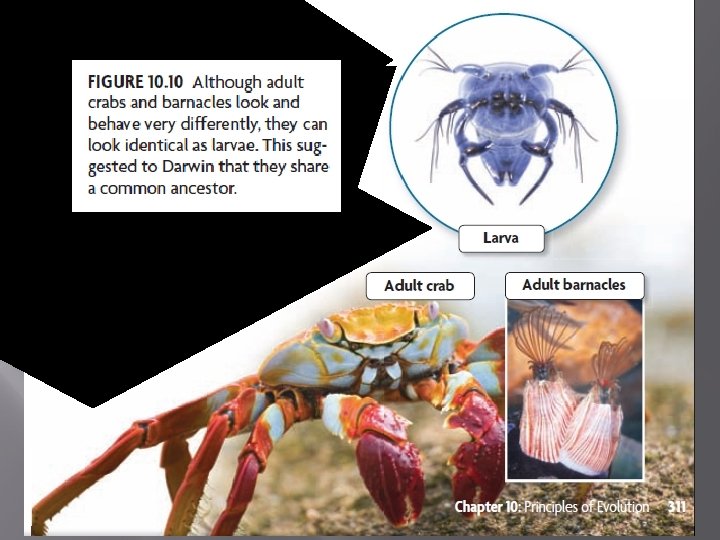
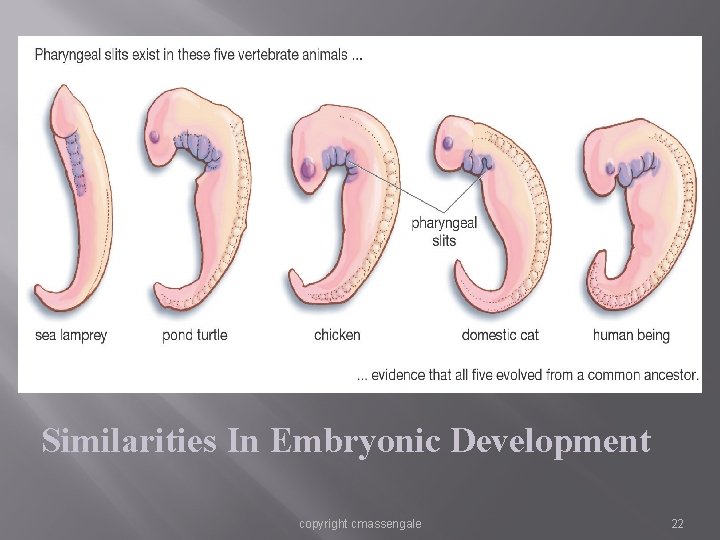
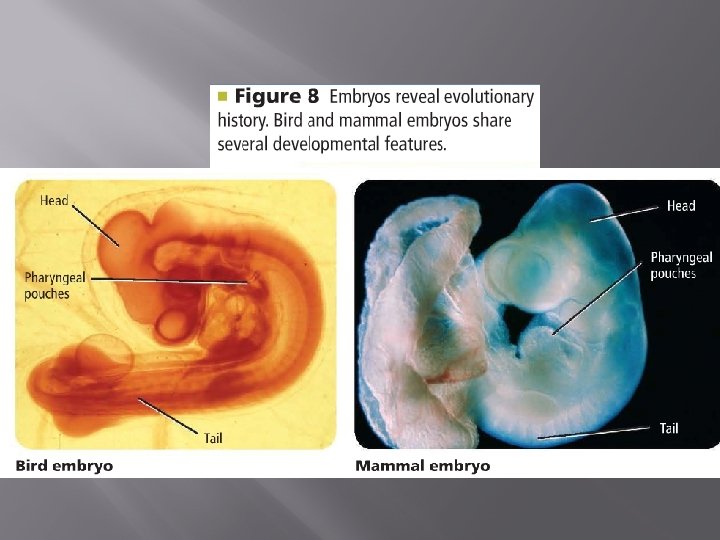
Embryology Similar patterns of embryological development provide evidence that organisms descended from a common ancestor. The same group of cells develop in the same order and produce homologous tissues in vertebrates.
Evidence for Evolution - Comparative Embryology Similarities In Embryonic Development copyright cmassengale 22
Molecular Biology At the molecular level, the universal genetic code and homologous molecules provide evidence of common descent. Genetic code is universal for all organisms. Homologous molecules are found in various organisms and have similar functions.
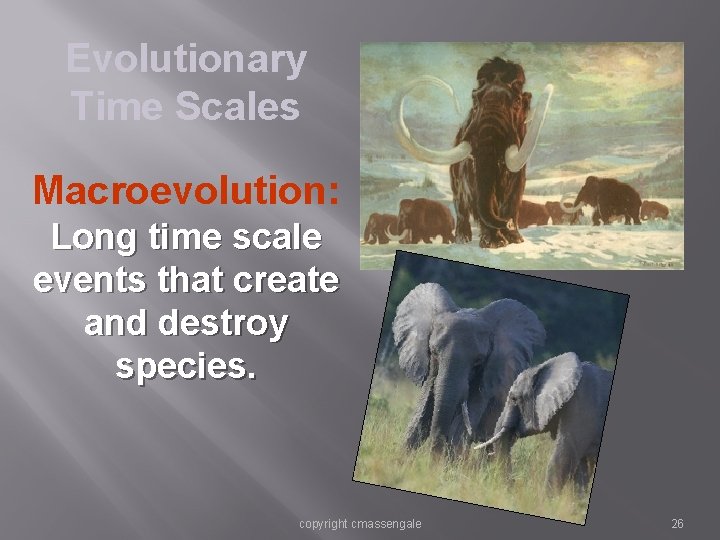
Evolutionary Time Scales Macroevolution: Long time scale events that create and destroy species. copyright cmassengale 26
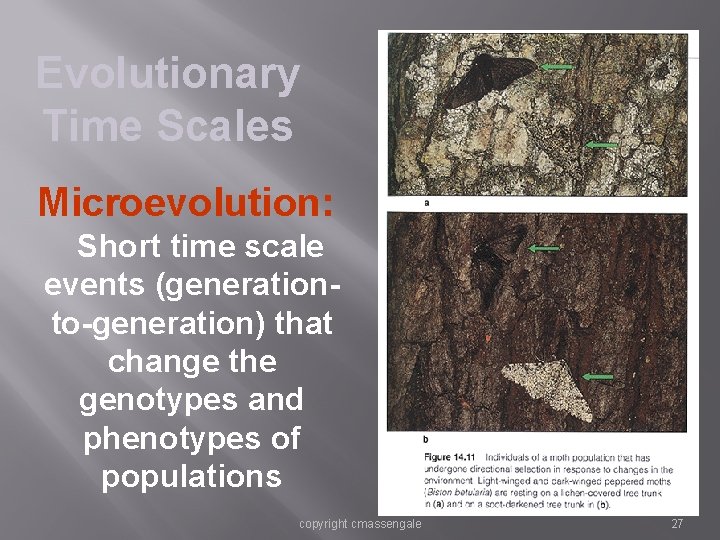
Evolutionary Time Scales Microevolution: Short time scale events (generationto-generation) that change the genotypes and phenotypes of populations copyright cmassengale 27
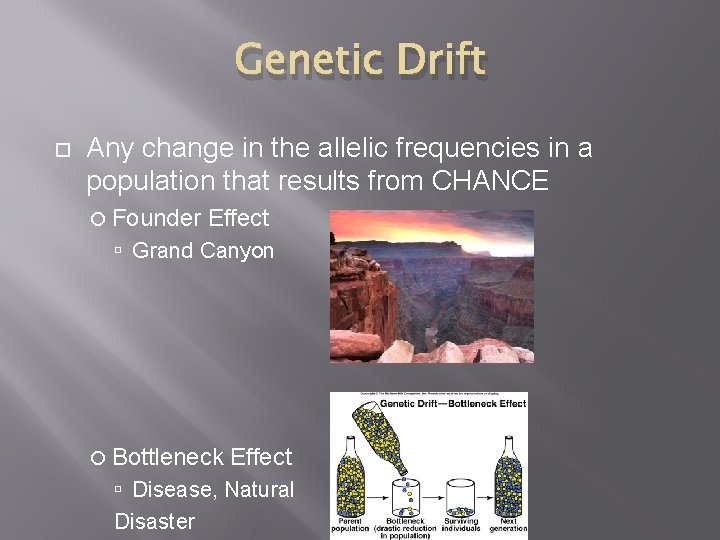
Genetic Drift Any change in the allelic frequencies in a population that results from CHANCE Founder Effect Grand Canyon Bottleneck Effect Disease, Natural Disaster
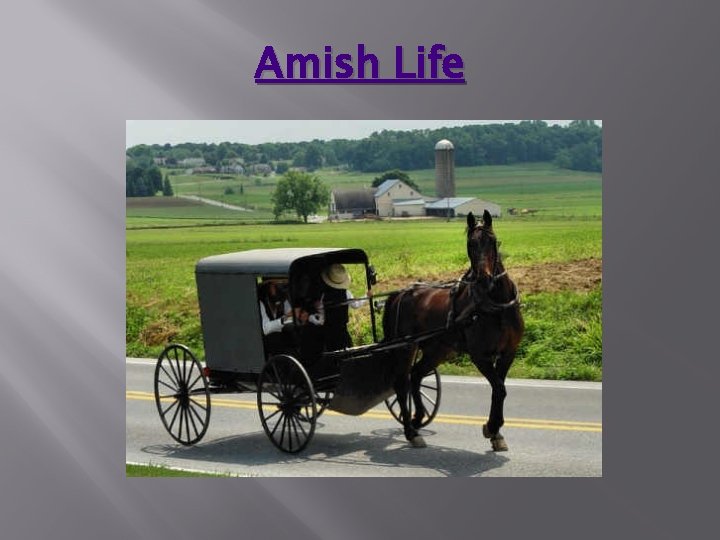
Amish Life
Founder Effect Eastern Pennsylvania is home to beautiful farmlands and countryside, but it's also a gold mine of information for geneticists, who have studied the region's Amish culture for decades. Because of their closed population stemming from a small number of German immigrants -- about 200 individuals -- the Amish carry unusual concentrations of gene mutations that cause a number of otherwise rare inherited disorders, including forms of dwarfism.
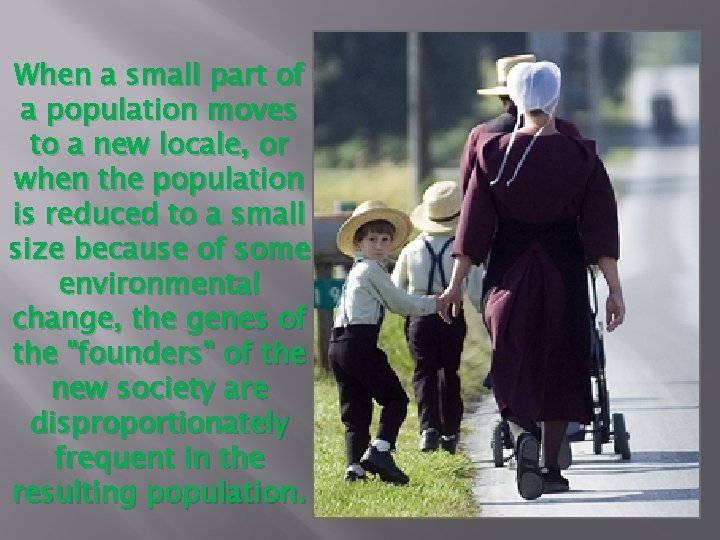
When a small part of a population moves to a new locale, or when the population is reduced to a small size because of some environmental change, the genes of the "founders" of the new society are disproportionately frequent in the resulting population.
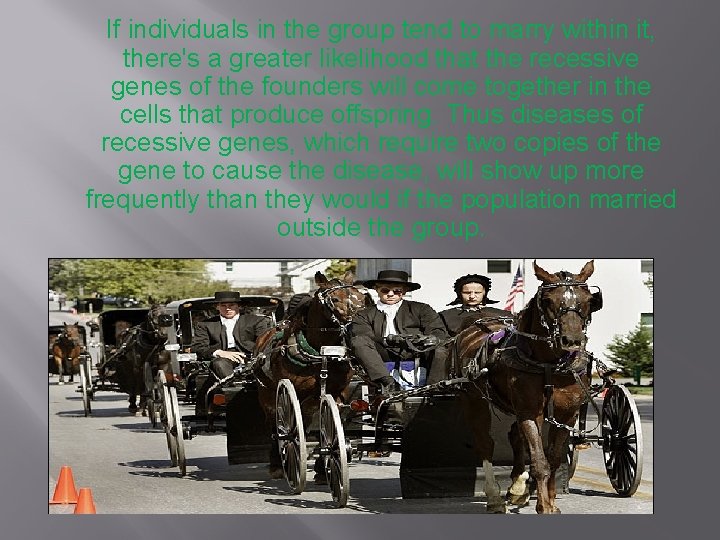
If individuals in the group tend to marry within it, there's a greater likelihood that the recessive genes of the founders will come together in the cells that produce offspring. Thus diseases of recessive genes, which require two copies of the gene to cause the disease, will show up more frequently than they would if the population married outside the group.
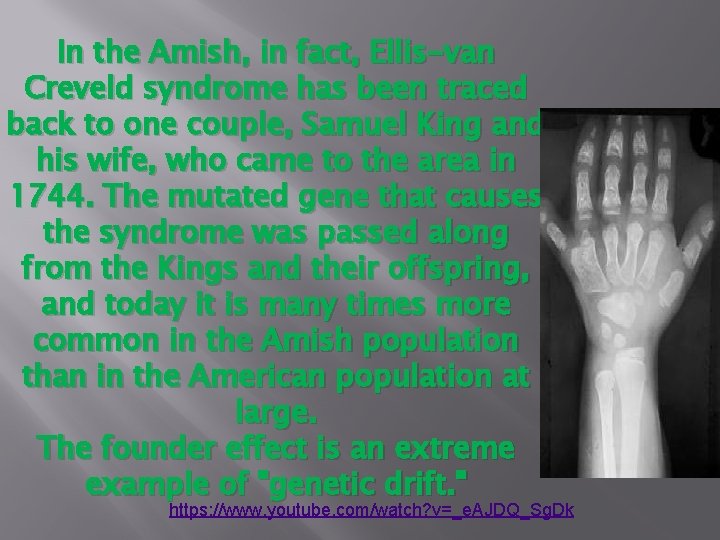
In the Amish, in fact, Ellis-van Creveld syndrome has been traced back to one couple, Samuel King and his wife, who came to the area in 1744. The mutated gene that causes the syndrome was passed along from the Kings and their offspring, and today it is many times more common in the Amish population than in the American population at large. The founder effect is an extreme example of "genetic drift. " https: //www. youtube. com/watch? v=_e. AJDQ_Sg. Dk
Gene Flow A population in genetic equilibrium experiences no gene flow In reality, few populations are isolated. Closed system, no new genes entering or leaving Random movement of individuals, ex: migration, which reduces differences between populations
Nonrandom Mating Rarely is mating completely random in a population. Usually, organisms mate with individuals in close proximity. This promotes inbreeding Favors homozygous traits
Mutations Recall that a mutation is a random change in genetic material. Can cause harm or death However, some mutations provide advantages.