
Natural Selection Charles Darwins Theory that Shapes the




- Slides: 39
Natural Selection Charles Darwin’s Theory that Shapes the Scientific Study of Life
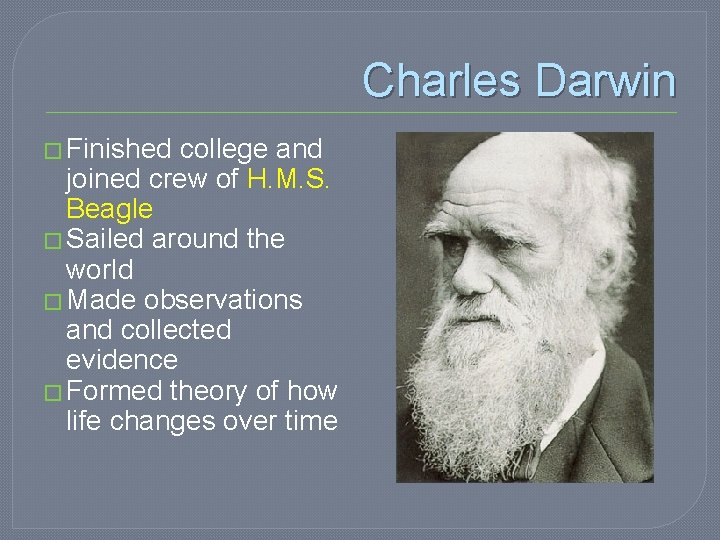
Charles Darwin � Finished college and joined crew of H. M. S. Beagle � Sailed around the world � Made observations and collected evidence � Formed theory of how life changes over time
Darwin’s Findings �Diversity • Darwin was amazed by the number of different strategies for survival and reproduction • He noticed that all of these different plants and animals seemed very well suited for their specific environment
Some Modern Diversity… VIDEO
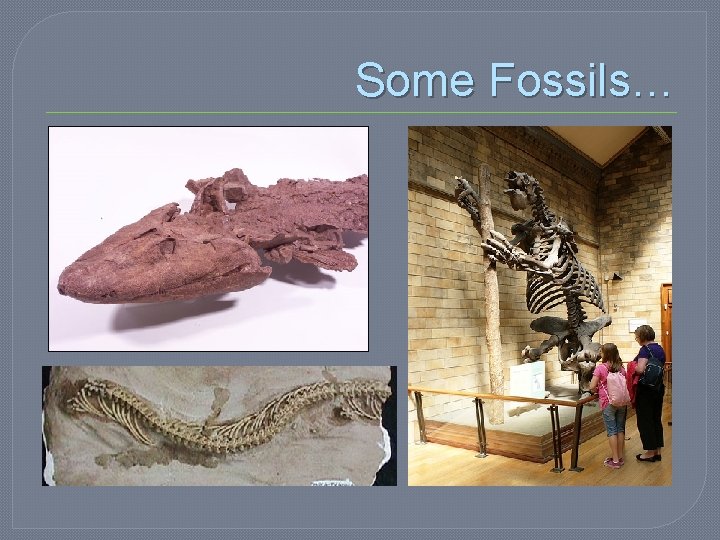
Darwin’s Findings �Fossils • On his voyage, Darwin collected many fossils – some of which resembled living things, and others that looked completely different �How did so many of these species disappear? �How were they related to living things?
Some Fossils…
Darwin’s Findings �The Galapagos Islands • These small islands off the western coast of South America had the greatest influence on Darwin’s theory • Let’s examine 2 specific findings there
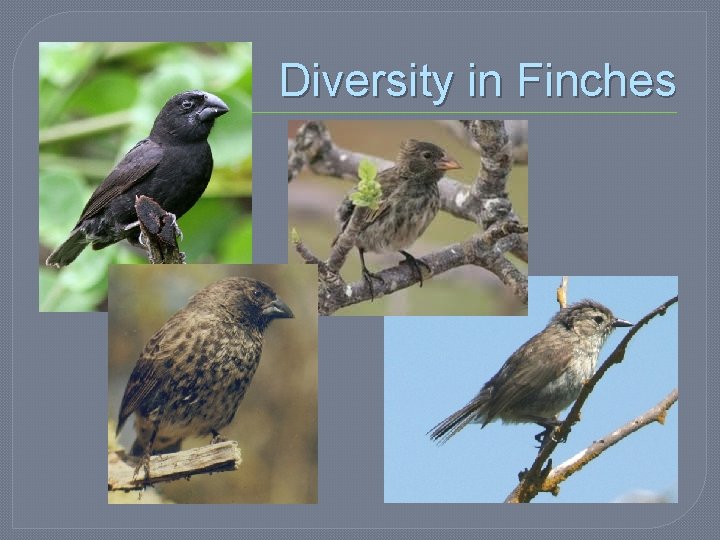
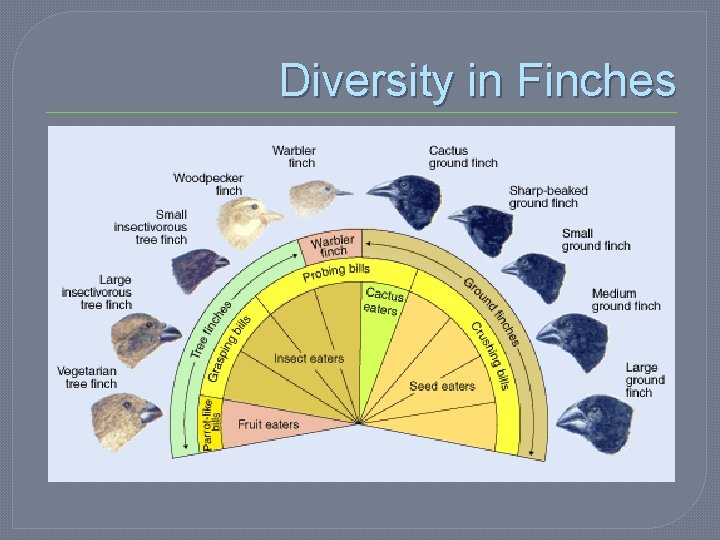
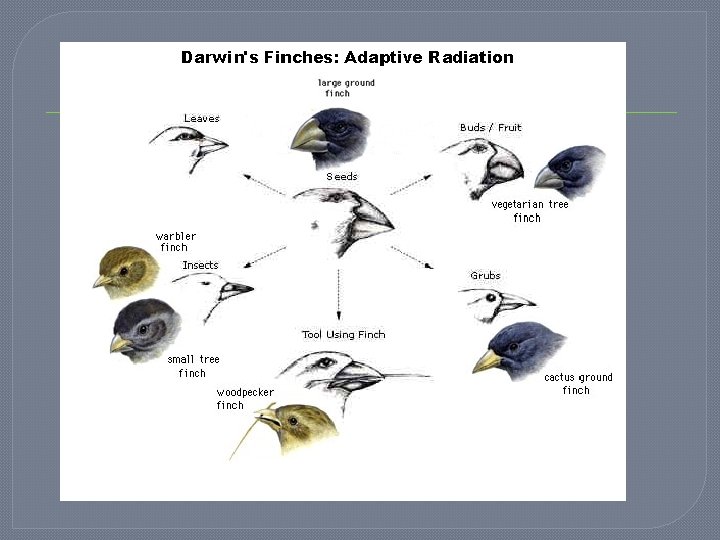
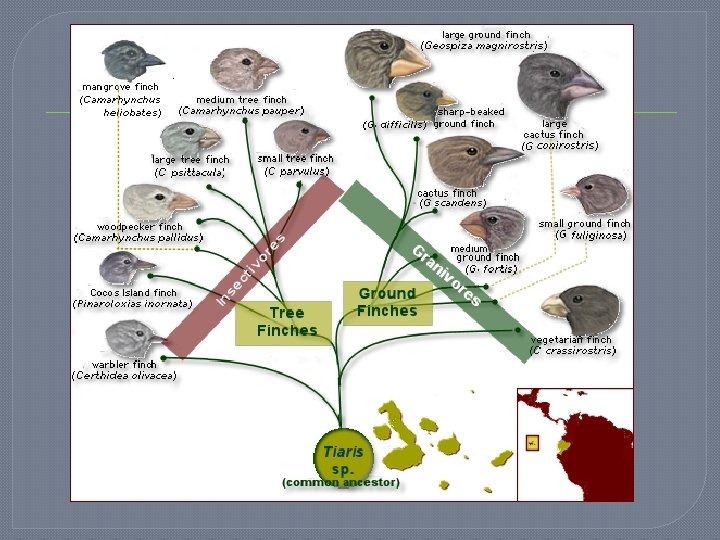
Darwin’s Findings �The Galapagos Islands – The Finches • Darwin observed and collected many birds that were different on each island • He discovered that these birds were all finches • He noticed that each type was well suited to its own specific environment
Diversity in Finches
Diversity in Finches
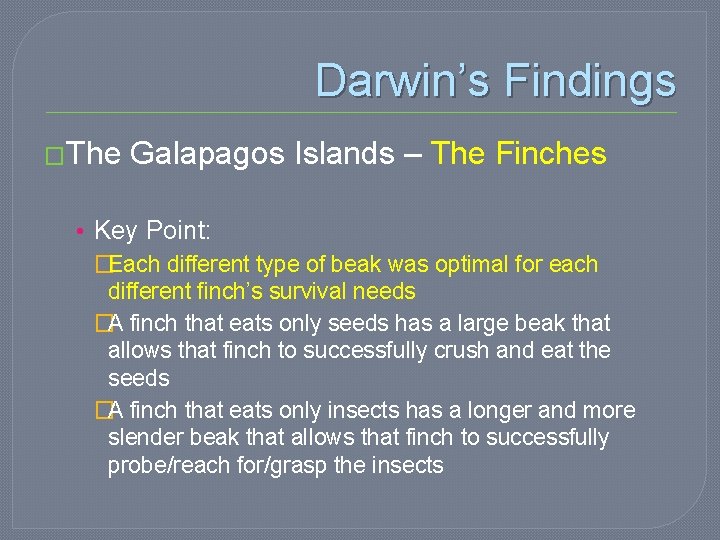
Darwin’s Findings �The Galapagos Islands – The Finches • Key Point: �Each different type of beak was optimal for each different finch’s survival needs �A finch that eats only seeds has a large beak that allows that finch to successfully crush and eat the seeds �A finch that eats only insects has a longer and more slender beak that allows that finch to successfully probe/reach for/grasp the insects
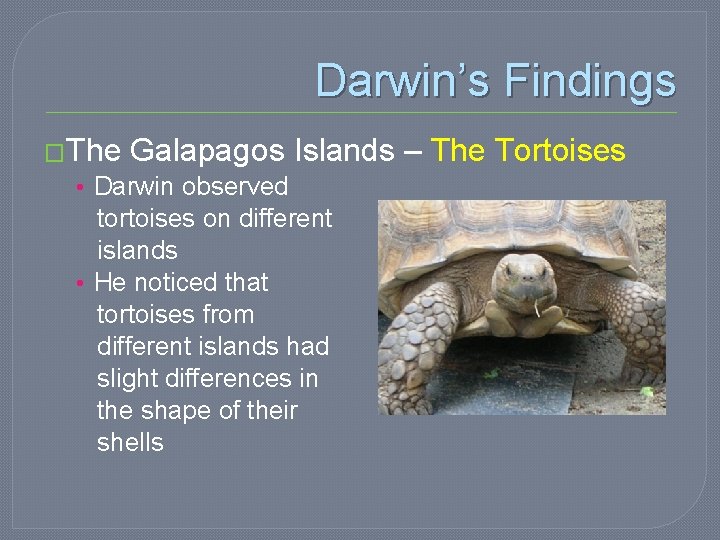
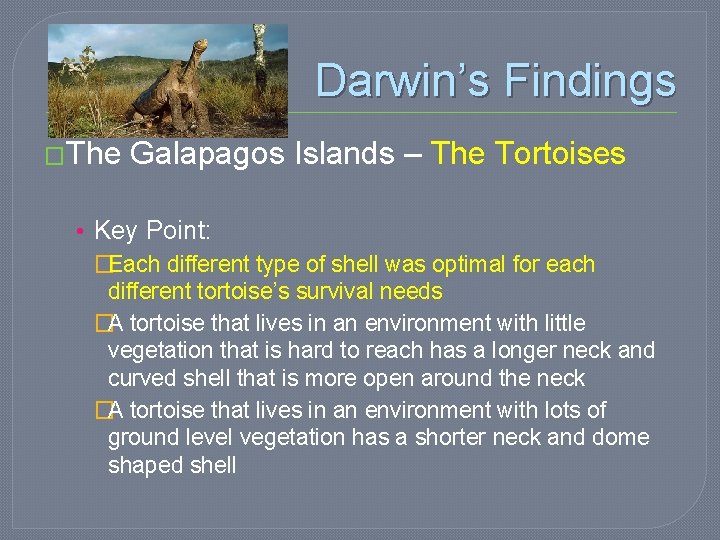
Darwin’s Findings �The Galapagos Islands • Darwin observed tortoises on different islands • He noticed that tortoises from different islands had slight differences in the shape of their shells – The Tortoises
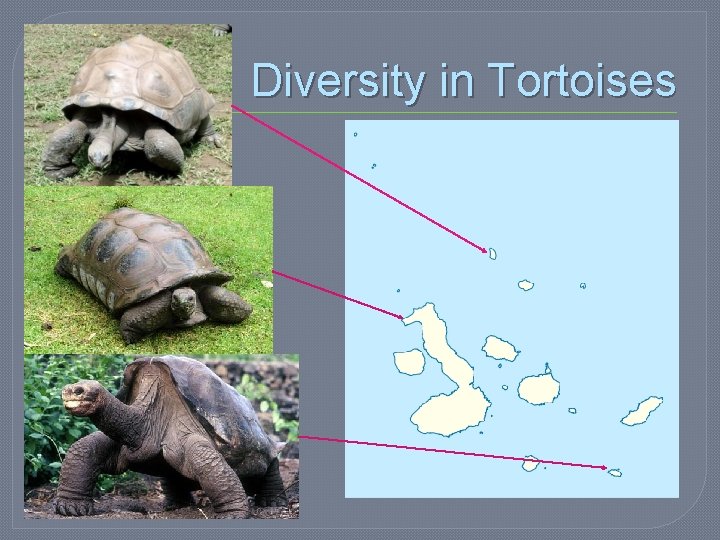
Diversity in Tortoises
Darwin’s Findings �The Galapagos Islands – The Tortoises • Key Point: �Each different type of shell was optimal for each different tortoise’s survival needs �A tortoise that lives in an environment with little vegetation that is hard to reach has a longer neck and curved shell that is more open around the neck �A tortoise that lives in an environment with lots of ground level vegetation has a shorter neck and dome shaped shell
Figuring it Out �Darwin noticed how organisms were so well suited for their own specific habitat �Key question: how did they get like that? �Answer: the process of natural selection
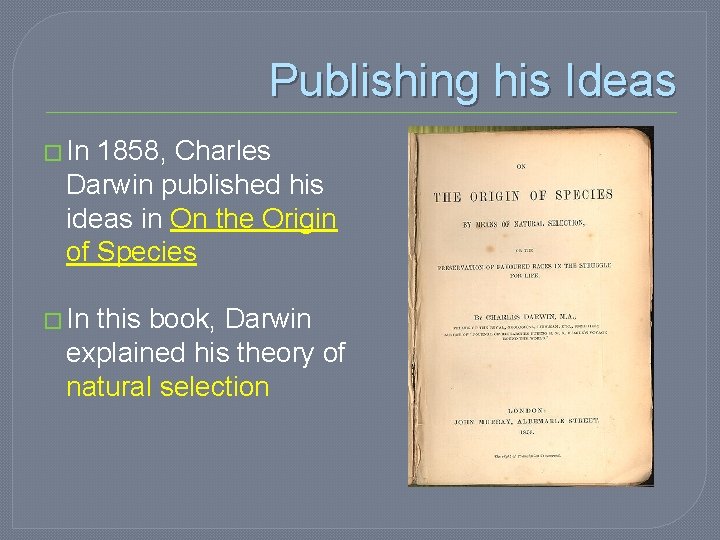
Publishing his Ideas � In 1858, Charles Darwin published his ideas in On the Origin of Species � In this book, Darwin explained his theory of natural selection
Natural Selection �“Survival of the fittest” • Those individuals that are best suited for their environment survive and reproduce most successfully
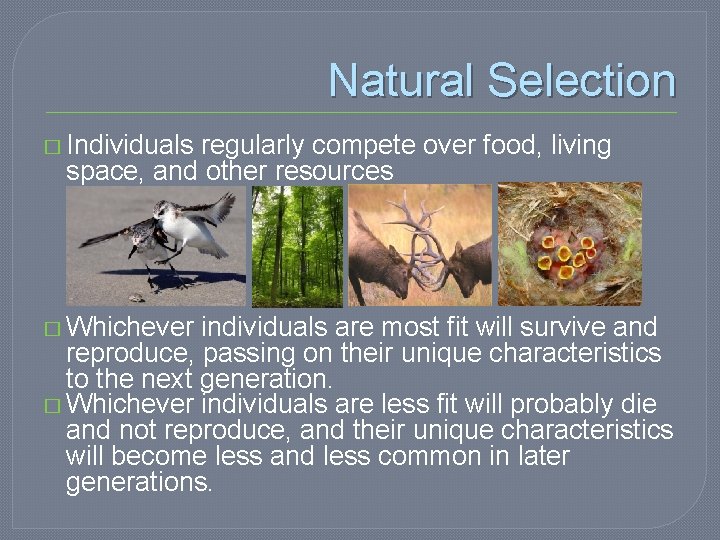
Natural Selection � Individuals regularly compete over food, living space, and other resources � Whichever individuals are most fit will survive and reproduce, passing on their unique characteristics to the next generation. � Whichever individuals are less fit will probably die and not reproduce, and their unique characteristics will become less and less common in later generations.
Natural Selection �VIDEO
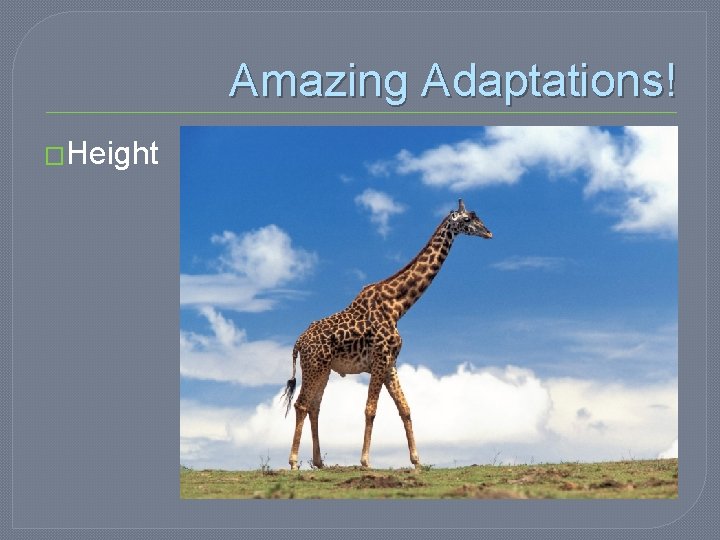
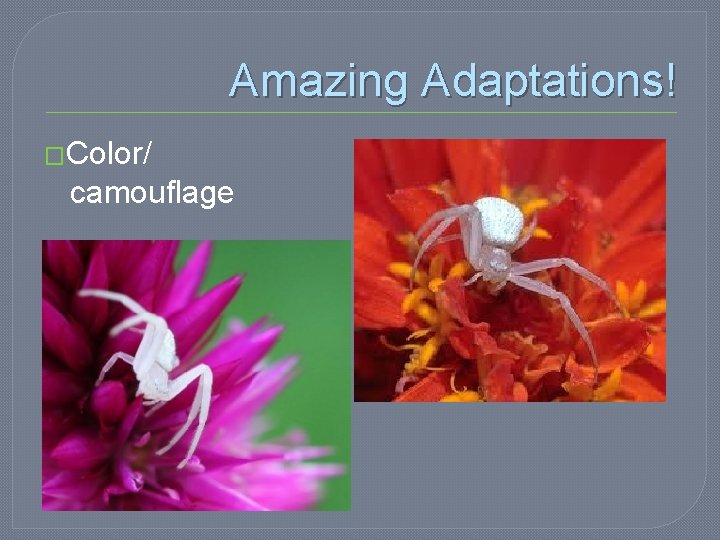
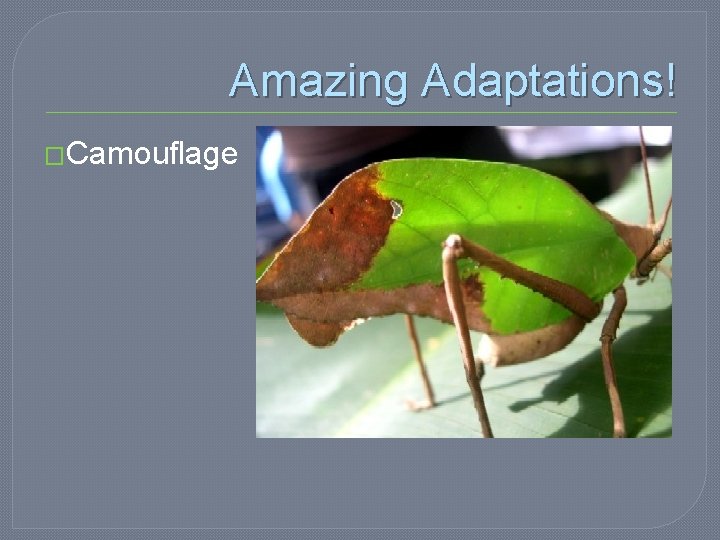
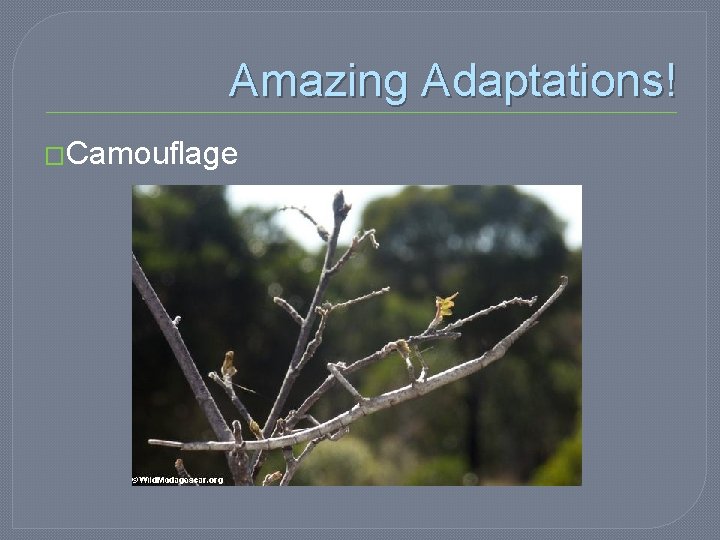
Adaptations �Darwin considered an organism’s fitness (its ability to survive and reproduce) to be the result of adaptations. �Adaptation • Any inherited characteristic that increases an organism’s chance for survival
Amazing Adaptations! �Height
Amazing Adaptations! �Color/ camouflage
Amazing Adaptations! �Camouflage
Amazing Adaptations! �Camouflage
Amazing Adaptations! �Camouflage http: //www. youtube. com/watch? v=__XA 6 B 41 SQQ&feature=related
Amazing Adaptations �Mimicry VIDEO
Amazing Adaptations �Mimicry http: //www. youtube. com/watch? v=h 8 I 3 cqpgn. A
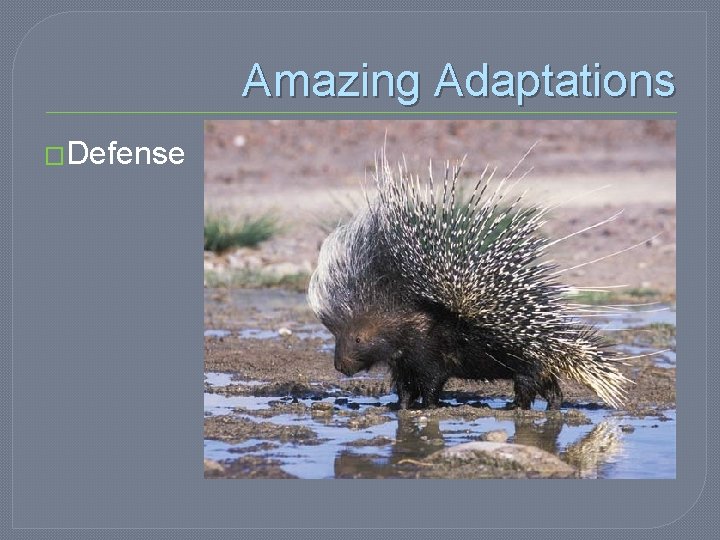
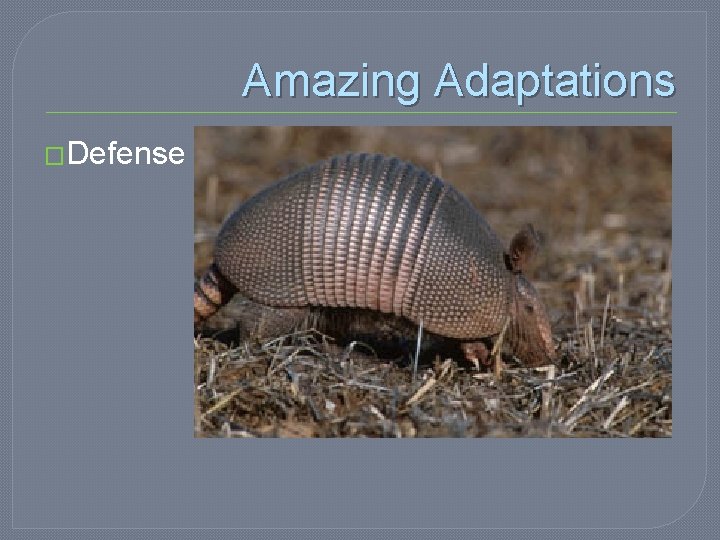
Amazing Adaptations �Defense
Amazing Adaptations �Defense
Amazing Adaptations! �Speed Peregrine Falcon
New Observations �Darwin would later make observations that would cause him to question his own theory! • Let’s look at each of these observations…
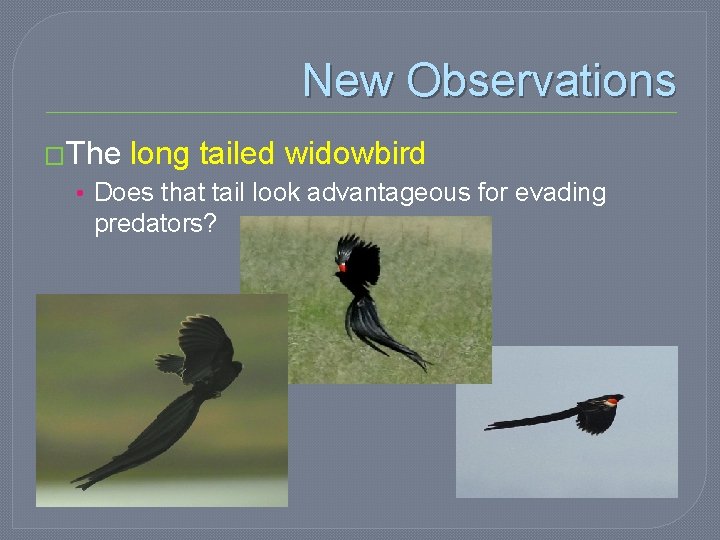
New Observations �The long tailed widowbird • Does that tail look advantageous for evading predators?
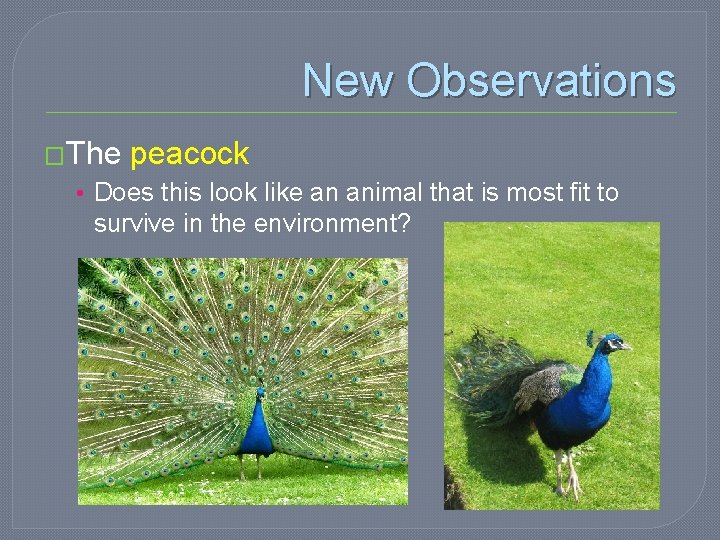
New Observations �The peacock • Does this look like an animal that is most fit to survive in the environment?
New Observations �Darwin observed that these confusing characteristics occurred only in the males, and had a strong connection to the individual’s ability to mate
New Observations �In the long tailed widowbird, the longer the tail, the more likely it was that the individual would mate �In the peacock, the larger the feather spread and the more spots, the more likely it was that the individual would mate
Sexual Selection �Darwin noticed: • Females prefer some characteristics in males over other characteristics �Darwin theorized: • Certain characteristics are selected for NOT as an environmental adaptations, but rather as preferences of females
Sexual Selection Birds