
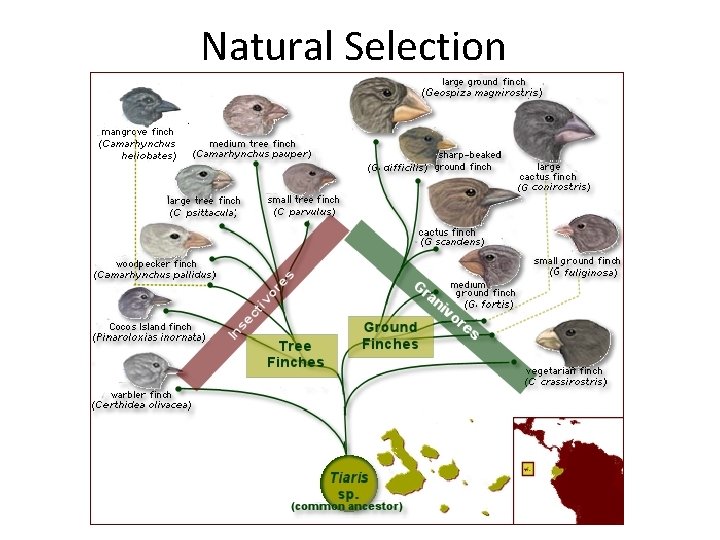
Natural Selection A Premises for Natural Selection 1
- Slides: 14
Natural Selection
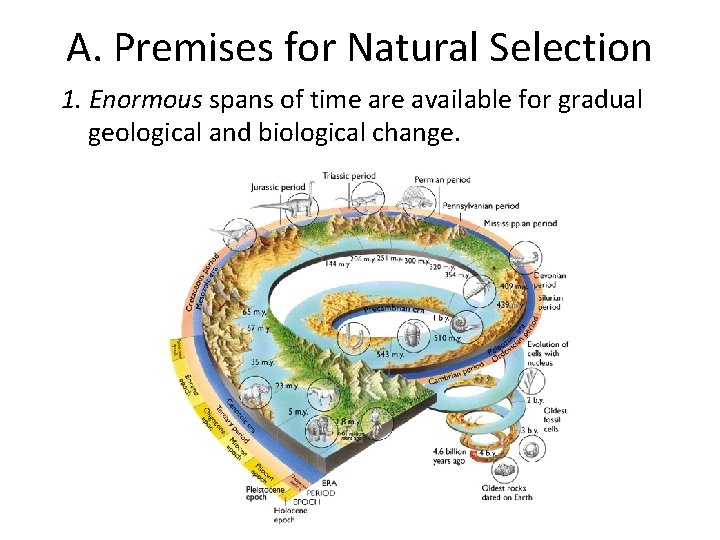
A. Premises for Natural Selection 1. Enormous spans of time are available for gradual geological and biological change.
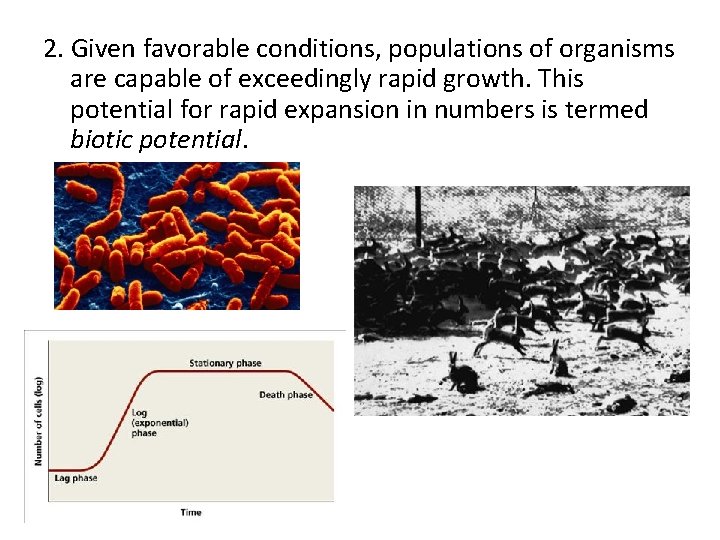
2. Given favorable conditions, populations of organisms are capable of exceedingly rapid growth. This potential for rapid expansion in numbers is termed biotic potential.
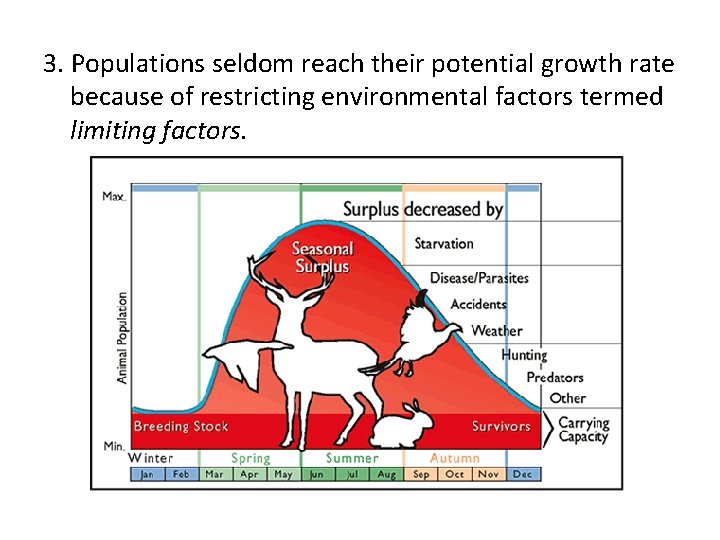
3. Populations seldom reach their potential growth rate because of restricting environmental factors termed limiting factors.
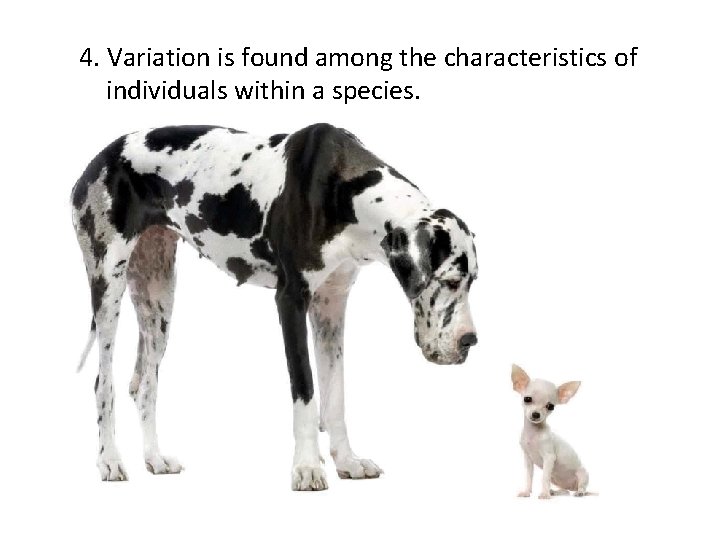
4. Variation is found among the characteristics of individuals within a species.
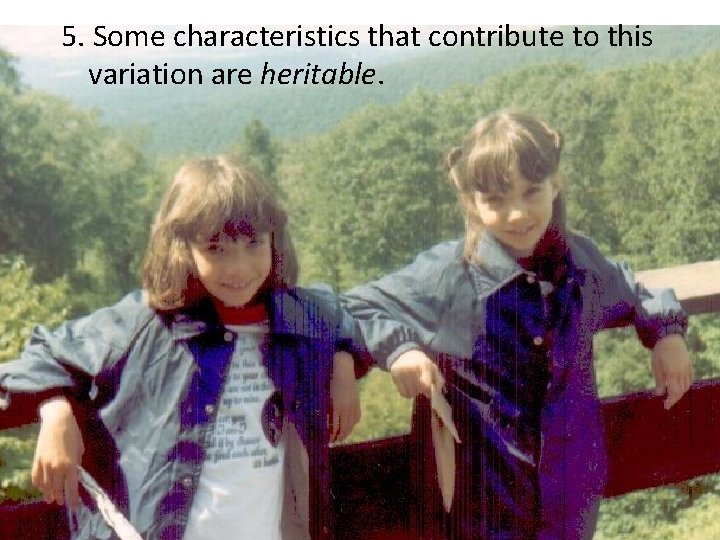
5. Some characteristics that contribute to this variation are heritable.
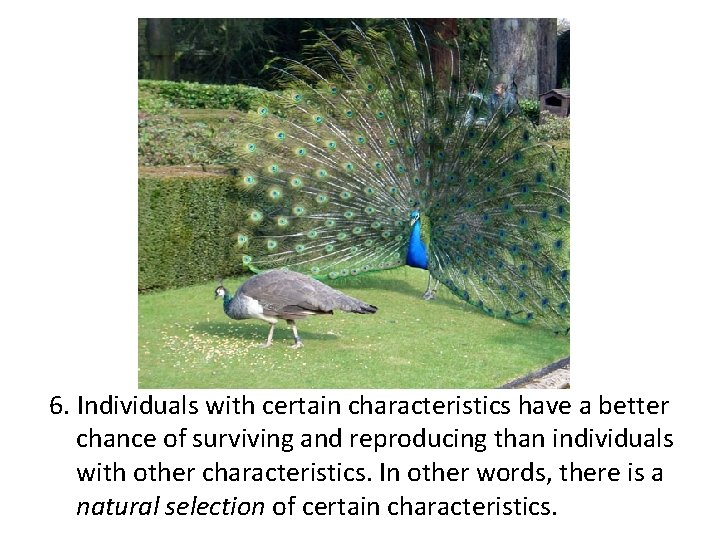
6. Individuals with certain characteristics have a better chance of surviving and reproducing than individuals with other characteristics. In other words, there is a natural selection of certain characteristics.
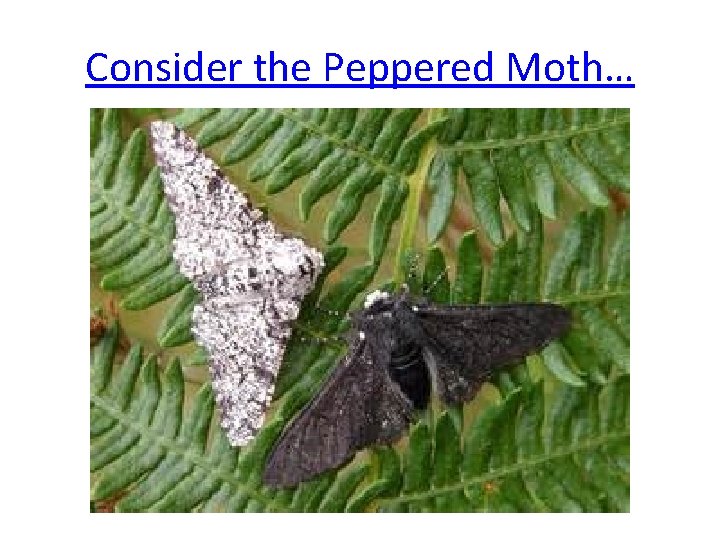
Consider the Peppered Moth…
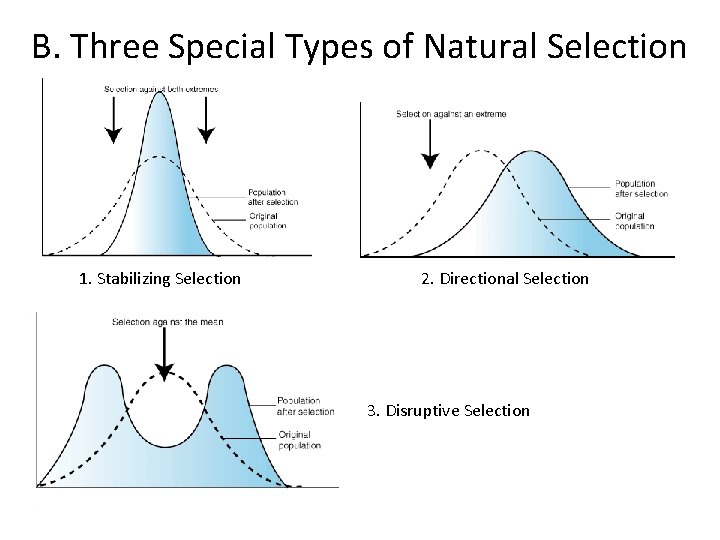
B. Three Special Types of Natural Selection 1. Stabilizing Selection 2. Directional Selection 3. Disruptive Selection
C. Speciation 1. How do we define a species? From your textbook… a. “Any group of actually or potentially interbreeding organisms reproductively isolated from all other groups and capable of producing fertile offspring. ” Huh?
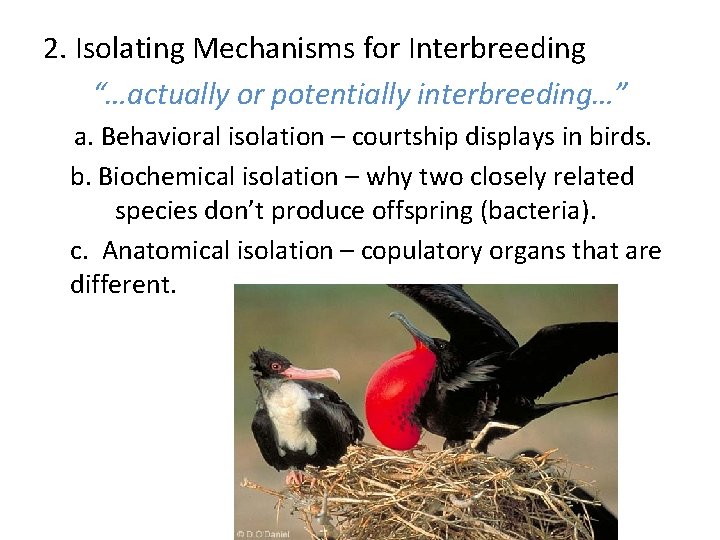
2. Isolating Mechanisms for Interbreeding “…actually or potentially interbreeding…” a. Behavioral isolation – courtship displays in birds. b. Biochemical isolation – why two closely related species don’t produce offspring (bacteria). c. Anatomical isolation – copulatory organs that are different.
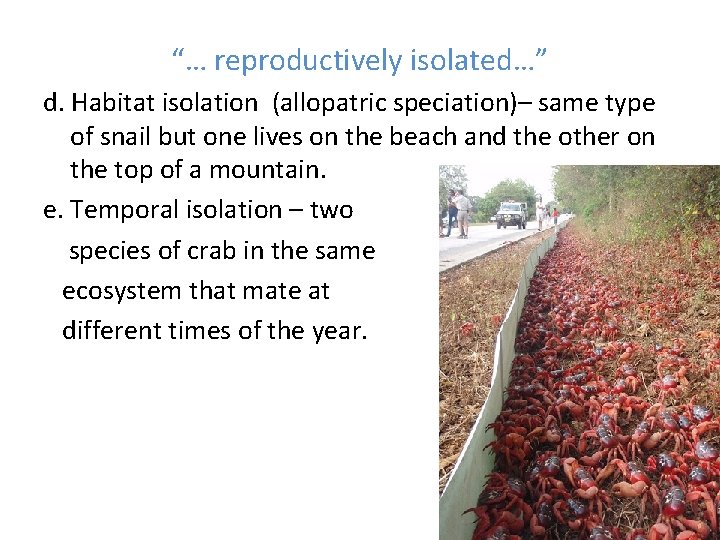
“… reproductively isolated…” d. Habitat isolation (allopatric speciation)– same type of snail but one lives on the beach and the other on the top of a mountain. e. Temporal isolation – two species of crab in the same ecosystem that mate at different times of the year.
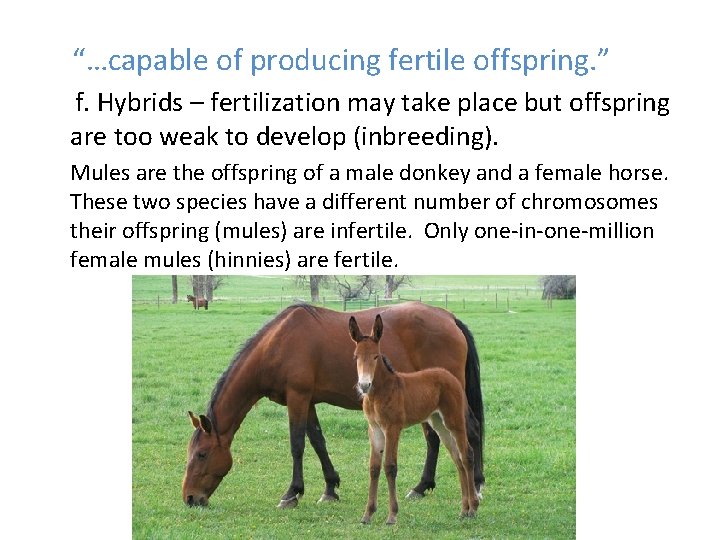
“…capable of producing fertile offspring. ” f. Hybrids – fertilization may take place but offspring are too weak to develop (inbreeding). Mules are the offspring of a male donkey and a female horse. These two species have a different number of chromosomes their offspring (mules) are infertile. Only one-in-one-million female mules (hinnies) are fertile.
Big Idea Instant Replay