
Natural Sciences Grade 7 Term 3 Energy and

![Types of renewable energy 1. Hydro power- Energy from falling water [PART 1] •](https://slidetodoc.com/presentation_image_h2/f2eeb46014dc5803ca70b49671d3183e/image-5.jpg "Types of renewable energy 1. Hydro power- Energy from falling water [PART 1] •")
![Types of renewable energy Hydropower- Hydro-electricity [PART 2] One of our country’s sources of](https://slidetodoc.com/presentation_image_h2/f2eeb46014dc5803ca70b49671d3183e/image-7.jpg "Types of renewable energy Hydropower- Hydro-electricity [PART 2] One of our country’s sources of")
![Types of renewable energy Hydropower- Hydro-electricity [PART 3] South Africa has three hydroelectric power](https://slidetodoc.com/presentation_image_h2/f2eeb46014dc5803ca70b49671d3183e/image-9.jpg "Types of renewable energy Hydropower- Hydro-electricity [PART 3] South Africa has three hydroelectric power")
![Types of renewable energy Hydropower- Hydro-electricity [PART 4] 2. Tugela – Vaal Scheme [Northern](https://slidetodoc.com/presentation_image_h2/f2eeb46014dc5803ca70b49671d3183e/image-10.jpg "Types of renewable energy Hydropower- Hydro-electricity [PART 4] 2. Tugela – Vaal Scheme [Northern")
![Types of renewable energy Hydropower- Hydro-electricity [PART 5] 3. Gariep Dam [Free State] •](https://slidetodoc.com/presentation_image_h2/f2eeb46014dc5803ca70b49671d3183e/image-12.jpg "Types of renewable energy Hydropower- Hydro-electricity [PART 5] 3. Gariep Dam [Free State] •")
- Slides: 20
Natural Sciences Grade 7 Term 3: Energy and Change Sources of energy
Topic 1 Sources of Energy Renewable energy Natural Sciences - Grade 7
What is renewable energy? • This is energy that can be replaced and restored as it replenishes. • It is free and cheap, because it comes from nature. • It is expensive to change the energy from renewable sources to a useful form , e. g. electricity and heat. Natural Sciences - Grade 7
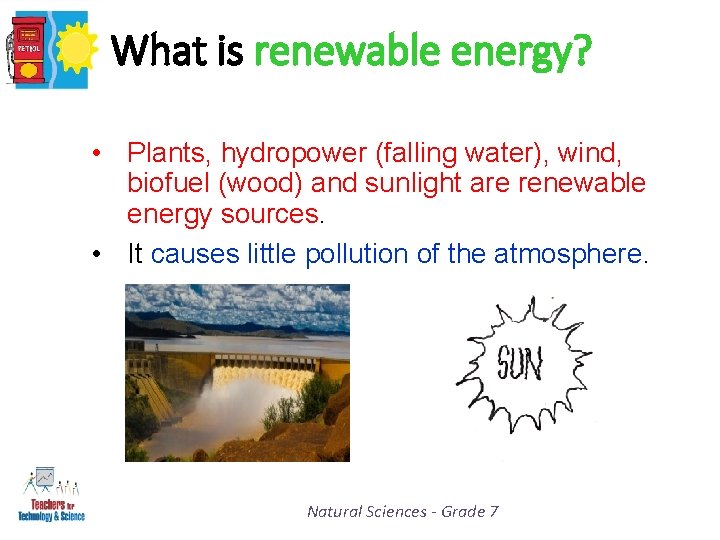
What is renewable energy? • Plants, hydropower (falling water), wind, biofuel (wood) and sunlight are renewable energy sources. • It causes little pollution of the atmosphere. Natural Sciences - Grade 7
Types of renewable energy 1. Hydro power- Energy from falling water [PART 1] • Hydro means water. • Hydropower uses the energy in moving water to make electricity. • Hydro-electric power stations are built next to dams or in the mountains where there are large waterfalls. Natural Sciences - Grade 7
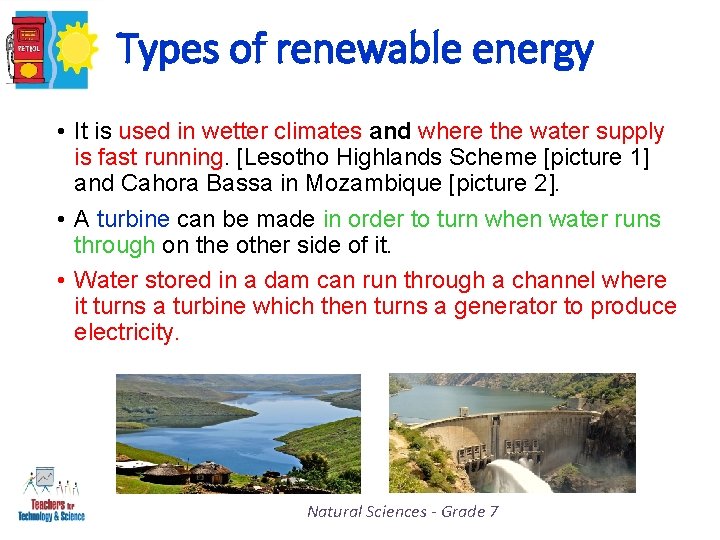
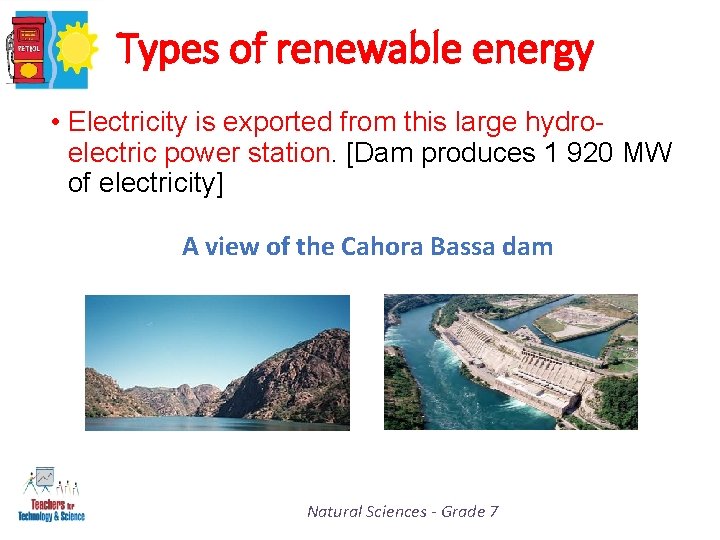
Types of renewable energy • It is used in wetter climates and where the water supply is fast running. [Lesotho Highlands Scheme [picture 1] and Cahora Bassa in Mozambique [picture 2]. • A turbine can be made in order to turn when water runs through on the other side of it. • Water stored in a dam can run through a channel where it turns a turbine which then turns a generator to produce electricity. Natural Sciences - Grade 7
Types of renewable energy Hydropower- Hydro-electricity [PART 2] One of our country’s sources of hydro-electricity • There are not many rivers in South Africa that are large enough to power a hydropower plant. • Most of South Africa’s rivers dry up during the dry season. • One source of hydro-electricity for South Africa is the Cahora Bassa Dam [292 km long, 38 km wide, 157 m maximum depth] on the Zambezi River in Mozambique. Natural Sciences - Grade 7
Types of renewable energy • Electricity is exported from this large hydroelectric power station. [Dam produces 1 920 MW of electricity] A view of the Cahora Bassa dam Natural Sciences - Grade 7
Types of renewable energy Hydropower- Hydro-electricity [PART 3] South Africa has three hydroelectric power stations: 1. Vanderkloof Dam [Northern Cape] • Second biggest dam in South Africa. • The highest dam wall is 108 metres. • It has a span of 765 Natural metres. Sciences - Grade 7
Types of renewable energy Hydropower- Hydro-electricity [PART 4] 2. Tugela – Vaal Scheme [Northern Drakensberg] • Problems of future water supply for commercial, domestic and industrial use in the Gauteng area were becoming increasingly serious. • Transferring water from the Tugela River catchment area into the Vaal River catchment was the solution. • It was completed and served as a pumping station for water that was built mostly underground to transfer water over the Drakensberg from the Tugela River into the Vaal River as well as a pumped storage scheme. Natural Sciences - Grade 7
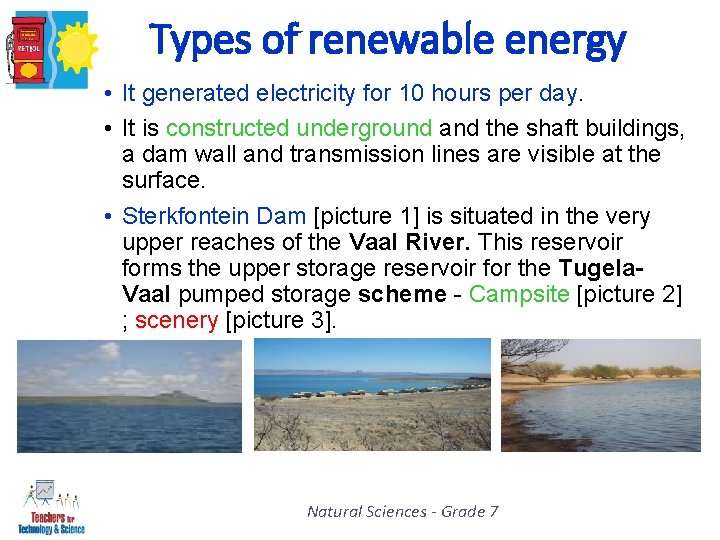
Types of renewable energy • It generated electricity for 10 hours per day. • It is constructed underground and the shaft buildings, a dam wall and transmission lines are visible at the surface. • Sterkfontein Dam [picture 1] is situated in the very upper reaches of the Vaal River. This reservoir forms the upper storage reservoir for the Tugela. Vaal pumped storage scheme - Campsite [picture 2] ; scenery [picture 3]. Natural Sciences - Grade 7
Types of renewable energy Hydropower- Hydro-electricity [PART 5] 3. Gariep Dam [Free State] • Electricity from Gariep Dam is fed into the Eskom network at the Hydra Distribution Station near De Aar. Natural Sciences - Grade 7
Wave and tidal energy • In some parts of the world the rise and fall of tides or the movement of waves is used to generate electricity. • South Africa does not have suitable tidal conditions for this, because our waves are usually too strong. Natural Sciences - Grade 7
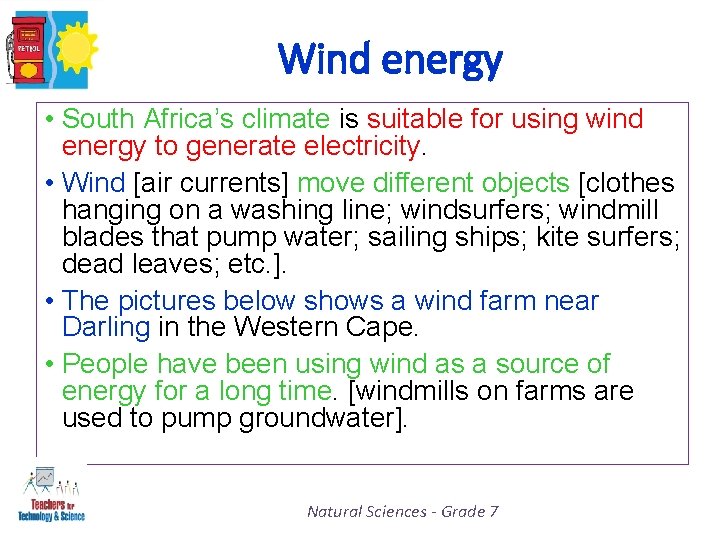
Wind energy • South Africa’s climate is suitable for using wind energy to generate electricity. • Wind [air currents] move different objects [clothes hanging on a washing line; windsurfers; windmill blades that pump water; sailing ships; kite surfers; dead leaves; etc. ]. • The pictures below shows a wind farm near Darling in the Western Cape. • People have been using wind as a source of energy for a long time. [windmills on farms are used to pump groundwater]. Natural Sciences - Grade 7
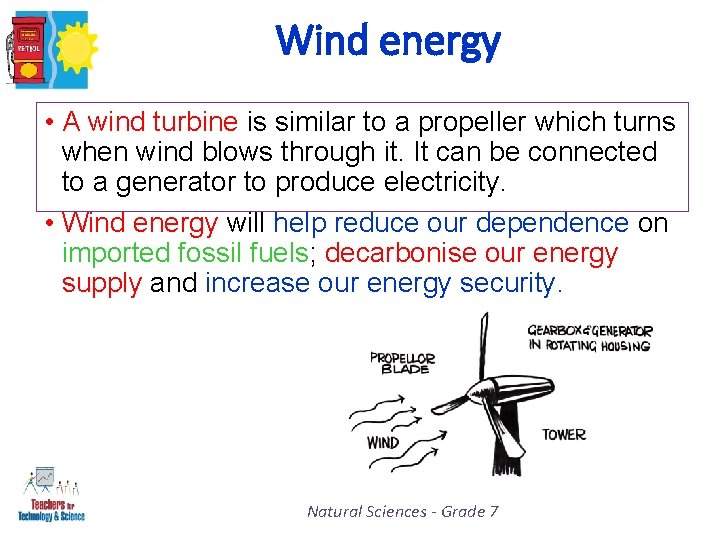
Wind energy • A wind turbine is similar to a propeller which turns when wind blows through it. It can be connected to a generator to produce electricity. • Wind energy will help reduce our dependence on imported fossil fuels; decarbonise our energy supply and increase our energy security. Natural Sciences - Grade 7
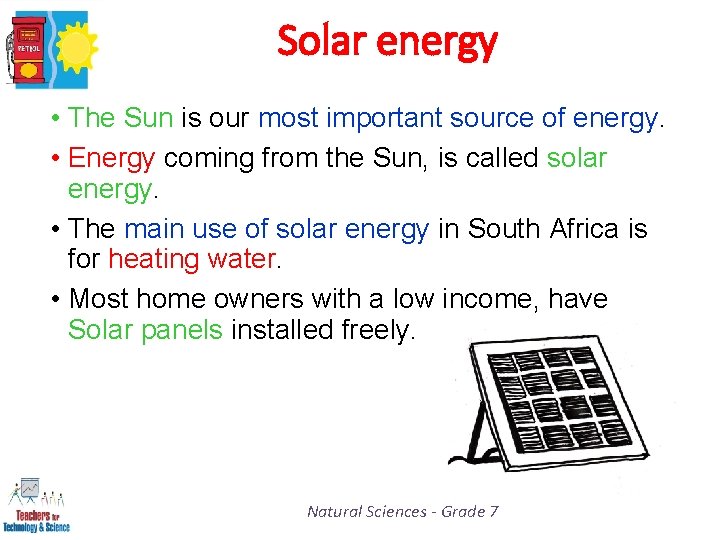
Solar energy • The Sun is our most important source of energy. • Energy coming from the Sun, is called solar energy. • The main use of solar energy in South Africa is for heating water. • Most home owners with a low income, have Solar panels installed freely. Natural Sciences - Grade 7
Solar energy • This is the government’s attempt to increase the use of solar energy and to reduce people’s electricity costs of heating water. • Sunlight shining onto the solar panels [pictures 1 -4 are a few examples] provides energy to push electricity to charge from one part of the panel to another. Natural Sciences - Grade 7
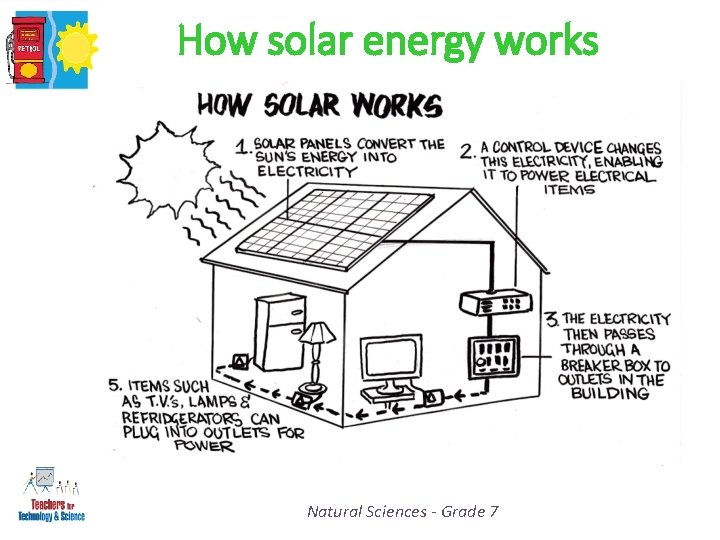
How solar energy works Natural Sciences - Grade 7
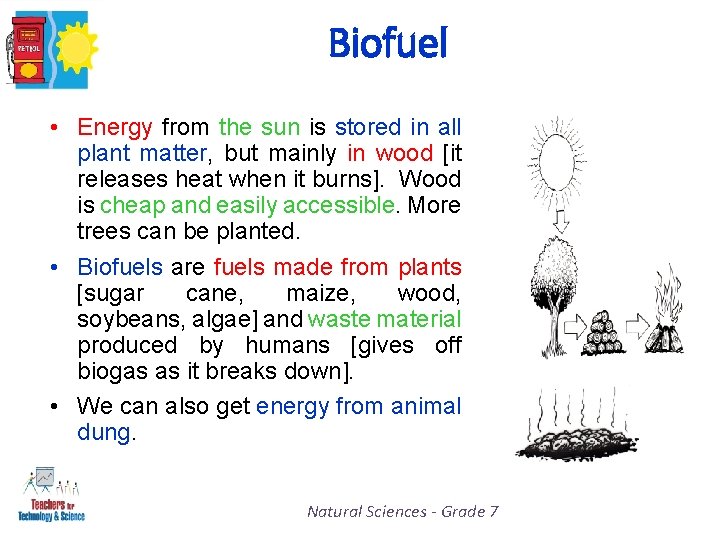
Biofuel • Energy from the sun is stored in all plant matter, but mainly in wood [it releases heat when it burns]. Wood is cheap and easily accessible. More trees can be planted. • Biofuels are fuels made from plants [sugar cane, maize, wood, soybeans, algae] and waste material produced by humans [gives off biogas as it breaks down]. • We can also get energy from animal dung. Natural Sciences - Grade 7
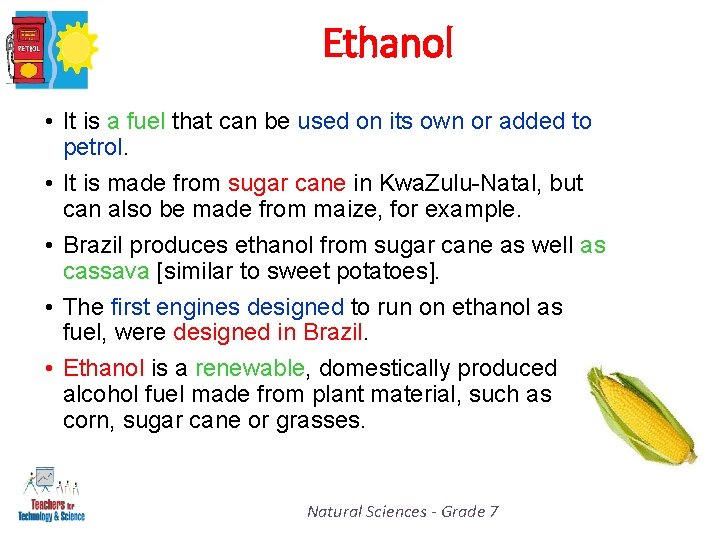
Ethanol • It is a fuel that can be used on its own or added to petrol. • It is made from sugar cane in Kwa. Zulu-Natal, but can also be made from maize, for example. • Brazil produces ethanol from sugar cane as well as cassava [similar to sweet potatoes]. • The first engines designed to run on ethanol as fuel, were designed in Brazil. • Ethanol is a renewable, domestically produced alcohol fuel made from plant material, such as corn, sugar cane or grasses. Natural Sciences - Grade 7