
Natural Sciences Grade 7 Term 1 Life and
- Slides: 13
Natural Sciences Grade 7 Term 1: Life and Living Sexual Reproduction (Part 1) (PPT 1)
Topic 3 Sexual Reproduction in Angiosperms Natural Sciences – Grade 7
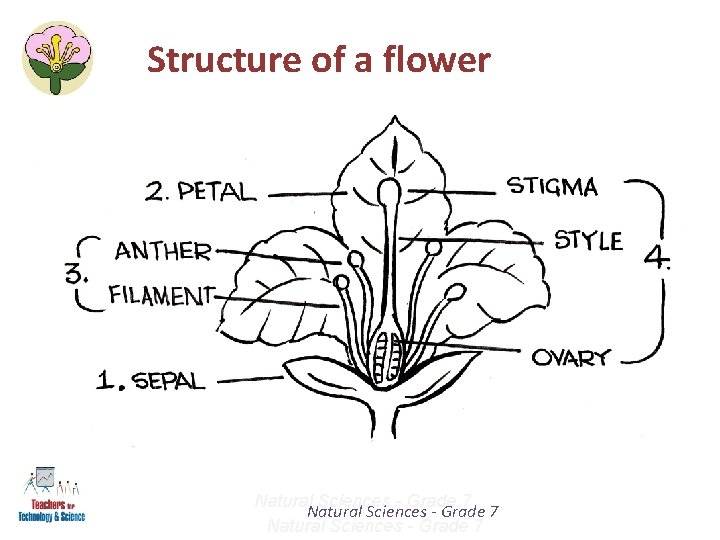
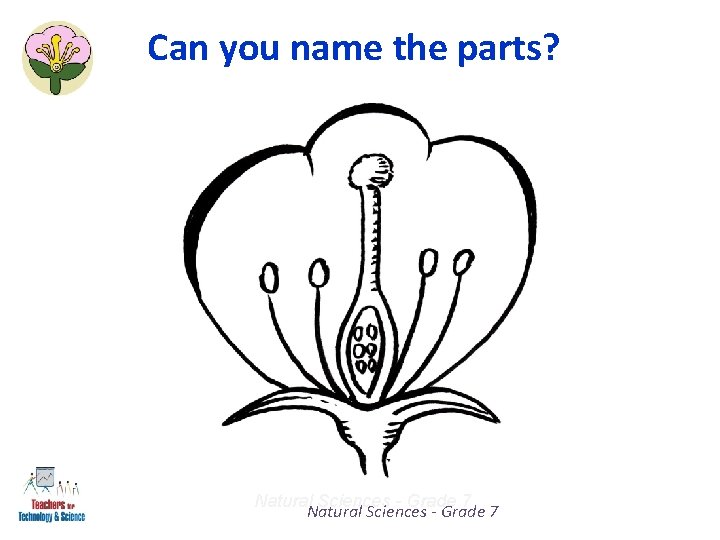
Structure of a flower • The parts of a flower are arranged in circles that fit into each other. • These circles are called whorls. § § First (outer) whorl = sepals Second whorl = petals Third whorl = stamens (Male whorl) Fourth whorl = pistil (Female whorl) Natural Sciences - Grade 7
Structure of a flower Natural Sciences - Grade 7
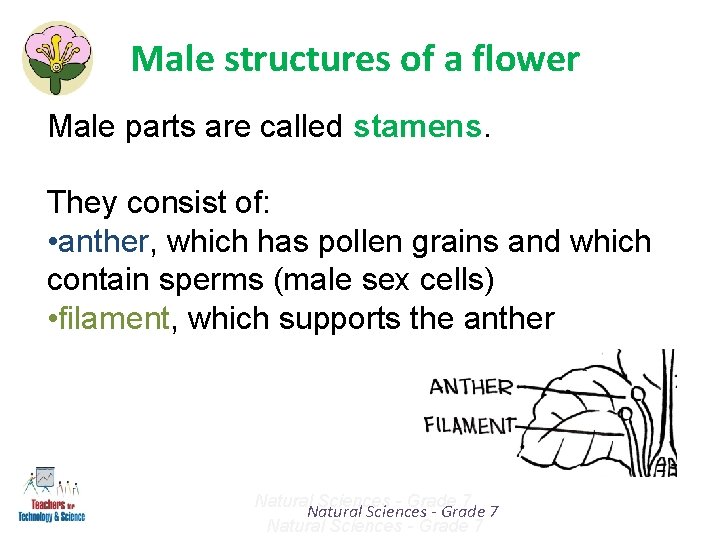
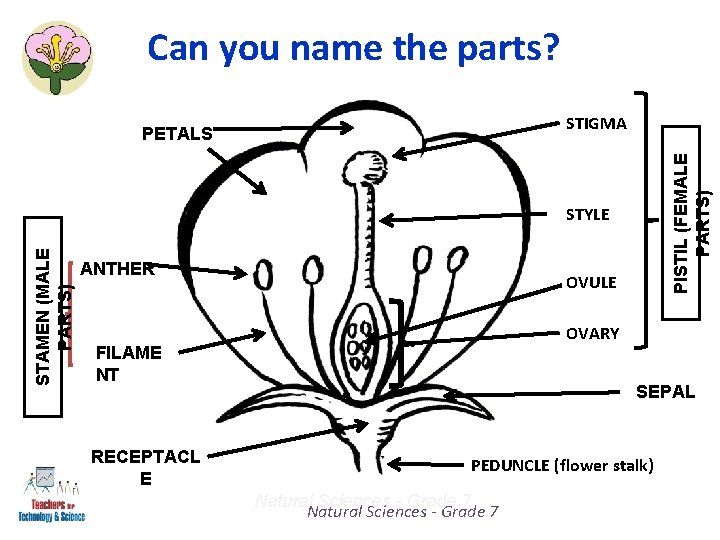
Male structures of a flower Male parts are called stamens. They consist of: • anther, which has pollen grains and which contain sperms (male sex cells) • filament, which supports the anther Natural Sciences - Grade 7
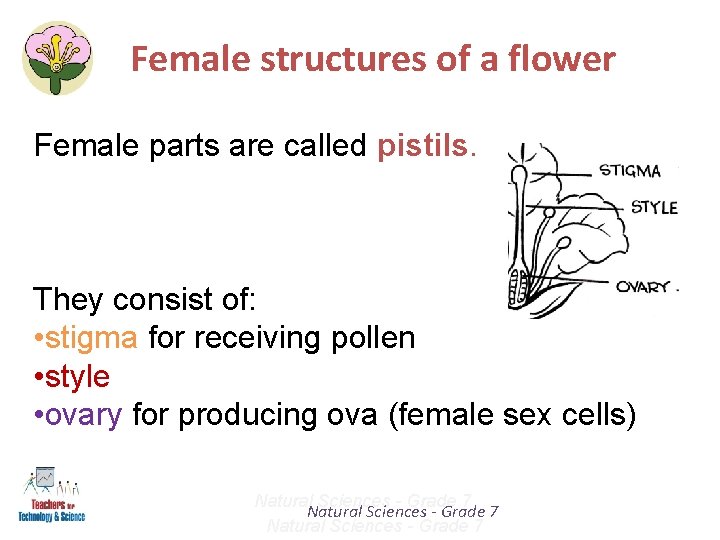
Female structures of a flower Female parts are called pistils. They consist of: • stigma for receiving pollen • style • ovary for producing ova (female sex cells) Natural Sciences - Grade 7
Petals They are often brightly coloured to attract animals for pollination. Natural Sciences - Grade 7
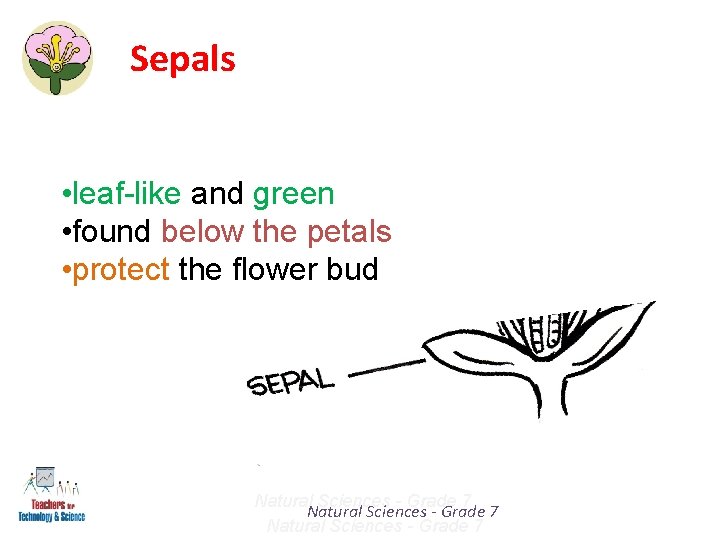
Sepals • leaf-like and green • found below the petals • protect the flower bud Natural Sciences - Grade 7
Can you name the parts? Natural Sciences - Grade 7
Can you name the parts? PISTIL (FEMALE PARTS) STIGMA PETALS STAMEN (MALE PARTS) STYLE ANTHER OVULE OVARY FILAME NT RECEPTACL E SEPAL PEDUNCLE (flower stalk) Natural Sciences - Grade 7
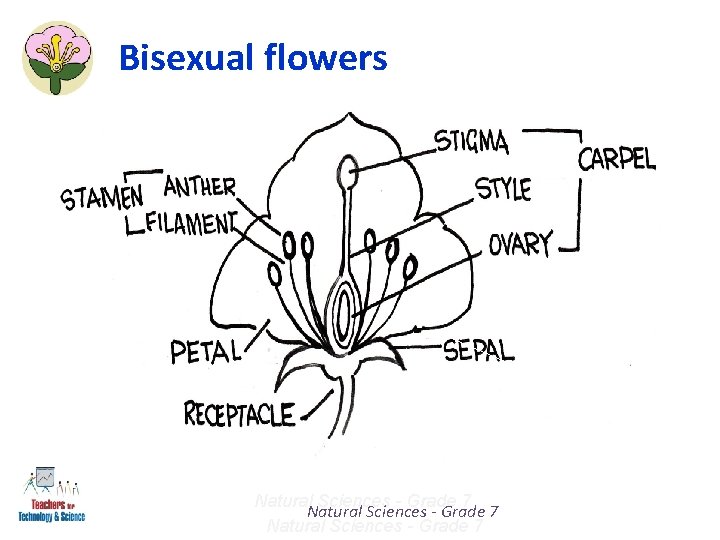
Bisexual flowers • Flowers that contain both the stamens and pistil are called bisexual. • They contain both male and female parts. Natural Sciences - Grade 7
Bisexual flowers Natural Sciences - Grade 7
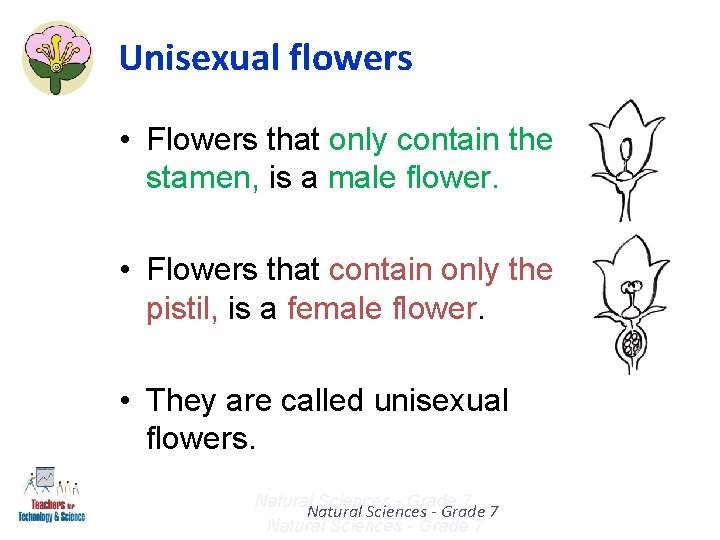
Unisexual flowers • Flowers that only contain the stamen, is a male flower. • Flowers that contain only the pistil, is a female flower. • They are called unisexual flowers. Natural Sciences - Grade 7