
Natural Rubber Latex Over 200 species of plants
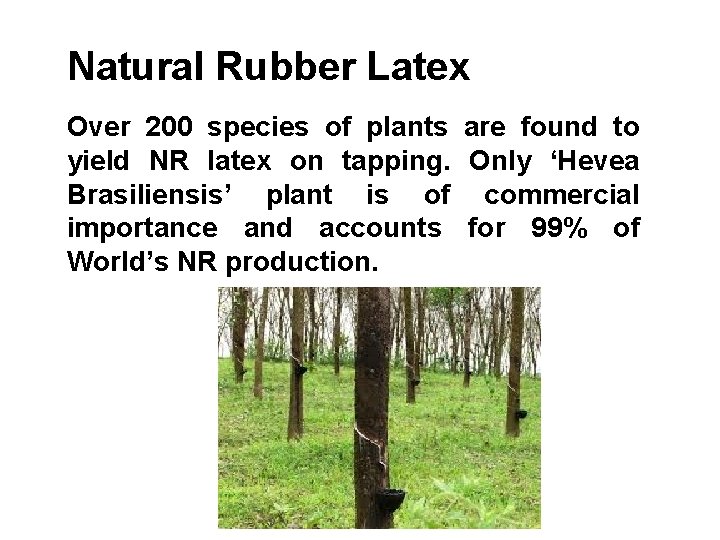
Natural Rubber Latex Over 200 species of plants are found to yield NR latex on tapping. Only ‘Hevea Brasiliensis’ plant is of commercial importance and accounts for 99% of World’s NR production.

Composition of field Latex
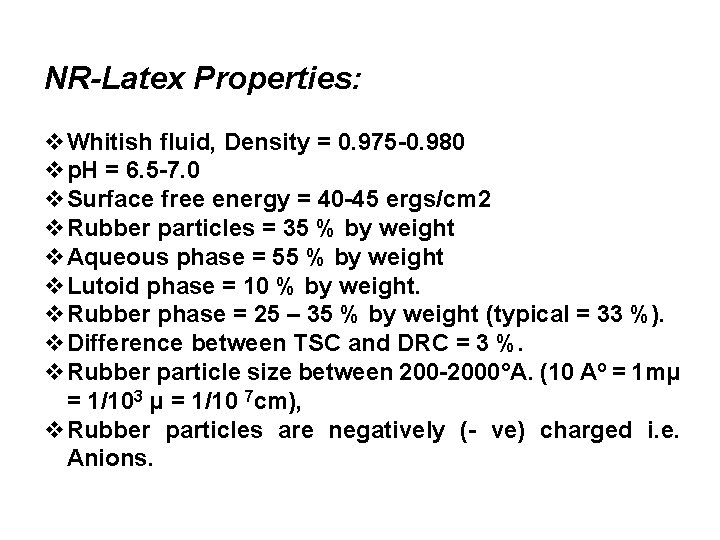
NR-Latex Properties: v. Whitish fluid, Density = 0. 975 -0. 980 vp. H = 6. 5 -7. 0 v. Surface free energy = 40 -45 ergs/cm 2 v. Rubber particles = 35 % by weight v. Aqueous phase = 55 % by weight v. Lutoid phase = 10 % by weight. v. Rubber phase = 25 – 35 % by weight (typical = 33 %). v. Difference between TSC and DRC = 3 %. v. Rubber particle size between 200 -2000°A. (10 Aº = 1 mμ = 1/103 μ = 1/10 7 cm), v. Rubber particles are negatively (- ve) charged i. e. Anions.
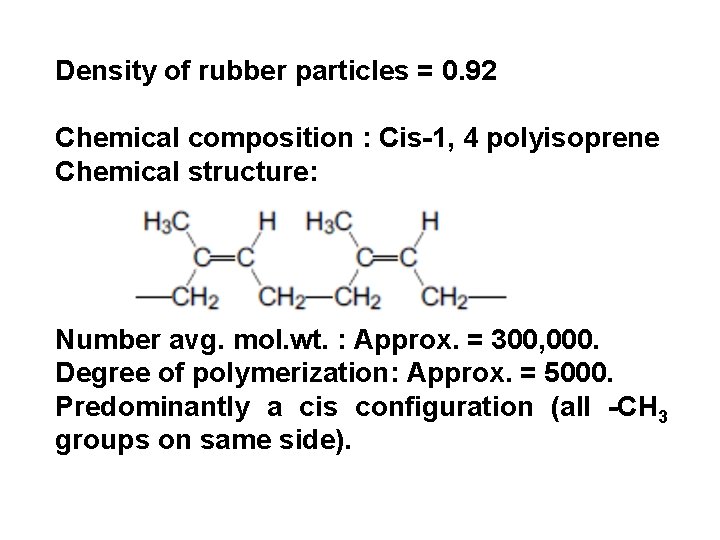
Density of rubber particles = 0. 92 Chemical composition : Cis-1, 4 polyisoprene Chemical structure: Number avg. mol. wt. : Approx. = 300, 000. Degree of polymerization: Approx. = 5000. Predominantly a cis configuration (all -CH 3 groups on same side).
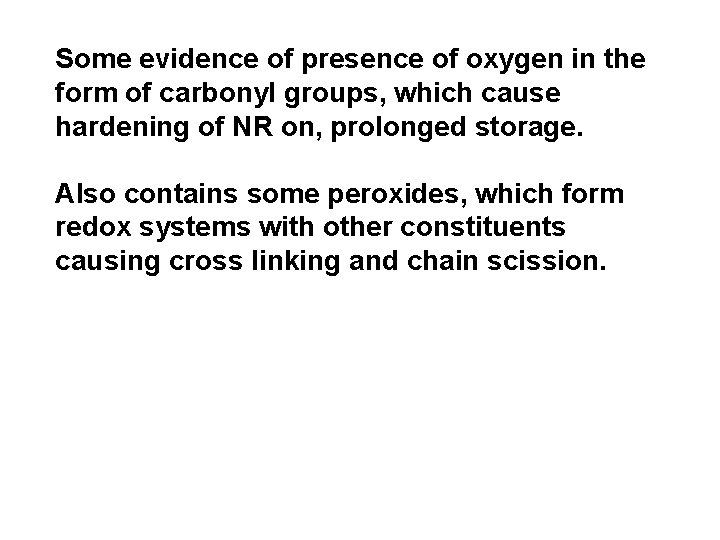
Some evidence of presence of oxygen in the form of carbonyl groups, which cause hardening of NR on, prolonged storage. Also contains some peroxides, which form redox systems with other constituents causing cross linking and chain scission.
Protein content is in the form of adsorbed layer, which surrounds the external surface of NR particles. Lipids comprise of sterols and sterol esters (approx. 0. 4%), wax and phospholipids adsorbed on rubber particles through which the proteins are anchored on rubber particles and are dissolved in the rubber hydrocarbon.
The ‘gel’ content (solvent insoluble rubber) steadily increases, as latex is stored. (After 2 to 3 months the gel content in toluene is as high as 50% (process similar to storage hardening of NR, which takes its Mooney viscosity to 80 -100). Particle Size Distribution: Wide range of diameter: 0. 01 μ to 5. 0 μ (Avg. 0. 25 -0. 8 μ) Particle size distribution is fairly consistent, Synthetic rubber lattices have much lower particle size than NR-latex.
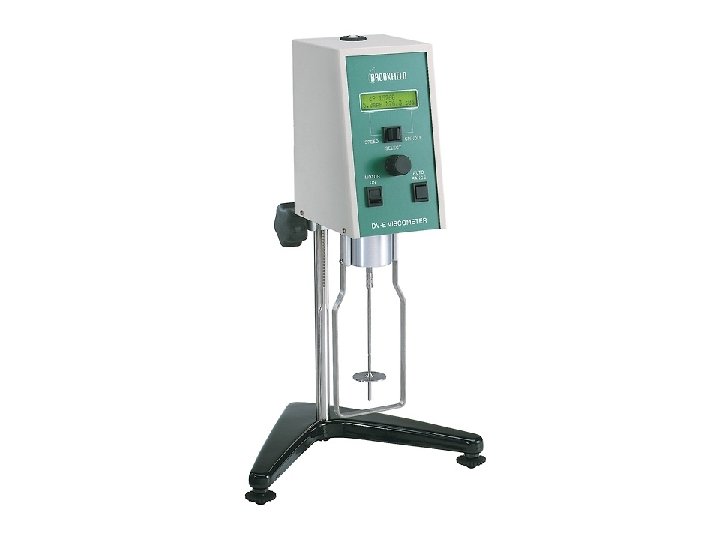
Viscosity: Latex containing more than 25% by volume of disperse phase is a non-Newtonian fluid. Hence the measured viscosity is dependant on the rate of shear rates, e. g. Brookfield viscosity at 6 rpm : η = 180 m. Pa. s Brookfield viscosity at 60 rpm : η = 87. 5 m. Pa. s η 6/60 = 2. 1
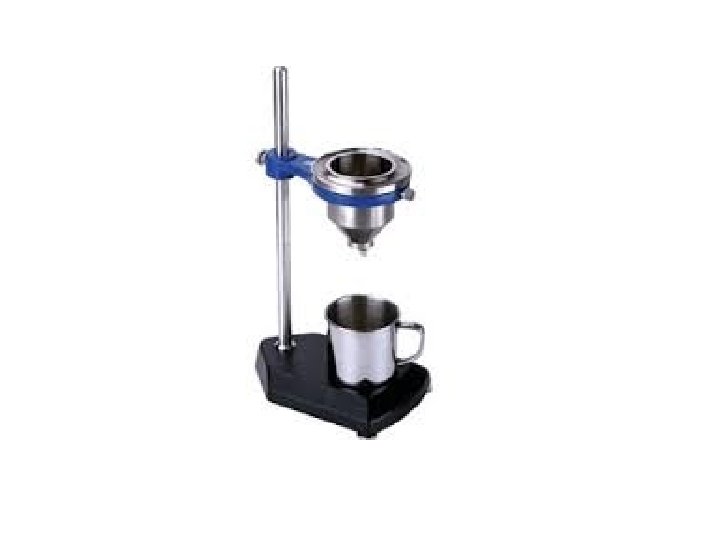

What is DRC? DRY RUBBER CONTENT Weigh approx 10 gm latex sample to nearest 1 mg into a porcelain evaporating dish (100 mm dia / 50 mm depth). Add distilled water to adjust solids content to approx 25 %. Add 80 ml of dilute (2 %) acetic acid with constant stirring over a period of 5 minutes to completely coagulate the latex. Place the dish on a steam bath and leave undisturbed for 30 min (a clear serum should result. If not, repeat above procedure exactly as stated with excess quantity of dilute acetic acid). Pickup coagulated latex particles with the main body of the coagulum, wash in running water and pass between rolls.
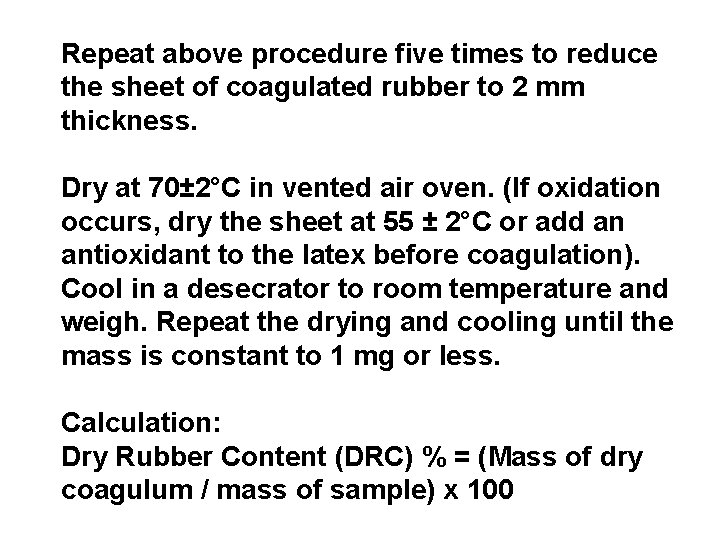
Repeat above procedure five times to reduce the sheet of coagulated rubber to 2 mm thickness. Dry at 70± 2°C in vented air oven. (If oxidation occurs, dry the sheet at 55 ± 2°C or add an antioxidant to the latex before coagulation). Cool in a desecrator to room temperature and weigh. Repeat the drying and cooling until the mass is constant to 1 mg or less. Calculation: Dry Rubber Content (DRC) % = (Mass of dry coagulum / mass of sample) x 100
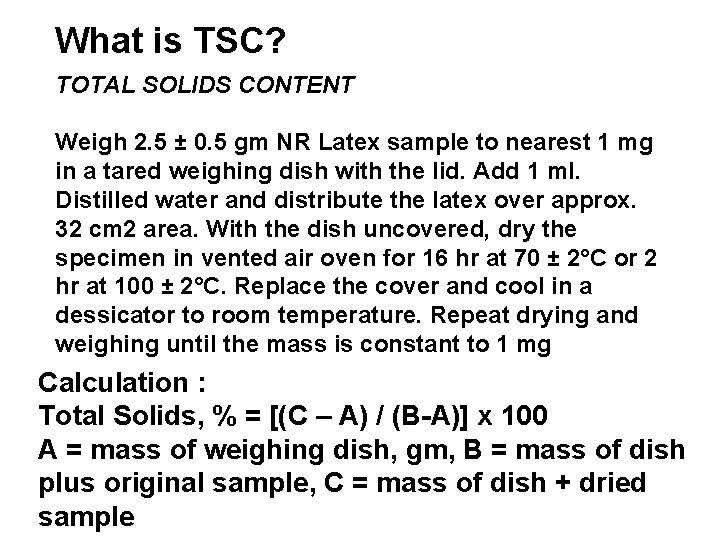
What is TSC? TOTAL SOLIDS CONTENT Weigh 2. 5 ± 0. 5 gm NR Latex sample to nearest 1 mg in a tared weighing dish with the lid. Add 1 ml. Distilled water and distribute the latex over approx. 32 cm 2 area. With the dish uncovered, dry the specimen in vented air oven for 16 hr at 70 ± 2°C or 2 hr at 100 ± 2°C. Replace the cover and cool in a dessicator to room temperature. Repeat drying and weighing until the mass is constant to 1 mg Calculation : Total Solids, % = [(C – A) / (B-A)] x 100 A = mass of weighing dish, gm, B = mass of dish plus original sample, C = mass of dish + dried sample
Chloroform Test
TOTAL ALKALINITY Take approx 5 gm latex sample in a 10 ml glass weighing bottle having ground glass cap and weigh to nearest 1 mg. Pour in to a beaker containing approx 300 ml distilled water, re-stopper quickly to prevent losses of ammonia and reweigh. (The sample mass is equal to the difference between the two weighing). Insert electrodes of a calibrated glass electrode p. H meter into the liquid and note the p. H. Slowly and while stirring constantly, add 0. 1 mol. Dilute HCl until a p. H of 6. 0 is reached (addition of 0. 1 mol. HCl should be in 1 ml increments and p. H reading to be taken after 10 seconds of each addition. As the p. H of 6. 0 is approached, smaller increments should be added). Alternately, add 6 drops of 0. 1 % solution of methyl red indicator into the sample and the solution is titrated against 0. 1 mol HCl until the indicator turns pink against white background of slightly coagulated latex.
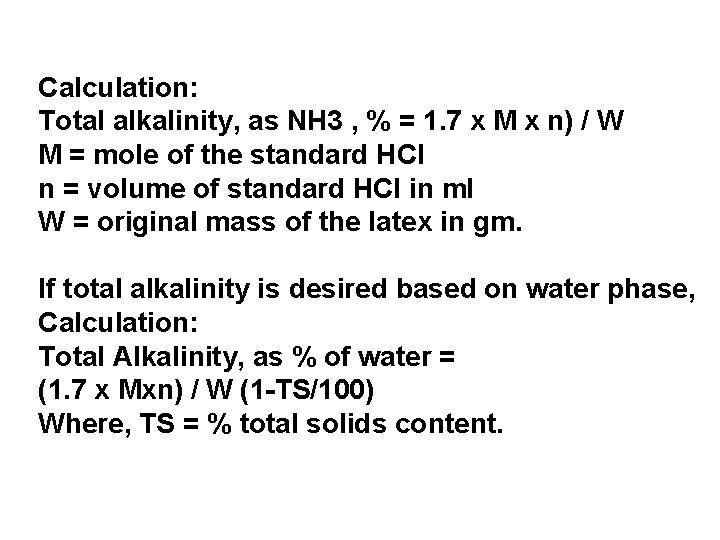
Calculation: Total alkalinity, as NH 3 , % = 1. 7 x M x n) / W M = mole of the standard HCl n = volume of standard HCl in ml W = original mass of the latex in gm. If total alkalinity is desired based on water phase, Calculation: Total Alkalinity, as % of water = (1. 7 x Mxn) / W (1 -TS/100) Where, TS = % total solids content.
Preservation of NR latex: High Ammonia NR Latex: NR-Latex coagulates within few hours due to development of acidity through micro-organisms when the p. H falls to around 5. 0. Ammonia at 0. 7 -1. 0 % is required for long term preservation. Ammonia also acts as a bactericide and sequestering agent for Mg++ and PO 4 - - - ions. [The disadvantages of ammonia are that: It has a strong odor, It is expensive, Ammonia preserved latex undergoes marked thickening when compounded with Zn. O, It interferes with the gelation of latex foam compound by Sodium Silicofluoride (SSF). (Excess ammonia has to be driven off before the latex is used for compounding. )]
Low Ammonia NR-Latex: • Boric acid at 0. 2% with 0. 2%ammonia & 0. 05% lauric acid is most popular LA- Preservative system. (Precaution: 0. 1% boric acid increases the KOH number by 0. 14 units). The deposits are free from discoloration and boric acid is cheap, harmless to human beings, easy to handle and can be estimated accurately. However the unvulcanized deposits tend to soften faster. • Sodium Pentachlorophenate at 0. 2% with 0. 2% ammonia is used as a stabilizer but not popular due to toxicity problems associated with pentachlorothiophenol.
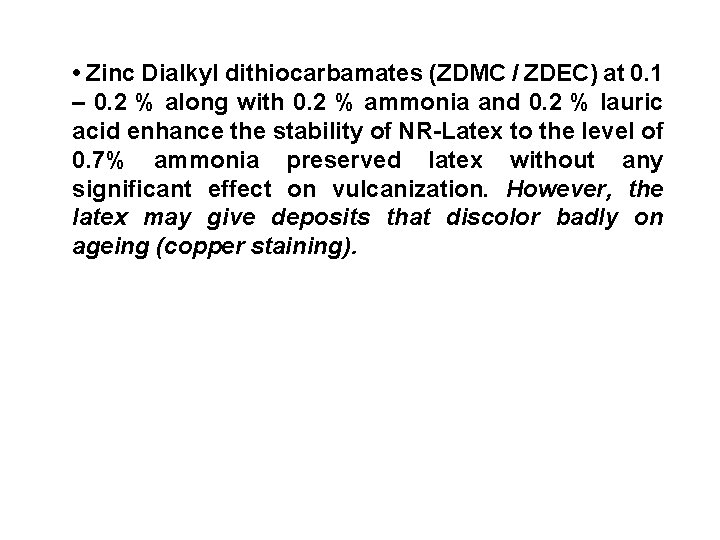
• Zinc Dialkyl dithiocarbamates (ZDMC / ZDEC) at 0. 1 – 0. 2 % along with 0. 2 % ammonia and 0. 2 % lauric acid enhance the stability of NR-Latex to the level of 0. 7% ammonia preserved latex without any significant effect on vulcanization. However, the latex may give deposits that discolor badly on ageing (copper staining).
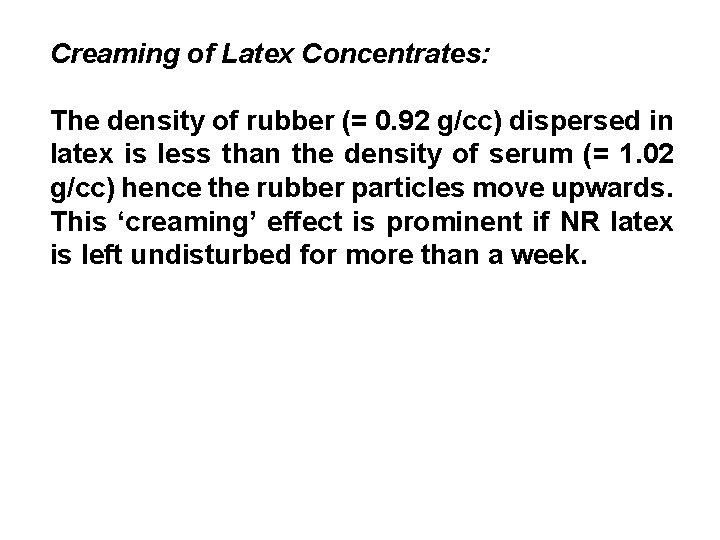
Creaming of Latex Concentrates: The density of rubber (= 0. 92 g/cc) dispersed in latex is less than the density of serum (= 1. 02 g/cc) hence the rubber particles move upwards. This ‘creaming’ effect is prominent if NR latex is left undisturbed for more than a week.
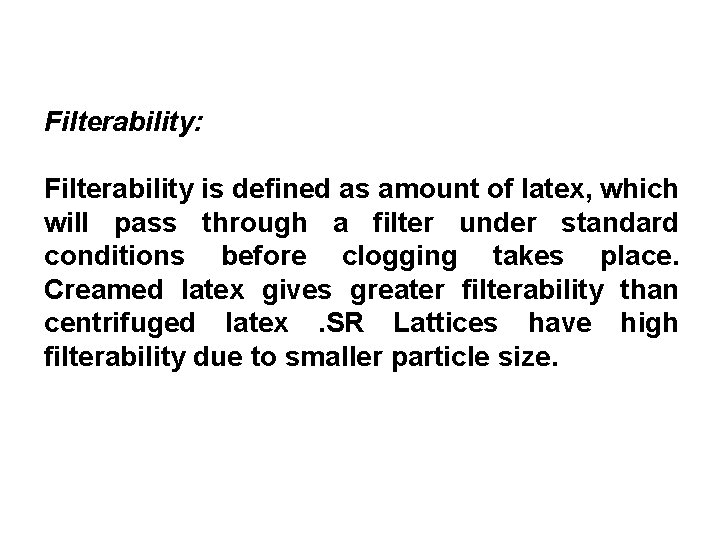
Filterability: Filterability is defined as amount of latex, which will pass through a filter under standard conditions before clogging takes place. Creamed latex gives greater filterability than centrifuged latex. SR Lattices have high filterability due to smaller particle size.

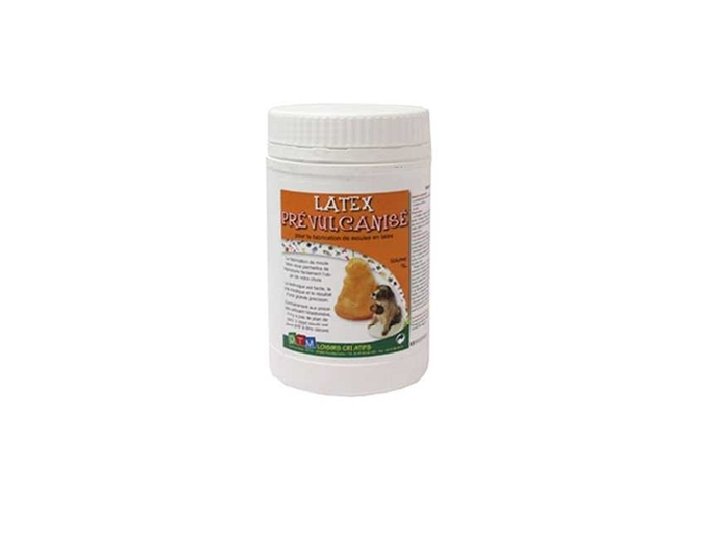
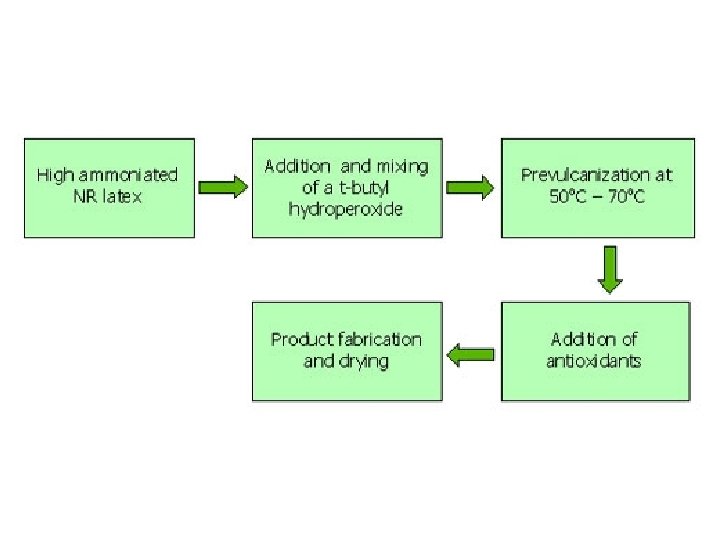
Chemically Modified Lattices Prevulcanized NR Latex: PV NR latex is a chemically modified NR latex, which on drying gives a vulcanized film. PV NR Latex is produced in the rubber plantation factory using field latex or concentrates or in the consumer’s factory. NR latex compounds containing ZDEC or ZDBC ultra fast accelerators usually achieve some degree of pre-vulcanization during the process of ‘maturation’ in the dispersed rubber phase. Commercially produced PV NR latex is prepared as follows:
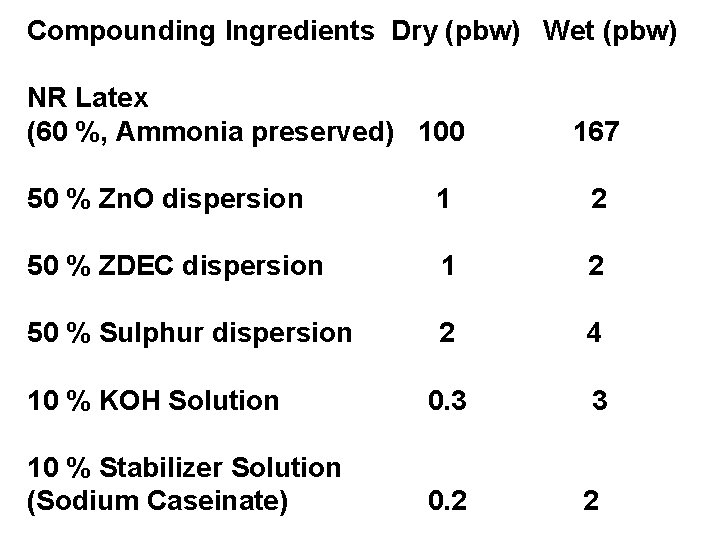
Compounding Ingredients Dry (pbw) Wet (pbw) NR Latex (60 %, Ammonia preserved) 100 167 50 % Zn. O dispersion 1 2 50 % ZDEC dispersion 1 2 50 % Sulphur dispersion 2 4 10 % KOH Solution 0. 3 3 10 % Stabilizer Solution (Sodium Caseinate) 0. 2 2
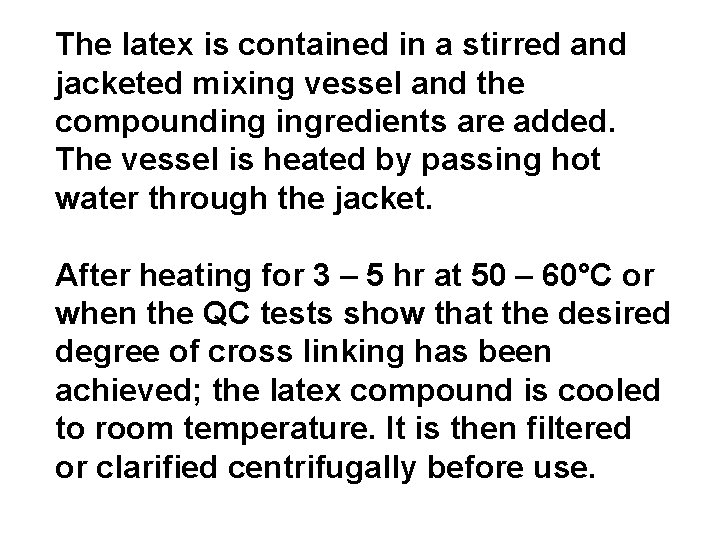
The latex is contained in a stirred and jacketed mixing vessel and the compounding ingredients are added. The vessel is heated by passing hot water through the jacket. After heating for 3 – 5 hr at 50 – 60°C or when the QC tests show that the desired degree of cross linking has been achieved; the latex compound is cooled to room temperature. It is then filtered or clarified centrifugally before use.
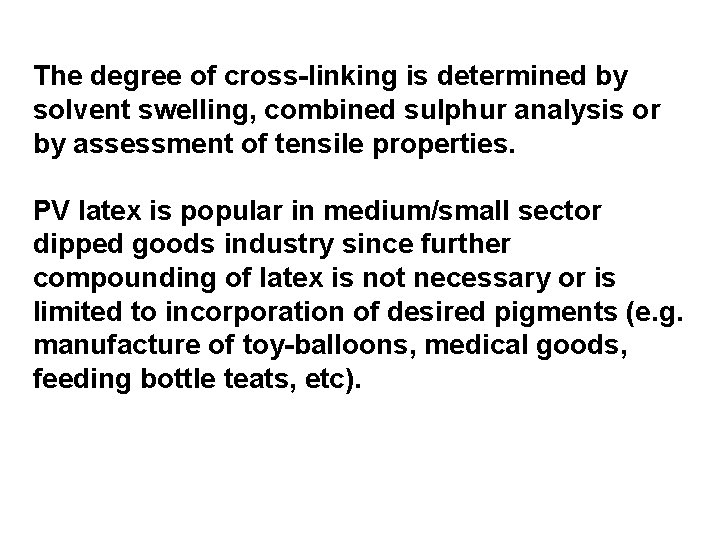
The degree of cross-linking is determined by solvent swelling, combined sulphur analysis or by assessment of tensile properties. PV latex is popular in medium/small sector dipped goods industry since further compounding of latex is not necessary or is limited to incorporation of desired pigments (e. g. manufacture of toy-balloons, medical goods, feeding bottle teats, etc).
The cross linking can be achieved by reaction with sulphur, sulphur donors (e. g. TMTD, DTDM, TETD) or by gamma radiation. The compounding formulations can vary depending on end applications. If ZDEC / ZDBC is present, Zn. O is not necessary. (Zn. O reduces the film clarity and may be substituted by Zn. CO 3 to improve the same). For peroxide cross-linking, tert-butyl hydro peroxide and tetra ethylene pentamine are used. Maximum film clarity is obtained by using ZDBC alone. The cross-links found in Prevulcanized latex are predominantly polysulphidic (except for Sulfurless /Sulfur donor cures).
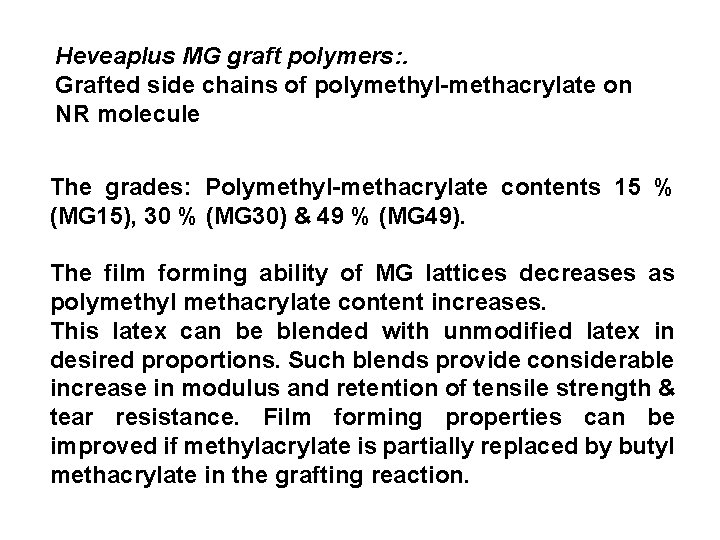
Heveaplus MG graft polymers: . Grafted side chains of polymethyl-methacrylate on NR molecule The grades: Polymethyl-methacrylate contents 15 % (MG 15), 30 % (MG 30) & 49 % (MG 49). The film forming ability of MG lattices decreases as polymethyl methacrylate content increases. This latex can be blended with unmodified latex in desired proportions. Such blends provide considerable increase in modulus and retention of tensile strength & tear resistance. Film forming properties can be improved if methylacrylate is partially replaced by butyl methacrylate in the grafting reaction.
Hydroxyl amine modified latex (HRH latex): On storage, the viscosity of the rubber in latex concentrates increases due to the molecular cross-linking process. The rate of storage hardening is faster during the first 20 – 30 days (and beyond 100 days the process is completed).
When hydroxylamine is added at 0. 15 phr at the latex production stage; the hardening effect is inhibited. The vulcanizates show slightly low modulus (thus for latex foam a lower volume shrinkage). Other properties are largely unchanged. This latex is useful for production of latex-foam and latex adhesives (for quick grab strength) used in footwear production.
Deprotenized latex: Latex concentrate contains about 2 % by weight ‘protein’ of which 50 % is associated with the surface of particles. The protein is largely retained on the surface of the rubber product causing increase in their water absorption and skin allergy on repeated contact, which has been a serious problem with sensitive individuals. Re-centrifuging followed by latex dilution removes high proportions of protein content from the serum.
Rest can be removed by treatment with a proteolytic enzyme (e. g. 0. 1 phr of Novo SP 88 – 24 h at 40°C) or protein displacement by a surfactant (e. g. Sodium dodecyl sulfate). The treated latex has to be diluted and recentrifuged. Deprotenized latex produces film containing 0. 02 – 0. 03 % Nitrogen and is used for dipped goods requiring special electrical properties.

Latex Compounding Ingredients: The conversion of NR-Latex into finished products is accomplished using different processes. The processes are based on the criteria of minimum energy consumption during various stages. (Higher energy consumption during drying has been a major concern). In all the processes, a stable colloidal system is maintained for a desired time after which the system is made unstable to convert the same to a solid product. Maintaining the balance between too much and too little stability is the major challenge.
The latex compounds contain four or more distinct disperse phases and are highly polydisperse with several different surface-active agents. The aqueous phase of high ionic strength gives the NR -latex compounds a relatively low colloid stability but facilitate conversion to solid products. For dipped goods, the latex compounds used must produce continuous films on the former and maintain film integrity during drying and vulcanizing stage.
Latex compounding ingredients: 1. Vulcanizing agents: Sulphur, Sulfur donors & others. 2. Accelerators: Dithiocarbamates, Thiazoles, Thiurams, Xanthates 3. Antioxidants: Amine datives, Phenolic derivative 4. Fillers & pigments: Inorganic, Organic.
5. Surface-active agents: Anionic, Cationic, Amphoteric, Nonionogenic. 6. Viscosity modifiers: Plant hydrocolloids, Proteins, Polyvinyl alcohols, Cellulose derivatives, Starches, Polyacrylates, Carboxylate polymers, Colloid clays, etc. ) 7. Other ingredients: Mineral oils, Waxes, Resins, Antifoaming agents, Antiwebbing agents, corrosion inhibitors, etc.
1. Vulcanizing Agents: Sulfur is the universal vulcanizing agent for all diene lattices. Fine particle size Rubber grade sulfur powder is used. Sulfur dosage 0. 3 to 2. 5 phr on dry basis in the form of 50% dispersion in water. The dosage of sulfur depends on the rate and state of cure desired and the amounts of other compounding ingredients used.
For the best heat resistant vulcanizates the sulfur dosages are kept at minimum and consistent with the ‘modulus’ requirements. With low sulfur contents, very fast accelerator combinations are necessary to achieve sufficiently rapid rate of cure.
Sulfur Donors: Used where a ‘sulfur less’ vulcanizate is required for optimum heat resistance or for use in contact with metals or for excellent resistance to copper catalyzed oxidative degradation. Vulcanization by TMTD and Zinc Oxide (without sulfur) is slow at 100°C. Thiourea activates TMTD vulcanization at 100°C when used at TMTD: Thiourea ratio = 1: 2 pbw.
Excess of either would produce a retarding effect. Use of sulfur donors other than TMTD is very rare. TMTD cured NR-Latex vulcanizates give excellent heat and ageing resistance, which is further enhanced by the conventional antioxidants and dithiocarbamate accelerators.

Sulfenamide accelerators e. g. CBS are also activated by Thiourea to produce acceptable cure rates without addition of sulfur and give vulcanizates which are not stained by copper. Butyl xantogen disulphide at 6. 0 phr and accelerator ZDEC at 4. 0 phr with 5. 0 phr Zn. O are used to vulcanize NRLatex films in the absence of additional sulphur.
C) Other curatives: Organic peroxides and hydro peroxides may be used to vulcanize NR-Latex products with higher translucency. Metal Oxide cures e. g. Zinc Oxide are used for polychloroprene latex.
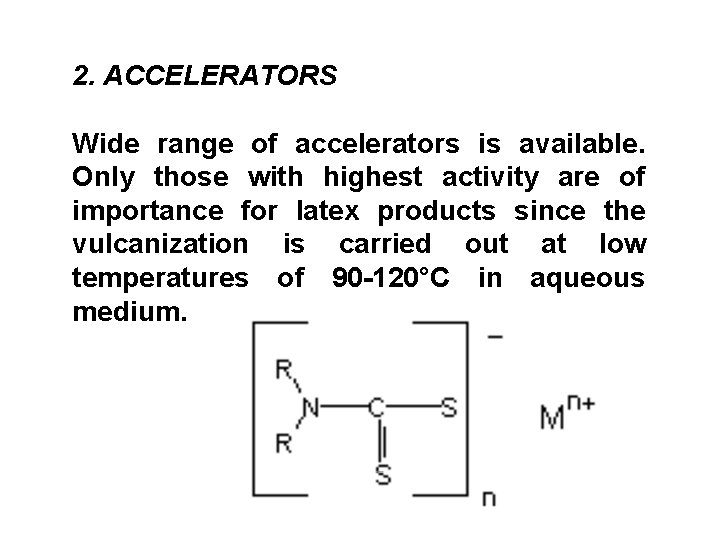
2. ACCELERATORS Wide range of accelerators is available. Only those with highest activity are of importance for latex products since the vulcanization is carried out at low temperatures of 90 -120°C in aqueous medium.
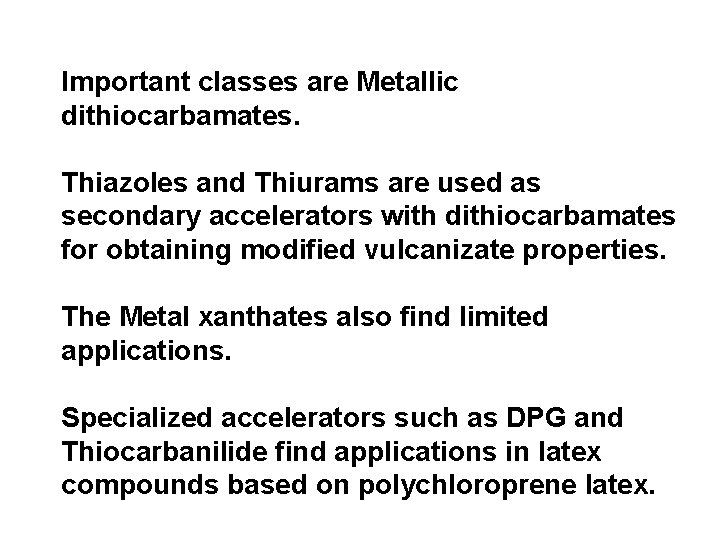
Important classes are Metallic dithiocarbamates. Thiazoles and Thiurams are used as secondary accelerators with dithiocarbamates for obtaining modified vulcanizate properties. The Metal xanthates also find limited applications. Specialized accelerators such as DPG and Thiocarbanilide find applications in latex compounds based on polychloroprene latex.
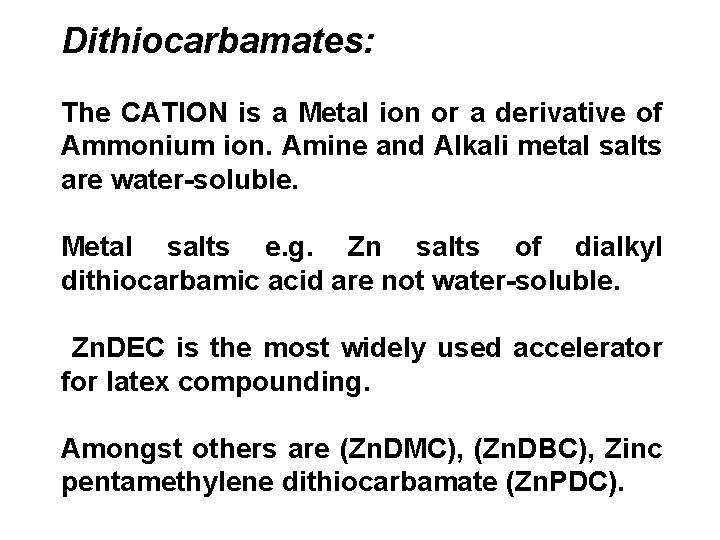
Dithiocarbamates: The CATION is a Metal ion or a derivative of Ammonium ion. Amine and Alkali metal salts are water-soluble. Metal salts e. g. Zn salts of dialkyl dithiocarbamic acid are not water-soluble. Zn. DEC is the most widely used accelerator for latex compounding. Amongst others are (Zn. DMC), (Zn. DBC), Zinc pentamethylene dithiocarbamate (Zn. PDC).
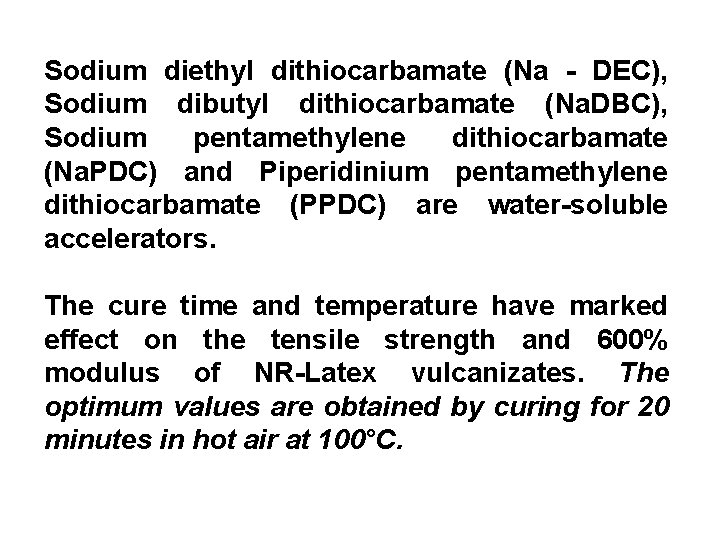
Sodium diethyl dithiocarbamate (Na - DEC), Sodium dibutyl dithiocarbamate (Na. DBC), Sodium pentamethylene dithiocarbamate (Na. PDC) and Piperidinium pentamethylene dithiocarbamate (PPDC) are water-soluble accelerators. The cure time and temperature have marked effect on the tensile strength and 600% modulus of NR-Latex vulcanizates. The optimum values are obtained by curing for 20 minutes in hot air at 100°C.
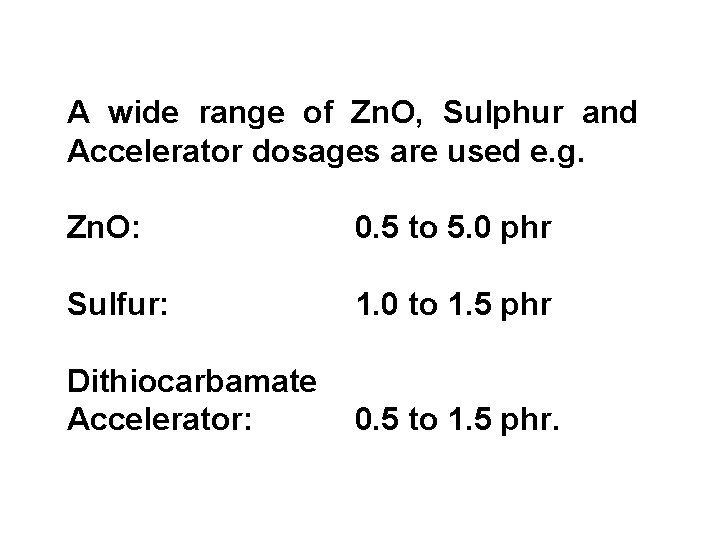
A wide range of Zn. O, Sulphur and Accelerator dosages are used e. g. Zn. O: 0. 5 to 5. 0 phr Sulfur: 1. 0 to 1. 5 phr Dithiocarbamate Accelerator: 0. 5 to 1. 5 phr.
Increasing the proportion of any one of the components increases the rate and state of cure without any significant change in the value of % elongation at break. Although Zn. O is not necessary when Zn -diethyl dithiocarbamates are used as accelerators, the presence of Zn. O improves the tensile properties and reversion resistance of the vulcanizates.
When transparency is desired for the finished product, Zn. O is used at 0. 5 phr max. Zn. CO 3 or Zn-Stearate are difficult to disperse but when used, the latex compounds are less prone to thickening. Zn. DMC is slower than Zn. DEC and Zn. DBC is faster than Zn. DEC. Zn. PDC is highly active in NR-latex Compounds but not necessarily in SR-latex compounds.
Zn-dialkyl dithiocarbamates cause gradual thickening of ammonia preserved latex under normal storage conditions due to slow liberation of zinc ions. Dithiocarbamates with no Zn contents do not cause any thickening. Water-soluble dithiocarbamates are easier to add to latex compounds but also are less active. Water-insoluble dithiocarbamates have to be used if water leaching of the product is necessary. (Although water soluble accelerators are not easily leached in hot water wash. )
With only 0. 5 phr of water-soluble dithiocarbamates , the NR-Latex compound films cure rapidly at 70°C. Increase in accelerator dosages does not influence the cure rate; however, the state of cure increases (higher modulus & lower permanent set).
Zinc dibenzyl dithiocarbamate (Zn. Bz. DC) is used as nitrosamine free Dithiocarbamate accelerator for Latex compounds. Zn. Bz. DC produces high stability latex compounds in the presence of ammonia. If Ammonia is removed (with formaldehyde or air blowing ) then NR-latex prevulcanization is possible with a combination of Zn. Bz. DC & Zn. MBT at elevated temperatures. Zn. Bz. DC is slower curing accelerator as compared to Zn. DEC or Zn. DBC.
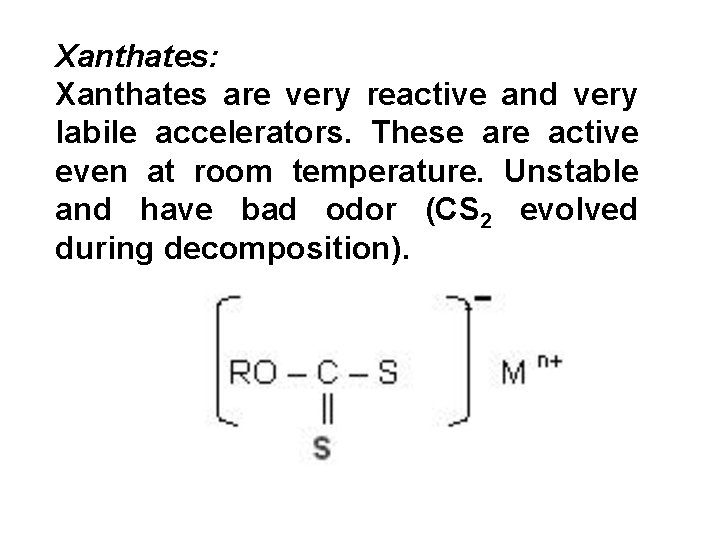
Xanthates: Xanthates are very reactive and very labile accelerators. These are active even at room temperature. Unstable and have bad odor (CS 2 evolved during decomposition).
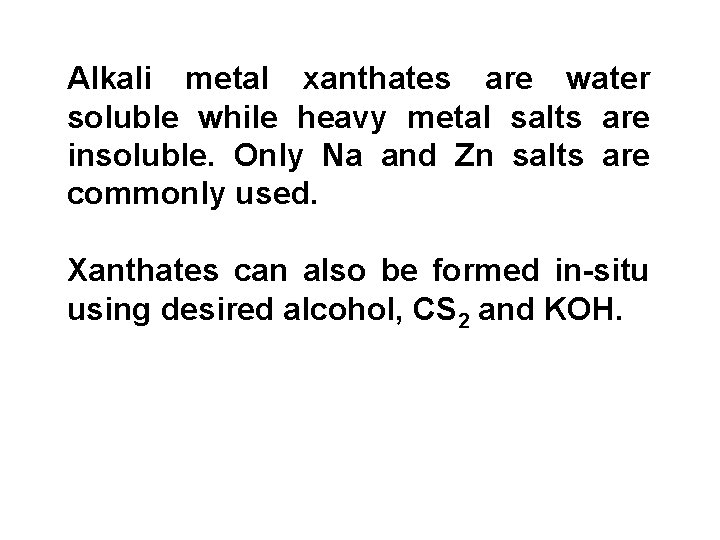
Alkali metal xanthates are water soluble while heavy metal salts are insoluble. Only Na and Zn salts are commonly used. Xanthates can also be formed in-situ using desired alcohol, CS 2 and KOH.
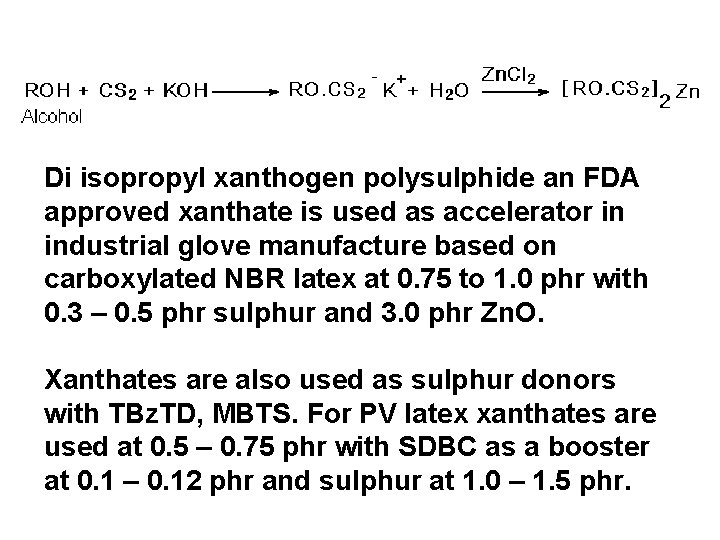
Di isopropyl xanthogen polysulphide an FDA approved xanthate is used as accelerator in industrial glove manufacture based on carboxylated NBR latex at 0. 75 to 1. 0 phr with 0. 3 – 0. 5 phr sulphur and 3. 0 phr Zn. O. Xanthates are also used as sulphur donors with TBz. TD, MBTS. For PV latex xanthates are used at 0. 5 – 0. 75 phr with SDBC as a booster at 0. 1 – 0. 12 phr and sulphur at 1. 0 – 1. 5 phr.
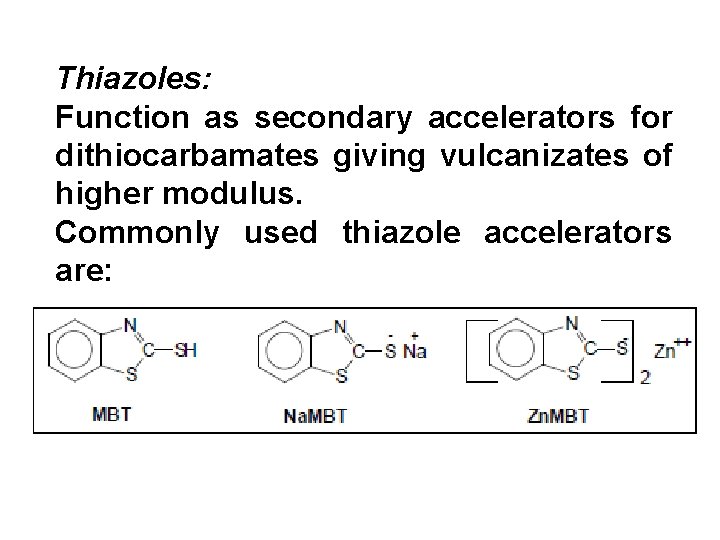
Thiazoles: Function as secondary accelerators for dithiocarbamates giving vulcanizates of higher modulus. Commonly used thiazole accelerators are:
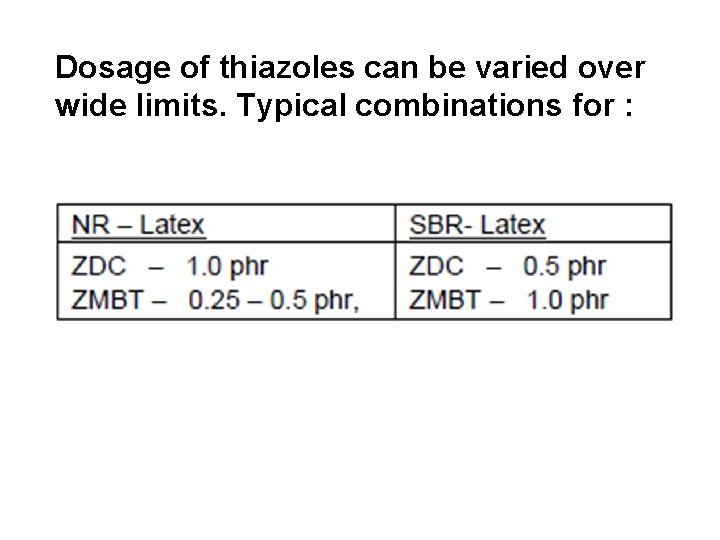
Dosage of thiazoles can be varied over wide limits. Typical combinations for :
MBT itself is slightly acidic and neutralizes alkali (ammonia or KOH added as latex stabilizer) and gradually causes latex thickening or even coagulation! Mechanical stability of latex compound is considerably reduced. MBT is useful in foam compounds to reduce the p. H of gelation by reacting with alkali (SSF gelation). Na. MBT has a tendency to enhance the latex compound stability to undesirable extent because of its high p. H (over 11. 0).
ZMBT is the most suitable accelerator for latex compounding and is insoluble in water (and latex serum). It has almost no effect on latex compound viscosity. Partial replacement of ZDEC by ZMBT has different effects depending upon the dosages. Replacement of 25% to 50% ZDEC by ZMBT results in very high modulus without any extension of cure cycle. While the tensile strength is marginally affected, the EB% is reduced 100% from its original value.
The combination of ZDC and ZMBT is more ‘peaky’ than ZDEC alone. When combination of ZDC – 0. 75 + ZMBT – 0. 25 phr is used; the modulus is sensitive to over cure and under cure.
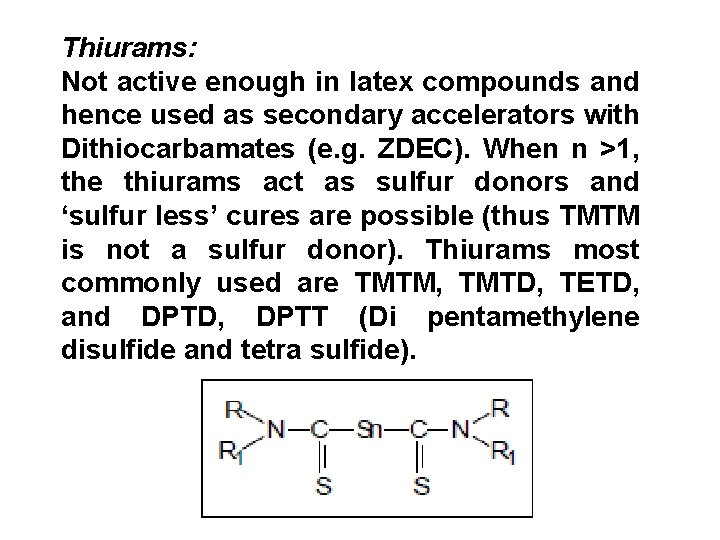
Thiurams: Not active enough in latex compounds and hence used as secondary accelerators with Dithiocarbamates (e. g. ZDEC). When n >1, the thiurams act as sulfur donors and ‘sulfur less’ cures are possible (thus TMTM is not a sulfur donor). Thiurams most commonly used are TMTM, TMTD, TETD, and DPTD, DPTT (Di pentamethylene disulfide and tetra sulfide).
All thiurams are insoluble in water. Incorporating sulfur-bearing compound such as Thiourea markedly increases accelerating efficiency of thiurams including TMTM. The combination of TMTD and ethylene thiourea (ETU) is faster than ZDEC (with or without Thiourea). Tetra butyl thiuram disulfide is used in the latex products requiring heat and copper staining resistance with following recommended dosages.
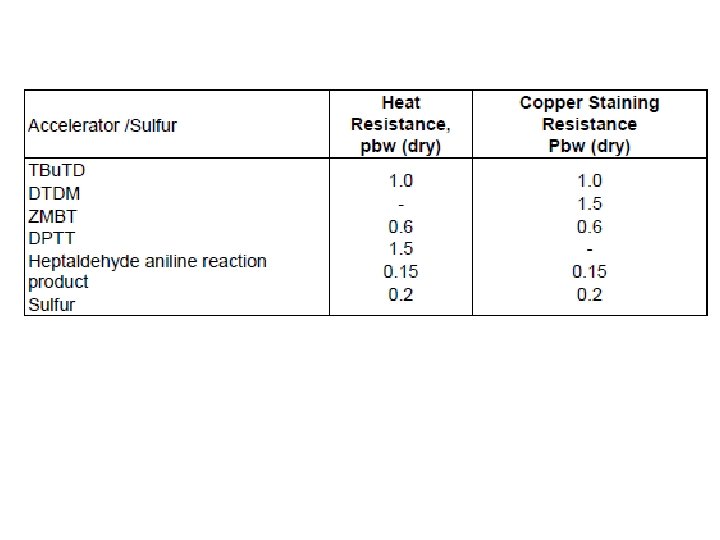
DPTT finds applications in heat resistant latex threads based on sulfur less cure with good color and heat ageing properties. The cure system and antioxidant dosages recommended are: DPTT ZMBT ZDBC Phenolic antioxidant 2. 0 phr (dry) 1. 5 phr 0. 5 phr 1. 5 phr
3. ANTIOXIDANTS Antioxidants act as protective agents in latex compounds depending on the nature of the product and the service conditions envisaged. Latex vulcanizates compounded using about 1. 0 phr of Zn-dialkyl dithiocarbamate accelerators may not need further antioxidant protection unless the products are very thin or the service conditions are very severe.
The incorporation of many antioxidants in latex compound is often difficult. The choice of antioxidant is particularly important where the product will be subjected to detergent washing (e. g. gloves). As received from the latex suppliers, NR latex and many synthetic lattices contain substances, which function as polymer antioxidants.
Amine derivatives (e. g. TMQ, PBNA) are generally more powerful antioxidants against the effect of heat, light and trace metals but these tend to cause discoloration during rubber product ageing. However, TMQ can be used for dark / black colored products. Phenolic antioxidants are generally weaker against degradative forces but do not cause any discoloration and hence widely used in all latex compounds.
The type and dosages of various phenolic antioxidants used for latex compounding may vary depending upon the end rubber product/application. The phenolic antioxidants are classified as:
Monophenols: e. g. BHT, Styrenated Phenol, Alkylated hindered phenols. Bisphenols: e. g. A/O 2246 – 2, 2’ Methylene bis (4 methyl-6 -t butyl phenol), Polybutylated bis phenols, thio bis phenols. Polyphenols: e. g. Wingstay L – Butylated reaction product of p-cresol and dicyclopentadiene, Irganox 1010 – Tetrakis (methylene 3 -(3, 5 dibutyl-4 hydroxyphenyl) propionate) methane.
Latex foam products/carpet backings require antioxidants (at 1. 0/1. 5 phr dosages). This is because the product demands longer service life (10 – 15 years), retention of cushioning effect (to ensure long life for fibers), non staining but can be slightly discoloring characteristics (since dark/black colored finished products), resistance to dyes (metal ions) and detergents (strong oxidizing agents), resistant to UV light and heat (longer drying conditions at high temperatures etc. )
Latex dipped goods are thin walled articles and hence need adequate protection. Latex threads require highly nonstaining and persistent antioxidants along with resistance to detergents. Recommended antioxidant dosages for various applications are as follows:
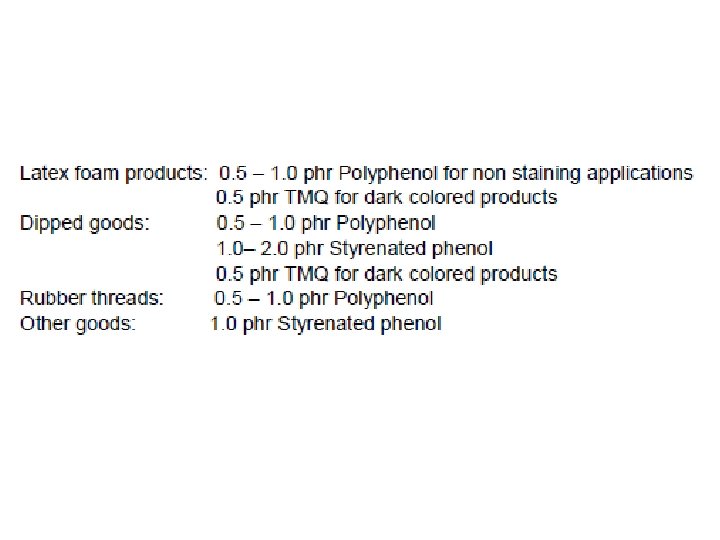
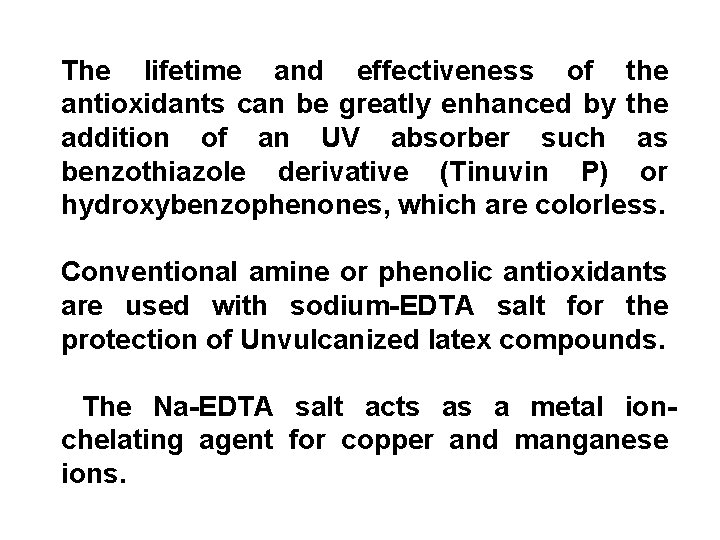
The lifetime and effectiveness of the antioxidants can be greatly enhanced by the addition of an UV absorber such as benzothiazole derivative (Tinuvin P) or hydroxybenzophenones, which are colorless. Conventional amine or phenolic antioxidants are used with sodium-EDTA salt for the protection of Unvulcanized latex compounds. The Na-EDTA salt acts as a metal ionchelating agent for copper and manganese ions.
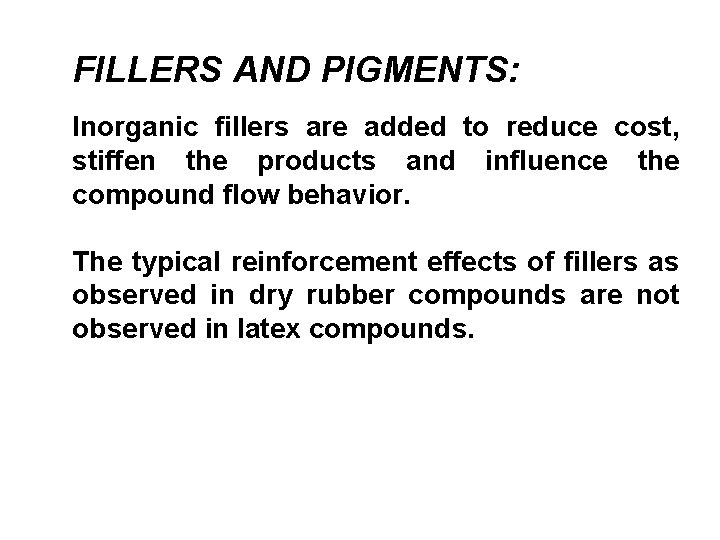
FILLERS AND PIGMENTS: Inorganic fillers are added to reduce cost, stiffen the products and influence the compound flow behavior. The typical reinforcement effects of fillers as observed in dry rubber compounds are not observed in latex compounds.
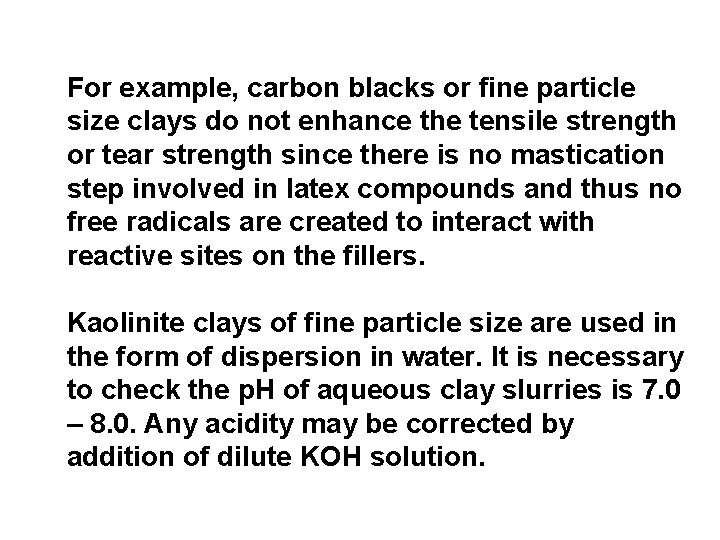
For example, carbon blacks or fine particle size clays do not enhance the tensile strength or tear strength since there is no mastication step involved in latex compounds and thus no free radicals are created to interact with reactive sites on the fillers. Kaolinite clays of fine particle size are used in the form of dispersion in water. It is necessary to check the p. H of aqueous clay slurries is 7. 0 – 8. 0. Any acidity may be corrected by addition of dilute KOH solution.
Clay loadings from 30 – 100 phr produce soft vulcanizates with higher tension set. Loadings between 100 – 400 phr produce very hard products without any rubbery properties, but only increase in modulus values. Calcium carbonates (whiting, chalks etc. ) give poor quality products with marked tendency to discoloration. The water-soluble salts in calcium carbonates (e. g. chlorides, sulphate s etc. ) tend to reduce latex stability. To avoid this small amount of sodium carbonate is added to the whiting slurry prior to addition to latex to ensure that the p. H is alkaline.
SURFACE ACTIVE AGENTS: Surface-active agents or surfactants are the chemicals; when present at low concentration in a system, have the property of adsorbing onto the surface or interfaces of a system and altering the surface or interfacial free energy to a marked degree. The surfactants usually act to reduce the interfacial free energy by expanding the interfaces significantly so that the energy/unit area is reduced and the two phases merge easily. The dosages of surface-active agents are very small, e. g. ppm level to 1%.
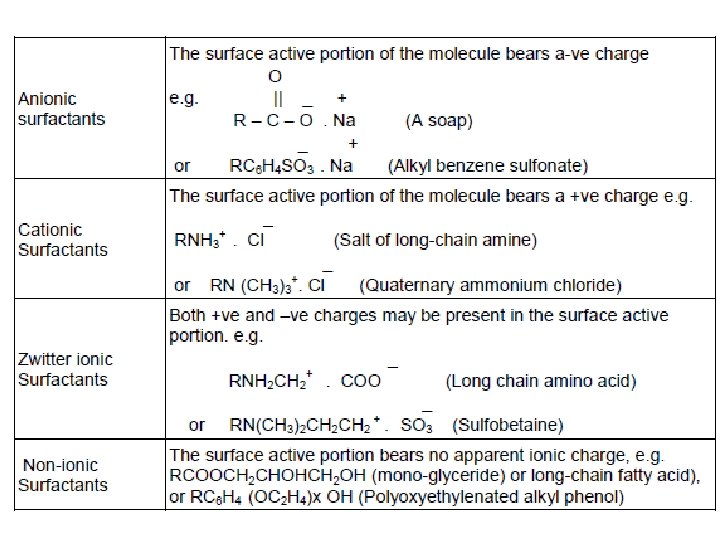
Utilization of surfactants is more of an art than a science. Surface-active agents have a characteristic (called ampipathic) structure consisting of a structural group that has a very little attraction for the solvent (lyophobic group) together with a group that has a strong attraction for the solvent (lyophilic group). The hydrophobic group is usually a longchain hydrocarbon residue. The hydrophilic group is an ionic or highly polar group.
The hydrophobic groups include: Straight-chain long alkyl groups (C 8 – C 20) Branched-chain long alkyl groups (C 8 – H 20) Long-chain alkyl benzene residues (C 8 – H 15) Alkyl napthalene residues (C 3 and greater length alkyl groups) Rosin derivatives High molecular weight propylene oxide polymers (polyoxypropylene glycol derivatives) Long chain perfluoroalkyl groups Polysiloxane groups
GENERAL NOTES ON SURFACTANTS APPLICATIONS Anionics are generally not compatible with cationics. Non ionic and Zwitter ionics are compatible with all other types. Carboxylic acid salts are more sensitive to low p. H, polyvalent cations and inert electrolyte in aqueous phase than the salts of organic phosphoric acids and these are more sensitive than organic sulfonates and sulfates. Branched-chain or ring containing surfactants are more soluble and show lower viscosity in aqueous media than straight chain materials with same number of carbon atoms.
Hot acids easily hydrolyze organic sulfates and esters are readily hydrolyzed by hot alkali (or hot acids). Amides are more resistant to hydrolysis. Non-quaternary cationics are generally sensitive to high p. H, polyvalent anions and inert electrolyte in aqueous phase. Quaternary ammonium salts, on the other hand, are generally not sensitive to such additives. Oxyethylenation of any surfactant results in increase in its solubility in water and decrease in sensitivity to p. H changes.
VISCOSITY MODIFIERS These are hydrocolloids soluble in water and increase the viscosity of water. Sometimes these substances are known as thickeners. Broadly these are classified on the basis of their origin viz. plant origin or animal origin.
Alginates Alginic acid is polymerized 1, 4’-β-anhydromannuronic acid. Found as a calcium salt in marine algae. Its sodium salt is obtained by dissolving in sodium carbonate solution and is used as a viscosity modifier although the usage is limited due to handling difficulties and hygroscopic nature. Gum Arabic Gum (resin) collected from acacia tree and is a mixture of Ca, Mg & K salts of Arabic acid. The equivalent weight of Arabic acid is 1000 and the mol. wt. of gum Arabic is 240000. It dissolves in water and the solution is reasonably acidic and the acidity varies from sample to sample. Maximum viscosity is obtained at p. H 6 to 8 and can be used as thickener for latex compounds.
Proteins are linear high molecular weight polyamides and are classified in several ways. The latex compounds are concerned with simple proteins, which are water-soluble. Proteins are Amphoteric polyelectrolytes and at p. H 5. 0 they have no overall electric charge and thus can be used as viscosity modifiers for latex compounding. Casein is the most widely used protein. It is a phosphoprotein obtained from the raw protein of milk by acid precipitation (by mineral acid or allowing lactic acid to develop). Casein has a mol. wt. of 40000 and is a pale buff colored powder with approx. 10% moisture. A solution of casein in water in the region of p. H 4. 5 – 5. 0 acts as a protective colloid, dispersion stabilizer and thickener
Casein solution in dilute alkali is used in latex based adhesives for rubber to textile bonding adhesives. Casein is easily attacked by micro-organisms giving foul odor and has to be protected using pentachlorothiophenate. Glue is a protein derivative obtained from animal connective tissues by hydrolysis with steam/hot water. Glue pre-swollen with mild acid treatment and having solution p. H at 4. 7 – 5. 0 is used as a protective colloid and foam stabilizer. Gelatin is refined glue and can substitute glue. It consists of water-soluble proteins of high molecular weight, which swell in cold water and completely dissolve in hot water.
Polyvinyl Alcohols PVA is markedly surface active and shows a very little tendency to foam. PVA solution in water is an effective emulsion and dispersion stabilizer. However, it tends to precipitate out in the presence of borates. Cellulose Derivatives Cellulose-alkyl ethers, hyroxyalkyl ethers, carboxyalkyl ethers etc. are used as thickeners in latex compounds.
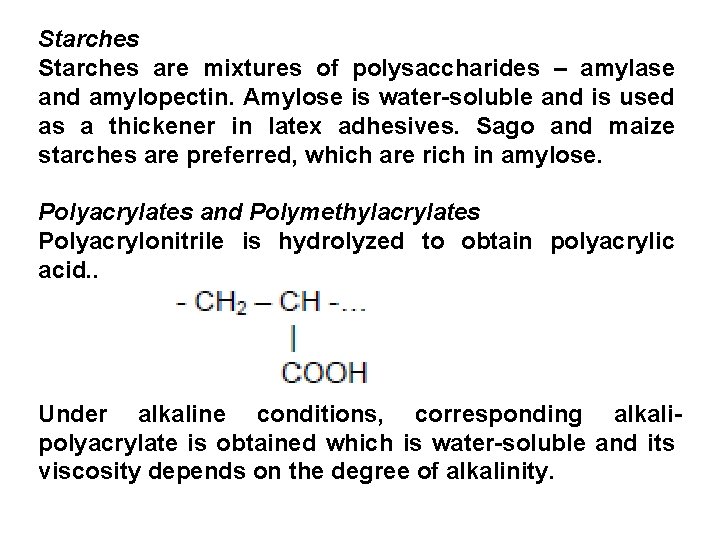
Starches are mixtures of polysaccharides – amylase and amylopectin. Amylose is water-soluble and is used as a thickener in latex adhesives. Sago and maize starches are preferred, which are rich in amylose. Polyacrylates and Polymethylacrylates Polyacrylonitrile is hydrolyzed to obtain polyacrylic acid. . Under alkaline conditions, corresponding alkalipolyacrylate is obtained which is water-soluble and its viscosity depends on the degree of alkalinity.
OTHER COMPOUNDING INGREDIENTS Mineral oils and ester plasticizers find applications in latex compounds. The choice is determined on the type of latex (e. g. mineral oils for NR, SBR and other general purpose lattices and ester plasticizers for NBR, CR, PVC, PVA lattices). Waxes and petroleum jellies are used in latex compounds for obtaining certain specific properties/ effects (e. g. petroleum jelly as cell-wall lubricant for latex foam products). Varieties of viscous and resinous ingredients are used to impart tack to latex-adhesive films.
SOLUTIONS, DISPERSIONS & EMULSIONS The compounding ingredients are added to lattices as aqueous solutions, dispersions or emulsions depending on their solubility or insolubility in water. (A few ingredients may be directly added to latex e. g. dry fillers to certain latex foam compounds or ester plasticizer to PVA latex. ) The particle size of dispersion or the droplet size of emulsion should be close to the latex. The stability of dispersions and emulsions should be comparable with the latex. The stabilizing systems should be similar for the ingredient preparation and the latex.
SOLUTIONS: Solutions of highly water-soluble ingredients are prepared in soft water to desired concentration and then added to the latex compound. Solubility of some water-soluble compounding ingredients (e. g. accelerators) may be temperature dependent. Hence, either more dilute solution has to be prepared or appropriate temperature has to be maintained.
DISPERSIONS: To start with, coarse slurry of powdered ingredient is made in water along with dispersing agents and dispersion stabilizers and then it is ground in a suitable mill to desired average particle e. g. 5 micron or lowers to produce a stable dispersion. The mills, which only break down particle aggregates of, fine particles but do not affect any particle size reduction, are known as colloid mills. The mills, which do effect reduction to ultimate particle size as well as disperse any agglomerates, are ball mills, pebble mills, ultrasonic mills, attrition mills etc.
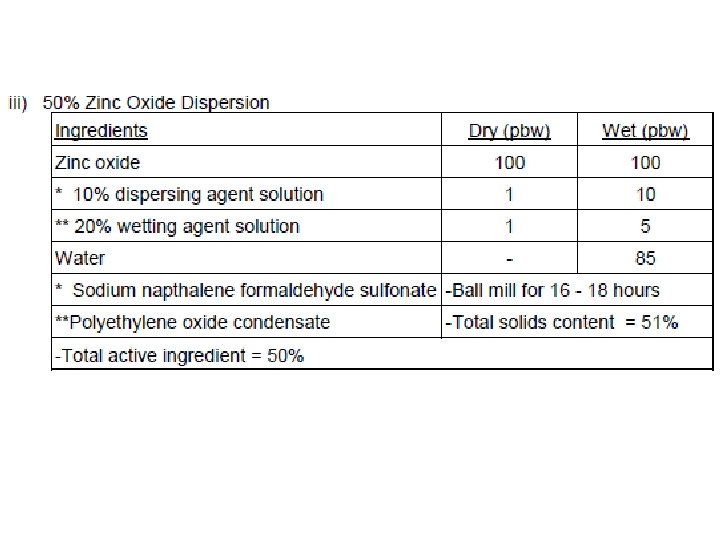
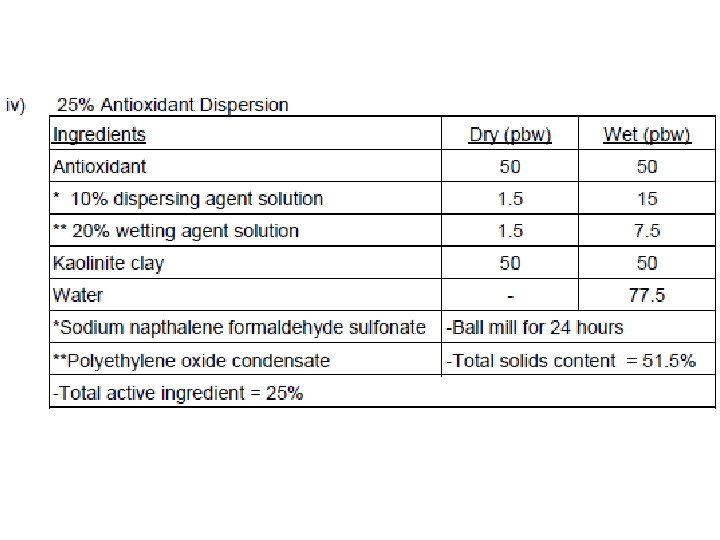
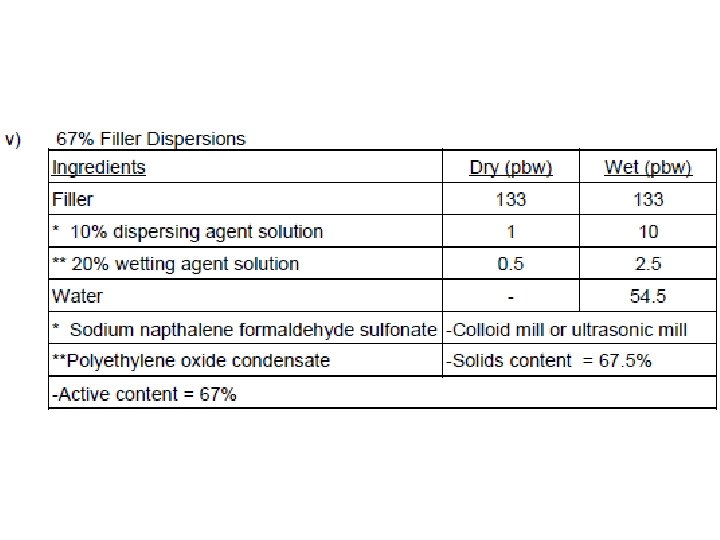
Colloid Mills Several types of colloidal mills are available. The main principle is that the slurry of powder is subjected to a high rate of shear, thereby causing the agglomerates to break down. The colloid mills are used for fillers such as zinc oxide, china clay, ppt. calcium carbonate that are of much finer particle size and only the breaking of loose aggregates is necessary. Ingredients which are in coarse crystalline form (e. g. sulphur, accelerators, and antioxidants) are ball milled for reduction to ultimate particle size desired.
Ball Mills Ball mills consist of cylindrical containers in which slurry of the ingredient, dispersing agent / wetting agent in water is placed together with charge of balls/pebbles. The quantity of charge is adjusted in such a way that an empty air space (approx. 40 -50 % of the total volume) is left free. The cylindrical containers are revolved slowly about their axis horizontally. When the mill is working properly, the balls get carried round with the container for a short distance and then cascade.
The process of cascading causes grinding of the particles in the slurry. The container rpm is rather slow to avoid centrifuging of the balls. Frothing in the free empty space prevents grinding action! The ball mills are lined with steel and pebble mills are generally of ceramic cylinders.
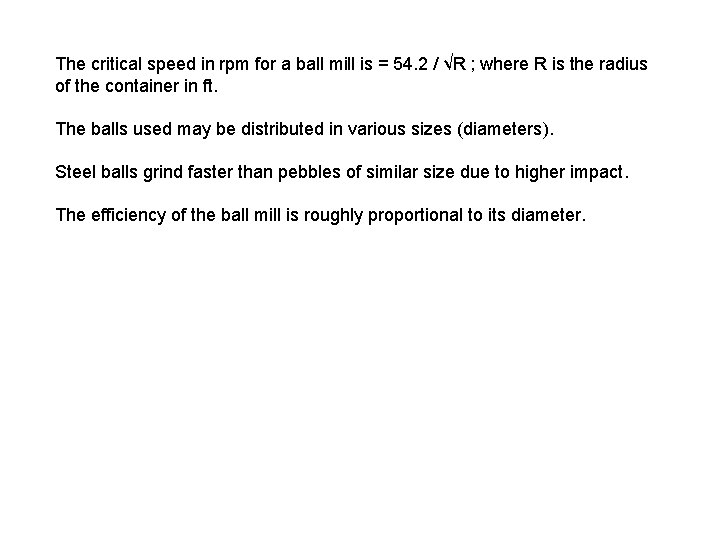
The critical speed in rpm for a ball mill is = 54. 2 / √R ; where R is the radius of the container in ft. The balls used may be distributed in various sizes (diameters). Steel balls grind faster than pebbles of similar size due to higher impact. The efficiency of the ball mill is roughly proportional to its diameter.
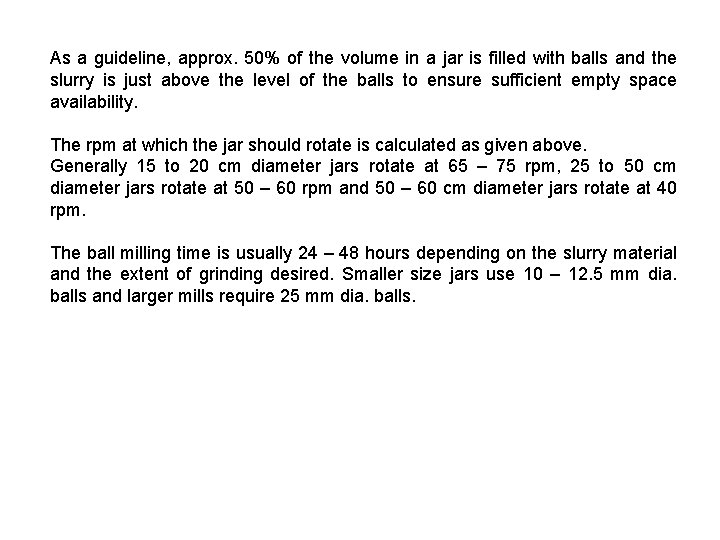
As a guideline, approx. 50% of the volume in a jar is filled with balls and the slurry is just above the level of the balls to ensure sufficient empty space availability. The rpm at which the jar should rotate is calculated as given above. Generally 15 to 20 cm diameter jars rotate at 65 – 75 rpm, 25 to 50 cm diameter jars rotate at 50 – 60 rpm and 50 – 60 cm diameter jars rotate at 40 rpm. The ball milling time is usually 24 – 48 hours depending on the slurry material and the extent of grinding desired. Smaller size jars use 10 – 12. 5 mm dia. balls and larger mills require 25 mm dia. balls.
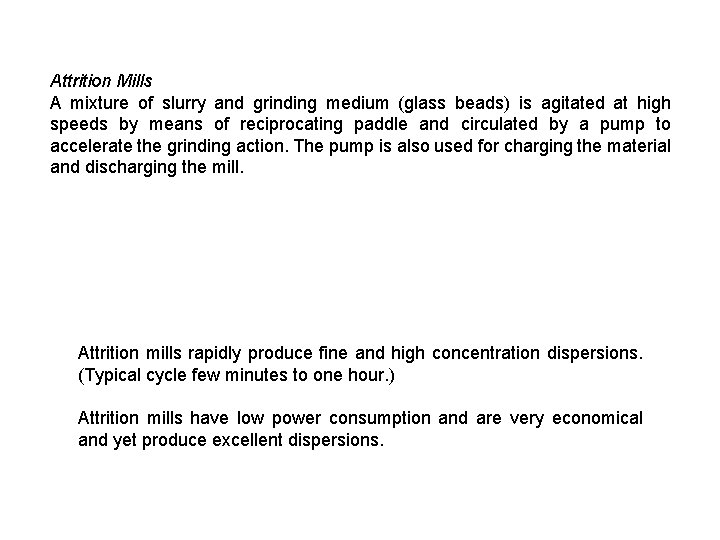
Attrition Mills A mixture of slurry and grinding medium (glass beads) is agitated at high speeds by means of reciprocating paddle and circulated by a pump to accelerate the grinding action. The pump is also used for charging the material and discharging the mill. Attrition mills rapidly produce fine and high concentration dispersions. (Typical cycle few minutes to one hour. ) Attrition mills have low power consumption and are very economical and yet produce excellent dispersions.
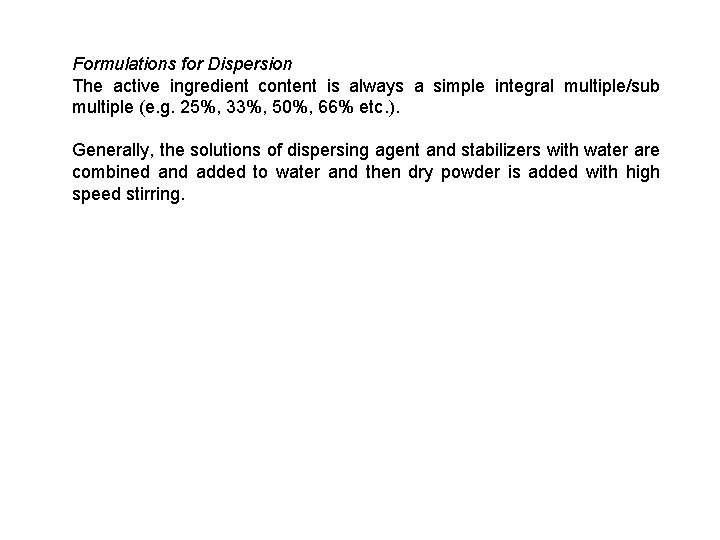
Formulations for Dispersion The active ingredient content is always a simple integral multiple/sub multiple (e. g. 25%, 33%, 50%, 66% etc. ). Generally, the solutions of dispersing agent and stabilizers with water are combined and added to water and then dry powder is added with high speed stirring.
Preparation of sulphur dispersion is relatively difficult as it tends to flocculate and sediment. It generally requires higher proportions of dispersing agents (2. 0 – 2. 5 phr) and at least 1. 0 phr stabilizer like caseinate/ethylene oxide condensates. Sulphur dispersion preparation also takes more ball milling time, e. g. 72 hrs. as compared to 24 hr. or even lower for other ingredients. Thickeners are often used for sulphur dispersions to retard sedimentation (but not at the ball milling stage!).
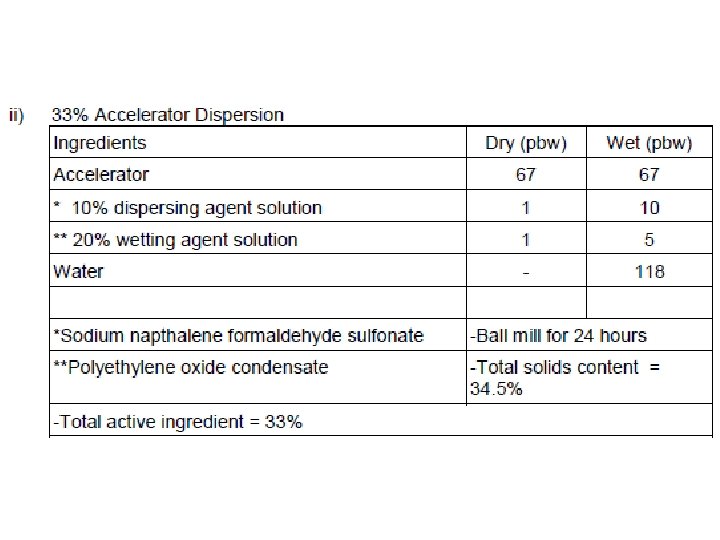
Accelerator dispersions are prepared at 50% active content. ZDEC tends to flocculate at 50% and hence one may consider 33% dispersion for ZDEC. Sometimes 1% methylcellulose is added to enhance the stability of the dispersion and discourage sedimentation. Zinc oxide dispersions can be prepared by ball milling or by colloid mill depending on particle size desired.
One can make a single dispersion of all possible ingredients in the proportions desired in the compounding formulation, and can include antioxidants and other minor ingredients in such recipe. Resinous antioxidants/other ingredients are difficult to grind and hence Kaolinite clays are used as inert carriers. Equal weights of antioxidant (e. g. TMQ) and Kaolinite clay are combined to get 50% dispersion with higher proportions of dispersing agents and stabilizers. The active antioxidant content thus will be 25%. The clay particles coat the coarser antioxidant as disintegration takes place thereby preventing the latter from sticking together again.
Fillers such as calcium carbonates, china clays are added to latex as 67% 75% dispersions using dispersing agents (and thickeners if necessary to adjust the viscosity). Sometimes marked increase in viscosity of the dispersion is observed due to build up of a second layer of surface-active agent on top of the initially adsorbed layer. The orientation of the second layer prevents essentially hydrophobic surface to aqueous phase encouraging flocculation. In case of Zn. O, enhanced hydration of Zn. O particles due to excess dispersing agent can also cause such problems.
A high degree of dispersion results in low viscosity and low sedimentation rate. On the other hand, partially flocculated dispersions have high viscosity and sediment rapidly. The aqueous pigment dispersions contain water (to desired viscosity), wetting agents, dispersing agents and colloid stabilizers/viscosity modifiers.
These dispersions are formulated to contain a balance of anionic and nonionic compounds, which together form efficient wetting and dispersing and stabilizing system (e. g. sodium polymethacrylate plus sodium polymeta sulphate plus a non ionic wetting agent or methyl cellulose plus anionic dispersing agent like sodium polymeta phosphate plus tetra sodium pyrophosphate etc. ).
EMULSIONS: Emulsions of the type oil-in-water are used for latex compounding. First a coarse suspension of oil droplets is made in water and then this is subjected to high speed intense shearing and impact using a specially designed emulsifier. Colloidal mills, ultrasonic mills or specially designed emulsifiers are used for refining purpose. The coarse emulsions are prepared by using one of the two techniques given below. : Dissolving the dispersing aids, stabilizers, thickeners etc. in water and then adding the oil under high speed stirring.
Soap-in-Situe: The fatty acid component of the soap is dissolved in the oil and the alkali component is dissolved in water together with any stabilizer. The oil phase is then poured into aqueous phase with high-speed stirring whereupon emulsification takes place spontaneously. The soap is formed just at the locations where it is required and where it is most effective. The overall ratio of alkali to acid determines the p. H of emulsion, which should be mildly alkaline (e. g. p. H = 9) for which 5% extra alkali over acid is needed.
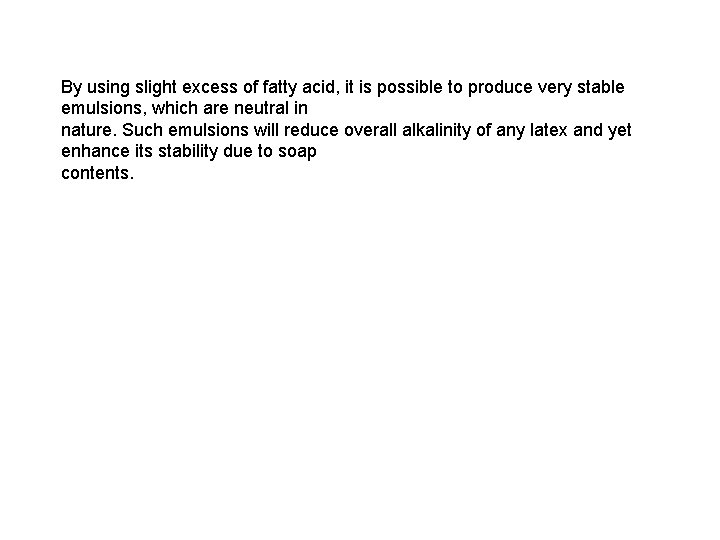
By using slight excess of fatty acid, it is possible to produce very stable emulsions, which are neutral in nature. Such emulsions will reduce overall alkalinity of any latex and yet enhance its stability due to soap contents.
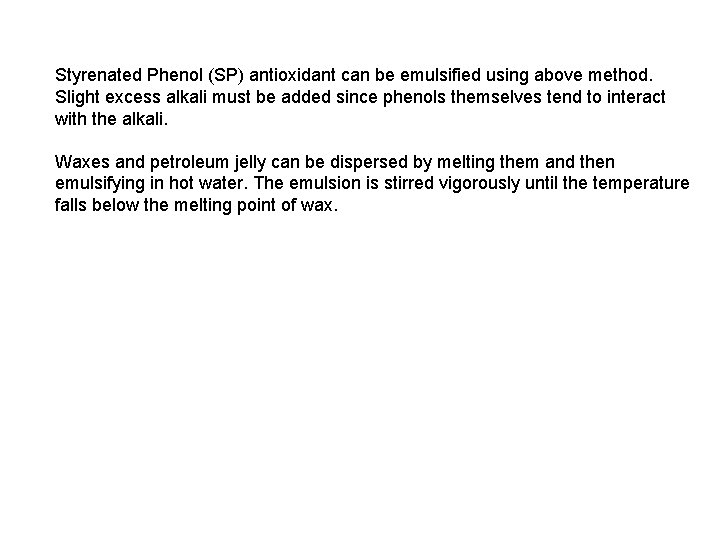
Styrenated Phenol (SP) antioxidant can be emulsified using above method. Slight excess alkali must be added since phenols themselves tend to interact with the alkali. Waxes and petroleum jelly can be dispersed by melting them and then emulsifying in hot water. The emulsion is stirred vigorously until the temperature falls below the melting point of wax.
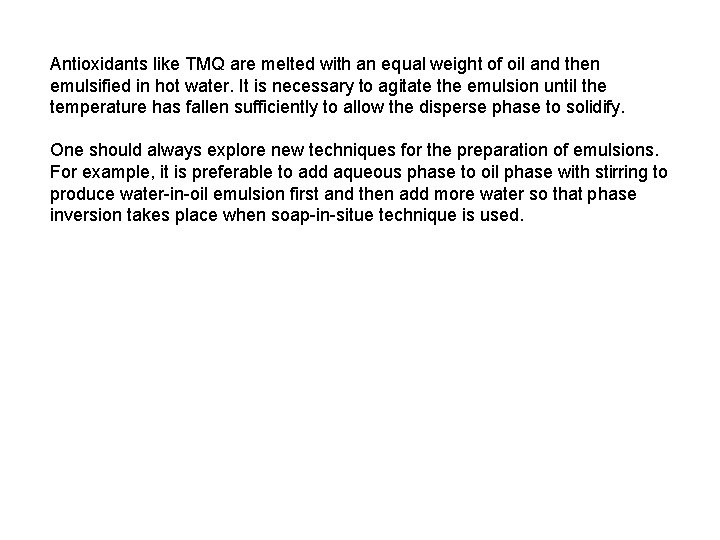
Antioxidants like TMQ are melted with an equal weight of oil and then emulsified in hot water. It is necessary to agitate the emulsion until the temperature has fallen sufficiently to allow the disperse phase to solidify. One should always explore new techniques for the preparation of emulsions. For example, it is preferable to add aqueous phase to oil phase with stirring to produce water-in-oil emulsion first and then add more water so that phase inversion takes place when soap-in-situe technique is used.


16% Stearic Acid Emulsion Stearic acid, 10 pbw is melted with 2. 5 pbw of oleic acid and added to 490 pbw of hot water (70°C) containing 2. 5 pbw of KOH. Ammonia 2. 5 pbw is then added and the mixture is cooled with continuous stirring.
General All dispersions are prepared using soft water. The degree of dispersion depends on the finished product quality or process requirements (e. g. for high strength films very fine particle size dispersions are necessary, for good product color or transparency very fine particle size dispersions are necessary). For high quality rubber goods dispersions of each ingredient should be prepared separately and also added separately (rather than making a single dispersion of all the compounding ingredients).
The quality of dispersion is easily checked by allowing a drop of the dispersion to fall on the surface of water taken in a 1000 ml glass cylinder. The drop must not fall to the bottom but should disperse well in water phase. For production of articles like latex thread, ultra thin dipped goods; the average particle size of dispersion should be 5 microns or lower in diameter (similar to rubber particles in latex).
- Slides: 120