
Natural Resources Systems 1 Objectives 1 To gain
Natural Resources Systems 1

Objectives 1. To gain a basic understanding of the Natural Resources Systems Pathway. 2. To discover career options available within the Natural Resources Systems Pathway. 3. To explore the working environment, educational requirements, skills needed and salary of careers available within the Natural Resources Systems Pathway. 2
Pathway Overview Ø Careers focus on researching and managing natural resources Ø Duties include: • producing and processing forest products • mining • range and wildlife habitat management • studying the environment 3
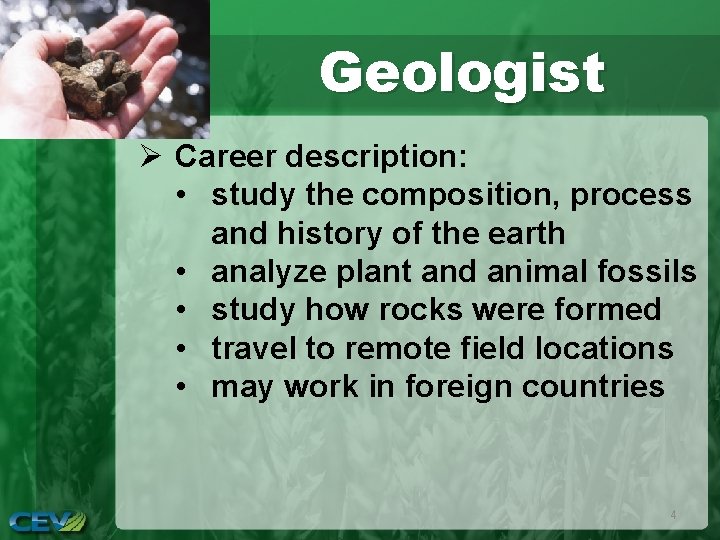
Geologist Ø Career description: • study the composition, process and history of the earth • analyze plant and animal fossils • study how rocks were formed • travel to remote field locations • may work in foreign countries 4
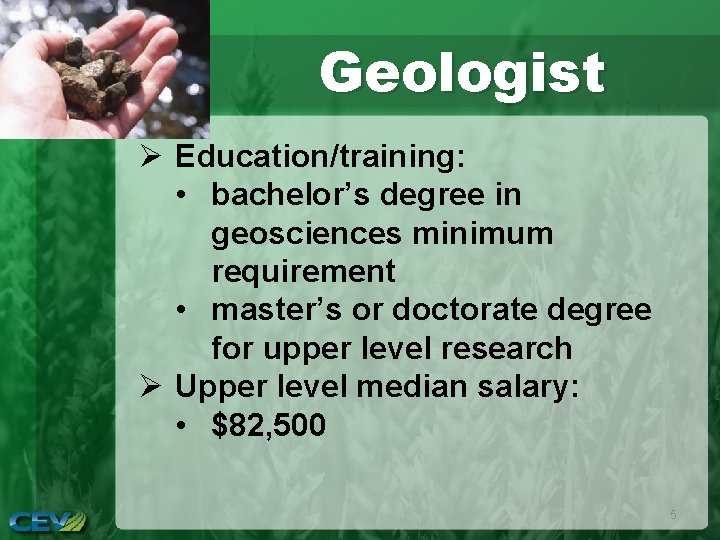
Geologist Ø Education/training: • bachelor’s degree in geosciences minimum requirement • master’s or doctorate degree for upper level research Ø Upper level median salary: • $82, 500 5
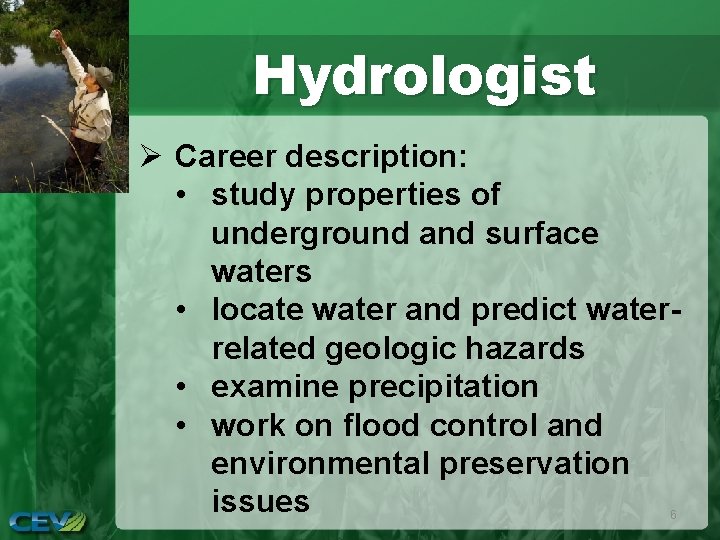
Hydrologist Ø Career description: • study properties of underground and surface waters • locate water and predict waterrelated geologic hazards • examine precipitation • work on flood control and environmental preservation issues 6
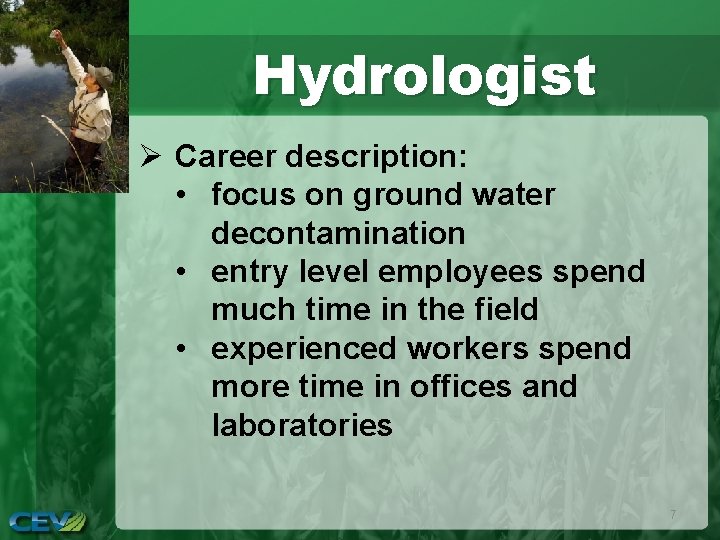
Hydrologist Ø Career description: • focus on ground water decontamination • entry level employees spend much time in the field • experienced workers spend more time in offices and laboratories 7
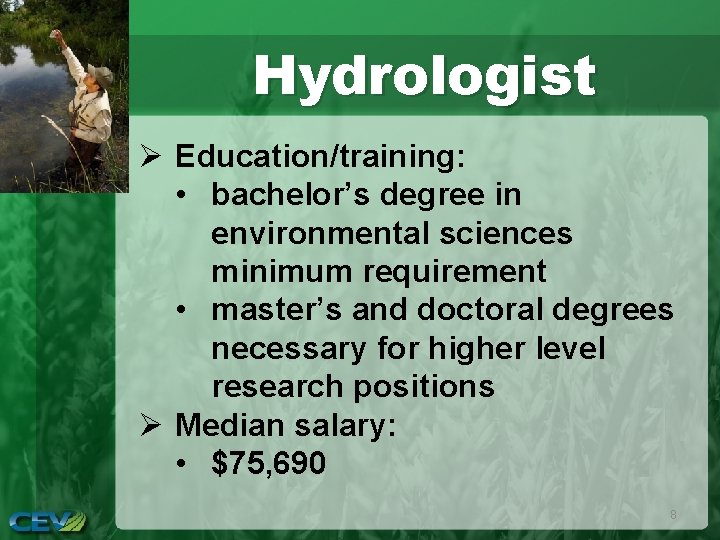
Hydrologist Ø Education/training: • bachelor’s degree in environmental sciences minimum requirement • master’s and doctoral degrees necessary for higher level research positions Ø Median salary: • $75, 690 8
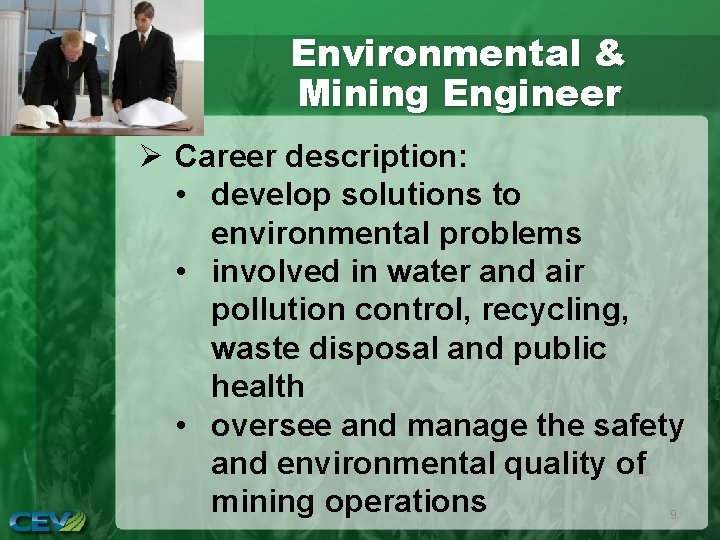
Environmental & Mining Engineer Ø Career description: • develop solutions to environmental problems • involved in water and air pollution control, recycling, waste disposal and public health • oversee and manage the safety and environmental quality of mining operations 9
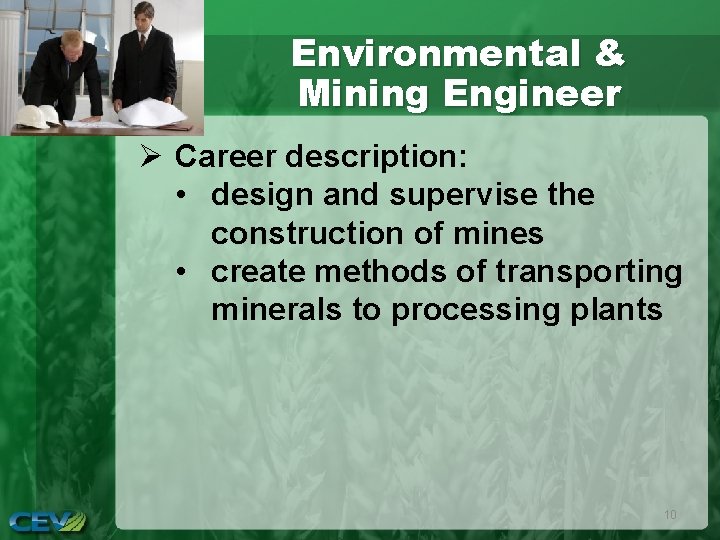
Environmental & Mining Engineer Ø Career description: • design and supervise the construction of mines • create methods of transporting minerals to processing plants 10
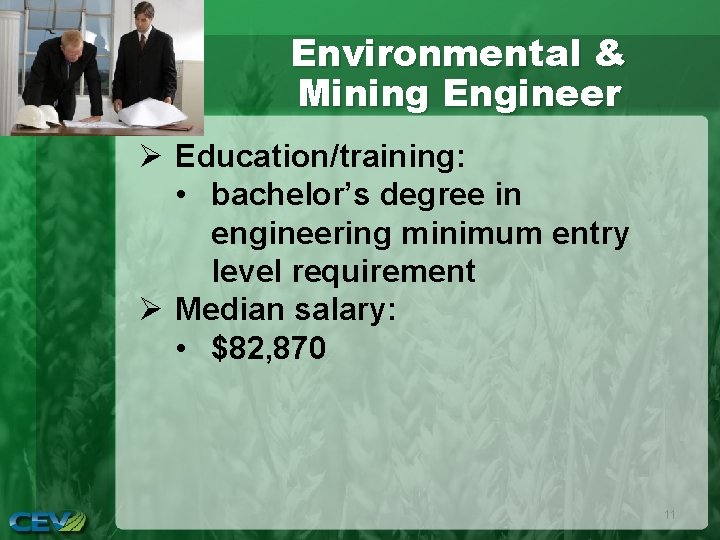
Environmental & Mining Engineer Ø Education/training: • bachelor’s degree in engineering minimum entry level requirement Ø Median salary: • $82, 870 11
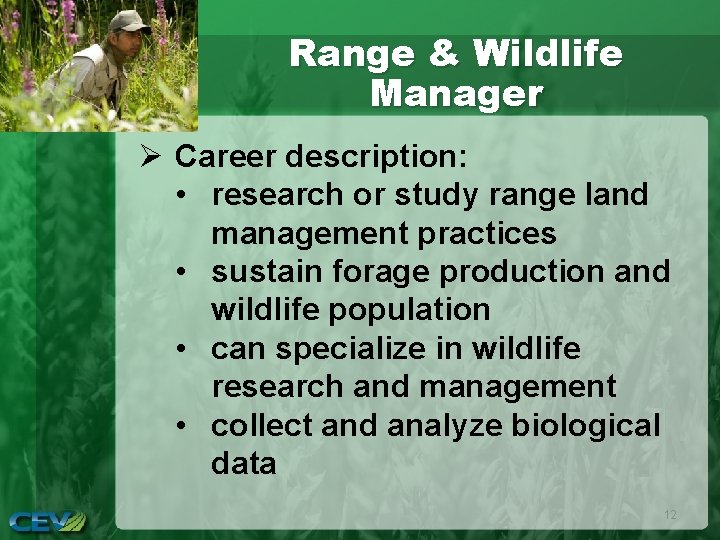
Range & Wildlife Manager Ø Career description: • research or study range land management practices • sustain forage production and wildlife population • can specialize in wildlife research and management • collect and analyze biological data 12
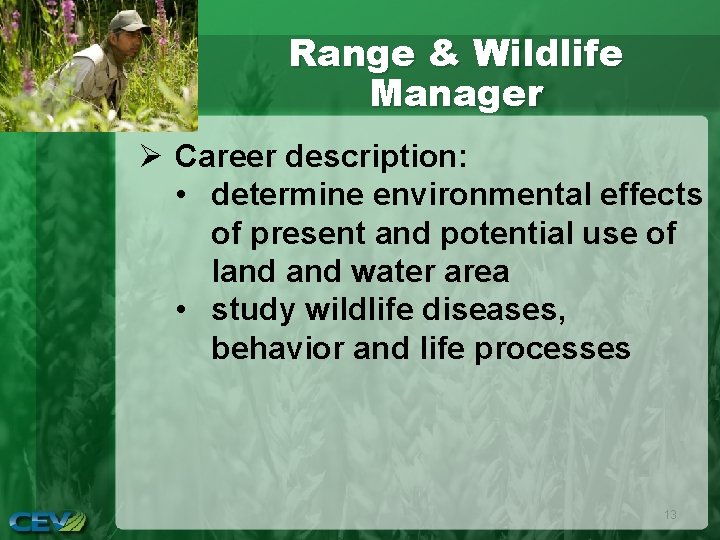
Range & Wildlife Manager Ø Career description: • determine environmental effects of present and potential use of land water area • study wildlife diseases, behavior and life processes 13
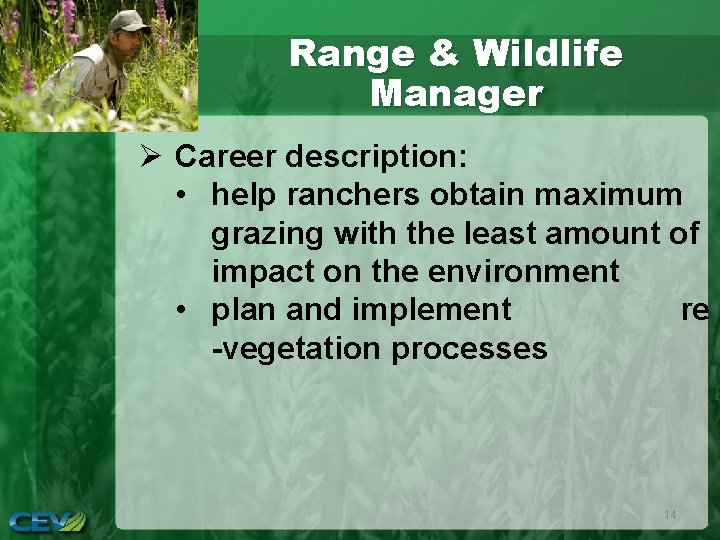
Range & Wildlife Manager Ø Career description: • help ranchers obtain maximum grazing with the least amount of impact on the environment • plan and implement re -vegetation processes 14
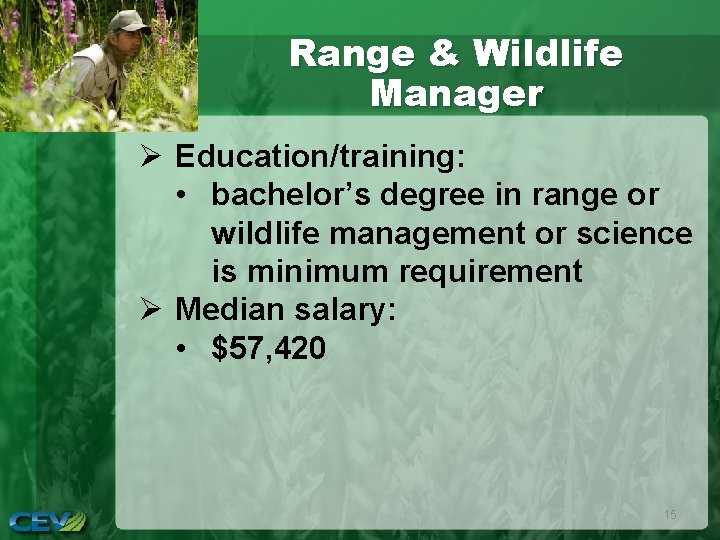
Range & Wildlife Manager Ø Education/training: • bachelor’s degree in range or wildlife management or science is minimum requirement Ø Median salary: • $57, 420 15
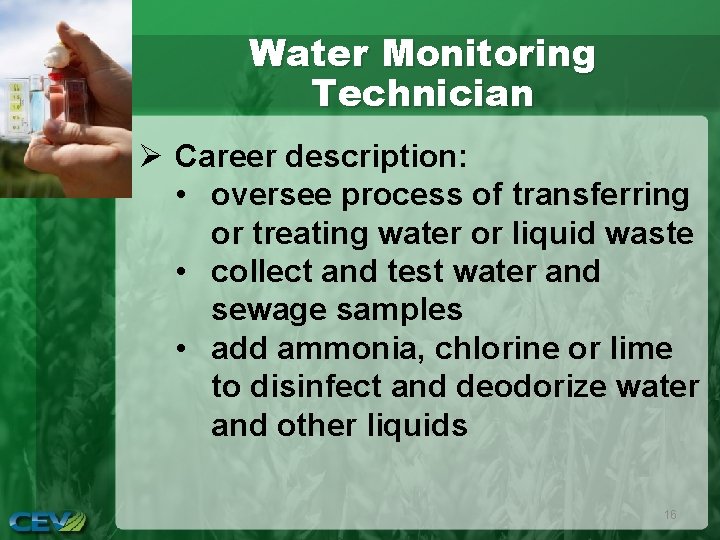
Water Monitoring Technician Ø Career description: • oversee process of transferring or treating water or liquid waste • collect and test water and sewage samples • add ammonia, chlorine or lime to disinfect and deodorize water and other liquids 16
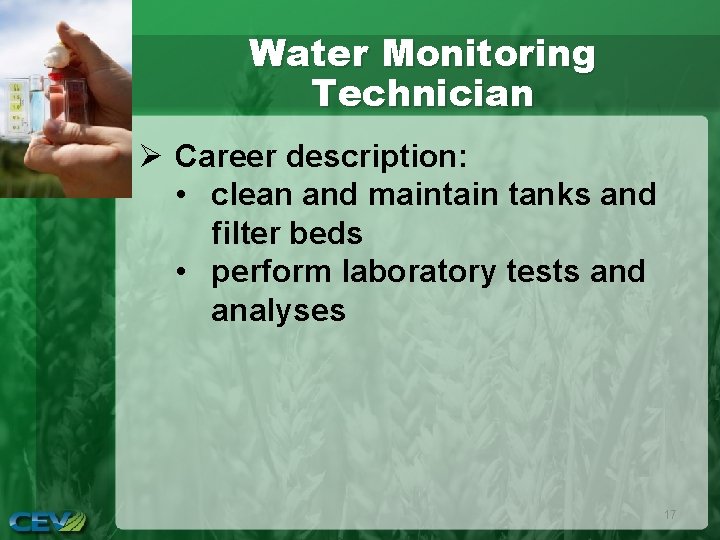
Water Monitoring Technician Ø Career description: • clean and maintain tanks and filter beds • perform laboratory tests and analyses 17
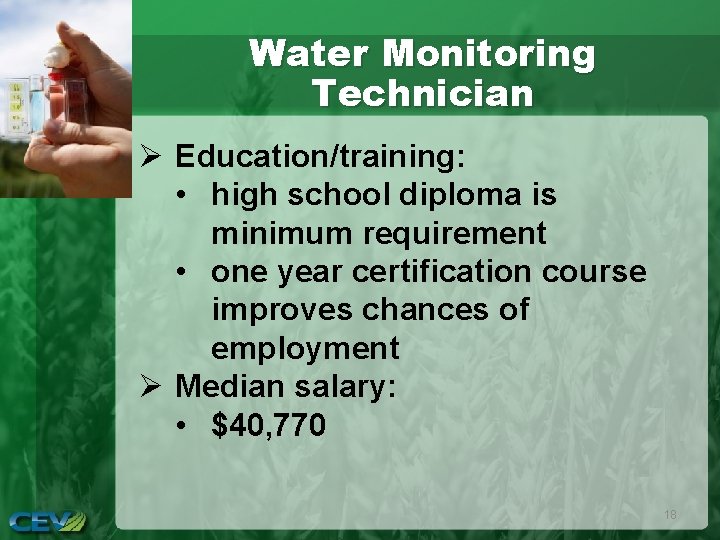
Water Monitoring Technician Ø Education/training: • high school diploma is minimum requirement • one year certification course improves chances of employment Ø Median salary: • $40, 770 18
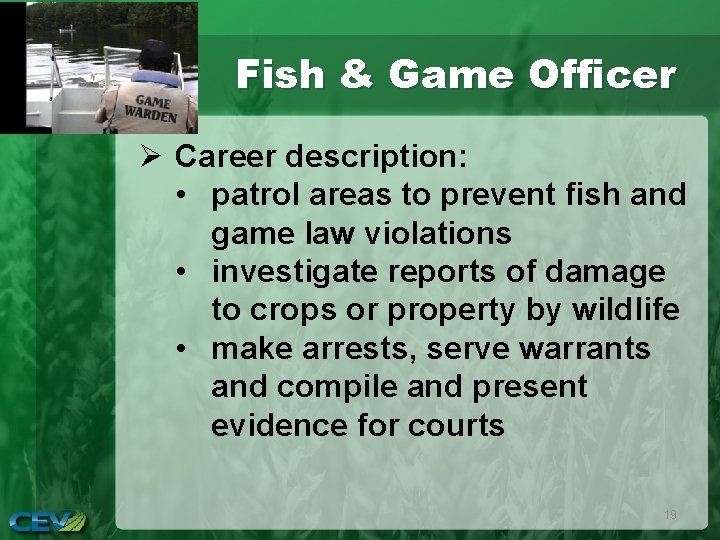
Fish & Game Officer Ø Career description: • patrol areas to prevent fish and game law violations • investigate reports of damage to crops or property by wildlife • make arrests, serve warrants and compile and present evidence for courts 19
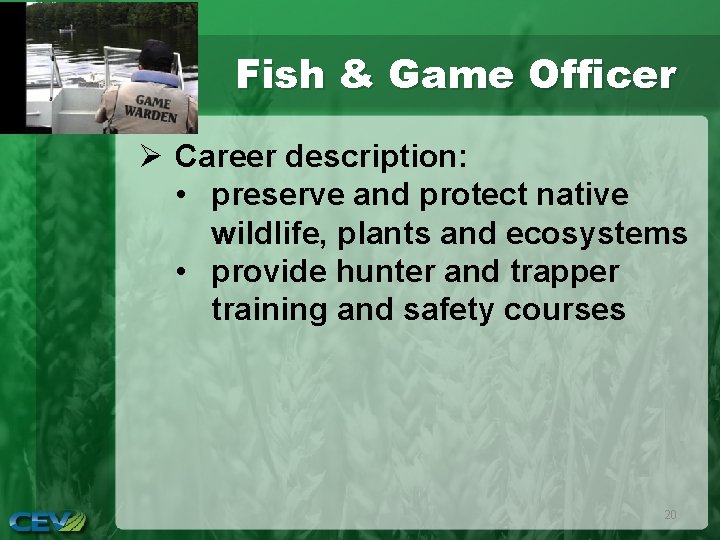
Fish & Game Officer Ø Career description: • preserve and protect native wildlife, plants and ecosystems • provide hunter and trapper training and safety courses 20
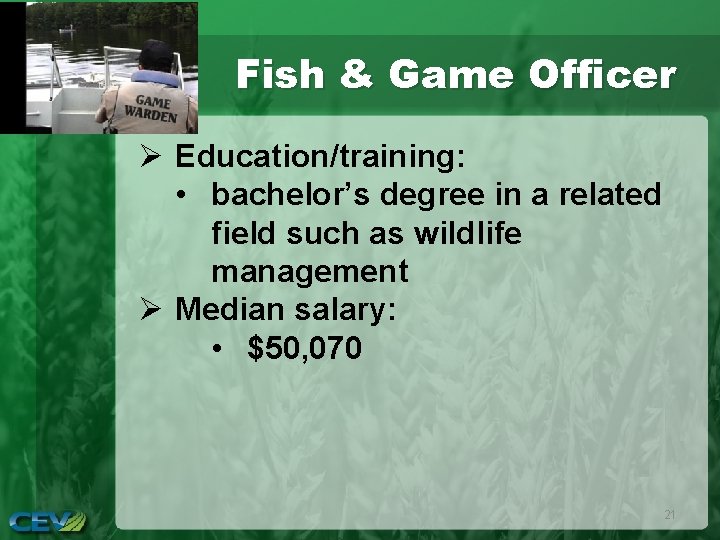
Fish & Game Officer Ø Education/training: • bachelor’s degree in a related field such as wildlife management Ø Median salary: • $50, 070 21
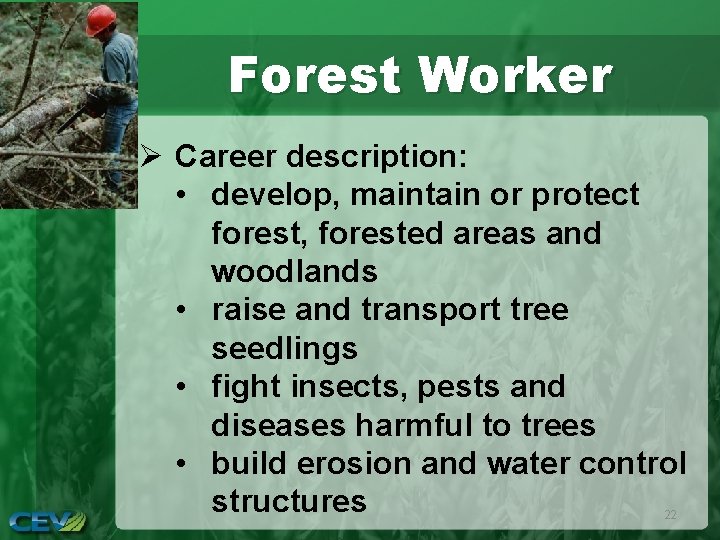
Forest Worker Ø Career description: • develop, maintain or protect forest, forested areas and woodlands • raise and transport tree seedlings • fight insects, pests and diseases harmful to trees • build erosion and water control structures 22
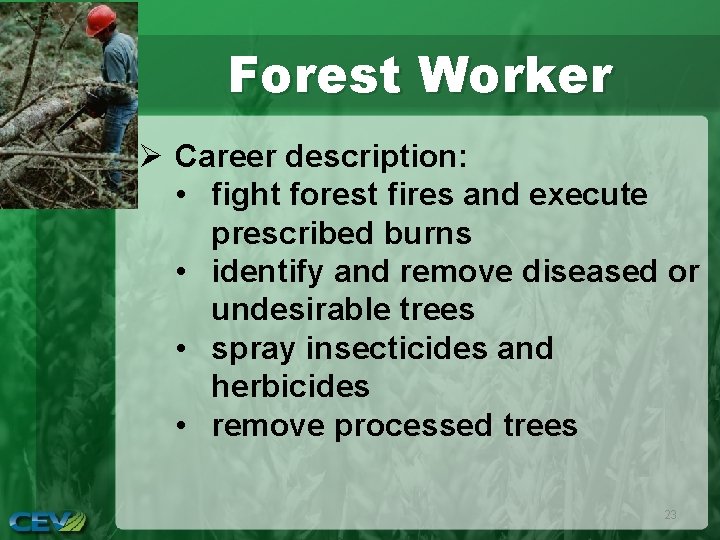
Forest Worker Ø Career description: • fight forest fires and execute prescribed burns • identify and remove diseased or undesirable trees • spray insecticides and herbicides • remove processed trees 23
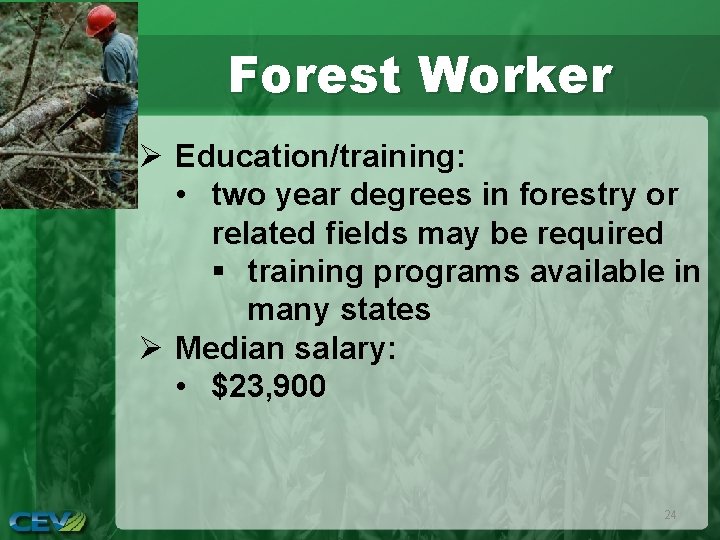
Forest Worker Ø Education/training: • two year degrees in forestry or related fields may be required § training programs available in many states Ø Median salary: • $23, 900 24
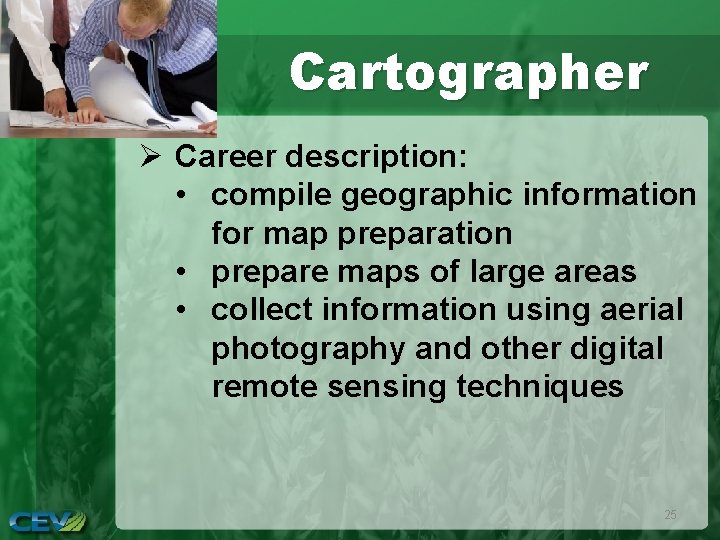
Cartographer Ø Career description: • compile geographic information for map preparation • prepare maps of large areas • collect information using aerial photography and other digital remote sensing techniques 25
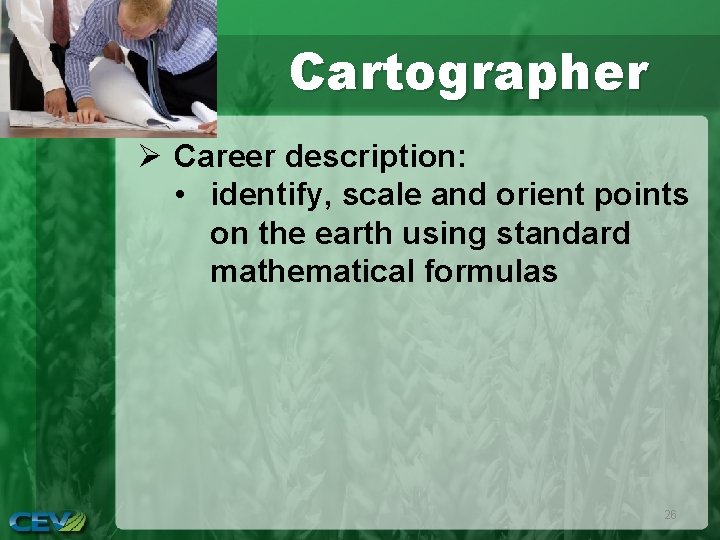
Cartographer Ø Career description: • identify, scale and orient points on the earth using standard mathematical formulas 26
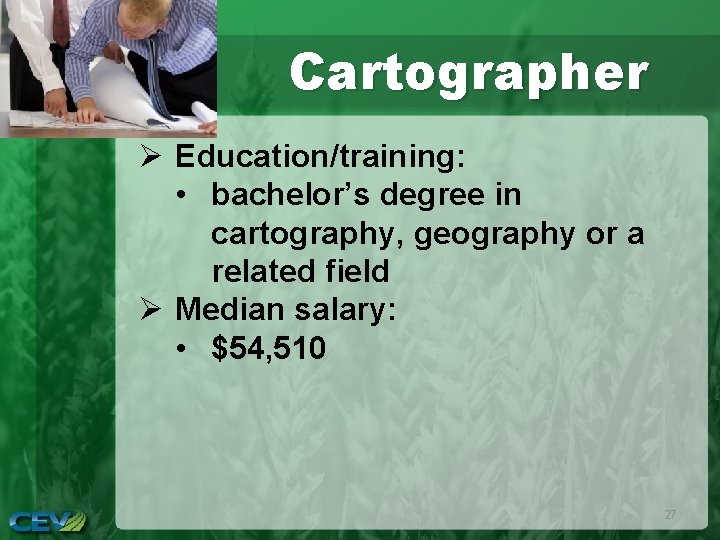
Cartographer Ø Education/training: • bachelor’s degree in cartography, geography or a related field Ø Median salary: • $54, 510 27
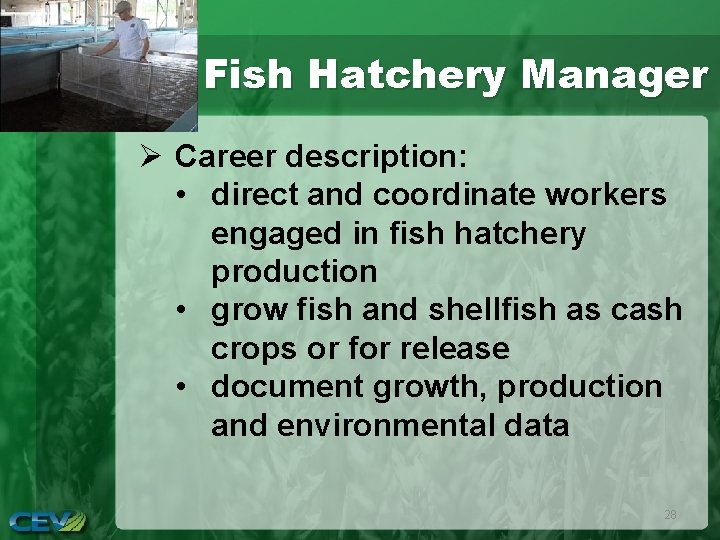
Fish Hatchery Manager Ø Career description: • direct and coordinate workers engaged in fish hatchery production • grow fish and shellfish as cash crops or for release • document growth, production and environmental data 28
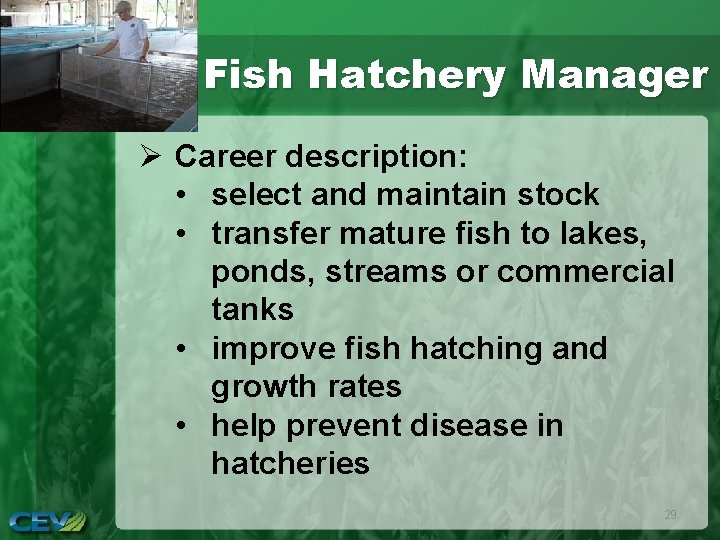
Fish Hatchery Manager Ø Career description: • select and maintain stock • transfer mature fish to lakes, ponds, streams or commercial tanks • improve fish hatching and growth rates • help prevent disease in hatcheries 29
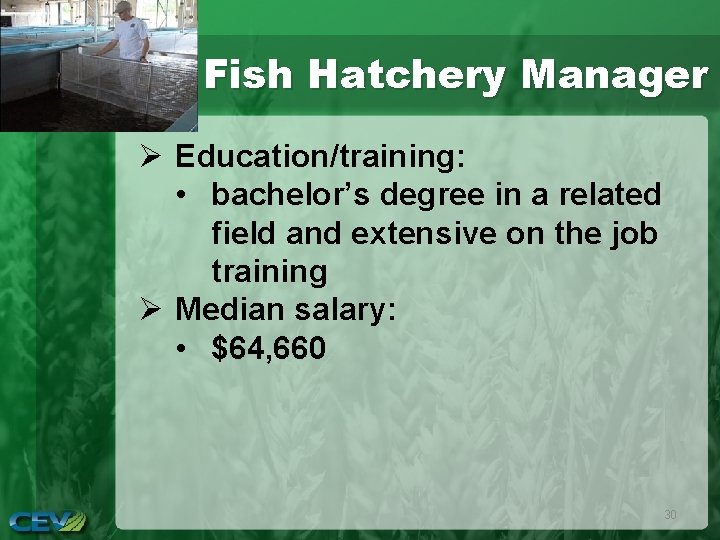
Fish Hatchery Manager Ø Education/training: • bachelor’s degree in a related field and extensive on the job training Ø Median salary: • $64, 660 30
Discussion Questions 1. Describe the Natural Resource Systems Pathway and the careers available within the pathway. 2. What education and training requirements are needed for most careers in this pathway? 3. What are the working conditions for most careers in this pathway? 31
Discussion Questions 4. Describe the average earnings of some careers in this pathway and why they differ from other careers. 5. List three character traits you possess which would make you successful in a career in this pathway. 32
Resources U. S. Department of Labor. Occupational Outlook Handbook. Washington, D. C. : Jist Works, 2013. http: //online. onetcenter. org/ 33
Acknowledgements Production Coordinator Holly Mannan John Carroll Graphics Designer John Carroll Technical Writer Jessica Odom Vice President of Brand Management Clayton Franklin Executive Producers Gordon Davis, Ph. D. Dusty Moore CEV Multimedia. Ltd. ©MMXIII 34
- Slides: 34