
NATURAL RESOURCES LAND SOIL AND WATER RESOURCES Natural




- Slides: 25
NATURAL RESOURCES: LAND, SOIL AND WATER RESOURCES
● Natural resources upon which all human activity is based is land ● Lithosphere consists of loose surface material called Soil ● Combination of organic and inorganic matter. Organic consists of dead and decomposed parts of animals and plants called Humus. Inorganic formed by rock particles and minerals such as lime, iron etc. ● 90% of the world’s population is inhabited in the plain areas of alluvial soil ● Sparse population is seen in areas of high altitudes, deserts, equatorial forests, infertile soil
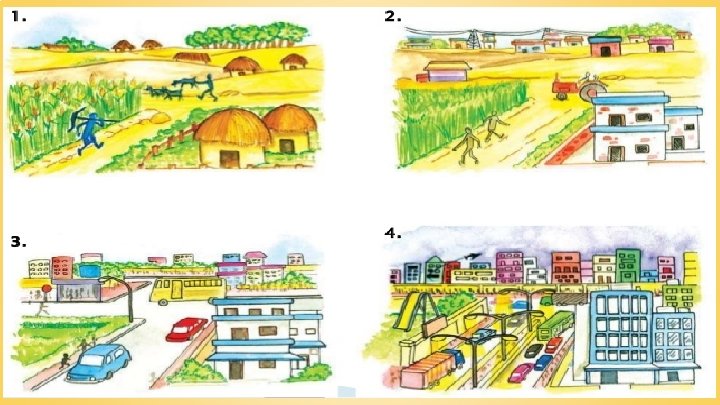
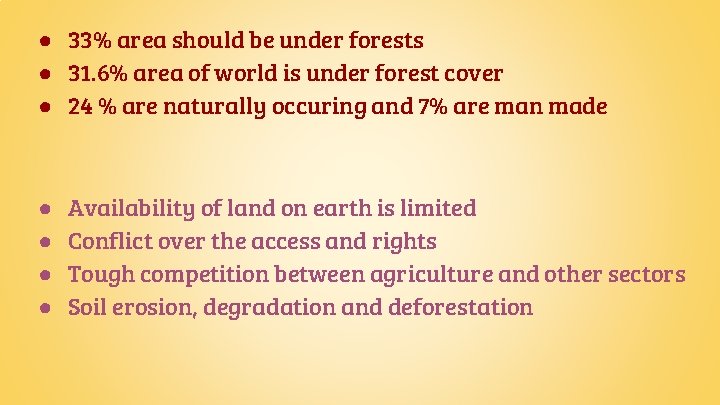
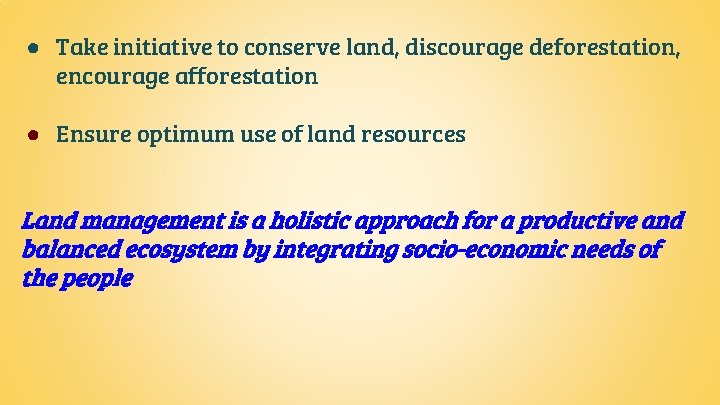
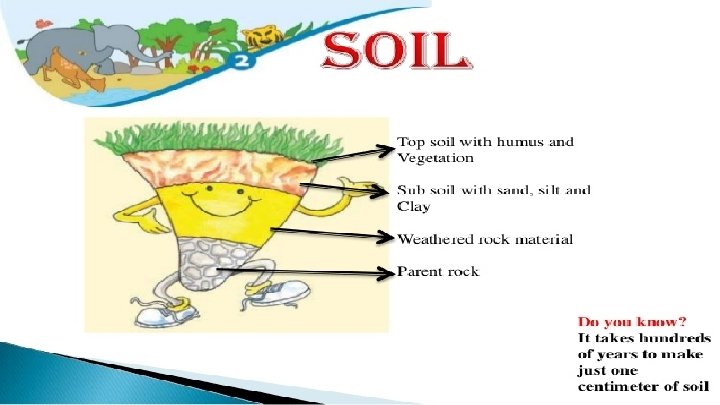
● Land is used for various purposes such as cultivation of crops, building of houses, roads and railways, grazing of animals etc. known as land use pattern ● Utilization of land is determined by the continuous interplay Physical factors- relief, soil, climatic conditions, mineral resources Human Factors- Density of population, technological
● Study of land use pattern is important for the economic planning of the nation ● Assess the shortcomings in land utilisation ● Development goals and availability of natural rsources
● 33% area should be under forests ● 31. 6% area of world is under forest cover ● 24 % are naturally occuring and 7% are man made ● ● Availability of land on earth is limited Conflict over the access and rights Tough competition between agriculture and other sectors Soil erosion, degradation and deforestation
● Take initiative to conserve land, discourage deforestation, encourage afforestation ● Ensure optimum use of land resources Land management is a holistic approach for a productive and balanced ecosystem by integrating socio-economic needs of the people
● A large part of the earth is covered with soil USES OF SOIL ● Valuable to the farmers ● Agriculture production is dependent on fertility of soil ● Rich and deep soil cover favours Agriculture production ● Shallow and lacks fertility Agriculture production will be less ● Growth of plants ● Animals depend upon soil ● Gives shelter to insects and animals ● Making bricks
● Soil erosion and depletion are the major threats to soil as a resource. ● Both human and natural factors can lead to degradation of soil ● Factors which lead to soil degradation are deforestation, overgrazing, overuse of chemical feritilisers or pesticides
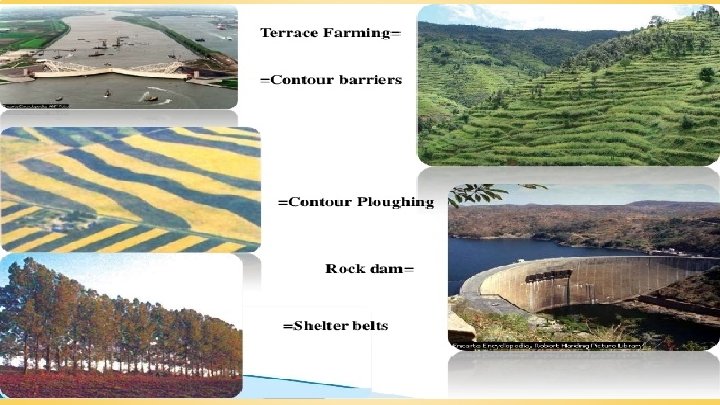
CONSERVATION MEASURES ● ● ● ● Afforestation Planting of shelter belts Overgrazing must be check Check reckless cutting of trees Building of dams Terrace farming and contour ploughing Scientific agriculture practices like rotation of crops, strip cropping etc.
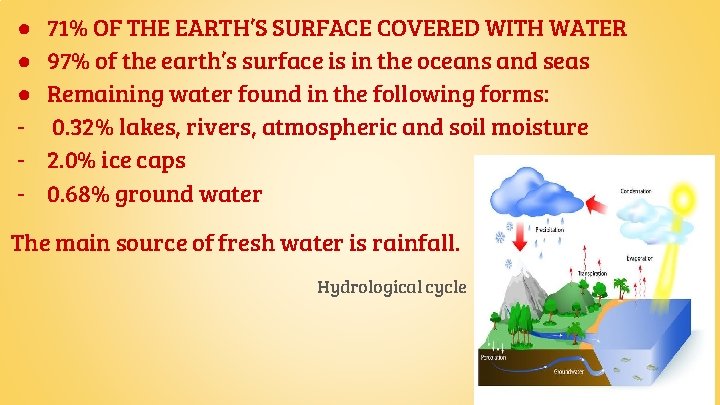
● ● ● - 71% OF THE EARTH’S SURFACE COVERED WITH WATER 97% of the earth’s surface is in the oceans and seas Remaining water found in the following forms: 0. 32% lakes, rivers, atmospheric and soil moisture 2. 0% ice caps 0. 68% ground water The main source of fresh water is rainfall. Hydrological cycle
● Precipitation of the world is estimated to be 1050 millimetres per year or 2. 9 mm per day ● Areas of High Rainfall- Equatorial areas in South America, Africa and South East Asia ● Areas of Low Rainfall- Tropical Deserts. Sahara, Arabian, Western Australia, Kalahari, Central Eurasia, Polar Areas etc.
Map: world : Distribution of Rainfall
POLLUTION OF WATER ● Access to clean and adequate water sources is a major problem facing the world today ● Discharge of untreated or partially treated sewage, agricultural chemicals and industrial effluents in water bodies are major contaminants ● Most of these chemicals being non-biodegradable reach human bodies through water cause diseases ● Disturbs the ecosystem
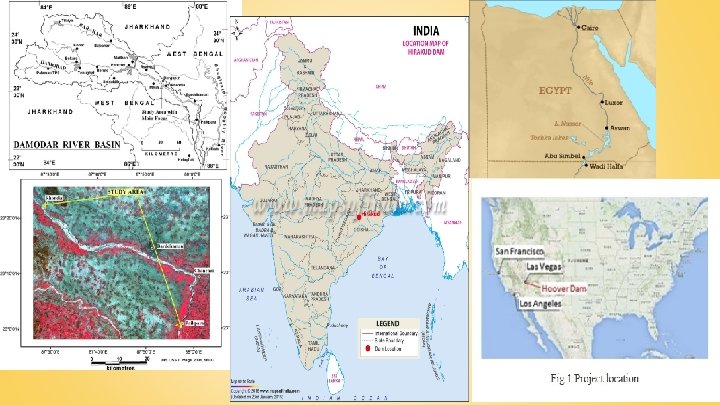
MULTIPURPOSE RIVER PROJECTS ● Projects which serves many objectives at the same time. ● Under this a dam or series of dams are constructed across the river for storing water ● Used for several purposes- providing irrigation, generating hydroelectricity, afforestation, control floods, navigation etc. ● Damodar river valley project and Hirakud Dam in India, Aswan in Egypt, Hoover Valley project in USA
Ecological problems by dams ● ● ● Extensive forests submerged under water Aquatic life gets affected River water gets diverted Result in soil erosion Population gets displaced During excessive rain, floods are caused
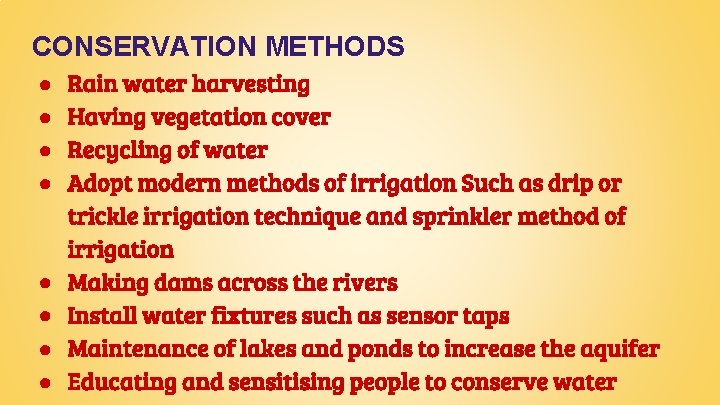
CONSERVATION METHODS ● ● ● ● Rain water harvesting Having vegetation cover Recycling of water Adopt modern methods of irrigation Such as drip or trickle irrigation technique and sprinkler method of irrigation Making dams across the rivers Install water fixtures such as sensor taps Maintenance of lakes and ponds to increase the aquifer Educating and sensitising people to conserve water