
NATURAL RESOURCES ECOLOGICAL FOOTPRINTS NATURAL RESOURCES are the
- Slides: 9
NATURAL RESOURCES & ECOLOGICAL FOOTPRINTS
NATURAL RESOURCES. . . § are the materials provided by Earth itself § Replenish (are replaced) through natural processes § used by ALL living organisms to sustain life § used by people for economic gain as well § Examples: § Air § Water § Land & soil § Minerals & rocks § Living organisms
TYPES OF NATURAL RESOURCES Renewable Nonrenewable Can be used without significantly reducing the amount available Replenish in months, years, or decades Rate of replenishment is greater than or equal to rate of use Examples: water, wind, oxygen, timber Can NOT be used without significantly reducing the amount available Replenishment/form ation takes millions of years Rate of replenishment is less than rate of use Examples: coal,
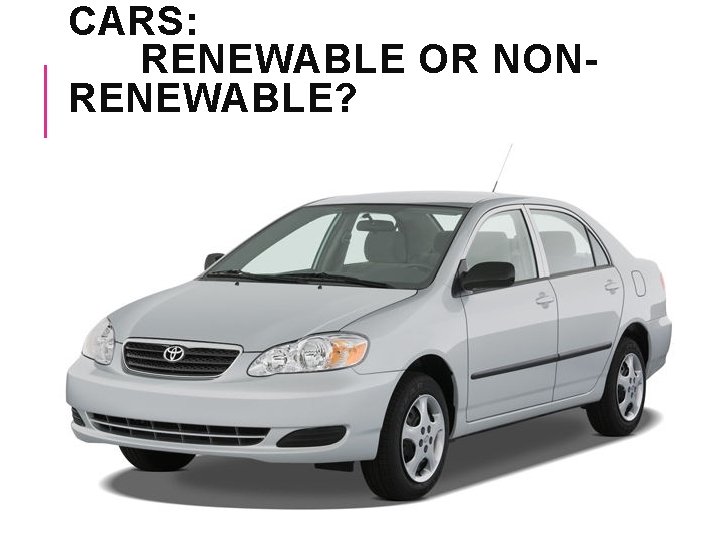
CARS: RENEWABLE OR NONRENEWABLE?
RESOURCE DISTRIBUTION § Natural resources are found in every part of the world § Natural distribution is NOT equal § Deserts lack water § Tundra lack trees § North America has few diamonds § Caribbean Islands have no emeralds § Greater natural resources = more wealth & power
U. S. NATURAL RESOURCES § U. S. has many different natural resources in relatively abundant supply § Timber § Freshwater § Coal § Often more resources = greater use person = higher standard of living
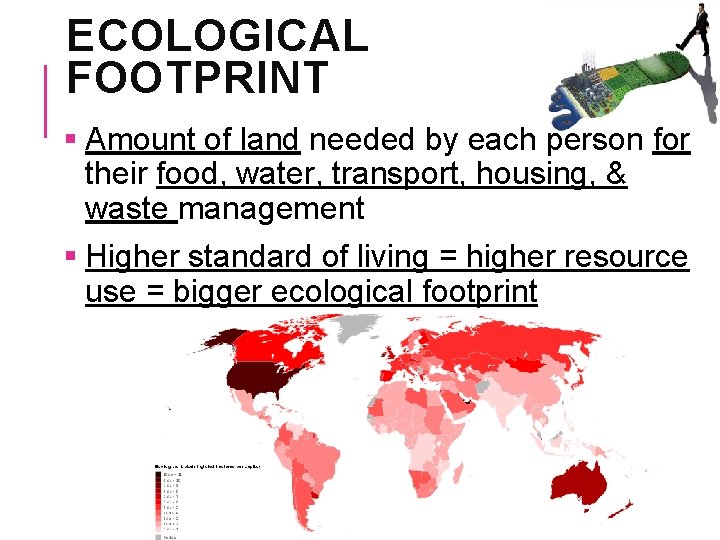
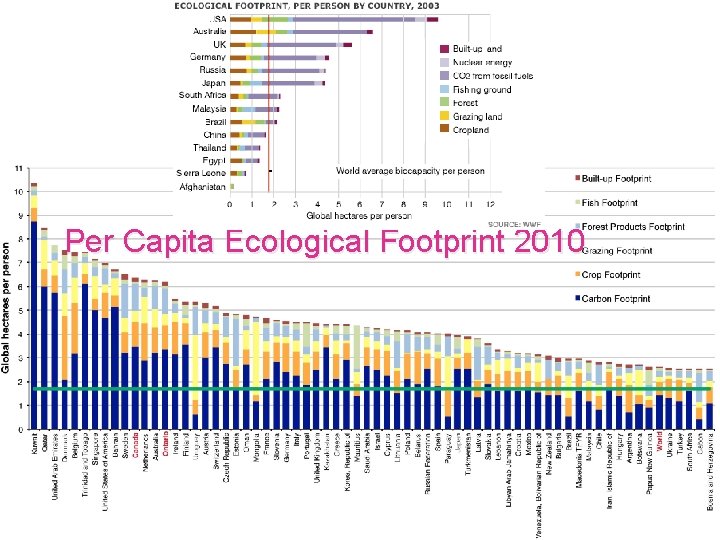
ECOLOGICAL FOOTPRINT § Amount of land needed by each person for their food, water, transport, housing, & waste management § Higher standard of living = higher resource use = bigger ecological footprint
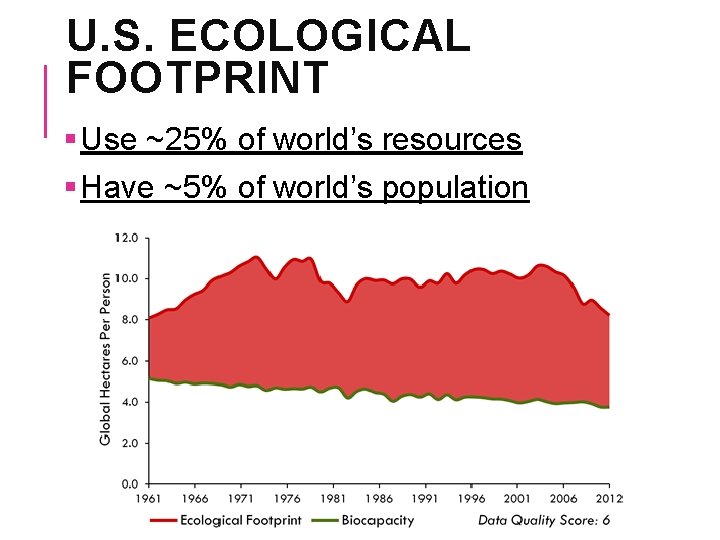
U. S. ECOLOGICAL FOOTPRINT § Use ~25% of world’s resources § Have ~5% of world’s population
Per Capita Ecological Footprint 2010