
Natural Resources and the Economy Primary economic activity

- Slides: 32
Natural Resources and the Economy • Primary economic activity • Resource-based economies (Gabon) • Agriculture and trade (Chile)
Economic geography • How do people earn a living? – Physical environment – Cultural conditions – Technology – Politics/economic system • How does that vary by place? • How does it connect places?
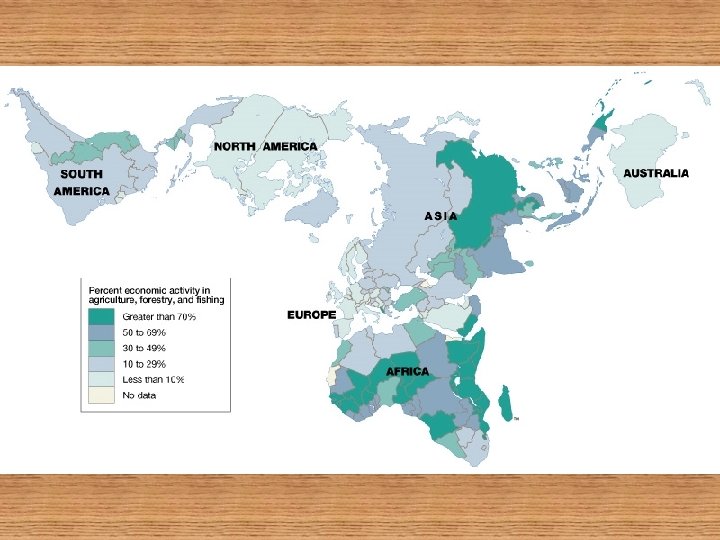
Economic geography • Primary economic activity – Closest contact with natural resources – Generally, lowest income • Secondary: value added (manufacturing) • Tertiary: services for primary or secondary • Quaternary: information-based services
Primary economic activity • “Gathering” industries – Fishing – Forestry • Commercial vs. subsistence • Potentially renewable resources • Maximum sustainable yield
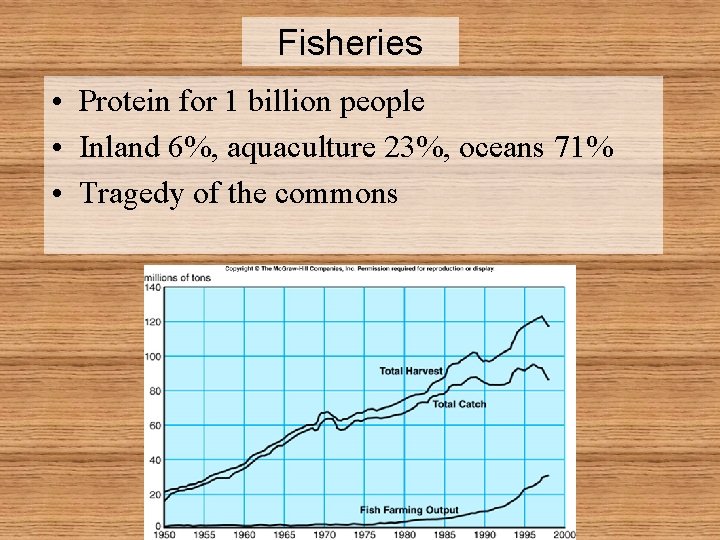
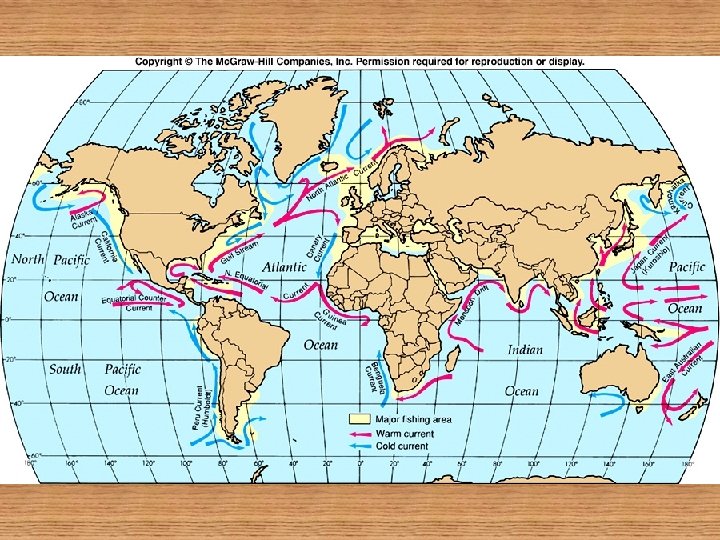
Fisheries • Protein for 1 billion people • Inland 6%, aquaculture 23%, oceans 71% • Tragedy of the commons
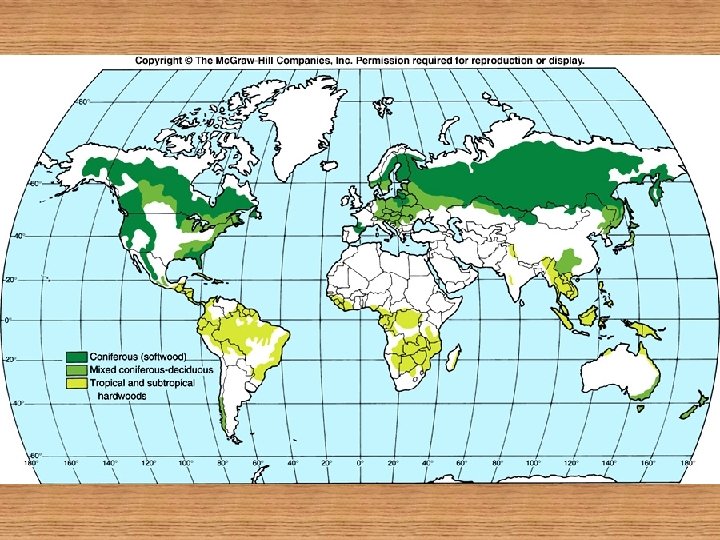
Forestry • • Commercial use or fuelwood Coniferous (softwood) for paper, lumber Deciduous (hardwood) for furniture, etc. Tropical hardwood for fuelwood, furniture – And clearing land
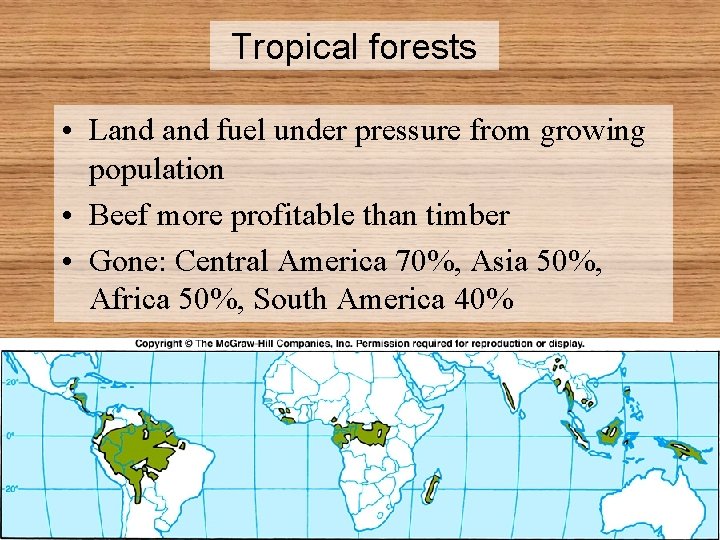
Tropical forests • Land fuel under pressure from growing population • Beef more profitable than timber • Gone: Central America 70%, Asia 50%, Africa 50%, South America 40%
Tropical forests • Forests as carbon sink • Rain forests and biodiversity – Costa Rica birds = North America – 72 species of ant on Peruvian tree • Medical resources • Ecotourism
Primary economic activity • “Extractive” industries – Mining – Quarrying (gravel, sand) • Nonrenewable resources • Huge capital investment: then what?
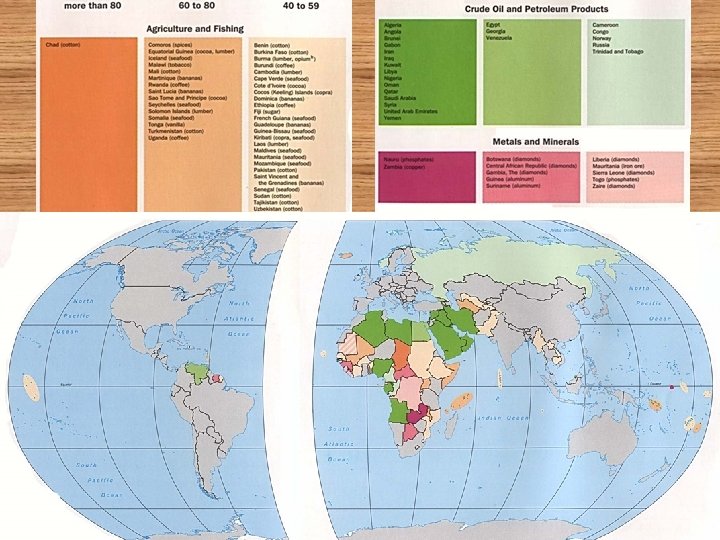
Resource-based economies • • • Multiple scales (from countries to towns) Dependent on one commodity Volatile commodity prices Boom-and-bust cycles Need value-added activity
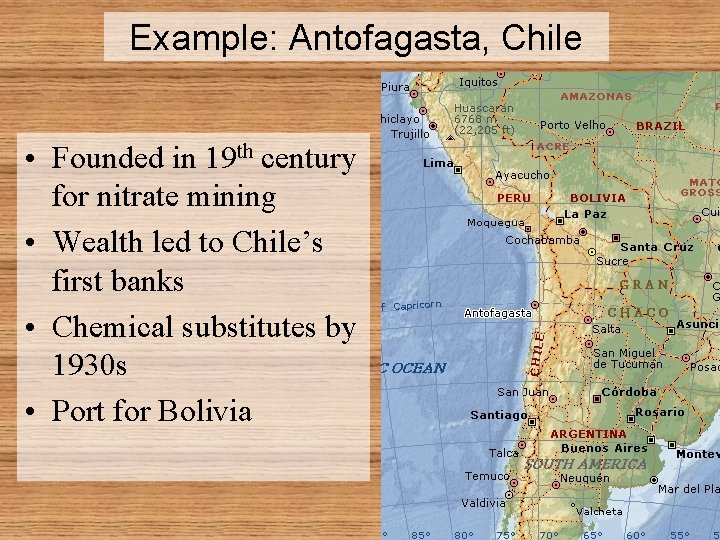
Example: Antofagasta, Chile • Founded in 19 th century for nitrate mining • Wealth led to Chile’s first banks • Chemical substitutes by 1930 s • Port for Bolivia
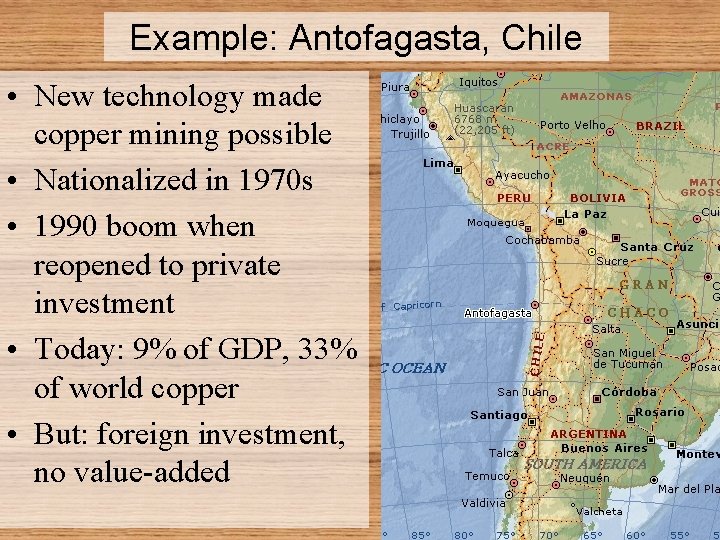
Example: Antofagasta, Chile • New technology made copper mining possible • Nationalized in 1970 s • 1990 boom when reopened to private investment • Today: 9% of GDP, 33% of world copper • But: foreign investment, no value-added
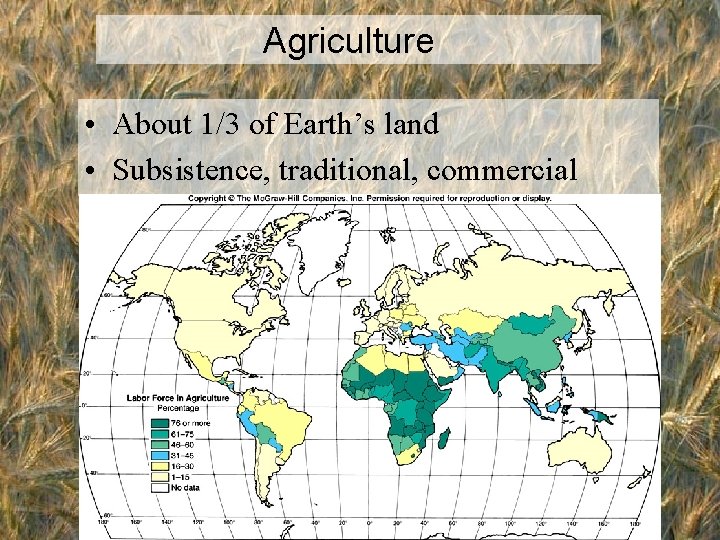
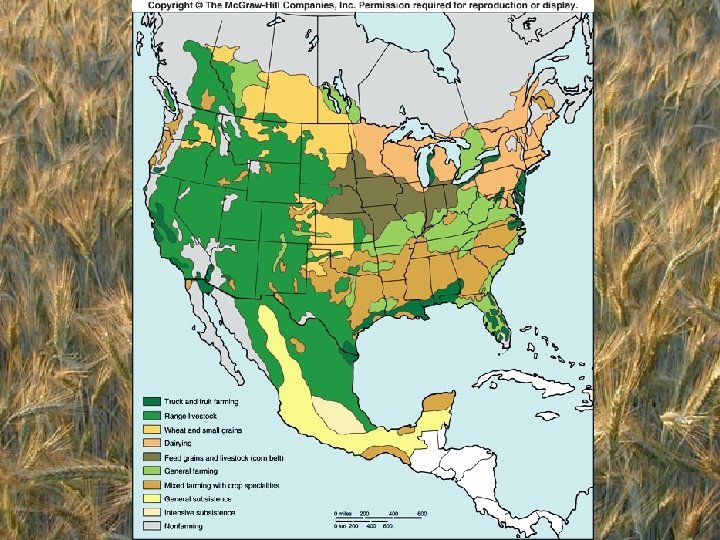
Agriculture • About 1/3 of Earth’s land • Subsistence, traditional, commercial
Subsistence agriculture • Your responsibility! • Extensive vs. intensive • Nomadic herding, shifting cultivation, intensive subsistence • Where and why
Commercial agriculture • • Maximizing profit, not food security Specialization by location Off-farm sales Interdependence of producers and consumers
Agribusiness • Focus on minimizing risk – Producers want standard products – Farmers want guaranteed markets • Contracts between farmers and corporations • Political pressure for subsidies • Political pressure on health
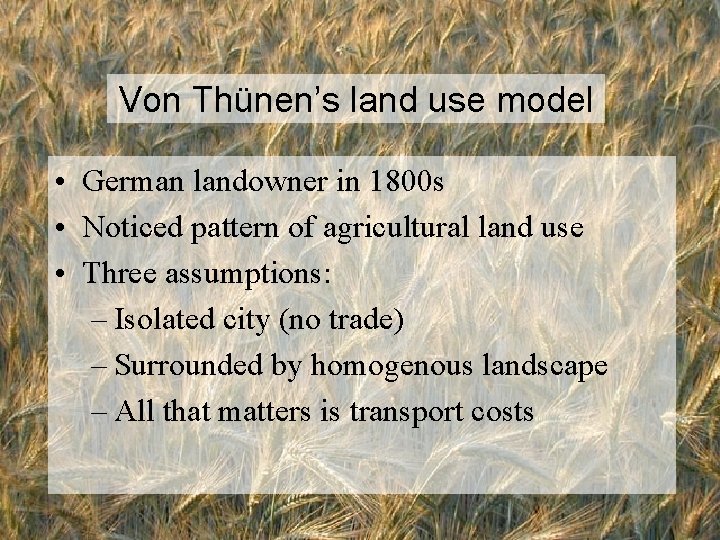
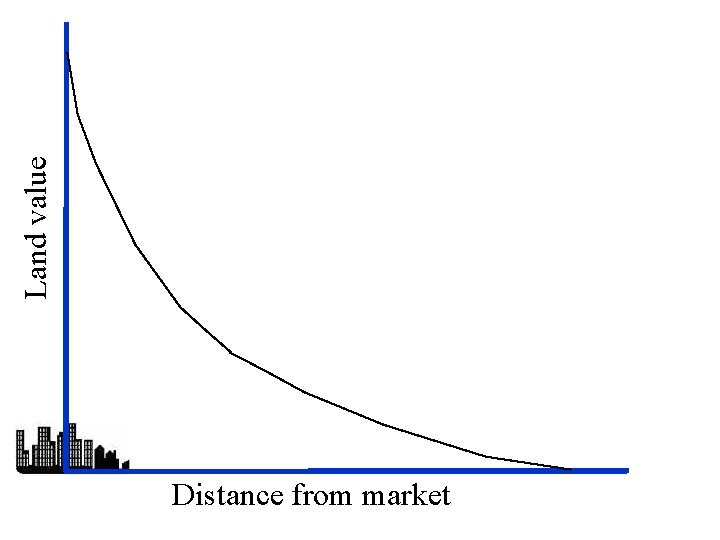
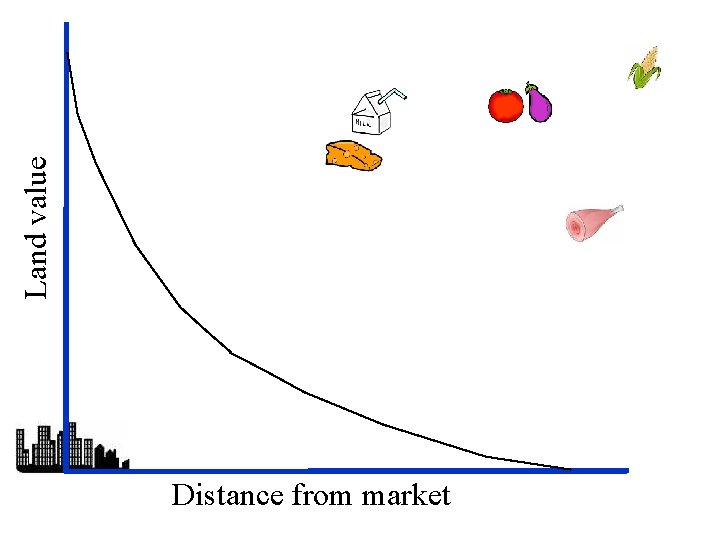
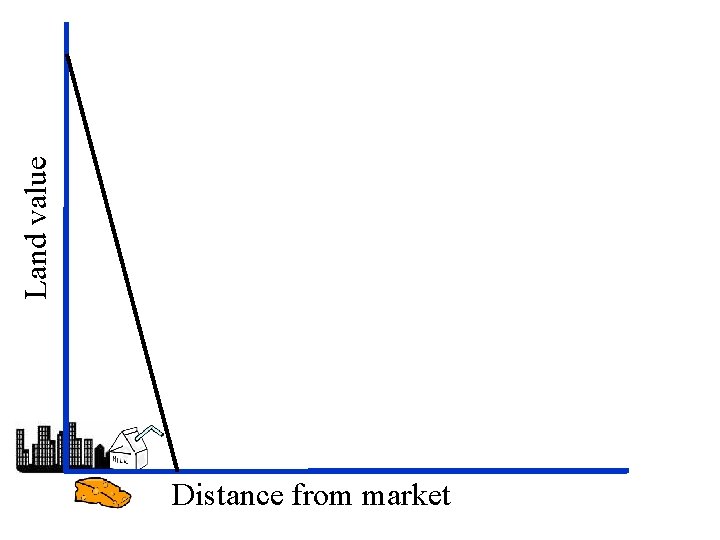
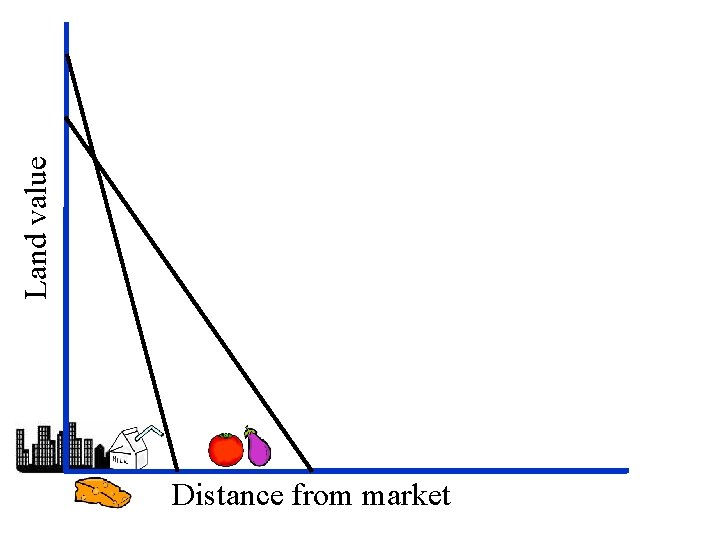
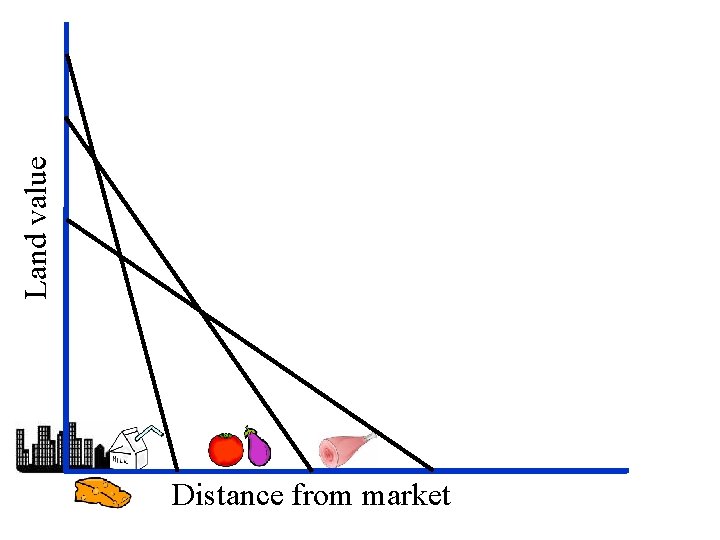
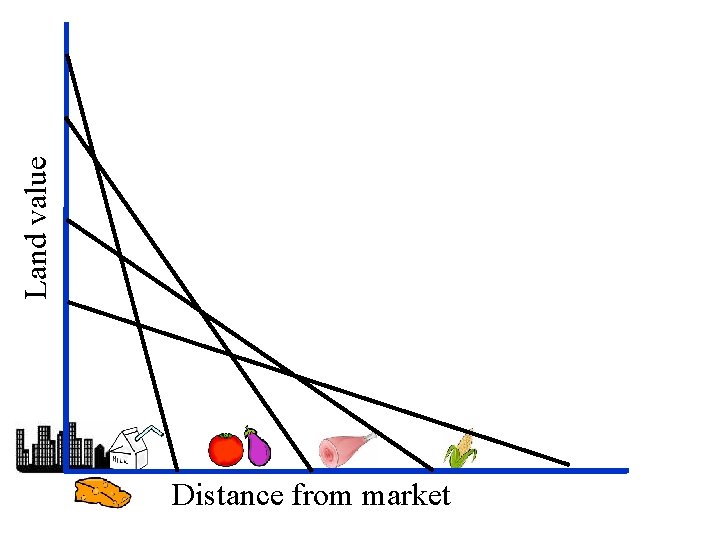
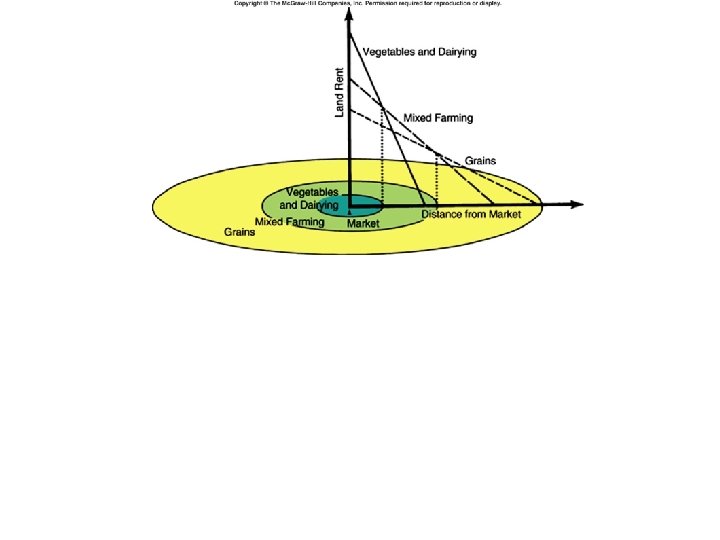
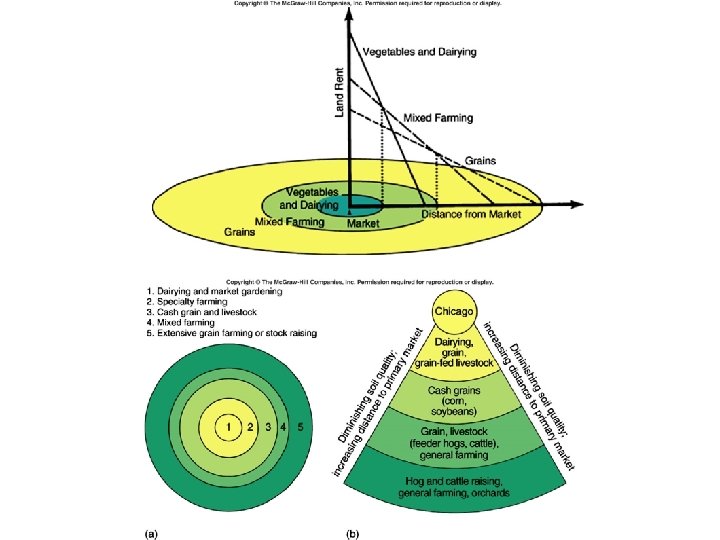
Von Thünen’s land use model • German landowner in 1800 s • Noticed pattern of agricultural land use • Three assumptions: – Isolated city (no trade) – Surrounded by homogenous landscape – All that matters is transport costs
Land value Distance from market
Land value Distance from market
Land value Distance from market
Land value Distance from market
Land value Distance from market
Land value Distance from market
Von Thünen’s land use model • • • So what? Connections between city and country General patterns of agriculture Can be applied to urban settings, too Decreased transport costs make the pattern larger