
Natural Resource Damage Assessment Basics Applicability to Compacts
Natural Resource Damage Assessment Basics; Applicability to Compacts with FSM and RMI Michael Fry Environmental Contaminants Coordinator U. S. Fish and Wildlife Service Honolulu, Hawaii
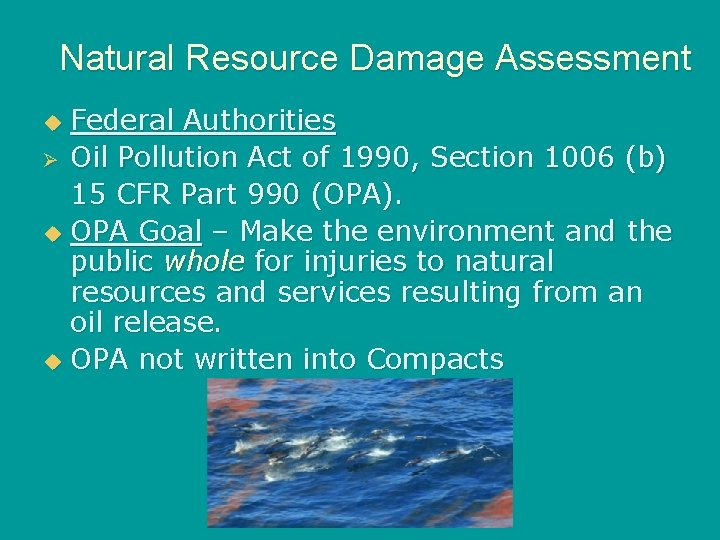
Natural Resource Damage Assessment Federal Authorities Ø Oil Pollution Act of 1990, Section 1006 (b) 15 CFR Part 990 (OPA). u OPA Goal – Make the environment and the public whole for injuries to natural resources and services resulting from an oil release. u OPA not written into Compacts u
OPA Goals u Action 1 -restore injured resources to baseline (e. g. # dead animals, acres of wetland, restoration of coral). u Action 2 -compensate public for interim lost services (e. g. # lost days to tourism, loss of food chain source).
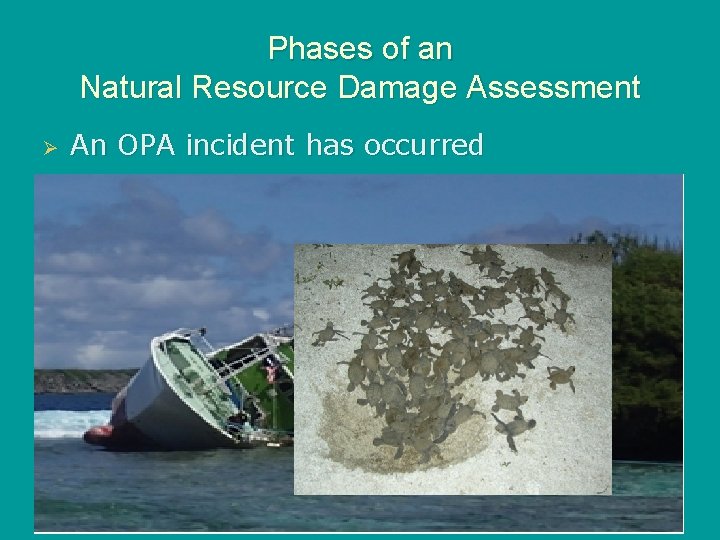
Phases of an Natural Resource Damage Assessment Ø An OPA incident has occurred u Agency -“Determination of Jurisdiction” Ø Ø No exclusionary criteria apply (e. g. military emergency, public vessel) Trust Resources of agencies are at risk as a result
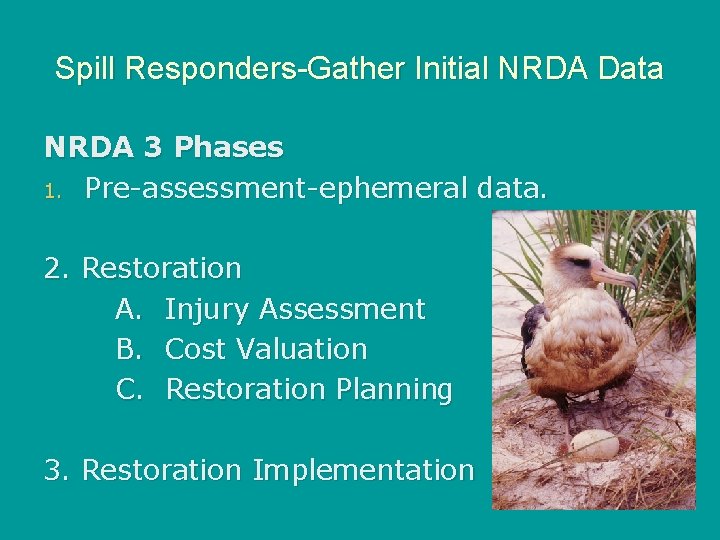
Spill Responders-Gather Initial NRDA Data NRDA 3 Phases 1. Pre-assessment-ephemeral data. 2. Restoration A. Injury Assessment B. Cost Valuation C. Restoration Planning 3. Restoration Implementation

Identifying Resources at Risk Circumstances of the incident –location, condition of the vessel or facility, environmental conditions u Characteristics of the discharge – type of product, source, time, duration, and volume of release u
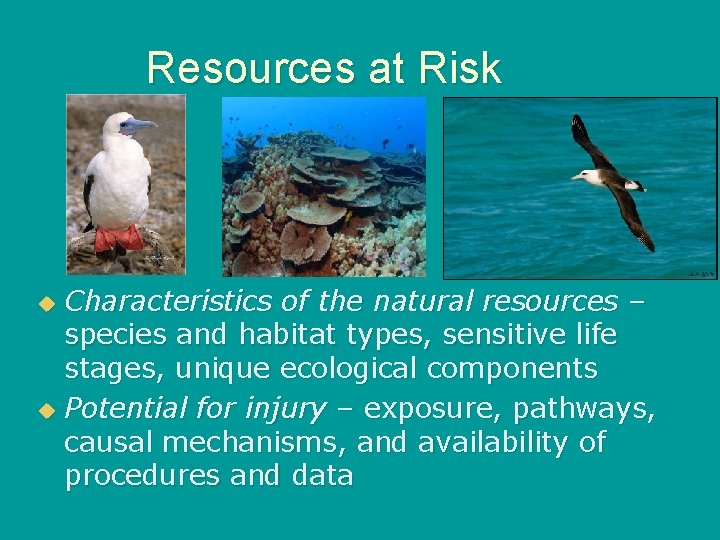
Resources at Risk Characteristics of the natural resources – species and habitat types, sensitive life stages, unique ecological components u Potential for injury – exposure, pathways, causal mechanisms, and availability of procedures and data u
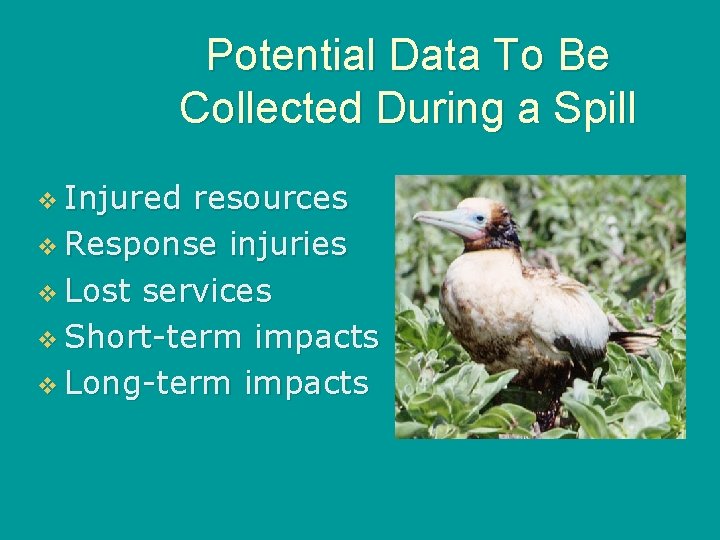
Potential Data To Be Collected During a Spill v Injured resources v Response injuries v Lost services v Short-term impacts v Long-term impacts
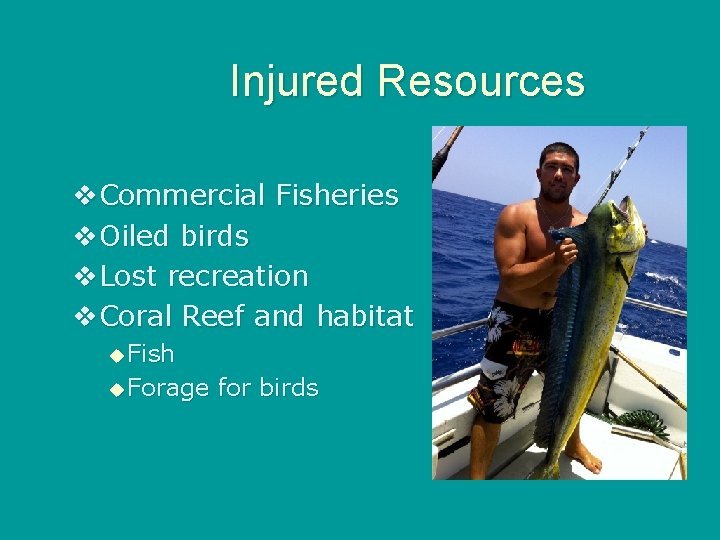
Injured Resources v. Commercial Fisheries v. Oiled birds v. Lost recreation v. Coral Reef and habitat u Fish u Forage for birds
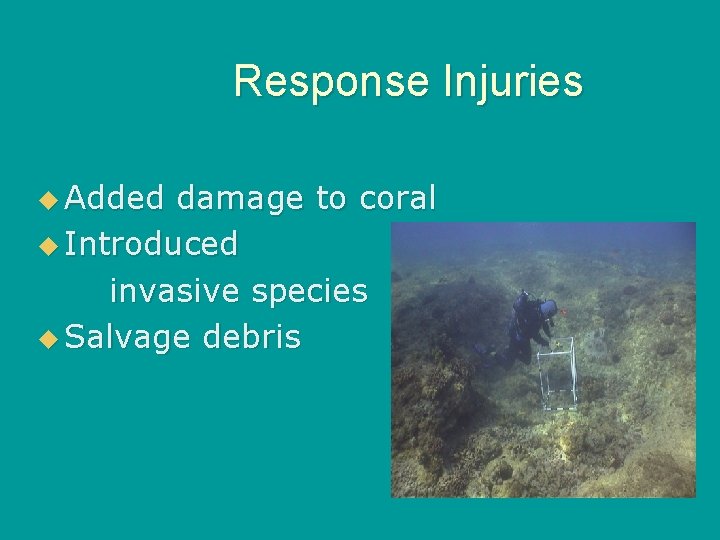
Response Injuries u Added damage to coral u Introduced invasive species u Salvage debris
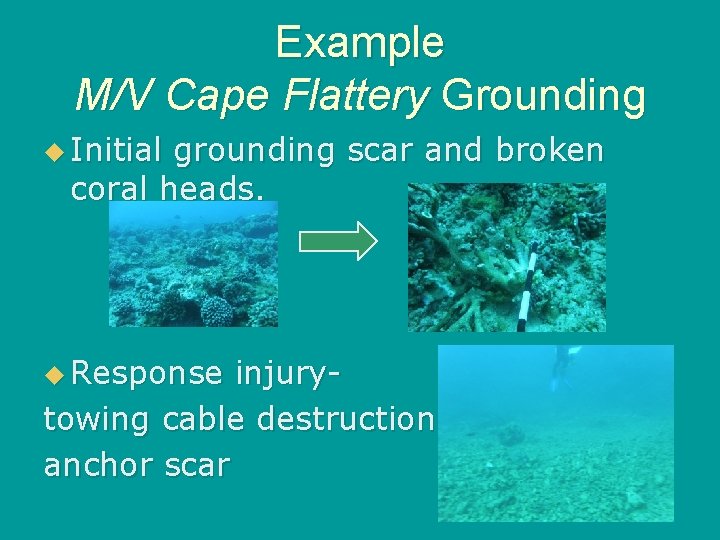
Example M/V Cape Flattery Grounding u Initial grounding scar and broken coral heads. u Response injurytowing cable destruction anchor scar
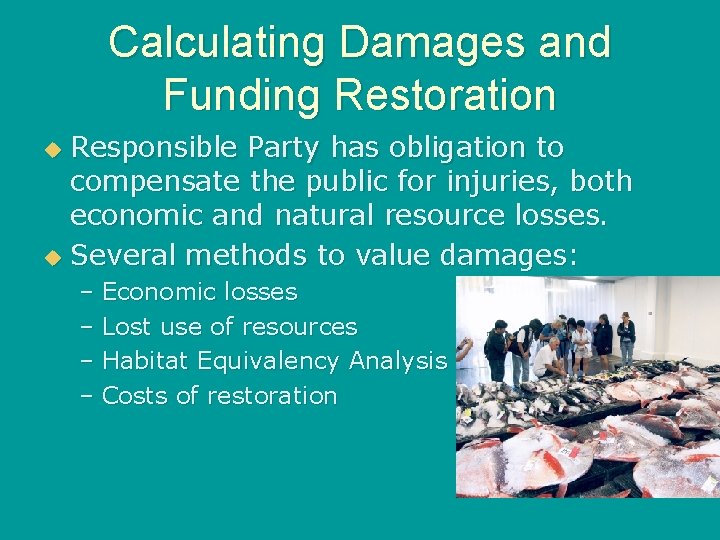
Calculating Damages and Funding Restoration Responsible Party has obligation to compensate the public for injuries, both economic and natural resource losses. u Several methods to value damages: u – Economic losses – Lost use of resources – Habitat Equivalency Analysis – Costs of restoration
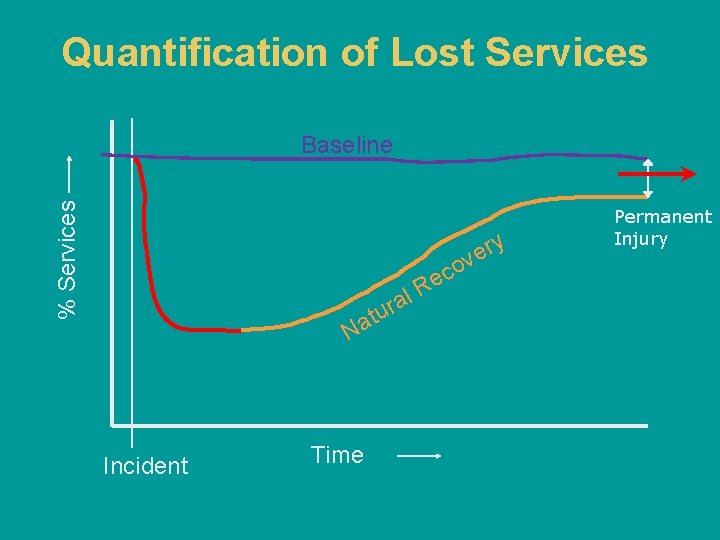
Quantification of Lost Services % Services Baseline ry e ov a r u t a N Incident Time c e l. R Permanent Injury
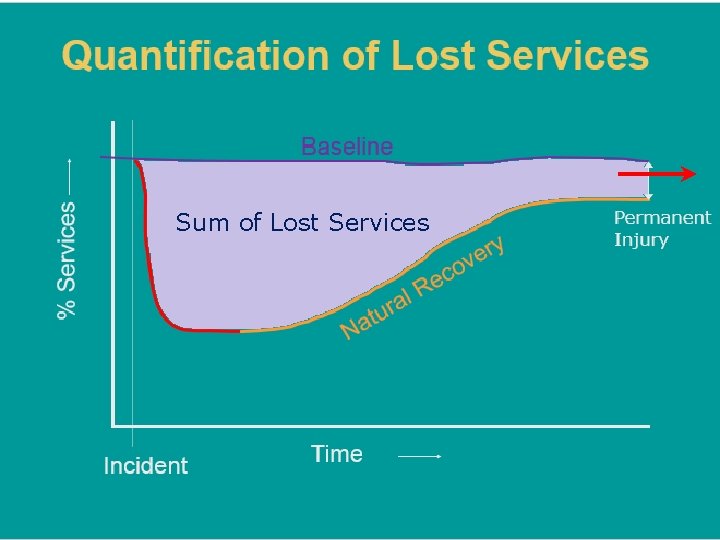
Sum of Lost Services
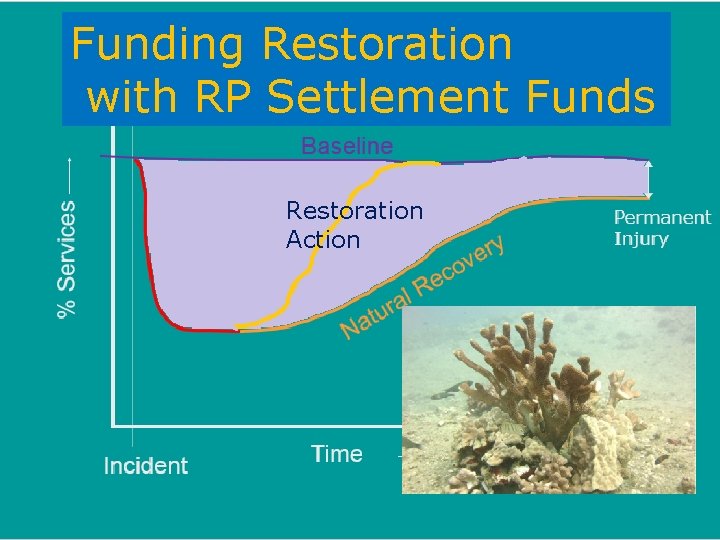
Funding Restoration with RP Settlement Funds Restoration Action
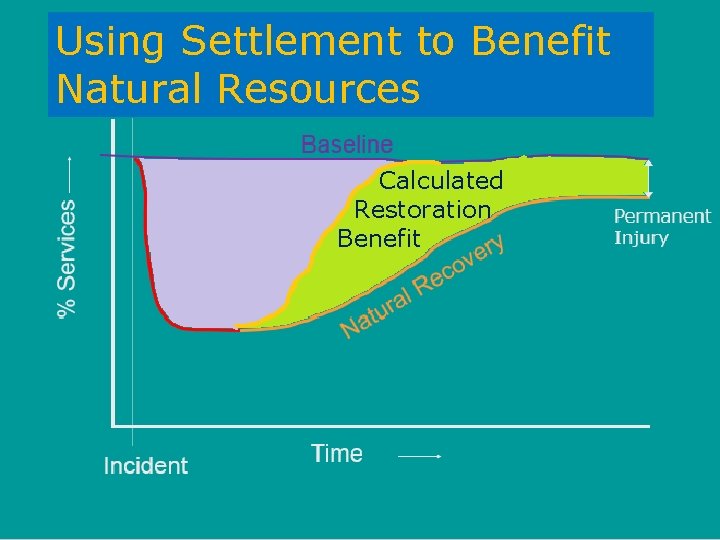
Using Settlement to Benefit Natural Resources Calculated Restoration Benefit
- Slides: 17