
Natural Pollution Natural pollutants Substances that occur naturally

Natural Pollution
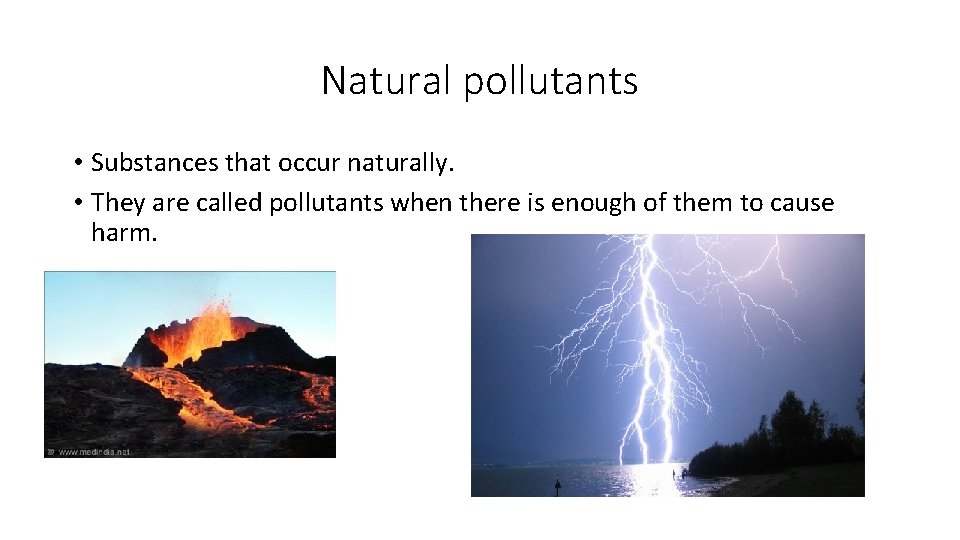
Natural pollutants • Substances that occur naturally. • They are called pollutants when there is enough of them to cause harm.
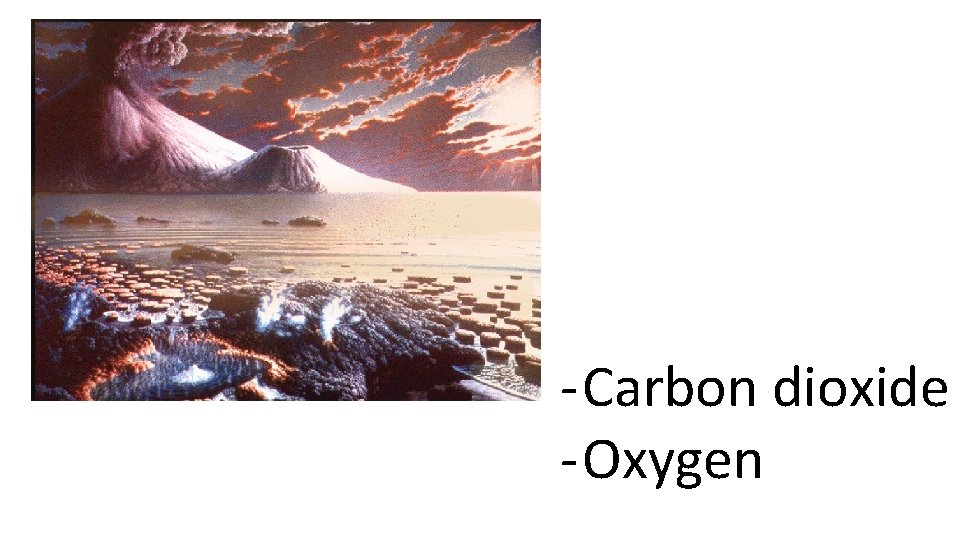
- Carbon dioxide - Oxygen
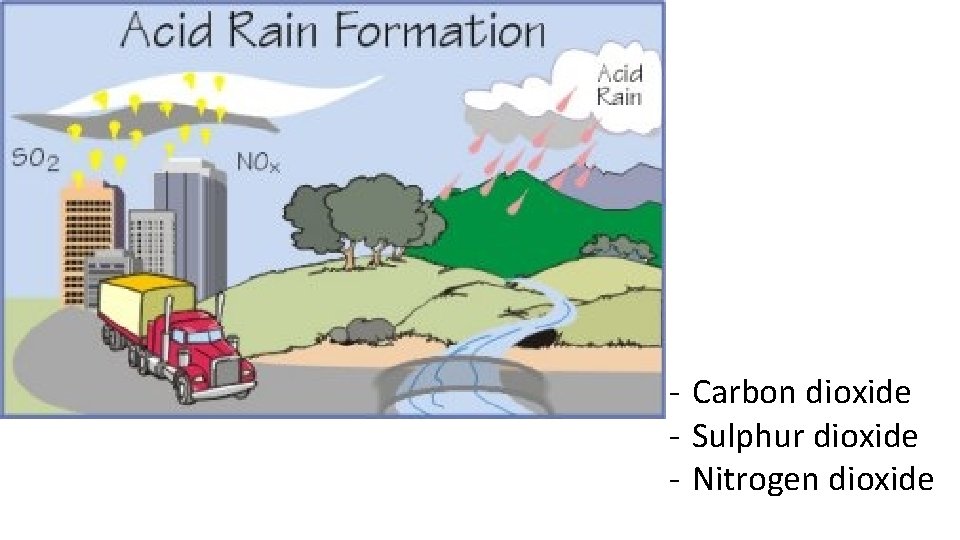
- Carbon dioxide - Sulphur dioxide - Nitrogen dioxide
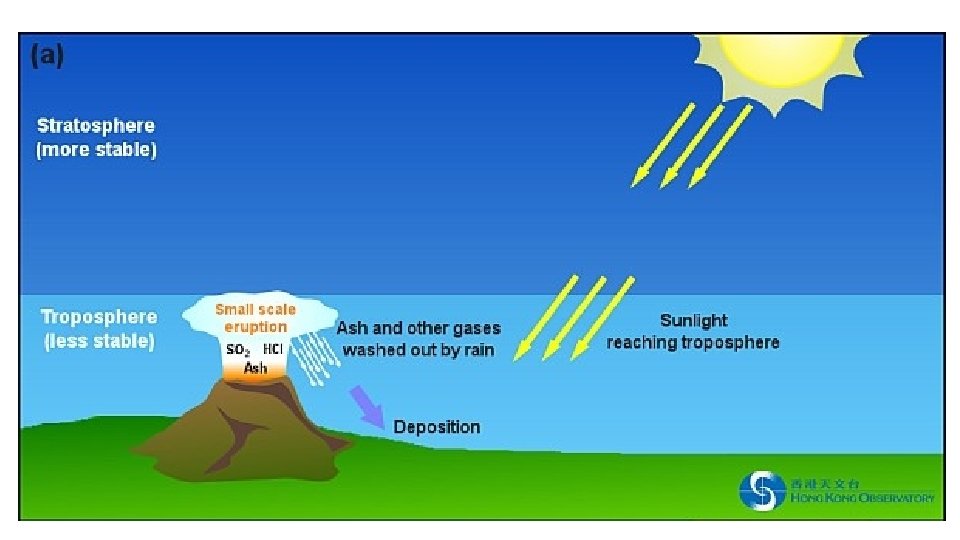

Acid rain
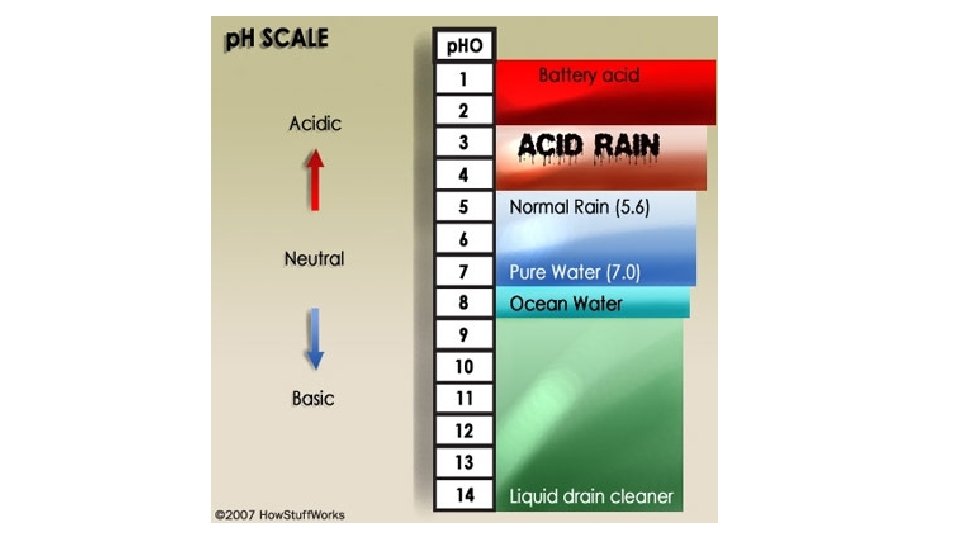
What is acid rain? • Acid rain refers to a mixture of deposited material, both wet and dry, coming from the atmosphere containing more than normal amounts of nitric and sulfuric acids. The most acidic rain falling in the U. S. has a p. H of about 4. 3. • Canada, northeastern United States and most of Europe, including portions of Sweden, Norway, and Germany. • Found in parts of South Asia, South Africa, Sri Lanka, and Southern India. • It was discovered way back in 1800 s during the Industrial Revolution. A Scottish chemist, Robert Angus Smith.
Forms of Acid Rain • Wet Deposition – When the wind blows the acidic chemicals in the air to the areas where the weather is wet, the acids fall to the ground in the form of rain, sleet, fog, snow or mist. It affects large number of plants, animals and aquatic life. The water from drain flows into rivers and canals which is them mixed up with sea water, thereby affecting marine habitats. • Dry Deposition – If the wind blows the acidic chemicals in the air to the areas where the weather is dry, the acidic pollutants slip into dust or smoke and fall to the ground as dry particles. These stick to the ground and other surfaces such as cars, houses, trees and buildings.
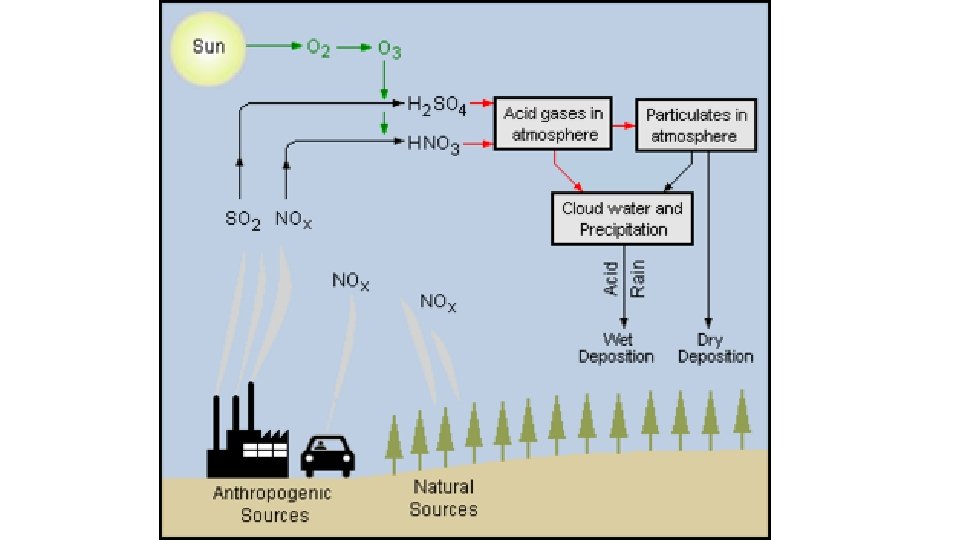
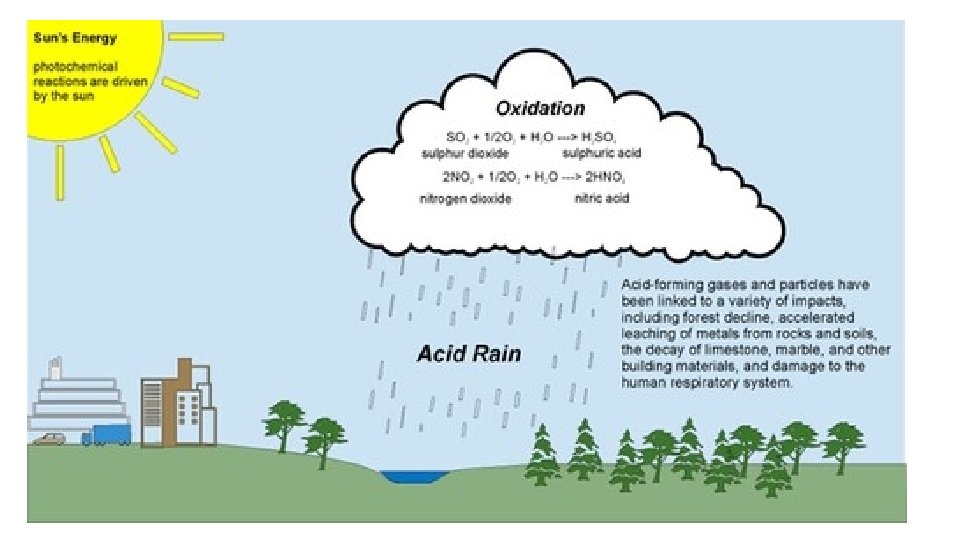
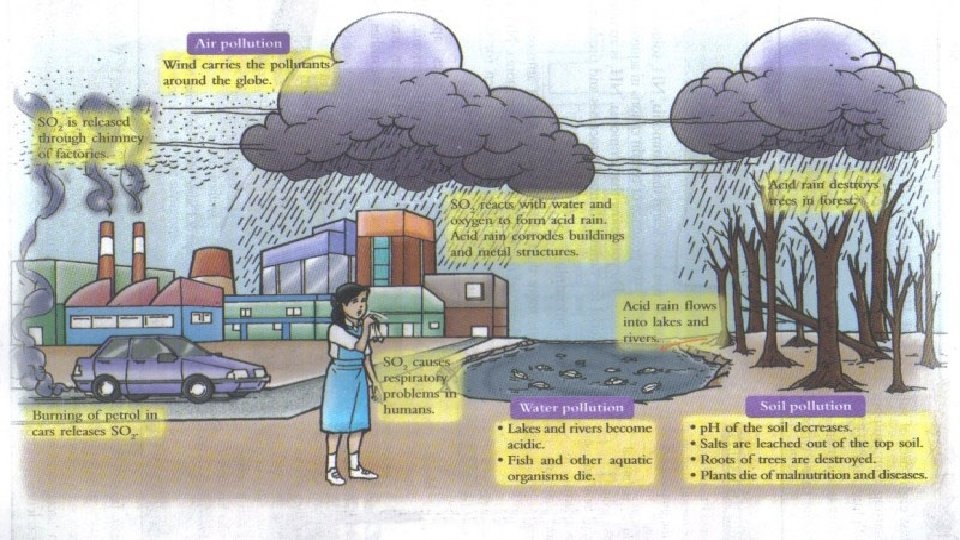
Causes of Acid Rain • Both natural and man-made sources are known to play a role in the formation of acid rain. But, it is mainly caused by combustion of fossil fuels which results in emissions of sulfur dioxide (SO 2) and nitrogen oxides (NOx). • Natural sources such as erupting volcanoes, rotting vegetation and sea sprays produce sulfur dioxide and fires, bacterial decomposition and lightening generate nitrogen dioxide. The chemicals released by natural sources gets mixed up with water and oxygen and are disperse over large areas because of wind patterns. • Man-made sources include emission of sulfur dioxide and nitrogen oxides due to combustion of fossil fuels. • These gases react in the atmosphere with water, oxygen, and other chemicals to form various acidic compounds such as sulfuric acid, ammonium nitrate, and nitric acid. • The gases i. e. sulfur dioxide (SO 2) and nitrogen oxides (NOx) are primarily gases occurring from electric power generation by burning coal and responsible for acid rain.
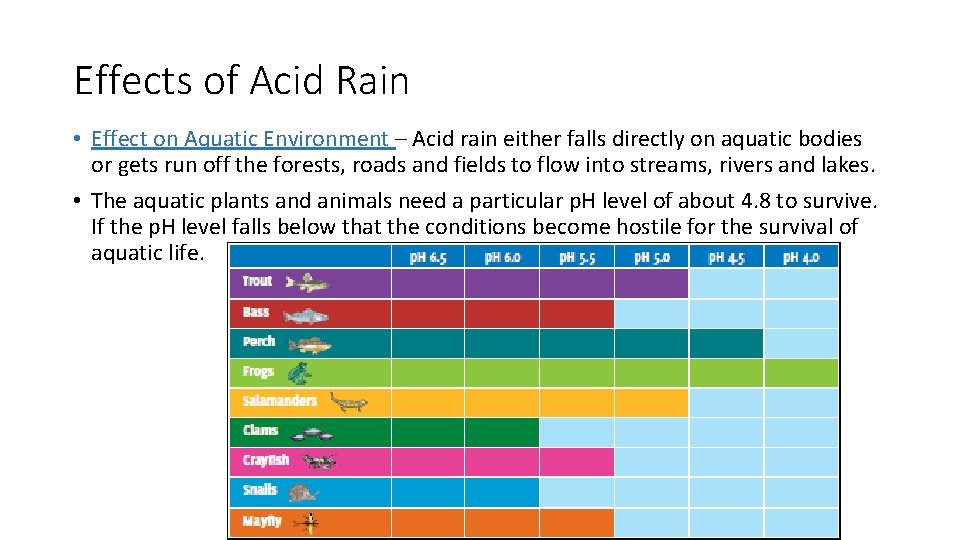
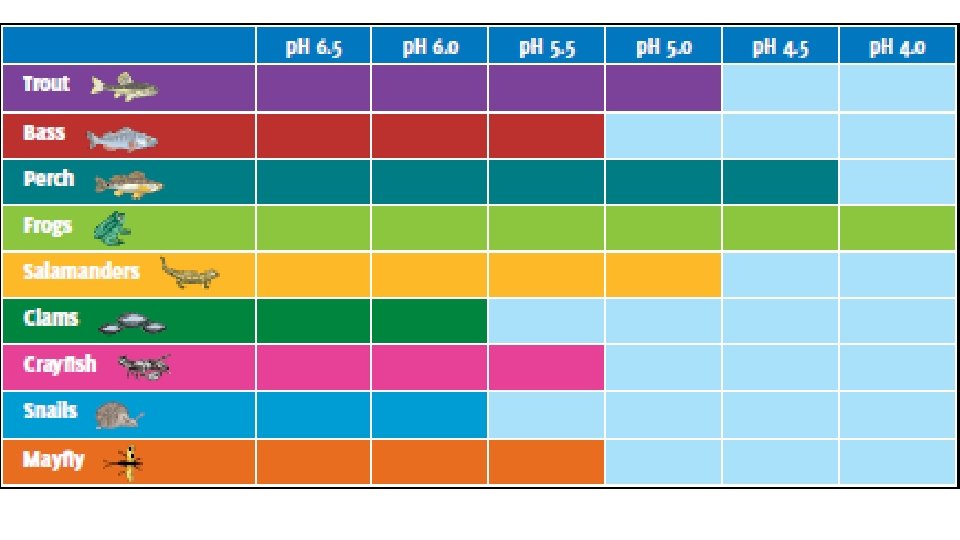
Effects of Acid Rain • Effect on Aquatic Environment – Acid rain either falls directly on aquatic bodies or gets run off the forests, roads and fields to flow into streams, rivers and lakes. • The aquatic plants and animals need a particular p. H level of about 4. 8 to survive. If the p. H level falls below that the conditions become hostile for the survival of aquatic life.
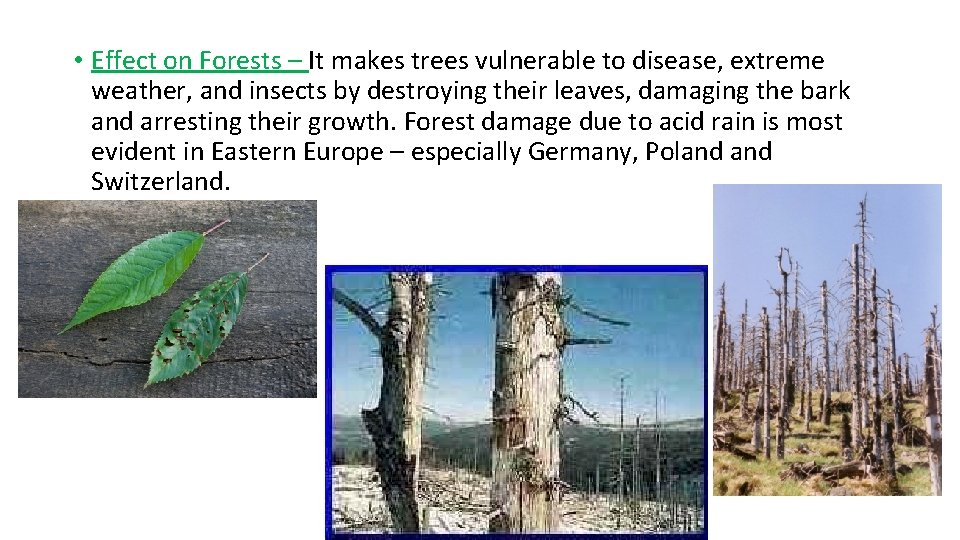
• Effect on Forests – It makes trees vulnerable to disease, extreme weather, and insects by destroying their leaves, damaging the bark and arresting their growth. Forest damage due to acid rain is most evident in Eastern Europe – especially Germany, Poland Switzerland.
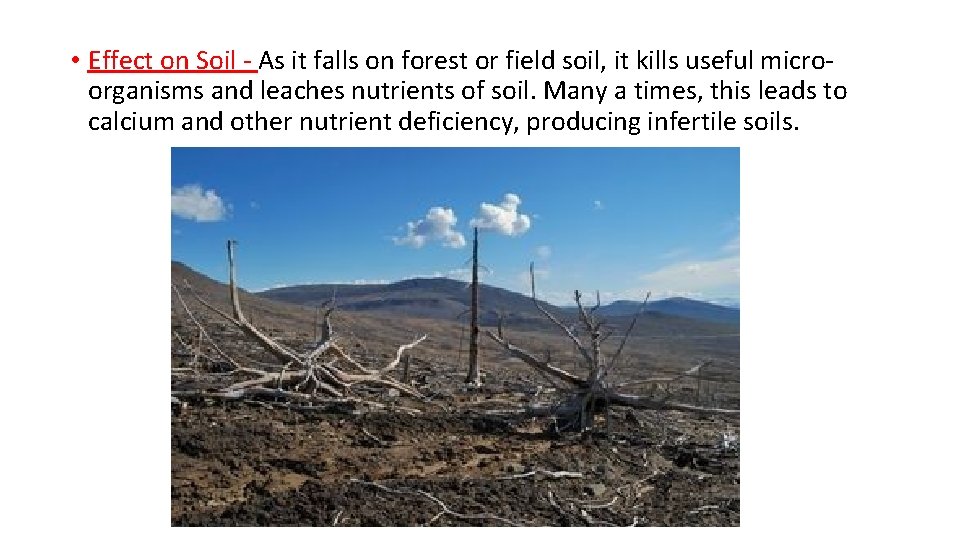
• Effect on Soil - As it falls on forest or field soil, it kills useful microorganisms and leaches nutrients of soil. Many a times, this leads to calcium and other nutrient deficiency, producing infertile soils.
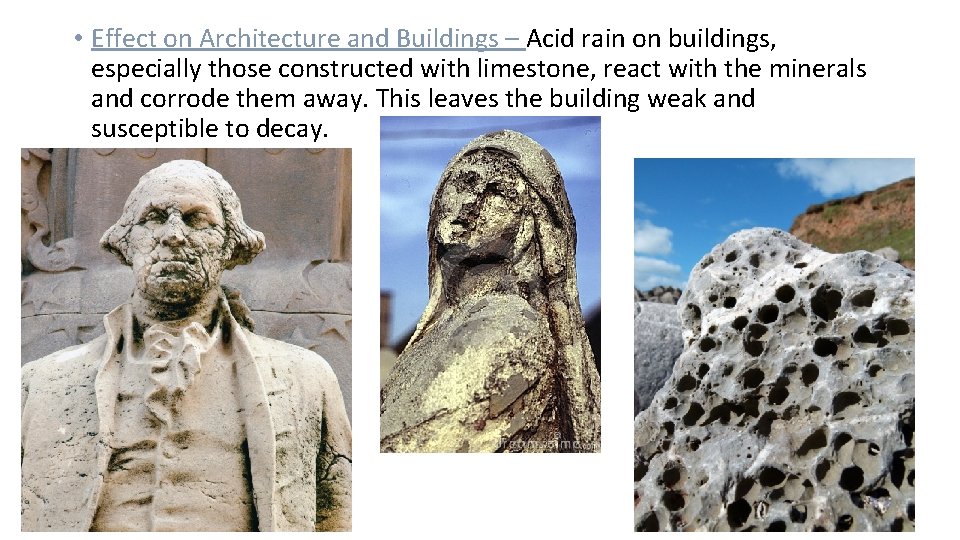
• Effect on Architecture and Buildings – Acid rain on buildings, especially those constructed with limestone, react with the minerals and corrode them away. This leaves the building weak and susceptible to decay.
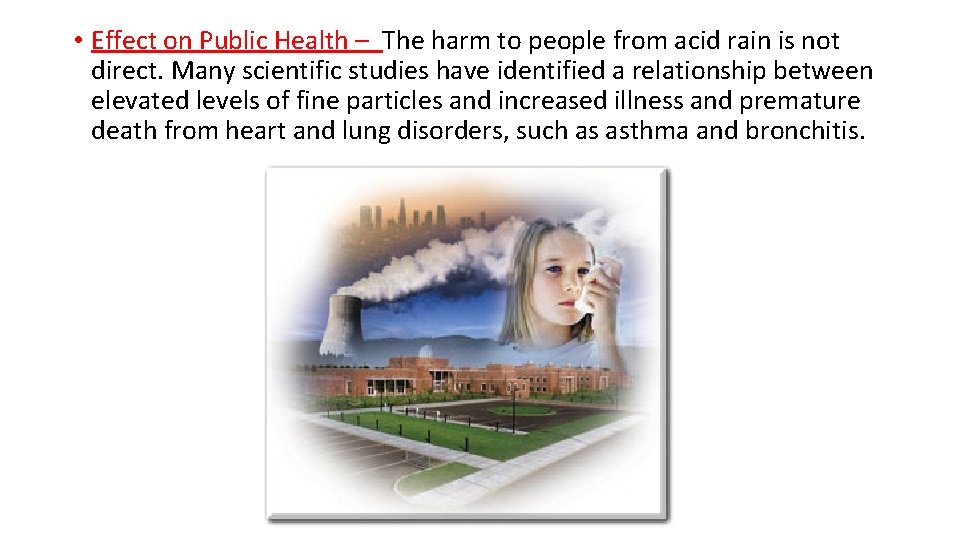
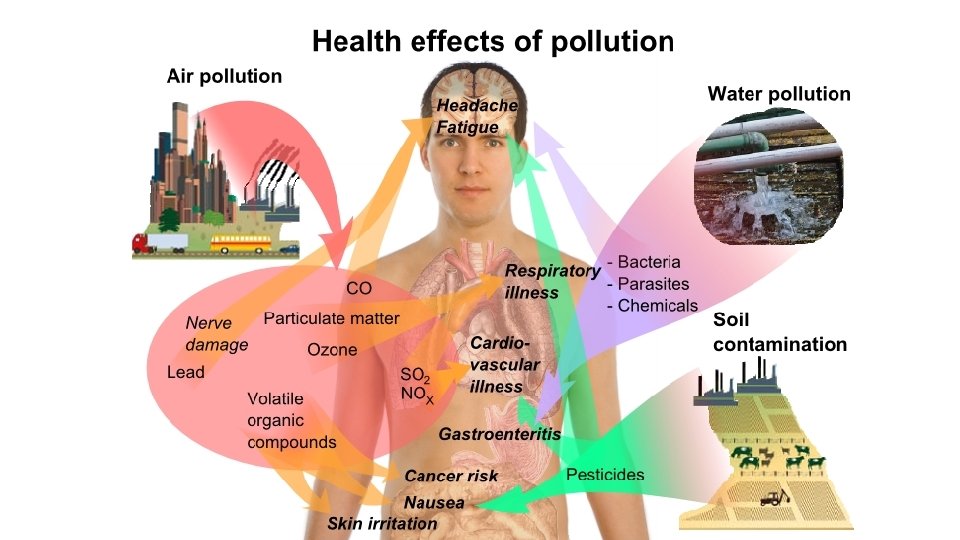
• Effect on Public Health – The harm to people from acid rain is not direct. Many scientific studies have identified a relationship between elevated levels of fine particles and increased illness and premature death from heart and lung disorders, such as asthma and bronchitis.
- Slides: 21