
NATURAL ORDER OF LANGUAGE ACQUISITION IN GRAMMAR CLASSES







- Slides: 30
NATURAL ORDER OF LANGUAGE ACQUISITION IN GRAMMAR CLASSES Evgeniya “Jane” Borisova Nada Rossiter
Why are we here today? Language Acquisition mystery • Redesigned grammar curriculum • Evidence of success •
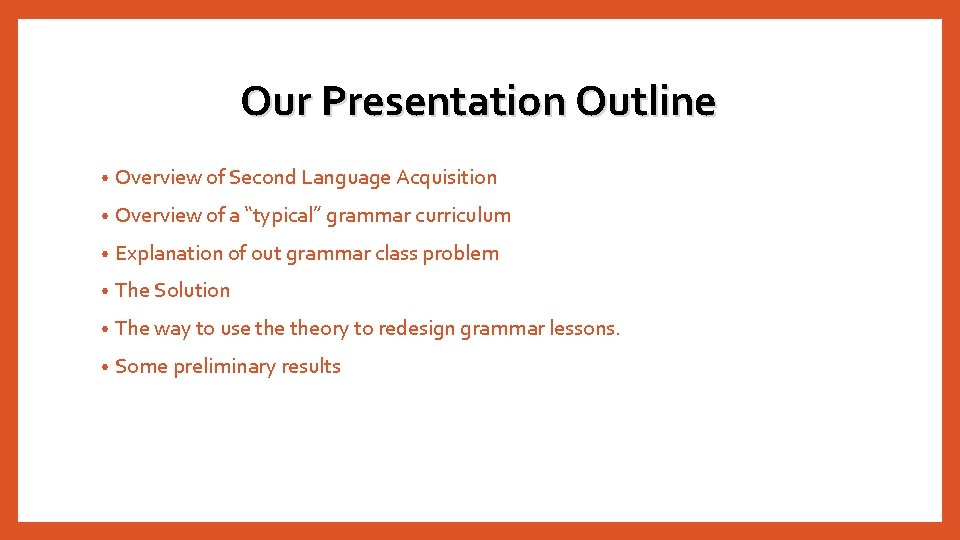
Our Presentation Outline • Overview of Second Language Acquisition • Overview of a “typical” grammar curriculum • Explanation of out grammar class problem • The Solution • The way to use theory to redesign grammar lessons. • Some preliminary results
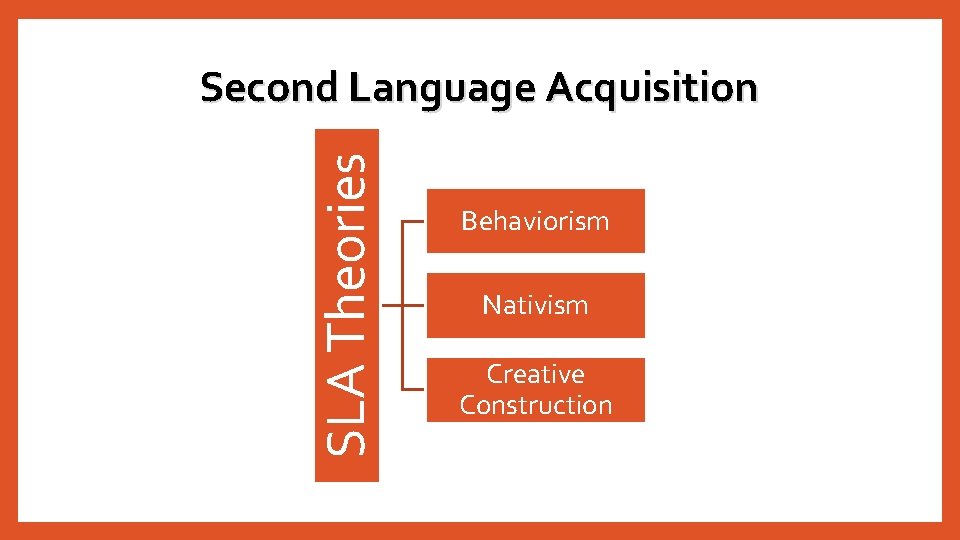
SLA Theories Second Language Acquisition Behaviorism Nativism Creative Construction
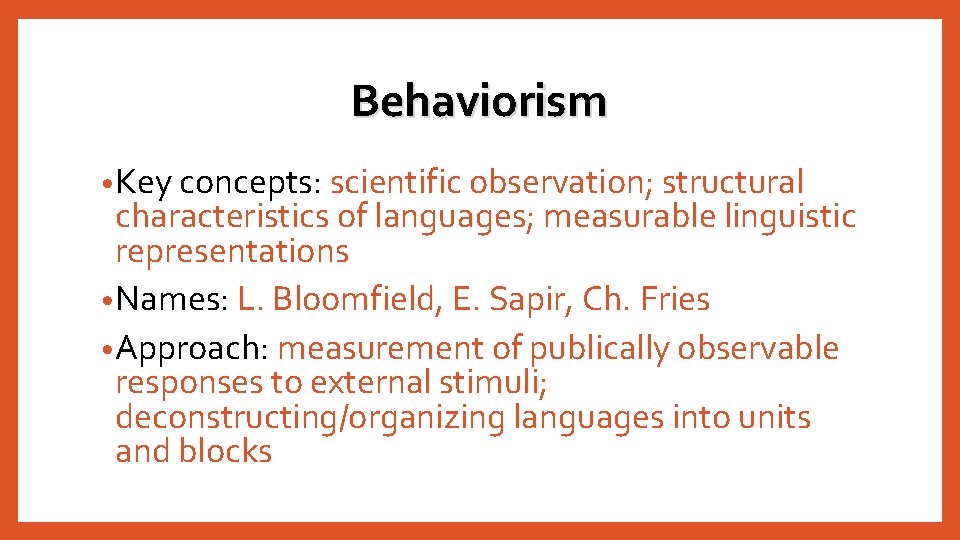
Behaviorism • Key concepts: scientific observation; structural characteristics of languages; measurable linguistic representations • Names: L. Bloomfield, E. Sapir, Ch. Fries • Approach: measurement of publically observable responses to external stimuli; deconstructing/organizing languages into units and blocks
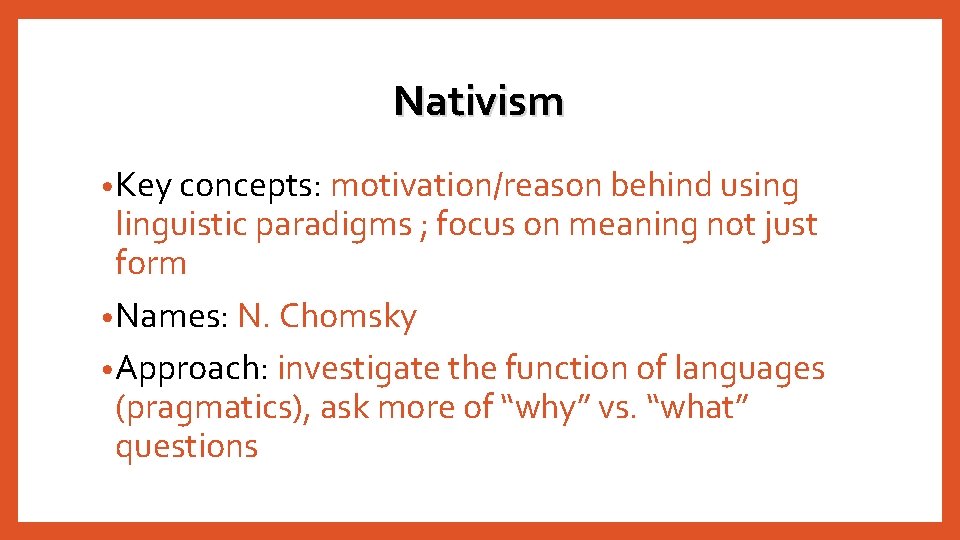
Nativism • Key concepts: motivation/reason behind using linguistic paradigms ; focus on meaning not just form • Names: N. Chomsky • Approach: investigate the function of languages (pragmatics), ask more of “why” vs. “what” questions
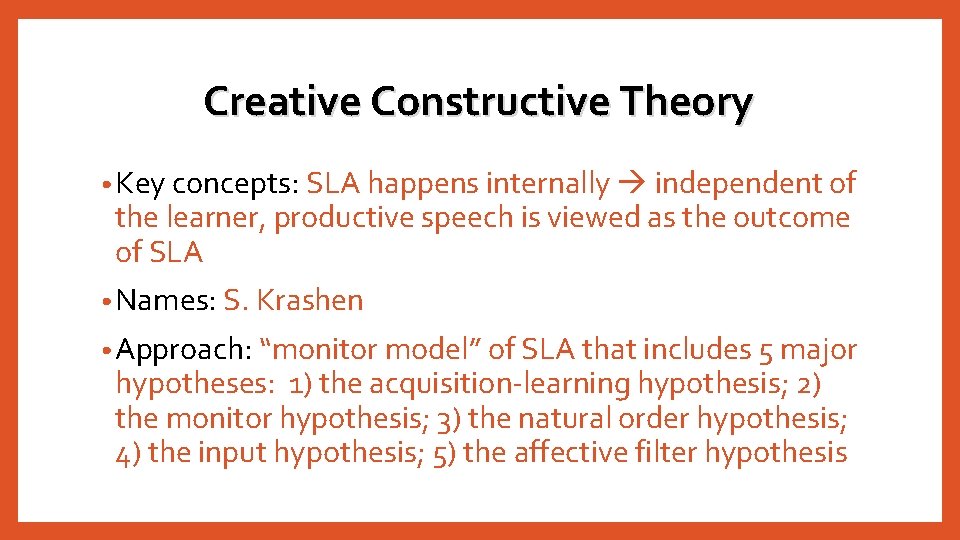
Creative Constructive Theory • Key concepts: SLA happens internally independent of the learner, productive speech is viewed as the outcome of SLA • Names: S. Krashen • Approach: “monitor model” of SLA that includes 5 major hypotheses: 1) the acquisition-learning hypothesis; 2) the monitor hypothesis; 3) the natural order hypothesis; 4) the input hypothesis; 5) the affective filter hypothesis
A TYPICAL GRAMMAR CURRICULUM
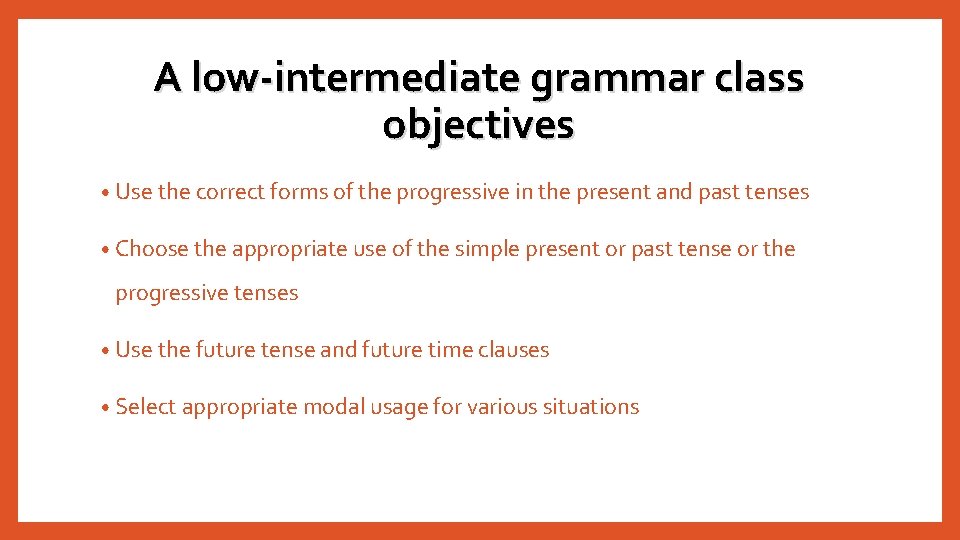
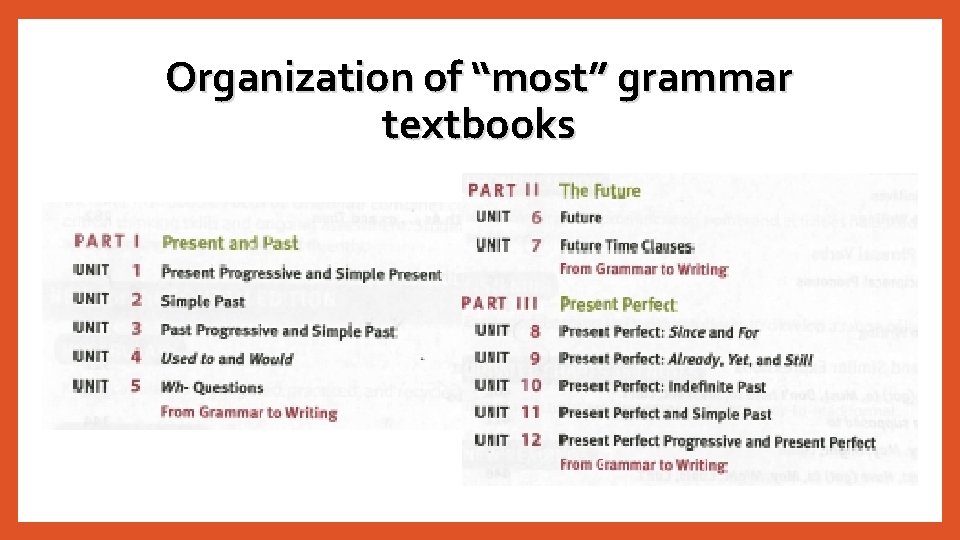
A low-intermediate grammar class objectives • Use the correct forms of the progressive in the present and past tenses • Choose the appropriate use of the simple present or past tense or the progressive tenses • Use the future tense and future time clauses • Select appropriate modal usage for various situations
Organization of “most” grammar textbooks
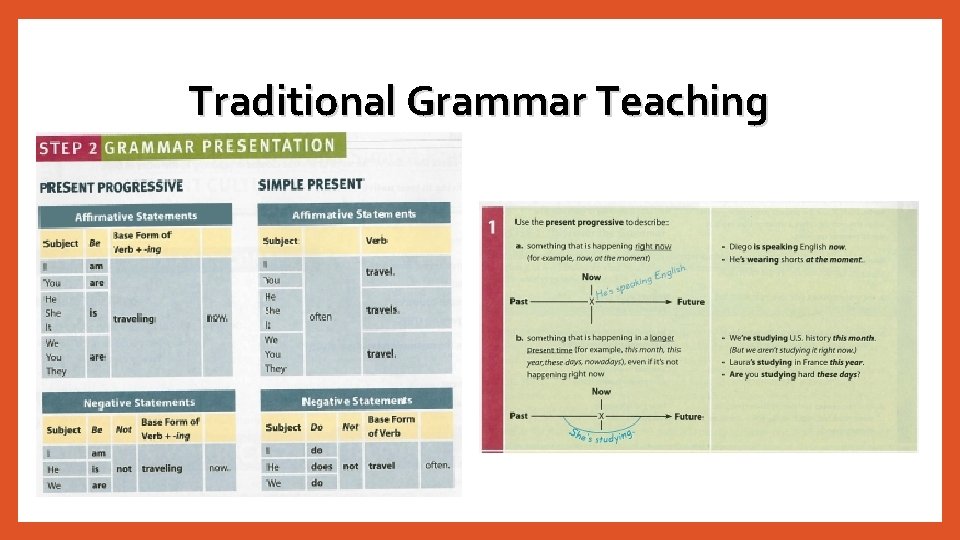
Traditional Grammar Classroom • Most textbooks begin with a section that prompts the students to connect to the topic • In a grammar textbook the text will utilize the target grammar or that lesson
Traditional Grammar Teaching
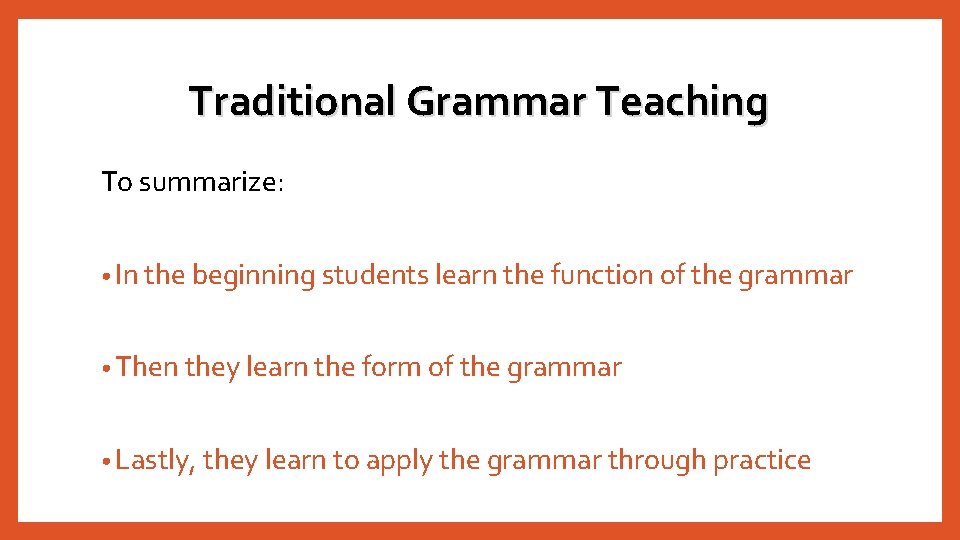
Traditional Grammar Teaching To summarize: • In the beginning students learn the function of the grammar • Then they learn the form of the grammar • Lastly, they learn to apply the grammar through practice
REDEFINING SLA THROUGH NATIVISM AND CONSTRUCTIVISM
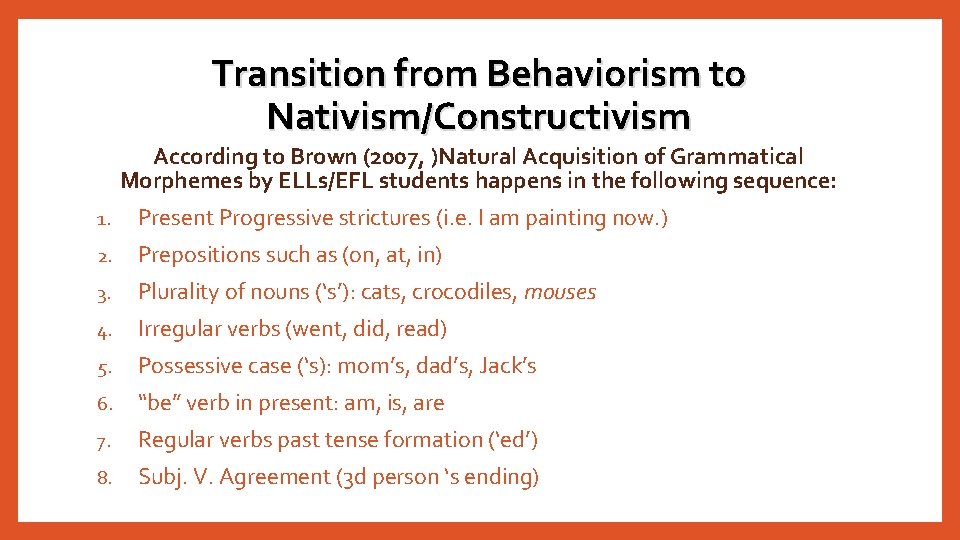
Transition from Behaviorism to Nativism/Constructivism According to Brown (2007, )Natural Acquisition of Grammatical Morphemes by ELLs/EFL students happens in the following sequence: 1. Present Progressive strictures (i. e. I am painting now. ) 2. Prepositions such as (on, at, in) 3. Plurality of nouns (‘s’): cats, crocodiles, mouses 4. Irregular verbs (went, did, read) 5. Possessive case (‘s): mom’s, dad’s, Jack’s 6. “be” verb in present: am, is, are 7. Regular verbs past tense formation (‘ed’) 8. Subj. V. Agreement (3 d person ‘s ending)
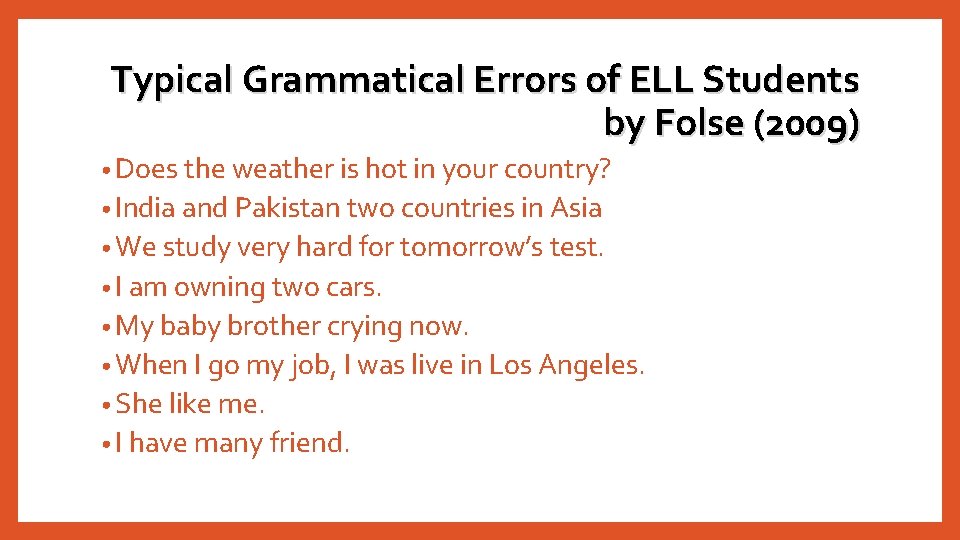
Typical Grammatical Errors of ELL Students by Folse (2009) • Does the weather is hot in your country? • India and Pakistan two countries in Asia • We study very hard for tomorrow’s test. • I am owning two cars. • My baby brother crying now. • When I go my job, I was live in Los Angeles. • She like me. • I have many friend.
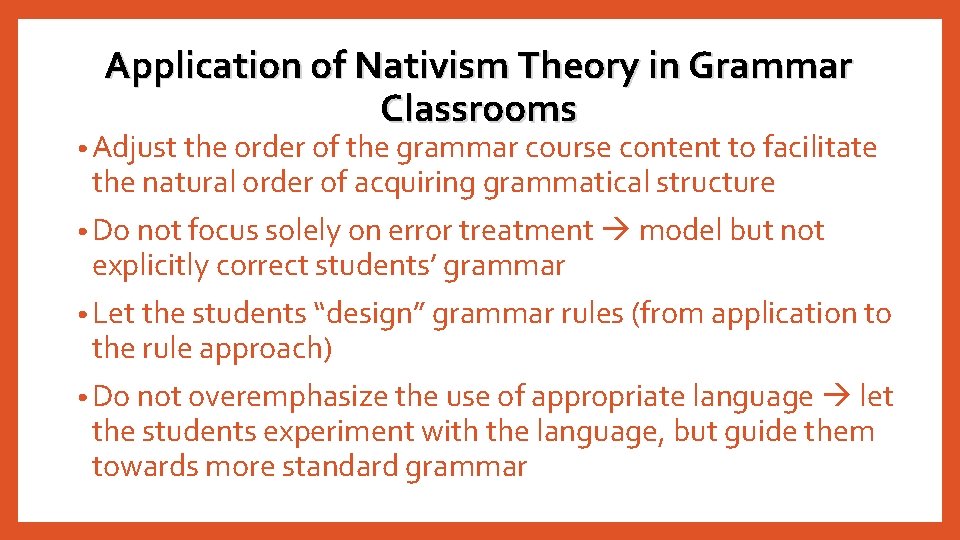
Application of Nativism Theory in Grammar Classrooms • Adjust the order of the grammar course content to facilitate the natural order of acquiring grammatical structure • Do not focus solely on error treatment model but not explicitly correct students’ grammar • Let the students “design” grammar rules (from application to the rule approach) • Do not overemphasize the use of appropriate language let the students experiment with the language, but guide them towards more standard grammar
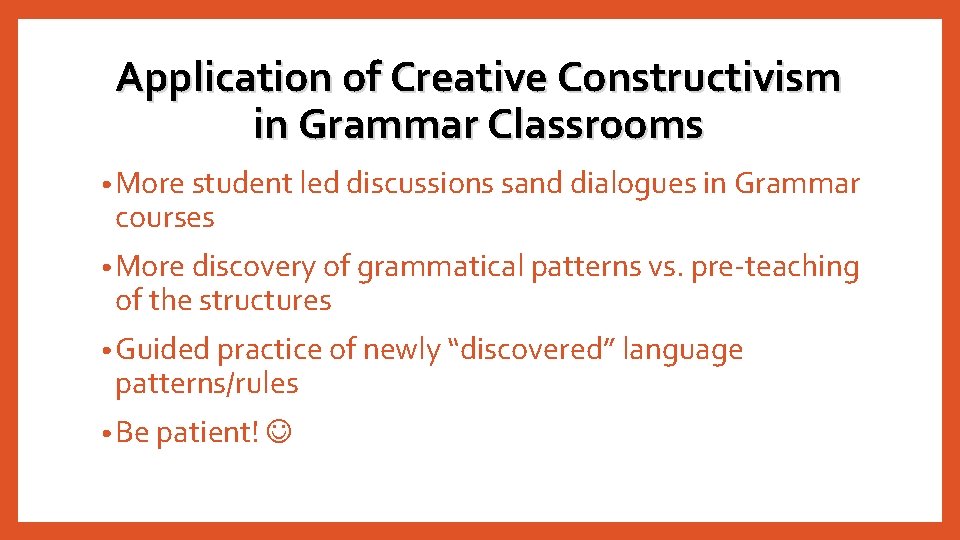
Application of Creative Constructivism in Grammar Classrooms • More student led discussions sand dialogues in Grammar courses • More discovery of grammatical patterns vs. pre-teaching of the structures • Guided practice of newly “discovered” language patterns/rules • Be patient!
Stephen Krashen: Comprehensible Input
WHAT WE DID IN OUR CLASSROOMS
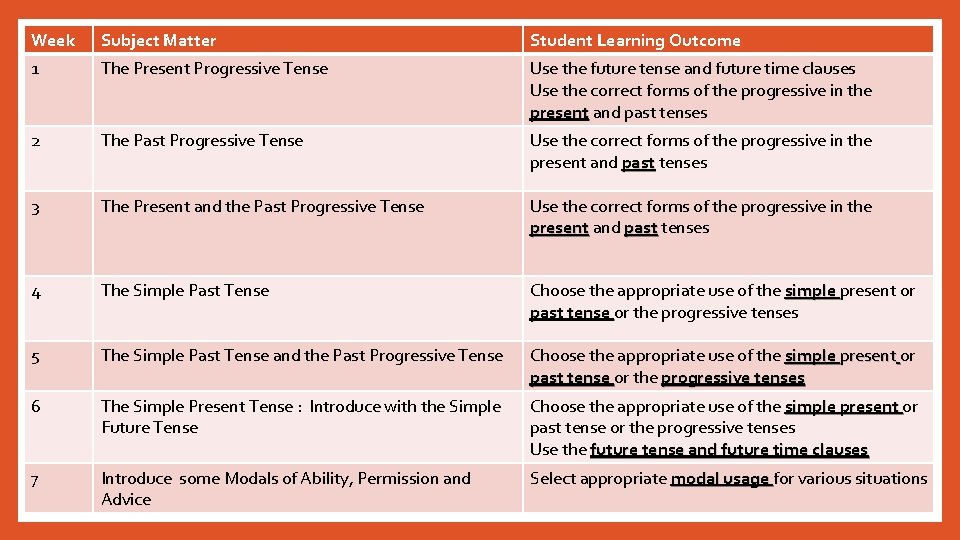
Week Subject Matter Student Learning Outcome 1 The Present Progressive Tense Use the future tense and future time clauses Use the correct forms of the progressive in the present and past tenses 2 The Past Progressive Tense Use the correct forms of the progressive in the present and past tenses 3 The Present and the Past Progressive Tense Use the correct forms of the progressive in the present and past tenses 4 The Simple Past Tense Choose the appropriate use of the simple present or past tense or the progressive tenses 5 The Simple Past Tense and the Past Progressive Tense Choose the appropriate use of the simple present or past tense or the progressive tenses 6 The Simple Present Tense : Introduce with the Simple Future Tense Choose the appropriate use of the simple present or past tense or the progressive tenses Use the future tense and future time clauses 7 Introduce some Modals of Ability, Permission and Advice Select appropriate modal usage for various situations
Step 1: Warm-up and Practice
Build Conversation • Do talk about the topic with your students. • Add additional reading and listening exercise • Model the grammar but fixate on error correction • Don’t teach the structures yet
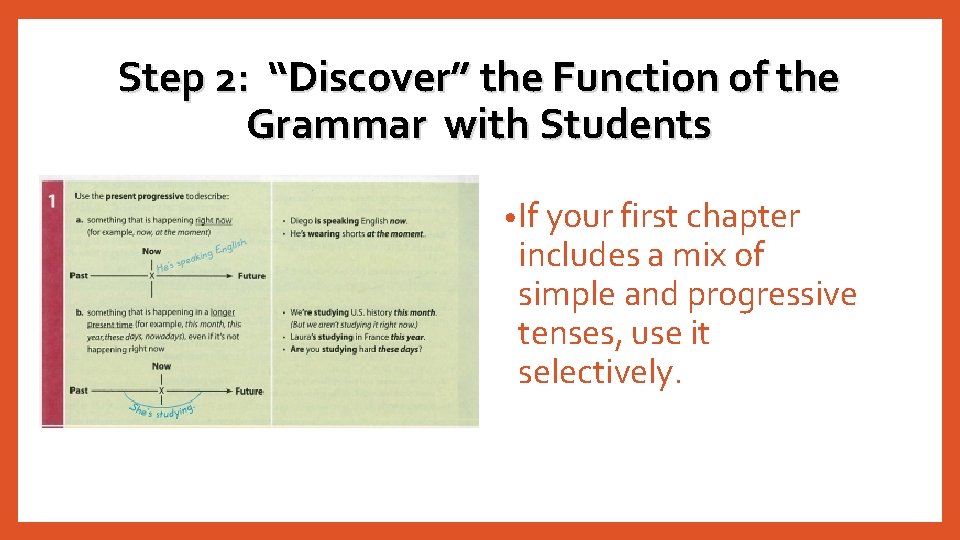
Step 2: “Discover” the Function of the Grammar with Students • If your first chapter includes a mix of simple and progressive tenses, use it selectively.
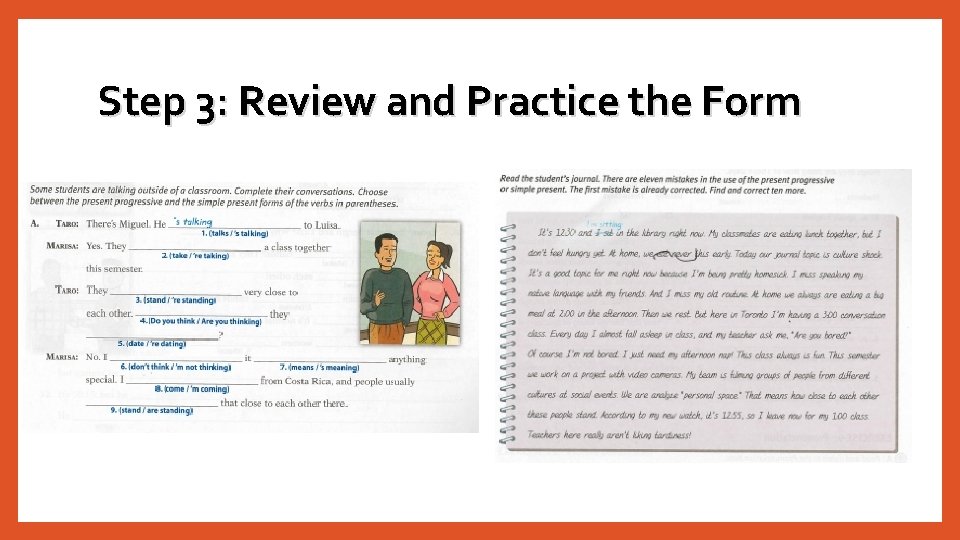
Step 3: Review and Practice the Form
Step 5: Assessment • Use a variety of assessment tools • Fill in the blanks • Editing • Journals • Group activities • Presentations
DID IT WORK?
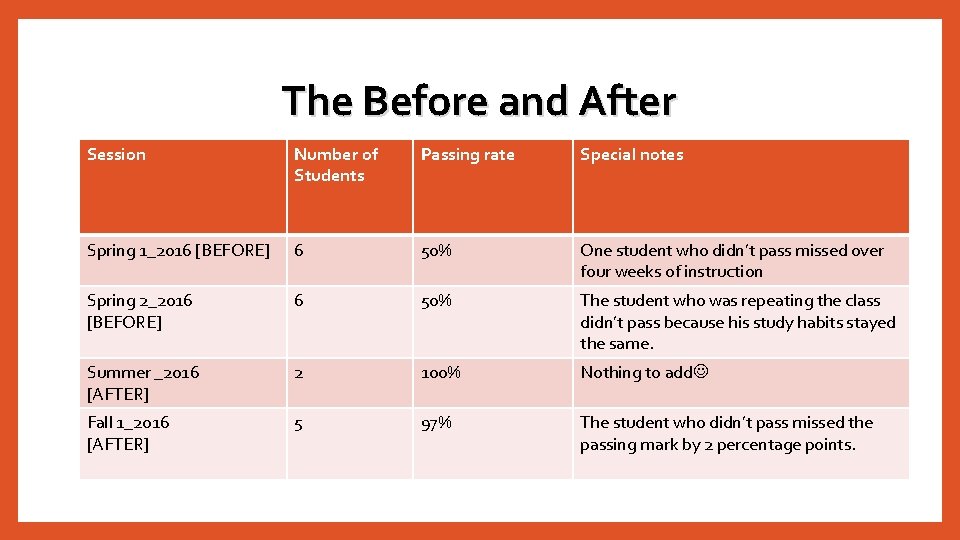
The Before and After Session Number of Students Passing rate Special notes Spring 1_2016 [BEFORE] 6 50% One student who didn’t pass missed over four weeks of instruction Spring 2_2016 [BEFORE] 6 50% The student who was repeating the class didn’t pass because his study habits stayed the same. Summer _2016 [AFTER] 2 100% Nothing to add Fall 1_2016 [AFTER] 5 97% The student who didn’t pass missed the passing mark by 2 percentage points.
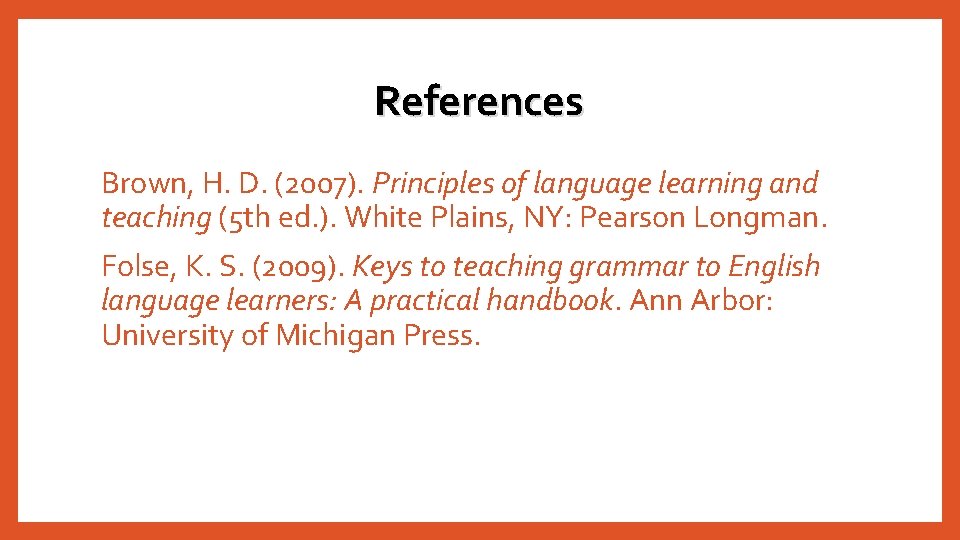
References Brown, H. D. (2007). Principles of language learning and teaching (5 th ed. ). White Plains, NY: Pearson Longman. Folse, K. S. (2009). Keys to teaching grammar to English language learners: A practical handbook. Ann Arbor: University of Michigan Press.
CONTACT INFORMATION Evgeniya “Jane” Borisova Evgeniya. Borisova@unco. edu *Please do not hesitate to contact me with any questions regarding the content of the presentation.