
Natural Insect Control By Elaine James and Josh
Natural Insect Control By Elaine, James, and Josh Environmental Biotechnology
Outline of Proposal • Problem Identification • Project Objective • Rationale for Project • Methods: materials, procedures, data analysis
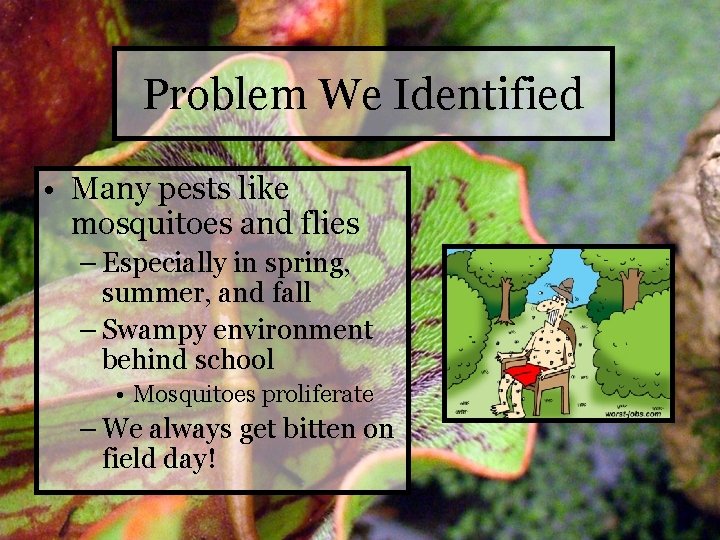
Problem We Identified • Many pests like mosquitoes and flies – Especially in spring, summer, and fall – Swampy environment behind school • Mosquitoes proliferate – We always get bitten on field day!
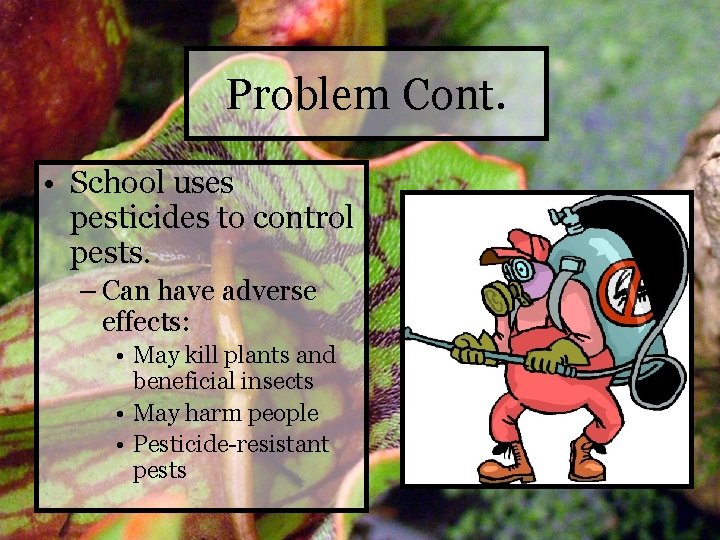
Problem Cont. • School uses pesticides to control pests. – Can have adverse effects: • May kill plants and beneficial insects • May harm people • Pesticide-resistant pests
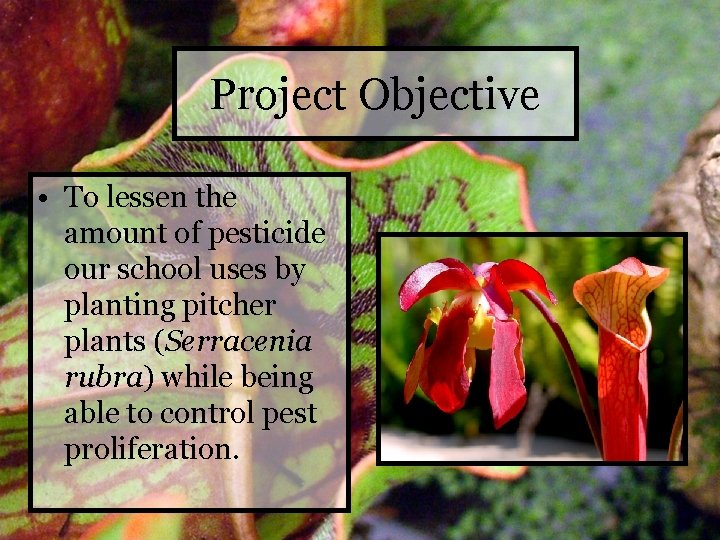
Project Objective • To lessen the amount of pesticide our school uses by planting pitcher plants (Serracenia rubra) while being able to control pest proliferation.
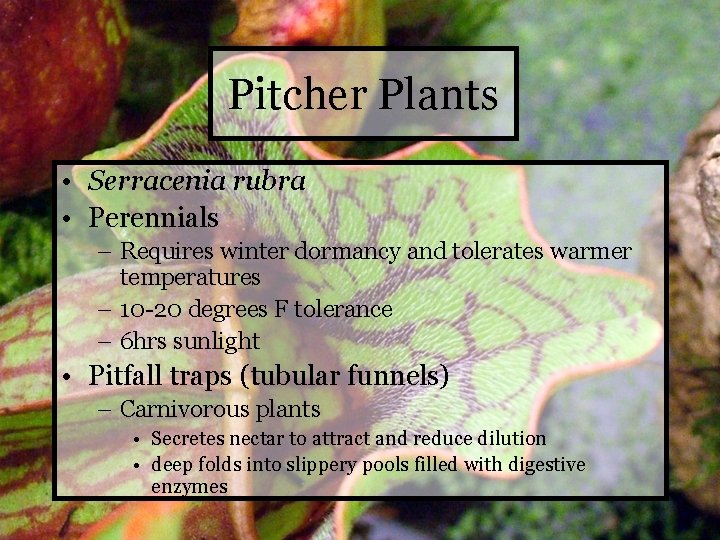
Pitcher Plants • Serracenia rubra • Perennials – Requires winter dormancy and tolerates warmer temperatures – 10 -20 degrees F tolerance – 6 hrs sunlight • Pitfall traps (tubular funnels) – Carnivorous plants • Secretes nectar to attract and reduce dilution • deep folds into slippery pools filled with digestive enzymes
Danger To Humans • Tehran • Analyzed pesticide related death – Pesticide Poisoning – 1. 31% of deaths – 50% of those were suicide • Concluded safer way needed • (Soltaninejad 2007)
Further Risks • Inhibition of G 6 PD – Needed for Metabolism • Arrive by land, sea and air • Deltamethrin (common) – Highly Effective • (Şentük 2009)
Danger to Pitcher Plant • Analyzed Evolution • Difficulties due to low pop. – Over Collection – Lack Land – Conserve • Able to survive stressful environment • (Ellison 2001)
Lasting Effect • Pitcher plants perennials • Used to 10% Nitro from Insects – >10%, more growth – (Ellison 2001)
Materials • Pitcher Plants (15 - they will reproduce)* – Must be ordered- about $6 a plant • 2 Standard Soil Mix Bags- 50% peat moss, 50% pear lite* ($3 for 1 gallon bag) • Water and Watering Can- for first day • Gardening Tools – Rake, hoe, shovels, spades • Tabletop Balance and Weigh Boats • Gloves (both rubber and gardening) • Forceps
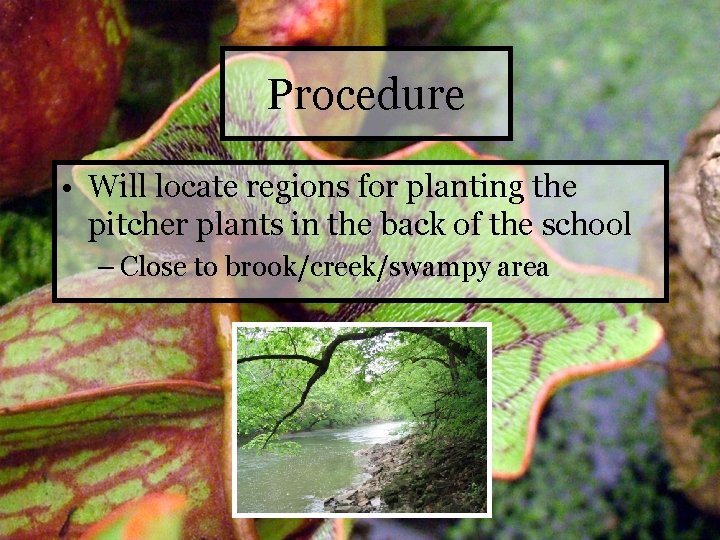
Procedure • Will locate regions for planting the pitcher plants in the back of the school – Close to brook/creek/swampy area
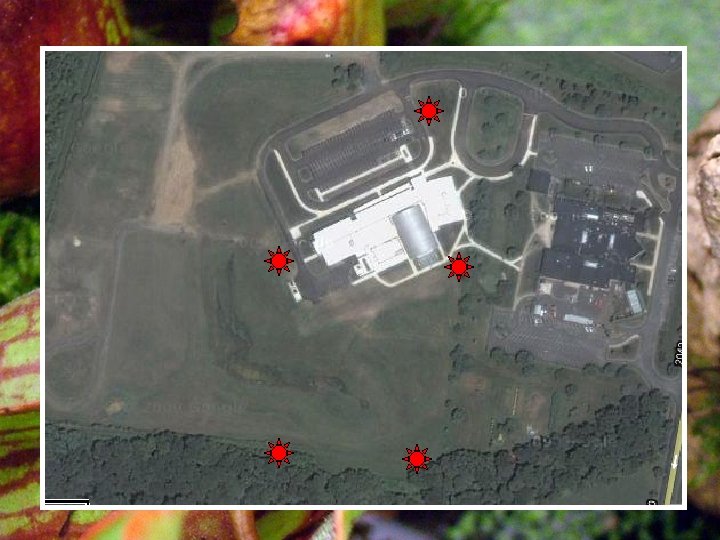
Picture
Procedure Cont. • Will clear area of grass and leaves in designated regions. • With gardening tools, will dig a 1 -2 ft ditch/hole in planting areas. • Will gently remove plant from pot/packaging and place in ditch. – 3 plants per designated region • Will place soil around plants to hold them down
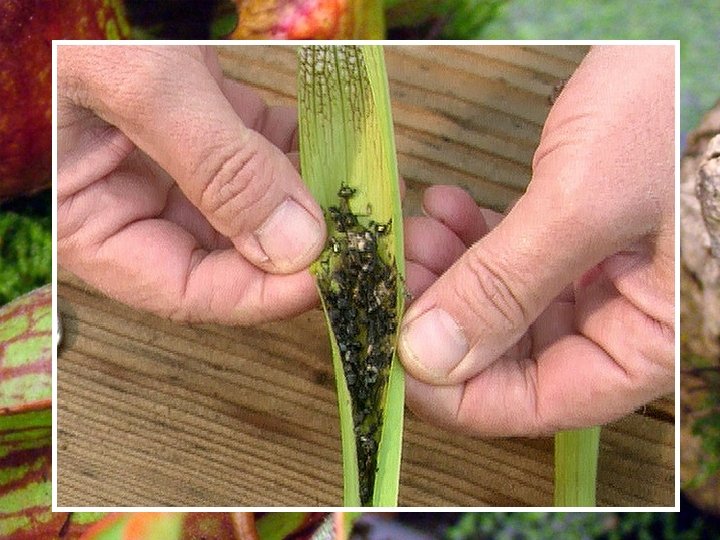
Procedure Cont. • Once every week, will vertically cut from the opening to the petiole. – Only for one of the plant’s traps – One per designated area – Will count number of dead insects (exoskeletons are not digested and are identifiable) – Will take mass of collected exoskeletons
Picture Bank
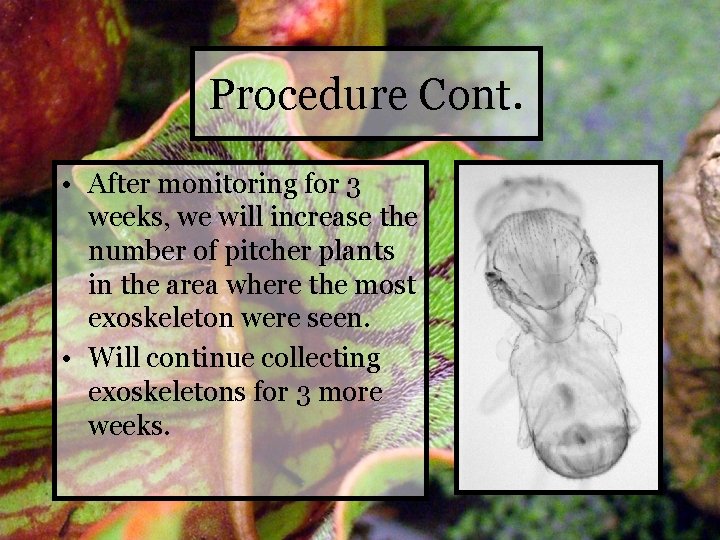
Procedure Cont. • After monitoring for 3 weeks, we will increase the number of pitcher plants in the area where the most exoskeleton were seen. • Will continue collecting exoskeletons for 3 more weeks.
Data Analysis • Will collect the number of exoskeletons over 6 wks (after we add more plants) • Average and standard deviation over 6 wks per area – Check for variety of data • T-test between all the regions against each other
Conclusion • Pitcher plants will be an effective method for reducing the amount of pesticides used by significantly reducing the number of pests. • Small step to a brighter and greener future!
References • Amato, P. (1998). The Savage Garden: Cultivating Carniverous Plants. Ten Speed Press. • Botanical Society of America. (2010). Carnivorous Plants. Retrieved March 2, 2010, from http: //www. botany. org/carnivorous_Plants/ • Aaron M. Ellison, Nicholas J. Gotelli, Evolutionary ecology of carnivorous plants, Trends in Ecology & Evolution, Volume 16, Issue 11, 1 November 2001, Pages 623 -629, ISSN 0169 -5347, DOI: 10. 1016/S 01695347(01)02269 -8. • Pet Flytrap. (1999 -2010). Retrieved March 2, 2010, from http: //www. petflytrap. com/Store. Front. bok • Predatory Plants. (2010). Retrieved March 2, 2010, from http: //www. predatoryplants. com/ • Murat Senturk, Saltuk Bugrahan Ceyhun, Orhan Erdogan, Omer Irfan Kufrevioglu, In vitro and in vivo effects of some pesticides on glucose-6 -phosphate dehydrogenase enzyme activity from rainbow trout (Oncorhynchus mykiss) erythrocytes, Pesticide Biochemistry and Physiology, Volume 95, Issue 2, October 2009, Pages 95 -99, ISSN 0048 -3575, DOI: 10. 1016/j. pestbp. 2009. 07. 005. • Kambiz Soltaninejad, Mansoor Faryadi, Fariba Sardari, Acute pesticide poisoning related deaths in Tehran during the period 2003 -2004, Journal of Forensic and Legal Medicine, Volume 14, Issue 6, August 2007, Pages 352 -354, ISSN 1752 -928 X, DOI: 10. 1016/j. jflm. 2006. 12. 011.
- Slides: 20