
Natural History of Hepatitis B and Liver Cancer

Natural History of Hepatitis B and Liver Cancer Screening Herbert H Lee, M. D. , M. P. H. , M. S. Ed.
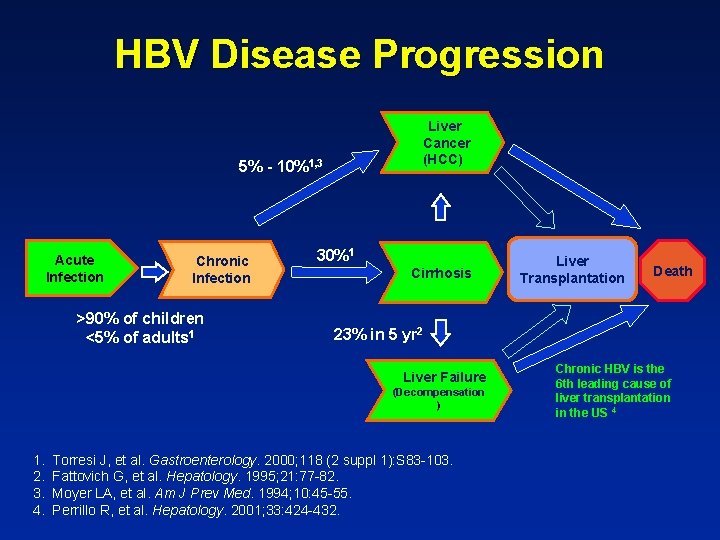
HBV Disease Progression Liver Cancer (HCC) 5% - 10%1, 3 Acute Infection Chronic Infection >90% of children <5% of adults 1 30%1 Cirrhosis Death 23% in 5 yr 2 Liver Failure (Decompensation ) 1. 2. 3. 4. Liver Transplantation Torresi J, et al. Gastroenterology. 2000; 118 (2 suppl 1): S 83 -103. Fattovich G, et al. Hepatology. 1995; 21: 77 -82. Moyer LA, et al. Am J Prev Med. 1994; 10: 45 -55. Perrillo R, et al. Hepatology. 2001; 33: 424 -432. Chronic HBV is the 6 th leading cause of liver transplantation in the US 4
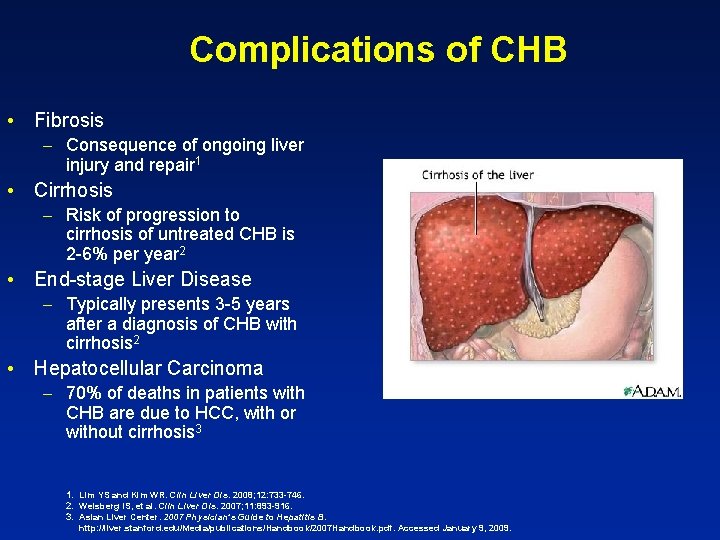
Complications of CHB • Fibrosis – Consequence of ongoing liver injury and repair 1 • Cirrhosis – Risk of progression to cirrhosis of untreated CHB is 2 -6% per year 2 • End-stage Liver Disease – Typically presents 3 -5 years after a diagnosis of CHB with cirrhosis 2 • Hepatocellular Carcinoma – 70% of deaths in patients with CHB are due to HCC, with or without cirrhosis 3 1. Lim YS and Kim WR. Clin Liver Dis. 2008; 12: 733 -746. 2. Weisberg IS, et al. Clin Liver Dis. 2007; 11: 893 -916. 3. Asian Liver Center. 2007 Physician’s Guide to Hepatitis B. http: //liver. stanford. edu/Media/publications/Handbook/2007 Handbook. pdf. Accessed January 9, 2009.
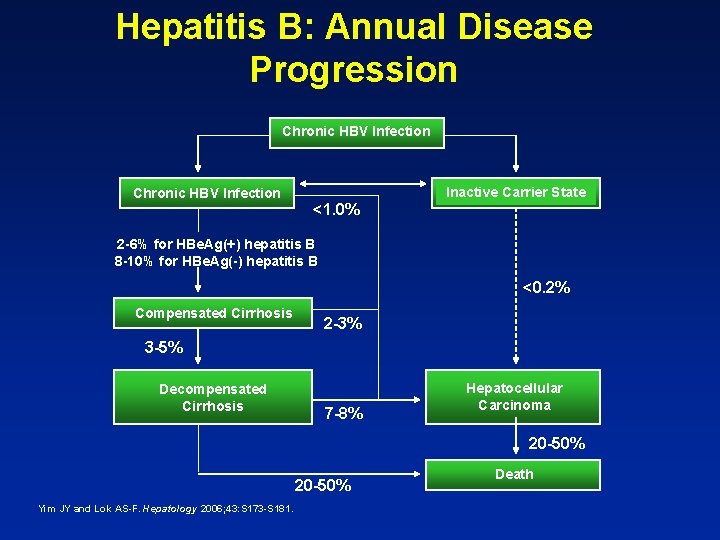
Hepatitis B: Annual Disease Progression Chronic HBV Infection Inactive Carrier State <1. 0% 2 -6% for HBe. Ag(+) hepatitis B 8 -10% for HBe. Ag(-) hepatitis B <0. 2% Compensated Cirrhosis 2 -3% 3 -5% Decompensated Cirrhosis 7 -8% Hepatocellular Carcinoma 20 -50% Yim JY and Lok AS-F. Hepatology 2006; 43: S 173 -S 181. Death
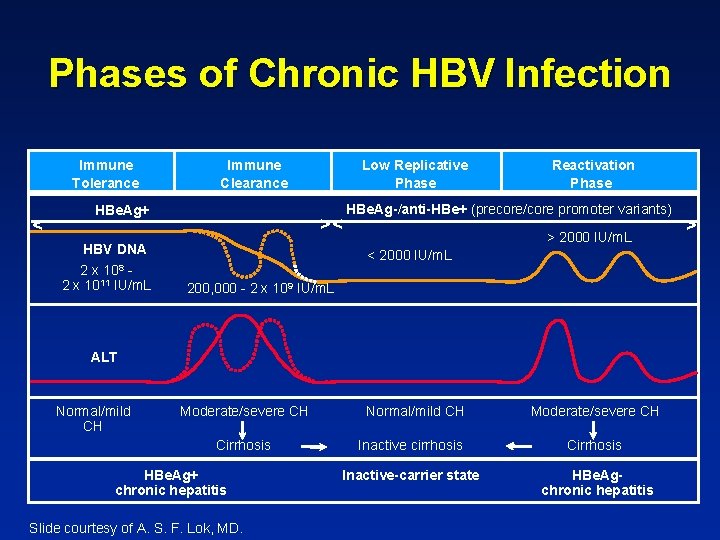
Phases of Chronic HBV Infection Immune Tolerance < Immune Clearance HBe. Ag+ HBV DNA 2 x 10⁸ 2 x 10¹¹ IU/m. L Low Replicative Phase >< Reactivation Phase HBe. Ag-/anti-HBe+ (precore/core promoter variants) > 2000 IU/m. L < 2000 IU/m. L 200, 000 - 2 x 10⁹ IU/m. L ALT Normal/mild CH Moderate/severe CH Cirrhosis HBe. Ag+ chronic hepatitis Slide courtesy of A. S. F. Lok, MD. Normal/mild CH Moderate/severe CH Inactive cirrhosis Cirrhosis Inactive-carrier state HBe. Agchronic hepatitis >
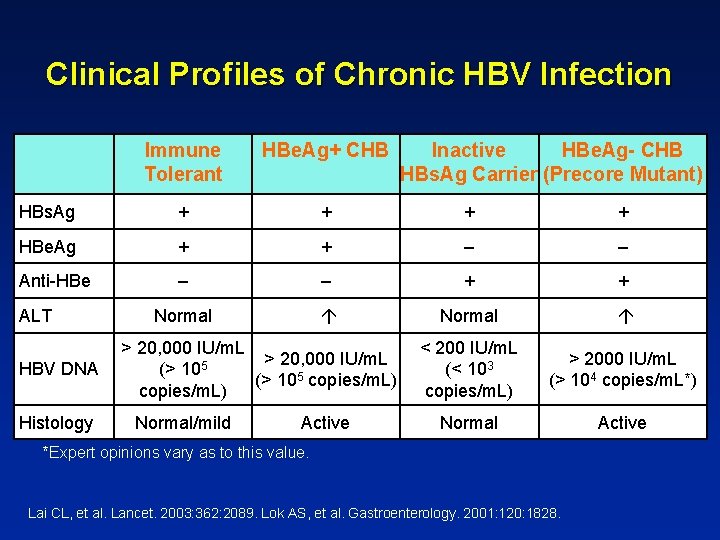
Clinical Profiles of Chronic HBV Infection Immune Tolerant HBe. Ag+ CHB HBs. Ag + + HBe. Ag + + – – Anti-HBe – – + + Normal < 200 IU/m. L (< 103 copies/m. L) > 2000 IU/m. L (> 104 copies/m. L*) Normal Active ALT HBV DNA Histology > 20, 000 IU/m. L (> 105 copies/m. L) Normal/mild Active Inactive HBe. Ag- CHB HBs. Ag Carrier (Precore Mutant) *Expert opinions vary as to this value. Lai CL, et al. Lancet. 2003: 362: 2089. Lok AS, et al. Gastroenterology. 2001: 120: 1828.

Natural History of HBV: Development of HBe. Ag-Negative HBe. Ag negative / CHB anti-HBe positive HBe. Ag positive Phases of HBV infection Replicative or immune HBe. Ag tolerance phase clearance Low-replicative phase HBV reactivation Wild-type HBV Variant HBV CHB = chronic hepatitis B Hadziyannis SJ, Vassilopoulos D. Hepatology. 2001; 34: 617 -624.

Comparison of HBe. Ag-positive CHB with HBe. Ag-negative CHB HBe. Ag + CHB HBe. Ag - CHB Type of infection Wild type Pre-C/C mutant Mean HBV load High Low Seroconversion 2 -15%/year N/A Natural history Variable More active/severe Rx end point HBe. Ag seroconversion N/A Rx duration More defined Longer-term Rx Rx response Higher response rate Lower relapse rate Lower response rate Higher relapse rate

Differentiating HBe. Ag-Negative Chronic Hepatitis B From Inactive Carrier State Status HBe. Ag-Negative Disease Inactive Carrier HBs. Ag positive Anti-HBe positive Anti-HBc positive Moderate, often fluctuating levels; serum HBV DNA > 2000 IU/m. L Low or undetectable; serum HBV DNA negative or < 2000 IU/m. L Elevated, often fluctuating levels Normal HBV DNA ALT Keeffe EB, et al. Clin Gastroenterol Hepatol. 2008; 6: 1315 -1341.

HBV: Factors Associated With Increased Risks of Progression to Cirrhosis Host Factors Virus Factors Environmental Factors Older age* (longer duration) High levels of HBV replication* Concurrent infection (HCV, * HDV, HIV) Male* Genotype (C > B)* Alcohol consumption* Immune Status HBV variant (core promoter) Diabetes mellitus† Obesity† *Supported by strong evidence. †Further studies needed. Yim JY, Lok AS-F. Hepatology. 2006; 43: S 173 -S 181.
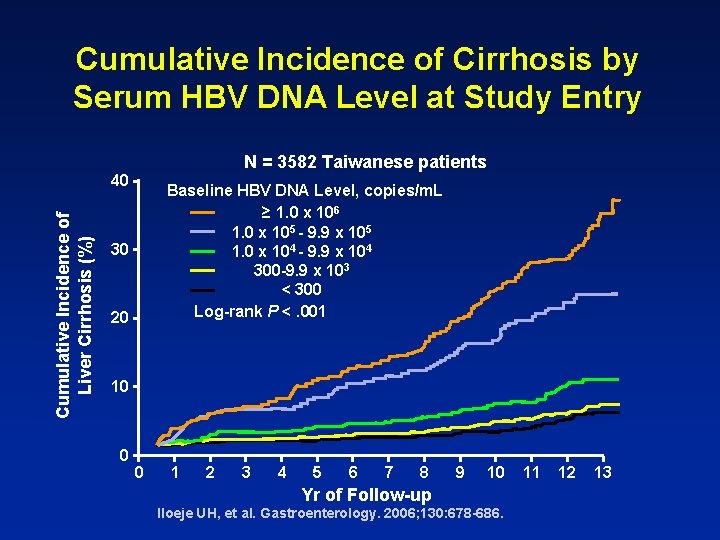
Cumulative Incidence of Cirrhosis by Serum HBV DNA Level at Study Entry N = 3582 Taiwanese patients Cumulative Incidence of Liver Cirrhosis (%) 40 Baseline HBV DNA Level, copies/m. L ≥ 1. 0 x 106 1. 0 x 105 - 9. 9 x 10⁵ 1. 0 x 104 - 9. 9 x 10⁴ 300 -9. 9 x 10³ < 300 Log-rank P <. 001 30 20 10 0 0 1 2 3 4 5 6 7 8 9 10 Yr of Follow-up Iloeje UH, et al. Gastroenterology. 2006; 130: 678 -686. 11 12 13
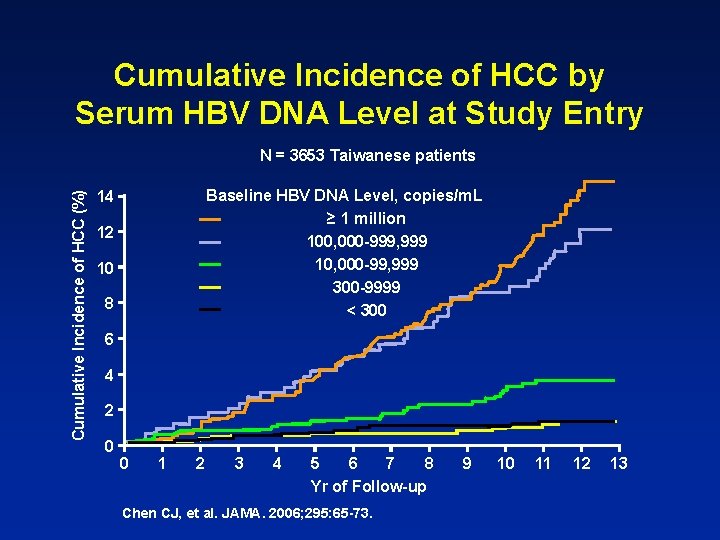
Cumulative Incidence of HCC by Serum HBV DNA Level at Study Entry Cumulative Incidence of HCC (%) N = 3653 Taiwanese patients Baseline HBV DNA Level, copies/m. L ≥ 1 million 100, 000 -999, 999 10, 000 -99, 999 300 -9999 < 300 14 12 10 8 6 4 2 0 0 1 2 3 4 5 6 7 8 Yr of Follow-up Chen CJ, et al. JAMA. 2006; 295: 65 -73. 9 10 11 12 13
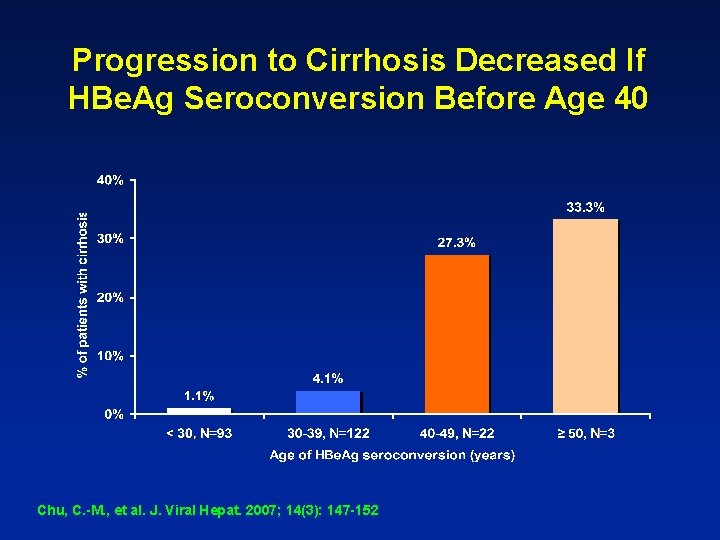
Progression to Cirrhosis Decreased If HBe. Ag Seroconversion Before Age 40 Chu, C. -M. , et al. J. Viral Hepat. 2007; 14(3): 147 -152
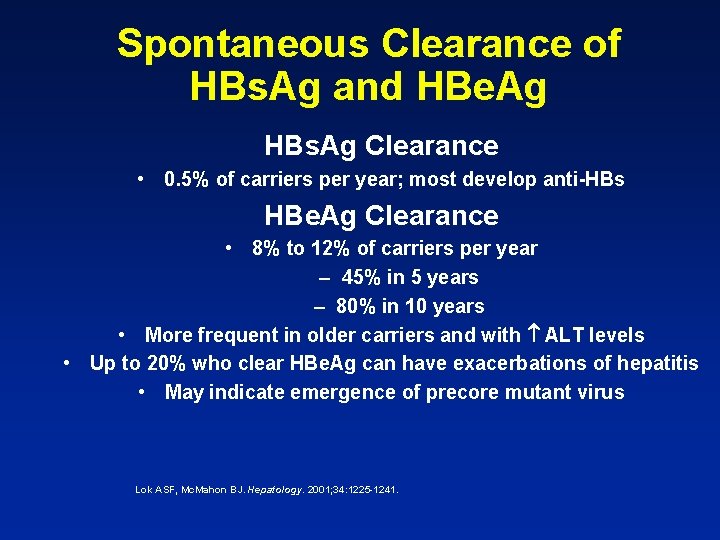
Spontaneous Clearance of HBs. Ag and HBe. Ag HBs. Ag Clearance • 0. 5% of carriers per year; most develop anti-HBs HBe. Ag Clearance • 8% to 12% of carriers per year – 45% in 5 years – 80% in 10 years • More frequent in older carriers and with ALT levels • Up to 20% who clear HBe. Ag can have exacerbations of hepatitis • May indicate emergence of precore mutant virus Lok ASF, Mc. Mahon BJ. Hepatology. 2001; 34: 1225 -1241.
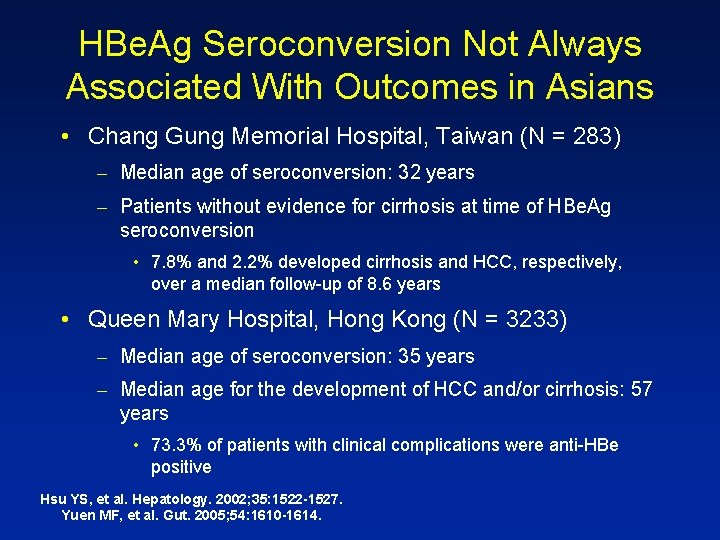
HBe. Ag Seroconversion Not Always Associated With Outcomes in Asians • Chang Gung Memorial Hospital, Taiwan (N = 283) – Median age of seroconversion: 32 years – Patients without evidence for cirrhosis at time of HBe. Ag seroconversion • 7. 8% and 2. 2% developed cirrhosis and HCC, respectively, over a median follow-up of 8. 6 years • Queen Mary Hospital, Hong Kong (N = 3233) – Median age of seroconversion: 35 years – Median age for the development of HCC and/or cirrhosis: 57 years • 73. 3% of patients with clinical complications were anti-HBe positive Hsu YS, et al. Hepatology. 2002; 35: 1522 -1527. Yuen MF, et al. Gut. 2005; 54: 1610 -1614.
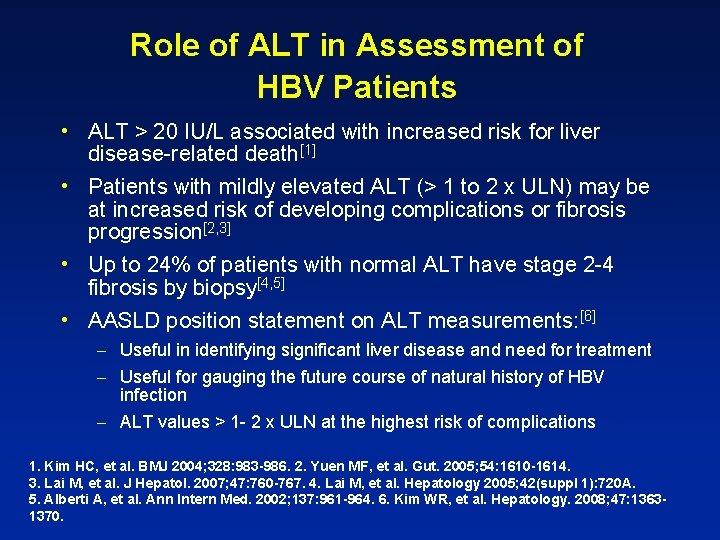
Role of ALT in Assessment of HBV Patients • ALT > 20 IU/L associated with increased risk for liver disease-related death[1] • Patients with mildly elevated ALT (> 1 to 2 x ULN) may be at increased risk of developing complications or fibrosis progression[2, 3] • Up to 24% of patients with normal ALT have stage 2 -4 fibrosis by biopsy[4, 5] • AASLD position statement on ALT measurements: [6] – Useful in identifying significant liver disease and need for treatment – Useful for gauging the future course of natural history of HBV infection – ALT values > 1 - 2 x ULN at the highest risk of complications 1. Kim HC, et al. BMJ 2004; 328: 983 -986. 2. Yuen MF, et al. Gut. 2005; 54: 1610 -1614. 3. Lai M, et al. J Hepatol. 2007; 47: 760 -767. 4. Lai M, et al. Hepatology 2005; 42(suppl 1): 720 A. 5. Alberti A, et al. Ann Intern Med. 2002; 137: 961 -964. 6. Kim WR, et al. Hepatology. 2008; 47: 13631370.
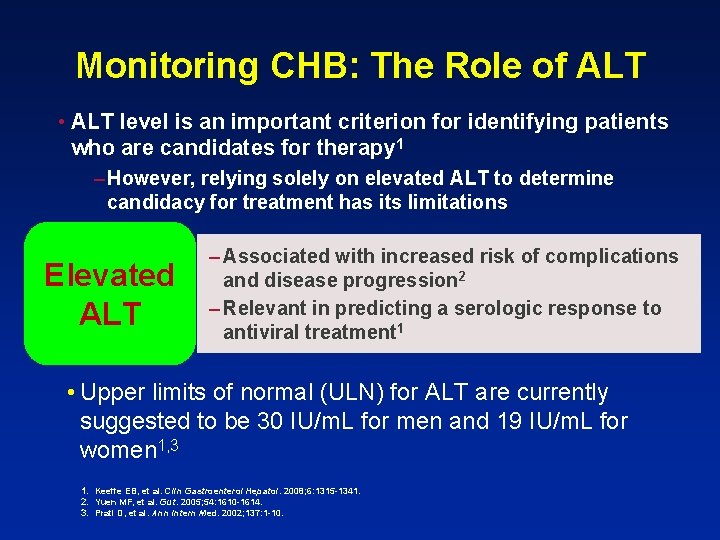
Monitoring CHB: The Role of ALT • ALT level is an important criterion for identifying patients who are candidates for therapy 1 – However, relying solely on elevated ALT to determine candidacy for treatment has its limitations Elevated ALT – Associated with increased risk of complications and disease progression 2 – Relevant in predicting a serologic response to antiviral treatment 1 • Upper limits of normal (ULN) for ALT are currently suggested to be 30 IU/m. L for men and 19 IU/m. L for women 1, 3 1. Keeffe EB, et al. Clin Gastroenterol Hepatol. 2008; 6: 1315 -1341. 2. Yuen MF, et al. Gut. 2005; 54: 1610 -1614. 3. Prati D, et al. Ann Intern Med. 2002; 137: 1 -10.
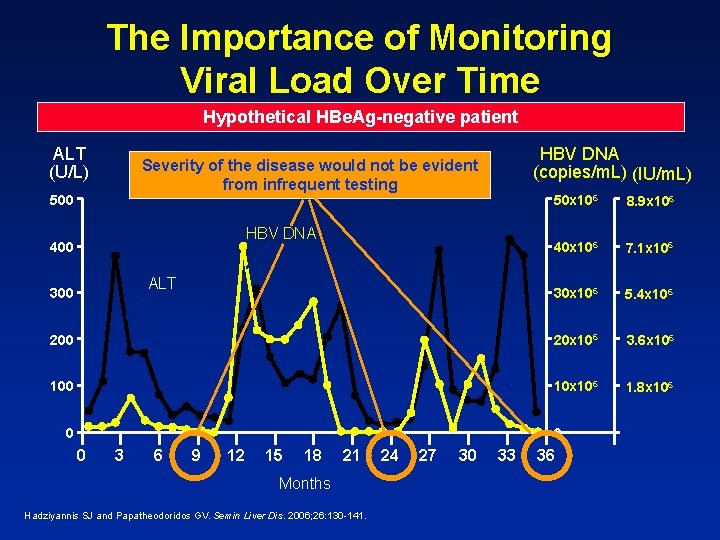
The Importance of Monitoring Viral Load Over Time Hypothetical HBe. Ag-negative patient ALT (U/L) HBV DNA (copies/m. L) (IU/m. L) Severity of the disease would not be evident from infrequent testing 500 50 x 106 8. 9 x 10⁶ 40 x 106 7. 1 x 10⁶ 30 x 106 5. 4 x 10⁶ 200 20 x 106 3. 6 x 10⁶ 100 10 x 106 1. 8 x 10⁶ HBV DNA 400 ALT 300 0 3 6 9 12 15 18 21 Months Hadziyannis SJ and Papatheodoridos GV. Semin Liver Dis. 2006; 26: 130 -141. 24 27 30 33 36
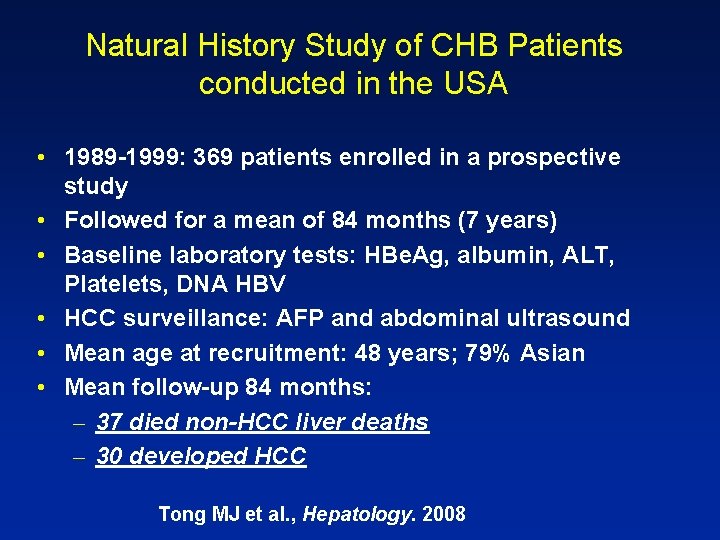
Natural History Study of CHB Patients conducted in the USA • 1989 -1999: 369 patients enrolled in a prospective study • Followed for a mean of 84 months (7 years) • Baseline laboratory tests: HBe. Ag, albumin, ALT, Platelets, DNA HBV • HCC surveillance: AFP and abdominal ultrasound • Mean age at recruitment: 48 years; 79% Asian • Mean follow-up 84 months: – 37 died non-HCC liver deaths – 30 developed HCC Tong MJ et al. , Hepatology. 2008
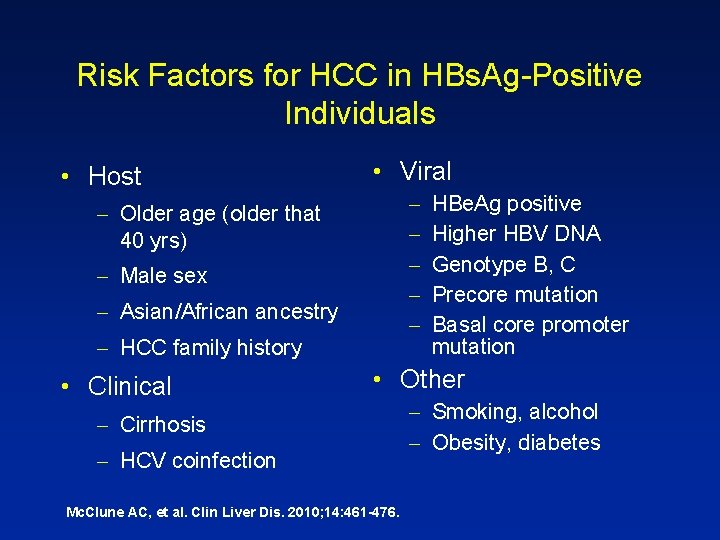
Risk Factors for HCC in HBs. Ag-Positive Individuals • Host • Viral – – – Older age (older that 40 yrs) – Male sex – Asian/African ancestry – HCC family history • Clinical HBe. Ag positive Higher HBV DNA Genotype B, C Precore mutation Basal core promoter mutation • Other – Cirrhosis – HCV coinfection Mc. Clune AC, et al. Clin Liver Dis. 2010; 14: 461 -476. – Smoking, alcohol – Obesity, diabetes

HCC Surveillance in Chronic Hepatitis B: AASLD Recommendations • • • Asian men older than 40 yrs of age Asian women older than 50 yrs of age Patients with cirrhosis Patients with family history of HCC African Americans Those with other risk factors such as high HBV DNA, co-infection with HCV or HIV, or presence of other liver diseases Bruix J, et al. Hepatology. 2011; 53: 1020 -1022.
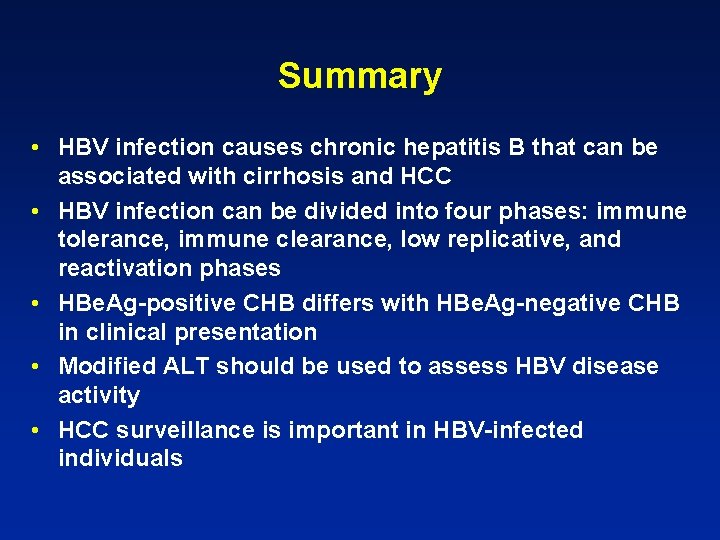
Summary • HBV infection causes chronic hepatitis B that can be associated with cirrhosis and HCC • HBV infection can be divided into four phases: immune tolerance, immune clearance, low replicative, and reactivation phases • HBe. Ag-positive CHB differs with HBe. Ag-negative CHB in clinical presentation • Modified ALT should be used to assess HBV disease activity • HCC surveillance is important in HBV-infected individuals
- Slides: 22