
Natural Gas Utility Distribution Pipeline Infrastructure Replacement Programs
Natural Gas Utility Distribution Pipeline Infrastructure Replacement Programs RATE RECOVERY ISSUES Prepared by: Alexander J. Cochis Presented to: NASUCA Mid-Year Meeting Charlestown, South Carolina June 2012
Capital Expenditures and Cost Recovery ú Base rate recovery using a representative test year: the old fashioned way – Depreciation Expense – Revenue from load growth – Regulatory lag » Administratively efficient » Unobtrusive to management (can plan on) – Prudence can be reviewed in rate case – Used and useful standard protected public 2
Recovery Under Cost Trackers ú Theoretical Rationale for Cost pass-throughs – Objective costs » External to the Company – Volatile in nature – Material to financial operation – Improves administrative efficiency by avoiding rate cases ú Fuel supply costs the classic example – Around for decades 3
Cap-X Cost Recovery Under Trackers ú Distribution System Capital costs – Costs somewhat subjective » Most or all reflect utility or affiliate costs – These investments are well planned over five or ten year horizons – Material costs in capital intensive industry – Administratively cumbersome » Annual filings or true-ups can be like a mini-rate case 4
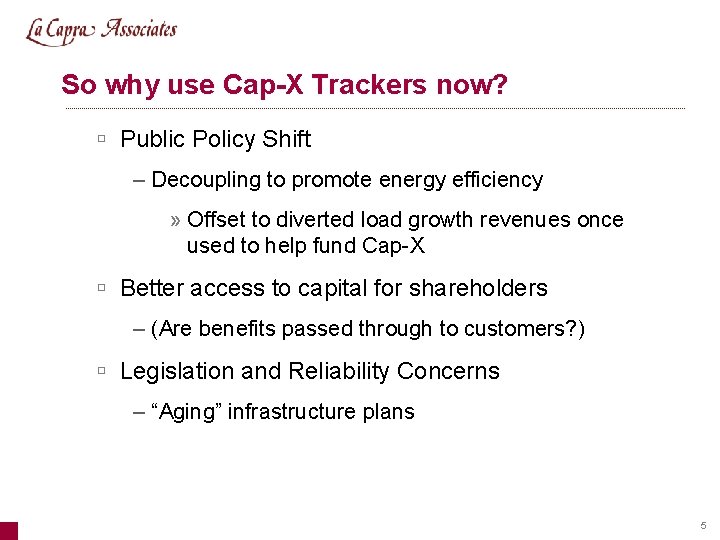
So why use Cap-X Trackers now? ú Public Policy Shift – Decoupling to promote energy efficiency » Offset to diverted load growth revenues once used to help fund Cap-X ú Better access to capital for shareholders – (Are benefits passed through to customers? ) ú Legislation and Reliability Concerns – “Aging” infrastructure plans 5
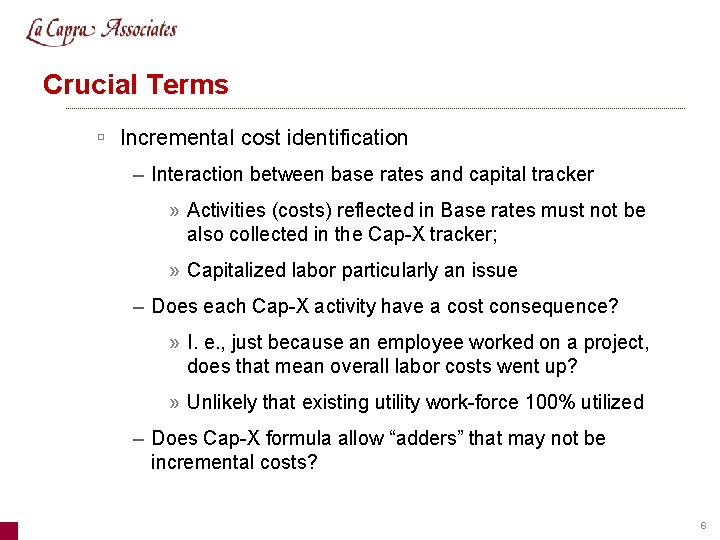
Crucial Terms ú Incremental cost identification – Interaction between base rates and capital tracker » Activities (costs) reflected in Base rates must not be also collected in the Cap-X tracker; » Capitalized labor particularly an issue – Does each Cap-X activity have a cost consequence? » I. e. , just because an employee worked on a project, does that mean overall labor costs went up? » Unlikely that existing utility work-force 100% utilized – Does Cap-X formula allow “adders” that may not be incremental costs? 6
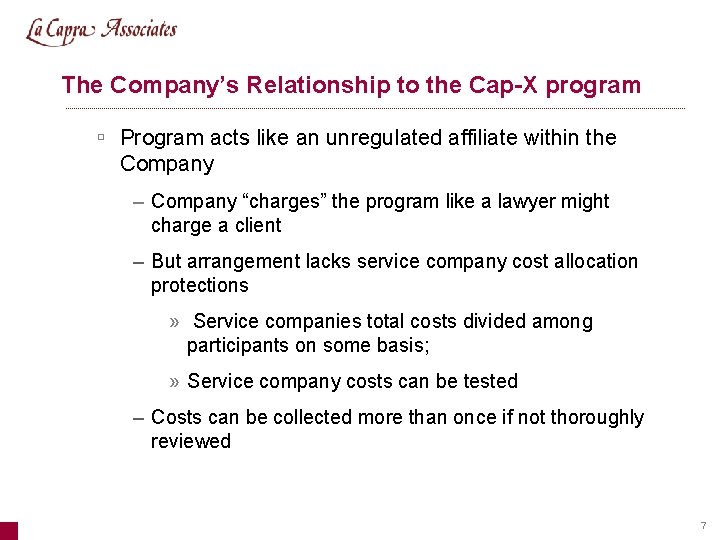
The Company’s Relationship to the Cap-X program ú Program acts like an unregulated affiliate within the Company – Company “charges” the program like a lawyer might charge a client – But arrangement lacks service company cost allocation protections » Service companies total costs divided among participants on some basis; » Service company costs can be tested – Costs can be collected more than once if not thoroughly reviewed 7

The Example of Capitalized Labor Test Year Rate Year without Cap-X tracker Rate Year with Base Rate and Cap-X tracker Capitalized Labor 80 90 90 Expensed Labor 20 10 20 Total 100 110 ► Total labor expense the same in test year and rate year but the capitalized ratio changes due to increased Cap-X activity ► Base rates do not reconcile to reflect the reduction in expensed labor ► Capitalized Labor increase passed on through the rate mechanism 8
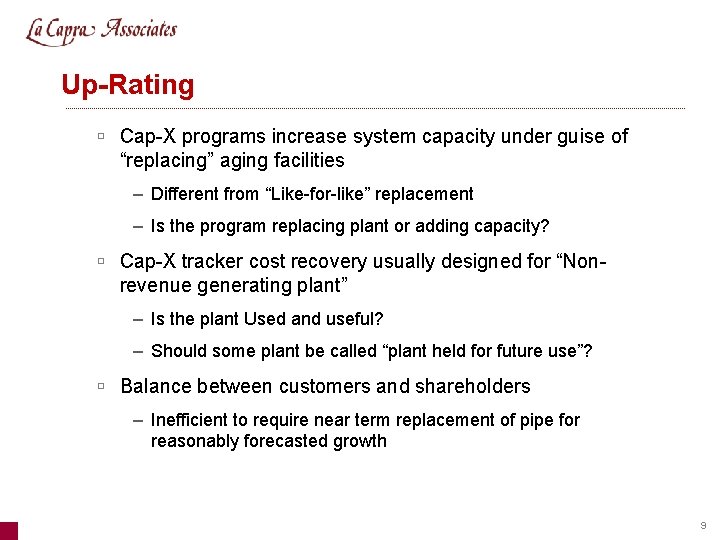
Up-Rating ú Cap-X programs increase system capacity under guise of “replacing” aging facilities – Different from “Like-for-like” replacement – Is the program replacing plant or adding capacity? ú Cap-X tracker cost recovery usually designed for “Nonrevenue generating plant” – Is the plant Used and useful? – Should some plant be called “plant held for future use”? ú Balance between customers and shareholders – Inefficient to require near term replacement of pipe for reasonably forecasted growth 9
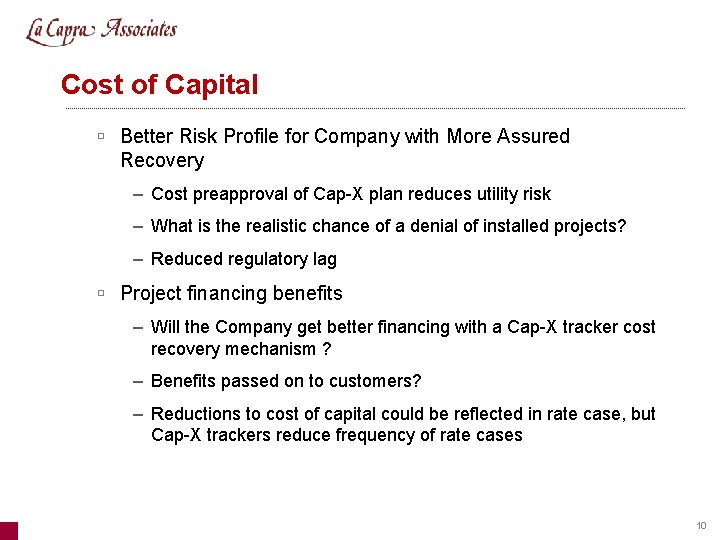
Cost of Capital ú Better Risk Profile for Company with More Assured Recovery – Cost preapproval of Cap-X plan reduces utility risk – What is the realistic chance of a denial of installed projects? – Reduced regulatory lag ú Project financing benefits – Will the Company get better financing with a Cap-X tracker cost recovery mechanism ? – Benefits passed on to customers? – Reductions to cost of capital could be reflected in rate case, but Cap-X trackers reduce frequency of rate cases 10
End of Presentation Contact Information: La Capra Associates One Washington Mall, 9 th Floor Boston, MA 02108 617. 778. 2590 www. lacapra. com 11
- Slides: 11