
Natural Environment of the Pacific Northwest Rainshadow Effect
- Slides: 13
Natural Environment of the Pacific Northwest Rainshadow Effect
Rainshadow Effect • Agenda – Go over objectives – Take notes on the Rainshadow Effect – Short in-class activity – Finish/turn in chapter vocabulary
Rainshadow Effect • Objective: – At the end of this lesson I should be able to… • explain the 5 steps of the Rainshadow Effect. • act out the Rainshadow Effect.
Rainshadow Effect • Overview – Most important climatic phenomenon in PNW – Creates two differing natural environments
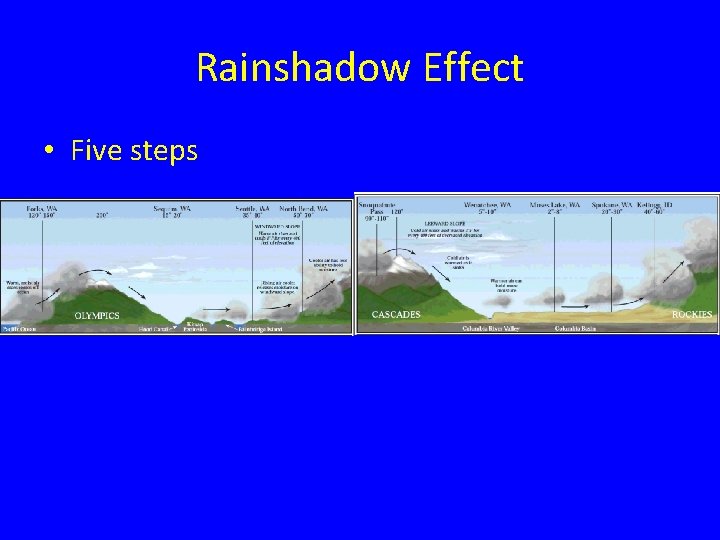
Rainshadow Effect • Five steps
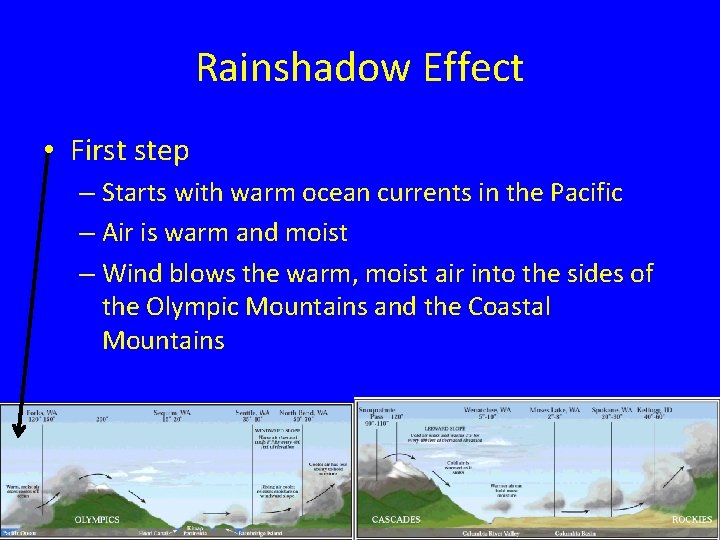
Rainshadow Effect • First step – Starts with warm ocean currents in the Pacific – Air is warm and moist – Wind blows the warm, moist air into the sides of the Olympic Mountains and the Coastal Mountains
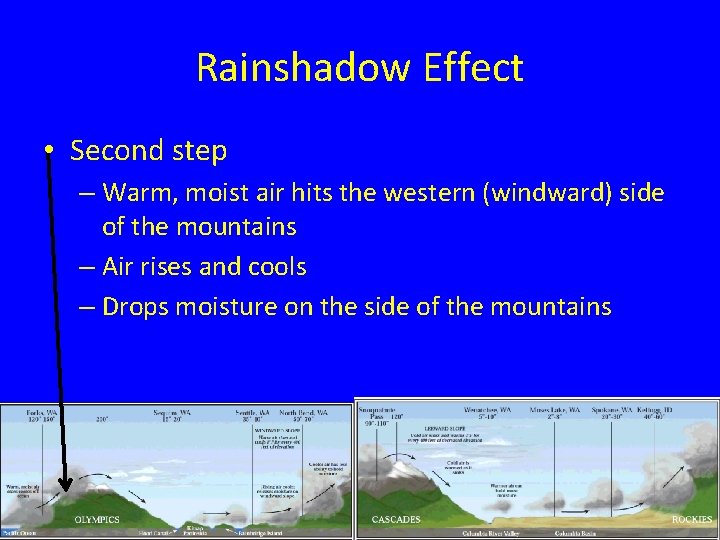
Rainshadow Effect • Second step – Warm, moist air hits the western (windward) side of the mountains – Air rises and cools – Drops moisture on the side of the mountains
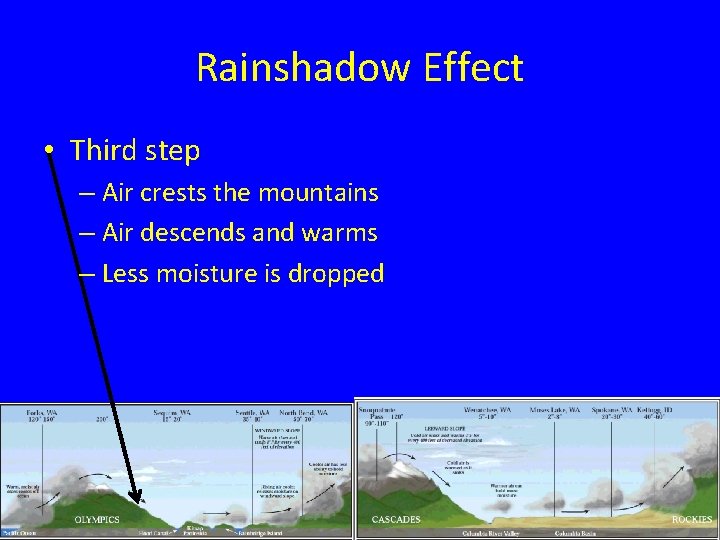
Rainshadow Effect • Third step – Air crests the mountains – Air descends and warms – Less moisture is dropped
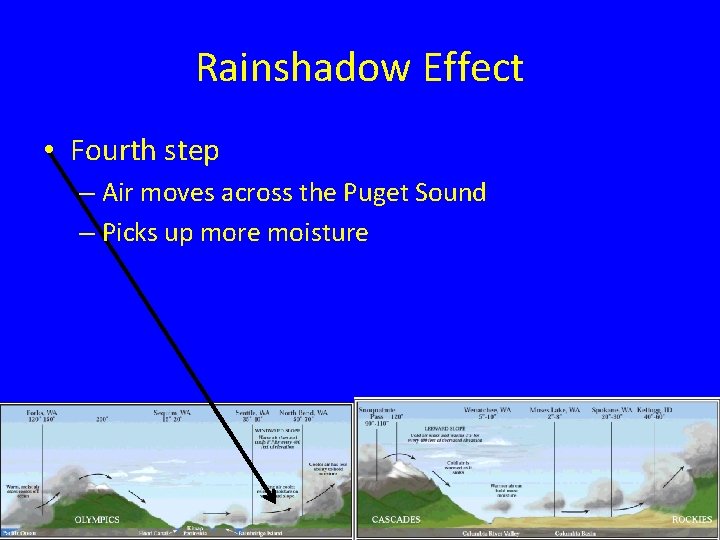
Rainshadow Effect • Fourth step – Air moves across the Puget Sound – Picks up more moisture
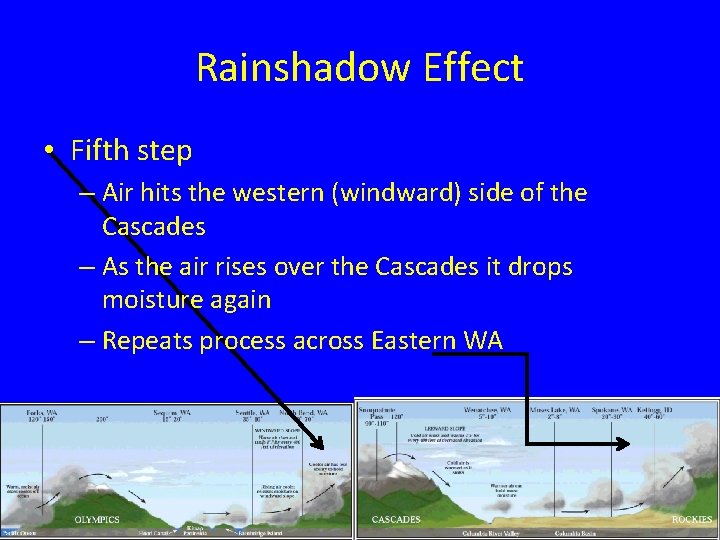
Rainshadow Effect • Fifth step – Air hits the western (windward) side of the Cascades – As the air rises over the Cascades it drops moisture again – Repeats process across Eastern WA
Rainshadow Effect • Results – Western (windward) slopes • More rain • Greener • More people – Eastern (leeward) slopes • Less rain • Drier • Less people
Rainshadow Effect • Activity – Each row is going to get a card – The card has one of the five steps – Refer to your notes – Take five minutes to devise a short skit (less than 1 minute) – You will act these out for the class
Rainshadow Effect • Tomorrow – Turn in vocab (if you have not yet) – West/East of the Cascades – co-teaching