
Natural Drivers of Climate Change Current Weather Solar

- Slides: 35
Natural Drivers of Climate Change Current Weather Solar Changes Orbital Changes and Milankovitch Cycles Volcanoes Feedbacks For Next Class: Read National Geographic Everest story https: //www. nationalgeographic. com/adventure/2019/06/ mount-everest-highest-weather-station/
Natural Drivers of Climate Change • Global radiative equilibrium - energy entering Earth’s climate system (i. e. , absorbed solar radiation) ultimately equals energy leaving the system (i. e. , infrared radiation emitted to space) – Law of energy conservation – Change in either energy input or energy output shifts the planet’s climate state • A number of factors can change the global radiative equilibrium – – – Fluctuations in solar energy output Changes in Earth’s orbit about the Sun Volcanic eruptions Variations in atmospheric chemistry Alterations in Earth’s surface properties Human activities
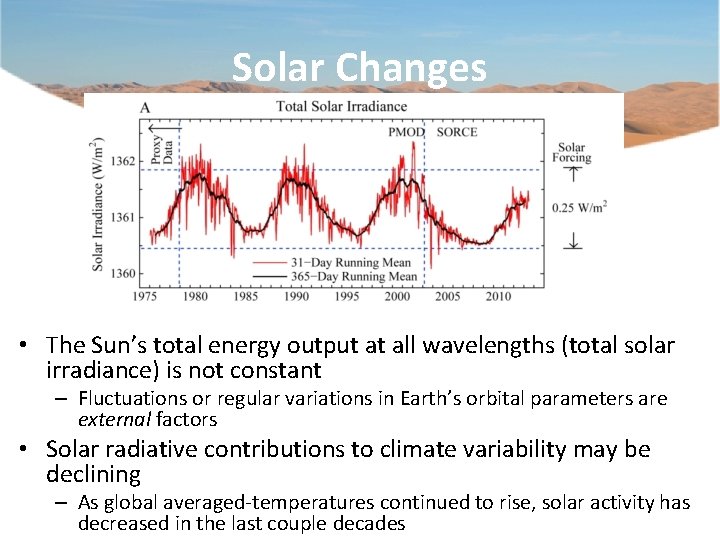
Solar Changes • The Sun’s total energy output at all wavelengths (total solar irradiance) is not constant – Fluctuations or regular variations in Earth’s orbital parameters are external factors • Solar radiative contributions to climate variability may be declining – As global averaged-temperatures continued to rise, solar activity has decreased in the last couple decades
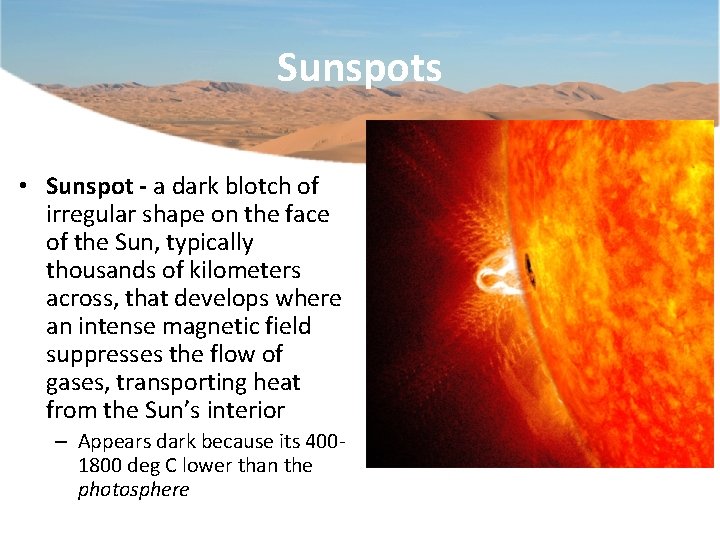
Sunspots • Sunspot - a dark blotch of irregular shape on the face of the Sun, typically thousands of kilometers across, that develops where an intense magnetic field suppresses the flow of gases, transporting heat from the Sun’s interior – Appears dark because its 4001800 deg C lower than the photosphere
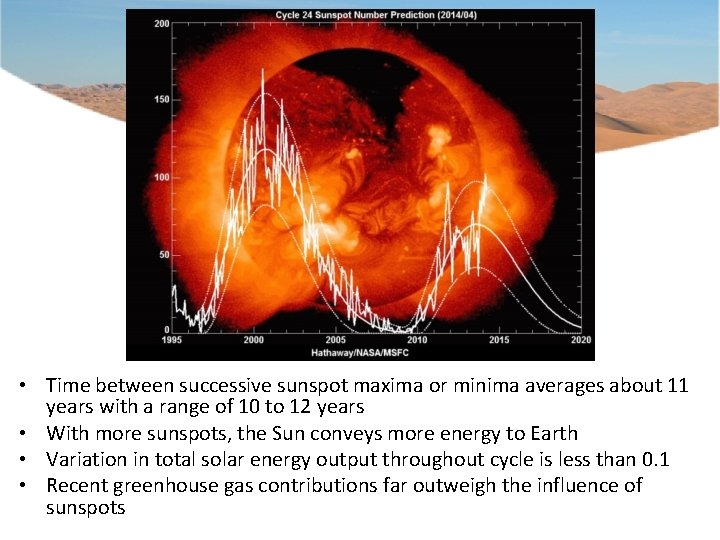
• Time between successive sunspot maxima or minima averages about 11 years with a range of 10 to 12 years • With more sunspots, the Sun conveys more energy to Earth • Variation in total solar energy output throughout cycle is less than 0. 1 • Recent greenhouse gas contributions far outweigh the influence of sunspots
Maunder Minimum and the Little Ice Age • Maunder minimum - during the 70 -year period from 1645 to 1715 sunspot activity declined by a factor of 10 to 20 from its usual value during normal sunspot cycles, and decreased global temperatures • Spörer minimum - a 90 -year period of reduced sunspot number from 1460 to 1550 and lower global temperatures • Dalton minimum - a 40 -year period of reduced sunspot number from 1790 to 1830 and lower global temperatures
Maunder Minimum and the Little Ice Age • Cooler climate of Maunder and Spörer minimum supported by 14 C in tree growth ring and drought records • The weak solar signal might be amplified within Earth’s climate system – Changes in incoming UV radiation that affect the stratosphere may alter the dynamics of the troposphere as to augment regional climate change
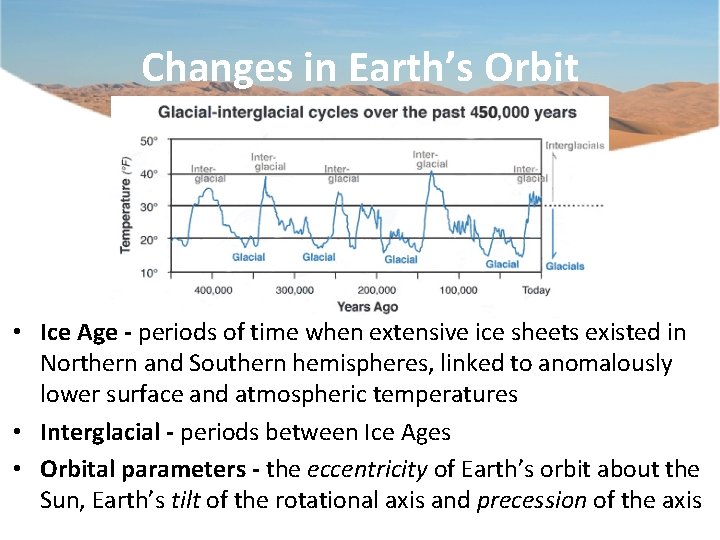
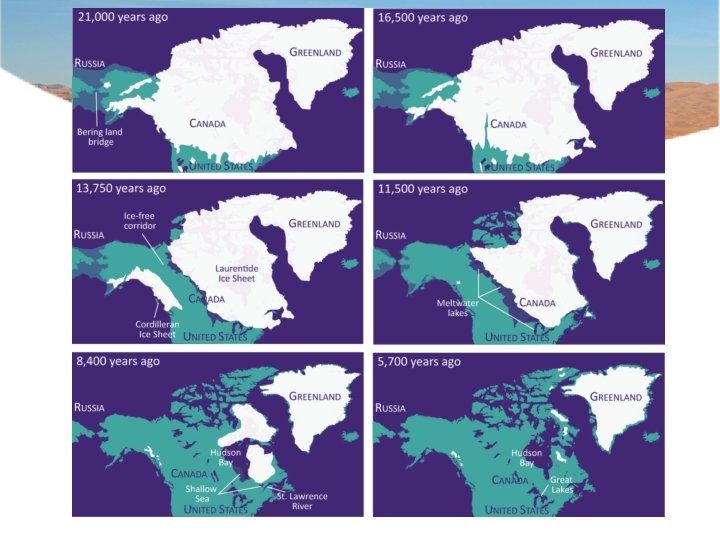
Changes in Earth’s Orbit • Ice Age - periods of time when extensive ice sheets existed in Northern and Southern hemispheres, linked to anomalously lower surface and atmospheric temperatures • Interglacial - periods between Ice Ages • Orbital parameters - the eccentricity of Earth’s orbit about the Sun, Earth’s tilt of the rotational axis and precession of the axis
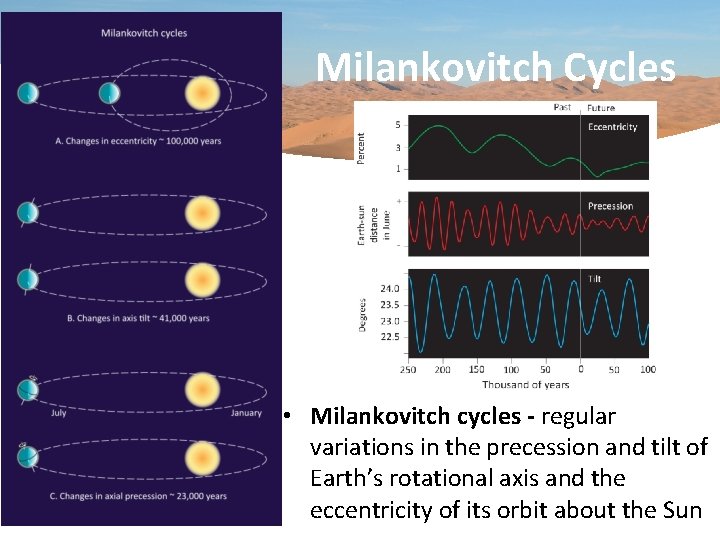
Milankovitch Cycles • Milankovitch cycles - regular variations in the precession and tilt of Earth’s rotational axis and the eccentricity of its orbit about the Sun
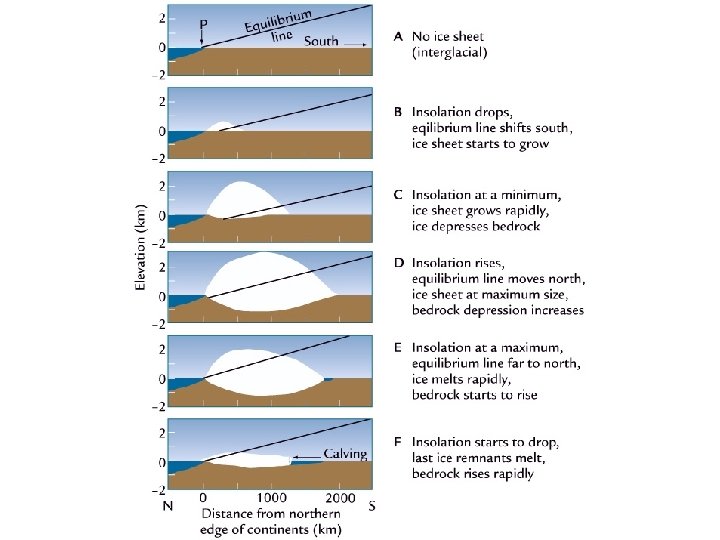
Milankovitch Theory “. . . Ice ages are triggered by minima in summer insolation near 65°N, enabling winter snowfall to persist all year and therefore accumulate to build NH [Northern Hemisphere] glacial ice sheets” (IPCC AR 4 Ch. 6, p. 445). Onset of last ice age (~116, 000 yrs ago) was associated with mid-June insolation about 40 w m -2 lower than today.
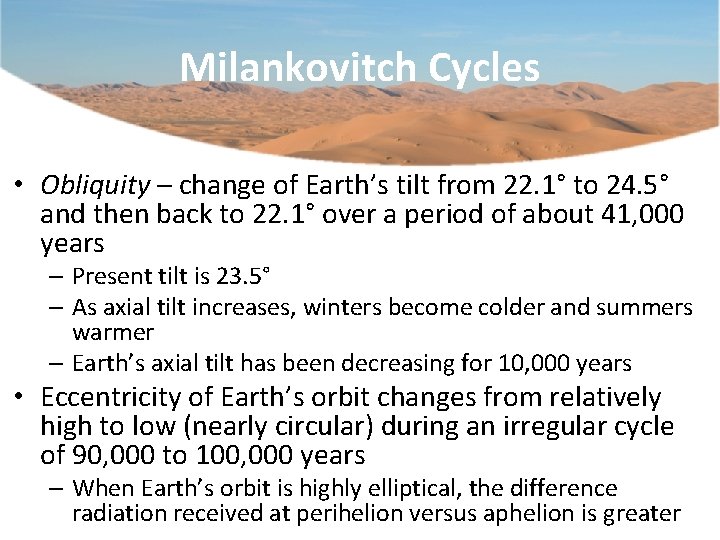
Milankovitch Cycles • Obliquity – change of Earth’s tilt from 22. 1° to 24. 5° and then back to 22. 1° over a period of about 41, 000 years – Present tilt is 23. 5° – As axial tilt increases, winters become colder and summers warmer – Earth’s axial tilt has been decreasing for 10, 000 years • Eccentricity of Earth’s orbit changes from relatively high to low (nearly circular) during an irregular cycle of 90, 000 to 100, 000 years – When Earth’s orbit is highly elliptical, the difference radiation received at perihelion versus aphelion is greater
Discussion Question • How do volcanoes influence climate? What are the physical processes?
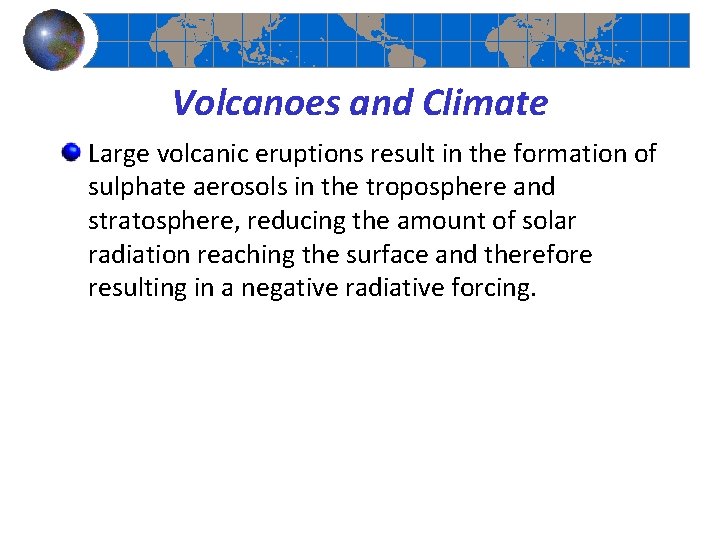
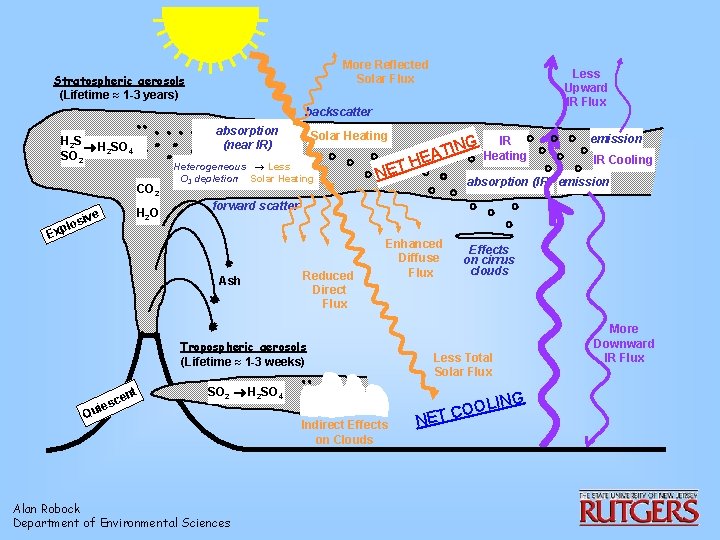
Volcanoes and Climate Large volcanic eruptions result in the formation of sulphate aerosols in the troposphere and stratosphere, reducing the amount of solar radiation reaching the surface and therefore resulting in a negative radiative forcing.
More Reflected Solar Flux Stratospheric aerosols (Lifetime » 1 -3 years) Less Upward IR Flux backscatter absorption (near IR) H 2 S ® H SO 2 4 SO 2 CO 2 H 2 O ve osi l Exp Solar Heating Heterogeneous ® Less O 3 depletion Solar Heating IR NG Heating I T A HE NET absorption (IR) emission Reduced Direct Flux Enhanced Diffuse Flux Tropospheric aerosols (Lifetime » 1 -3 weeks) ent IR Cooling forward scatter Ash sc uie emission Less Total Solar Flux SO 2 ® H 2 SO 4 Q Alan Robock Department of Environmental Sciences Indirect Effects on Clouds Effects on cirrus clouds LING N OO ET C More Downward IR Flux
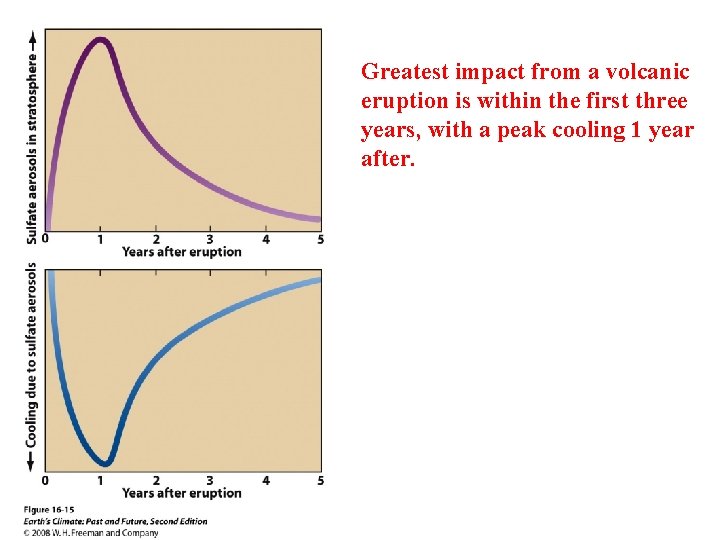
Greatest impact from a volcanic eruption is within the first three years, with a peak cooling 1 year after.
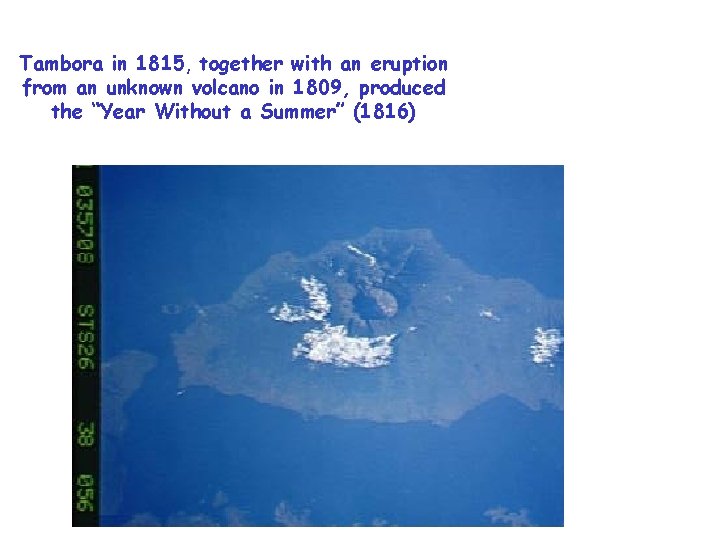
Tambora in 1815, together with an eruption from an unknown volcano in 1809, produced the “Year Without a Summer” (1816)
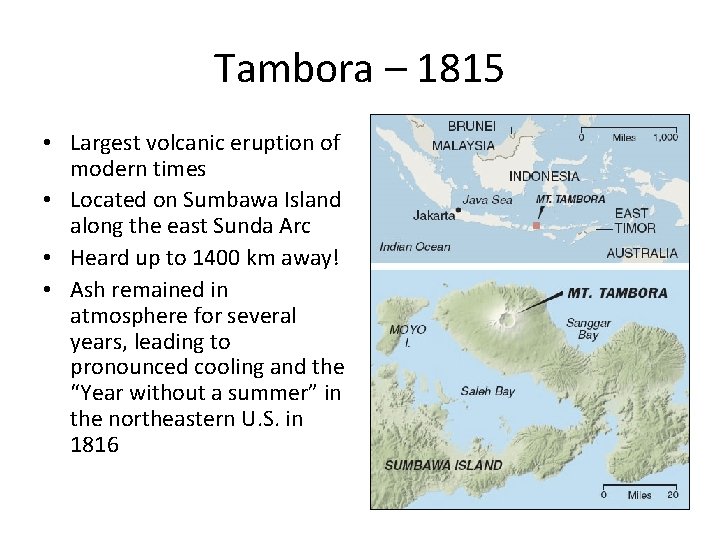
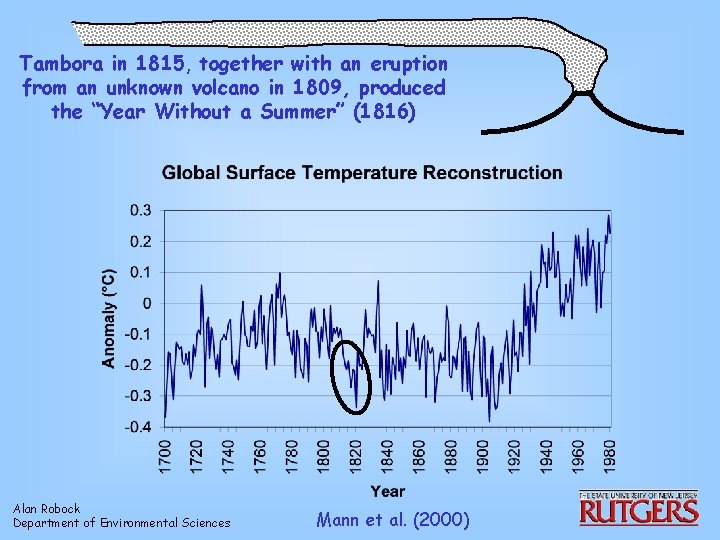
Tambora – 1815 • Largest volcanic eruption of modern times • Located on Sumbawa Island along the east Sunda Arc • Heard up to 1400 km away! • Ash remained in atmosphere for several years, leading to pronounced cooling and the “Year without a summer” in the northeastern U. S. in 1816
Year without a Summer http: //www. dandantheweatherman. com/
Tambora in 1815, together with an eruption from an unknown volcano in 1809, produced the “Year Without a Summer” (1816) Alan Robock Department of Environmental Sciences Mann et al. (2000)
Tambora, 1815, produced the “Year Without a Summer” (1816) Percy Bysshe Shelley Alan Robock Department of Environmental Sciences Mary Shelley George Gordon, Lord Byron
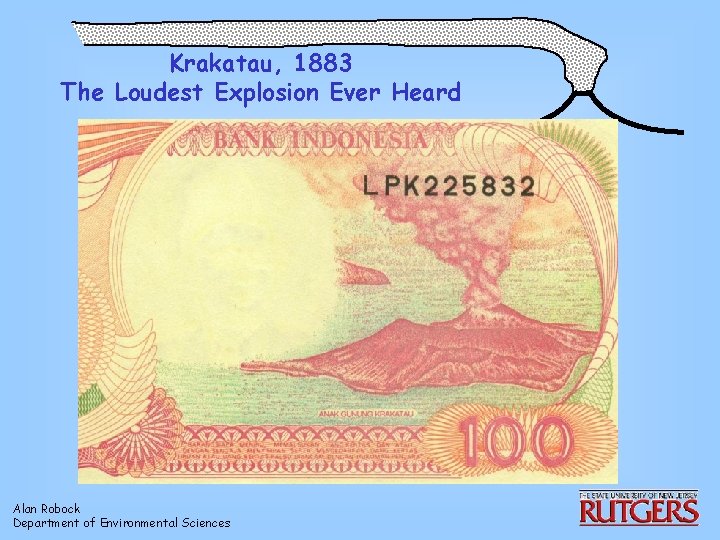
Krakatau, 1883 The Loudest Explosion Ever Heard Alan Robock Department of Environmental Sciences
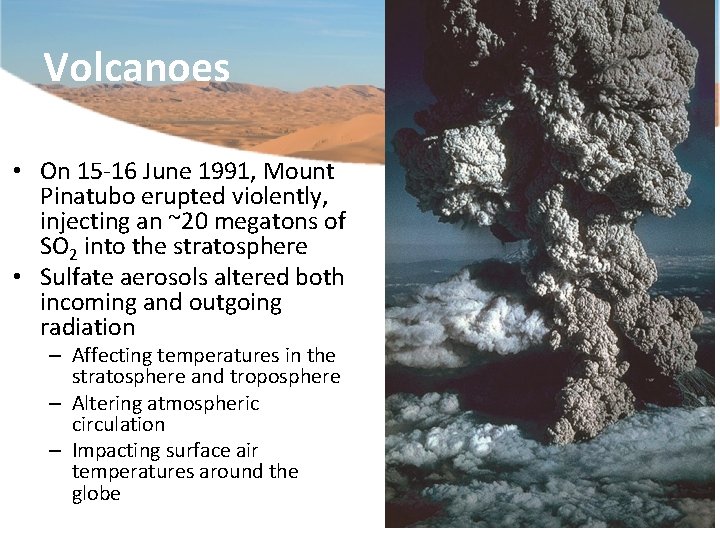
Volcanoes • On 15 -16 June 1991, Mount Pinatubo erupted violently, injecting an ~20 megatons of SO 2 into the stratosphere • Sulfate aerosols altered both incoming and outgoing radiation – Affecting temperatures in the stratosphere and troposphere – Altering atmospheric circulation – Impacting surface air temperatures around the globe
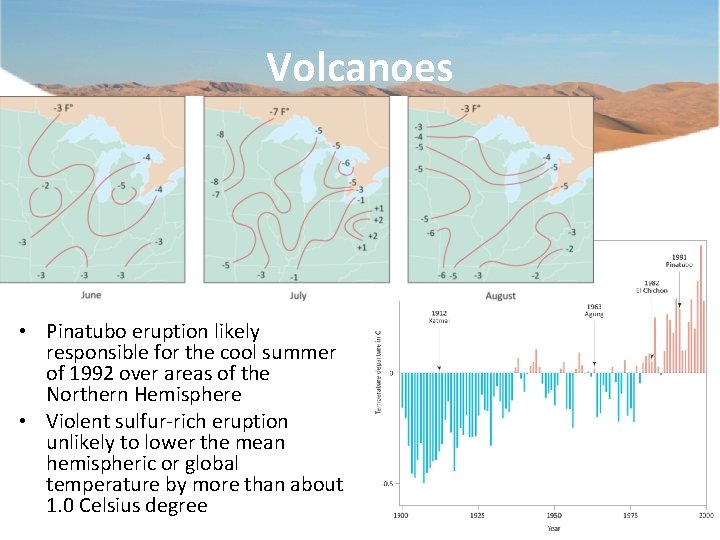
Volcanoes • Pinatubo eruption likely responsible for the cool summer of 1992 over areas of the Northern Hemisphere • Violent sulfur-rich eruption unlikely to lower the mean hemispheric or global temperature by more than about 1. 0 Celsius degree
Volcanoes • Not all volcanoes are similar • Based upon the type of eruption, some volcanoes produce more CO 2 than sulfuric aerosols – Volcanoes NOT a large source of CO 2 – Volcanoes have LESS influence on global climate than anthropogenic CO 2 – The volume of CO 2 released during eruptions pales in comparison to the volume of CO 2 released by humans
Feedbacks • None of the natural drivers of climate change act singularly in influencing climate • Sometimes, a “push” of the climate in one direction, leads to a “pull” of the opposite sign • Feedbacks - in climate studies, processes in which a natural or anthropogenic driver affects the climate system by a certain amount, as measured by a specified quantity, which, in turn, changes the first quantity – These drivers “nudge” the current climate state towards a warmer or cooler condition – Drivers can act on long or short timescales and affect the “sensitivity” of climate
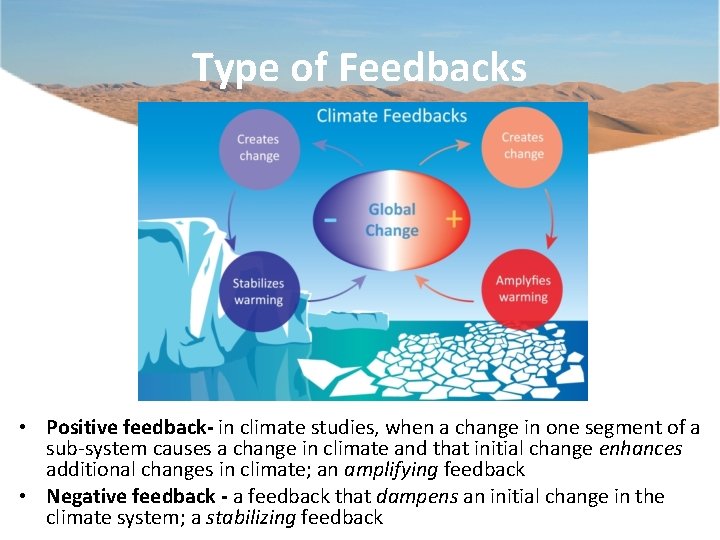
Type of Feedbacks • Positive feedback- in climate studies, when a change in one segment of a sub-system causes a change in climate and that initial change enhances additional changes in climate; an amplifying feedback • Negative feedback - a feedback that dampens an initial change in the climate system; a stabilizing feedback
Snow and Ice Cover • An extensive snow cover has a chilling positive feedback effect on the atmosphere – Fresh-fallen snow reflects 80% or more of incident solar radiation, reducing the amount of solar heating and lowering the daily maximum air temperature – An effective emitter of infrared radiation, especially on clear nights, snow lowers the daily minimum air temperature – A snow cover chills the near surface air, increasing atmospheric stability and suppressing vertical mixing of air, which reduces convective heat flux – An extensive snow cover tends to be self-sustaining
Snow and Ice Cover • Land-surface changes were contributing to a major summer warming trend in the Alaskan Arctic – Significantly lower land-surface albedo in late spring means sensible heating of the lower atmosphere begins earlier – With warmer summers, tall shrubs have expanded their coverage and white spruce forests have invaded the tundra, further amplifying (positive feedback) atmospheric heating • Ice, especially snow-covered ice, reflects more incident solar radiation than either the ocean or snow-free land so that any change in glacial or sea ice cover would affect climate
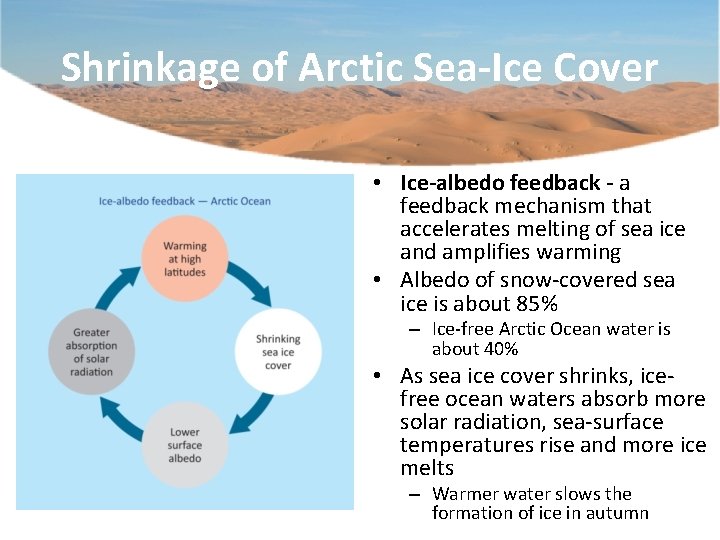
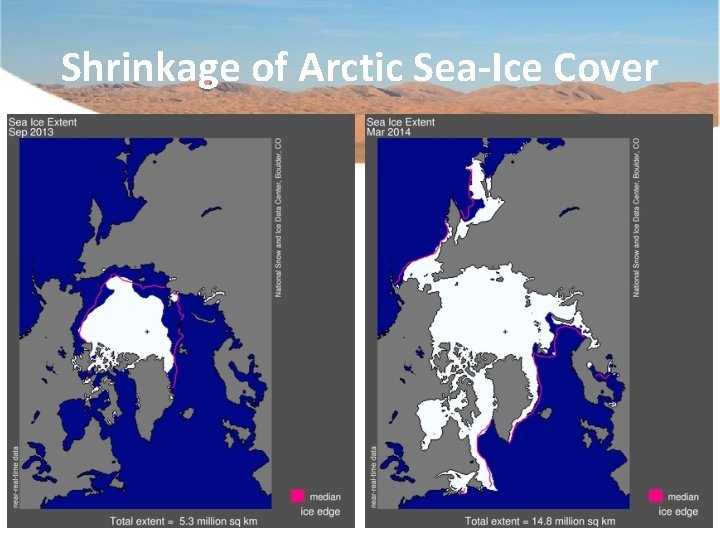
Shrinkage of Arctic Sea-Ice Cover • Ice-albedo feedback - a feedback mechanism that accelerates melting of sea ice and amplifies warming • Albedo of snow-covered sea ice is about 85% – Ice-free Arctic Ocean water is about 40% • As sea ice cover shrinks, icefree ocean waters absorb more solar radiation, sea-surface temperatures rise and more ice melts – Warmer water slows the formation of ice in autumn
Shrinkage of Arctic Sea-Ice Cover