
Natural and Human impacts on Weather and Climate
- Slides: 28
Natural and Human impacts on Weather and Climate
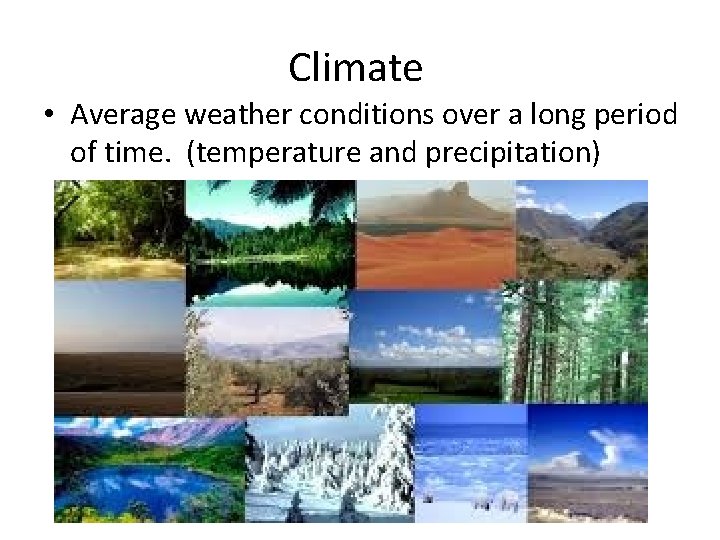
Climate • Average weather conditions over a long period of time. (temperature and precipitation)
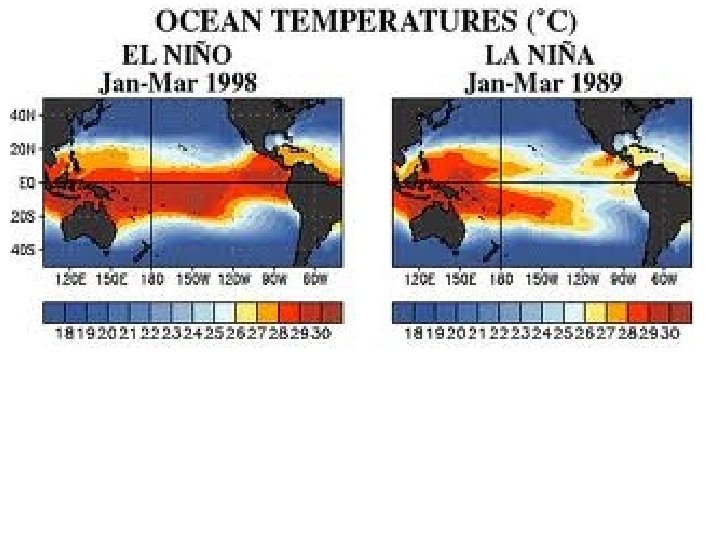
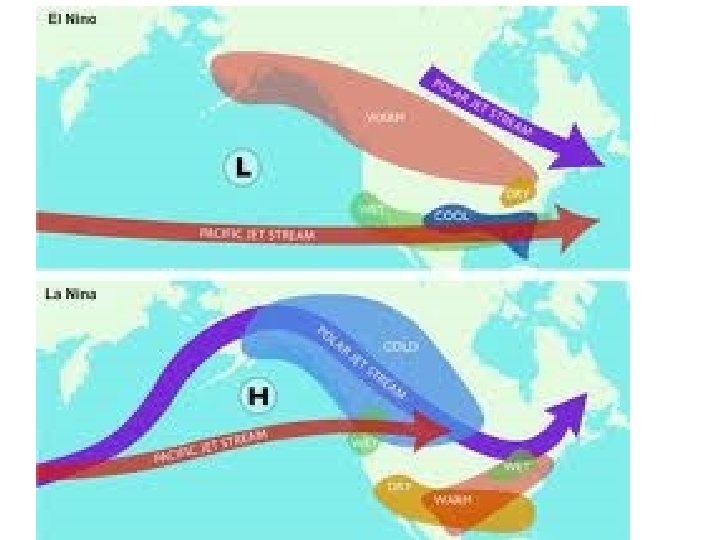
Natural Impacts El Nino/La Nina • El Nino: unusually warm current off the coast of S. America: (caused by weak winds) makes South America warmer and rainier than usual. Causes storms in U. S. Can weaken hurricanes. • La Nina: the more common colder current off the coast of S. America is cooler and drier.
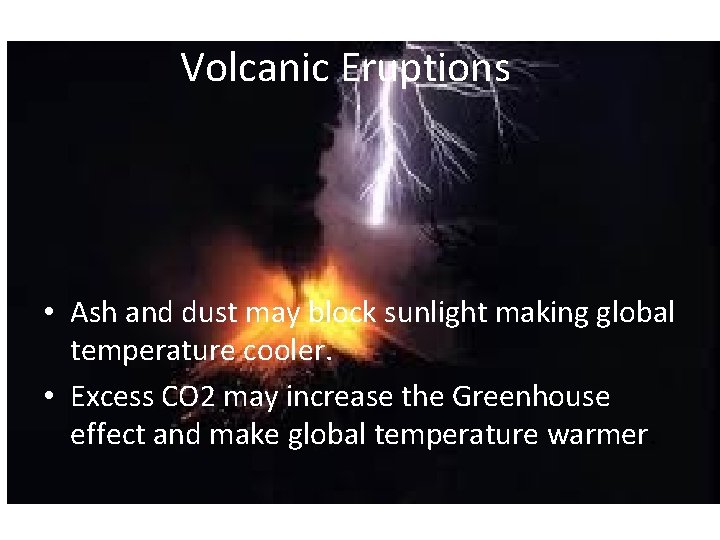
Volcanic Eruptions • Ash and dust may block sunlight making global temperature cooler. • Excess CO 2 may increase the Greenhouse effect and make global temperature warmer.
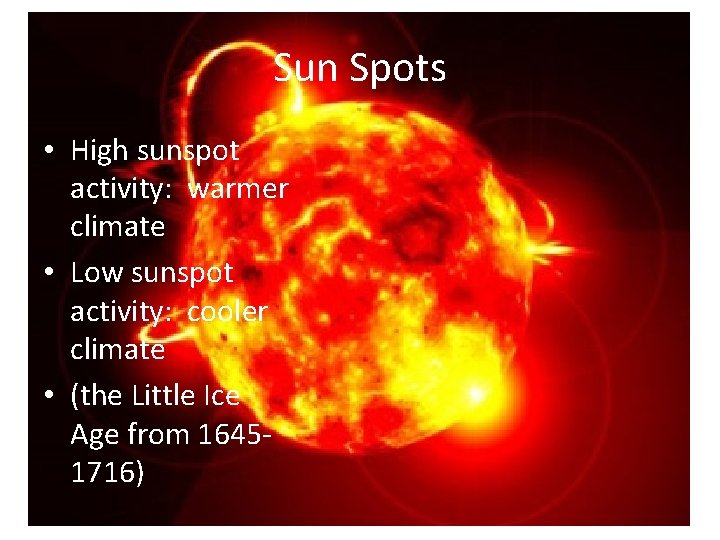
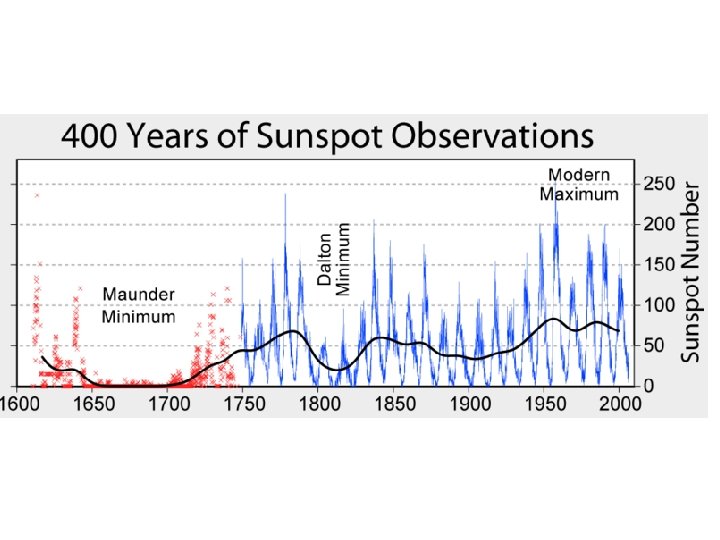
Sun Spots • High sunspot activity: warmer climate • Low sunspot activity: cooler climate • (the Little Ice Age from 16451716)
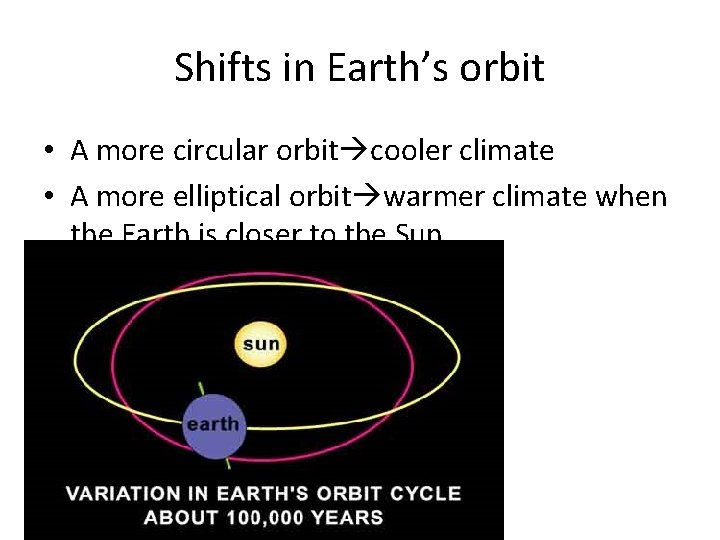
Shifts in Earth’s orbit • A more circular orbit cooler climate • A more elliptical orbit warmer climate when the Earth is closer to the Sun
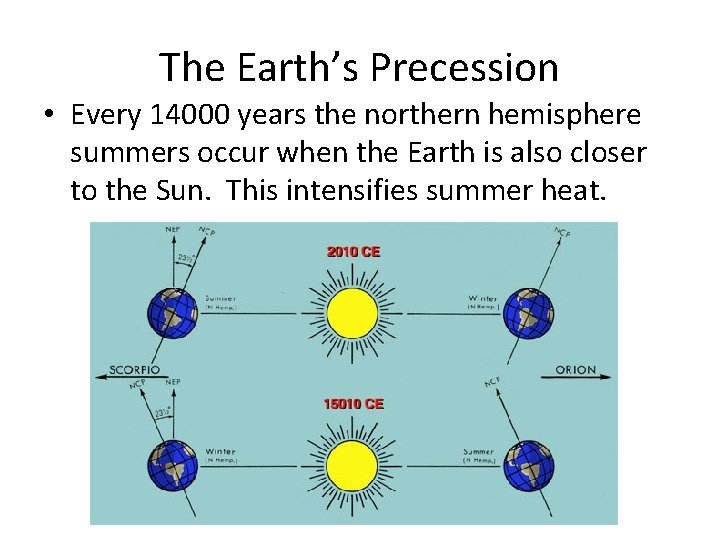
The Earth’s Precession • Every 14000 years the northern hemisphere summers occur when the Earth is also closer to the Sun. This intensifies summer heat.
HUMAN IMPACTS ON GLOBAL CLIMATE
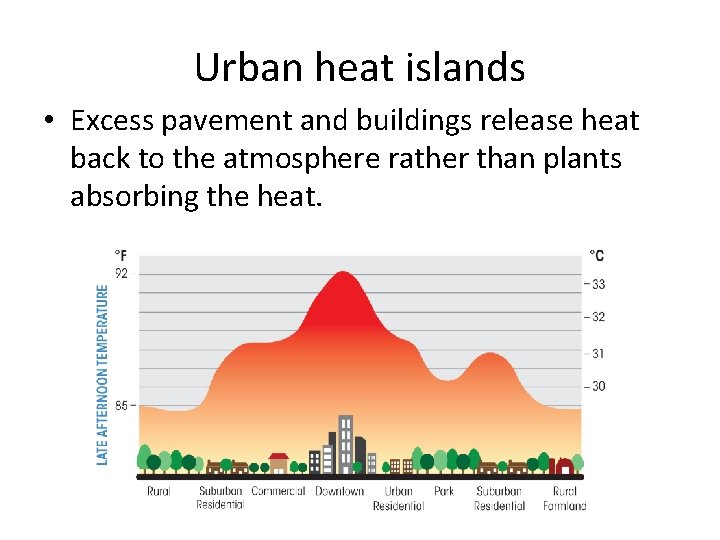
Urban heat islands • Excess pavement and buildings release heat back to the atmosphere rather than plants absorbing the heat.
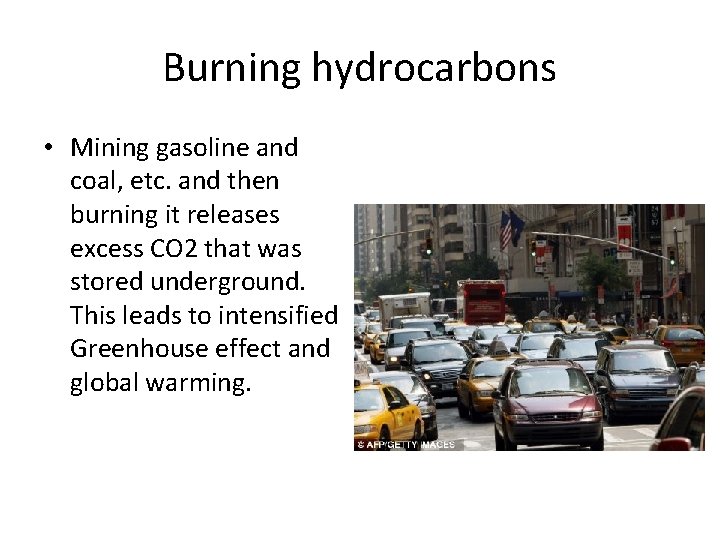
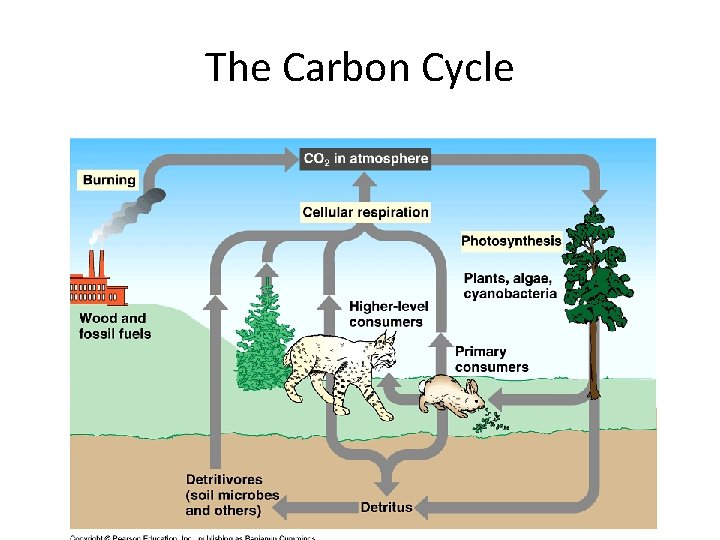
Burning hydrocarbons • Mining gasoline and coal, etc. and then burning it releases excess CO 2 that was stored underground. This leads to intensified Greenhouse effect and global warming.
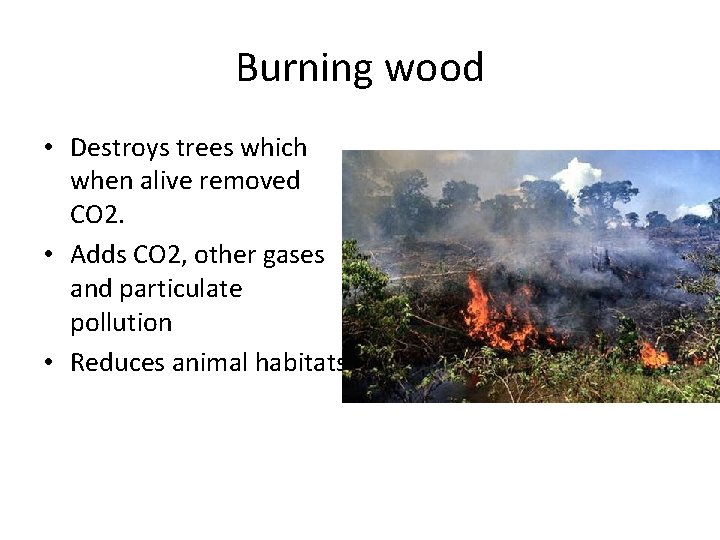
Burning wood • Destroys trees which when alive removed CO 2. • Adds CO 2, other gases and particulate pollution • Reduces animal habitats
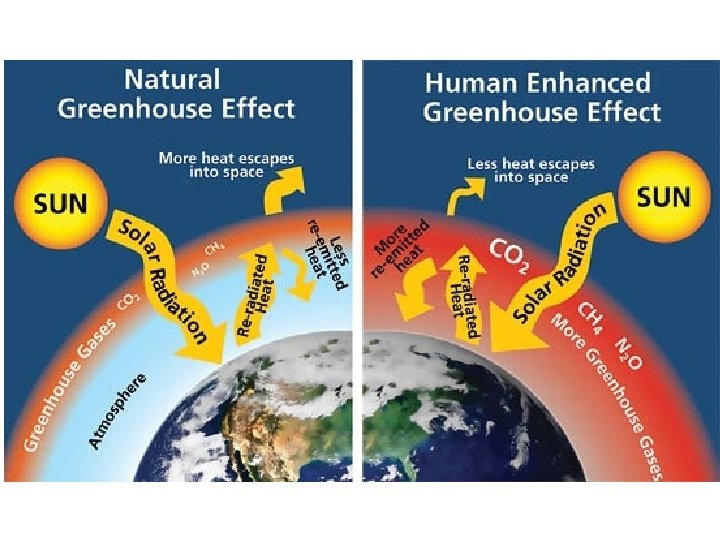
Greenhouse Effect • The greenhouse effect itself is good! It allows us to have moderate temperatures for survival. • EXCESS CO 2 traps heat in the atmosphere causing global temperature to rise (global warming)
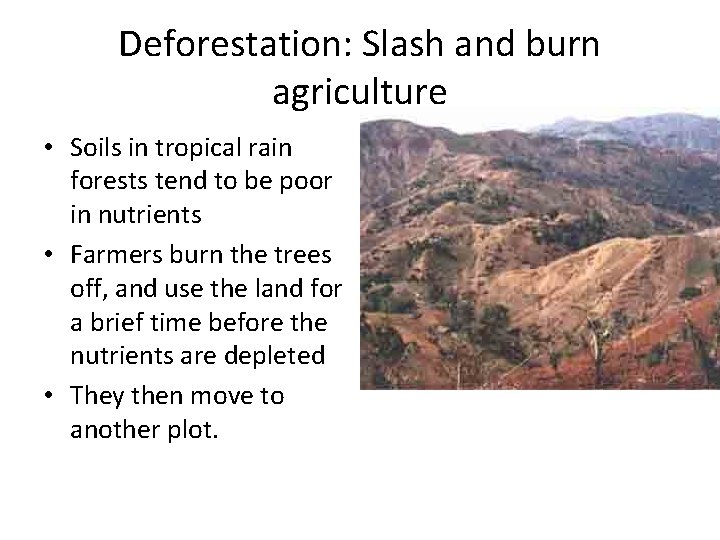
Deforestation: Slash and burn agriculture • Soils in tropical rain forests tend to be poor in nutrients • Farmers burn the trees off, and use the land for a brief time before the nutrients are depleted • They then move to another plot.
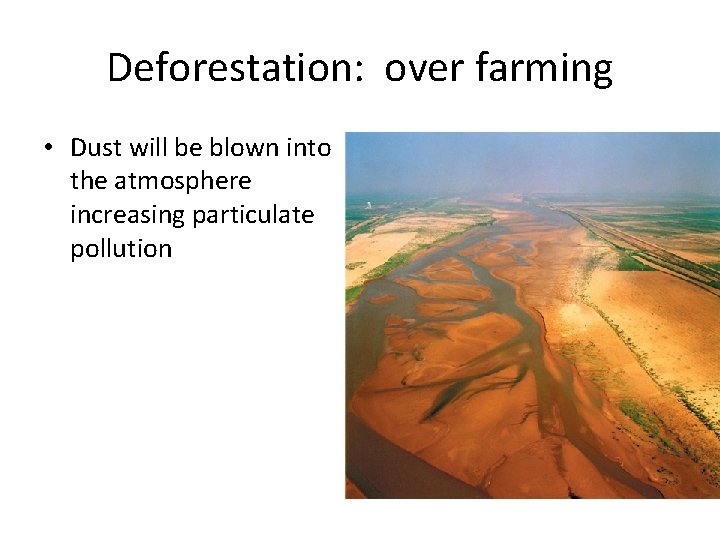
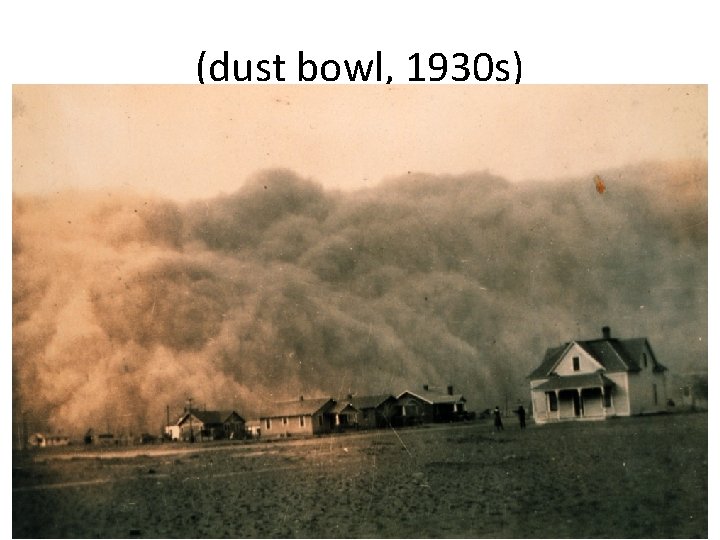
Deforestation: over farming • Dust will be blown into the atmosphere increasing particulate pollution
(dust bowl, 1930 s)
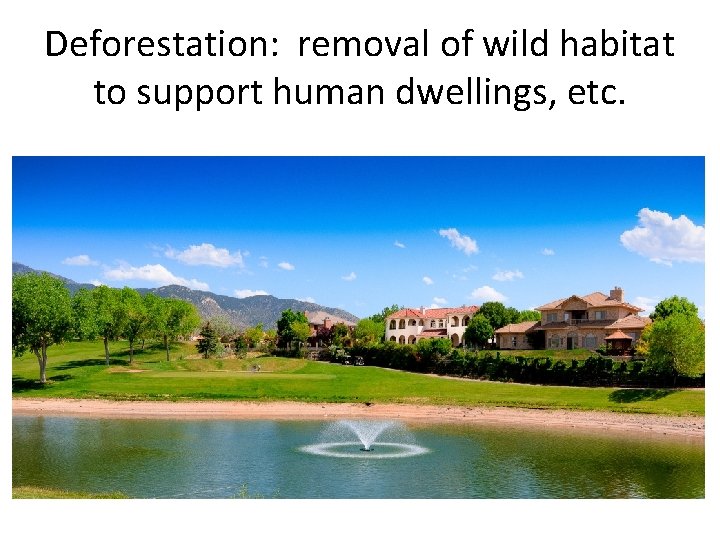
Deforestation: removal of wild habitat to support human dwellings, etc.
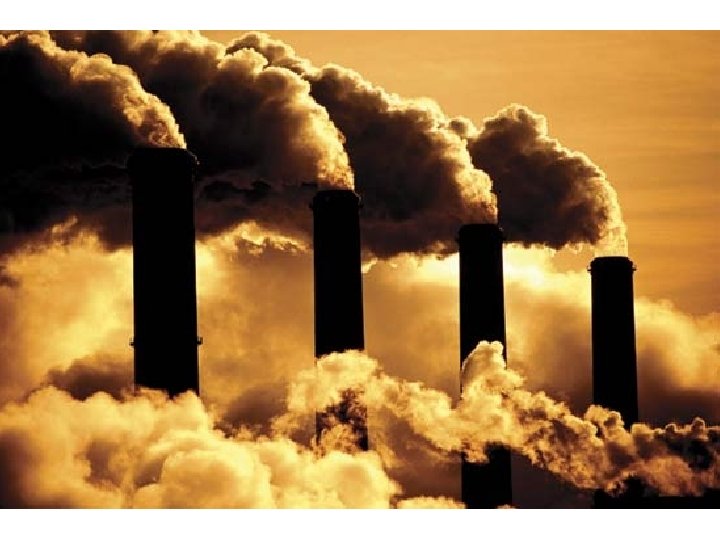
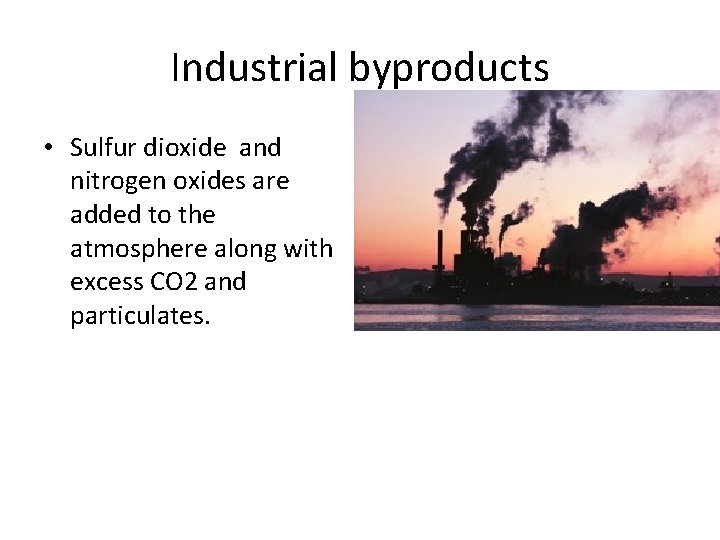
Industrial byproducts • Sulfur dioxide and nitrogen oxides are added to the atmosphere along with excess CO 2 and particulates.
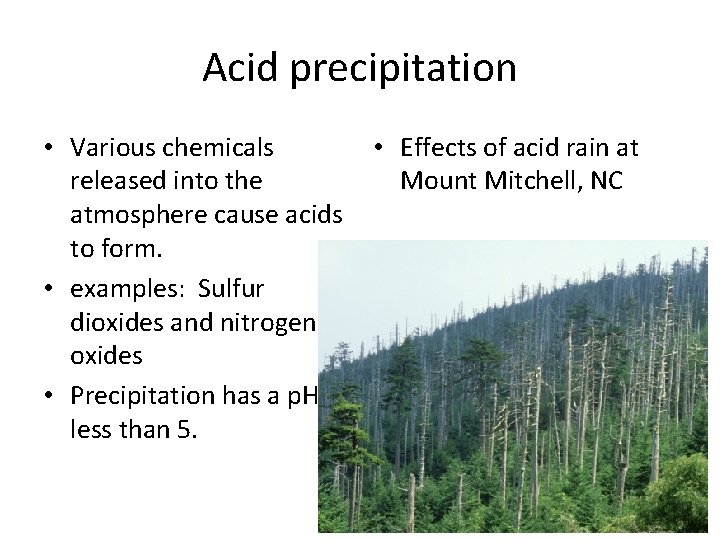
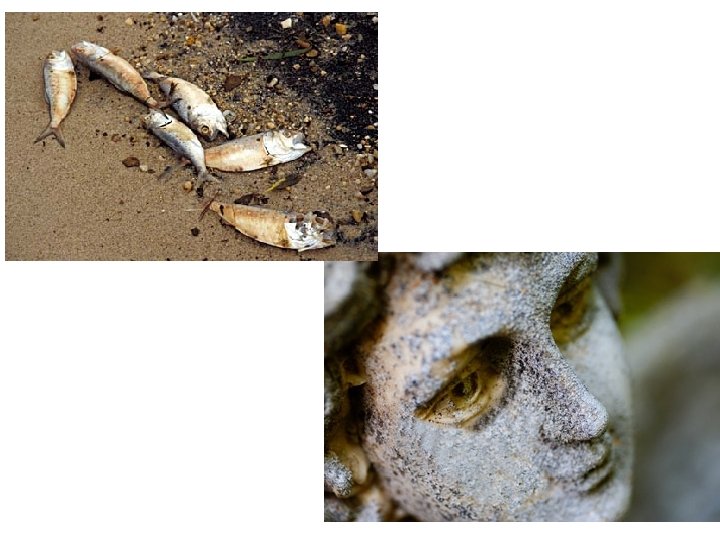
Acid precipitation • Various chemicals • Effects of acid rain at released into the Mount Mitchell, NC atmosphere cause acids to form. • examples: Sulfur dioxides and nitrogen oxides • Precipitation has a p. H of less than 5.
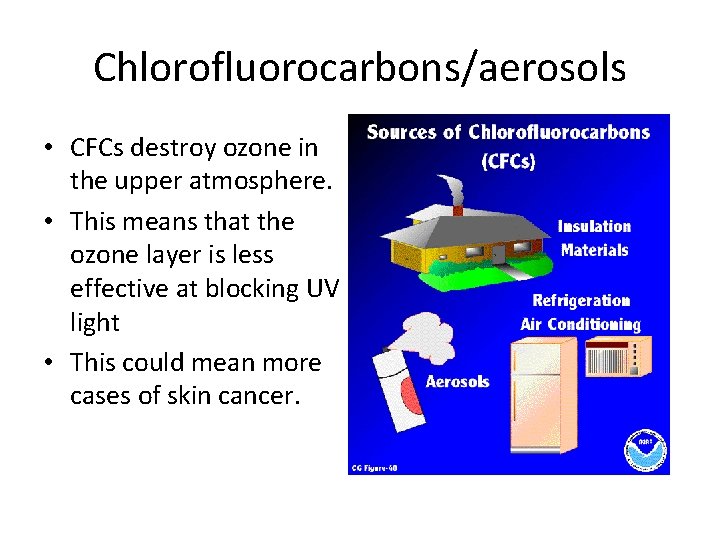
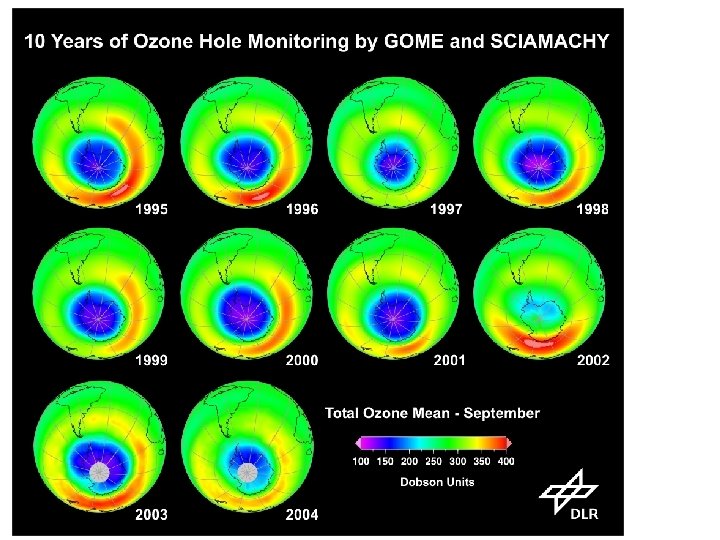
Chlorofluorocarbons/aerosols • CFCs destroy ozone in the upper atmosphere. • This means that the ozone layer is less effective at blocking UV light • This could mean more cases of skin cancer.
The Carbon Cycle
What can we do? Create a poster with words and pictures showing how we can reduce AIR pollution and global warming. List ideas in each category: • World • My family and I