
NATS 101 Section 13 Lecture 4 Temperature and
- Slides: 36
NATS 101 Section 13: Lecture 4 Temperature and Heat Transfer
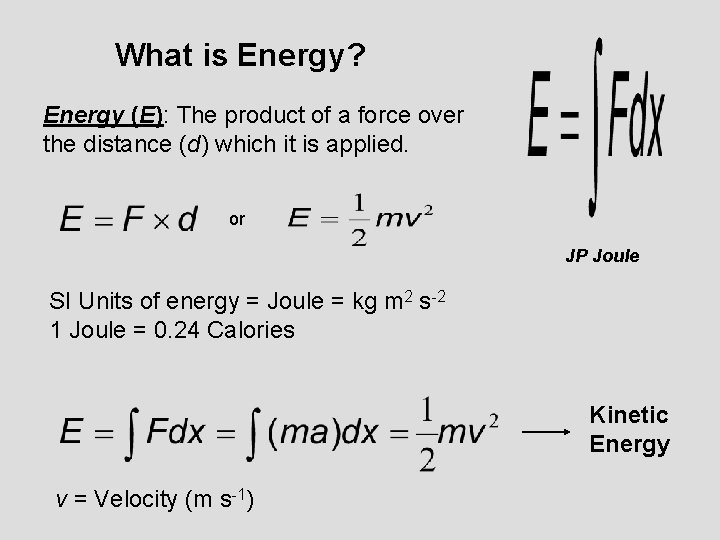
What is Energy? Energy (E): The product of a force over the distance (d) which it is applied. or JP Joule SI Units of energy = Joule = kg m 2 s-2 1 Joule = 0. 24 Calories Kinetic Energy v = Velocity (m s-1)
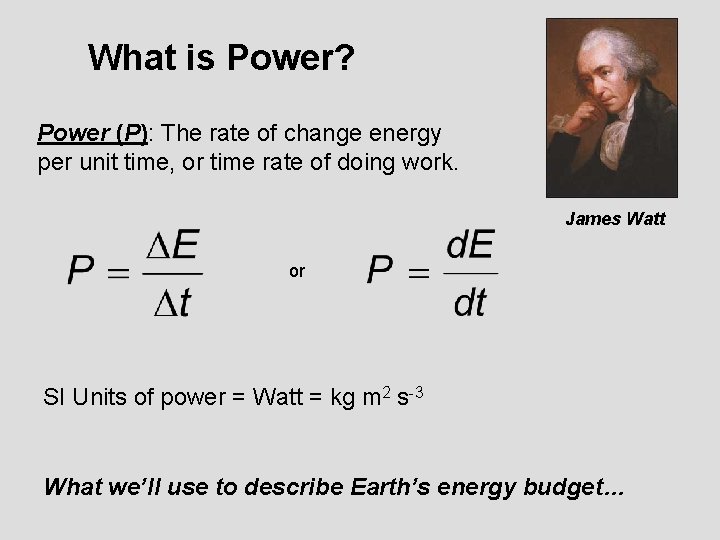
What is Power? Power (P): The rate of change energy per unit time, or time rate of doing work. James Watt or SI Units of power = Watt = kg m 2 s-3 What we’ll use to describe Earth’s energy budget…
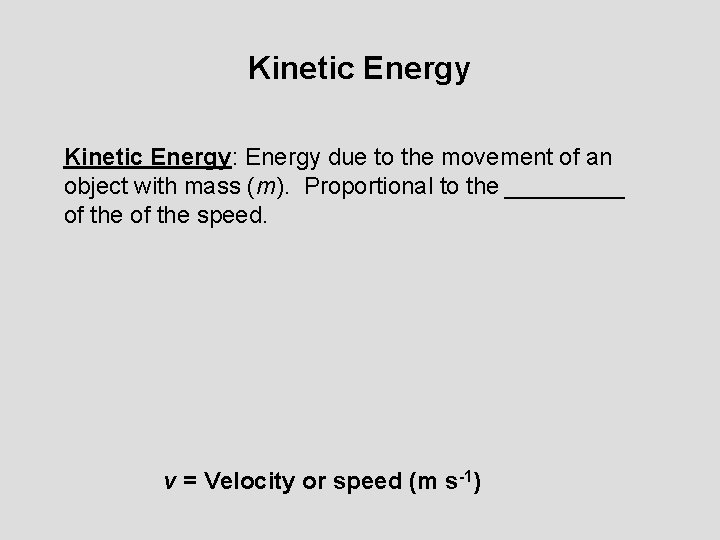
Kinetic Energy: Energy due to the movement of an object with mass (m). Proportional to the _____ of the speed. v = Velocity or speed (m s-1)
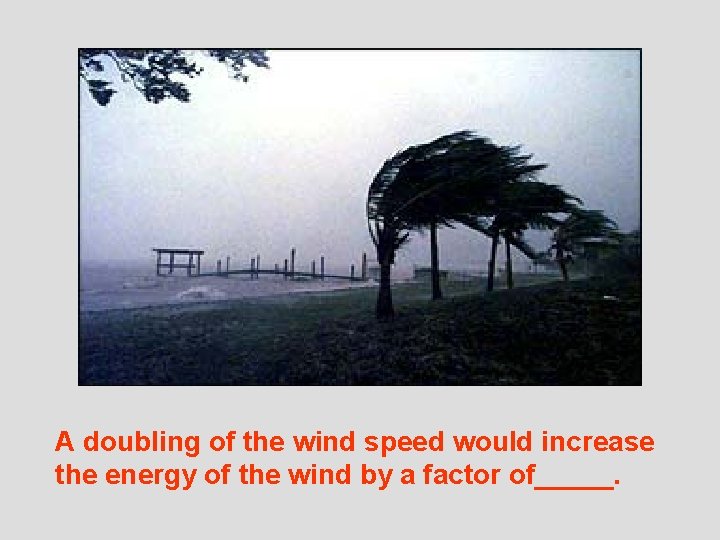
A doubling of the wind speed would increase the energy of the wind by a factor of_____.
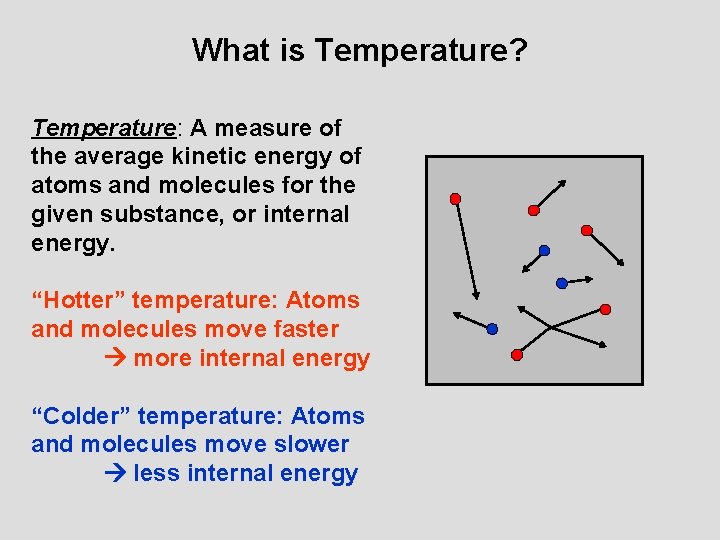
What is Temperature? Temperature: A measure of the average kinetic energy of atoms and molecules for the given substance, or internal energy. “Hotter” temperature: Atoms and molecules move faster more internal energy “Colder” temperature: Atoms and molecules move slower less internal energy
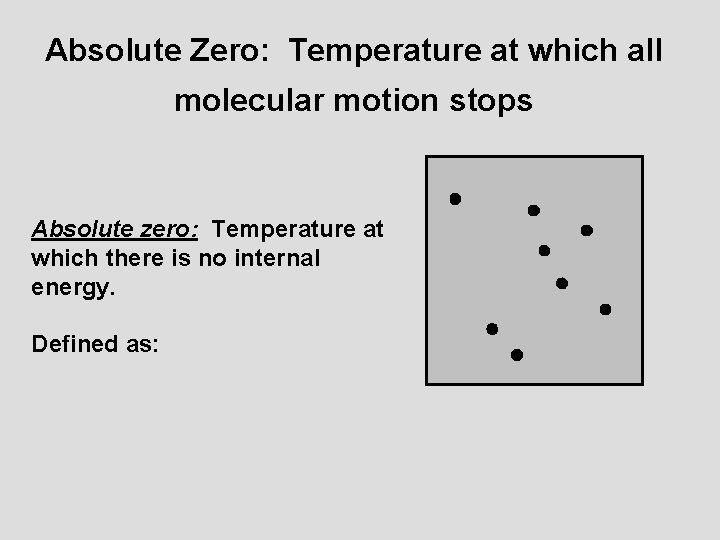
Absolute Zero: Temperature at which all molecular motion stops Absolute zero: Temperature at which there is no internal energy. Defined as:
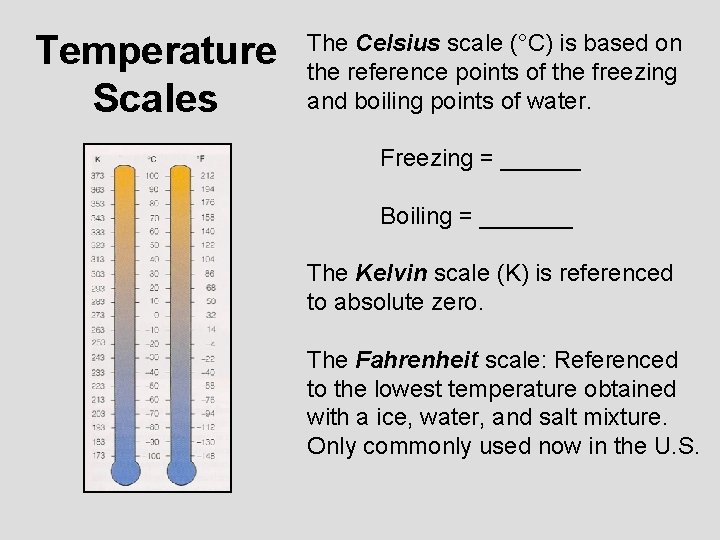
Temperature Scales The Celsius scale (°C) is based on the reference points of the freezing and boiling points of water. Freezing = ______ Boiling = _______ The Kelvin scale (K) is referenced to absolute zero. The Fahrenheit scale: Referenced to the lowest temperature obtained with a ice, water, and salt mixture. Only commonly used now in the U. S.
Temperature Conversions °C = 5/9(°F - 32) K = °C + 273 Using these equations, for example: Freezing point of water = ______ = 273 K = 32° F Boiling point of water = _______ = 373 K = 212° F You should familiarize yourself with these equations and know how to convert from the three scales.
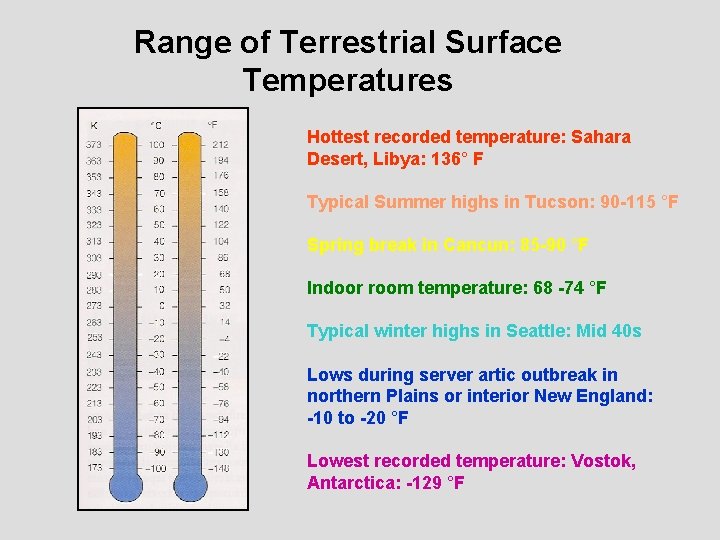
Range of Terrestrial Surface Temperatures Hottest recorded temperature: Sahara Desert, Libya: 136° F Typical Summer highs in Tucson: 90 -115 °F Spring break in Cancun: 85 -90 °F Indoor room temperature: 68 -74 °F Typical winter highs in Seattle: Mid 40 s Lows during server artic outbreak in northern Plains or interior New England: -10 to -20 °F Lowest recorded temperature: Vostok, Antarctica: -129 °F
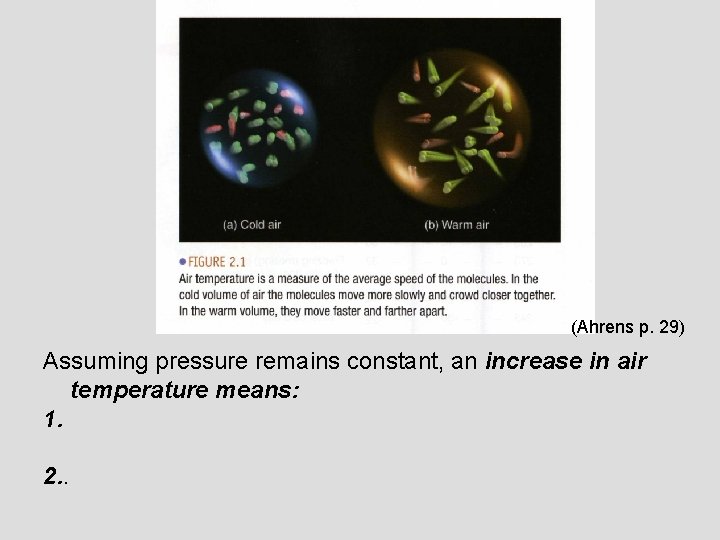
(Ahrens p. 29) Assuming pressure remains constant, an increase in air temperature means: 1. 2. .
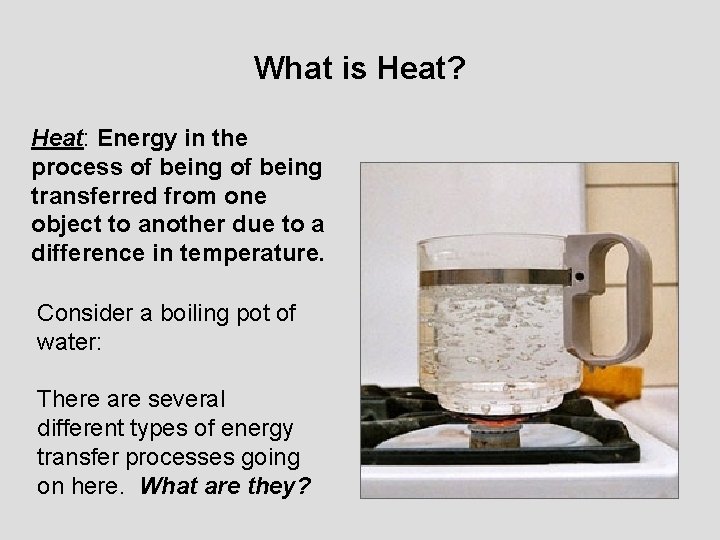
What is Heat? Heat: Energy in the process of being transferred from one object to another due to a difference in temperature. Consider a boiling pot of water: There are several different types of energy transfer processes going on here. What are they?
Answer: What are these modes of heat transfer and how do they work in the boiling pot example?
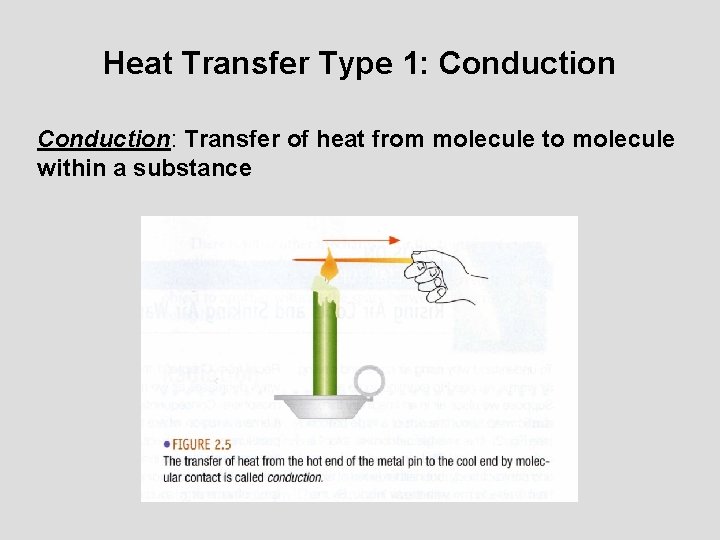
Heat Transfer Type 1: Conduction: Transfer of heat from molecule to molecule within a substance
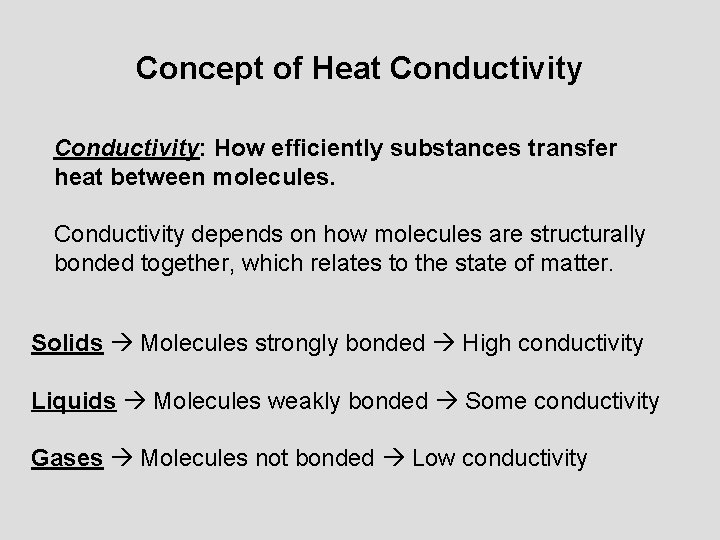
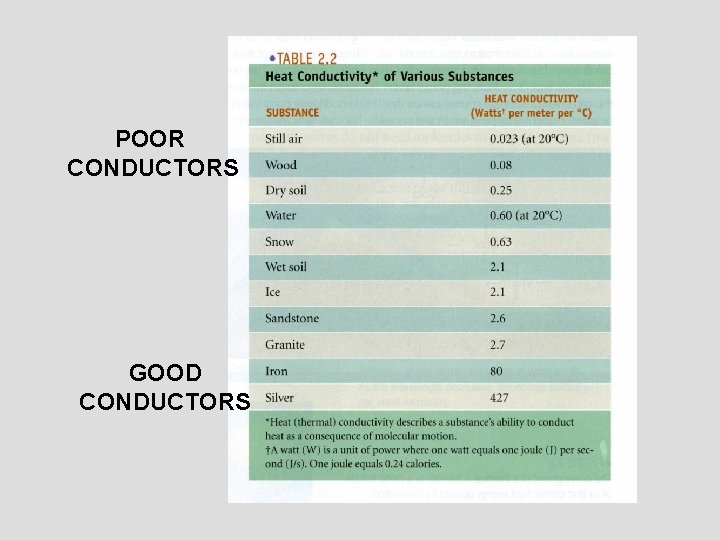
Concept of Heat Conductivity: How efficiently substances transfer heat between molecules. Conductivity depends on how molecules are structurally bonded together, which relates to the state of matter. Solids Molecules strongly bonded High conductivity Liquids Molecules weakly bonded Some conductivity Gases Molecules not bonded Low conductivity
POOR CONDUCTORS GOOD CONDUCTORS
Heat Capacity (different from conductivity) Heat capacity: ratio of the amount of heat energy of absorbed by that substance to its temperature rise. Specific heat capacity: Amount of heat needed to raise the temperature of one gram of a substance by 1 °C. Low specific heat Heat or cool quickly High specific heat Heat or cool slowly
Water has a relatively high specific heat, so: 1. 2.
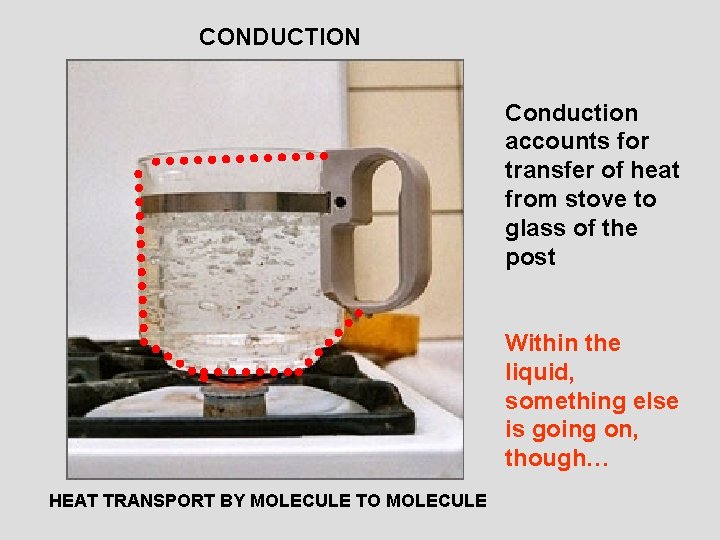
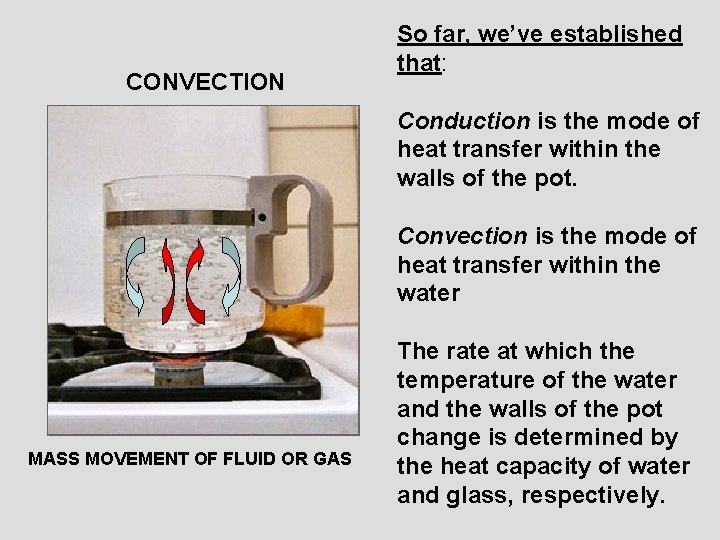
CONDUCTION Conduction accounts for transfer of heat from stove to glass of the post Within the liquid, something else is going on, though… HEAT TRANSPORT BY MOLECULE TO MOLECULE
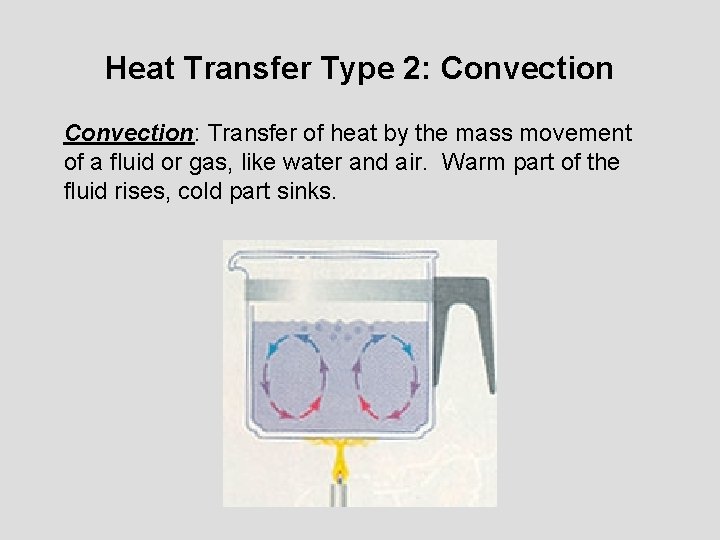
Heat Transfer Type 2: Convection: Transfer of heat by the mass movement of a fluid or gas, like water and air. Warm part of the fluid rises, cold part sinks.
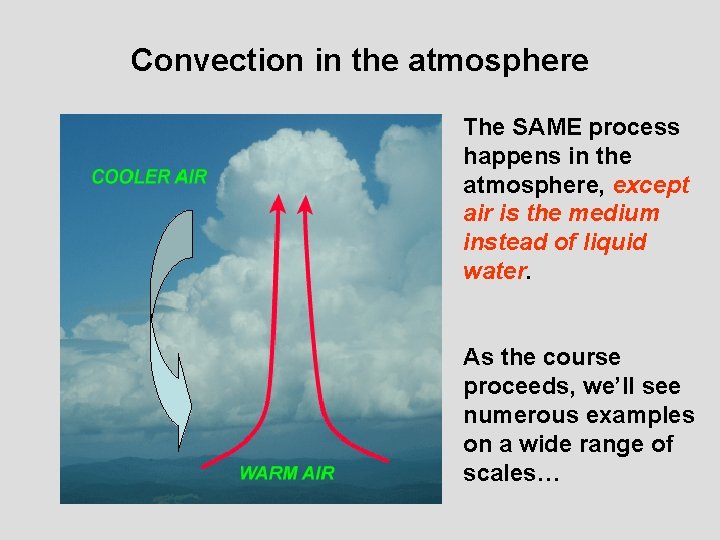
Convection in the atmosphere The SAME process happens in the atmosphere, except air is the medium instead of liquid water. As the course proceeds, we’ll see numerous examples on a wide range of scales…
CONVECTION So far, we’ve established that: Conduction is the mode of heat transfer within the walls of the pot. Convection is the mode of heat transfer within the water MASS MOVEMENT OF FLUID OR GAS The rate at which the temperature of the water and the walls of the pot change is determined by the heat capacity of water and glass, respectively.
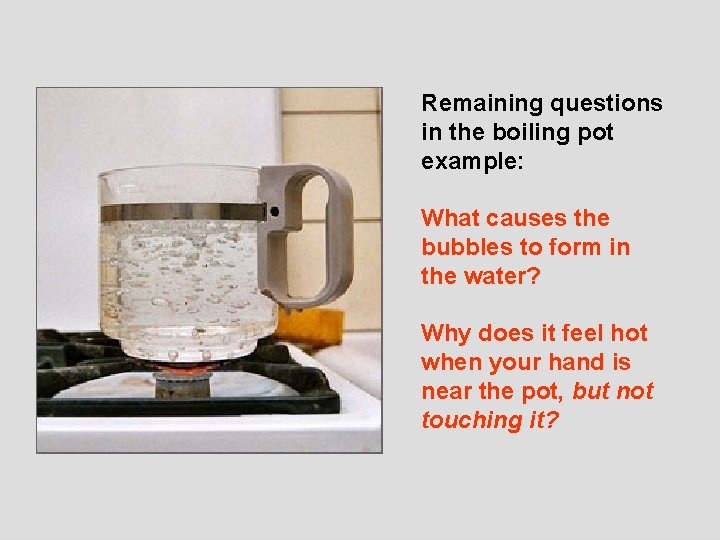
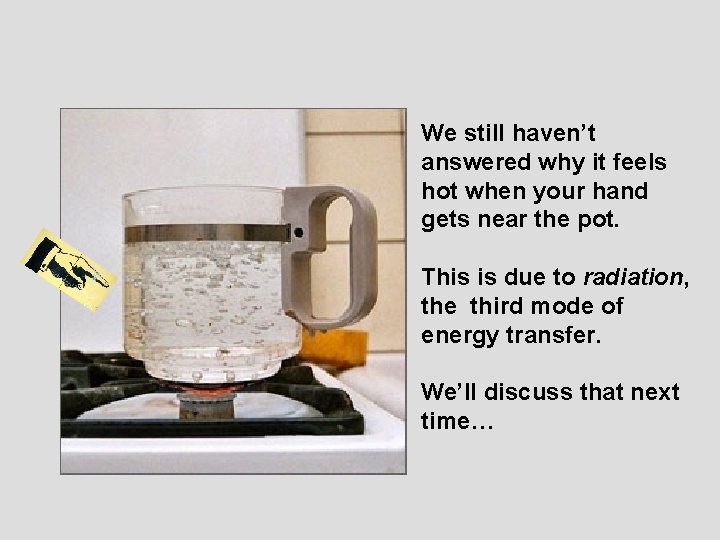
Remaining questions in the boiling pot example: What causes the bubbles to form in the water? Why does it feel hot when your hand is near the pot, but not touching it?
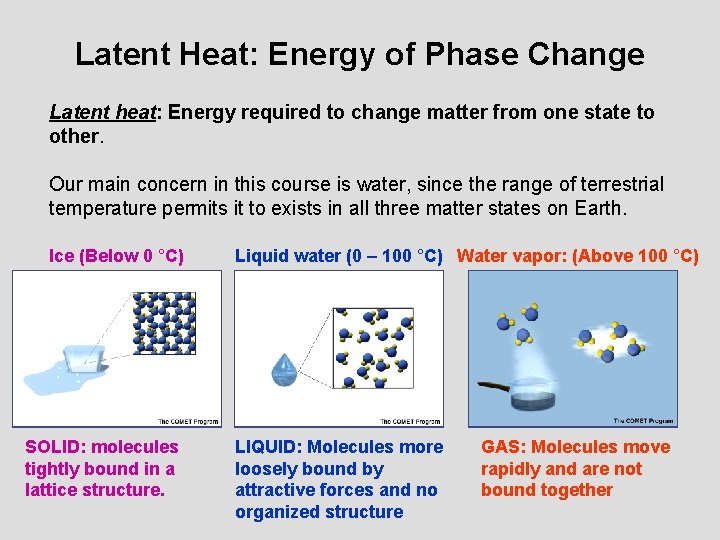
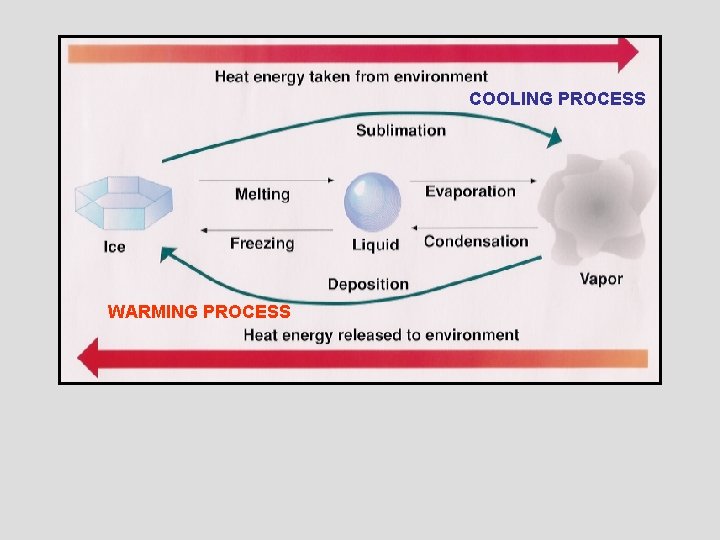
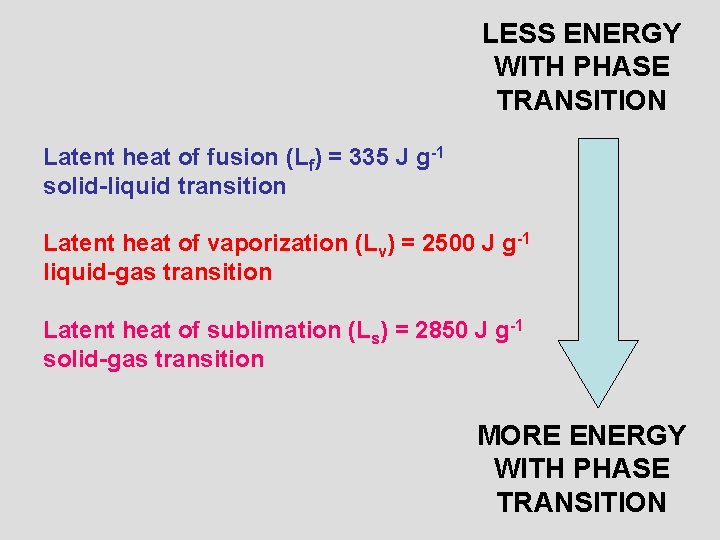
Latent Heat: Energy of Phase Change Latent heat: Energy required to change matter from one state to other. Our main concern in this course is water, since the range of terrestrial temperature permits it to exists in all three matter states on Earth. Ice (Below 0 °C) SOLID: molecules tightly bound in a lattice structure. Liquid water (0 – 100 °C) Water vapor: (Above 100 °C) LIQUID: Molecules more loosely bound by attractive forces and no organized structure GAS: Molecules move rapidly and are not bound together
COOLING PROCESS WARMING PROCESS
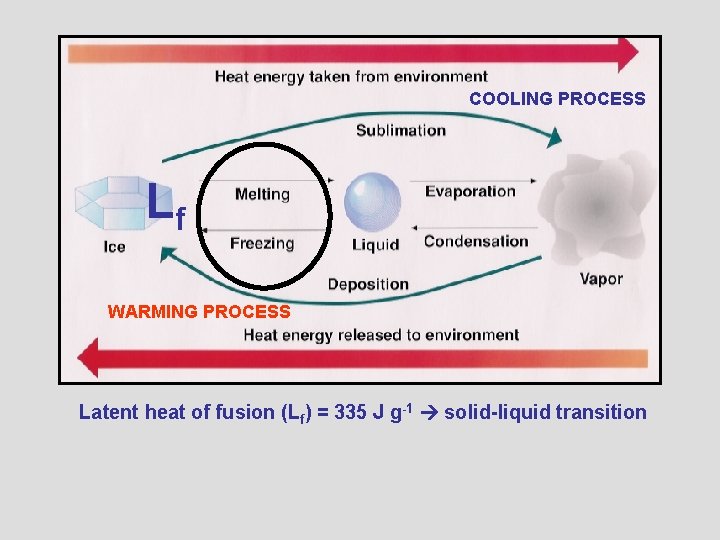
COOLING PROCESS Lf WARMING PROCESS Latent heat of fusion (Lf) = 335 J g-1 solid-liquid transition
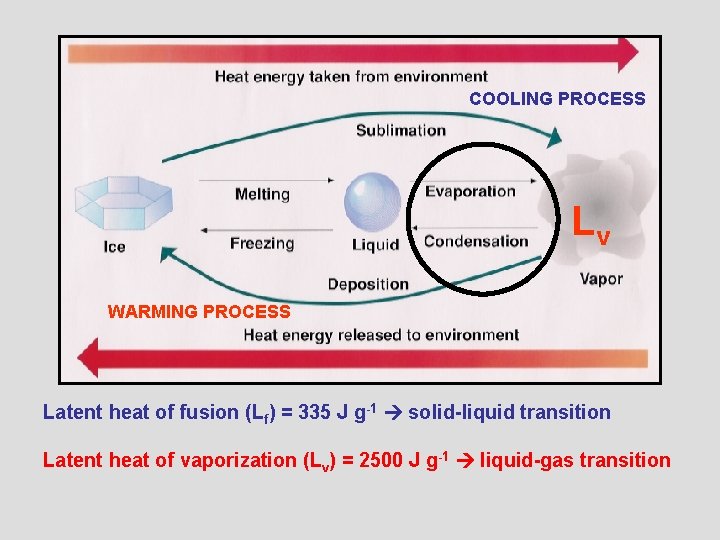
COOLING PROCESS Lv WARMING PROCESS Latent heat of fusion (Lf) = 335 J g-1 solid-liquid transition Latent heat of vaporization (Lv) = 2500 J g-1 liquid-gas transition
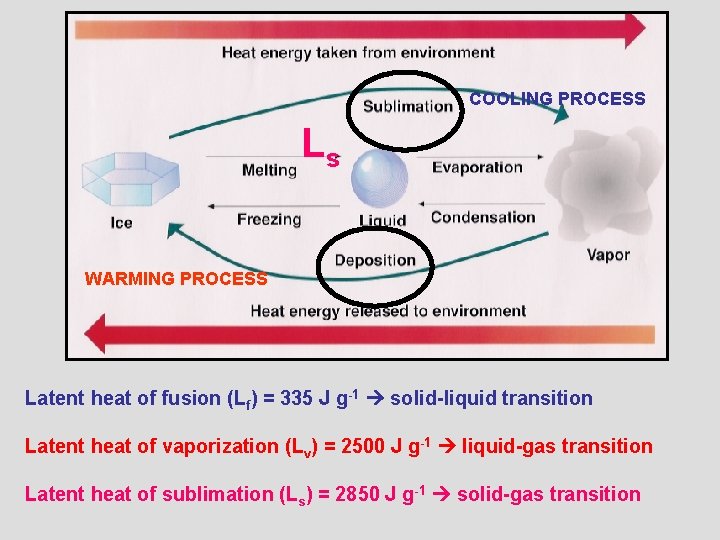
COOLING PROCESS Ls WARMING PROCESS Latent heat of fusion (Lf) = 335 J g-1 solid-liquid transition Latent heat of vaporization (Lv) = 2500 J g-1 liquid-gas transition Latent heat of sublimation (Ls) = 2850 J g-1 solid-gas transition
LESS ENERGY WITH PHASE TRANSITION Latent heat of fusion (Lf) = 335 J g-1 solid-liquid transition Latent heat of vaporization (Lv) = 2500 J g-1 liquid-gas transition Latent heat of sublimation (Ls) = 2850 J g-1 solid-gas transition MORE ENERGY WITH PHASE TRANSITION
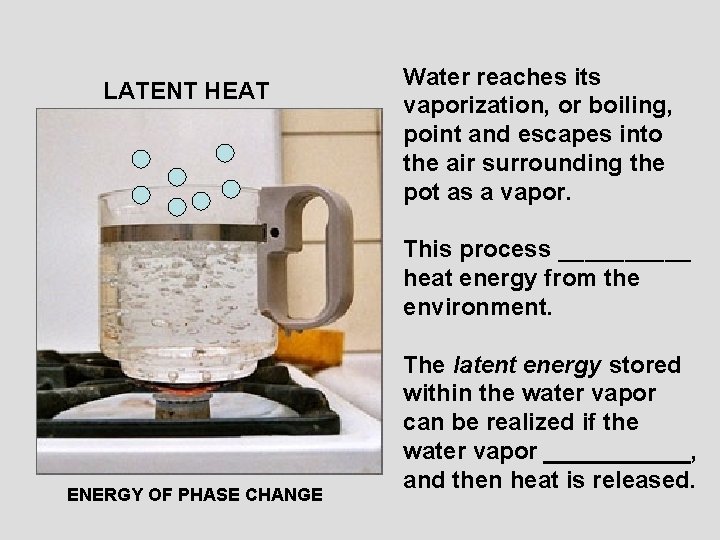
LATENT HEAT Water reaches its vaporization, or boiling, point and escapes into the air surrounding the pot as a vapor. This process _____ heat energy from the environment. ENERGY OF PHASE CHANGE The latent energy stored within the water vapor can be realized if the water vapor ______, and then heat is released.
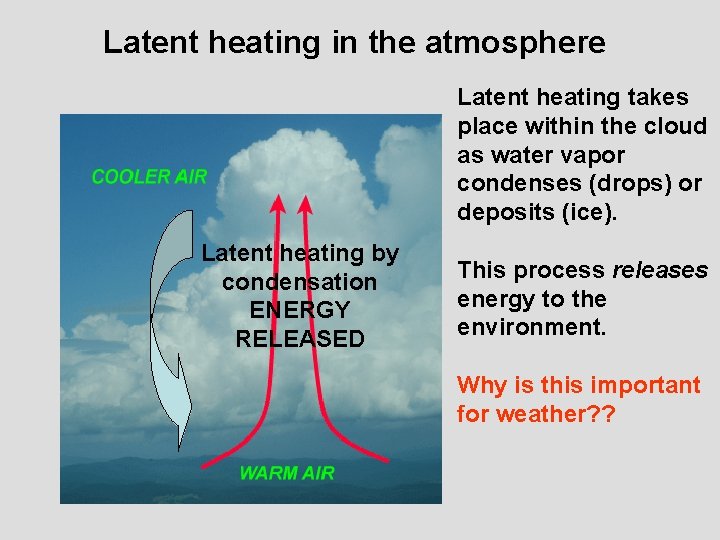
Latent heating in the atmosphere Latent heating takes place within the cloud as water vapor condenses (drops) or deposits (ice). Latent heating by condensation ENERGY RELEASED This process releases energy to the environment. Why is this important for weather? ?
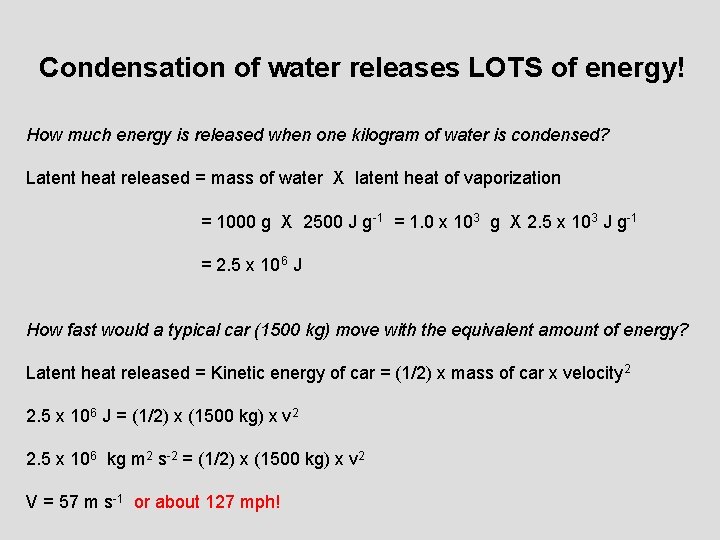
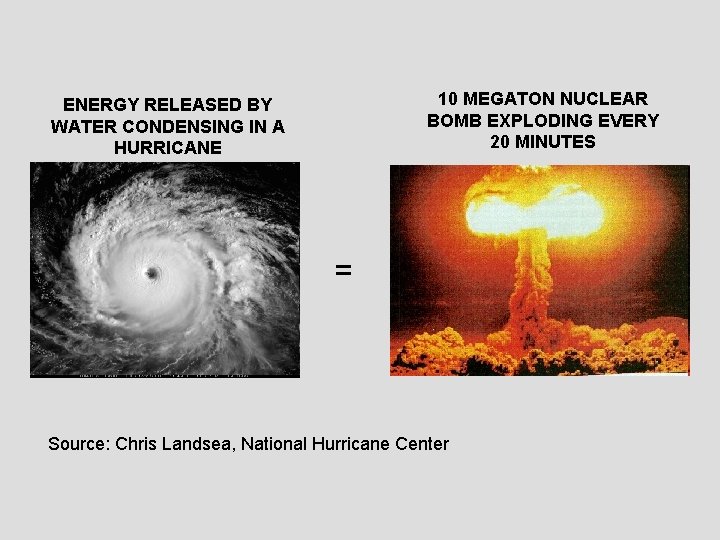
Condensation of water releases LOTS of energy! How much energy is released when one kilogram of water is condensed? Latent heat released = mass of water X latent heat of vaporization = 1000 g X 2500 J g -1 = 1. 0 x 103 g X 2. 5 x 10³ J g-1 = 2. 5 x 10 6 J How fast would a typical car (1500 kg) move with the equivalent amount of energy? Latent heat released = Kinetic energy of car = (1/2) x mass of car x velocity 2 2. 5 x 10⁶ J = (1/2) x (1500 kg) x v 2 2. 5 x 10⁶ kg m 2 s-2 = (1/2) x (1500 kg) x v 2 V = 57 m s-1 or about 127 mph!
10 MEGATON NUCLEAR BOMB EXPLODING EVERY 20 MINUTES ENERGY RELEASED BY WATER CONDENSING IN A HURRICANE = Source: Chris Landsea, National Hurricane Center
We still haven’t answered why it feels hot when your hand gets near the pot. This is due to radiation, the third mode of energy transfer. We’ll discuss that next time…
Summary of Lecture 4 Defined a new quantity, energy: product of a force over a distance which it is applied. Temperature is the measure of the average kinetic energy of a given substance, or internal energy. Defined °F, °C, and K scales and their conversions. Assuming pressure remains constant, an increase in temperature means the volume of air expands and its density decreases Heat is energy in the process of being transferred. Conduction: heat transfer molecule by molecule Convection: mass movement of a fluid or gas Latent heat is energy associated with phase changes from one state of matter to another.
Reading Assignment and Review Questions Ahrens, Chapter 2, pp. 35 -40 (8 th ed. ), 37 -42 (9 th ed. )