
NATS 101 Lecture 23 Fronts Review Air Masses
- Slides: 24
NATS 101 Lecture 23 Fronts
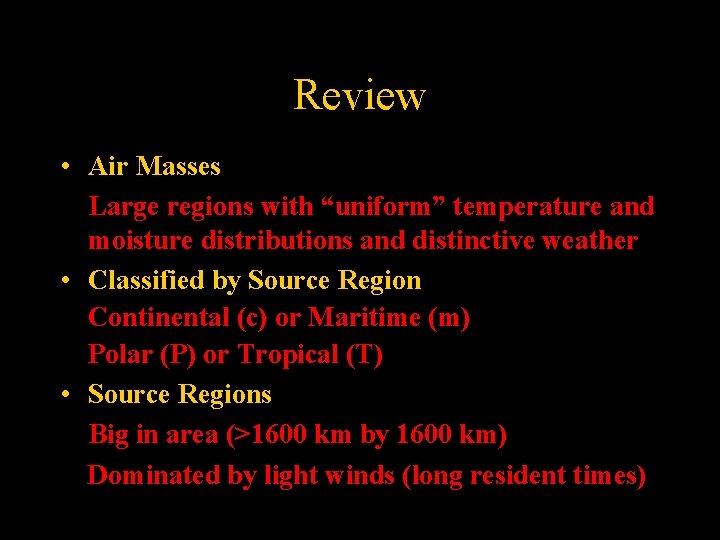
Review • Air Masses Large regions with “uniform” temperature and moisture distributions and distinctive weather • Classified by Source Region Continental (c) or Maritime (m) Polar (P) or Tropical (T) • Source Regions Big in area (>1600 km by 1600 km) Dominated by light winds (long resident times)
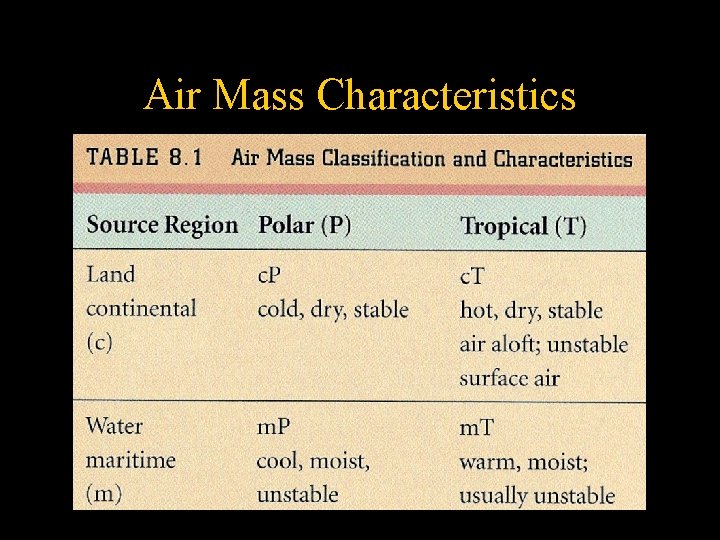
Air Mass Characteristics Ahrens Table 8. 1
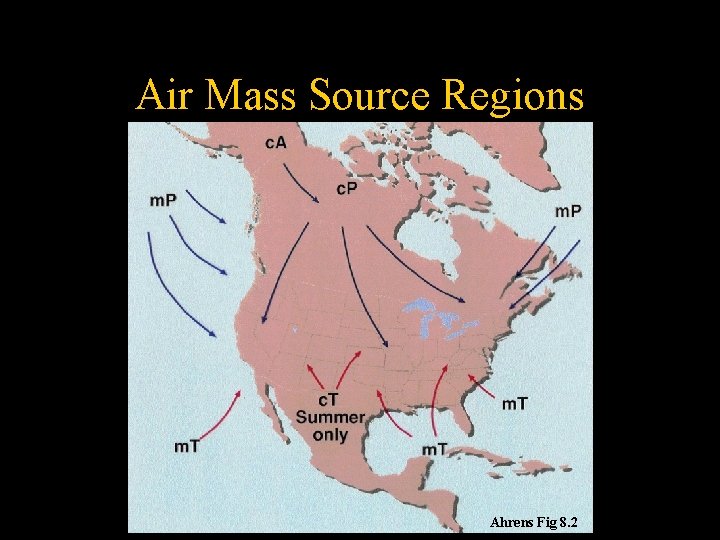
Air Mass Source Regions Ahrens Fig 8. 2
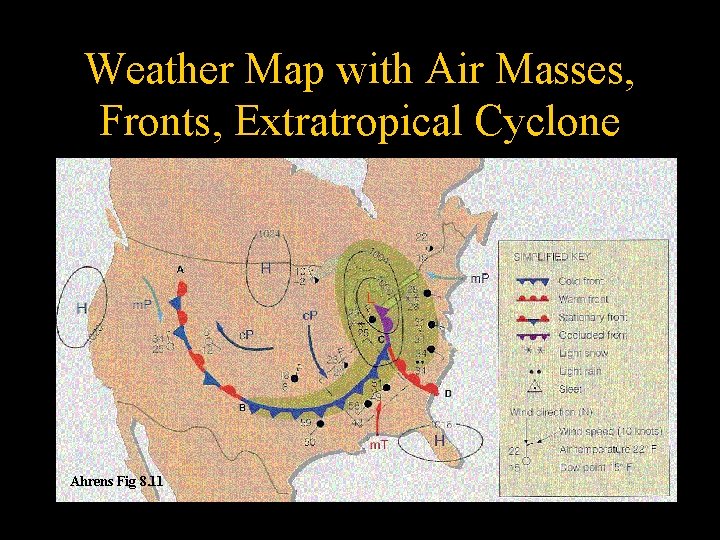
Weather Map with Air Masses, Fronts, Extratropical Cyclone Ahrens Fig 8. 11
Extratropical Cyclones and Fronts • In mid-latitudes, significant weather is often associated with a particular type of storm: Extratropical Cyclone • Cyclone denotes the circulation around a low pressure center • The energy for extratropical cyclones comes from horizontal temperature contrasts
Extratropical Cyclones and Fronts • ET cyclones often form on a boundary between a warm and cold air mass, associated with the jet stream • They tend to focus temperature contrasts along frontal zones, bands of very rapid horizontal temperature changes
Extratropical Cyclones and Fronts • Strongest temperature gradients occur at warm edge of frontal zone, called a front • There are four types of fronts Classified by their movement Each has its own symbol, color scheme Cold, Warm, Stationary, Occluded
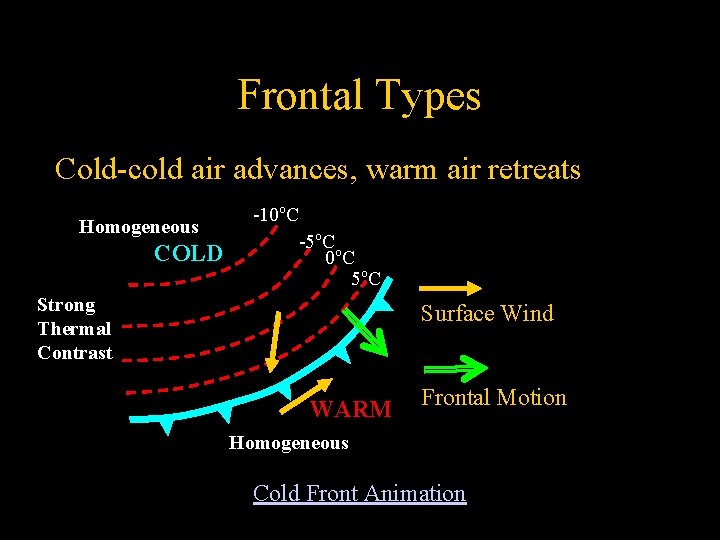
Frontal Types Cold-cold air advances, warm air retreats Homogeneous COLD -10 o. C -5 o. Co 0 C 5 o. C Strong Thermal Contrast Surface Wind WARM Frontal Motion Homogeneous Cold Front Animation
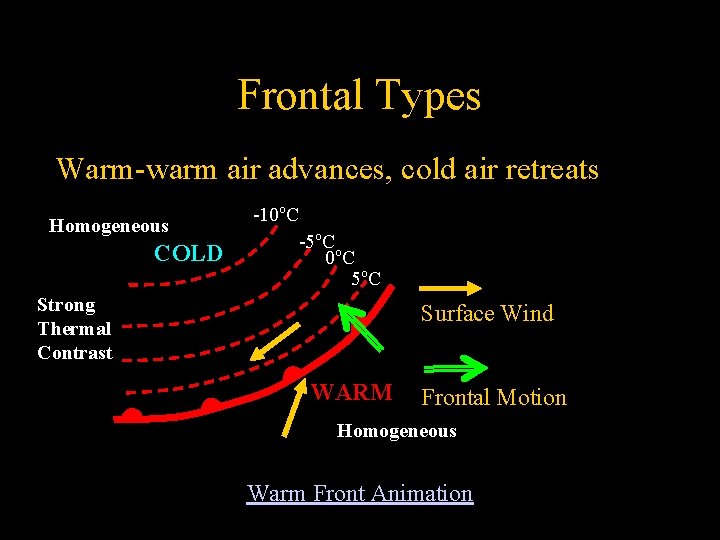
Frontal Types Warm-warm air advances, cold air retreats Homogeneous COLD -10 o. C -5 o. Co 0 C 5 o. C Strong Thermal Contrast Surface Wind WARM Frontal Motion Homogeneous Warm Front Animation
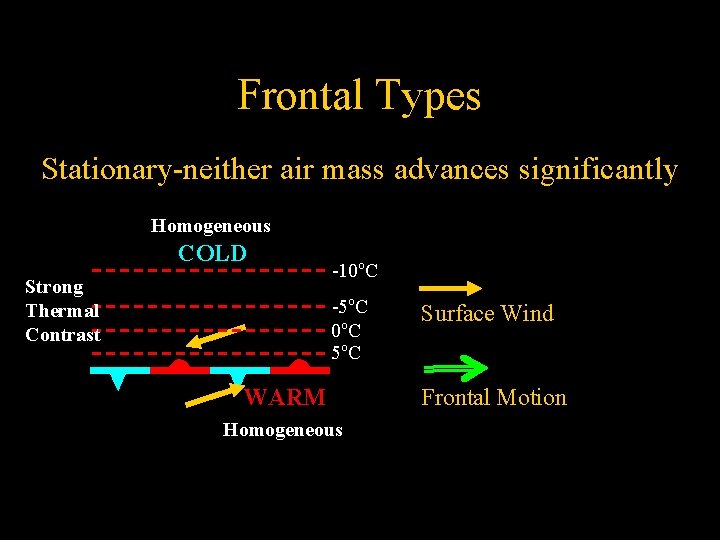
Frontal Types Stationary-neither air mass advances significantly Homogeneous COLD Strong Thermal Contrast -10 o. C -5 o. C 0 o. C 5 o. C WARM Homogeneous Surface Wind Frontal Motion
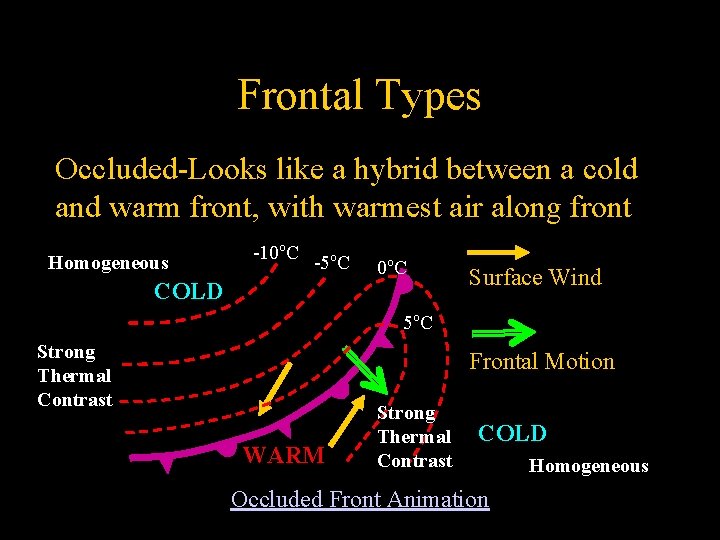
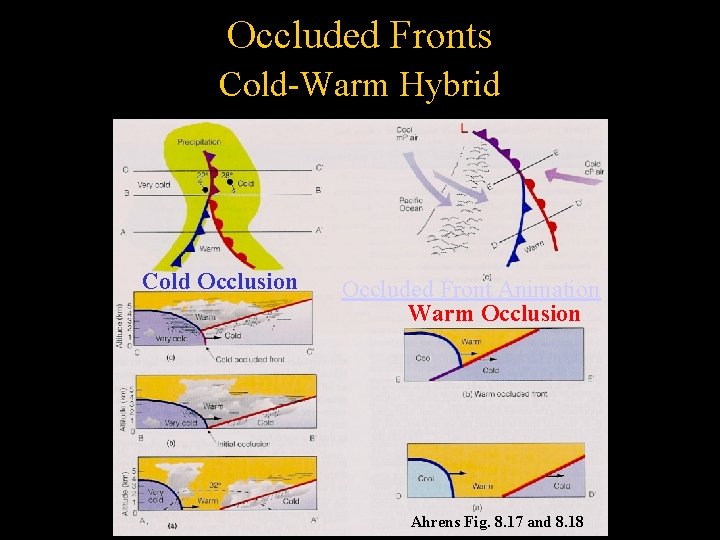
Frontal Types Occluded-Looks like a hybrid between a cold and warm front, with warmest air along front Homogeneous -10 o. C -5 o. C COLD 0 o. C Surface Wind 5 o. C Strong Thermal Contrast Frontal Motion WARM Strong Thermal Contrast COLD Occluded Front Animation Homogeneous
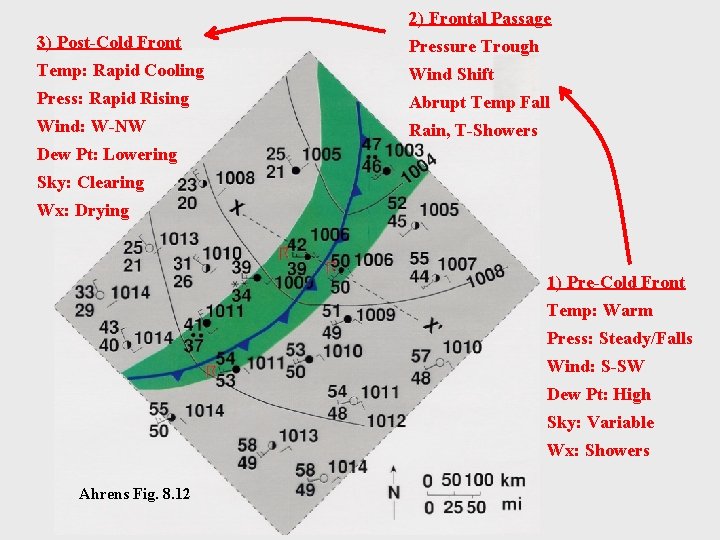
2) Frontal Passage 3) Post-Cold Front Pressure Trough Temp: Rapid Cooling Wind Shift Press: Rapid Rising Abrupt Temp Fall Wind: W-NW Rain, T-Showers Dew Pt: Lowering Sky: Clearing Wx: Drying 1) Pre-Cold Front Temp: Warm Press: Steady/Falls Wind: S-SW Dew Pt: High Sky: Variable Wx: Showers Ahrens Fig. 8. 12
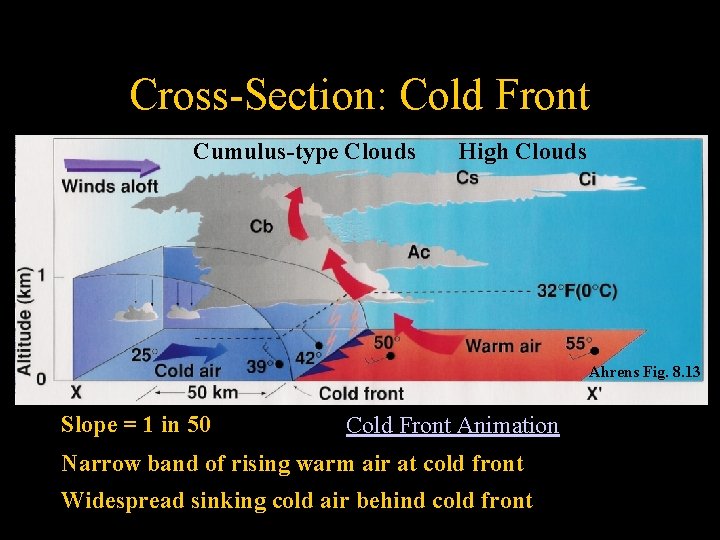
Cross-Section: Cold Front Cumulus-type Clouds High Clouds Ahrens Fig. 8. 13 Slope = 1 in 50 Cold Front Animation Narrow band of rising warm air at cold front Widespread sinking cold air behind cold front
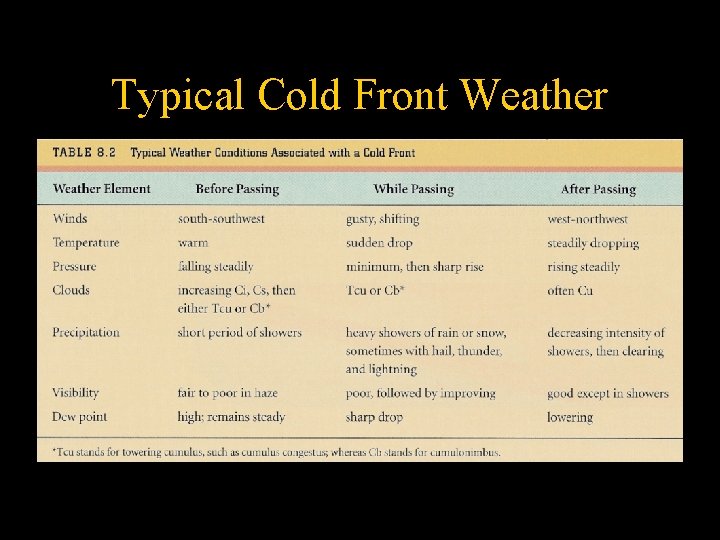
Typical Cold Front Weather
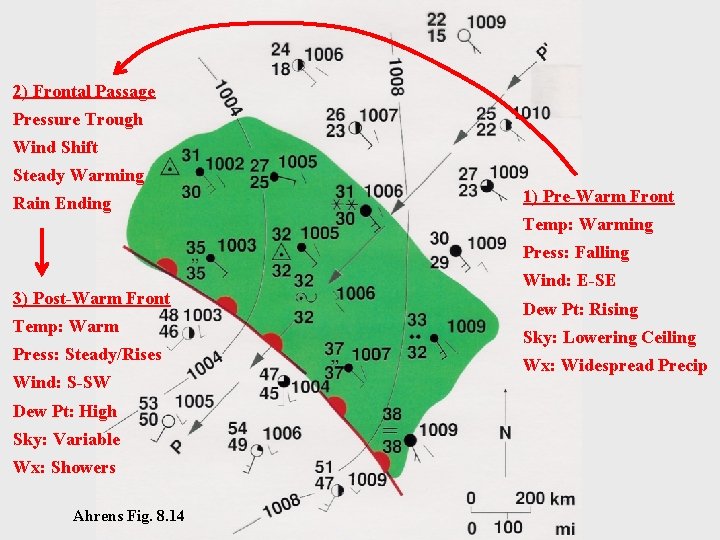
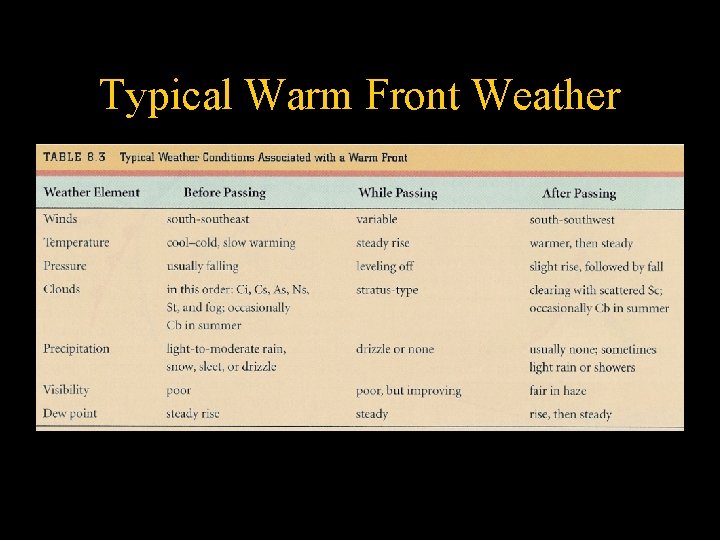
2) Frontal Passage Pressure Trough Wind Shift Steady Warming Rain Ending 1) Pre-Warm Front Temp: Warming Press: Falling 3) Post-Warm Front Temp: Warm Press: Steady/Rises Wind: S-SW Dew Pt: High Sky: Variable Wx: Showers Ahrens Fig. 8. 14 Wind: E-SE Dew Pt: Rising Sky: Lowering Ceiling Wx: Widespread Precip
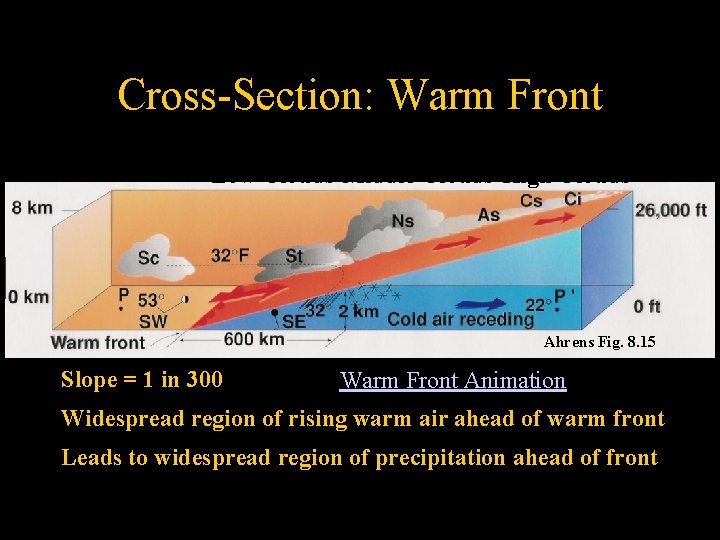
Cross-Section: Warm Front Low Clouds-Middle Clouds-High Clouds Ahrens Fig. 8. 15 Slope = 1 in 300 Warm Front Animation Widespread region of rising warm air ahead of warm front Leads to widespread region of precipitation ahead of front
Typical Warm Front Weather
Occluded Fronts Cold-Warm Hybrid Cold Occlusion Occluded Front Animation Warm Occlusion Ahrens Fig. 8. 17 and 8. 18
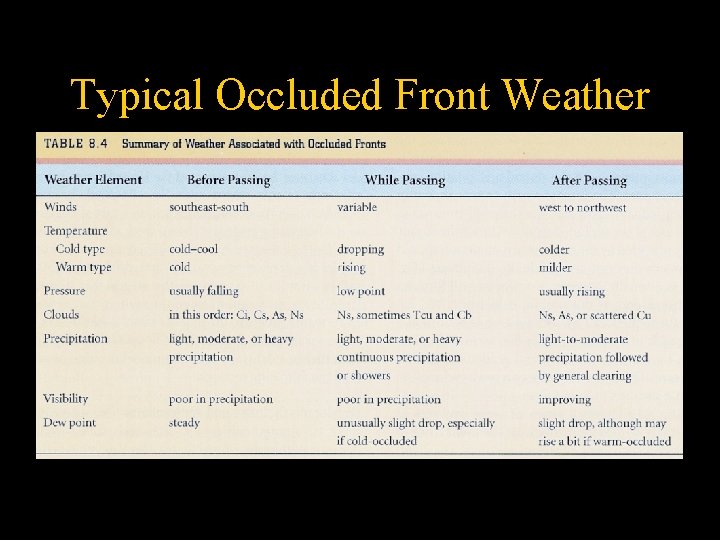
Typical Occluded Front Weather
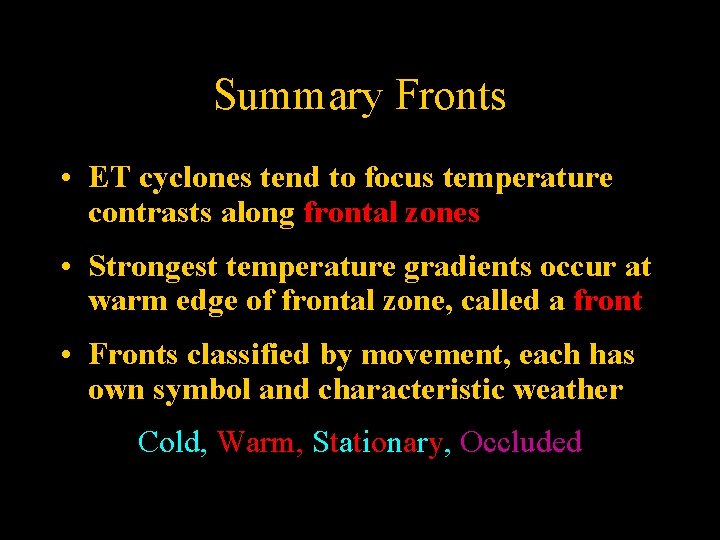
Summary Fronts • ET cyclones tend to focus temperature contrasts along frontal zones • Strongest temperature gradients occur at warm edge of frontal zone, called a front • Fronts classified by movement, each has own symbol and characteristic weather Cold, Warm, Stationary, Occluded
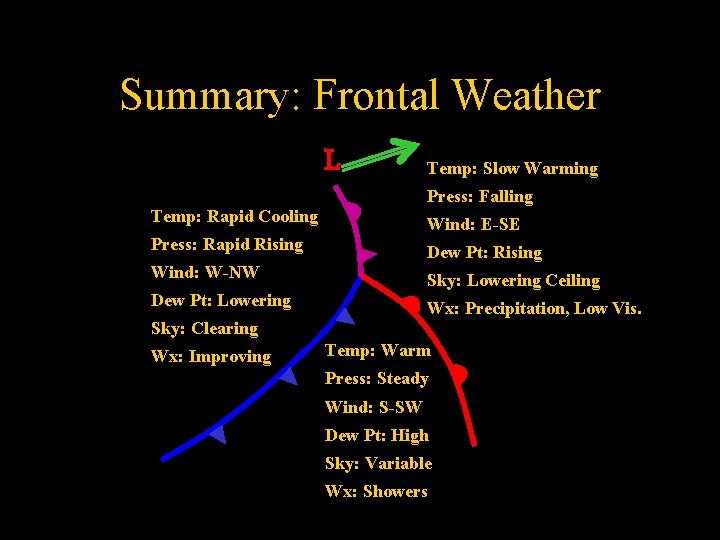
Summary: Frontal Weather L Temp: Rapid Cooling Press: Falling Wind: E-SE Press: Rapid Rising Dew Pt: Rising Wind: W-NW Sky: Lowering Ceiling Dew Pt: Lowering Wx: Precipitation, Low Vis. Sky: Clearing Wx: Improving Temp: Slow Warming Temp: Warm Press: Steady Wind: S-SW Dew Pt: High Sky: Variable Wx: Showers
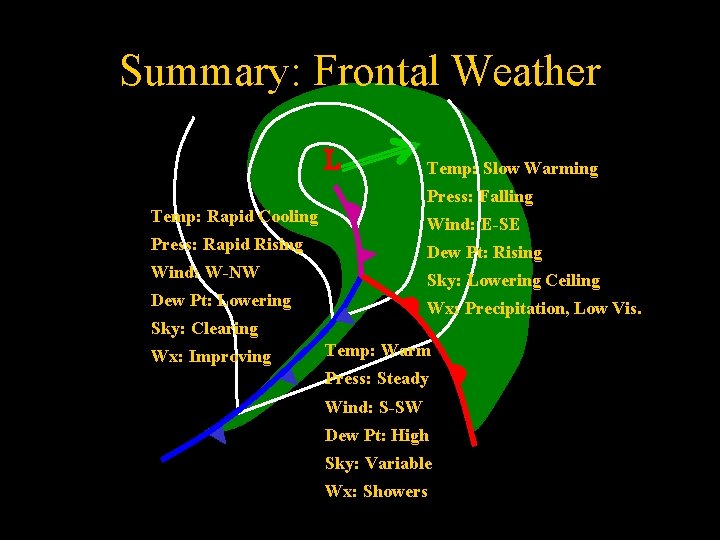
Summary: Frontal Weather L Temp: Rapid Cooling Press: Falling Wind: E-SE Press: Rapid Rising Dew Pt: Rising Wind: W-NW Sky: Lowering Ceiling Dew Pt: Lowering Wx: Precipitation, Low Vis. Sky: Clearing Wx: Improving Temp: Slow Warming Temp: Warm Press: Steady Wind: S-SW Dew Pt: High Sky: Variable Wx: Showers
Assignment for Next Lecture • Topic - Extratropical Cyclone Formation • Reading - Ahrens pg 219 -228 • Problems - 8. 14, 8. 15, 8. 17