
NATS 101 Lecture 13 Precipitation Processes Supplemental References
- Slides: 20
NATS 101 Lecture 13 Precipitation Processes
Supplemental References for Today’s Lecture Danielson, E. W. , J. Levin and E. Abrams, 1998: Meteorology. 462 pp. Mc. Graw-Hill. (ISBN 0 -697 -21711 -6) Gedzelman, S. D. , 1980: The Science and Wonders of the Atmosphere. 535 pp. John-Wiley & Sons. (ISBN 0 -471 -02972 -6)
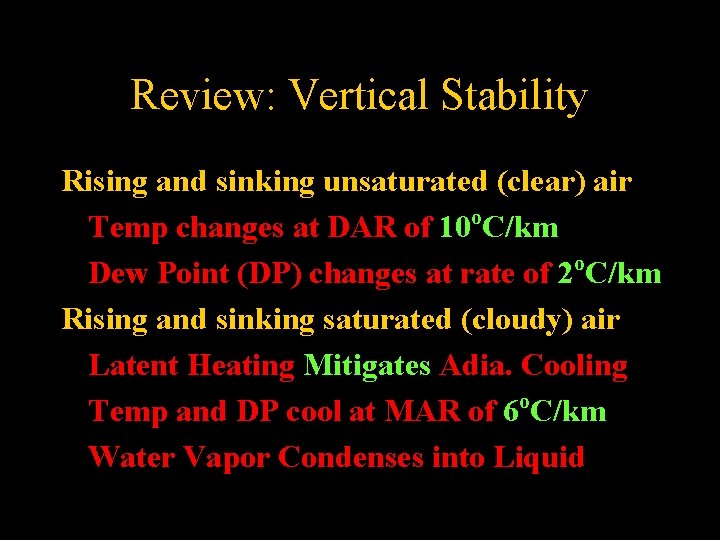
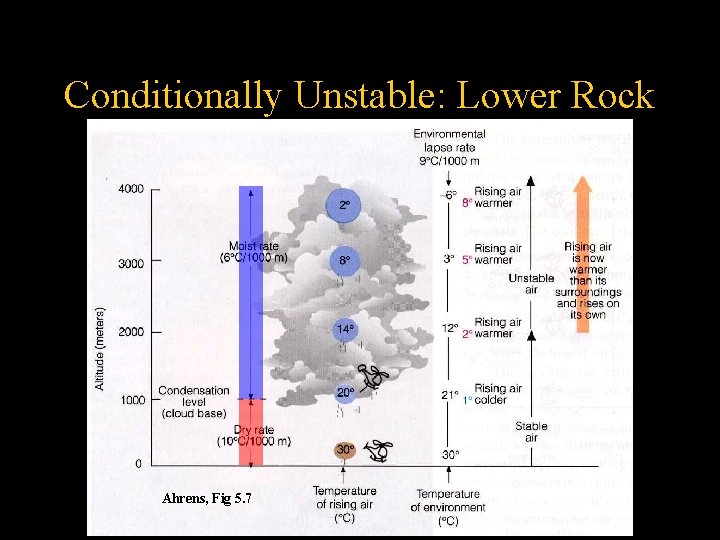
Review: Vertical Stability Rising and sinking unsaturated (clear) air o Temp changes at DAR of 10 C/km Dew Point (DP) changes at rate of 2 o. C/km Rising and sinking saturated (cloudy) air Latent Heating Mitigates Adia. Cooling Temp and DP cool at MAR of 6 o. C/km Water Vapor Condenses into Liquid
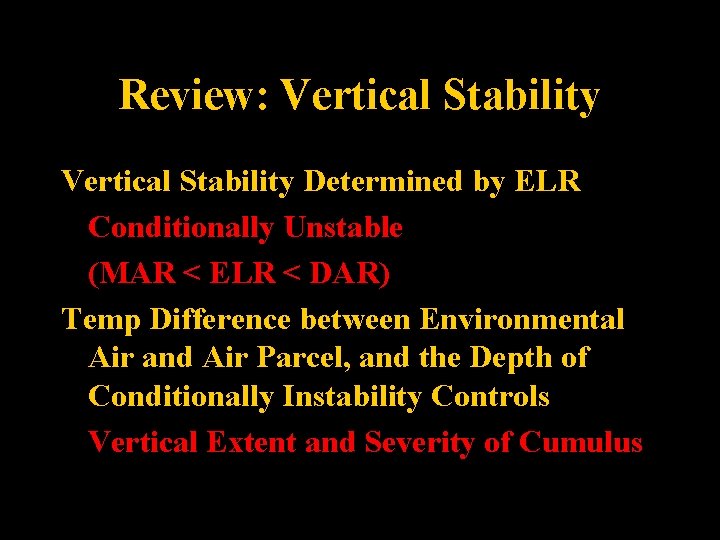
Review: Vertical Stability Determined by ELR Conditionally Unstable (MAR < ELR < DAR) Temp Difference between Environmental Air and Air Parcel, and the Depth of Conditionally Instability Controls Vertical Extent and Severity of Cumulus
Conditionally Unstable: Lower Rock Ahrens, Fig 5. 7
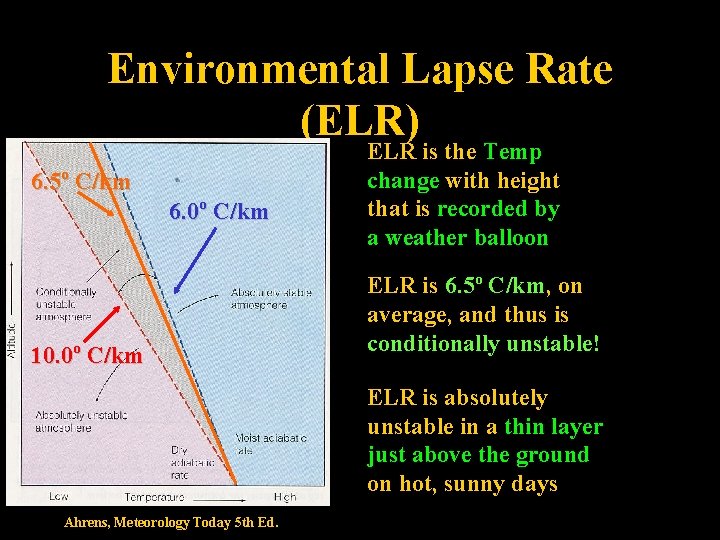
Environmental Lapse Rate (ELR) 6. 5 o C/km 6. 0 o C/km 10. 0 o C/km ELR is the Temp change with height that is recorded by a weather balloon ELR is 6. 5 o C/km, on average, and thus is conditionally unstable! ELR is absolutely unstable in a thin layer just above the ground on hot, sunny days Ahrens, Meteorology Today 5 th Ed.
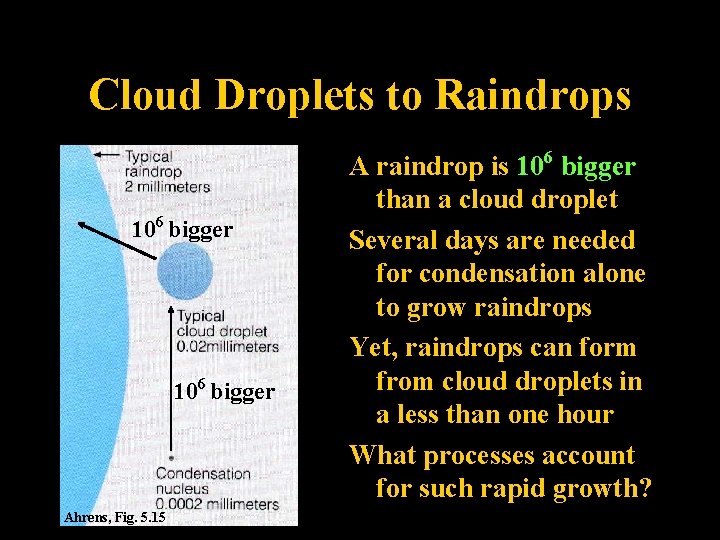
Cloud Droplets to Raindrops 106 bigger Ahrens, Fig. 5. 15 A raindrop is 106 bigger than a cloud droplet Several days are needed for condensation alone to grow raindrops Yet, raindrops can form from cloud droplets in a less than one hour What processes account for such rapid growth?
Terminal Fall Speeds (upward suspension velocity) CCN Cloud Droplets-Drizzle Small-Large Raindrops
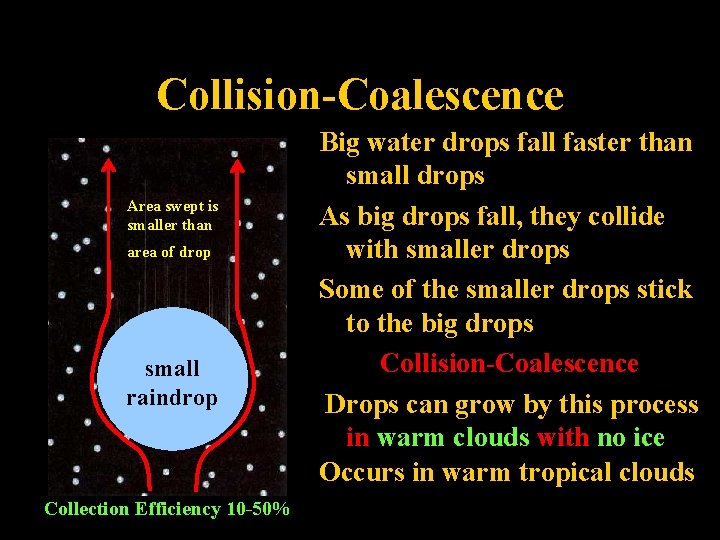
Collision-Coalescence Area swept is smaller than area of drop small raindrop Collection Efficiency 10 -50% Big water drops fall faster than small drops As big drops fall, they collide with smaller drops Some of the smaller drops stick to the big drops Collision-Coalescence Drops can grow by this process in warm clouds with no ice Occurs in warm tropical clouds
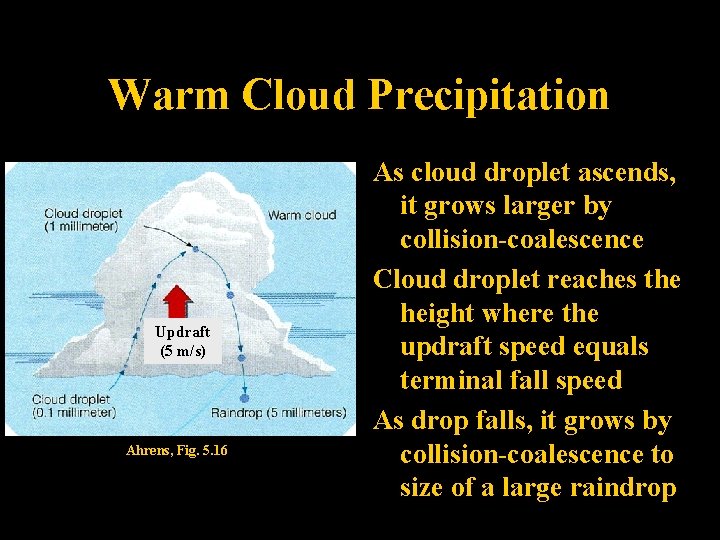
Warm Cloud Precipitation Updraft (5 m/s) Ahrens, Fig. 5. 16 As cloud droplet ascends, it grows larger by collision-coalescence Cloud droplet reaches the height where the updraft speed equals terminal fall speed As drop falls, it grows by collision-coalescence to size of a large raindrop
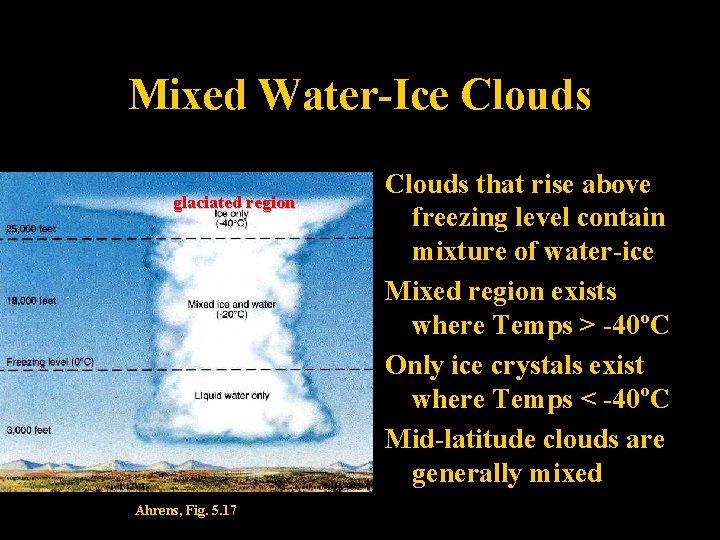
Mixed Water-Ice Clouds glaciated region Ahrens, Fig. 5. 17 Clouds that rise above freezing level contain mixture of water-ice Mixed region exists where Temps > -40 o. C Only ice crystals exist where Temps < -40 o. C Mid-latitude clouds are generally mixed
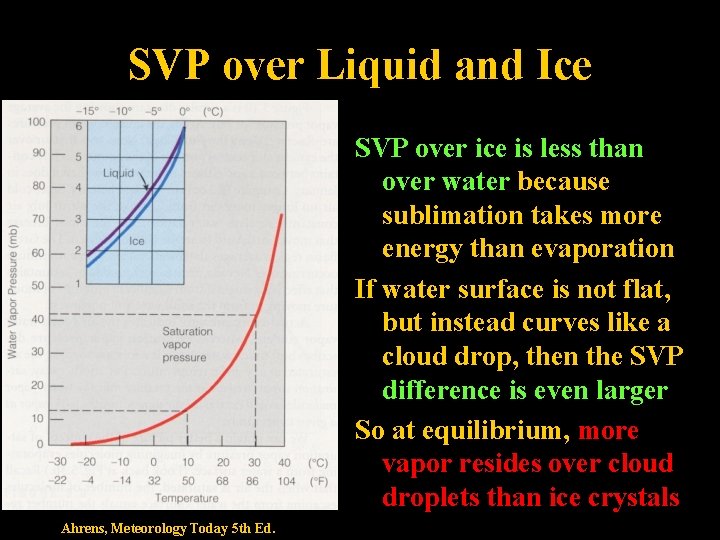
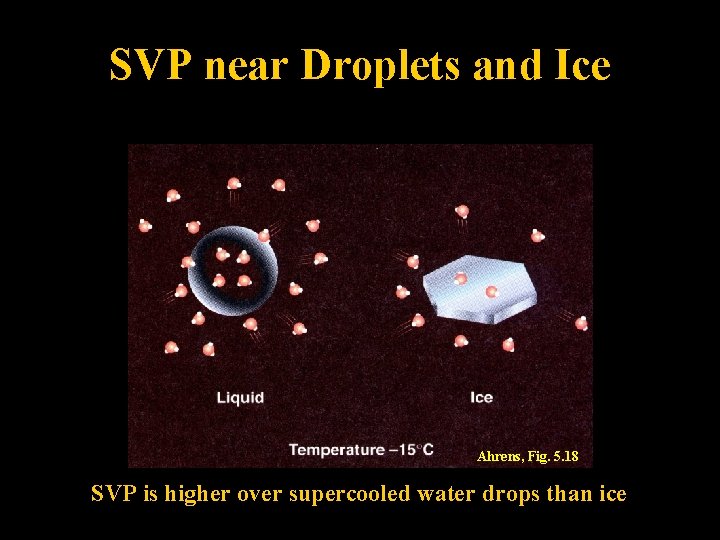
SVP over Liquid and Ice SVP over ice is less than over water because sublimation takes more energy than evaporation If water surface is not flat, but instead curves like a cloud drop, then the SVP difference is even larger So at equilibrium, more vapor resides over cloud droplets than ice crystals Ahrens, Meteorology Today 5 th Ed.
SVP near Droplets and Ice Ahrens, Fig. 5. 18 SVP is higher over supercooled water drops than ice
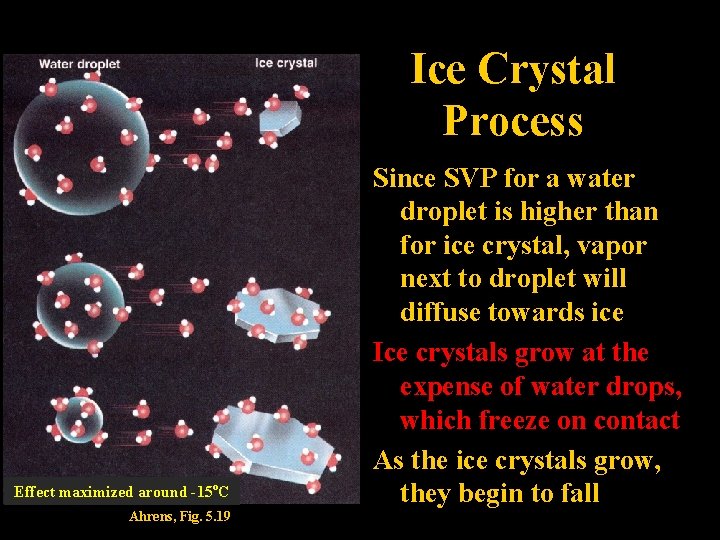
Ice Crystal Process Effect maximized around -15 o. C Ahrens, Fig. 5. 19 Since SVP for a water droplet is higher than for ice crystal, vapor next to droplet will diffuse towards ice Ice crystals grow at the expense of water drops, which freeze on contact As the ice crystals grow, they begin to fall
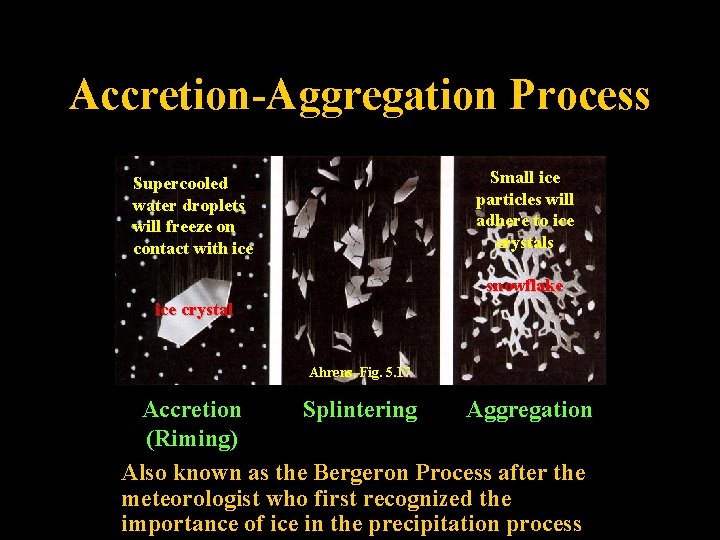
Accretion-Aggregation Process Small ice particles will adhere to ice crystals Supercooled water droplets will freeze on contact with ice snowflake ice crystal Ahrens, Fig. 5. 17 Accretion Splintering Aggregation (Riming) Also known as the Bergeron Process after the meteorologist who first recognized the importance of ice in the precipitation process
Summary: Key Concepts Condensation acts too slow to produce rain Several days required for condensation Clouds produce rain in less than 1 hour Warm clouds (no ice) Collision-Coalescence Process Cold clouds (with ice) Ice Crystal Process Accretion-Splintering-Aggregation
Examples of Precipitation Types
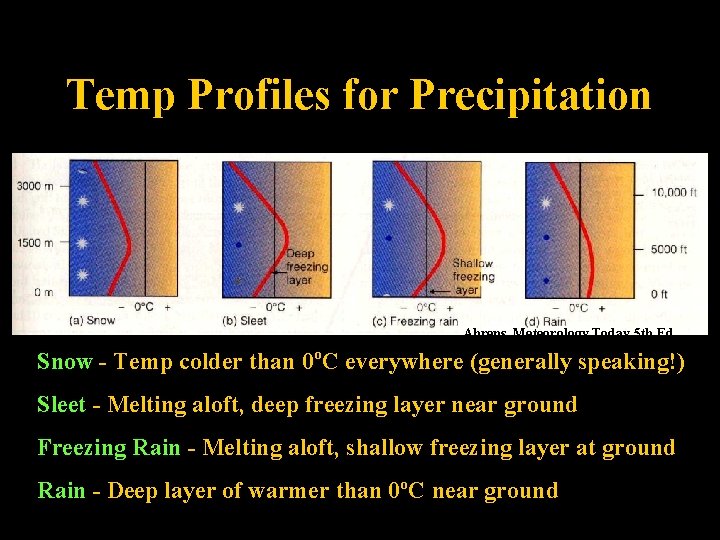
Temp Profiles for Precipitation Ahrens, Meteorology Today 5 th Ed. Snow - Temp colder than 0 o. C everywhere (generally speaking!) Sleet - Melting aloft, deep freezing layer near ground Freezing Rain - Melting aloft, shallow freezing layer at ground Rain - Deep layer of warmer than 0 o. C near ground
Summary: Key Concepts Precipitation can take many forms Drizzle-Rain-Glazing-Sleet-Snow-Hail Depending on specific weather conditions Radar used to sense precipitation remotely Location-Rate-Type (liquid v. frozen) Cloud drops with short wavelength pulse Wind component toward and from radar
Assignment for Next Lecture • Topic – Atmospheric Pressure • Reading - Ahrens pg 141 -148 • Problems - 6. 1, 6. 7, 6. 8