
Native Peoples of Canada Eastern Woodlands Eastern Woodlands
- Slides: 12
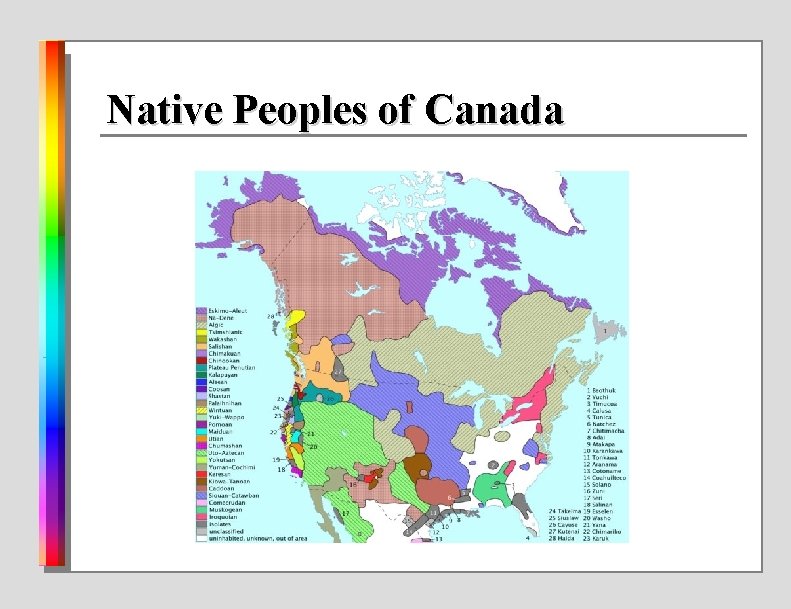
Native Peoples of Canada
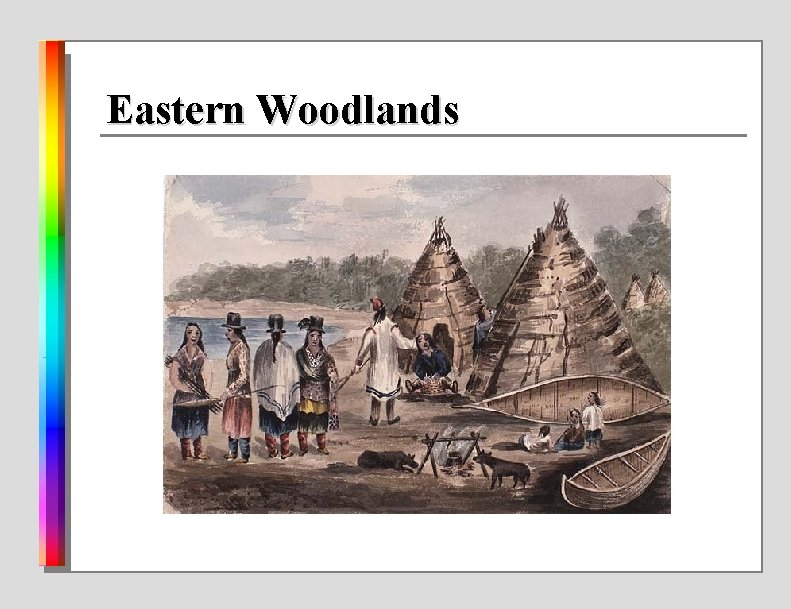
Eastern Woodlands
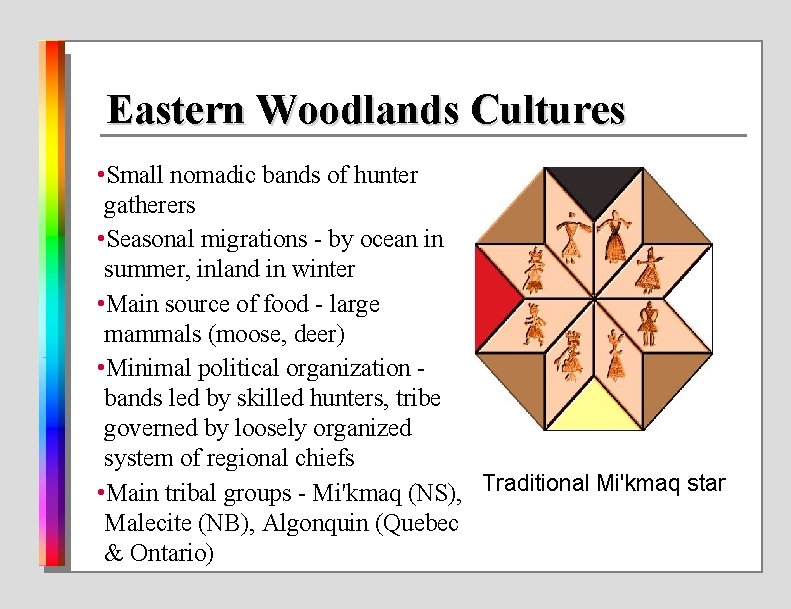
Eastern Woodlands Cultures • Small nomadic bands of hunter gatherers • Seasonal migrations - by ocean in summer, inland in winter • Main source of food - large mammals (moose, deer) • Minimal political organization bands led by skilled hunters, tribe governed by loosely organized system of regional chiefs • Main tribal groups - Mi'kmaq (NS), Traditional Mi'kmaq star Malecite (NB), Algonquin (Quebec & Ontario)
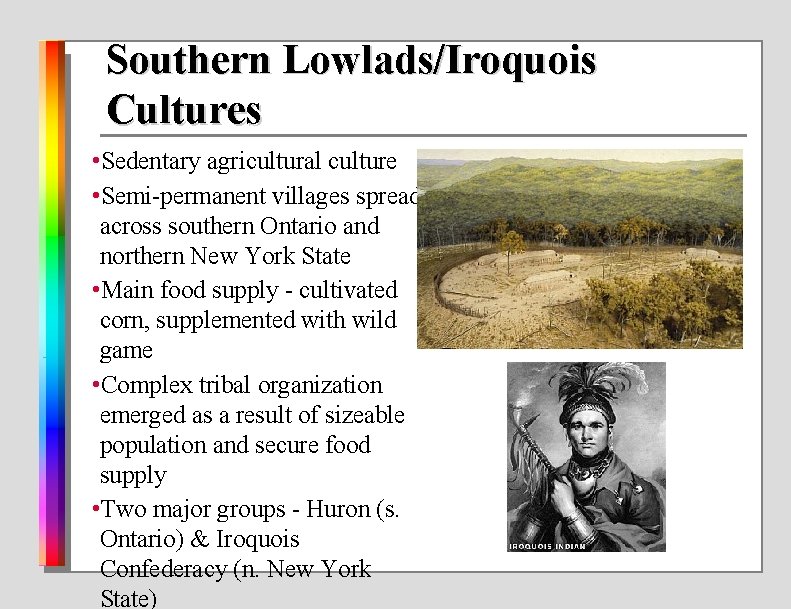
Southern Lowlads/Iroquois Cultures • Sedentary agricultural culture • Semi-permanent villages spread across southern Ontario and northern New York State • Main food supply - cultivated corn, supplemented with wild game • Complex tribal organization emerged as a result of sizeable population and secure food supply • Two major groups - Huron (s. Ontario) & Iroquois Confederacy (n. New York State)
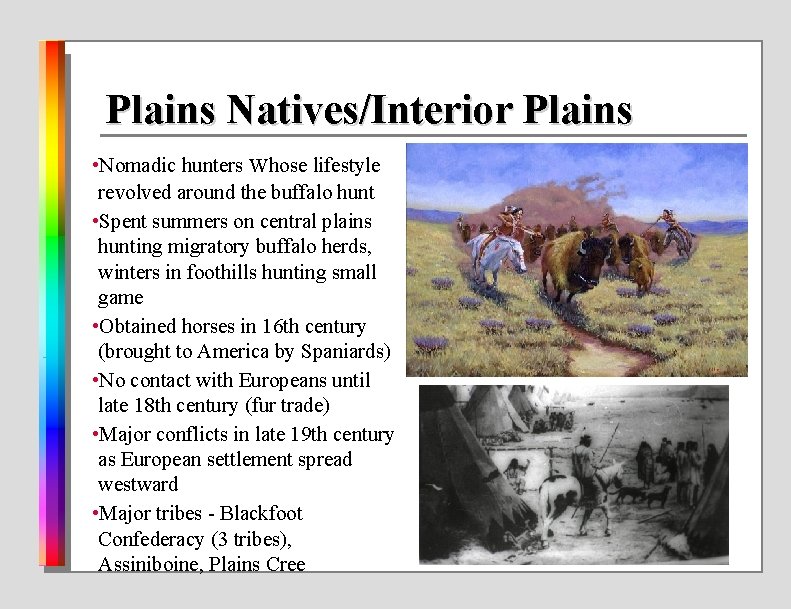
Plains Natives/Interior Plains • Nomadic hunters whose lifestyle revolved around the buffalo hunt • Spent summers on central plains hunting migratory buffalo herds, winters in foothills hunting small game • Obtained horses in 16 th century (brought to America by Spaniards) • No contact with Europeans until late 18 th century (fur trade) • Major conflicts in late 19 th century as European settlement spread westward • Major tribes - Blackfoot Confederacy (3 tribes), Assiniboine, Plains Cree
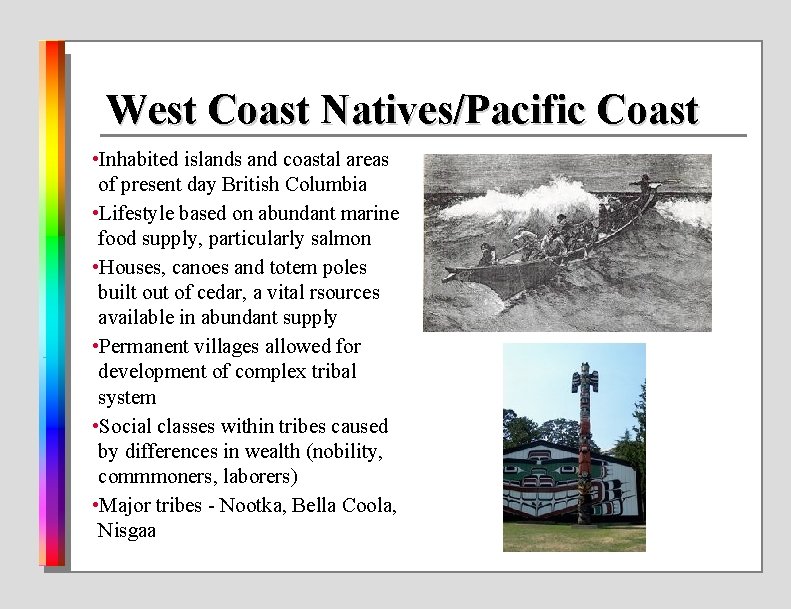
West Coast Natives/Pacific Coast • Inhabited islands and coastal areas of present day British Columbia • Lifestyle based on abundant marine food supply, particularly salmon • Houses, canoes and totem poles built out of cedar, a vital rsources available in abundant supply • Permanent villages allowed for development of complex tribal system • Social classes within tribes caused by differences in wealth (nobility, commmoners, laborers) • Major tribes - Nootka, Bella Coola, Nisgaa
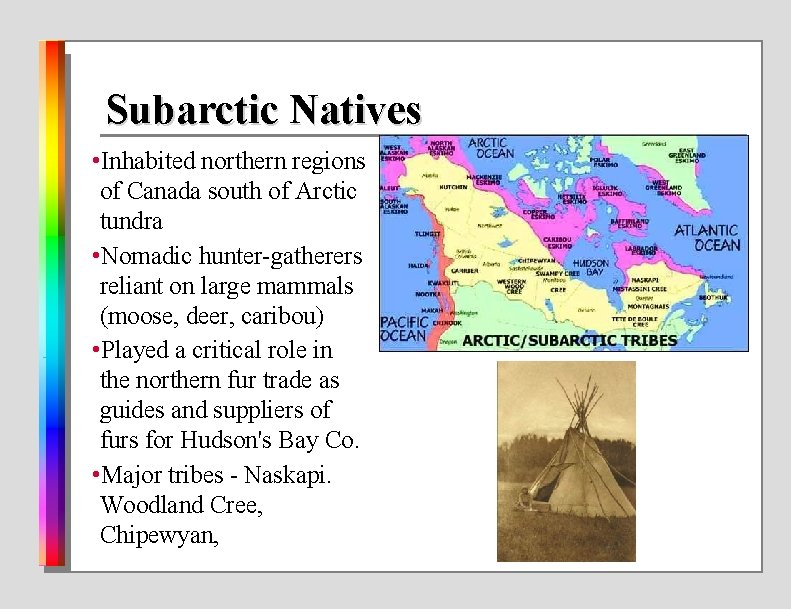
Subarctic Natives • Inhabited northern regions of Canada south of Arctic tundra • Nomadic hunter-gatherers reliant on large mammals (moose, deer, caribou) • Played a critical role in the northern fur trade as guides and suppliers of furs for Hudson's Bay Co. • Major tribes - Naskapi. Woodland Cree, Chipewyan,
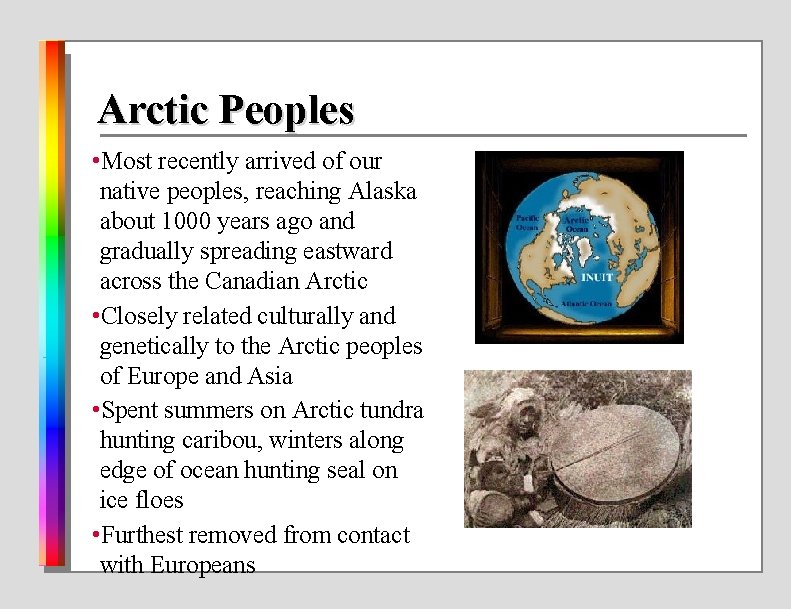
Arctic Peoples • Most recently arrived of our native peoples, reaching Alaska about 1000 years ago and gradually spreading eastward across the Canadian Arctic • Closely related culturally and genetically to the Arctic peoples of Europe and Asia • Spent summers on Arctic tundra hunting caribou, winters along edge of ocean hunting seal on ice floes • Furthest removed from contact with Europeans
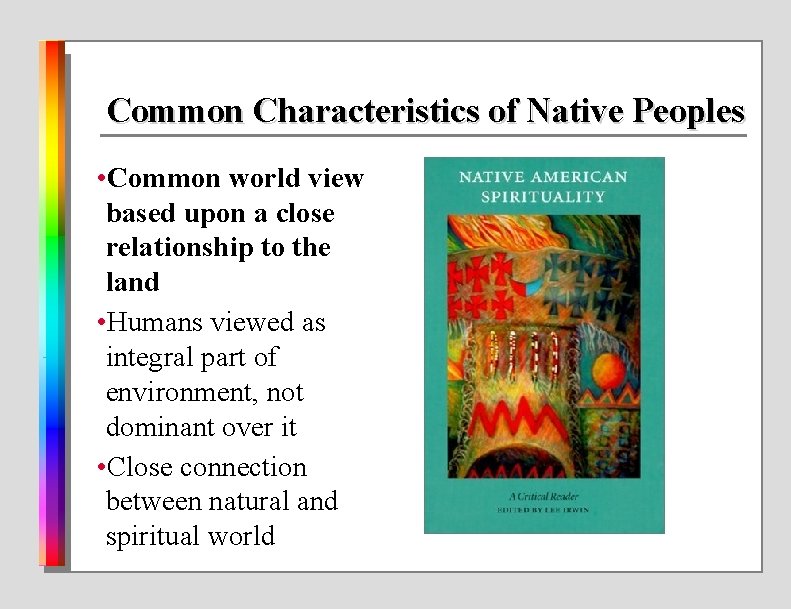
Common Characteristics of Native Peoples • Common world view based upon a close relationship to the land • Humans viewed as integral part of environment, not dominant over it • Close connection between natural and spiritual world
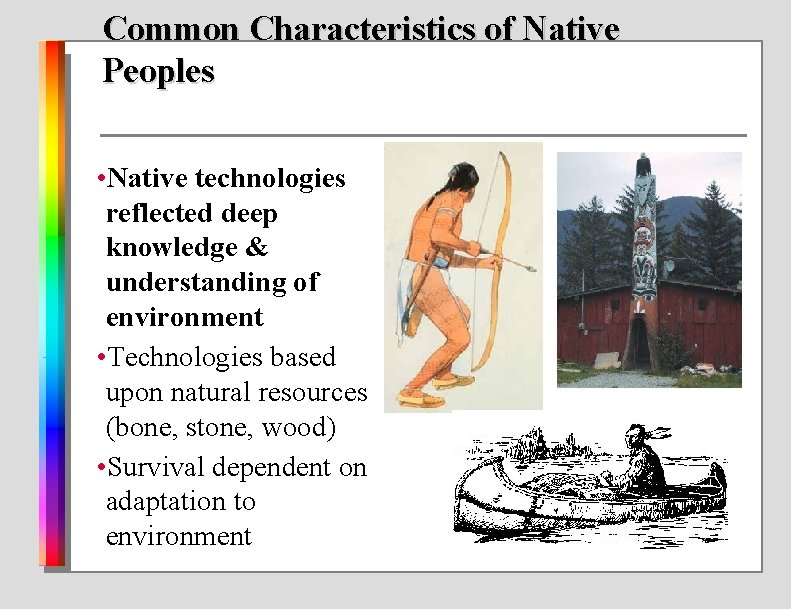
Common Characteristics of Native Peoples • Native technologies reflected deep knowledge & understanding of environment • Technologies based upon natural resources (bone, stone, wood) • Survival dependent on adaptation to environment
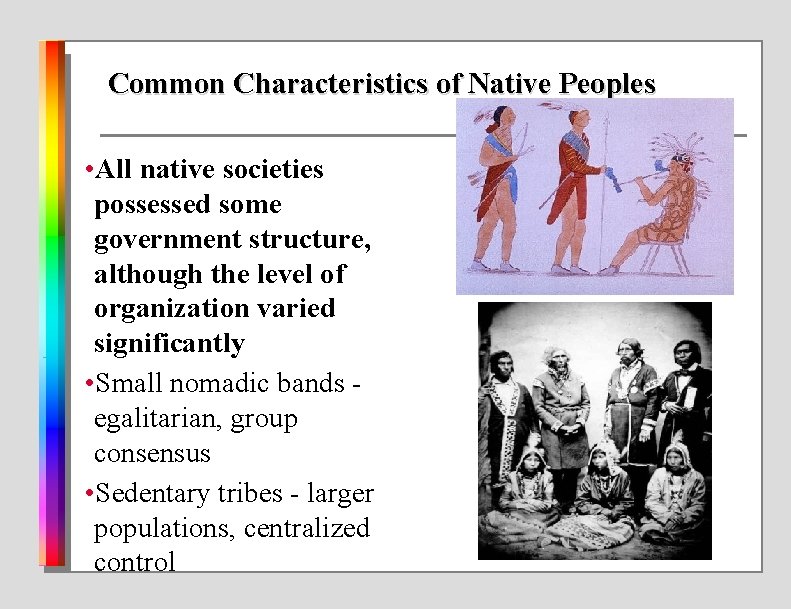
Common Characteristics of Native Peoples • All native societies possessed some government structure, although the level of organization varied significantly • Small nomadic bands egalitarian, group consensus • Sedentary tribes - larger populations, centralized control
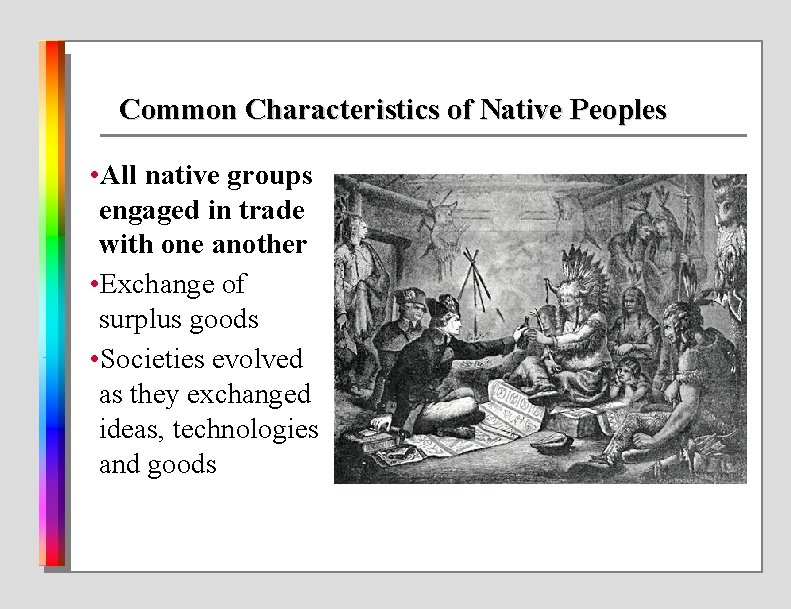
Common Characteristics of Native Peoples • All native groups engaged in trade with one another • Exchange of surplus goods • Societies evolved as they exchanged ideas, technologies and goods