
NATIVE MICHIGAN SHRUBS GO GROW PLANT NATIVES Why
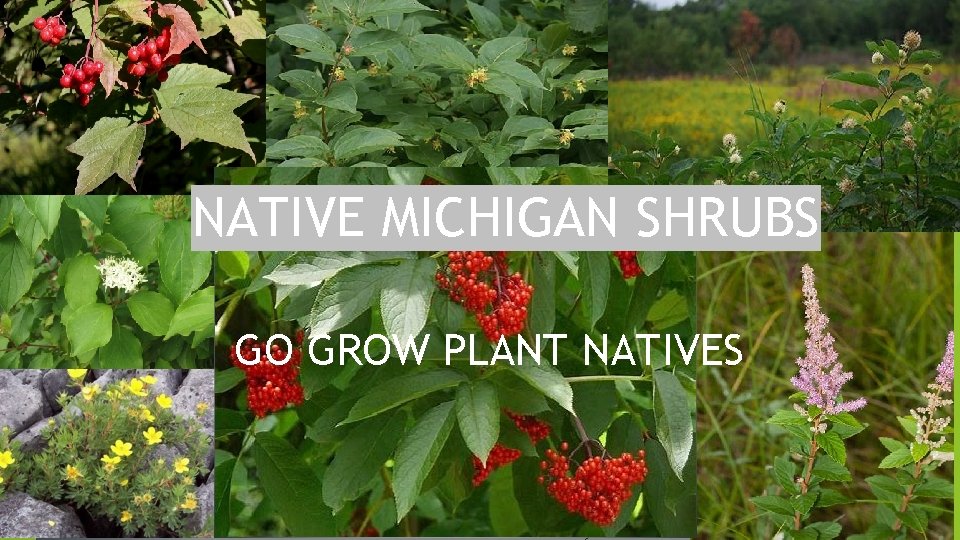
NATIVE MICHIGAN SHRUBS GO GROW PLANT NATIVES
Why are Native species more desirable ? The cultivars or “improved” selections emphasize the ornamental and not enough on the function. Adaptive Matches animals. to Michigan soils and weather. the needs for Michigan insects, birds,
Why plant shrubs ? Or Why not plant a shrubland ? An aesthetic opportunity: planting in masses creates a strong visual impact Creates Useful May the dynamic edge between forest grassland in designing space, screening and framing be the most stable vegetative state. Completes the portfolio of back-yard wildlife habitat
Categories of shrubs: Rhizomatous and stoloniferous which proliferate from shoots or suckers. Clump forming shrubs which reproduce from seeds.
Rhizomatous/stoloniferous § Uses: Stabilize banks Weed suppression Provides a mow free cover for dry banks, poor soils or wetlands Types : Dry: Rough leaf dogwood, Sumacs , Bearberry Mosaic: Winterberry holly, Chokeberry, Steeple. Bush, Meadowsweet
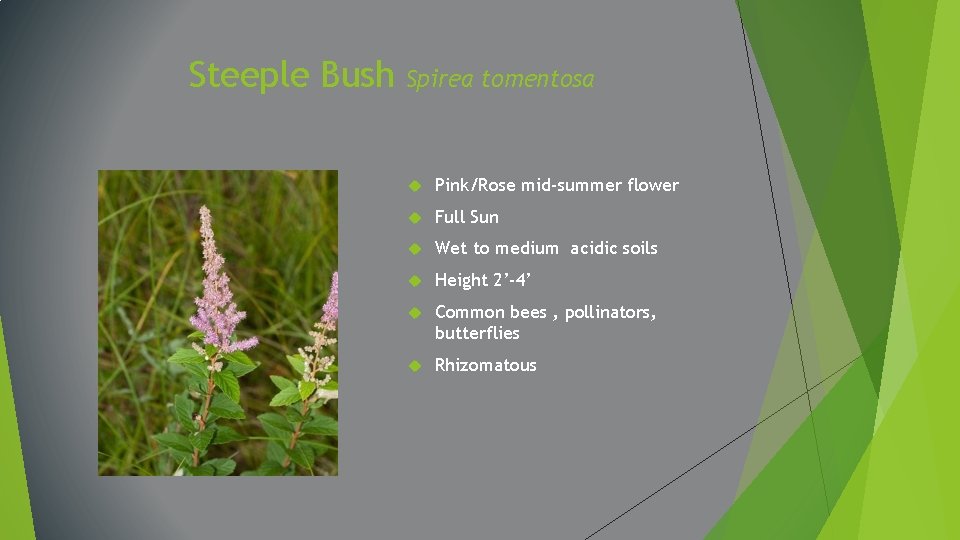
Steeple Bush Spirea tomentosa Pink/Rose mid-summer flower Full Sun Wet to medium acidic soils Height 2’-4’ Common bees , pollinators, butterflies Rhizomatous
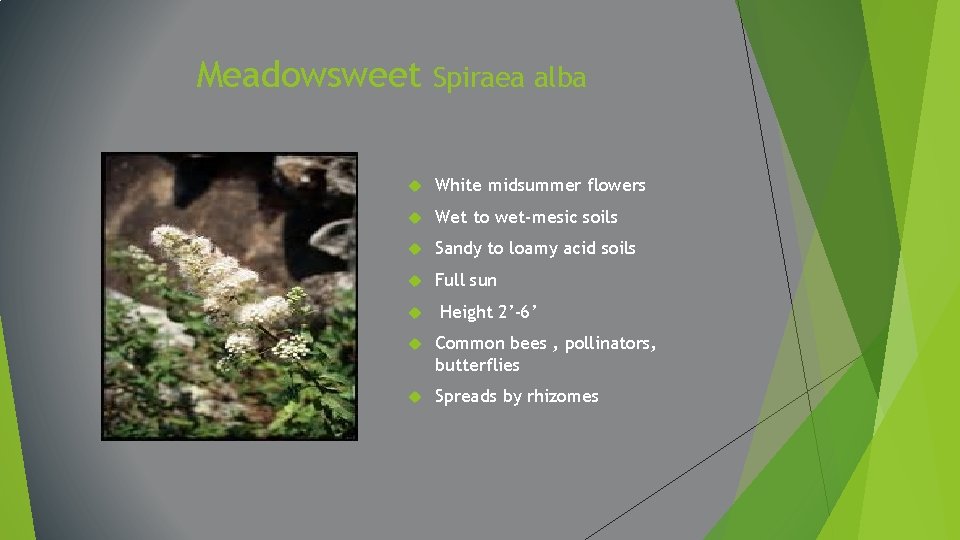
Meadowsweet Spiraea alba White midsummer flowers Wet to wet-mesic soils Sandy to loamy acid soils Full sun Height 2’-6’ Common bees , pollinators, butterflies Spreads by rhizomes
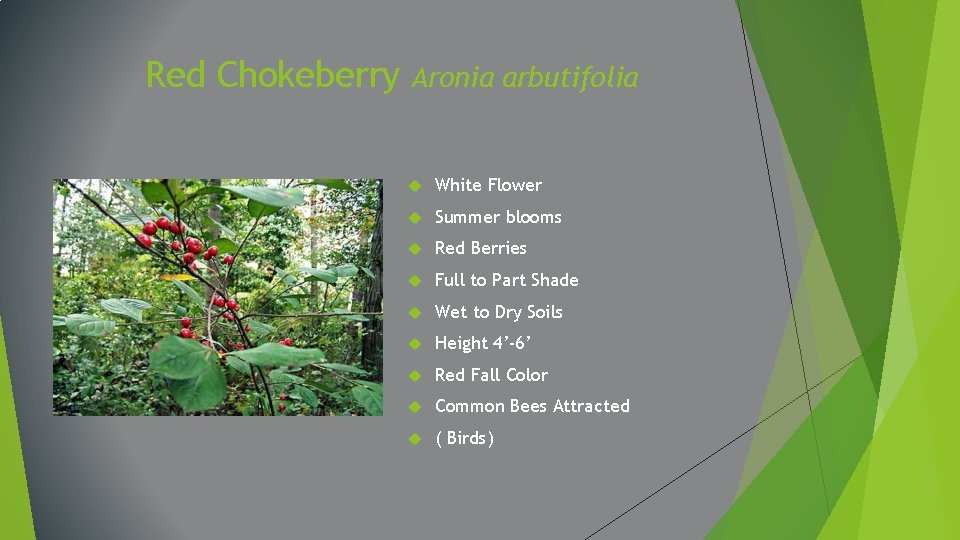
Red Chokeberry Aronia arbutifolia White Flower Summer blooms Red Berries Full to Part Shade Wet to Dry Soils Height 4’-6’ Red Fall Color Common Bees Attracted ( Birds)
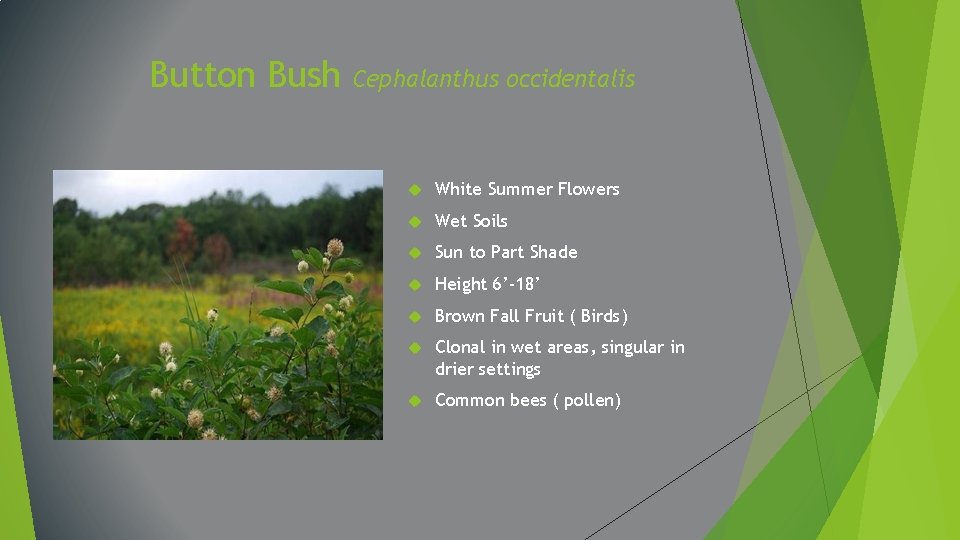
Button Bush Cephalanthus occidentalis White Summer Flowers Wet Soils Sun to Part Shade Height 6’-18’ Brown Fall Fruit ( Birds) Clonal in wet areas, singular in drier settings Common bees ( pollen)
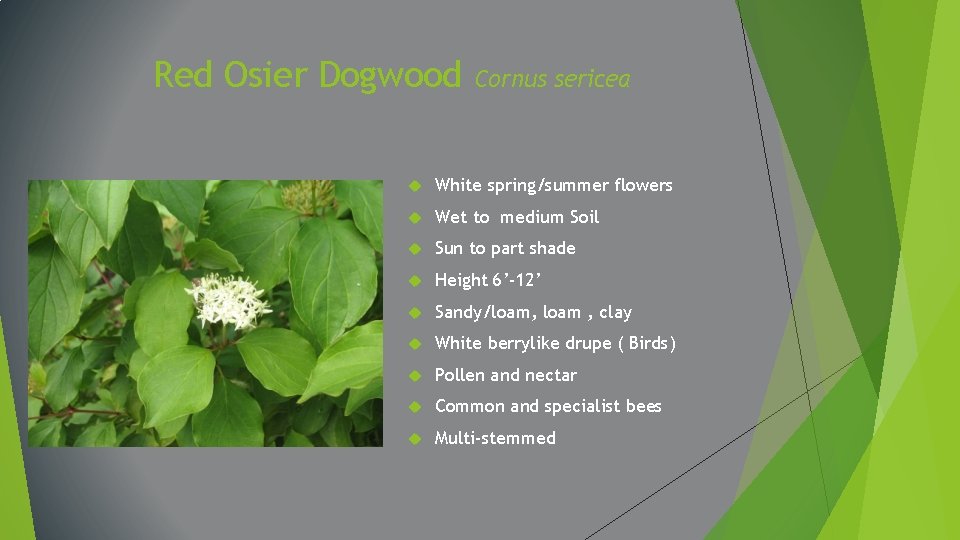
Red Osier Dogwood Cornus sericea White spring/summer flowers Wet to medium Soil Sun to part shade Height 6’-12’ Sandy/loam, loam , clay White berrylike drupe ( Birds) Pollen and nectar Common and specialist bees Multi-stemmed
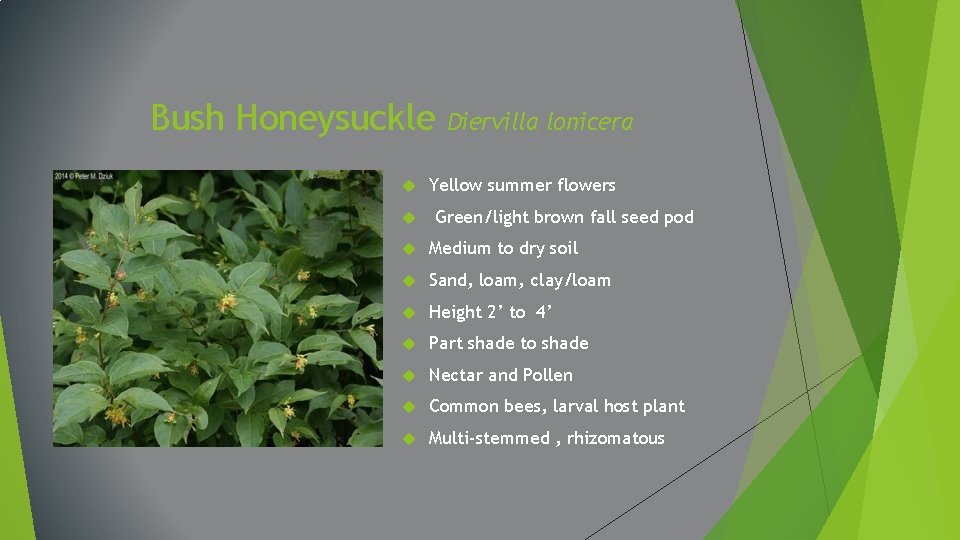
Bush Honeysuckle Diervilla lonicera Yellow summer flowers Green/light brown fall seed pod Medium to dry soil Sand, loam, clay/loam Height 2’ to 4’ Part shade to shade Nectar and Pollen Common bees, larval host plant Multi-stemmed , rhizomatous
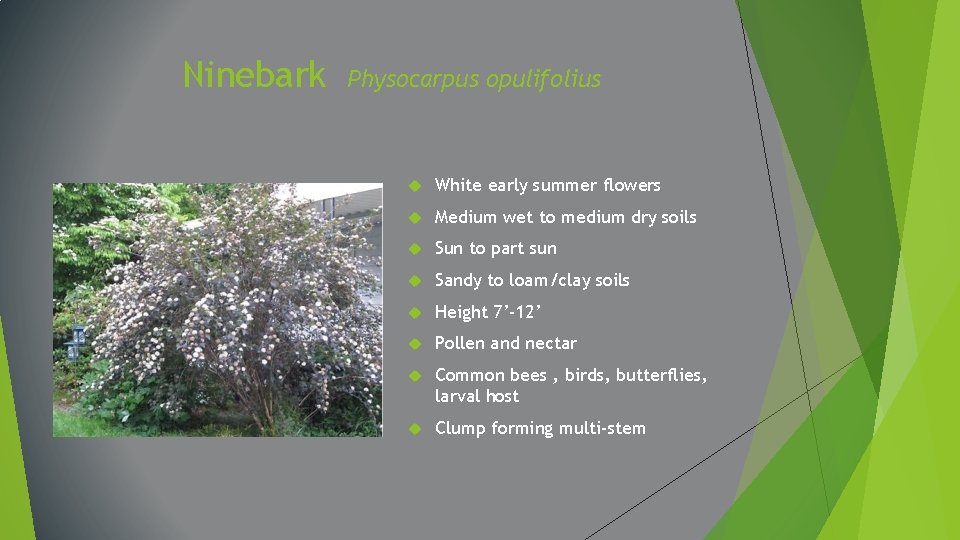
Ninebark Physocarpus opulifolius White early summer flowers Medium wet to medium dry soils Sun to part sun Sandy to loam/clay soils Height 7’-12’ Pollen and nectar Common bees , birds, butterflies, larval host Clump forming multi-stem
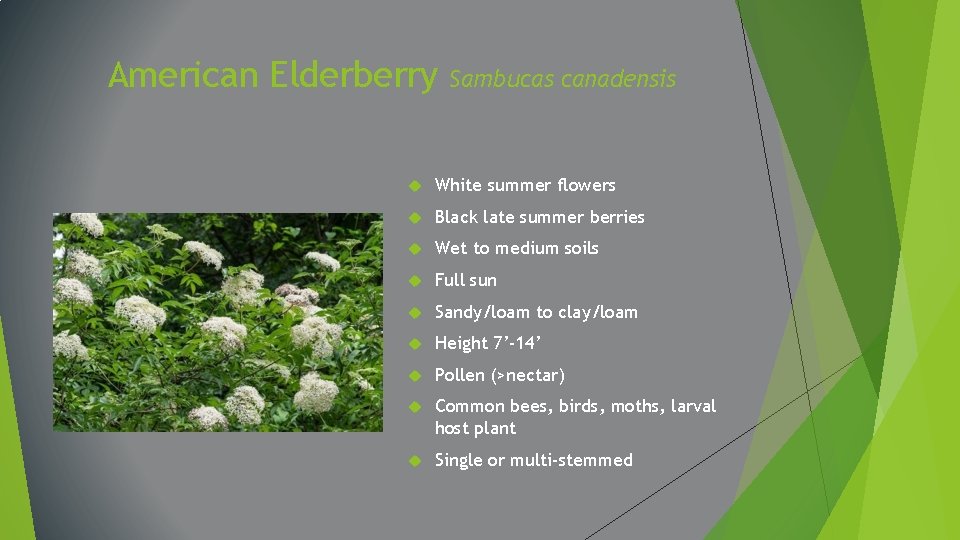
American Elderberry Sambucas canadensis White summer flowers Black late summer berries Wet to medium soils Full sun Sandy/loam to clay/loam Height 7’-14’ Pollen (>nectar) Common bees, birds, moths, larval host plant Single or multi-stemmed
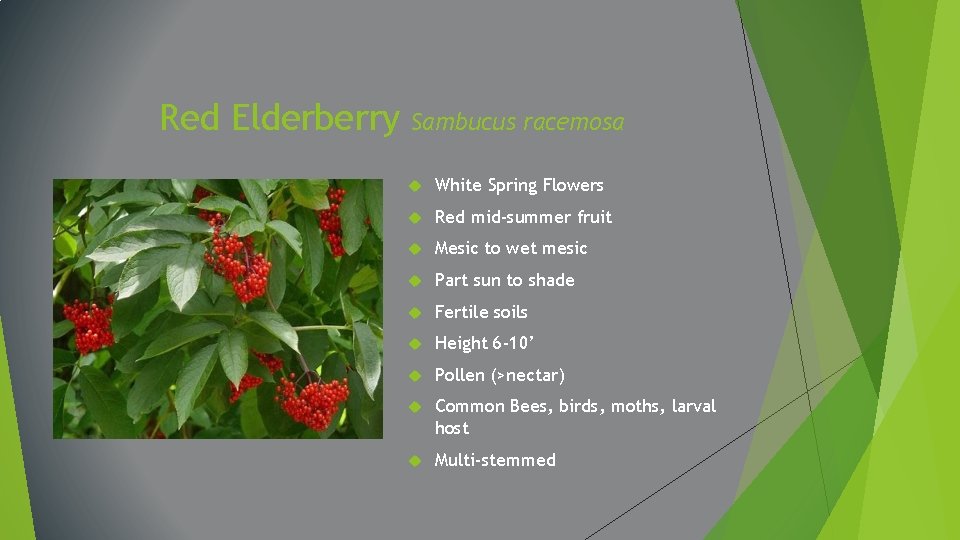
Red Elderberry Sambucus racemosa White Spring Flowers Red mid-summer fruit Mesic to wet mesic Part sun to shade Fertile soils Height 6 -10’ Pollen (>nectar) Common Bees, birds, moths, larval host Multi-stemmed
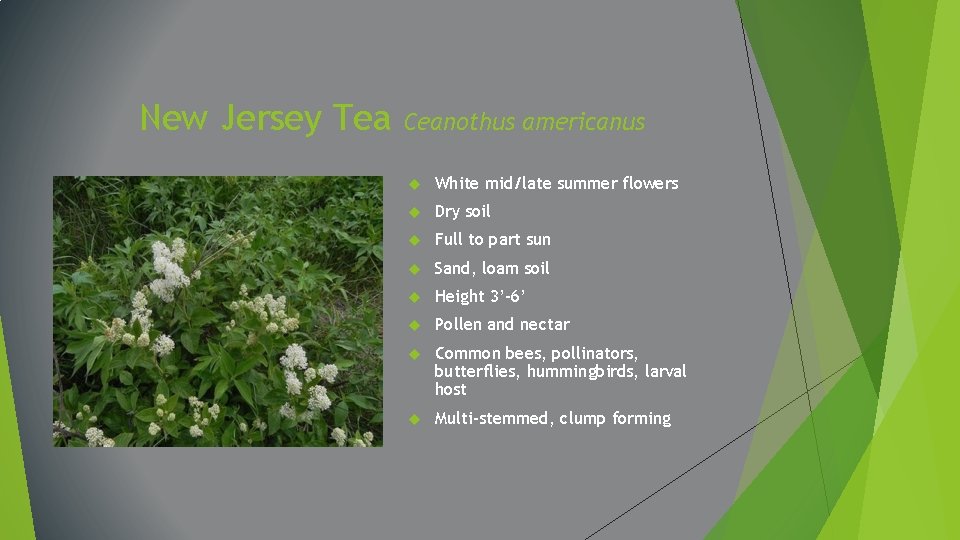
New Jersey Tea Ceanothus americanus White mid/late summer flowers Dry soil Full to part sun Sand, loam soil Height 3’-6’ Pollen and nectar Common bees, pollinators, butterflies, hummingbirds, larval host Multi-stemmed, clump forming
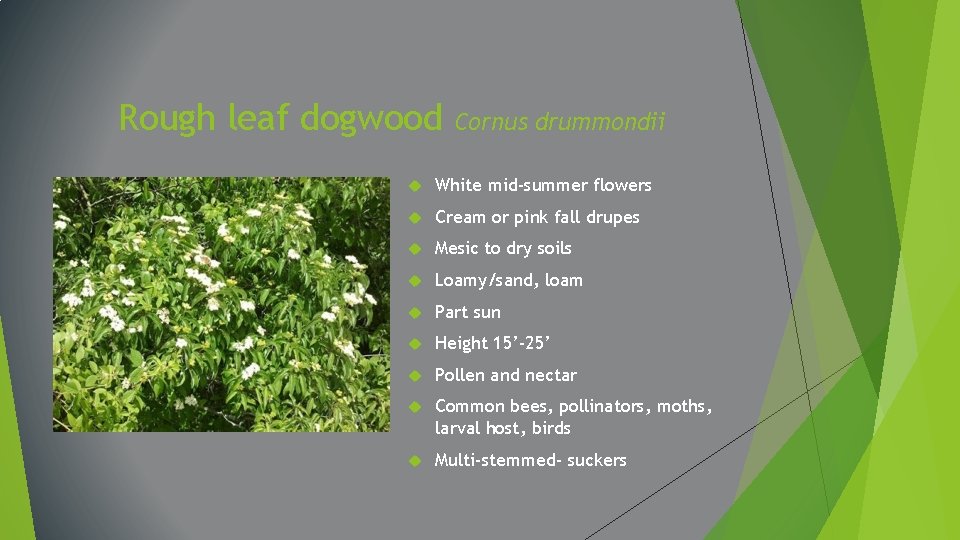
Rough leaf dogwood Cornus drummondii White mid-summer flowers Cream or pink fall drupes Mesic to dry soils Loamy/sand, loam Part sun Height 15’-25’ Pollen and nectar Common bees, pollinators, moths, larval host, birds Multi-stemmed- suckers
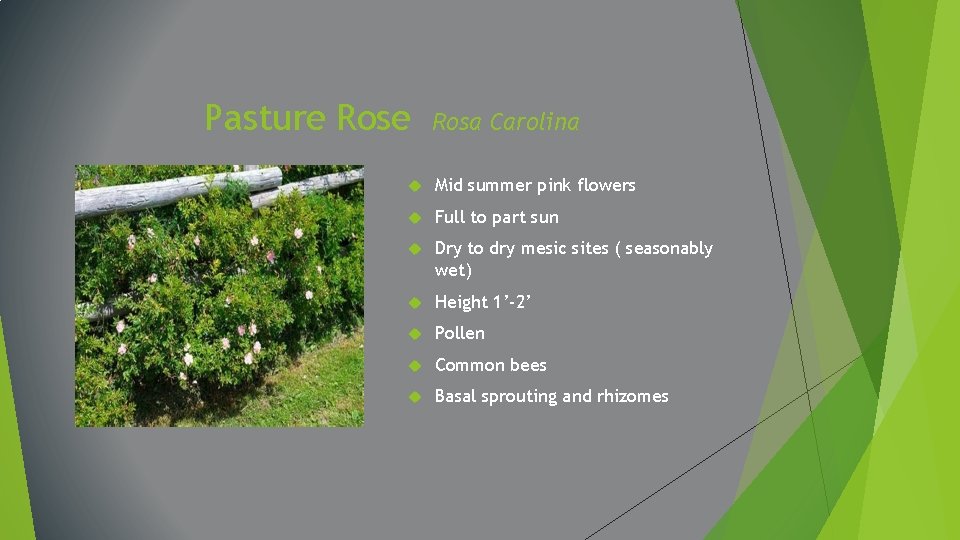
Pasture Rosa Carolina Mid summer pink flowers Full to part sun Dry to dry mesic sites ( seasonably wet) Height 1’-2’ Pollen Common bees Basal sprouting and rhizomes
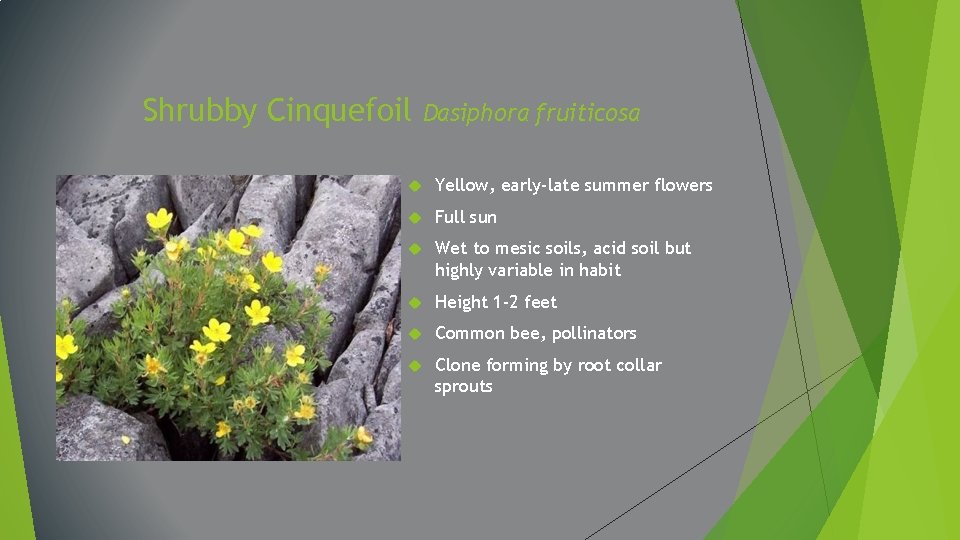
Shrubby Cinquefoil Dasiphora fruiticosa Yellow, early-late summer flowers Full sun Wet to mesic soils, acid soil but highly variable in habit Height 1 -2 feet Common bee, pollinators Clone forming by root collar sprouts
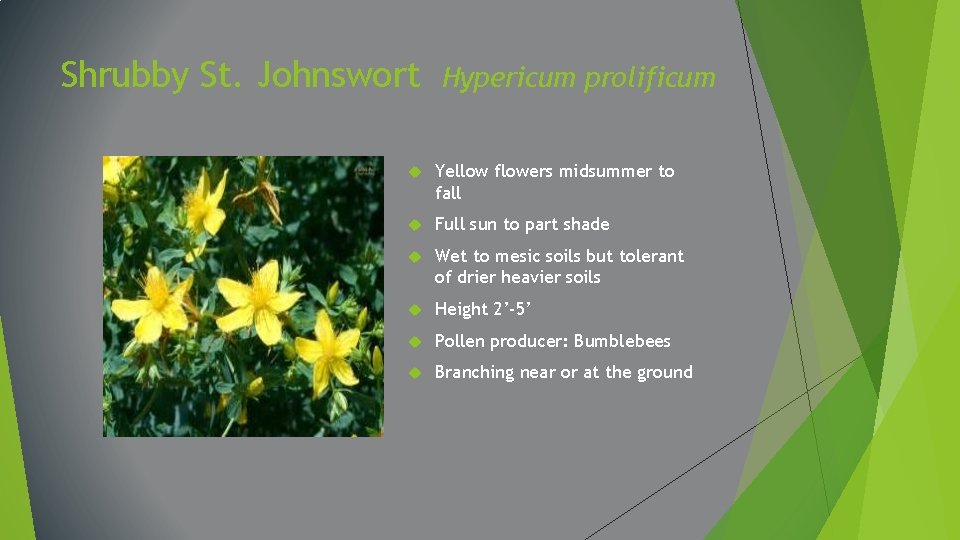
Shrubby St. Johnswort Hypericum prolificum Yellow flowers midsummer to fall Full sun to part shade Wet to mesic soils but tolerant of drier heavier soils Height 2’-5’ Pollen producer: Bumblebees Branching near or at the ground
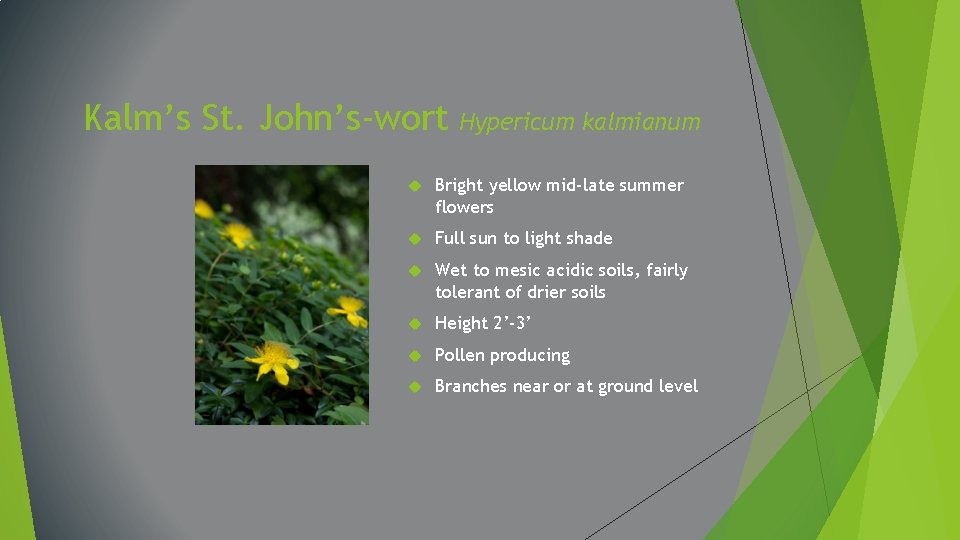
Kalm’s St. John’s-wort Hypericum kalmianum Bright yellow mid-late summer flowers Full sun to light shade Wet to mesic acidic soils, fairly tolerant of drier soils Height 2’-3’ Pollen producing Branches near or at ground level
Clump Forming Shrubs Form relatively compact individual plants and reproduce by seeds Types: Viburnums High bush cranberry Can get tall and leggy which makes them more suitable for intermingling with herbaceous plants.
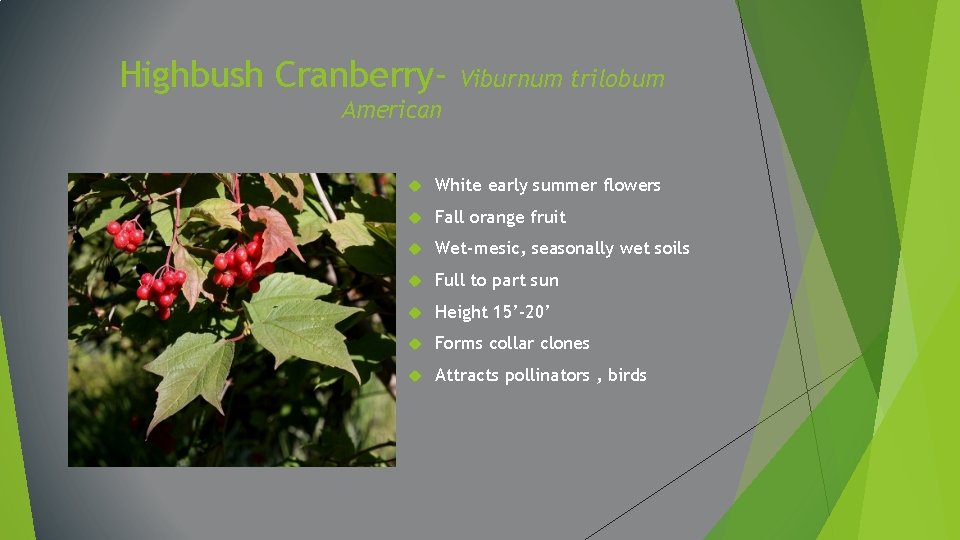
Highbush Cranberry- Viburnum trilobum American White early summer flowers Fall orange fruit Wet-mesic, seasonally wet soils Full to part sun Height 15’-20’ Forms collar clones Attracts pollinators , birds
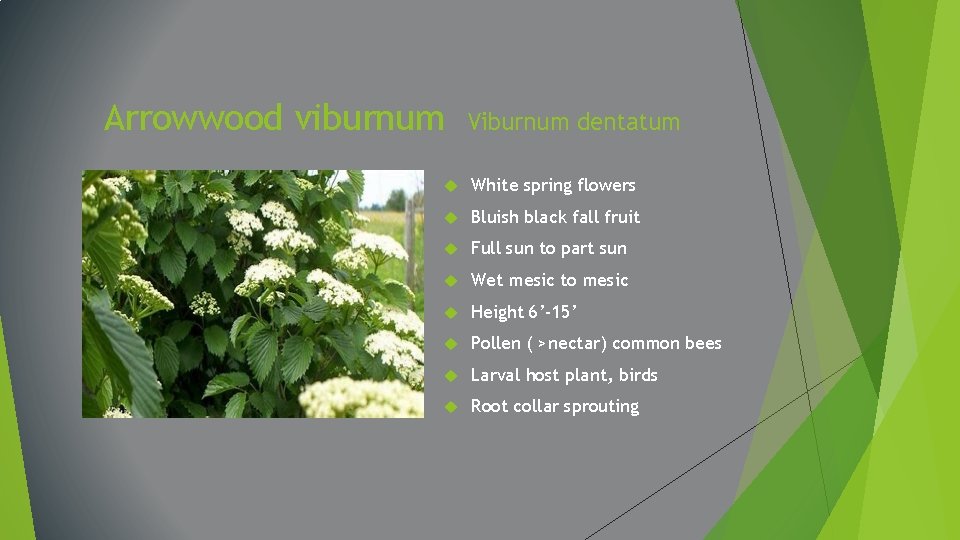
Arrowwood viburnum Viburnum dentatum White spring flowers Bluish black fall fruit Full sun to part sun Wet mesic to mesic Height 6’-15’ Pollen ( >nectar) common bees Larval host plant, birds Root collar sprouting

- Slides: 24