
Native Landscaping Central RESTORING BEAUTY BALANCE TO FLORIDA
Native Landscaping Central RESTORING BEAUTY & BALANCE TO FLORIDA
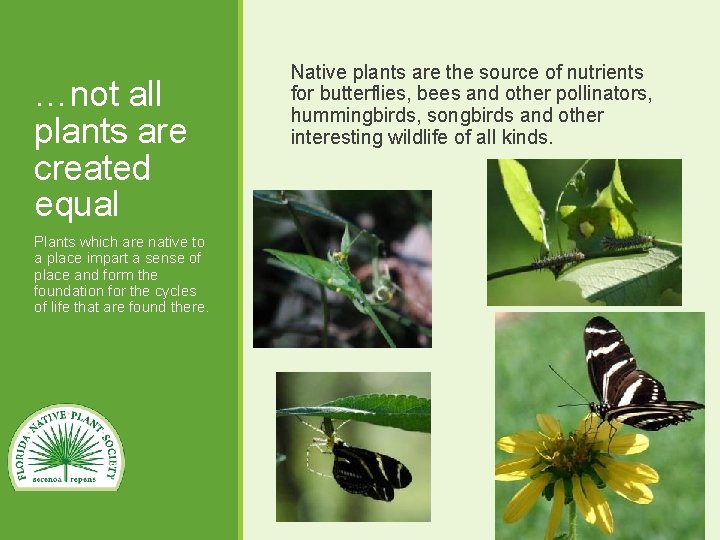
…not all plants are created equal Plants which are native to a place impart a sense of place and form the foundation for the cycles of life that are found there. Native plants are the source of nutrients for butterflies, bees and other pollinators, hummingbirds, songbirds and other interesting wildlife of all kinds.
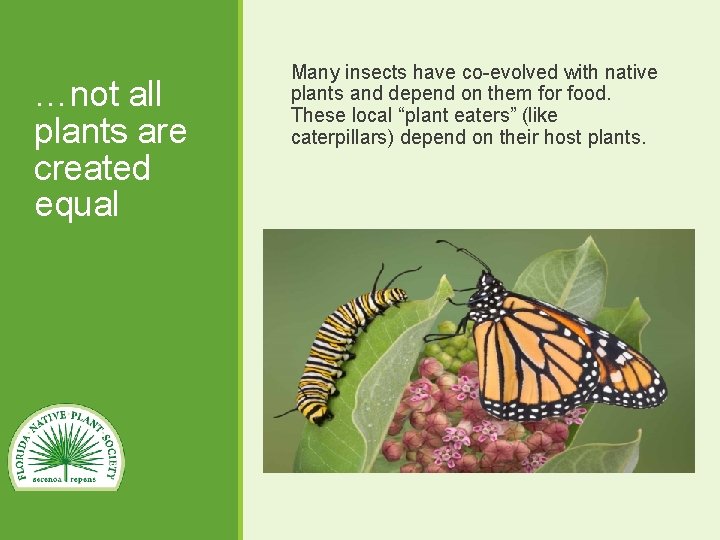
…not all plants are created equal Many insects have co-evolved with native plants and depend on them for food. These local “plant eaters” (like caterpillars) depend on their host plants.
Begin a Partnership with Nature CHOOSING THE RIGHT PLANT FOR THE RIGHT PLACE Light Zones: Moisture Zones: ØSun ØDry ØPart Sun ØAverage ØShade ØWet
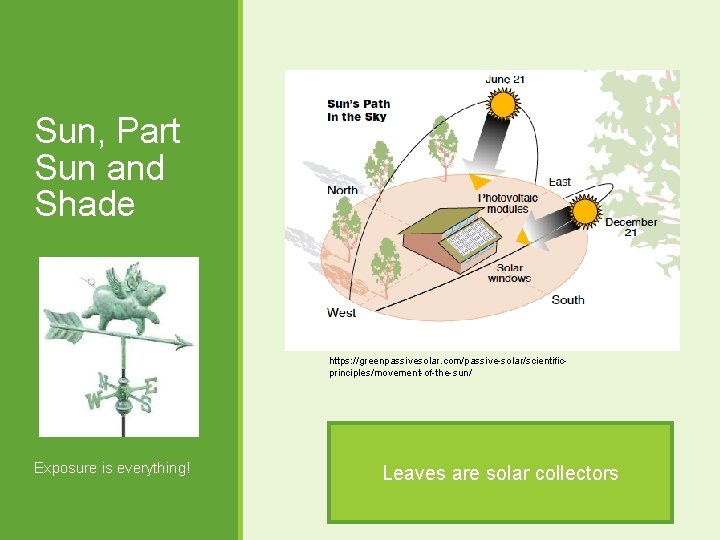
Sun, Part Sun and Shade https: //greenpassivesolar. com/passive-solar/scientificprinciples/movement-of-the-sun/ Exposure is everything! Leaves are solar collectors
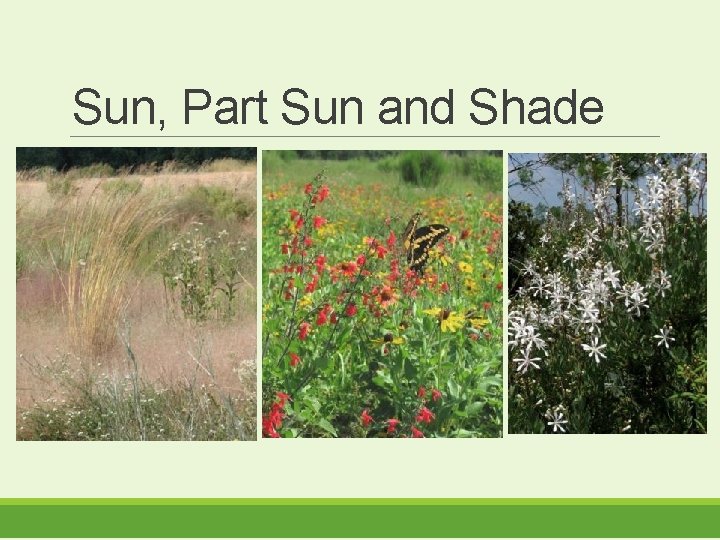
Sun, Part Sun and Shade
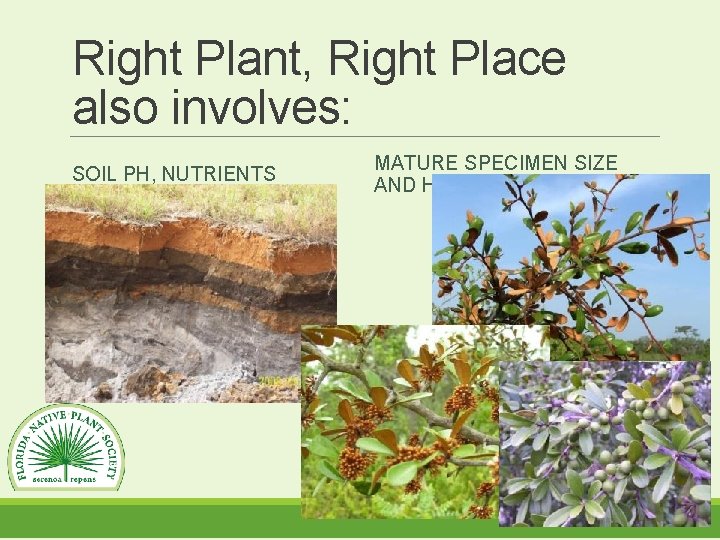
Right Plant, Right Place also involves: SOIL PH, NUTRIENTS MATURE SPECIMEN SIZE AND HABITS
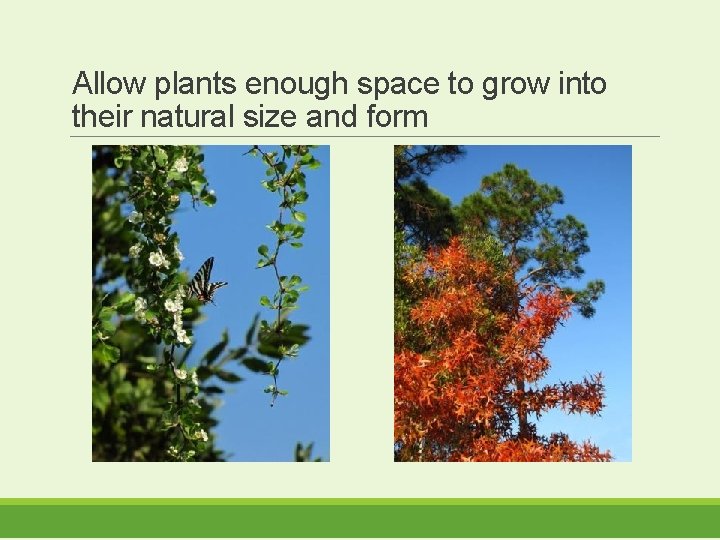
Allow plants enough space to grow into their natural size and form
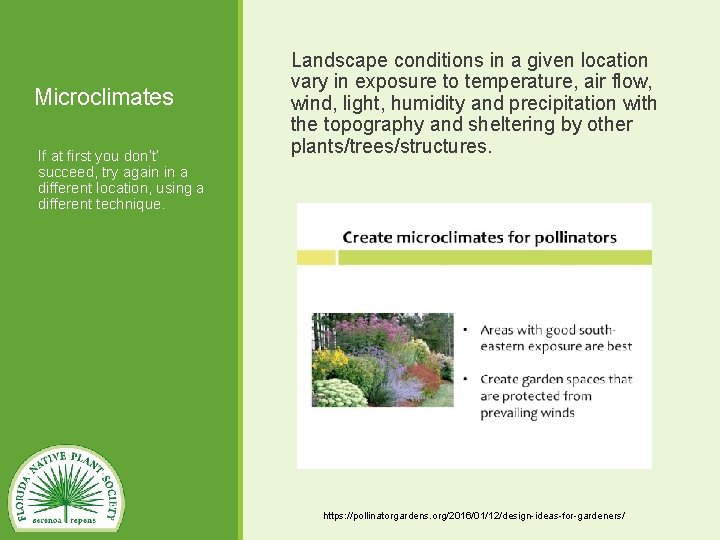
Microclimates If at first you don’t’ succeed, try again in a different location, using a different technique. Landscape conditions in a given location vary in exposure to temperature, air flow, wind, light, humidity and precipitation with the topography and sheltering by other plants/trees/structures. https: //pollinatorgardens. org/2016/01/12/design-ideas-for-gardeners/
Why do most new plantings die? WATERING TOO LITTLE TOO LATE
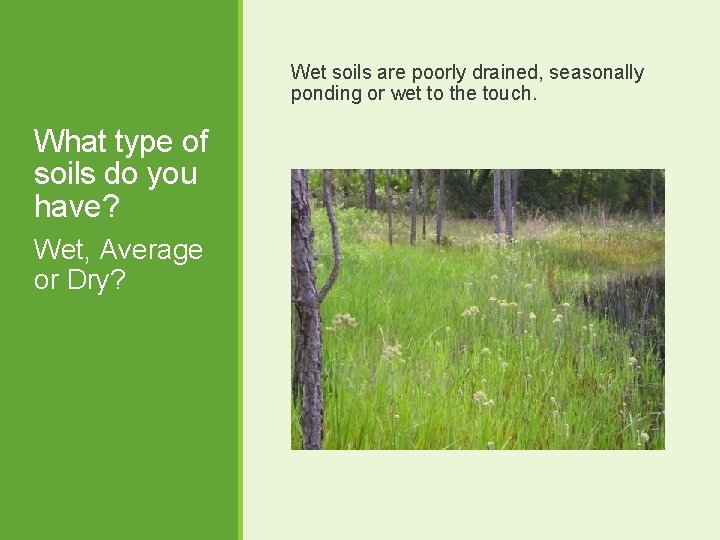
Wet soils are poorly drained, seasonally ponding or wet to the touch. What type of soils do you have? Wet, Average or Dry?
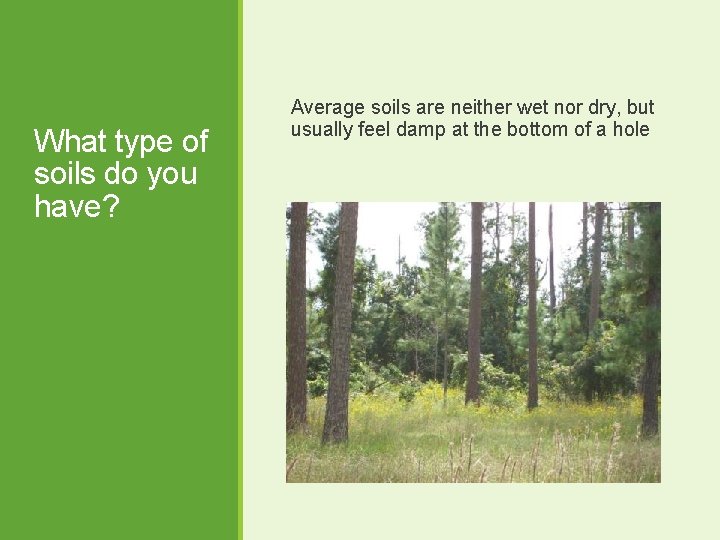
What type of soils do you have? Average soils are neither wet nor dry, but usually feel damp at the bottom of a hole
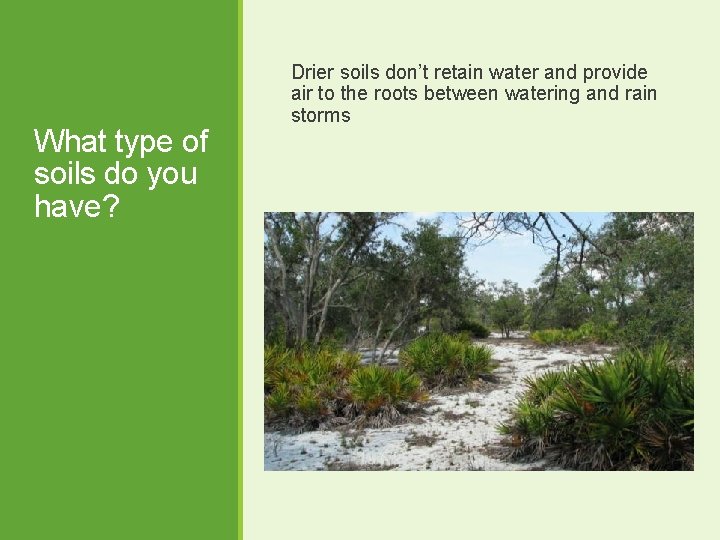
What type of soils do you have? Drier soils don’t retain water and provide air to the roots between watering and rain storms
Now You Know The Basics CHOICES, CHOICES
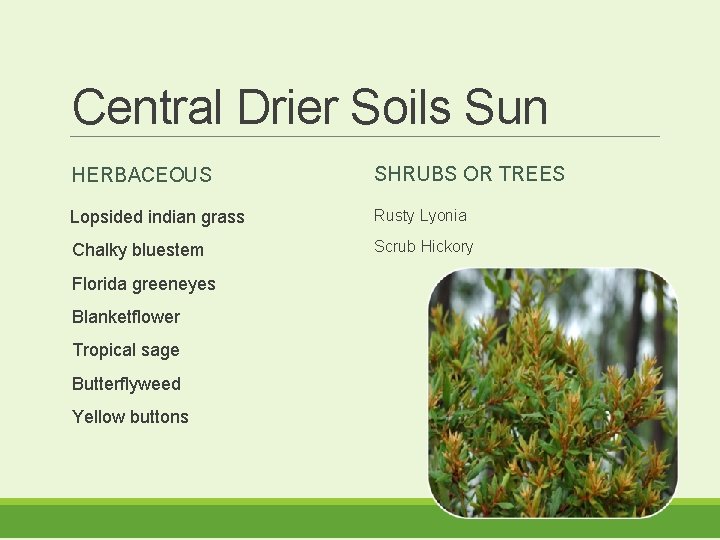
Central Drier Soils Sun HERBACEOUS SHRUBS OR TREES Lopsided indian grass Rusty Lyonia Chalky bluestem Scrub Hickory Florida greeneyes Blanketflower Tropical sage Butterflyweed Yellow buttons
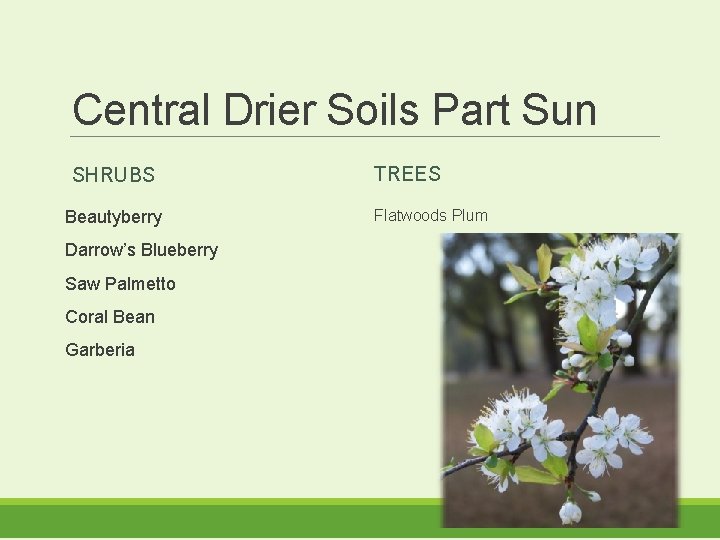
Central Drier Soils Part Sun SHRUBS Beautyberry Darrow’s Blueberry Saw Palmetto Coral Bean Garberia TREES Flatwoods Plum
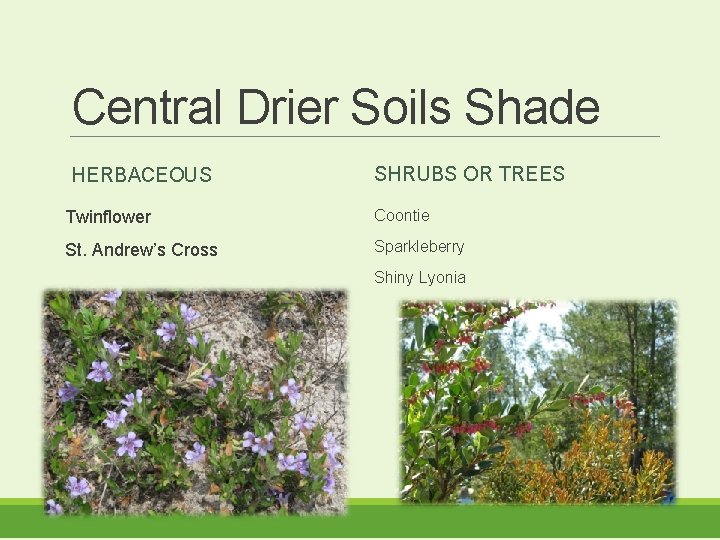
Central Drier Soils Shade HERBACEOUS SHRUBS OR TREES Twinflower Coontie St. Andrew’s Cross Sparkleberry Shiny Lyonia
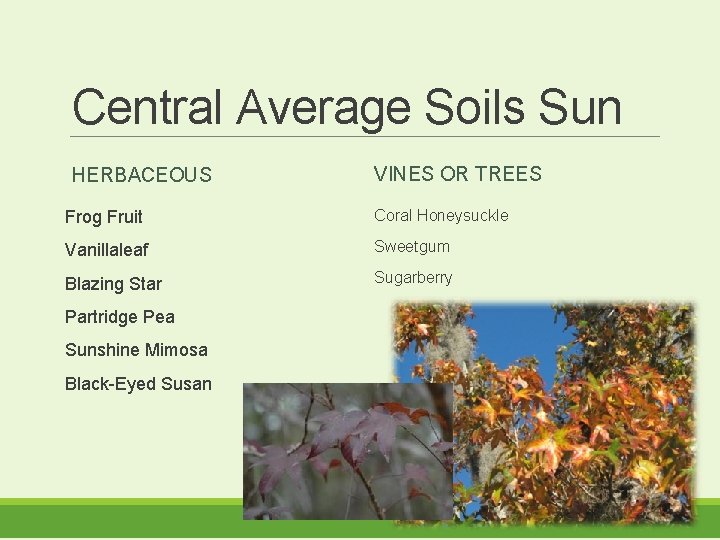
Central Average Soils Sun HERBACEOUS VINES OR TREES Frog Fruit Coral Honeysuckle Vanillaleaf Sweetgum Blazing Star Sugarberry Partridge Pea Sunshine Mimosa Black-Eyed Susan
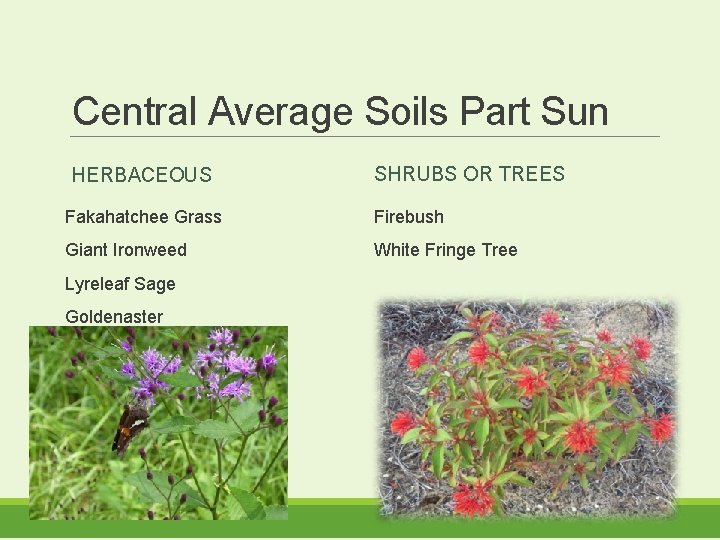
Central Average Soils Part Sun HERBACEOUS SHRUBS OR TREES Fakahatchee Grass Firebush Giant Ironweed White Fringe Tree Lyreleaf Sage Goldenaster
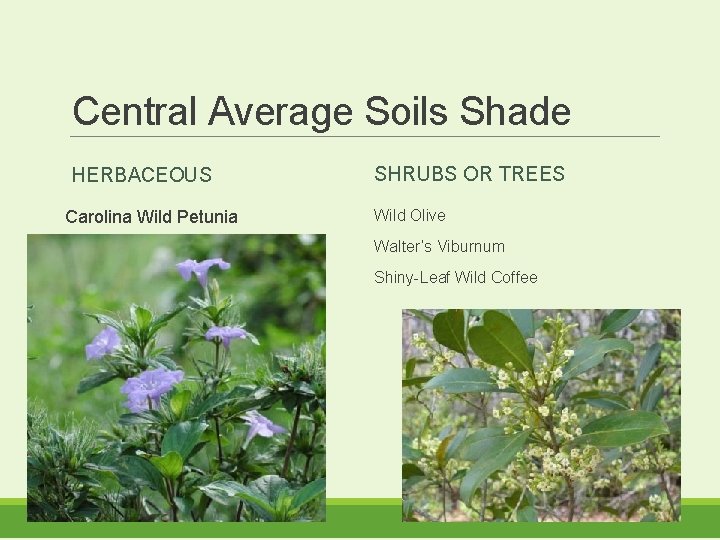
Central Average Soils Shade HERBACEOUS Carolina Wild Petunia SHRUBS OR TREES Wild Olive Walter’s Viburnum Shiny-Leaf Wild Coffee
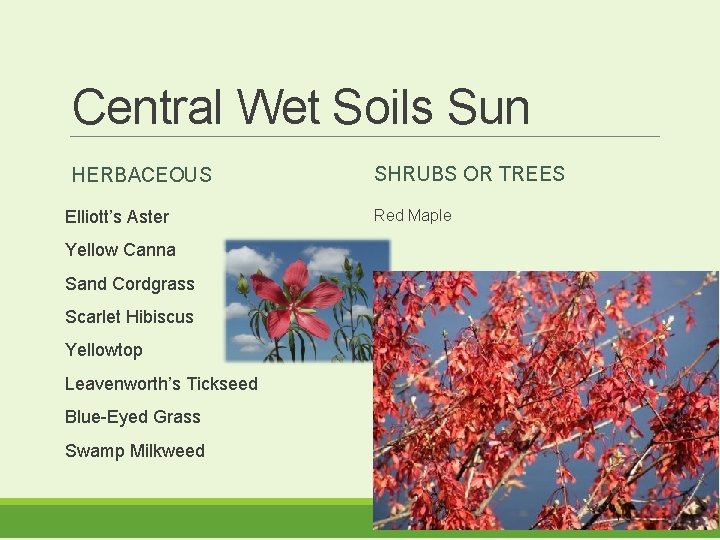
Central Wet Soils Sun HERBACEOUS Elliott’s Aster Yellow Canna Sand Cordgrass Scarlet Hibiscus Yellowtop Leavenworth’s Tickseed Blue-Eyed Grass Swamp Milkweed SHRUBS OR TREES Red Maple
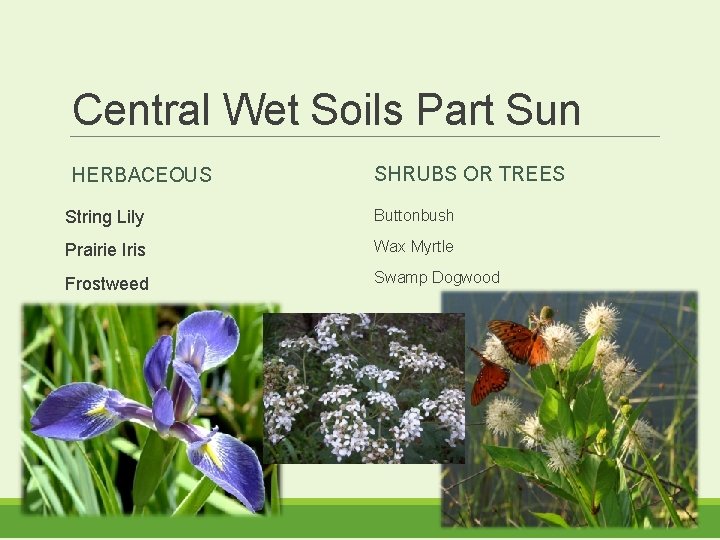
Central Wet Soils Part Sun HERBACEOUS SHRUBS OR TREES String Lily Buttonbush Prairie Iris Wax Myrtle Frostweed Swamp Dogwood
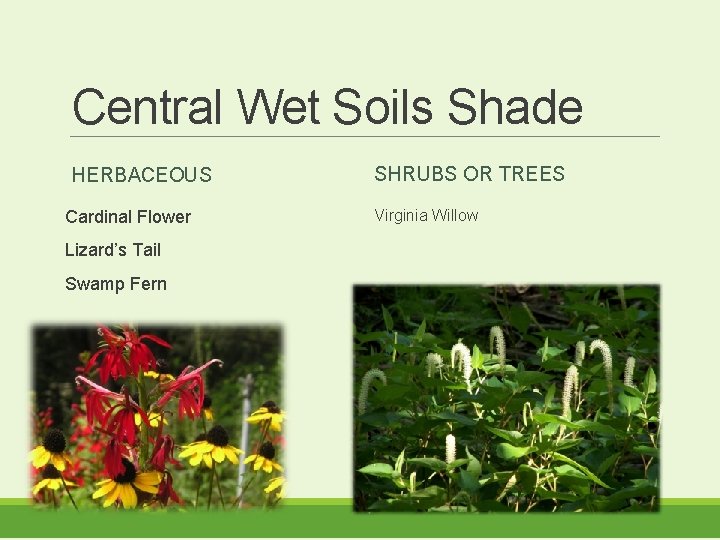
Central Wet Soils Shade HERBACEOUS Cardinal Flower Lizard’s Tail Swamp Fern SHRUBS OR TREES Virginia Willow
A note about exotic invasive species IFAS is currently assessing nonnative species for invasive tendencies http: //assessment. ifas. ufl. edu How do I know what is native and what is not? Florida. Plant. Atlas. USF. edu is a great resource for native status, conservation status ( rare, threatened, etc. ), photos and plant range by county. FNPS. org: The Florida Native Plant Society website has a list of books under their Resources tab.
Resources
- Slides: 25