
Native Americans Unit 2 Part I Essential Understanding
- Slides: 15
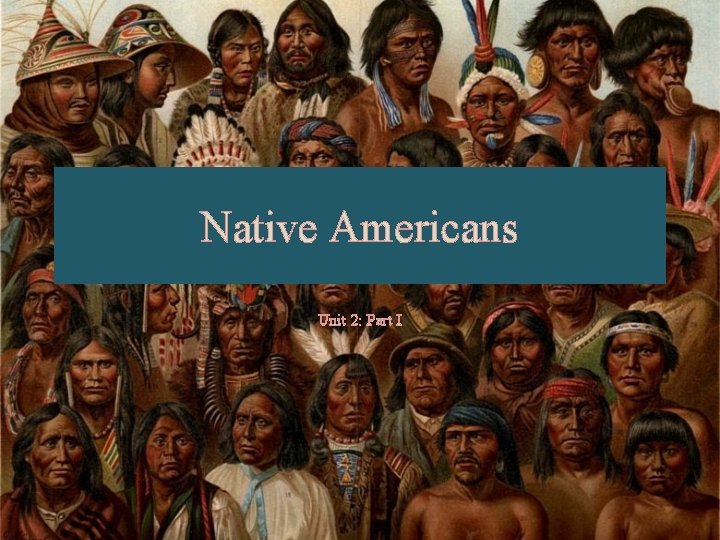
Native Americans Unit 2: Part I
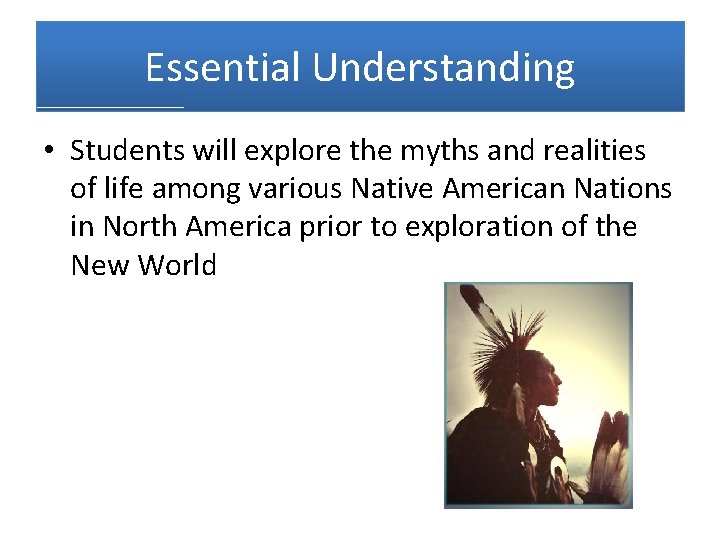
Essential Understanding • Students will explore the myths and realities of life among various Native American Nations in North America prior to exploration of the New World
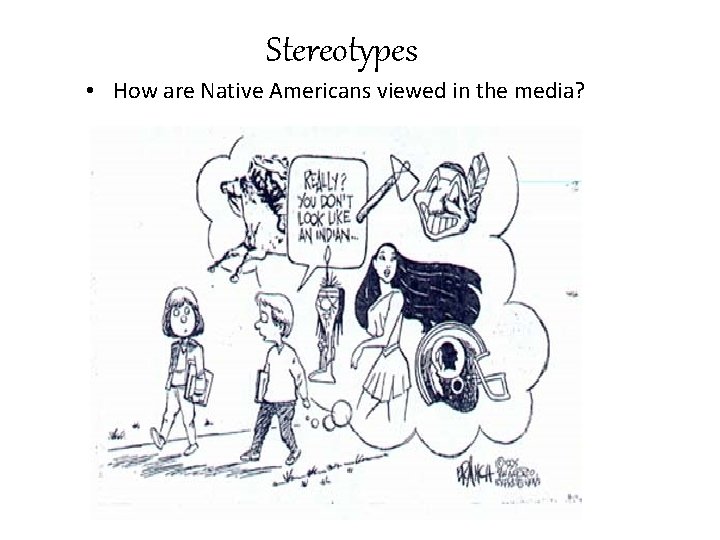
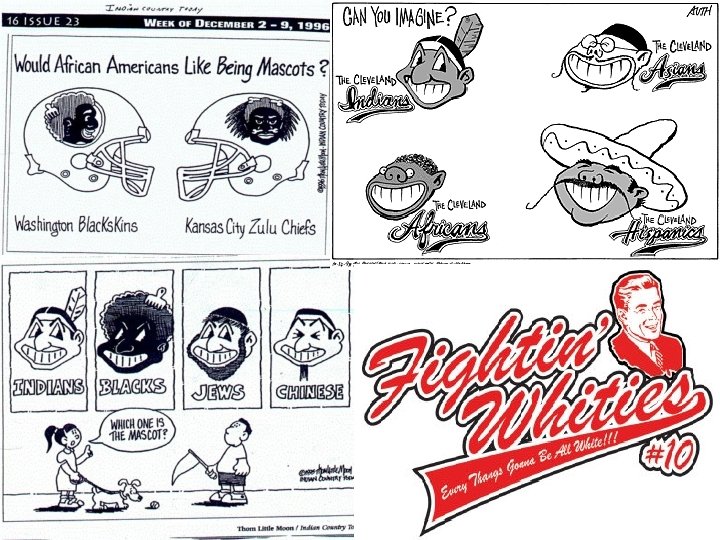
Stereotypes • How are Native Americans viewed in the media?
Declaration of Independence …He has excited domestic insurrections amongst us, and has endeavoured to bring on the inhabitants of our frontiers, From the beginning there the were merciless Indianstereotypes… Savages, whose known negative rule of warfare, is an undistinguished destruction of all ages, sexes and conditions. Why do you think Thomas Jefferson used the terms “Merciless” and “Savages” to refer to the Native Americans? What does this show about Native American and Colonial relations?
Definition Stereotypes: fixed impressions, exaggerated or preconceived ideas about particular social groups, usually based solely on physical appearance. • Define Stereotypes in your own words. Give an example of stereotyping in our school or community. Explain your answer.
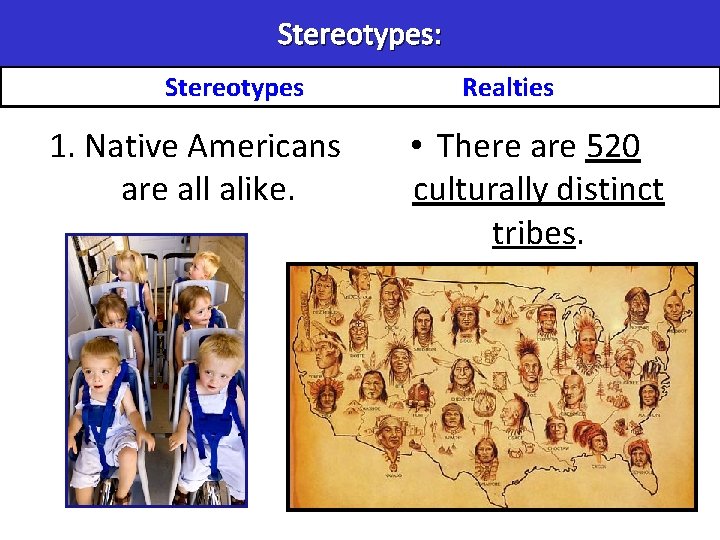
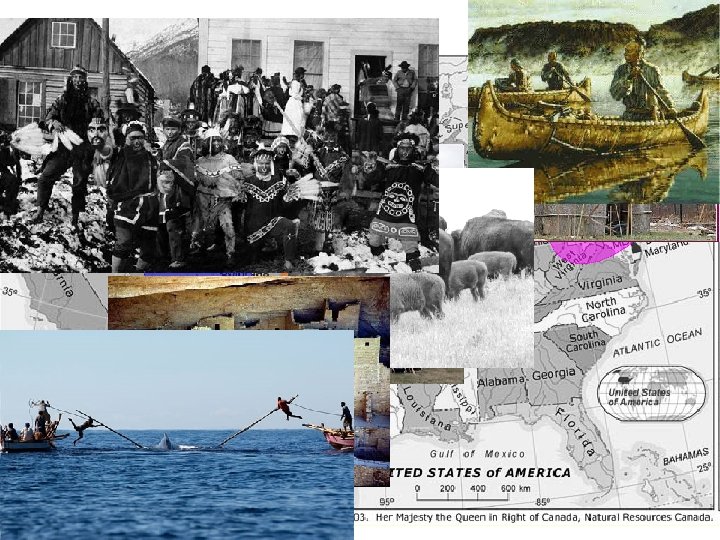
Stereotypes: Stereotypes 1. Native Americans are all alike. Realties • There are 520 culturally distinct tribes.
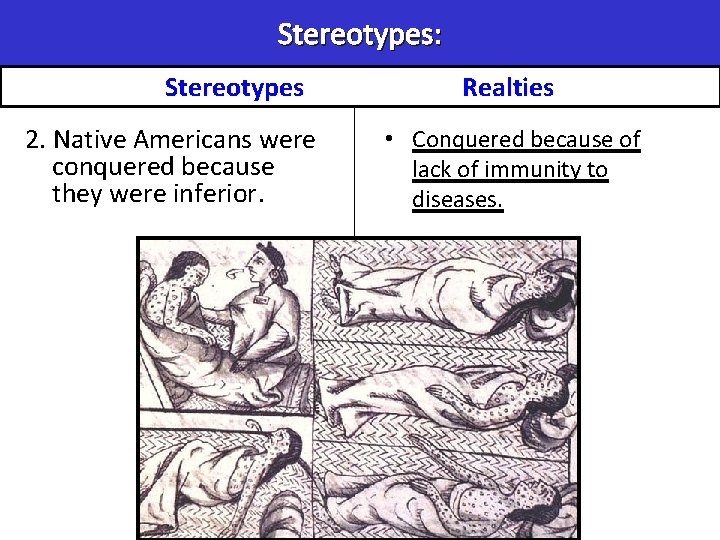
Stereotypes: Stereotypes 2. Native Americans were conquered because they were inferior. Realties • Conquered because of lack of immunity to diseases.
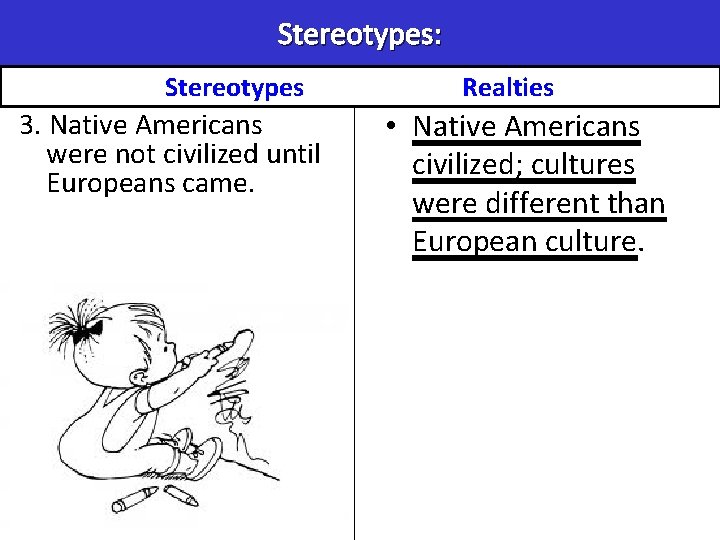
Stereotypes: Stereotypes 3. Native Americans were not civilized until Europeans came. Realties • Native Americans civilized; cultures were different than European culture.
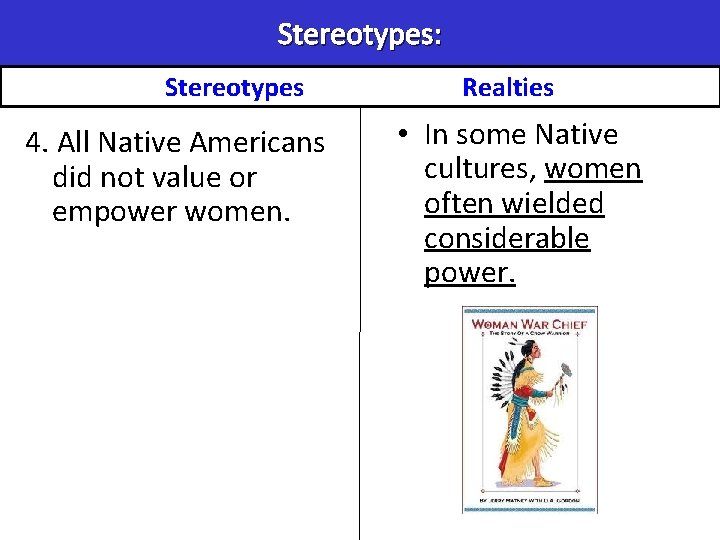
Stereotypes: Stereotypes 4. All Native Americans did not value or empower women. Realties • In some Native cultures, women often wielded considerable power.
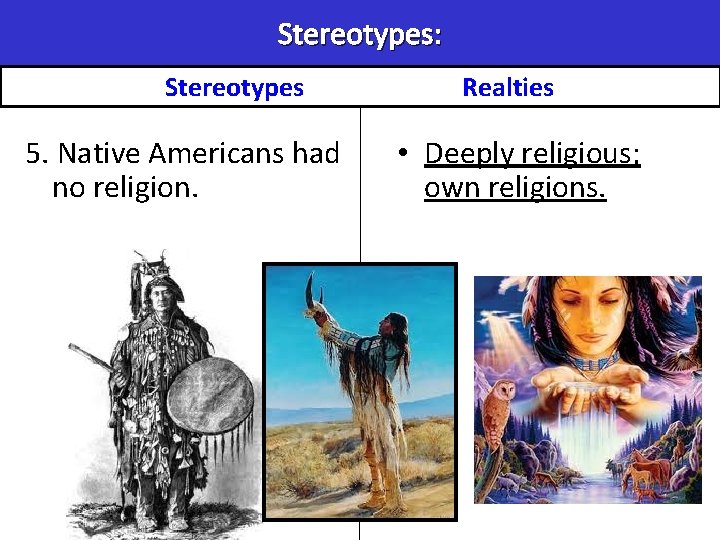
Stereotypes: Stereotypes 5. Native Americans had no religion. Realties • Deeply religious; own religions.
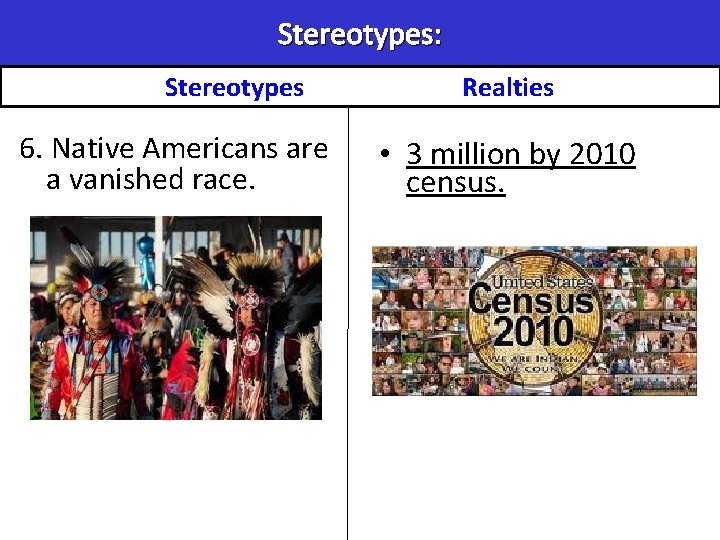
Stereotypes: Stereotypes 6. Native Americans are a vanished race. Realties • 3 million by 2010 census.
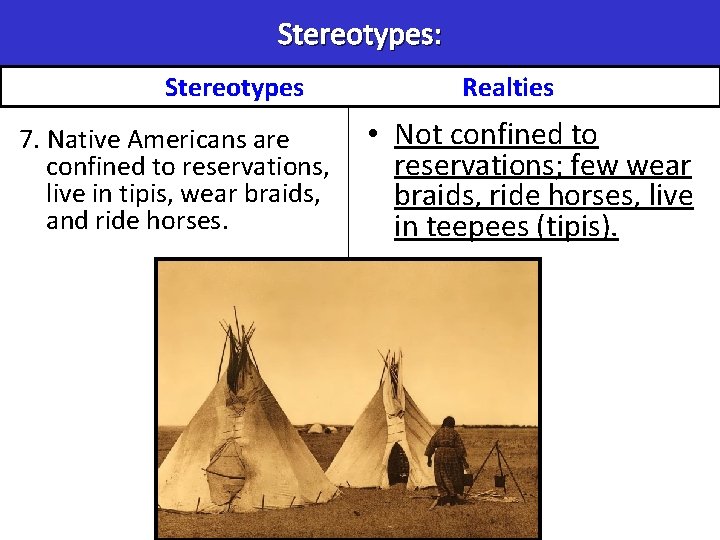
Stereotypes: Stereotypes 7. Native Americans are confined to reservations, live in tipis, wear braids, and ride horses. Realties • Not confined to reservations; few wear braids, ride horses, live in teepees (tipis).
Stereotypes: Stereotypes 8. Native Americans know the histories, languages, and cultural aspects of their own tribe and all other tribes. Realties • Few know all the info on their own tribe, let alone all of the others.