
Native Americans in the United StatesThe Early Years


- Slides: 37
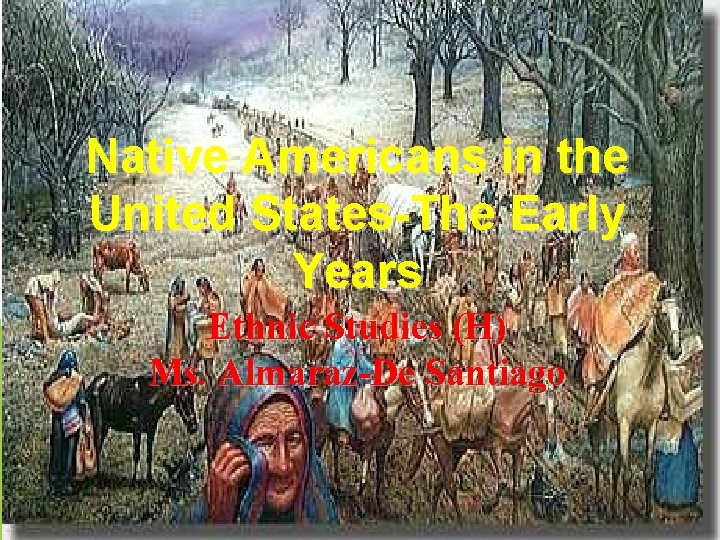
Native Americans in the United States-The Early Years Ethnic Studies (H) Ms. Almaraz-De Santiago
In 1607, the English landed in Jamestown, Virginia Predict: What are some issues you foresee between Europeans and Native Americans How would you handle the conflicts between Native Americans and Europeans
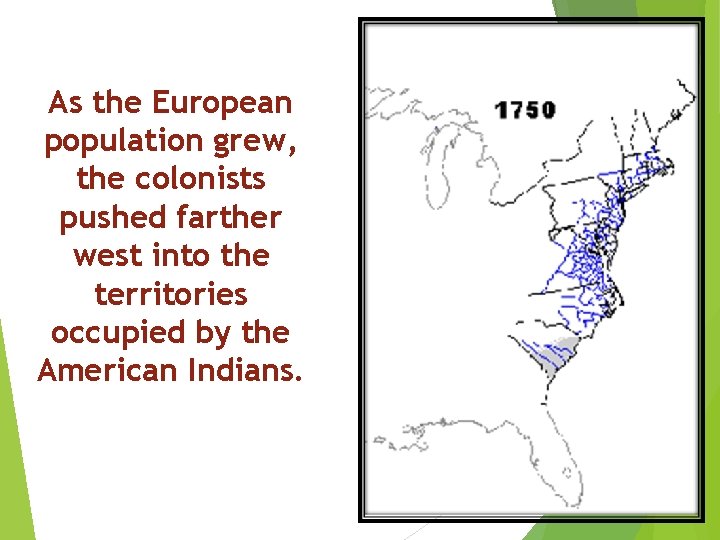
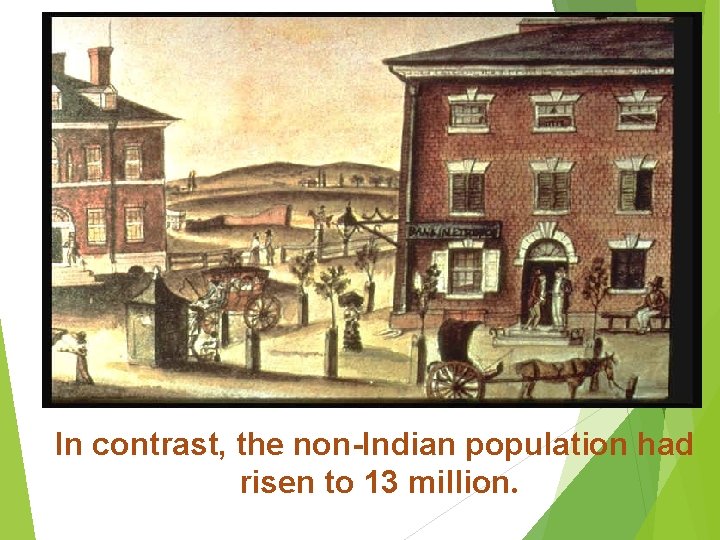
As the European population grew, the colonists pushed farther west into the territories occupied by the American Indians.
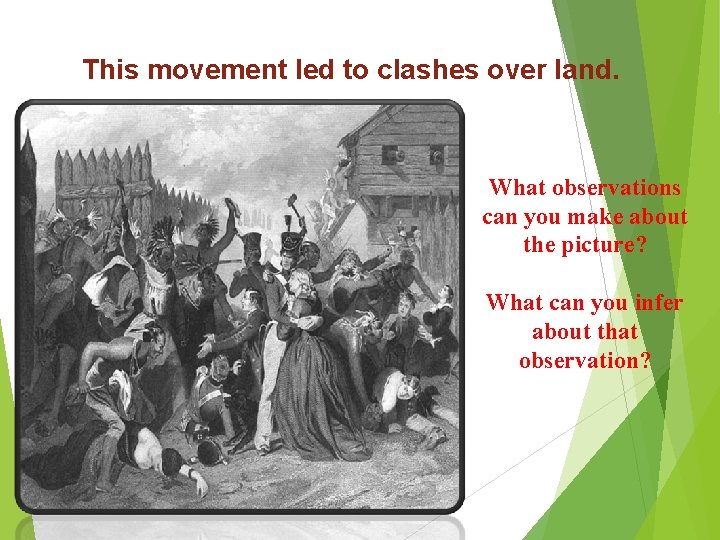
This movement led to clashes over land. What observations can you make about the picture? What can you infer about that observation?
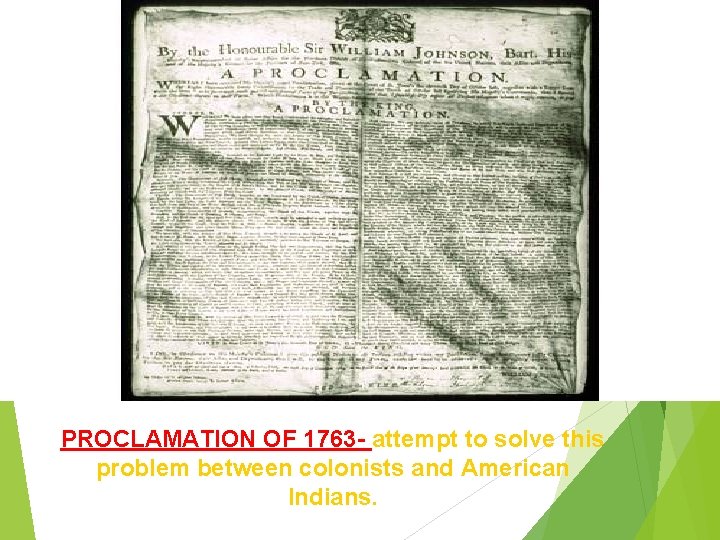
PROCLAMATION OF 1763 - attempt to solve this problem between colonists and American Indians.
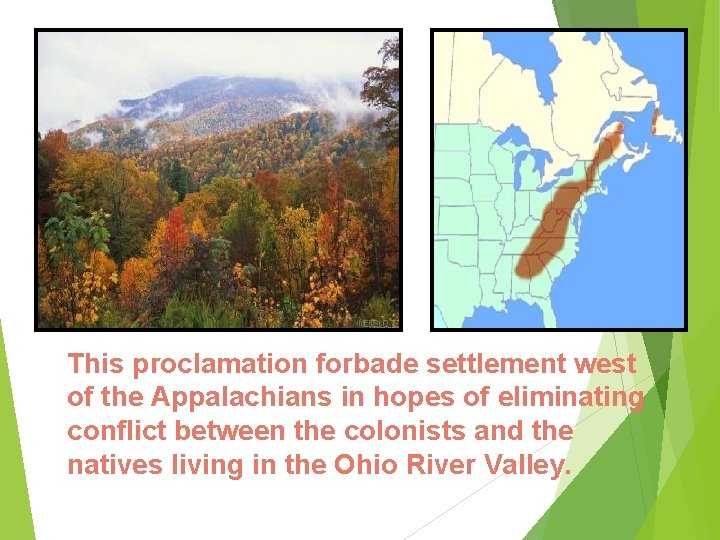
This proclamation forbade settlement west of the Appalachians in hopes of eliminating conflict between the colonists and the natives living in the Ohio River Valley.
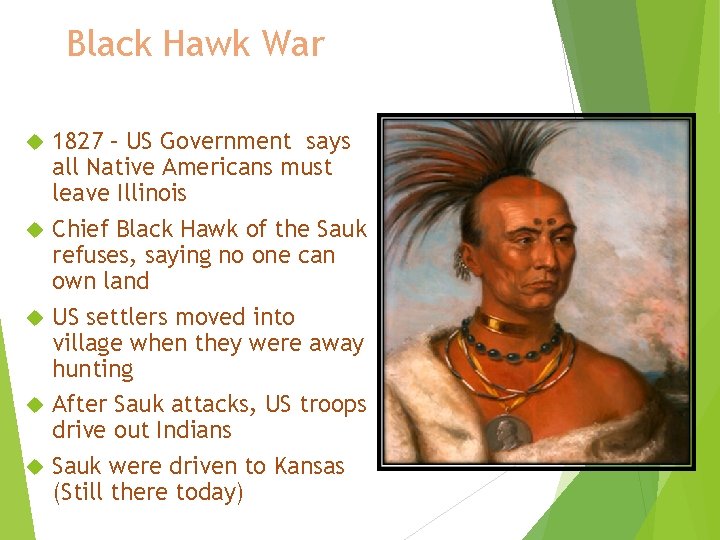
Black Hawk War 1827 – US Government says all Native Americans must leave Illinois Chief Black Hawk of the Sauk refuses, saying no one can own land US settlers moved into village when they were away hunting After Sauk attacks, US troops drive out Indians Sauk were driven to Kansas (Still there today)
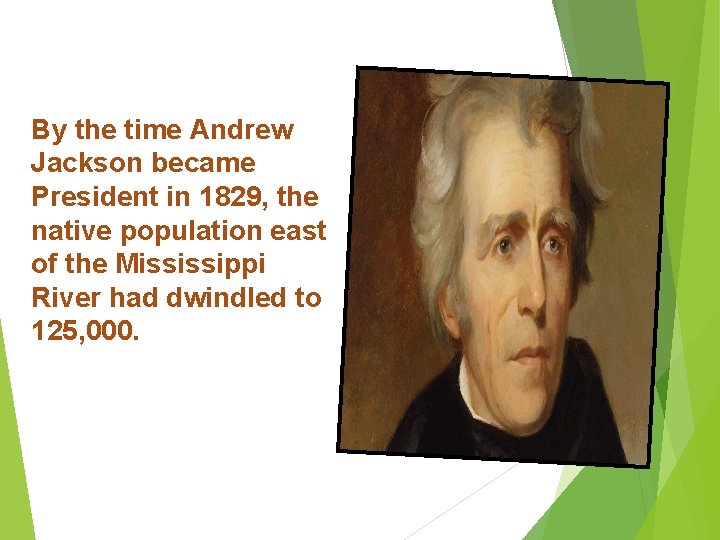
By the time Andrew Jackson became President in 1829, the native population east of the Mississippi River had dwindled to 125, 000.
In contrast, the non-Indian population had risen to 13 million.
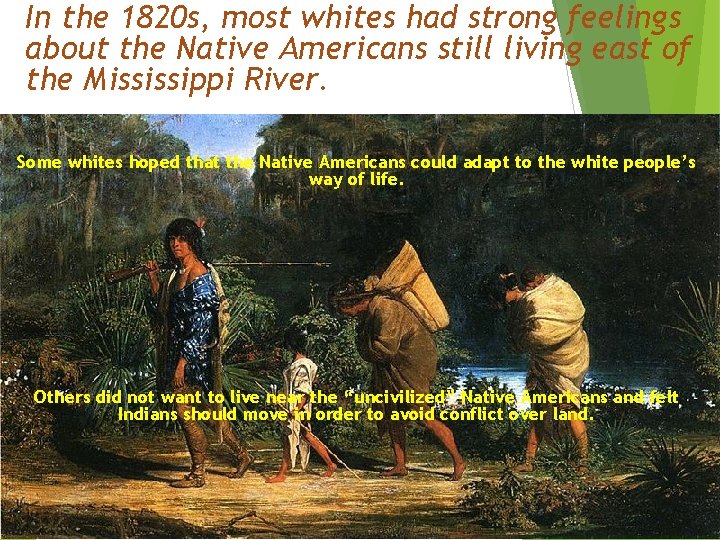
In the 1820 s, most whites had strong feelings about the Native Americans still living east of the Mississippi River. Some whites hoped that the Native Americans could adapt to the white people’s way of life. Others did not want to live near the “uncivilized” Native Americans and felt Indians should move in order to avoid conflict over land.
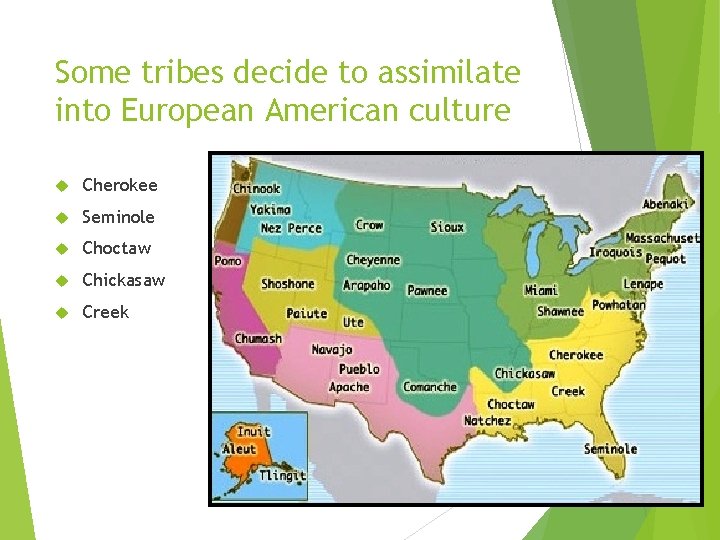
Some tribes decide to assimilate into European American culture Cherokee Seminole Choctaw Chickasaw Creek
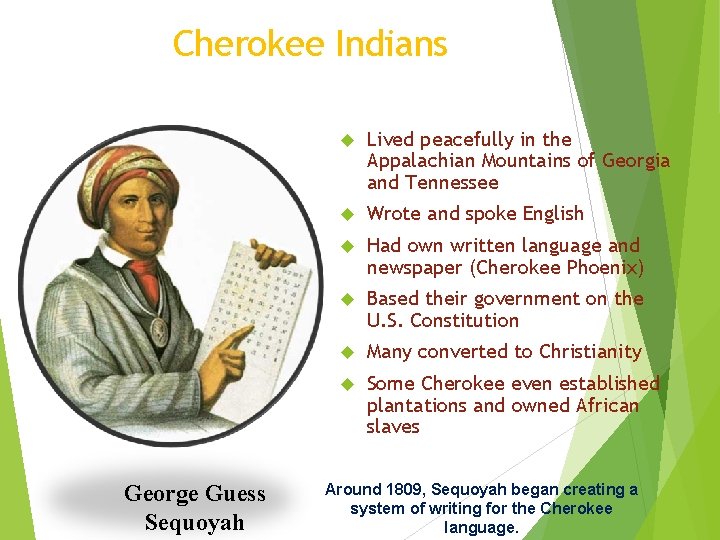
Cherokee Indians George Guess Sequoyah Lived peacefully in the Appalachian Mountains of Georgia and Tennessee Wrote and spoke English Had own written language and newspaper (Cherokee Phoenix) Based their government on the U. S. Constitution Many converted to Christianity Some Cherokee even established plantations and owned African slaves Around 1809, Sequoyah began creating a system of writing for the Cherokee language.
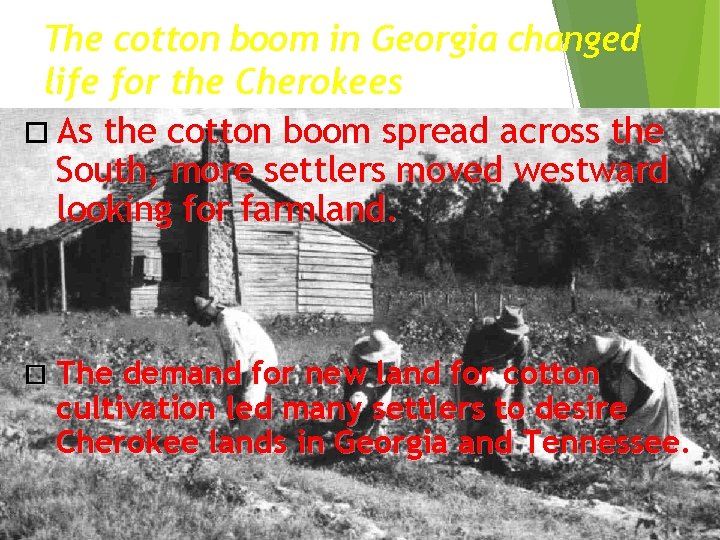
The cotton boom in Georgia changed life for the Cherokees As the cotton boom spread across the South, more settlers moved westward looking for farmland. The demand for new land for cotton cultivation led many settlers to desire Cherokee lands in Georgia and Tennessee.
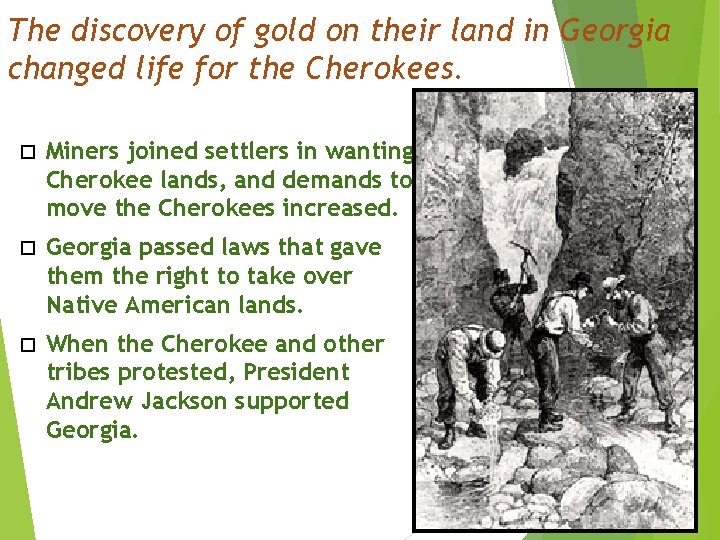
The discovery of gold on their land in Georgia changed life for the Cherokees. Miners joined settlers in wanting Cherokee lands, and demands to move the Cherokees increased. Georgia passed laws that gave them the right to take over Native American lands. When the Cherokee and other tribes protested, President Andrew Jackson supported Georgia.
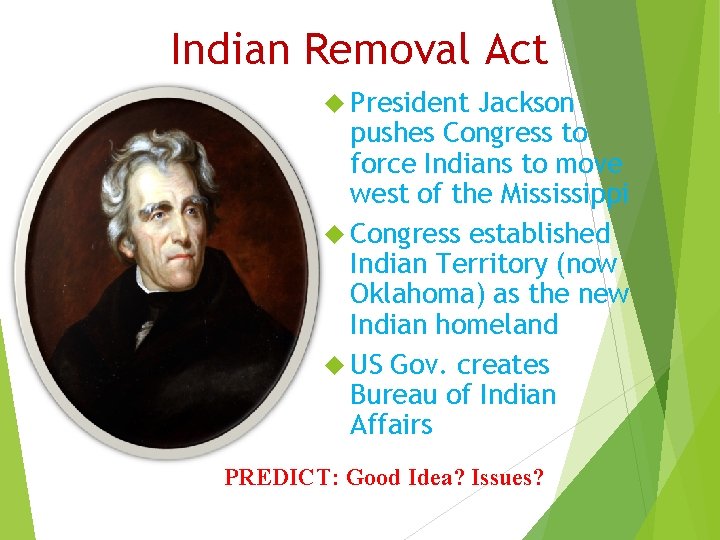
Indian Removal Act President Jackson pushes Congress to force Indians to move west of the Mississippi Congress established Indian Territory (now Oklahoma) as the new Indian homeland US Gov. creates Bureau of Indian Affairs PREDICT: Good Idea? Issues?
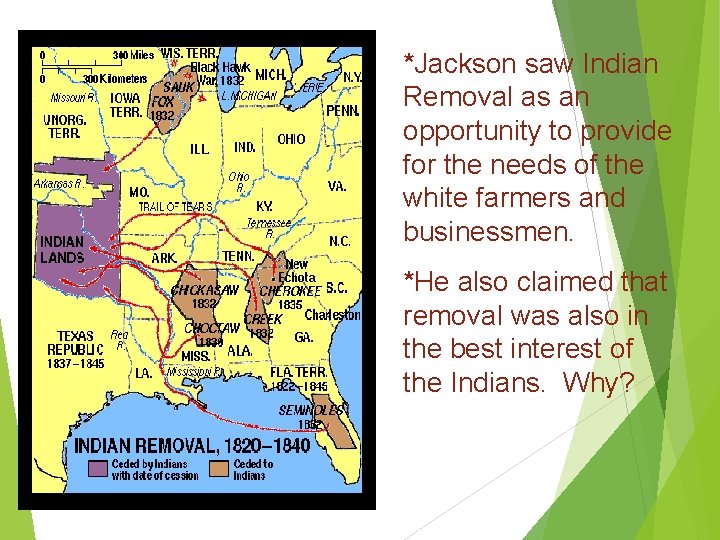
*Jackson saw Indian Removal as an opportunity to provide for the needs of the white farmers and businessmen. *He also claimed that removal was also in the best interest of the Indians. Why?
Jackson to the Indians: “Where you now are, you and my white children are too near to each other to live in harmony and peace. Your game is gone, and many of your people will not work and till the earth. . . The land beyond the Mississippi belongs to the President and no one else, and he will give it to you forever. ” INFERENCES:
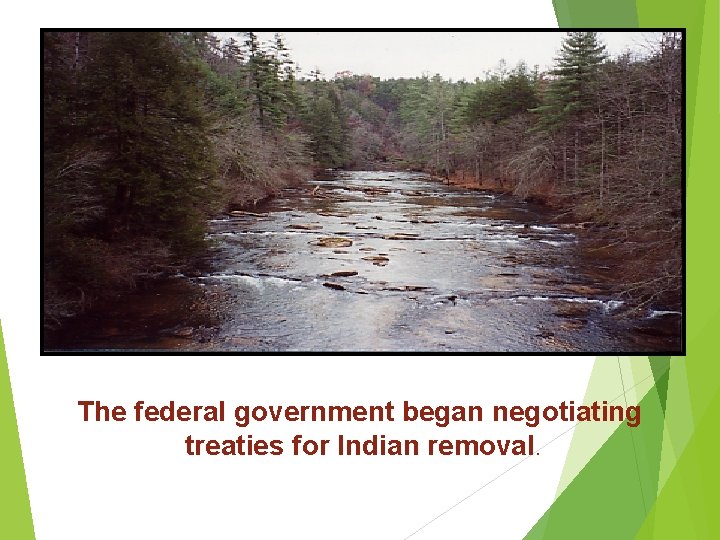
The federal government began negotiating treaties for Indian removal.
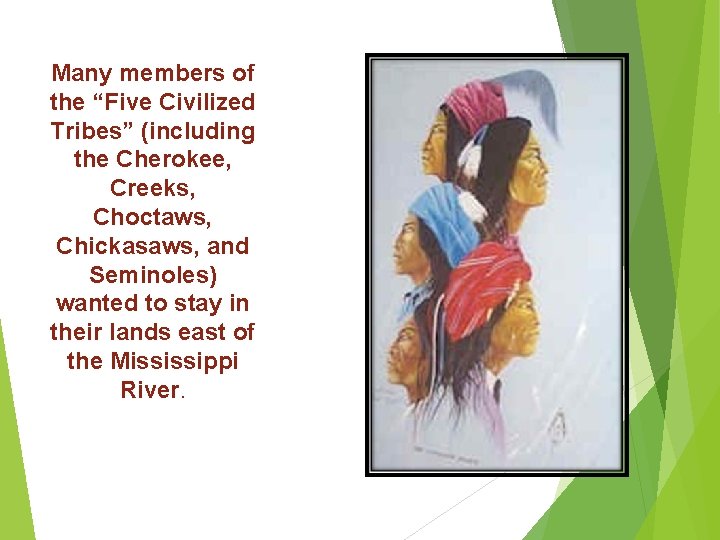
Many members of the “Five Civilized Tribes” (including the Cherokee, Creeks, Choctaws, Chickasaws, and Seminoles) wanted to stay in their lands east of the Mississippi River.
How did the Five Civilized Tribes try to avoid removal?
Cherokee Sue For Land Cherokee sued the government of Georgia for taking their land Worcester vs. Georgia
How do you think the Supreme Court decided? Why?
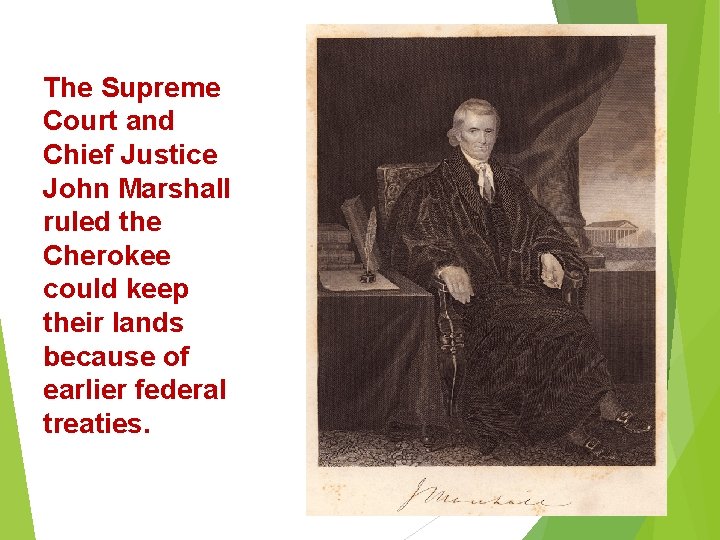
The Supreme Court and Chief Justice John Marshall ruled the Cherokee could keep their lands because of earlier federal treaties.
Furthermore, the court ruled the treaty was an agreement between two nations and couldn’t be overruled by Georgia.
What do you think President Jackson and the Georgia did next?
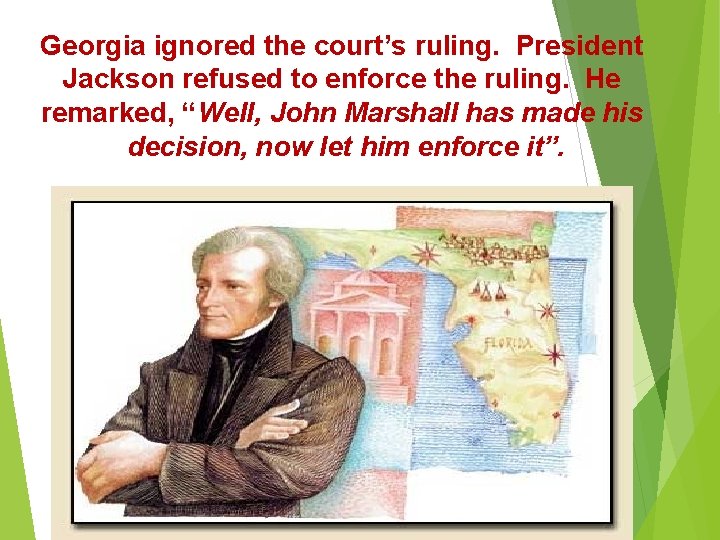
Georgia ignored the court’s ruling. President Jackson refused to enforce the ruling. He remarked, “Well, John Marshall has made his decision, now let him enforce it”.
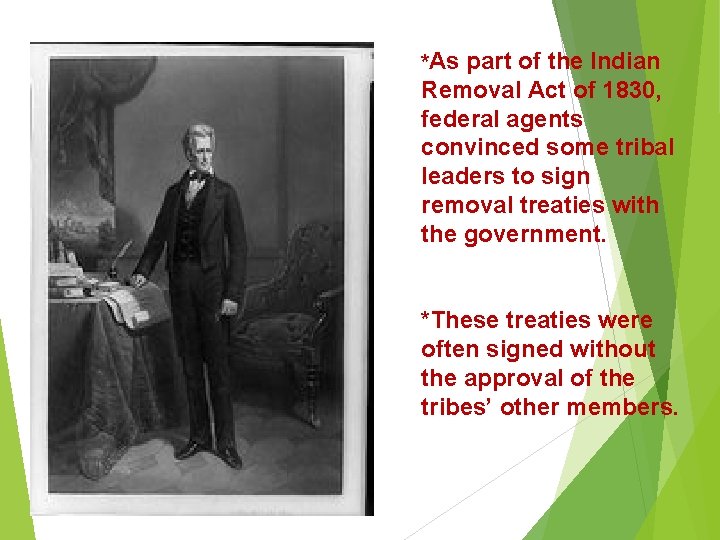
*As part of the Indian Removal Act of 1830, federal agents convinced some tribal leaders to sign removal treaties with the government. *These treaties were often signed without the approval of the tribes’ other members.
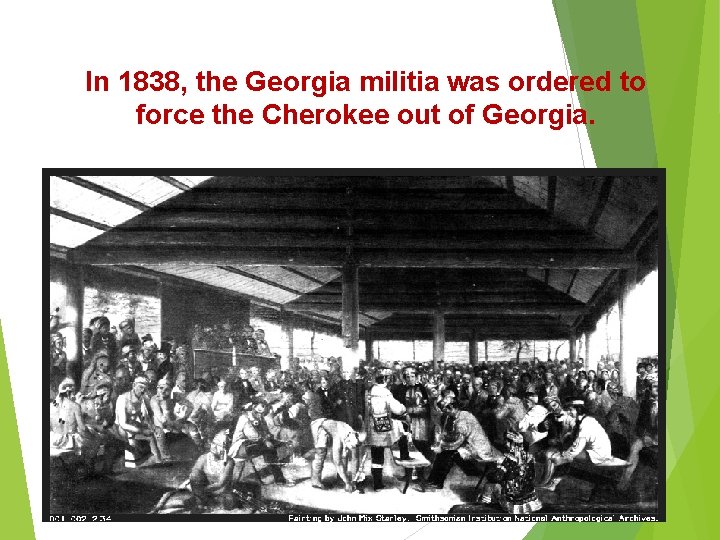
In 1838, the Georgia militia was ordered to force the Cherokee out of Georgia.
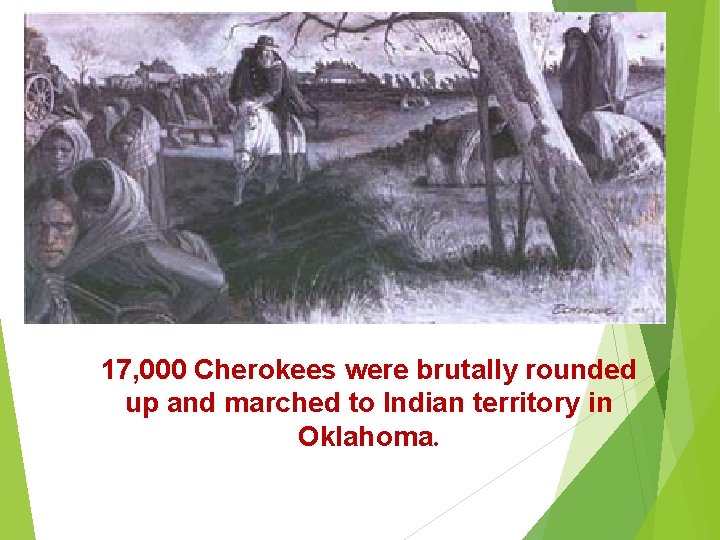
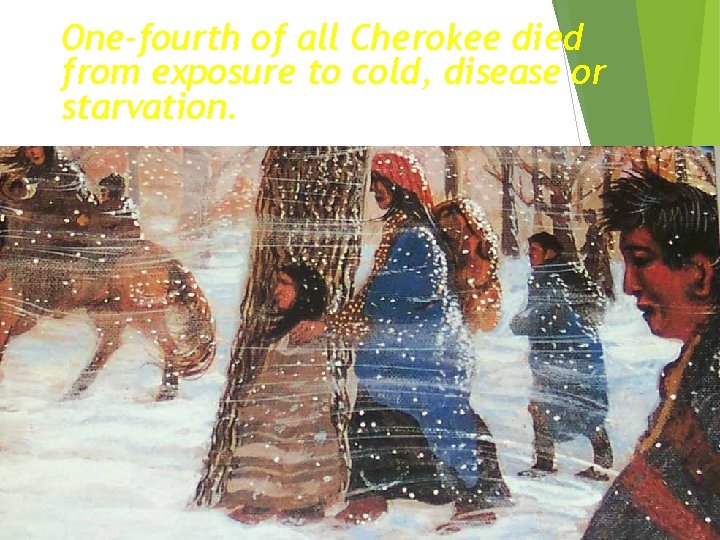
17, 000 Cherokees were brutally rounded up and marched to Indian territory in Oklahoma.
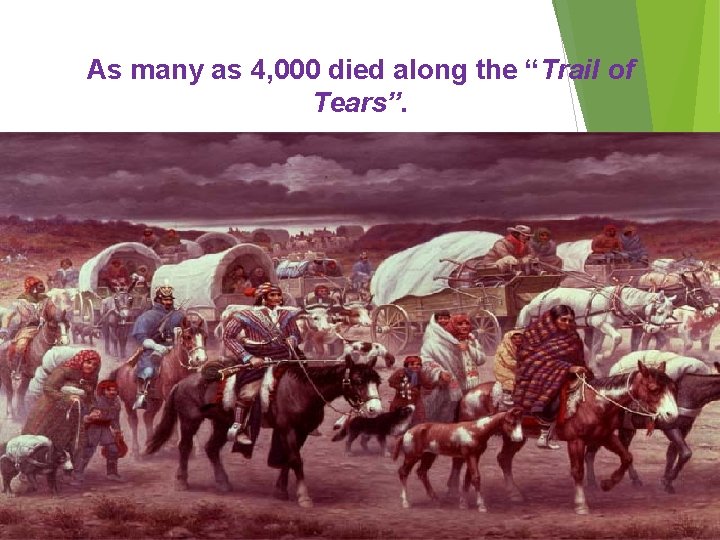
As many as 4, 000 died along the “Trail of Tears”.
One-fourth of all Cherokee died from exposure to cold, disease or starvation.
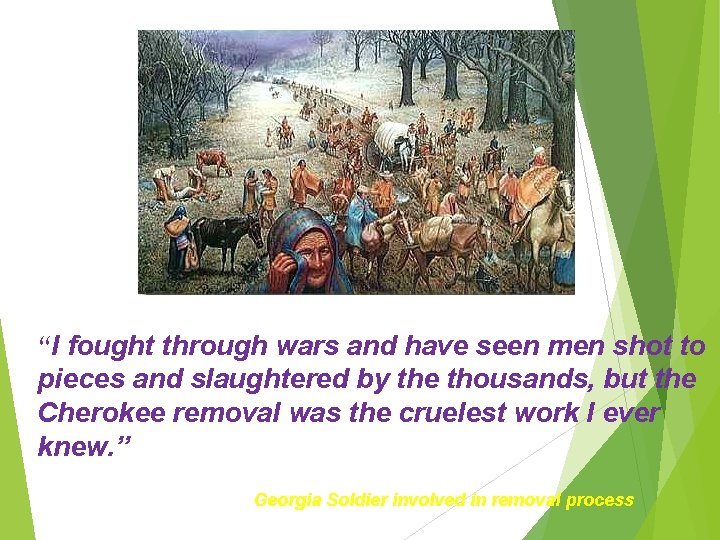
“I fought through wars and have seen men shot to pieces and slaughtered by the thousands, but the Cherokee removal was the cruelest work I ever knew. ” Georgia Soldier involved in removal process
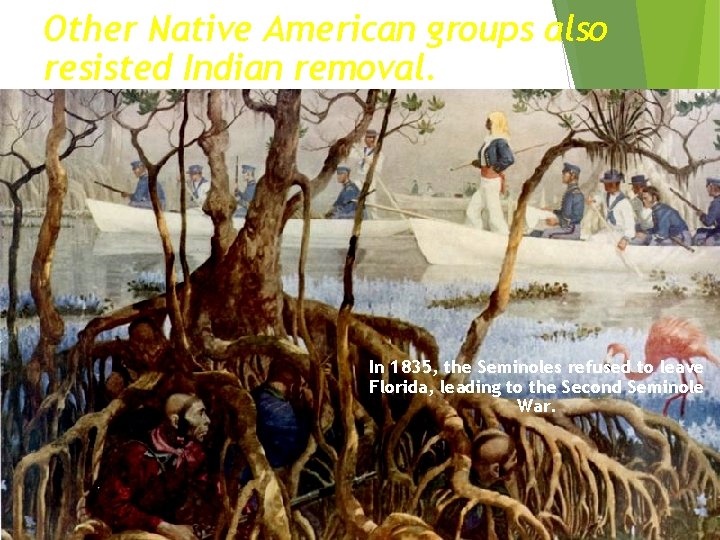
Other Native American groups also resisted Indian removal. In 1835, the Seminoles refused to leave Florida, leading to the Second Seminole War.
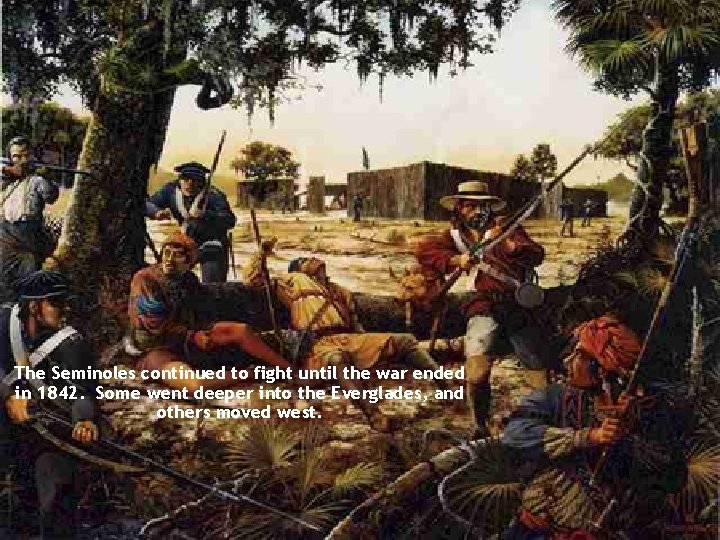
The Seminoles continued to fight until the war ended in 1842. Some went deeper into the Everglades, and others moved west.
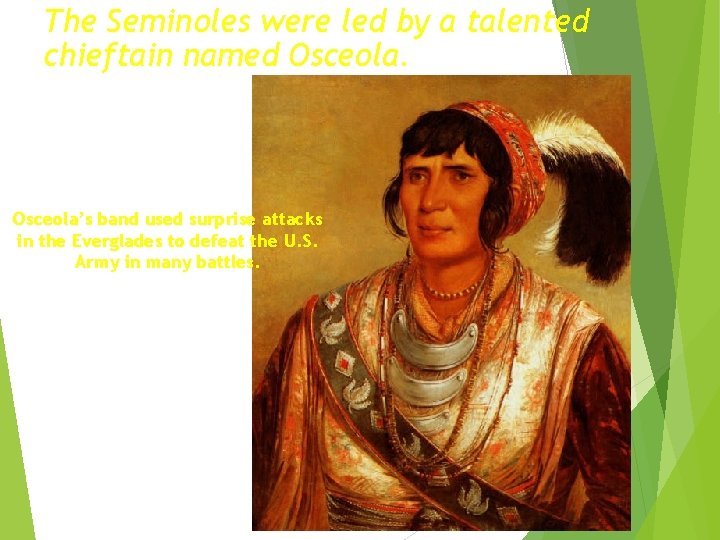
The Seminoles were led by a talented chieftain named Osceola’s band used surprise attacks in the Everglades to defeat the U. S. Army in many battles.
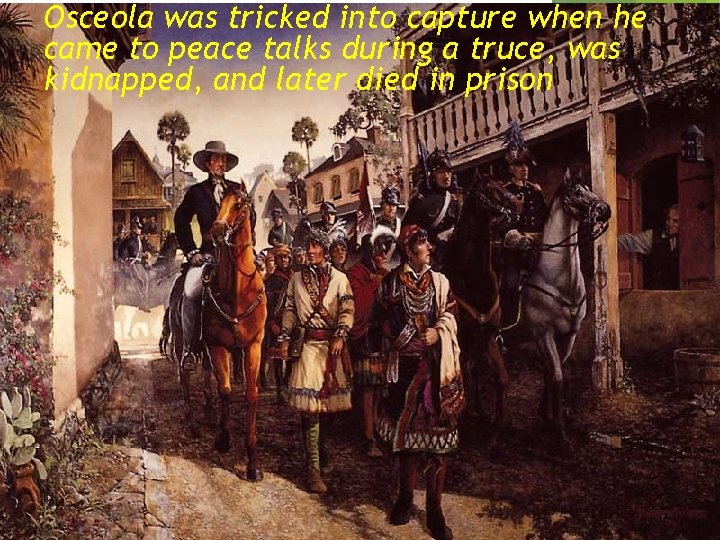
Osceola was tricked into capture when he came to peace talks during a truce, was kidnapped, and later died in prison
For Review How do you think the government laws (Proclamation of 1763, Indian Removal Act) affected native Americans today?